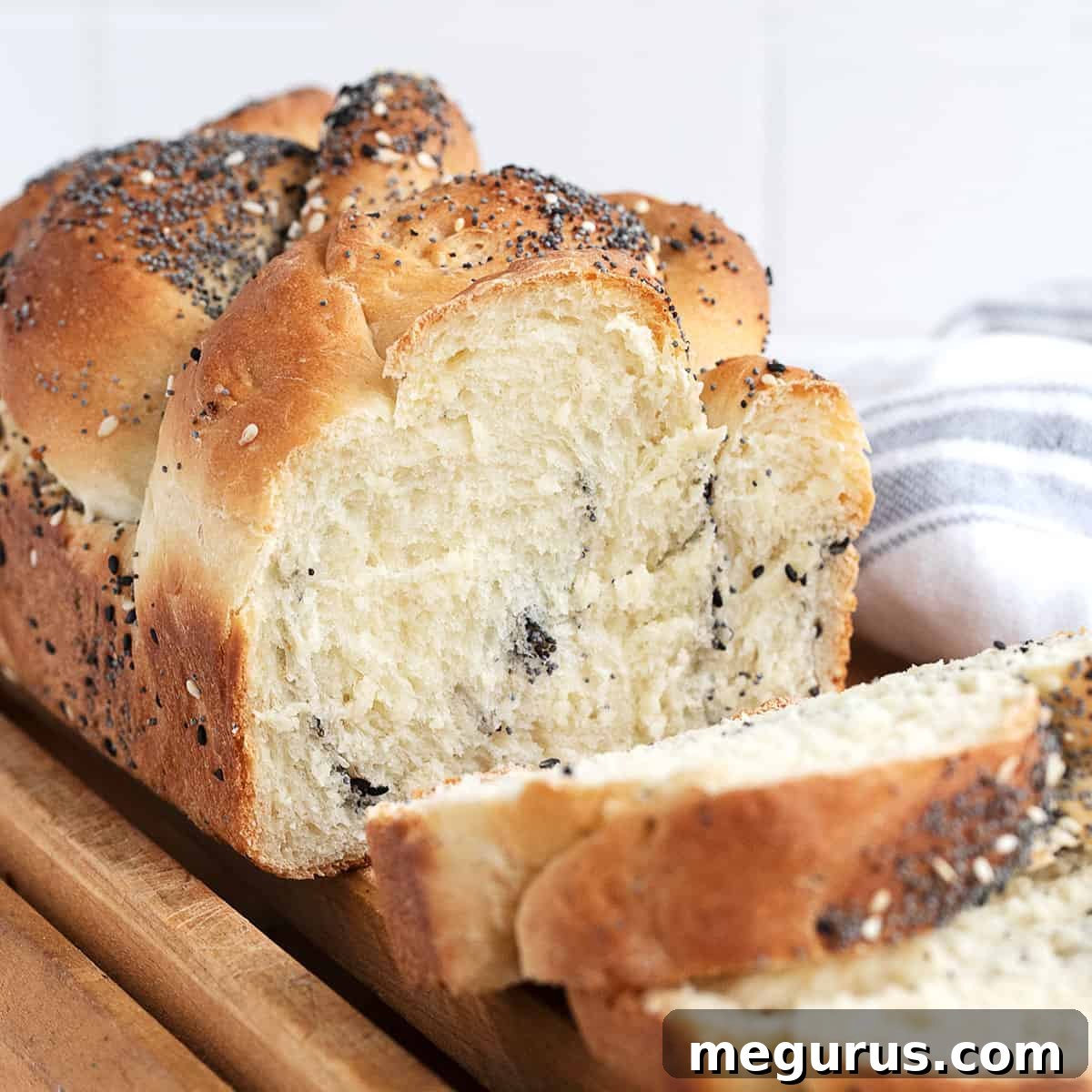
Imagine the irresistible aroma of freshly baked bread, infused with the savory crunch and bold flavors of everything bagel seasoning. This isn’t just any loaf; it’s a homemade masterpiece that brings the beloved “everything” experience directly to your kitchen. With a generous mix of poppy seeds, sesame seeds, dried garlic, and onion baked right into the dough, every slice promises an explosion of flavor. Perfect slathered with butter, toasted to golden perfection, or as the star of your next sandwich, this Everything Bread is a true culinary delight that you’ll want to bake again and again.
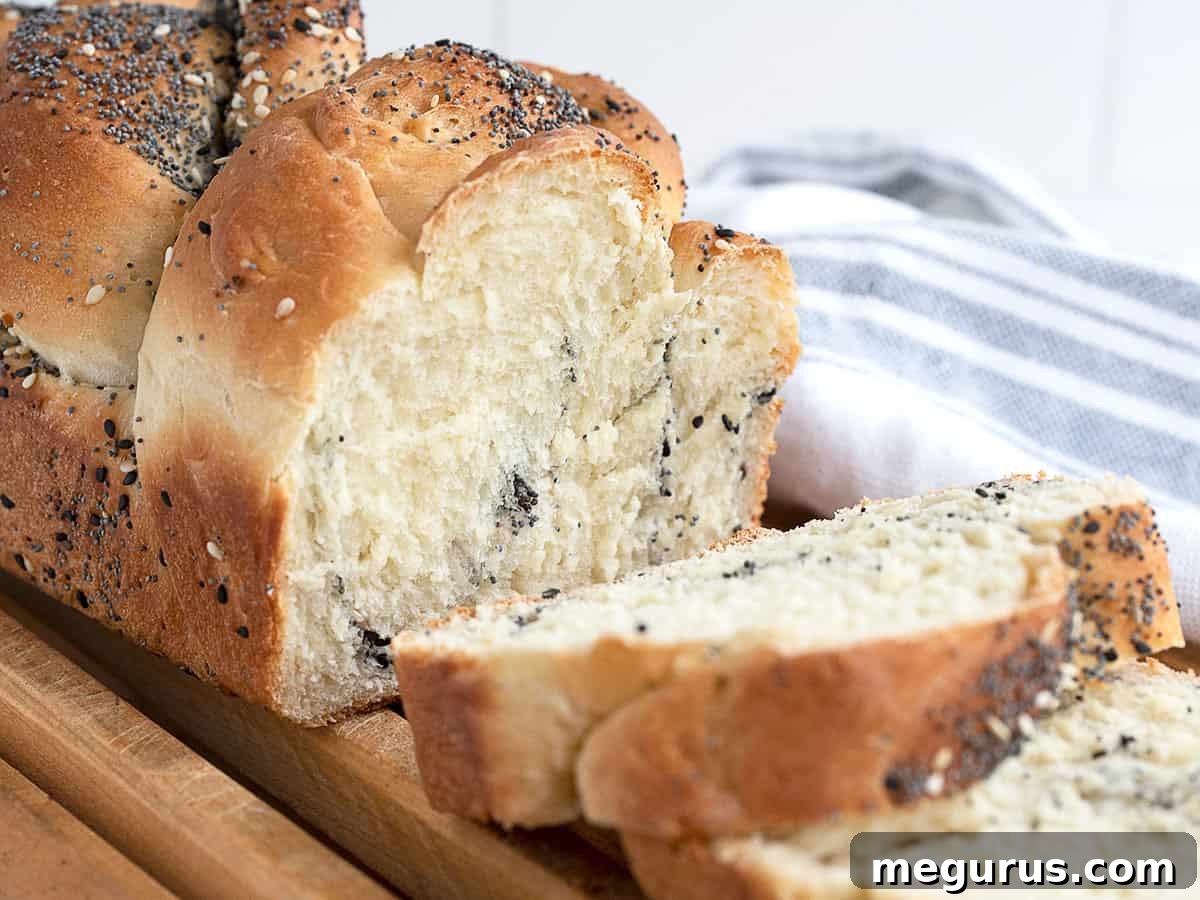
My passion for the classic everything seed and spice mix led me on a quest to bake those fantastic flavors into a hearty loaf of bread. The result? This Everything Bread, which truly exceeded all my expectations. It’s wonderfully satisfying on its own, simply enhanced with a smear of butter. When toasted, its crust becomes even crunchier, making it an ideal canvas for cream cheese. Beyond breakfast, it elevates any sandwich from ordinary to extraordinary. This recipe is a testament to the fact that some of the best culinary creations come from taking familiar flavors and giving them a fresh, homemade twist. Get ready to impress your family and friends with this incredibly soft, flavorful, and aromatic bread.
Why You’ll Fall in Love with This Homemade Everything Bread
There’s something uniquely comforting and satisfying about baking bread from scratch, and this Everything Bread takes that joy to a whole new level. Not only does it fill your home with an intoxicating aroma, but it also delivers on taste and texture in every bite. Here’s why this recipe deserves a spot in your baking repertoire:
- Unforgettable Flavor Profile: The harmonious blend of poppy seeds, sesame seeds, dried garlic, and onion creates a complex, savory taste that’s both familiar and exciting.
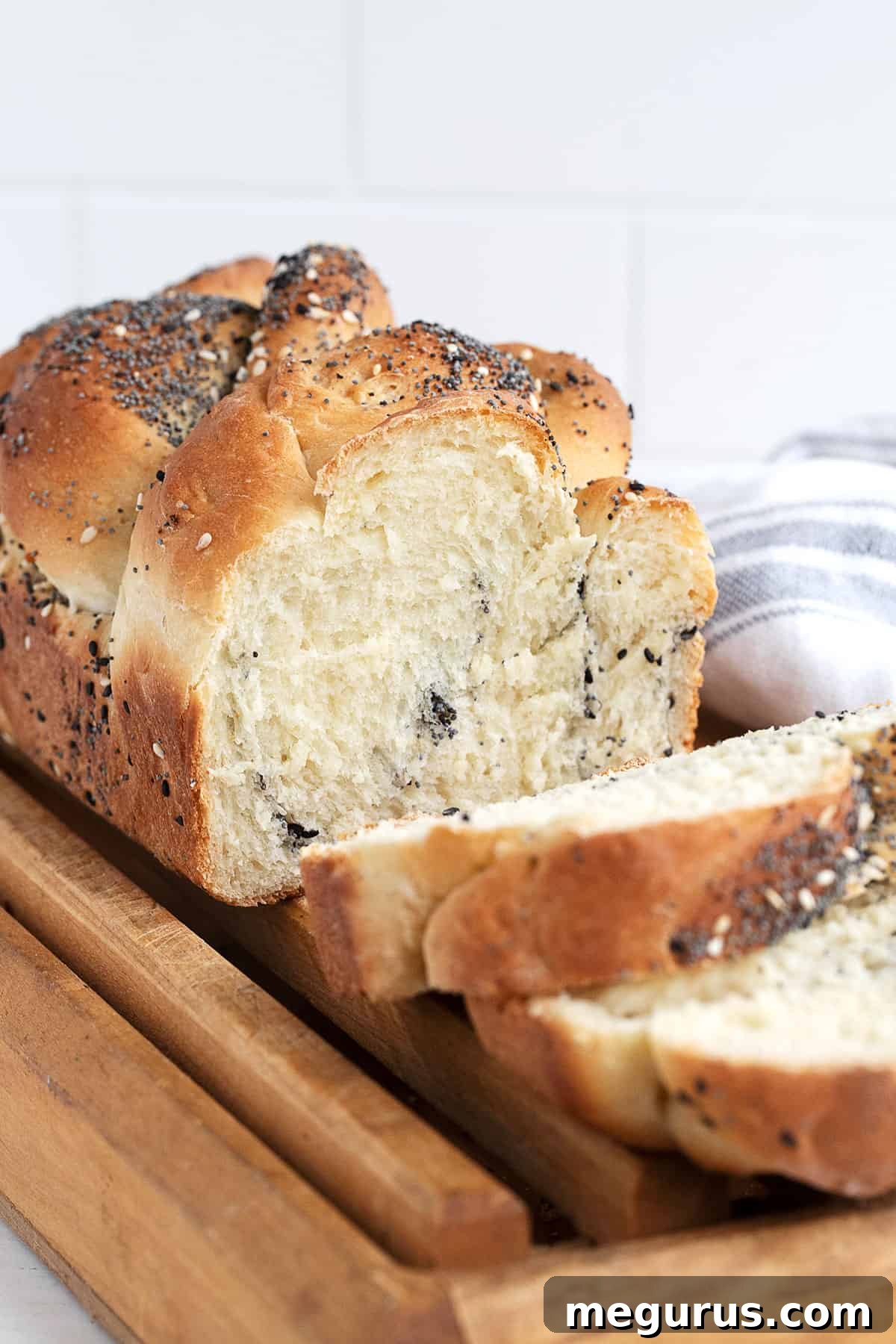
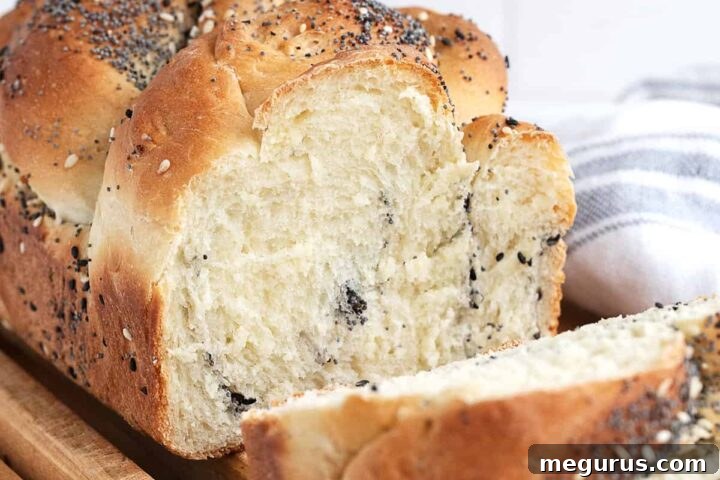
- Perfect Texture: This recipe yields a soft, tender crumb with a delightful chew, encased in a perfectly golden, subtly crisp crust thanks to the baked-in seasoning.
- Incredibly Versatile: From breakfast toast with cream cheese to a gourmet sandwich base, or simply alongside a bowl of soup, this bread is designed for every occasion.
- Rewarding Baking Experience: Even if you’re new to yeast bread, the step-by-step guidance ensures a successful and enjoyable baking process, culminating in a loaf you’ll be proud of.
- No More Bland Bread: Say goodbye to plain, uninspired bread. This loaf is packed with flavor from the inside out, making every meal a little more special.
Ingredient Deep Dive: Achieving Perfection
Each ingredient plays a crucial role in the success of this Everything Bread. Understanding their purpose and considering the nuances will help you achieve the best possible loaf. Here’s a closer look at what you’ll need and why:
Flour Choices: All-Purpose vs. Bread Flour
All-Purpose or Bread Flour: You have the flexibility to use either all-purpose or bread flour for this recipe. If opting for bread flour, which has a higher protein content, you might find you need slightly less overall flour than the recipe specifies. Bread flour typically absorbs more liquid and develops stronger gluten, leading to a chewier texture. All-purpose flour will still produce a wonderful loaf with a softer crumb. Whichever you choose, unbleached flour is always recommended if available. Unbleached flour retains more of its natural nutrients and often has a better flavor profile for baking, providing a superior foundation for your bread.
Yeast Varieties: Active Dry vs. Instant
Yeast: The recipe calls for either active dry yeast or regular instant yeast, such as SAF brand. Both will work beautifully to leaven your dough, giving it that characteristic soft and airy texture. Active dry yeast usually requires activation in warm water first, while instant yeast can often be mixed directly with dry ingredients. However, for this recipe, treating them similarly by dissolving in lukewarm water is a good practice to ensure they are active. Quick or rapid rising yeast is generally not recommended for this particular recipe, as it’s designed for a typical two-rise bread that benefits from slower fermentation for better flavor development and structure. The longer rise allows the dough to develop more complex flavors.
Flavor Boosters: Onion and Garlic Powder
Onion and Garlic Powder: These powdered aromatics are key to infusing the bread with that signature savory “everything” flavor throughout the loaf, not just on the crust. I’ve specified garlic powder, but if you only have garlic salt, it’s a perfectly acceptable substitute. Just remember to slightly reduce the amount of additional salt used in the bread dough to balance the seasoning. Similarly, for onion powder, you could also use finely minced, dried onion for a slightly different texture and concentrated onion flavor. Adjust the quantities to your personal preference; some prefer a stronger garlic or onion note, while others like it more subtle.
The Heart of the Loaf: Everything Mix Seeds
Everything Mix Seeds: The magic truly happens with the “everything mix” itself. This blend typically includes sesame seeds (white, black, or a mix of both for visual appeal) and poppy seeds. If you have access to black sesame seeds, they make a visually stunning addition alongside the white sesame seeds. For convenience, if you have a store-bought “Everything Bagel Seasoning” mix, you can certainly use that. You’ll need approximately 3½ tablespoons of the total mix. This blend provides the iconic crunch and burst of flavor that defines this bread. Feel free to experiment with a touch of dried minced garlic or onion in your mix for an extra layer of flavor.
A Touch of Sweetness: The Role of Sugar
Sugar: Many bakers are surprised to see sugar in a savory bread recipe and might be tempted to reduce it. While you can adjust it to your liking, the small amount of sugar in savory loaves serves several important functions. It provides food for the yeast, helping it activate and produce carbon dioxide more effectively, which leads to a good rise. More importantly, it contributes to a beautiful golden-brown crust and helps create a loaf that toasts exceptionally well. This subtle sweetness also balances the savory notes of the garlic and onion, enhancing the overall flavor rather than making the bread taste sweet. Consider it a trade-off for superior texture and browning.
Crafting Your Own Everything Bagel Seasoning
While store-bought everything seasoning is convenient, making your own at home ensures freshness and allows for customization. It’s incredibly simple and gives you control over the quality and proportion of each ingredient. Here’s a basic recipe for the Everything Mix:
- 1.5 Tablespoons poppy seeds
- 2 Tablespoons sesame seeds (white, black, or a blend)
- 1/8 teaspoon garlic powder
- 1/8 teaspoon onion powder
- Optional: A pinch of coarse salt (if not already reducing salt in the dough)
Simply combine all ingredients in a small bowl and mix well. This homemade blend offers a vibrant, fresh aroma that will truly elevate your Everything Bread.
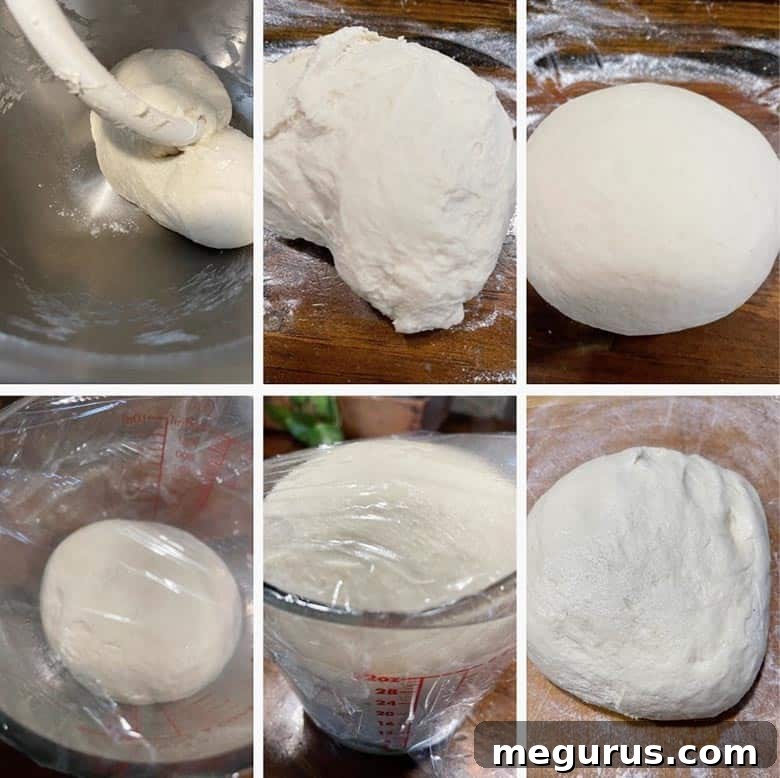
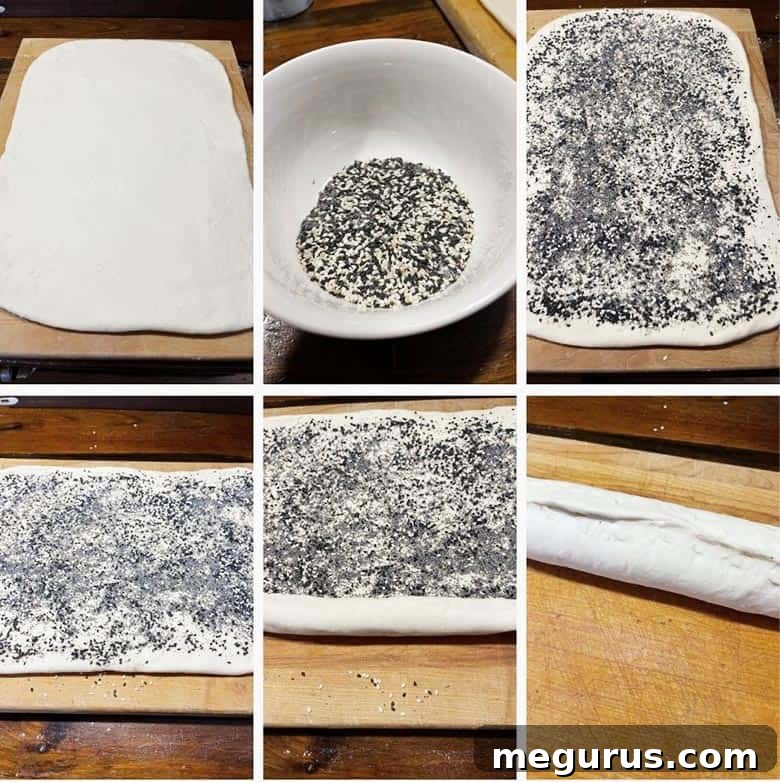
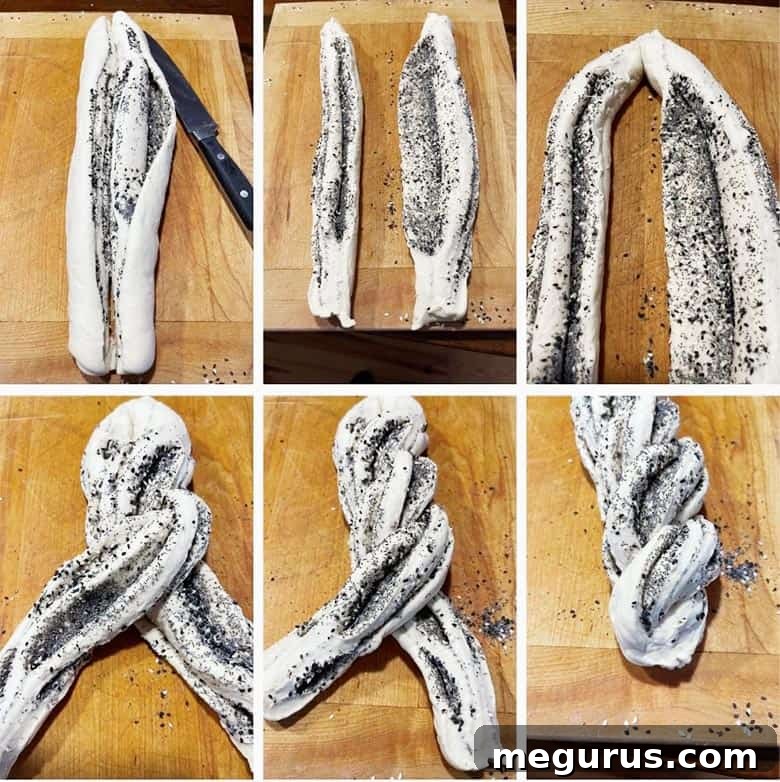
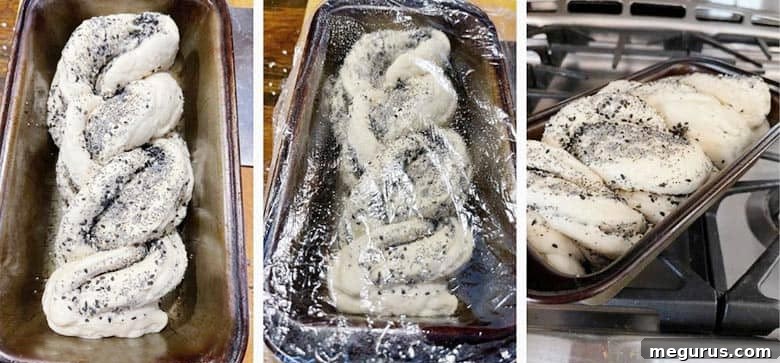
Visual Guide: Step-by-Step Shaping of Everything Bread
Crafting this bread is a delightful process, and seeing each step can make all the difference. While the full, detailed instructions are in the recipe card below, this section provides a quick visual summary of the key shaping steps to help you along your baking journey.
Frequently Asked Questions About Everything Bread
Here are answers to some common questions that arise when baking this delicious Everything Bread:
Absolutely! Most homemade breads freeze beautifully, and this Everything Bread is no exception. Once the loaf has completely cooled, wrap it tightly in plastic wrap, then an additional layer of aluminum foil to prevent freezer burn. It can be stored in the freezer for up to 3 months. When you’re ready to enjoy, simply thaw it at room temperature, or slice and toast directly from frozen for a quick treat.
Yes, customization is part of the joy of home baking! You can certainly adjust the amounts of onion and garlic powder in the dough to suit your taste preferences. If you love a bolder flavor, feel free to increase the quantities. If you prefer a more subtle hint, reduce them. No other adjustments to the recipe are necessary when simply modifying the powder amounts; just add more (or less) to your liking.
Yes, you can easily scale this recipe up! Many recipe cards offer “2X or 3X” buttons to automatically adjust ingredient amounts, making it simple to prepare larger batches. When tripling a bread recipe, especially if using a stand mixer, ensure your mixer can comfortably handle the increased volume of dough. If the motor seems to strain, you can always transfer the dough to a clean, lightly floured counter to finish kneading by hand, ensuring the proper dough consistency is achieved without overworking your appliance.
While I haven’t specifically tested this recipe in a bread machine for full automation, you can certainly use your bread machine’s dough cycle to do the initial mixing and first rise. This recipe yields a standard 1lb dough, which is typically well-suited for bread machines. Once the dough cycle is complete, you would then remove the dough from the machine, proceed with rolling, adding the Everything Mix, twisting, and the final rise in a loaf pan, followed by baking in a conventional oven. This semi-homemade approach saves a lot of hands-on time!
Baking Success: Expert Tips for Your Everything Bread
Even seasoned bakers can benefit from a few extra insights. Here are some baker’s tips to ensure your Everything Bread turns out perfectly every time, from dough consistency to delightful flavor nuances:
- Flour is Approximate: Remember that the amount of flour specified in any bread recipe, including this one, is always approximate. Flour absorption can vary significantly depending on factors like humidity in your kitchen, the brand of flour, and even the temperature of your ingredients. The goal is to achieve a dough that is smooth, cohesive, and moist, but crucially, not sticky. It should pull away from the sides of the bowl cleanly. Don’t be afraid to add a little more flour, a tablespoon at a time, or a tiny bit more liquid if needed, until you reach this ideal consistency.
- New to Yeast Bread Baking? If you’re just starting your journey with yeast bread, don’t be intimidated! It’s a rewarding process. I highly recommend checking out comprehensive resources, such as my guide on Getting Started with Yeast Bread Baking. It offers invaluable tips and techniques that will build your confidence and help you master the fundamentals, ensuring consistent success with this and future bread recipes.
- Butter or No Butter Before Seeds? I pondered this myself: should I brush the dough with melted butter before scattering the Everything Mix? While butter adds flavor, I decided against it for simplicity, and found the seeds adhered perfectly well without it. However, if you’re looking to infuse a bit of extra rich butter flavor into the crust and help the seeds stick even more securely, a very light brush of melted butter before applying the seasoning is an option you could certainly experiment with.
- Customize to Your Taste: This Everything Bread recipe is wonderfully adaptable, making it perfect for your personal taste experiments. Feel free to adjust the quantity of the Everything Mix; use more for an intense burst of flavor and crunch, or less for a more subdued seasoning. Similarly, tweak the amounts of onion and garlic powder in the dough to match your preference for these savory notes. For an adventurous twist, I’ve considered spreading a thin layer of cream cheese onto the dough before adding the seed mix and baking it. This would infuse a delightful creaminess directly into the bread, mimicking the experience of a cream-cheese-slathered bagel.
- Don’t Rush the Cooling: After removing your golden-brown loaf from the oven, resist the urge to slice into it immediately. While the aroma is irresistible, allowing the bread to cool completely on a wire rack for at least an hour (or even longer) is crucial. Slicing hot bread can result in a gummy, dense crumb because the internal moisture and starches haven’t had a chance to set properly. Patience here will be rewarded with the perfect texture.
- Proofing Environment Matters: For the best rise, place your covered dough in a warm, draft-free spot. A slightly warm oven (turned off, with just the light on), or a microwave with a cup of hot water, can create the ideal environment. Proper proofing ensures a light, airy texture and a beautiful oven spring.
Get the Recipe: Everything Bread
Bring the incredible Everything Bagel flavors to a sliceable loaf of homemade bread. With savory seed mix, onion, and garlic flavors baked into every tender slice, this bread is truly a game-changer.
This recipe has received fantastic feedback, consistently rated 5 out of 5 stars by happy bakers like you.
Pin This
Leave a Review
Prep Time: 20 mins
Cook Time: 40 mins
Rising Time: 1 hr 45 mins
Total Time: 2 hrs 45 mins
Yield: 12 servings
Ingredients
- 1/2 cup (125 ml) lukewarm water, about 95 F.
- 2 1/4 teaspoons (7 g) Active Dry or regular Instant yeast
- 2 Tablespoons (26 g) white sugar
- 1/2 cup (125 ml) lukewarm milk, about 95 F.
- 2 Tablespoons vegetable oil, or any neutral tasting oil (melted butter can also be used for richer flavor)
- 2 1/2 cups (300 g) all purpose flour, approximately, plus more as needed (unbleached recommended)
- 1/2 – 3/4 teaspoon garlic powder (adjust to taste)
- 1/2 – 3/4 teaspoon onion powder (adjust to taste)
- 1 teaspoon fine salt (reduce slightly if using garlic salt)
Everything Mix:
- 1 1/2 Tablespoons poppy seeds
- 2 Tablespoons sesame seeds, white or black, or a mix of both
- 1/8 teaspoon garlic powder
- 1/8 teaspoon onion powder
Instructions
- In a large mixing bowl or the bowl of a stand mixer fitted with the kneading hook, combine the warm water, yeast, and sugar. Stir gently and allow the mixture to stand for about 5 minutes until the yeast becomes foamy, indicating it’s active. Then, add the lukewarm milk and vegetable oil (or melted butter). Mix thoroughly to combine all the liquid ingredients.
- Add the initial 2 cups of flour to the liquid mixture, along with the specified amounts of garlic powder, onion powder, and fine salt. Mix on low speed (or by hand with a spoon) until just combined. Gradually begin adding the remaining flour, a small amount at a time (about a tablespoon), until you achieve a smooth, elastic, and moist dough that is no longer sticky and pulls away cleanly from the sides of the bowl. The exact amount of flour may vary.
- Transfer the dough from the bowl to a lightly floured work surface. Knead the dough for a few minutes (about 5-7 minutes by hand or 3-4 minutes in a stand mixer) until it is perfectly smooth and elastic. Form the dough into a neat ball. Place the dough ball into a lightly greased bowl, turning it once to coat, then cover the bowl tightly with plastic wrap. Let it rise in a warm, draft-free place until it has doubled in size, which typically takes about 1 hour, but could be longer depending on your kitchen’s temperature.
- While the dough is undergoing its first rise, prepare the star of the show: the Everything Mix. In a small bowl, combine all the ingredients for the Everything Mix (poppy seeds, sesame seeds, garlic powder, onion powder). Stir them together well and set aside. Also, take this time to generously grease an 8 1/2 x 4-inch loaf pan, ensuring it’s ready for the dough.
- Once the dough has completed its first rise and doubled in volume, gently remove it from the bowl and place it on a lightly floured surface. Using your fists, gently deflate the dough to release the accumulated gases. With a rolling pin, roll the dough into an even rectangle, approximately 10 x 15 inches. Scatter the prepared Everything Mix evenly over the entire surface of the dough, ensuring good coverage. Then, use the palms of your hands to gently press the seeds and spices into the dough, helping them adhere.
- **Visual Aid:** If the shaping instructions below seem unclear, please refer to the Step-by-Step photos provided earlier in this article for a clear visual guide on how to roll, cut, and twist the dough.
- Starting from one of the long (15-inch) edges of the dough rectangle, carefully and tightly roll up the dough, jelly-roll style, creating a neat log. Once rolled, firmly pinch the seam together along the length of the log to seal it completely. Flip the dough log over so that the pinched seam is now at the bottom. Using a sharp knife or bench scraper, carefully cut down the precise center of the log, from one end to the other, dividing it into two equal pieces. Slightly rotate each slice so that the cut, seed-filled edges are facing upwards. Place the two pieces about 1 inch apart. At one end, pinch the two pieces firmly together to create an anchor point. Then, gently and artfully twist the two dough pieces together, exposing the seeded layers as you go. Once twisted to the other end, pinch those ends together as well to seal them. Carefully transfer the twisted dough into your prepared 8 1/2 x 4-inch loaf pan. Cover the pan loosely with plastic wrap and allow it to rise again, in a warm, draft-free place, until the dough has risen beautifully and crested the pan by about 1 to 1 1/2 inches in the center. This final rise typically takes about 45 minutes, but keep an eye on the volume rather than strictly the time.
- While the dough is undergoing its final rise, preheat your oven to 375°F (190°C) using the regular bake setting. Position an oven rack in the center of the oven for even baking. Once the dough has sufficiently risen, place the loaf pan in the preheated oven. Bake for 35-40 minutes. The loaf should develop a rich, golden-brown crust and reach an internal temperature of at least 195°F (90°C) when measured with an instant-read thermometer. **Important Note:** Around the 25-minute mark, check the loaf. If the top is already sufficiently browned, loosely tent it with a sheet of aluminum foil to prevent it from over-browning during the remaining baking time.
- Once baked, carefully remove the loaf from the oven. Immediately transfer the hot loaf out of the pan and onto a wire cooling rack. Allow it to cool completely for at least 1 hour before attempting to slice it. Resisting the urge to slice a hot loaf is crucial, as cutting into it too early can result in a gummy, dense crumb due to trapped moisture. Patience will be rewarded with a perfect texture.
Notes
For more detailed insights, substitution suggestions, and extra baking wisdom, be sure to revisit the comprehensive ingredient notes, FAQs, and baker’s tips provided above this recipe card. You’ll also find the helpful Step-by-Step photos there to guide you visually through the shaping process.
Cuisine: American, Canadian
Course: Bread
Author: Jennifer Maloney
Serving: 1 serving, Calories: 144kcal, Carbohydrates: 23g, Protein: 4g, Fat: 4g, Saturated Fat: 2g, Cholesterol: 1mg, Sodium: 200mg, Potassium: 62mg, Fiber: 1g, Sugar: 3g, Vitamin A: 17IU, Vitamin C: 1mg, Calcium: 46mg, Iron: 2mg
Tried this recipe? If you enjoyed this delightful Everything Bread, please consider leaving a star rating and comment below. Your feedback helps other home bakers discover and enjoy this recipe too!