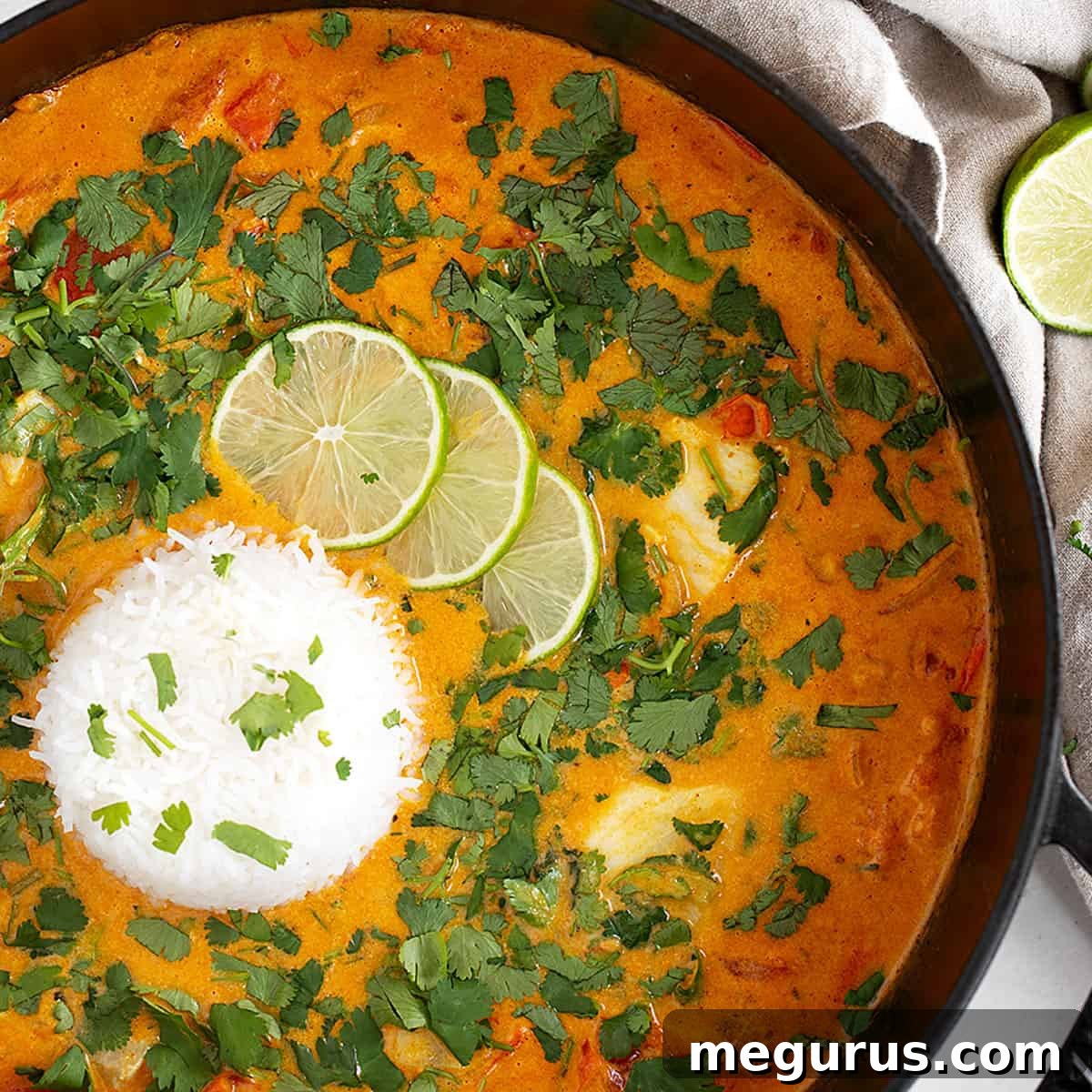
Embark on a culinary adventure with this exquisitely flavorful Coconut Fish Curry, a dish that promises a delightful escape to the vibrant coasts of Kerala, India. This incredible recipe transforms simple whitefish into a luxurious meal, bathed in a rich, Indian-spiced curry infused with fresh tomatoes, creamy coconut milk, and a generous scattering of fresh cilantro. The best part? This sensational dinner can be on your table, ready to savor, in under 30 minutes, making it the ultimate weeknight wonder for busy food lovers!
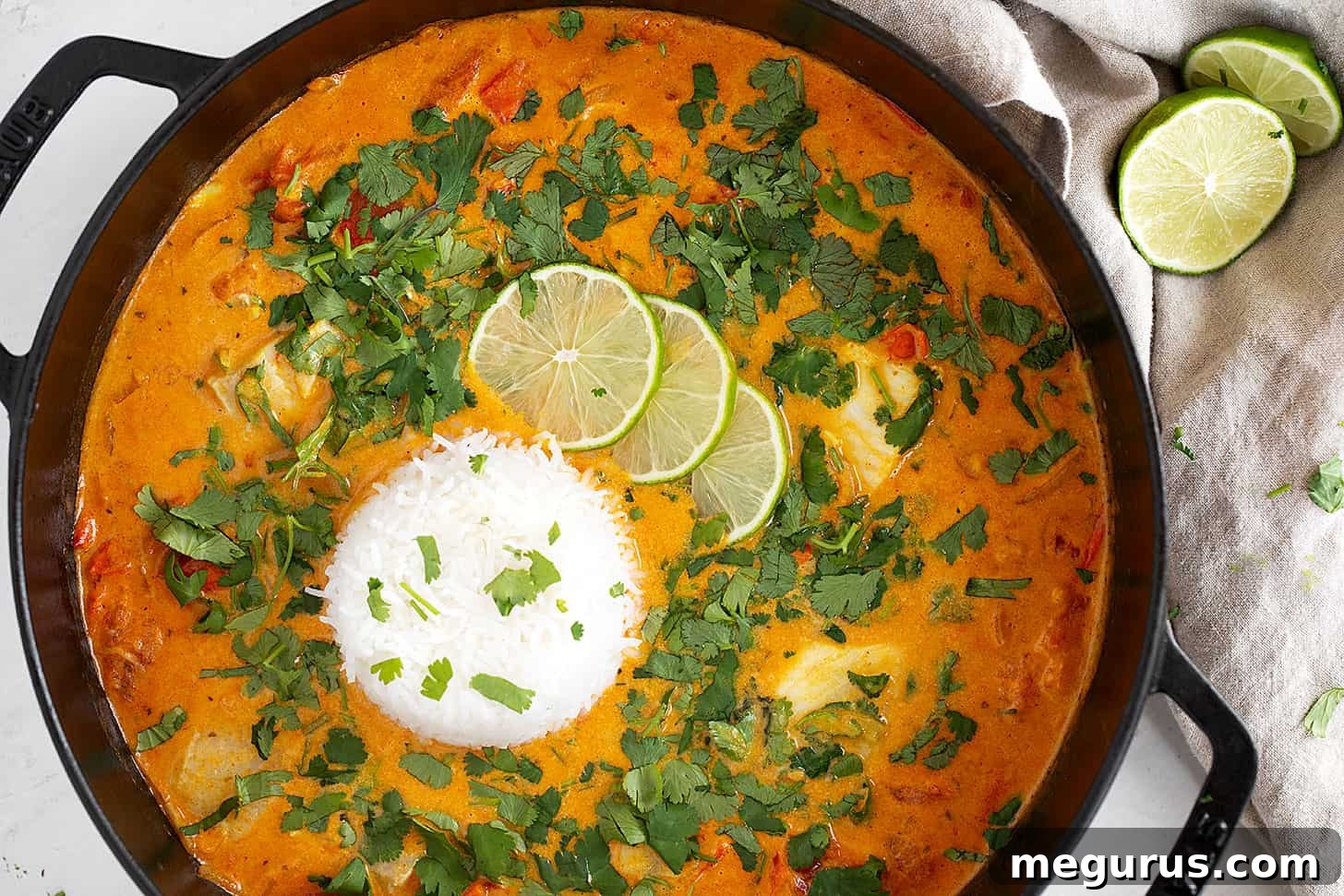
Originating from the sun-kissed backwaters and lush spice plantations of Kerala, a southern Indian state renowned for its diverse and aromatic cuisine, this Coconut Fish Curry is more than just a meal; it’s an experience. Its appeal lies not only in its profound taste but also in its remarkable simplicity and speed. Crafted in a single pan with just a handful of readily available ingredients, this dish is a testament to how accessible authentic, gourmet flavors can be. It’s an exceptionally delicious way to incorporate more fish into your diet, offering a perfect balance of savory, spicy, and tangy notes that will tantalize your taste buds.
Crafting Your Kerala Coconut Fish Curry: Essential Ingredients
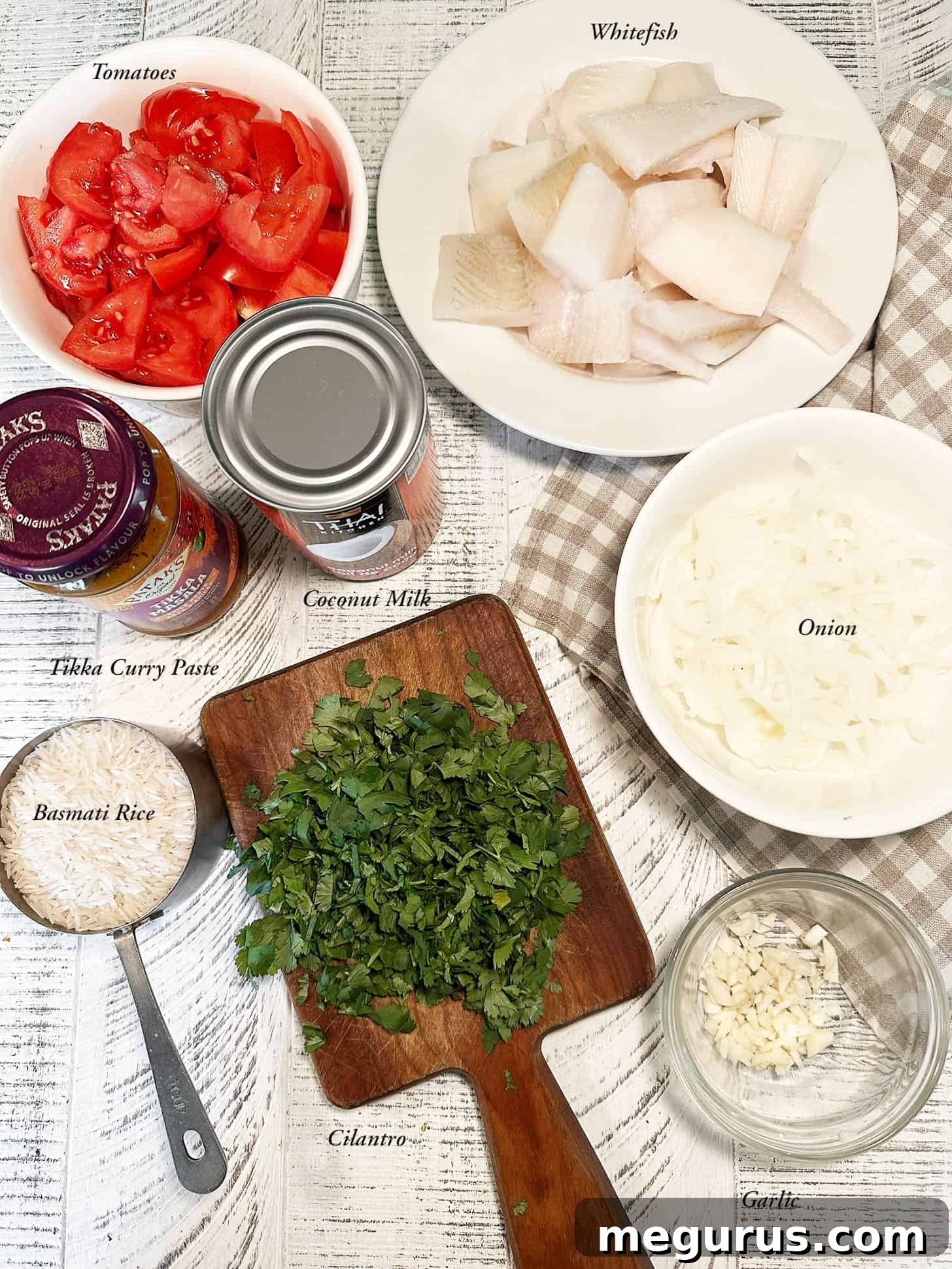
The magic of this Kerala-style fish curry lies in its fresh, high-quality ingredients that come together to create a symphony of flavors. Here’s a closer look at what you’ll need to assemble this culinary masterpiece, along with some helpful tips for selection and preparation:
Choosing Your Whitefish
The star of our curry, whitefish, is incredibly versatile. You can use almost any firm, flaky whitefish that you enjoy. Both fresh and frozen fish work beautifully; if using frozen, there’s no need to thaw it beforehand, just add it directly to the simmering sauce. The primary difference will be a slight adjustment in cooking time—thicker fillets or frozen pieces will require a few extra minutes to cook through. Excellent choices that hold up well in a curry and absorb the flavors include:
- Haddock: Known for its mild flavor and fine flake, haddock is a superb choice for curries.
- Halibut: A premium option, halibut offers a firm texture and sweet, delicate flavor.
- Cod: Flaky and tender, cod is a popular and readily available fish that’s perfect for curries.
- Tilapia: A milder, more affordable option that’s widely available and cooks quickly.
- Flounder: Delicate and thin, flounder will cook very fast, so keep an eye on it to prevent overcooking.
Aim for boneless, skinless fillets cut into chunks, roughly 1-2 inches in size, for even cooking and easy serving.
The Role of Tomatoes
Fresh tomatoes are a game-changer in this curry, adding a vibrant acidity and a lovely texture that brightens the entire dish. We highly recommend using fresh, ripe tomatoes if they are in season and available. You’ll need approximately three medium-sized fresh tomatoes, chopped into bite-sized pieces. If fresh tomatoes aren’t an option, good quality canned diced tomatoes can be used in a pinch. Consider fire-roasted canned tomatoes for an added layer of smoky depth.
Coconut Milk: The Creamy Foundation
Coconut milk is the soul of this Kerala fish curry, providing its signature creamy texture and subtle sweetness. You can opt for either full-fat or reduced-fat coconut milk, depending on your preference for richness. Full-fat coconut milk will yield a more luxurious, velvety sauce, while reduced-fat will result in a lighter curry without sacrificing much flavor. Always remember to shake the can well before opening to ensure the cream and liquid are fully integrated.
Tikka Curry Paste: The Flavor Powerhouse
Tikka curry paste is your secret weapon for achieving authentic Indian flavors quickly and effortlessly. This paste is a blend of aromatic spices, ginger, garlic, and sometimes chilies, forming a concentrated flavor base. It’s widely available in the international or Indian food aisle of most supermarkets. Look for brands like Patak’s, which are commonly found. It’s crucial to select “curry paste” and not a “cooking sauce,” as sauces are often pre-diluted and lack the intensity needed. If Tikka paste isn’t available, a similar Indian curry paste such as Madras (for a spicier kick) or Korma (for a milder, sweeter profile) would also work wonderfully.
Other Essential Aromatics and Fresh Herbs
Beyond the main ingredients, a few other pantry staples lay the foundation for this curry’s incredible depth:
- Cooking Oil: A neutral-tasting oil like vegetable, canola, or sunflower oil is best for sautéing the aromatics without imparting its own strong flavor.
- Onions: Sliced onions, cooked until soft and lightly golden, create a sweet, savory base for the curry sauce. They caramelize slightly, adding natural sweetness.
- Garlic: Freshly chopped garlic provides a pungent, aromatic punch that is indispensable in Indian cooking. You can also add a knob of grated fresh ginger for an extra layer of warmth and complexity.
- Fresh Cilantro: This bright, citrusy herb is more than just a garnish; it’s integral to the fresh taste of this curry. A generous amount of roughly chopped cilantro stirred in at the end, and perhaps a little extra for garnish, lifts all the flavors and adds an irresistible freshness.
Step-by-Step Guide: How to Make Coconut Fish Curry
Creating this delicious Kerala Coconut Fish Curry is a straightforward process, even for novice cooks. Follow these simple steps to bring this vibrant dish to life in your kitchen.
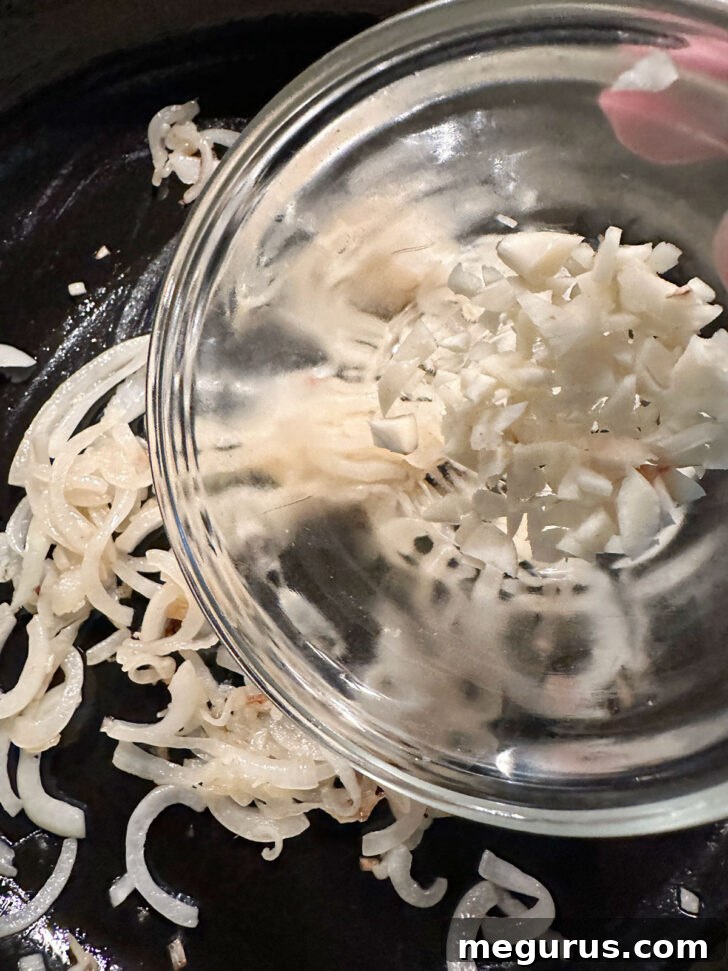
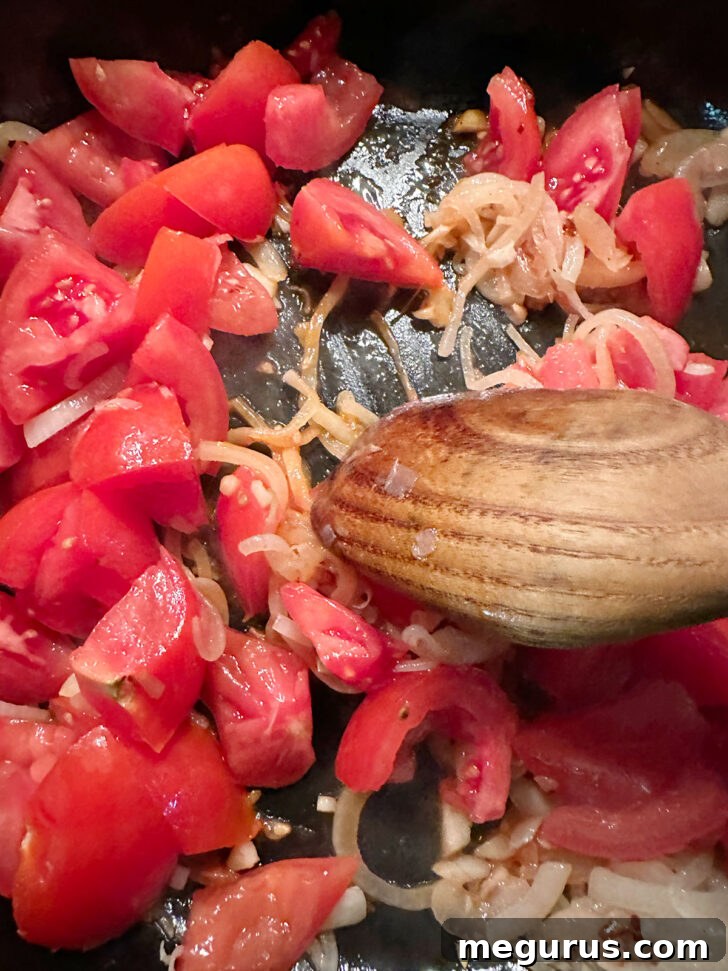
- Build the Flavor Base: Begin by heating a neutral-tasting cooking oil in a large skillet or Dutch oven over medium heat. Add the thinly sliced onions and cook, stirring occasionally, until they soften and just begin to turn translucent and develop a light golden color, typically 5-8 minutes. This gentle sautéing sweetens the onions, forming a crucial foundation for the curry. Next, stir in the chopped garlic (and grated ginger, if using) and cook for another minute until fragrant. Be careful not to burn the garlic.
- Infuse with Tomatoes: Add the chopped fresh tomatoes to the skillet. Continue to cook for a couple of minutes, stirring often, until the tomatoes begin to soften and release their juices. This step helps to mellow their acidity and integrate them into the aromatic base.
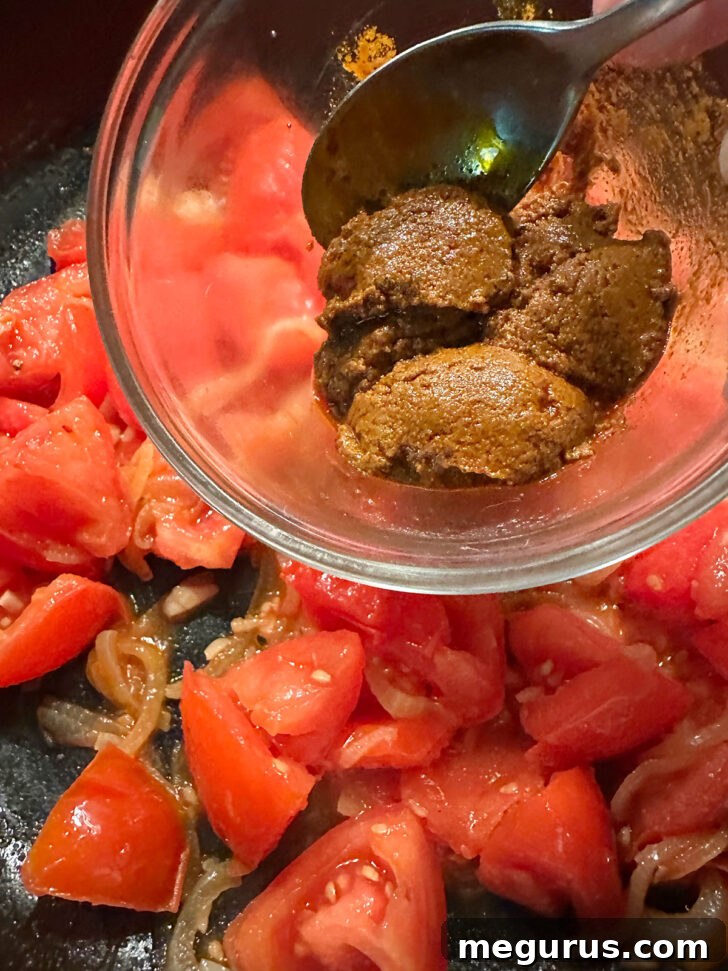
- Toast the Curry Paste: Incorporate the Tikka curry paste into the skillet. Cook, stirring constantly, for another 2 minutes. This brief toasting period is essential as it “blooms” the spices in the paste, intensifying their flavors and aromas before the liquid is added, ensuring a more deeply flavored curry.
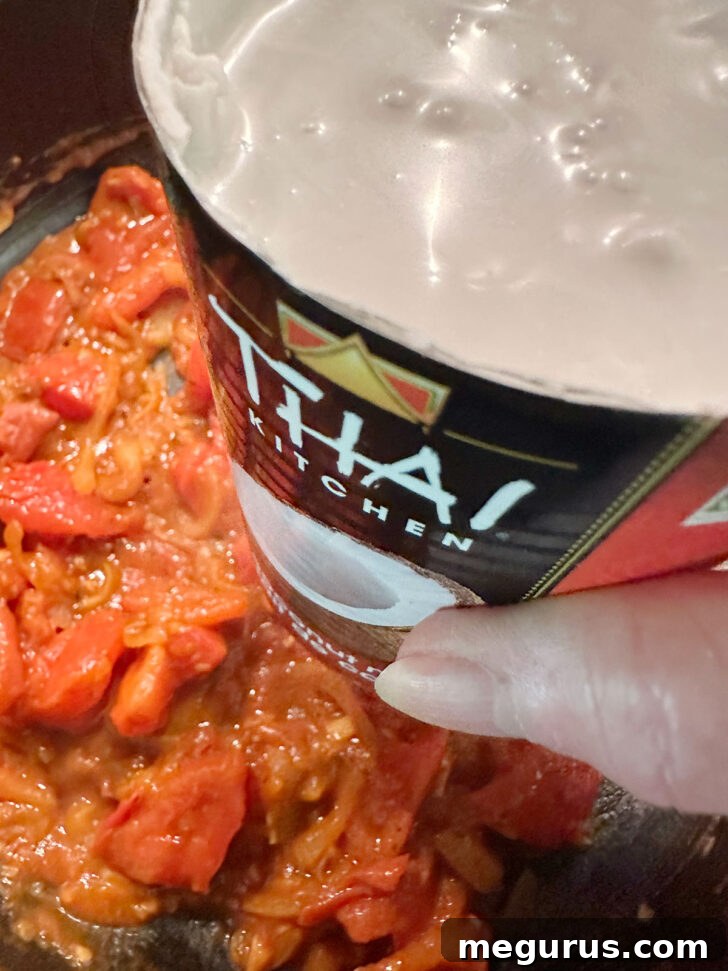
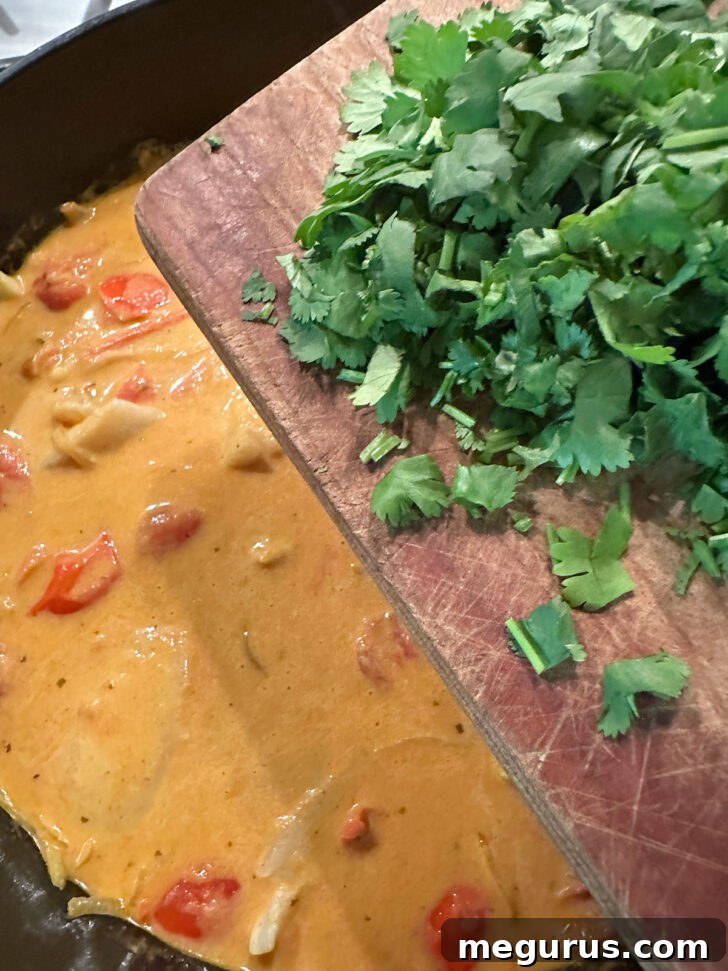
- Create the Curry Sauce: Pour the full can of coconut milk into the skillet. Stir thoroughly to combine all the ingredients and bring the sauce to a gentle boil over medium heat. Once boiling, reduce the heat to medium-low to maintain a gentle simmer.
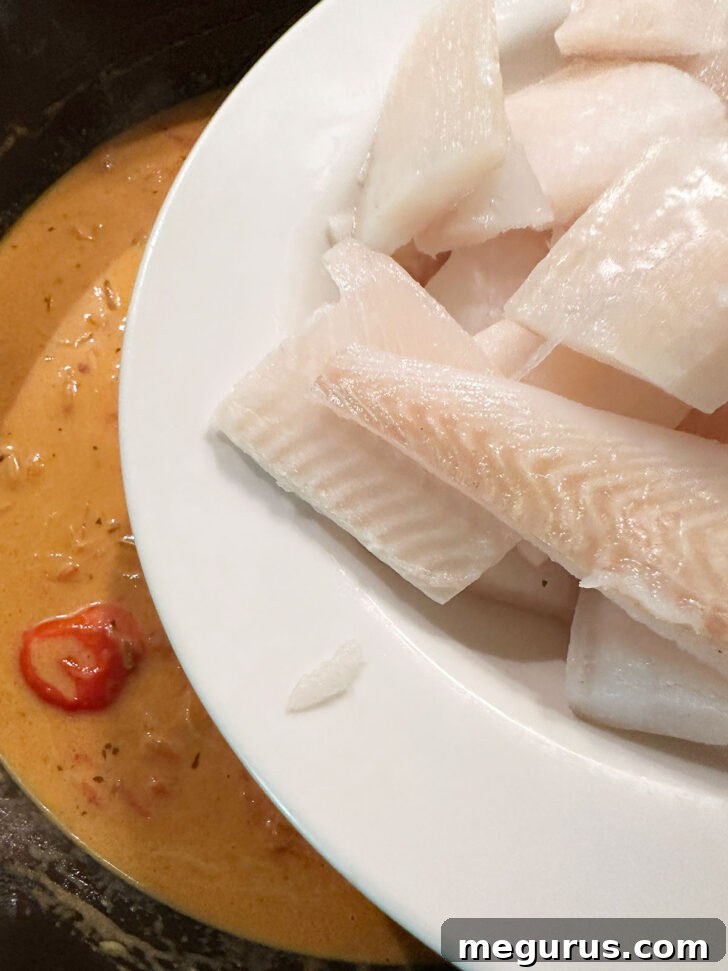
- Cook the Fish: Carefully add the whitefish chunks to the simmering curry sauce. Ensure the fish is mostly submerged in the liquid. Allow the fish to poach gently in the sauce for 5-8 minutes, or until it is cooked through and flakes easily with a fork. Cooking time will vary based on the thickness of your fish fillets and whether they are fresh or frozen. Be careful not to overcook the fish, as it can become tough.
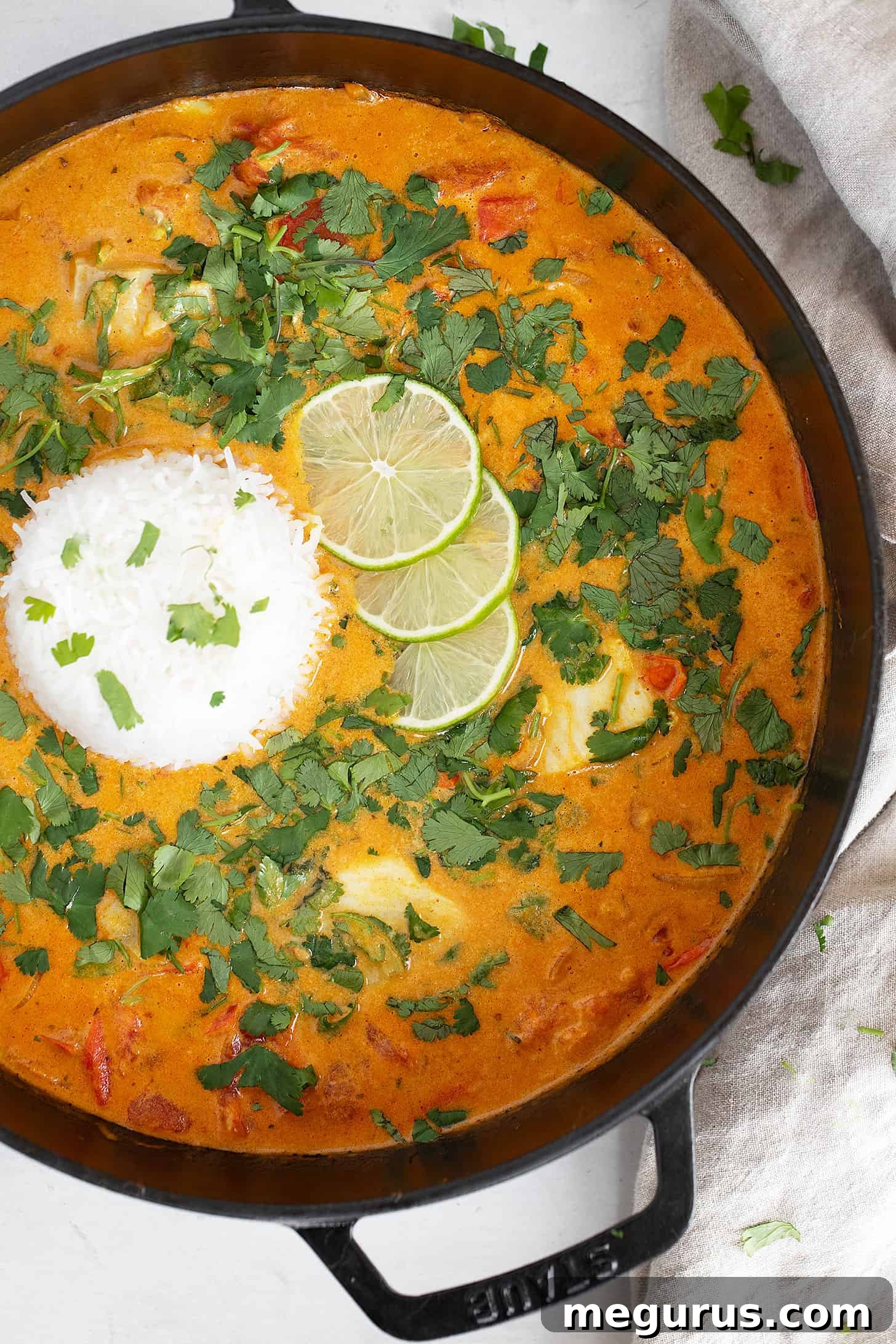
- Finish and Serve: Turn off the heat. Stir in a generous amount of fresh, roughly chopped cilantro. Taste the sauce and add salt as needed to enhance all the wonderful flavors. Serve your Kerala Coconut Fish Curry immediately with fluffy basmati rice, warm naan bread for dipping, and a wedge of fresh lime for a squeeze of brightness. Enjoy this truly satisfying and aromatic meal!
Recipe Video Guide
For a visual walkthrough of each step, watch our detailed recipe video. See exactly how the ingredients transform into this incredible curry, making your cooking process even easier and more enjoyable.
Expert Tips for Your Perfect Coconut Fish Curry!
Elevate your Coconut Fish Curry from great to extraordinary with these additional tips and serving suggestions:
- Boost Your Veggies: This curry is incredibly versatile for adding more vegetables. Green beans or peas are excellent choices and can be added directly to the simmering sauce during the last 5-10 minutes of cooking. Chopped cauliflower florets would also work well but might benefit from being blanched or lightly roasted beforehand to ensure they are tender. For quick additions, consider stirring in a handful of fresh spinach or kale during the final minute of cooking, allowing them to wilt into the sauce. Diced bell peppers or zucchini are also great additions for extra color and nutrition.
- The Perfect Accompaniment: While the curry is a star on its own, serving it with rice is a traditional and highly recommended way to enjoy it. Fluffy basmati rice is ideal for soaking up every last drop of the rich, aromatic sauce.
- Seasoning is Key: Don’t underestimate the power of salt and a final taste test. Curries often benefit from a final adjustment of seasoning, as the flavors meld and deepen during cooking. Taste the sauce at the end and add salt as needed to truly bring out the full spectrum of flavors. A squeeze of fresh lime juice just before serving can also add a bright, zesty finish that beautifully complements the creamy curry.
- Naan for Dipping: For an authentic and incredibly satisfying experience, serve your coconut fish curry with warm naan bread. The soft, chewy bread is perfect for scooping up the delicious, plentiful sauce, ensuring no flavor goes to waste. Chapati or roti are also excellent alternatives.
- Adjusting Spice Levels: If you prefer a spicier curry, you can add a pinch of red chili flakes or a finely chopped green chili along with the garlic and onions. For a milder version, choose a less spicy curry paste or reduce the amount you use.
- Garnish for Freshness: Beyond cilantro, consider garnishing with thinly sliced red onion, a few curry leaves, or a drizzle of coconut cream for an extra touch of elegance and flavor.
Making Ahead and Storing Your Curry
One of the fantastic qualities of this Kerala Coconut Fish Curry is that it can be prepared ahead of time, and the flavors often deepen and improve as they meld. You can cook the curry several hours in advance, or even the day before, and gently reheat it in a pan on the stovetop over low heat until warmed through. Be sure to cover the pan to prevent the sauce from drying out. Store any leftovers in an airtight container in the refrigerator for up to 2-3 days. While curries generally freeze well, fish can sometimes change texture upon freezing and reheating. If you plan to freeze, it’s best to freeze the sauce separately without the fish, then cook the fish fresh when reheating the sauce. Always ensure leftovers are reheated thoroughly to a safe temperature before serving.
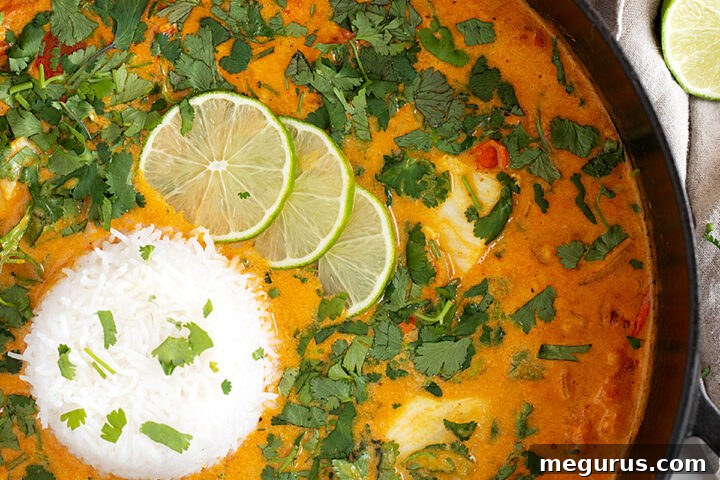
Get the Recipe: Flavorful Coconut Fish Curry
Pin This
Leave a Review
Ingredients
For the rice: (optional)
- 1 cup basmati rice
- 2 cups water
For the fish curry:
- 2-3 teaspoons neutral-tasting cooking oil
- 1 medium onions, peeled and thinly sliced
- 2 cloves garlic , chopped (optional: 1-inch fresh ginger, grated)
- 1 lb (454 g) fresh tomatoes, cut into chunks (about 3 medium tomatoes)
- 3 Tablespoons tikka curry paste
- 13.5 oz (400 ml) can coconut milk, full-fat or reduced-fat, well shaken
- 8 oz skinless, boneless white fish, such as cod, haddock, or halibut, cut into 1-2 inch chunks
- 1/2 cup fresh cilantro, roughly chopped
- Salt, to taste
For serving:
- Lime slices or wedges
- Naan bread (optional)
Instructions
-
If serving with rice, prepare 1 cup of basmati rice with 2 cups of water according to package directions or your preferred method. This can cook while you prepare the curry.
-
Heat the cooking oil in a large skillet or Dutch oven over medium heat. Add the thinly sliced onions and cook, stirring frequently, until they are softened and just beginning to turn golden, about 5-8 minutes. Add the chopped garlic (and grated ginger, if using) and cook for another minute until fragrant. Stir in the chopped fresh tomatoes and cook for about 2 minutes to soften. Add the tikka curry paste to the skillet and cook, stirring constantly, for 2 minutes to toast the spices and deepen the flavor.
-
Pour in the coconut milk and stir well to combine all ingredients. Bring the sauce to a gentle boil over medium heat, then reduce the heat to medium-low to maintain a gentle simmer. Carefully add the white fish chunks to the simmering sauce, ensuring they are mostly submerged. Let the fish simmer gently for 5-8 minutes, or until it is cooked through and flakes easily with a fork. Adjust cooking time for thicker or frozen fish.
-
Turn off the heat. Taste the sauce and season with salt as needed to truly enhance the flavors. Stir in the fresh, roughly chopped cilantro. Serve immediately with warm basmati rice, naan bread, and fresh lime wedges, as desired.
Notes
Whitefish: Any firm whitefish works well here, including haddock, halibut, cod, tilapia, or flounder. You can use fresh or frozen fish (cook directly from frozen). Adjust simmering time accordingly; thicker or frozen pieces will require a few more minutes.
Tomatoes: Fresh tomatoes are recommended for their bright flavor and texture. If unavailable, canned diced tomatoes can be used. Approximately 3 medium fresh tomatoes are needed.
Tikka Curry Paste: This paste is essential for the authentic flavor. Ensure you select “curry paste” and not a “cooking sauce.” Brands like Patak’s are commonly found. Madras curry paste can be used as an alternative for a spicier kick.
Recipe Tips:
– To add more vegetables, consider green beans, peas, or blanched cauliflower florets. Add them to the simmering sauce for the last 5-10 minutes.
– The curry benefits greatly from tasting and adjusting salt at the end. A squeeze of fresh lime juice can also brighten the flavors.
– Serve with basmati rice and warm naan bread for a complete and satisfying meal.
– For more detailed tips on ingredients, cooking, and serving, please refer to the sections above the Recipe Card.
This recipe has been thoughtfully adapted from a delightful Good Food recipe.