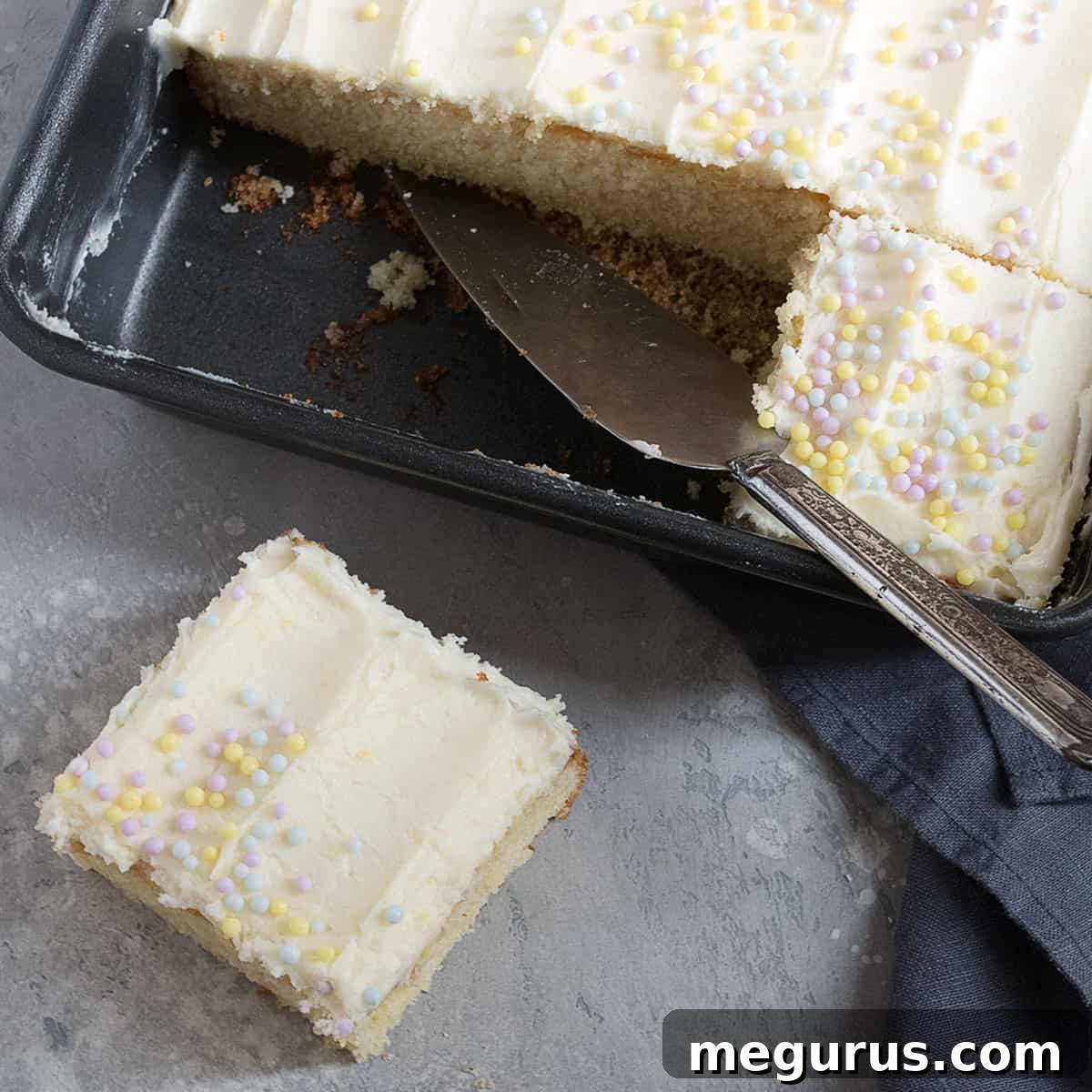
Ultimate Lemon Sheet Cake with Zesty Lemon Buttercream Frosting
Prepare to impress with this wonderfully light and moist lemon sheet cake, generously crowned with a vibrant, tangy lemon buttercream frosting. This impressive yet incredibly easy-to-make dessert is an absolute crowd-pleaser, ideal for any large gathering or celebration. What’s more, its make-ahead and freezer-friendly nature makes it a fantastic option for effortless entertaining, allowing you to enjoy your event without last-minute kitchen stress.
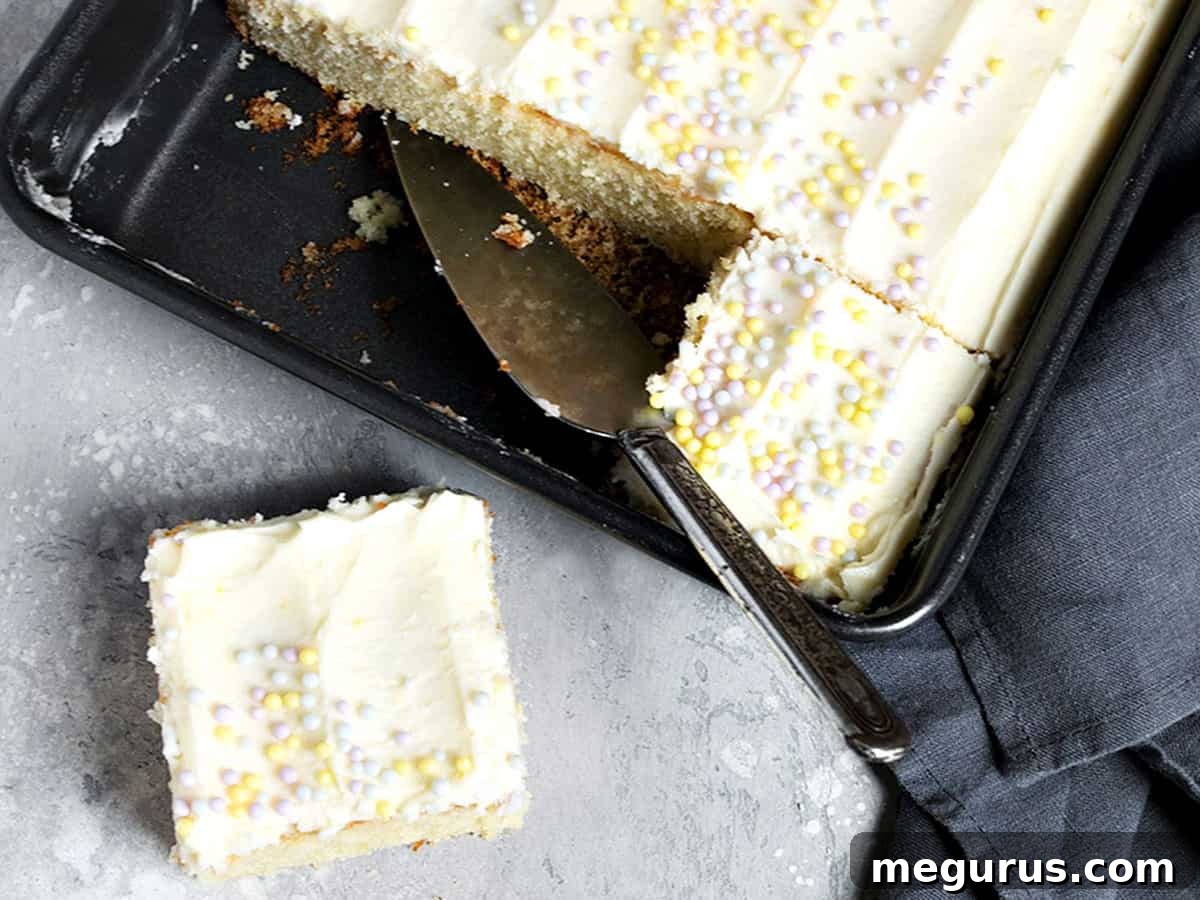
This lemon sheet cake isn’t just delicious; it’s a testament to simple elegance. It’s designed to be effortlessly beautiful and can comfortably serve 15 people, with the flexibility to stretch even further if needed. Its inherent ease of preparation, compared to more complex layer cakes, makes it a go-to recipe for both novice and experienced bakers. The convenience extends beyond baking day, as this cake can be prepared entirely in advance. You can bake the cake and freeze it unfrosted, or go a step further by frosting the entire cake before freezing. When your special occasion arrives, simply thaw, add any final decorative touches, and serve a dessert that tastes freshly baked.
One of the primary advantages of baking a sheet cake is its streamlined process. While layer cakes often demand meticulous assembly and delicate handling, a sheet cake simplifies baking without compromising on flavor or presentation. However, regardless of the cake style, a few fundamental principles can significantly elevate your baking game, ensuring every cake you create is nothing short of delicious and visually appealing.
Essential Ingredients for the Perfect Lemon Sheet Cake
Achieving a truly outstanding lemon sheet cake starts with selecting the right ingredients and understanding their roles. Here’s a deeper dive into the key components and potential substitutions:
Lemon: The Star of the Show
For an unparalleled burst of fresh, authentic lemon flavor, freshly squeezed lemon juice is paramount. Bottled lemon juice simply cannot replicate the brightness and complexity that fresh lemons impart. Always remember to zest your lemons *before* you cut and squeeze them for juice; it’s much easier to zest a whole, firm lemon. For both the cake and the luscious lemon buttercream frosting, you’ll need approximately 1/2 cup of freshly squeezed lemon juice, which typically comes from about two large lemons. Additionally, the recipe calls for a total of 7 teaspoons of finely grated lemon zest – roughly the zest of three large lemons. Therefore, it’s wise to start with at least three large, juicy lemons on hand to ensure you have enough for both components.
Milk: The Foundation of Moisture
Whole milk is highly recommended for this recipe due to its higher fat content (typically 3-3.5% butterfat). The fat in whole milk contributes significantly to the cake’s moist crumb and rich texture. If whole milk isn’t readily available, you can easily create a suitable substitute by mixing a lower-fat milk (like 2% or skim) with a small amount of heavy cream. This combination will help restore the desired fat content, ensuring your cake maintains its delightful tenderness.
Butter: The Heart of Richness
Always opt for unsalted butter for baking, as it gives you complete control over the salt content in your recipe. Ensure your butter is at true room temperature, which is crucial for achieving the perfect creamy texture when combined with sugar. We’ll delve deeper into what “room temperature” butter truly means in our baking tips section.
Eggs: The Binding and Leavening Agents
Like butter, large eggs should be at room temperature. Room temperature eggs emulsify better with the butter and sugar mixture, leading to a smoother batter and a more evenly textured, tender cake. They also help to incorporate more air, contributing to the cake’s light and fluffy consistency.
Flour, Leavening, and Salt: The Structure and Lift
All-purpose flour provides the primary structure for the cake. While not explicitly stated to sift in the original, sifting flour can lead to a lighter, airier cake. Baking powder and baking soda are the leavening agents responsible for the cake’s rise and tender crumb. Ensure they are fresh for optimal effectiveness. Coarse kosher salt balances the sweetness and enhances all the flavors. If using fine salt, adjust the quantity slightly, as fine salt is denser. Also, if your butter is salted, reduce the added salt.
Recipe Preparation and Make-Ahead Strategies
Preparing Your Baking Pan
For an impeccable presentation and effortless slicing, especially if you plan to remove the entire cake from the pan, I highly recommend lining your 9×13-inch baking pan with parchment paper. Leave a generous overhang on the long sides; these “handles” will allow you to easily lift the cooled cake out of the pan. Even if you intend to serve the cake directly from the pan, a light greasing and flouring can prevent sticking, but parchment paper offers superior release. Remember, patience is key: ensure the cake has cooled completely before attempting to remove it from the pan to avoid any breakage.
Making Ahead and Freezing
This lemon sheet cake is remarkably versatile when it comes to make-ahead preparation, making it perfect for busy schedules or future events. You have two excellent options for freezing:
- Freezing the Unfrosted Cake: Bake the cake as directed and allow it to cool completely. Once cool, wrap the entire cake (still in its pan, or removed and wrapped securely) in several layers of plastic wrap, followed by a layer of aluminum foil. This double protection helps prevent freezer burn. Store in the freezer for up to 2-3 months. To thaw, simply transfer the wrapped cake to the refrigerator overnight, then bring it to room temperature before frosting.
- Freezing the Frosted Cake: If you prefer to have the cake completely ready, you can also freeze it after frosting. Once the cake is fully frosted, place the entire pan (uncovered) in the freezer for about 1-2 hours, or until the frosting is firm. This “flash freezing” prevents the frosting from sticking to the wrap. Then, wrap the cake securely in plastic wrap and aluminum foil, as described above. Store in the freezer for up to 1 month. When ready to serve, thaw the wrapped cake in the refrigerator overnight.
A crucial tip for freezing frosted cakes: always save any delicate sprinkles or decorations until after the cake has thawed. Moisture from thawing can cause colors to bleed into the icing, marring your beautiful presentation. Add fresh decorations just before serving for the best results.
Mastering the Art of Baking: Tips for a Better Cake
Baking a cake is often seen as an exact science, but with a few simple techniques and a deeper understanding of the process, you can consistently achieve professional-quality results. These tips are foundational for this lemon sheet cake and any other cake recipe you tackle:
-
Start with Room Temperature Ingredients: The Emulsification Secret
Unless a recipe specifically calls for cold ingredients, always begin with room temperature butter, eggs, milk, and any other dairy products like sour cream. This seemingly minor detail is incredibly important. Room temperature ingredients emulsify much more effectively, creating a smoother, more homogenous batter. This leads to a finer, more tender crumb and a cake that rises more evenly. Take these items out of the refrigerator at least 30-60 minutes before you plan to start baking.
-
Embrace the Kitchen Scale for Accuracy
If your recipe provides ingredient weights (grams or ounces), use them! Weight measurements are significantly more accurate and consistent than traditional cup measures, especially for dry ingredients like flour. A kitchen scale is an invaluable addition to any baker’s toolkit and will undoubtedly elevate your baking precision and results.
-
Testing Butter for True Room Temperature: The Finger Test
Knowing exactly when your butter is at the ideal “room temperature” is critical. To test, gently press down on the butter with your index finger. If your finger leaves a slight imprint without much resistance, your butter is perfect. If your finger makes no imprint, it’s still too cold and needs more time. Conversely, if your finger easily presses all the way through, the butter is too soft, almost melted, and will result in a less desirable finished product with a greasy texture. The ideal temperature for baking butter is around 65°F (18°C), which is often cooler than your actual room temperature (72°F/22°C).
-
The Art of Creaming Butter and Sugar: Don’t Skimp on Time
The “creaming” process, where butter and sugar are beaten together, is a cornerstone of most cake recipes. It’s not just about mixing; it’s about incorporating air into the mixture, which creates pockets that expand during baking, resulting in a light and airy cake texture. Beat the butter, sugar, and lemon zest for a full 3-5 minutes (or longer, if specified by the recipe) until the mixture is light in color and fluffy. To ensure you’re giving it enough time, set a timer – don’t guess!
-
Scrape Down the Bowl Thoroughly and Regularly
As you add subsequent ingredients to your cake batter, make a habit of regularly and thoroughly scraping down the sides and bottom of your mixing bowl. Use a flexible spatula to ensure all ingredients are fully incorporated. Bits of butter, sugar, or flour can sometimes cling to the bottom or sides of the bowl, leading to an uneven texture in your finished cake. If you’re using a stand mixer, remember to lower the bowl or raise the paddle attachment to reach the very bottom effectively.
-
Adjust Baking Time for Your Oven and Pan: Be Vigilant
Every oven is unique, and baking pans can vary in material and heat conductivity, meaning baking times are always approximate. Always set your timer for slightly less than the recipe suggests (e.g., 5-10 minutes early). Before opening the oven door, peek through the window. If the cake clearly isn’t baked (the center is sunken, or the top looks pale), reset the timer for another 5 minutes. If it looks close to done, carefully open the oven and insert a wooden skewer or cake tester into the center. It should come out clean, with no wet batter clinging to it. If it doesn’t, continue baking for a few more minutes and re-test until it’s clean.
-
Allow Complete Cooling Before Frosting: The Golden Rule
This tip is non-negotiable for a beautifully frosted cake. Allow the cake to cool completely in the pan on a wire rack before attempting to remove it or, more importantly, before frosting it. Even the slightest warmth in the cake will cause your frosting to melt, slide, and create a messy, unappealing result. Patience here pays off immensely in the final presentation.
Elevating Your Sheet Cake: Expert Frosting Tips
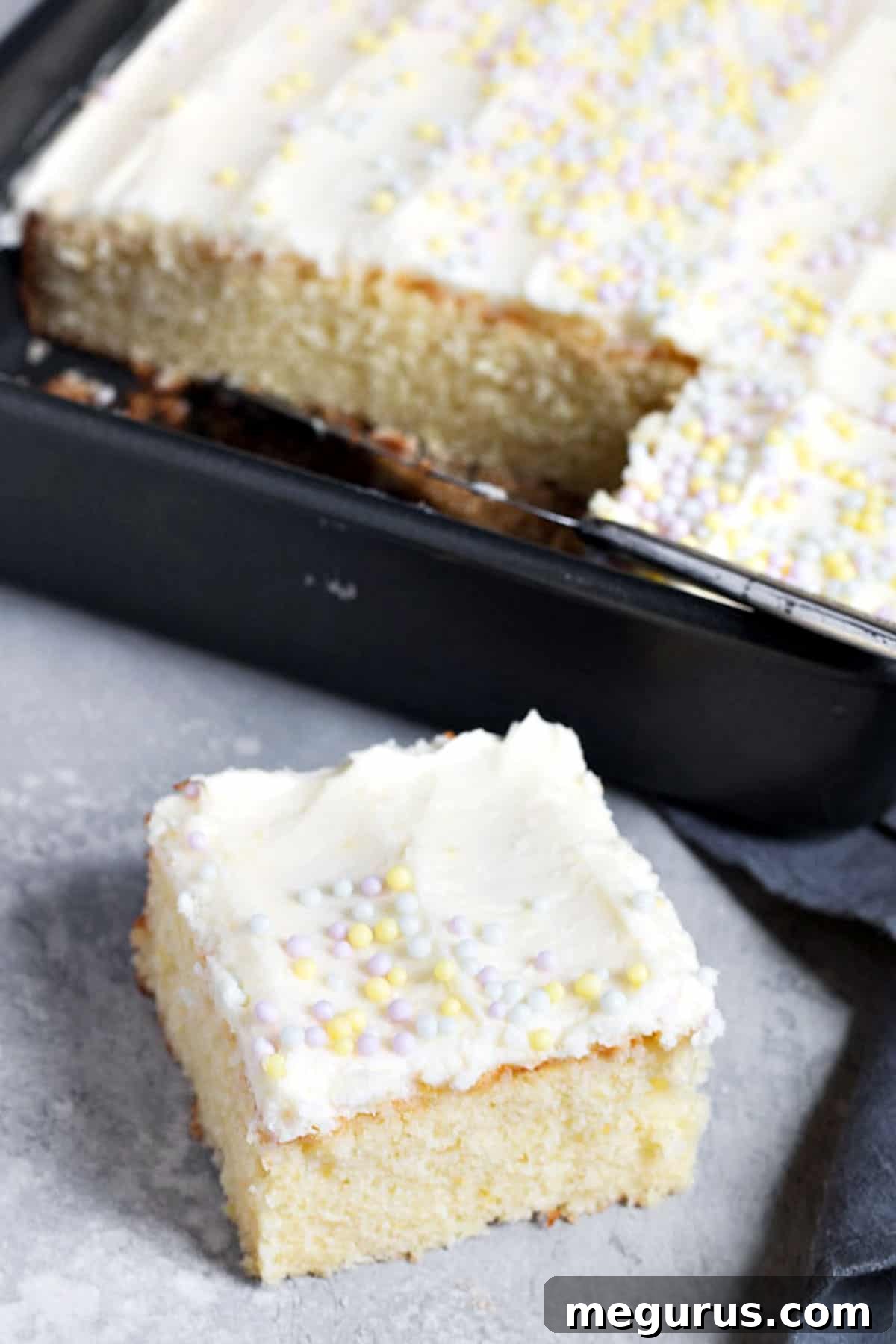
One of the true delights of baking a sheet cake is how incredibly simple it is to frost compared to its layered counterparts. While ease is a primary benefit, you can still achieve a stunning, professional-looking finish with a few smart techniques.
-
Frosting in the Pan: The Secret to Straight Edges
Even if your ultimate goal is to remove the cake from the pan for serving, the easiest way to achieve perfectly straight and even frosting edges is to frost the cake while it’s still in the pan. The sides of the pan act as natural guides, allowing the icing to nestle up against them, creating beautifully defined boundaries. This method helps maintain the cake’s structure and simplifies the spreading process.
-
Distribute Frosting Evenly to Avoid Crumb Contamination
Resist the urge to dump all the frosting in the center of your cooled cake. Instead, use a large spoon or an ice cream scoop to drop 5 or 6 evenly spaced mounds of frosting across the top of the cake. Then, using an offset spatula, gently spread the frosting together and out towards the sides. Apply very light pressure, ensuring you are only spreading the frosting and not scraping the top surface of the cake. This technique minimizes the risk of picking up cake crumbs and mixing them into your pristine frosting, keeping it smooth and crumb-free.
-
Effortless Decoration: Swirls and Textures
Once you’ve achieved an even layer of frosting across the entire cake, you can easily add decorative flair. For a simple yet elegant look, use the back of a spoon to create large, soft swirls across the surface. Alternatively, you can drag your offset spatula in various patterns for interesting textures. The key is to work relatively quickly and confidently. The frosting will begin to set, and overworking it can make it appear chunky or less appealing. A few smooth, decisive movements are usually best.
-
Creating Elegant Ridges: A Simple Technique
To replicate the sophisticated frosting pattern often seen on sheet cakes, first ensure your frosting is leveled smooth. Then, take the tip of your offset spatula and run it in straight lines from one end of the cake to the other. Space these lines evenly, leaving a small gap between each pass. As you drag the spatula, it will create subtle ridges, adding a lovely dimension and visual appeal to your frosted masterpiece.
-
The Art of the Sprinkle: Uneven is Often Prettier
If you choose to add sprinkles or other decorations, consider an “uneven” or artistic approach. Instead of a uniform coating, I find that sprinkling them diagonally from one corner to the opposite, then filling in the empty spaces with a lighter hand, creates a more organic and visually appealing effect. It adds a touch of whimsy and charm without feeling too rigid.
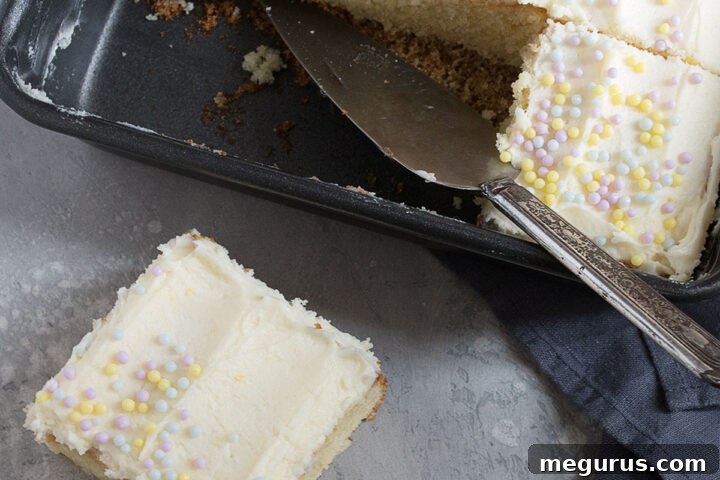
Get the Recipe: Lemon Sheet Cake with Lemon Buttercream Frosting
This light and moist lemon sheet cake, topped with a tangy lemon buttercream frosting, is a versatile dessert. It’s perfect for feeding a crowd and can be easily made ahead and/or frozen for convenience.
Rated 5 out of 5 stars by 9 readers.
Pin This
Leave a Review
Ingredients
For the Lemon Cake:
- 1 1/3 cups whole milk, 3% butterfat
- 1/4 cup lemon juice, freshly squeezed and strained (from about 1 large lemon)
- 3 cups all-purpose flour
- 1 1/4 teaspoons baking powder
- 3/4 teaspoon baking soda
- 1 teaspoon coarse kosher salt (or 3/4 tsp fine salt; less if using salted butter)
- 1 cup unsalted butter, at room temperature
- 2 cups granulated white sugar
- 4 teaspoons lemon zest, finely grated and packed (from about 2 lemons)
- 4 large eggs, at room temperature
For the Lemon Buttercream Frosting:
- 1 cup butter, at room temperature
- 3 1/2 cups icing/confectioners’ sugar
- 1 Tablespoon lemon zest (from about 2 lemons)
- 1/4 cup lemon juice, freshly squeezed and strained (from about 1 large lemon)
- Pinch salt
Instructions
- Prepare the cake: Preheat your oven to 350°F (175°C). Lightly grease a 9×13-inch baking pan. For easy removal and presentation, consider lining the pan with parchment paper, allowing an overhang on the long sides for lifting. Set the prepared pan aside.
- In a 2-cup measuring cup, whisk together the milk and freshly squeezed lemon juice. This creates a “buttermilk” effect, contributing to the cake’s tender crumb. Set this mixture aside.
- In a separate medium bowl, combine the dry ingredients: flour, baking powder, baking soda, and salt. Whisk them thoroughly to ensure they are evenly distributed. Set aside.
- In a large mixing bowl, or the bowl of a stand mixer fitted with the paddle attachment, cream together the room temperature unsalted butter, granulated white sugar, and finely grated lemon zest. Beat on medium-high speed for about 5 minutes, until the mixture is light, fluffy, and pale in color. Add the large eggs one at a time, beating for approximately 30 seconds after each addition until fully incorporated. Pause to scrape down the bottom and sides of the bowl with a rubber spatula, ensuring all ingredients are well combined.
- With the mixer on low speed, alternately add the dry flour mixture and the wet milk mixture to the creamed butter mixture in three additions. Begin and end with the flour mixture: add 1/3 of the flour, then 1/2 of the milk, followed by another 1/3 of the flour, the remaining milk, and finally the last 1/3 of the flour. Mix until just combined, being careful not to overmix. Finish incorporating any remaining ingredients by hand with a rubber spatula to ensure a uniform batter.
- Pour the prepared cake batter into your lined or greased 9×13-inch baking pan. Gently smooth the top surface of the batter with your spatula. Tap the pan lightly on the counter a few times to release any large air pockets, which helps create a more even cake structure.
- Bake for 35 to 40 minutes. The cake is done when it appears puffed and golden brown, and a wooden skewer or cake tester inserted into the center comes out clean. Once baked, remove the pan from the oven and allow the cake to cool completely on a wire rack before proceeding to frost. This step is crucial to prevent the frosting from melting.
- Prepare the frosting: In a clean large mixing bowl, or the bowl of a stand mixer with the paddle attachment, beat the room temperature butter for 1 minute until creamy. Add the icing/confectioners’ sugar, lemon zest, freshly squeezed lemon juice, and a pinch of salt to the bowl. Begin mixing on low speed until the icing sugar is fully incorporated and there are no dry spots. Increase the mixer speed to medium-high and beat for several minutes until the buttercream is light, fluffy, and smooth. If the frosting appears too thick, add a teaspoon or two of milk until it reaches your desired consistency. If it’s too thin, add a bit more icing sugar. The frosting should be smooth, slightly shiny, and hold its shape well.
- Frost the cake: Once the cake is completely cooled, use a large spoon or scoop to place 5 or 6 small mounds of lemon buttercream frosting evenly across the top. Using an offset spatula, gently spread the frosting outwards towards the edges of the cake, being careful not to pick up crumbs from the cake surface. Smooth the frosting for a clean finish or create decorative swirls with the back of a spoon or the tip of your spatula. Sprinkle with desired decorations, if any.
- Storage: The frosted lemon sheet cake will keep beautifully, covered at room temperature, for up to 2 days. For longer storage, as mentioned in the make-ahead section, the cake (frosted or unfrosted) can be frozen. Remember to add any delicate decorations only after thawing.
Notes
For additional valuable tips, alternative ingredient options, substitutions, and variations that can enhance this recipe, please make sure to read the detailed sections provided above the recipe card!
Nutrition Information
- Serving: 1 serving
- Calories: 464 kcal
- Carbohydrates: 63g
- Protein: 4g
- Fat: 22g
- Saturated Fat: 13g
- Cholesterol: 102mg
- Sodium: 300mg
- Potassium: 111mg
- Sugar: 46g
- Vitamin A: 730 IU
- Vitamin C: 3.6mg
- Calcium: 52mg
- Iron: 1.2mg
Tried this recipe?
If you enjoyed making and tasting this delightful lemon sheet cake, we would be thrilled if you could leave a star rating and comment below. Your feedback helps other home bakers discover and enjoy this wonderful recipe!