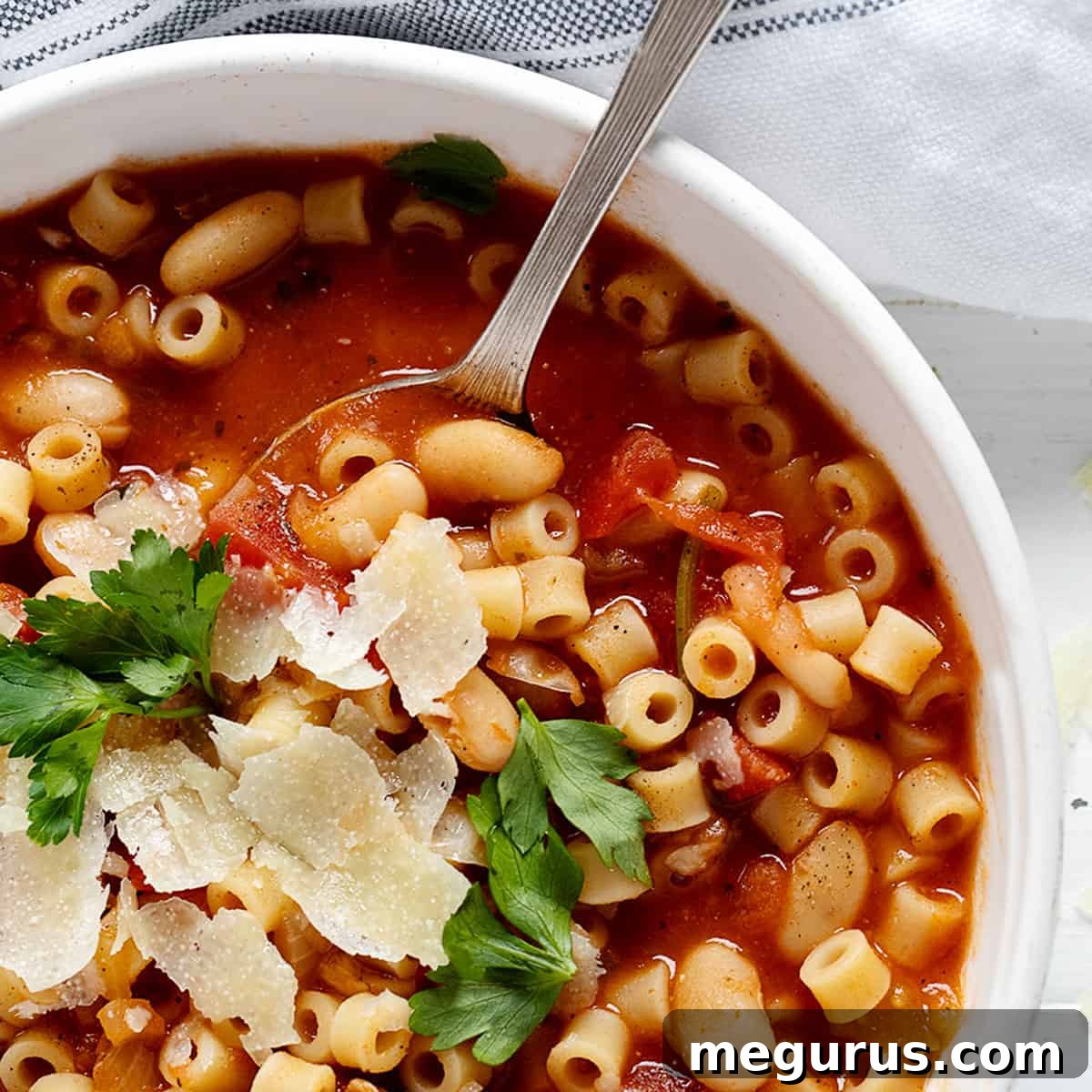
Authentic Pasta Fagioli: A Hearty Italian Classic
Discover the warmth and comforting flavors of traditional Pasta Fagioli, a beloved Italian pasta and bean soup that embodies rustic culinary charm. This incredibly satisfying dish, often translated as “pasta and beans,” is more than just a soup; it’s a hug in a bowl, perfect for chilly evenings or a nourishing lunch. Crafted from simple, wholesome pantry staples like canned tomatoes, hearty beans, and small pasta, it’s a testament to Italian ingenuity in creating profound flavor from humble ingredients. A touch of savory pancetta adds a delightful salty depth, complemented by the rich, umami notes of Parmesan or Pecorino cheese. Whether you enjoy it on its own for a hearty midday meal or paired with a crusty loaf of bread and a fresh green salad for a complete and delicious dinner, this Pasta Fagioli recipe promises to become a cherished favorite in your kitchen.
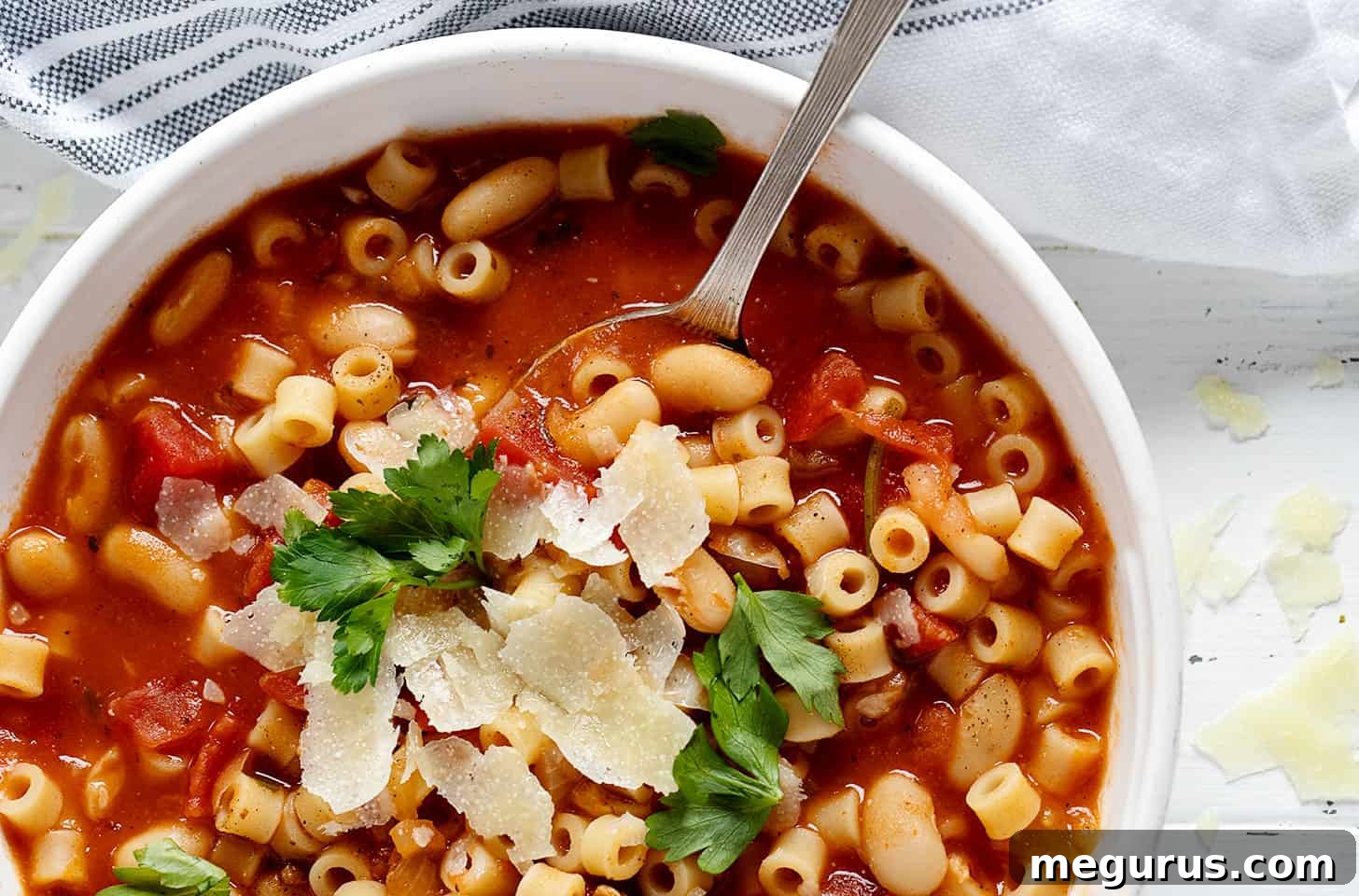
Pasta Fagioli, a staple in Italian homes for generations, is celebrated for its rich flavors and comforting texture. This recipe guides you through crafting an authentic version that is both easy to prepare and incredibly versatile, making it an ideal choice for busy weeknights or relaxed weekend cooking. Its reliance on readily available ingredients makes it a true “pantry soup,” meaning you likely have most components on hand already. The combination of tender pasta, robust beans, and a flavorful tomato broth creates a dish that is both nutritious and deeply satisfying. Beyond its delightful taste, Pasta Fagioli offers a glimpse into the heart of Italian home cooking, where simplicity and quality ingredients are paramount.
This hearty and easy Pasta Fagioli soup is perfect for a substantial lunch, providing sustained energy throughout the afternoon. To transform it into a more elaborate, yet still effortless, pantry dinner, simply serve it alongside a warm, crusty bread – perhaps even garlic bread for an extra treat – and a light, refreshing salad. The contrasting textures and flavors will elevate your meal, making it a delightful experience for the whole family. It’s a dish that warms you from the inside out, offering comfort and satisfaction with every spoonful.
Essential Ingredients for Your Classic Pasta Fagioli
The beauty of Pasta Fagioli lies in its straightforward ingredients, each playing a vital role in building its signature flavor profile. Here’s a closer look at the key components and helpful substitution notes to ensure your soup is always a success.
- Pancetta: This Italian cured pork belly is key to the authentic flavor of Pasta Fagioli, offering a salty, savory base. When rendered, it releases fat that is perfect for sautéing the aromatics. If pancetta isn’t available, diced bacon is an excellent substitute, providing a similar smoky and salty depth. For a vegetarian or vegan version, simply omit the pancetta and start by sautéing your vegetables in a good quality olive oil, perhaps adding a pinch of smoked paprika for a hint of smoky flavor.
- Canned Diced Tomatoes: These form the backbone of the soup’s rich, tangy broth. Diced tomatoes break down easily, integrating well into the soup. As an alternative, you can use whole canned tomatoes, which often have a slightly sweeter flavor. Simply hand-crush them directly into the pot before adding them to ensure they blend seamlessly with the other ingredients. Fresh tomatoes are also an option when in season, though they will require a bit more cooking time to soften and release their juices.
- Canned Cannellini Beans: Also known as white kidney beans, cannellini beans are traditionally used in Pasta Fagioli for their creamy texture and mild, earthy flavor. They hold their shape well during cooking and absorb the flavors of the broth beautifully. If cannellini beans are not on hand, don’t hesitate to use other varieties such as red kidney beans, navy beans, great northern beans, or pinto beans. Each will lend a slightly different character to the soup, but all will contribute to its hearty, comforting nature. Remember to rinse canned beans thoroughly before adding them to remove excess sodium and improve their texture.
- Chicken Broth: This liquid gold provides the essential savory foundation for the soup. A good quality chicken broth will enhance all the other flavors. For a vegetarian or vegan option, vegetable broth works perfectly and maintains the integrity of the dish. You can also use a low-sodium broth to have more control over the salt content, adjusting it to your preference at the end.
- Small Pasta: The “pasta” in Pasta Fagioli typically refers to small, short pasta shapes that are easy to eat with a spoon and blend well with the beans. Ditalini, meaning “little thimbles,” is a classic choice, but small shells, elbow macaroni, or even orzo would work wonderfully. The key is to use a pasta that doesn’t overwhelm the other ingredients and cooks relatively quickly. Ensure you don’t overcook the pasta, as it will continue to soften in the hot broth.
- Parmesan Rind: This is an optional but highly recommended secret ingredient that adds an incredible depth of umami and a subtle, nutty richness to the soup. The hard, often darker, outer layer of a Parmesan wedge, the rind, contains concentrated flavor that slowly infuses into the broth as it simmers. Many keen cooks save their Parmesan rinds in a bag in the freezer specifically for soups and stews. If you don’t have a rind, simply cut a small chunk of fresh Parmesan cheese and add it to the pot, removing it before serving. If fresh Parmesan is unavailable, stirring in a few tablespoons of grated Parmesan at the end can offer a similar flavor boost.
- Aromatics and Herbs: Diced onion and celery, along with finely minced garlic, form the classic Italian ‘soffritto’ base, building layers of flavor. Dried oregano and a pinch of red pepper flakes add aromatic warmth and a subtle kick, respectively. Fresh parsley is stirred in at the end to provide brightness and a fresh counterpoint to the rich soup.
- Tomato Paste: A concentrated burst of tomato flavor, tomato paste adds a robust depth and a beautiful reddish hue to the broth, enhancing the overall richness.
How to Prepare This Delightful Pasta Fagioli
Crafting this classic Italian soup is a straightforward and rewarding experience. This section offers a visual overview of the steps involved. For precise measurements and complete instructions, always refer to the detailed recipe card below.
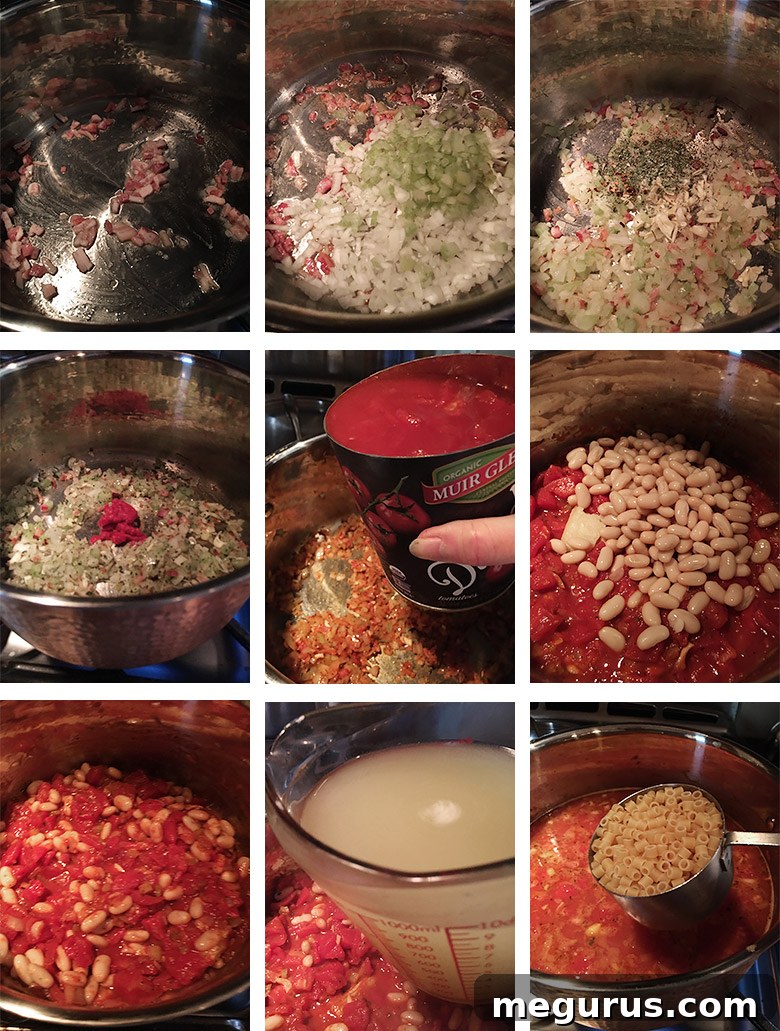
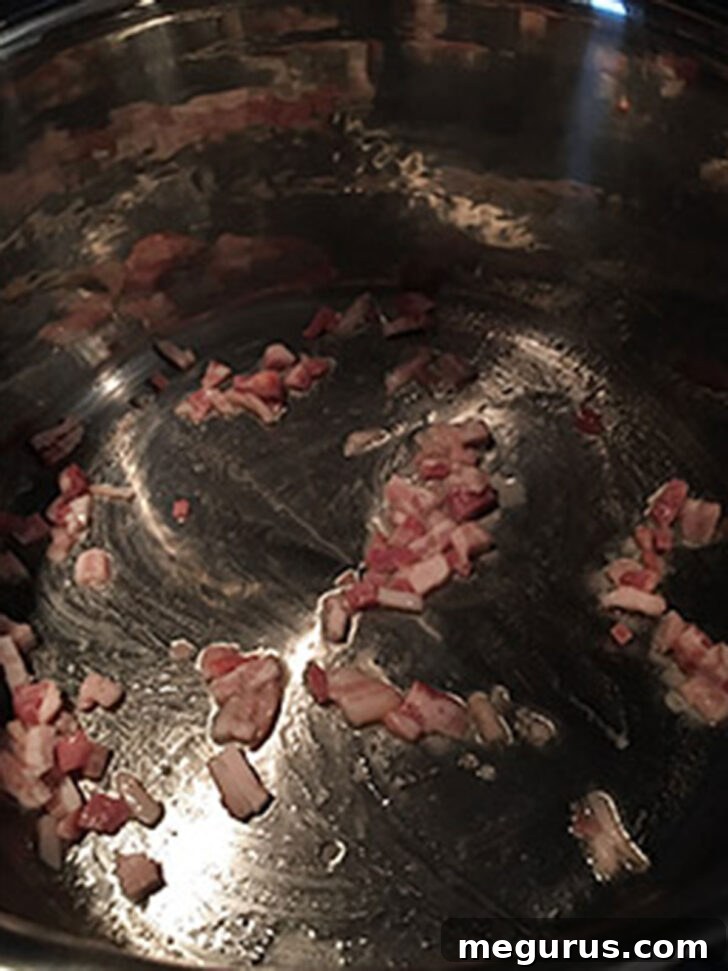
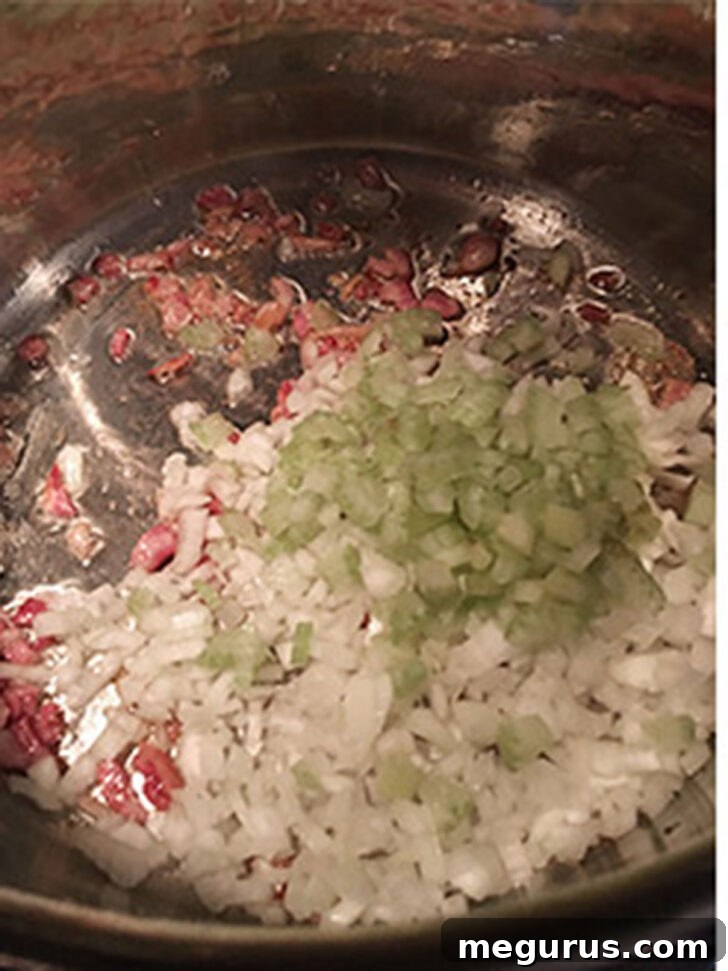
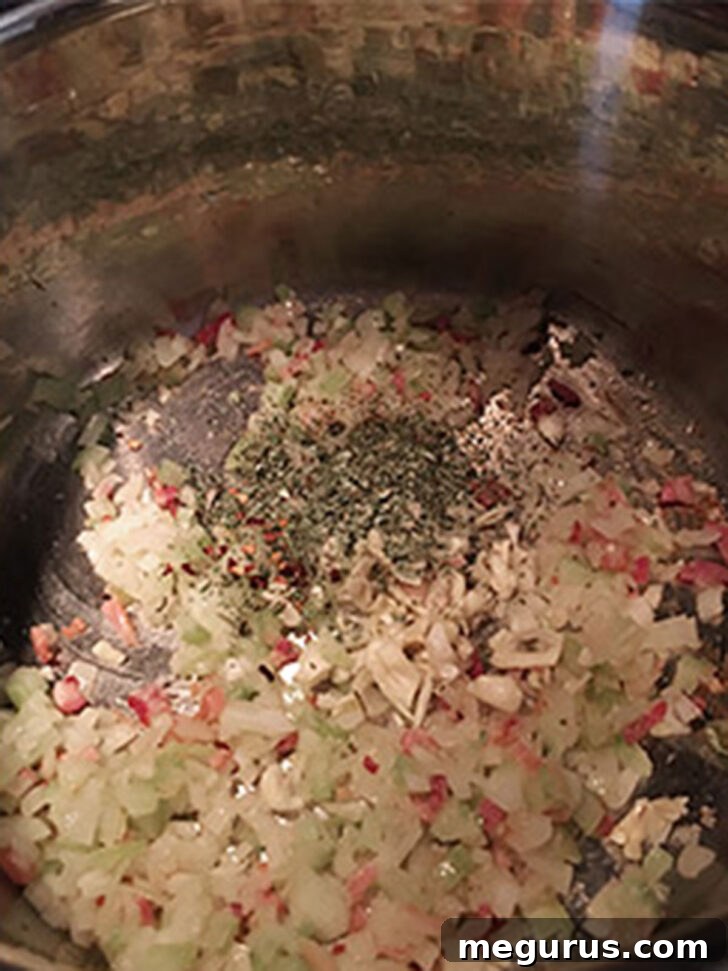
- Begin by heating a large, heavy-bottomed soup pot or Dutch oven over medium heat. Add the diced pancetta (or bacon) and cook, stirring occasionally, until it renders its fat and becomes nicely browned and crisp. This step is crucial for building a flavorful foundation for your soup. Once cooked, remove the pancetta with a slotted spoon and set aside, leaving the rendered fat in the pot.
- To the same pot, add the diced onion and celery. Cook these aromatic vegetables in the rendered pancetta fat (or olive oil, if vegetarian), stirring regularly, until they soften and become translucent, typically about 3-4 minutes. This process mellows their flavors and sweetens them.
- Stir in the finely diced garlic, dried oregano leaves, and a pinch of red pepper flakes (if using). Continue to cook for just another minute, stirring constantly, until the garlic becomes fragrant. Be careful not to burn the garlic, as it can turn bitter.
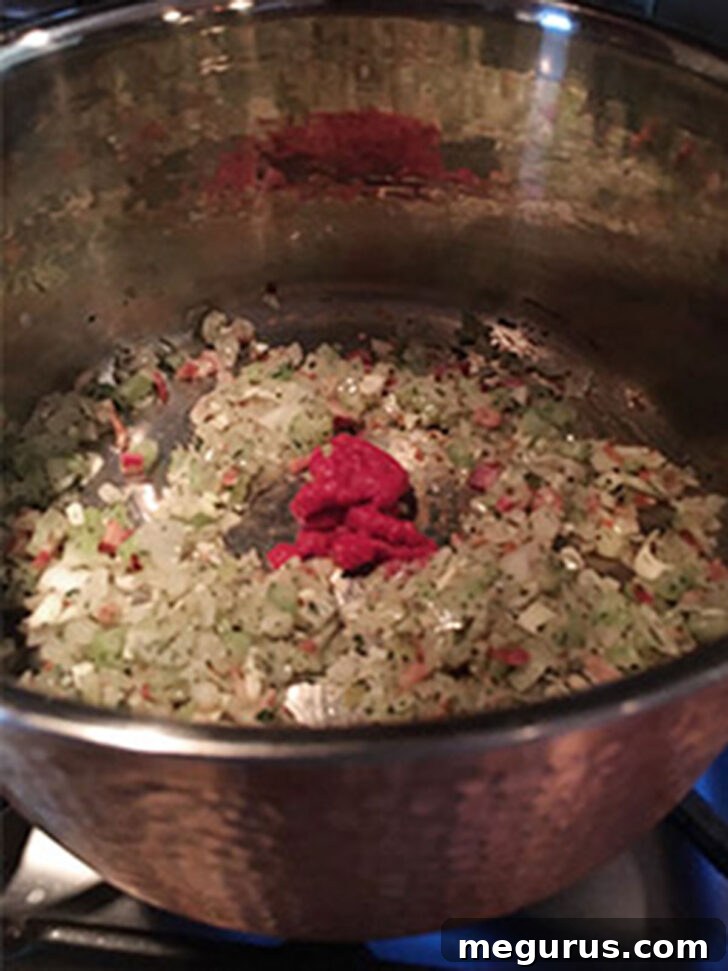
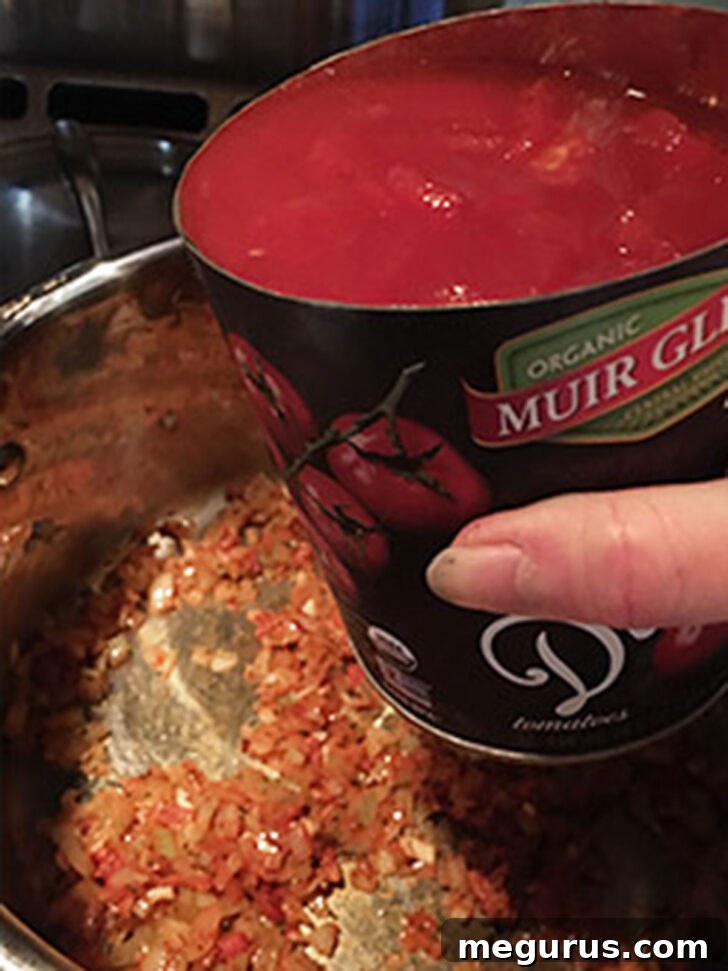
- Add the tomato paste to the pot. Cook, stirring constantly, for about 30-45 seconds. This step toasts the tomato paste, deepening its flavor and enhancing its sweetness, removing any raw tomato taste.
- Pour in the canned diced tomatoes, including their juices. Stir everything together well, ensuring the tomato paste is fully incorporated into the mixture.
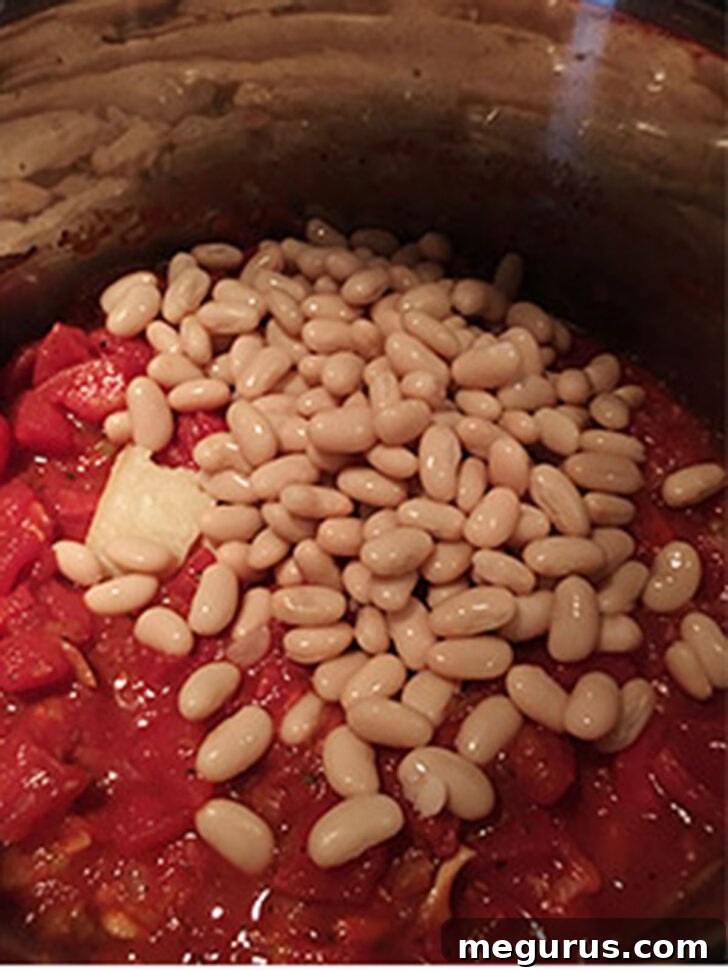
- Add the thoroughly rinsed cannellini beans (or your chosen bean type) to the pot. If you are using a Parmesan rind, add it now as well; it will release its delicious flavor as the soup simmers.
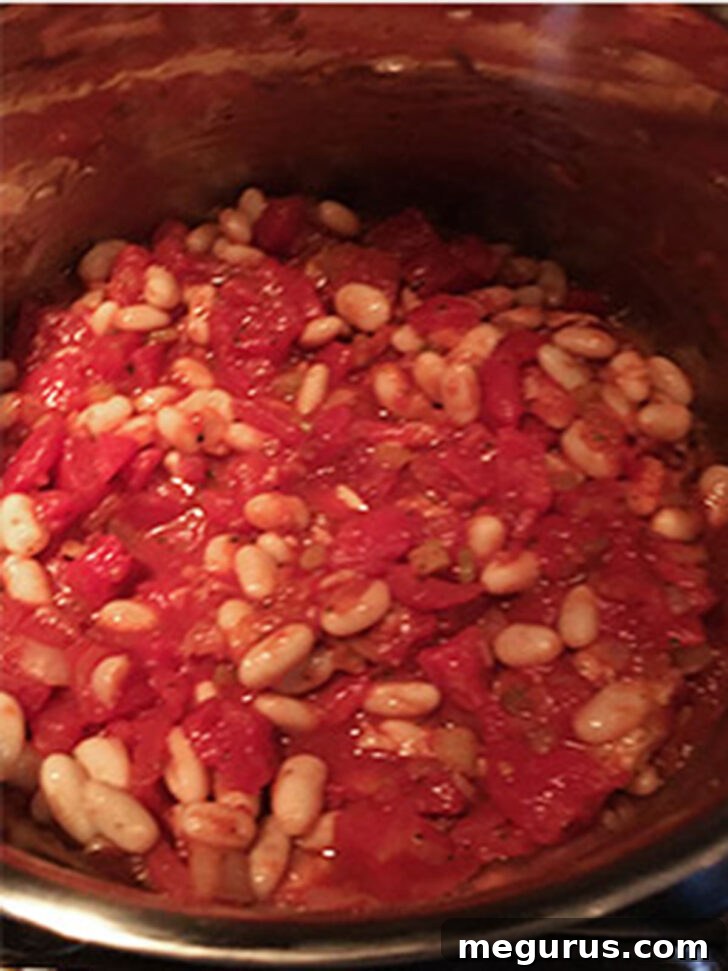
- Increase the heat slightly and bring the tomato and bean mixture to a gentle boil. Then, reduce the heat to medium-low and let it simmer for about 10 minutes. This simmering time allows the flavors to meld beautifully. *At this point, you can cool the mixture and refrigerate it to finish the soup later, if desired.
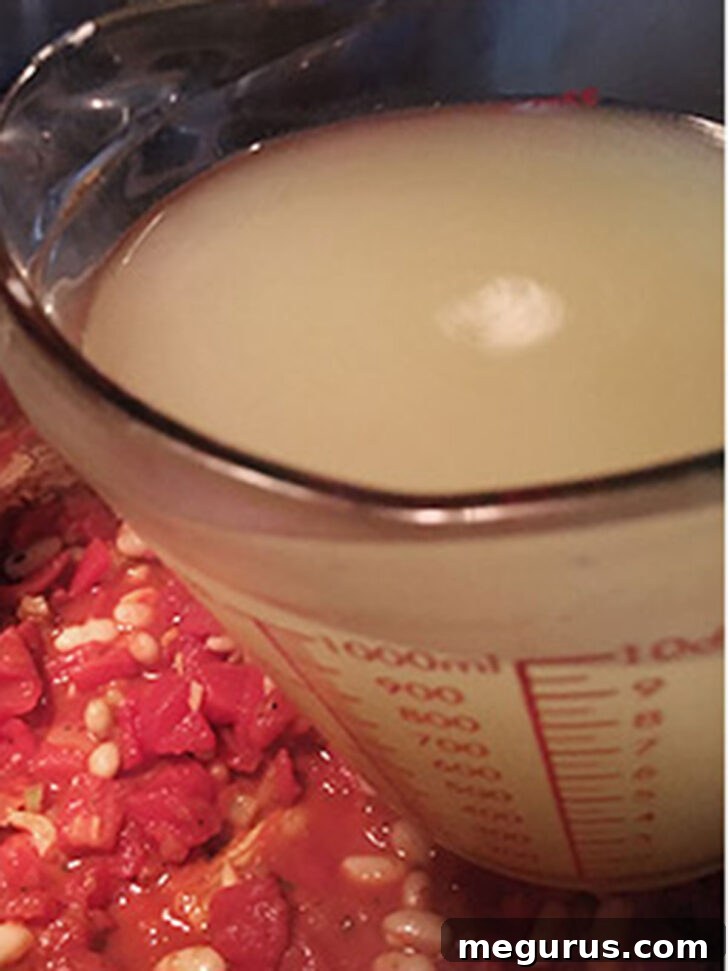
- Pour in the chicken broth (or vegetable broth). Increase the heat to medium-high and bring the entire mixture back to a rolling boil.
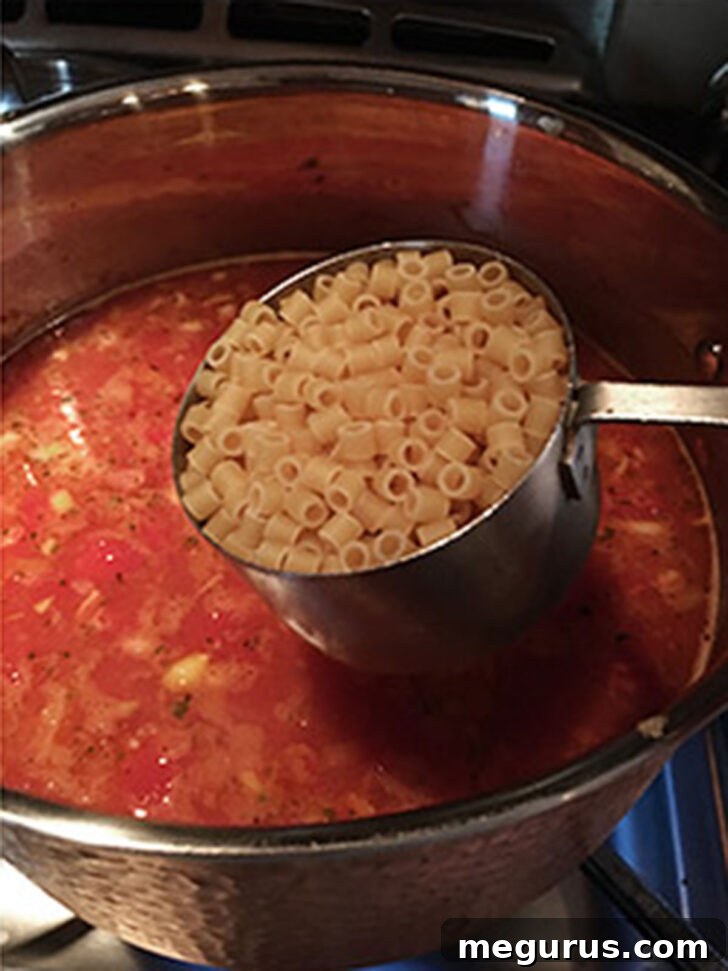
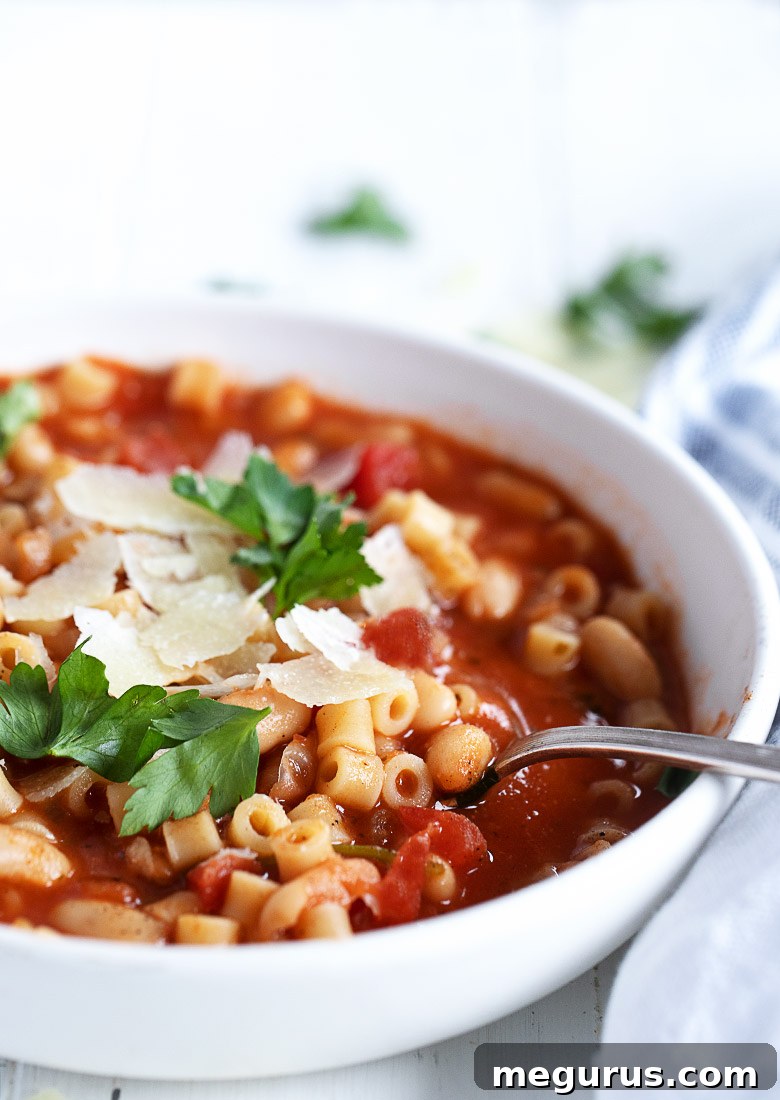
- Add the ditalini pasta and the initial teaspoon of fine salt to the pot. Reduce the heat to medium and cook, stirring very regularly, especially at the beginning, to prevent the pasta from sticking to the bottom of the pot. Cook until the pasta is tender but still al dente, typically 8-10 minutes. If the soup becomes too thick during cooking, add a splash of water or more broth to reach your desired consistency. Once the pasta is cooked, remove and discard the Parmesan rind. Stir in the fresh chopped parsley. Serve immediately, garnished with freshly shaved Parmesan cheese.
Top Tip for an Unforgettable Pasta Fagioli!
I know it might sound like a broken record, but I can’t stress this enough: always be sure to properly season your soup at the very end of cooking. Taste it critically. If it tastes bland, flat, or just “missing something,” it almost certainly needs more salt. A generous grind of fresh black pepper will also enhance the overall flavor. Do you crave a touch more aromatic herb? Stir in a little extra dried oregano or a blend of Italian herbs at this stage. And for the ultimate finishing touch, instead of just grated Parmesan, top your bowls with beautiful, freshly shaved Parmesan cheese. Using a vegetable peeler to create delicate curls of Parmesan will not only make your soup look more appealing but also provide delightful pockets of intense, salty, nutty flavor that melt wonderfully into the hot broth as you eat. It truly makes a significant difference!
Making Ahead, Storing, and Freezing Your Pasta Fagioli
While Pasta Fagioli is undeniably at its best when enjoyed freshly made, right after the pasta has cooked to perfection, there are smart strategies for preparing it ahead of time and handling leftovers. The main consideration is the pasta itself, which will continue to absorb liquid as the soup sits, causing it to thicken considerably and potentially become more like a stew.
Making Ahead: If you plan to prepare the soup in advance, the ideal approach is to cook the soup up to the point where the beans and tomatoes have simmered for 10 minutes (Step 7 in the instructions), but before adding the pasta and broth. Allow this flavorful base to cool completely, then transfer it to an airtight container and refrigerate for up to 3-4 days. When you’re ready to serve, simply add the broth, bring it to a boil, then add the pasta and cook until tender. This method ensures your pasta is perfectly cooked and your soup retains its ideal consistency.
Storing Leftovers: If you have leftover soup that already contains pasta, it will thicken significantly as it cools and sits in the refrigerator. When reheating, the best way to restore it to a soup-like consistency is to thin it out with a splash of extra chicken or vegetable broth, or even a little water, stirring well as it heats up. Gently reheat on the stovetop over medium-low heat until warmed through, or in the microwave. Store leftovers in an airtight container in the refrigerator for up to 3 days.
Freezing: Yes, you can absolutely freeze Pasta Fagioli! It freezes surprisingly well, making it a fantastic meal prep option. Again, for the best results, it’s recommended to freeze the soup base (without the pasta) if you’re intentionally making a batch for freezing. This way, you can cook fresh pasta when you thaw and reheat the soup. However, if you have cooked leftovers with pasta already in them, they can still be frozen. Portion the cooled soup into freezer-safe containers or bags, leaving a little headspace for expansion. It can be stored in the freezer for up to 2-3 months. When ready to enjoy, thaw overnight in the refrigerator, then reheat gently on the stovetop. As with refrigerated leftovers, expect it to be thicker, so thin it out with a bit more broth or water until it reaches your preferred consistency. Season again to taste after reheating.
Why This Pasta Fagioli Recipe Stands Out
This particular Pasta Fagioli recipe shines for several reasons, making it an ideal choice for both novice and experienced cooks. Its foundation is built on accessible, everyday ingredients, proving that extraordinary flavor doesn’t require exotic components. The clear, step-by-step instructions ensure a smooth cooking process, leading you to a delicious result every time. We’ve focused on maximizing flavor through proper browning of pancetta and toasting of tomato paste, techniques that are hallmarks of great Italian cooking.
Moreover, the emphasis on customization allows you to adapt the soup to your dietary needs or personal preferences, whether you prefer it vegetarian, spicier, or with different types of beans. The inclusion of the Parmesan rind tip is a game-changer, elevating the broth to new heights of savory goodness. Finally, the practical advice on making ahead, storing, and freezing ensures that you can enjoy this comforting soup even on your busiest days, making it a truly versatile and reliable recipe for any home.
Serving Suggestions for Your Hearty Soup
Pasta Fagioli is a wonderfully complete meal on its own, but a few simple additions can elevate the dining experience:
- Crusty Bread: A must-have! A good crusty Italian bread, ciabatta, or even garlic bread is perfect for soaking up every last drop of the flavorful broth.
- Fresh Green Salad: A light, crisp salad with a simple vinaigrette offers a refreshing contrast to the richness of the soup.
- Extra Cheese: Beyond the initial Parmesan rind, serve extra freshly grated or shaved Parmesan (or Pecorino Romano) at the table for guests to sprinkle on top.
- Drizzle of Olive Oil: A finishing drizzle of high-quality extra virgin olive oil just before serving adds a fruity, peppery note and a beautiful sheen.
- Fresh Herbs: A sprinkle of fresh chopped parsley or basil can brighten the flavors and add a pop of color.
Variations and Customizations to Explore
One of the joys of cooking is the ability to adapt recipes to suit your taste. Pasta Fagioli is incredibly forgiving and open to creative twists:
- Vegetarian/Vegan: As mentioned, simply omit the pancetta and start with a tablespoon or two of good olive oil. Use vegetable broth instead of chicken broth. For added depth, consider a dash of liquid smoke or smoked paprika. Nutritional yeast can also provide a cheesy, umami flavor if you’re avoiding dairy.
- Add More Vegetables: This soup is an excellent canvas for extra veggies. Stir in a handful of baby spinach or chopped kale during the last few minutes of cooking, allowing them to wilt. Diced carrots, zucchini, or even small broccoli florets can be added along with the celery and onion to cook down.
- Spice It Up: If you love heat, increase the amount of red pepper flakes or add a pinch of cayenne pepper. A dash of hot sauce at the table can also offer a customizable kick.
- Different Meats: While pancetta is traditional, you could brown Italian sausage (mild or spicy) for a different flavor profile, or even shredded chicken for a chicken and bean version.
- Herbs: Experiment with other dried or fresh herbs like thyme, rosemary, or bay leaves for nuanced aromas.
Nutritional Highlights
Beyond its delicious taste, Pasta Fagioli is a powerhouse of nutrition. Beans are an excellent source of plant-based protein and dietary fiber, which aids digestion and helps you feel full and satisfied. Tomatoes contribute beneficial antioxidants like lycopene and essential vitamins, including Vitamin C. The inclusion of various vegetables like onions and celery adds further vitamins, minerals, and fiber. When made with lean pancetta or a vegetarian base, and a modest amount of pasta, it can be a balanced and wholesome meal option that fits well into a healthy diet.
Frequently Asked Questions About Pasta Fagioli
- What does “Pasta Fagioli” mean?
- Pasta Fagioli literally translates from Italian as “pasta and beans.” It’s pronounced PAH-stah fah-JOH-lee.
- Can I use dried beans instead of canned?
- Absolutely! Using dried beans offers an even richer flavor and texture. You’ll need to soak them overnight and then cook them until tender before adding them to the soup. Account for this extra preparation time. Generally, 1 cup of dried beans yields about 3 cups of cooked beans, which is roughly equivalent to two 15-ounce cans.
- How can I make my Pasta Fagioli thicker or thinner?
- To thicken the soup, you can mash a portion of the cooked beans against the side of the pot with the back of a spoon, or carefully remove about a cup of beans, mash them, and stir them back in. Alternatively, allow the soup to simmer uncovered for a longer period to reduce the liquid. To thin it out, simply add more chicken or vegetable broth until it reaches your desired consistency.
- Is it okay to add vegetables like spinach or kale?
- Yes, it’s a fantastic idea! Leafy greens like spinach or kale are excellent additions. Stir them in during the last 5-10 minutes of cooking, allowing them to wilt into the hot broth. This boosts the nutritional content and adds more texture and color.
- What kind of pot is best for making this soup?
- A large, heavy-bottomed pot or Dutch oven is ideal. The heavy bottom helps distribute heat evenly and prevents sticking, especially when sautéing the pancetta and vegetables. It also provides enough volume for all the ingredients to simmer comfortably.
Classic Pasta Fagioli Recipe
Get the Recipe: Classic Pasta Fagioli
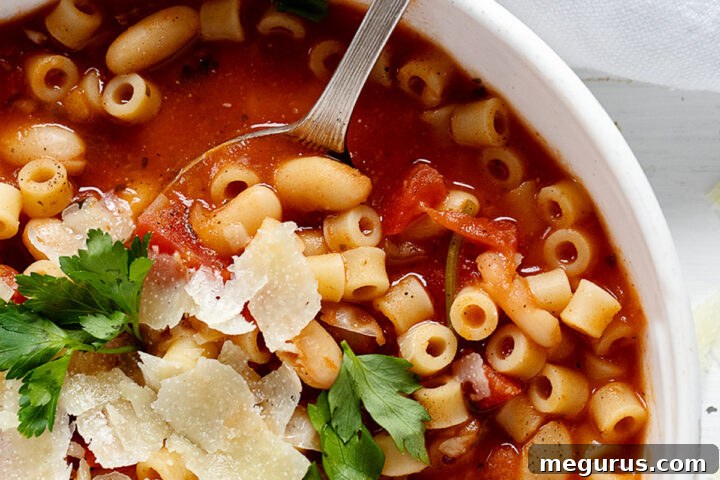
A classic Italian pasta soup, this pasta fagioli is made with pasta, pancetta, beans and tomatoes. Quick, easy, hearty and delicious, pasta fagioli is a great pantry soup.
Pin This
Leave a Review
Ingredients
- 1/3 cup pancetta, diced (or bacon)
- 1 cup onion, diced
- 1/3 cup celery, diced
- 4 cloves garlic, finely diced
- 1 teaspoon dried oregano leaves
- 1/8 teaspoon red pepper flakes
- 1 Tablespoon tomato paste
- 28 oz. canned diced tomatoes, *see Note 1 below
- 19 oz. canned Cannelini beans, (white kidney beans) rinsed *see Note 2
- Parmesan rind, optional, but recommended
- 4 cups chicken broth, or vegetable broth
- 1 cup ditalini pasta, about 6 oz, *see Note 3
- 1 teaspoon fine salt
- 1/4 cup fresh parsley, chopped
- additional salt and freshly ground pepper, to taste
- freshly shaved Parmesan, for serving
Instructions
-
Heat a large pot over medium heat on the stove-top. Add the diced bacon and cook, stirring, until the fat cooks off and the bacon is starting to brown. Add the onion and celery and cook, stirring regularly, until the onions soften, 3-4 minutes. Add the garlic, oregano and red pepper flakes and cook, stirring, another minute. Add the tomato paste and cook, stirring, another 30-45 seconds.
-
Add the canned tomatoes (with their juices) and rinsed beans and stir to combine. Add the Parmesan rind, if using. Increase the heat under the pot, bring the mixture to a boil, then reduce the heat to medium-low and simmer the bean/tomato mixture for about 10 minutes. *You can make ahead to this point and then refrigerate to finish later when ready to eat.
-
Add the chicken broth. Increase the heat under the pot to medium-high and bring the mixture to a boil. Add pasta and salt to the pot. Reduce the heat to medium and cook, stirring very regularly at the start, to prevent the pasta from sticking to the bottom of the pot! Cook until the pasta is tender, about 8-10 minutes. *if your soup is getting too thick, add a splash of water to the pot, as needed. Remove Parmesan rind. Stir in fresh parsley and stir to combine.
-
Taste soup and add additional salt and freshly ground pepper, as needed. Serve immediately, garnished with freshly shaved Parmesan cheese.
Notes
Note 1. You can also use whole canned tomatoes. Just hand-crush them before adding to the pot.
Note 2. You can use any canned beans, such as red kidney, pinto, great northern or navy beans.
Note 3. Any small pasta will work here, such as small shells, macaroni or orzo.
Pasta Fagioli is best enjoyed freshly cooked, as the pasta will continue to absorb the broth as it sits and making ahead or leftovers will become a stew quite quickly.
Serving: 1 serving, Calories: 327kcal, Carbohydrates: 52g, Protein: 17g, Fat: 7g, Saturated Fat: 2g, Cholesterol: 9mg, Sodium: 746mg, Potassium: 982mg, Fiber: 7g, Sugar: 6g, Vitamin A: 444IU, Vitamin C: 19mg, Calcium: 139mg, Iron: 5mg