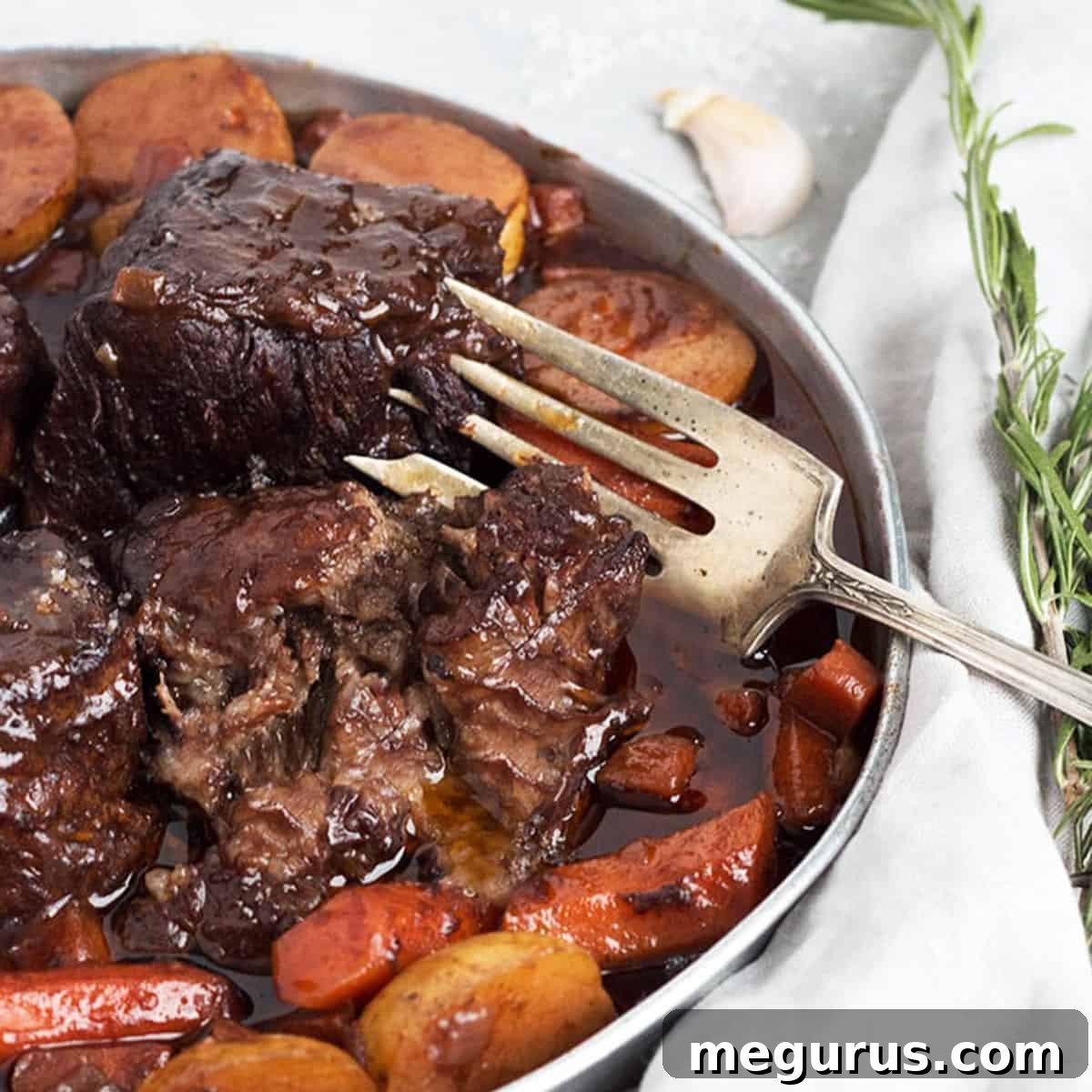
Discover the ultimate culinary embrace with these Red Wine Braised Boneless Short Ribs. This simple yet sophisticated dish, cooked low and slow to perfection, stands as the quintessential comfort food, especially as the chill of winter sets in. Prepare to indulge in melt-in-your-mouth tenderness infused with rich wine and fragrant herbs.
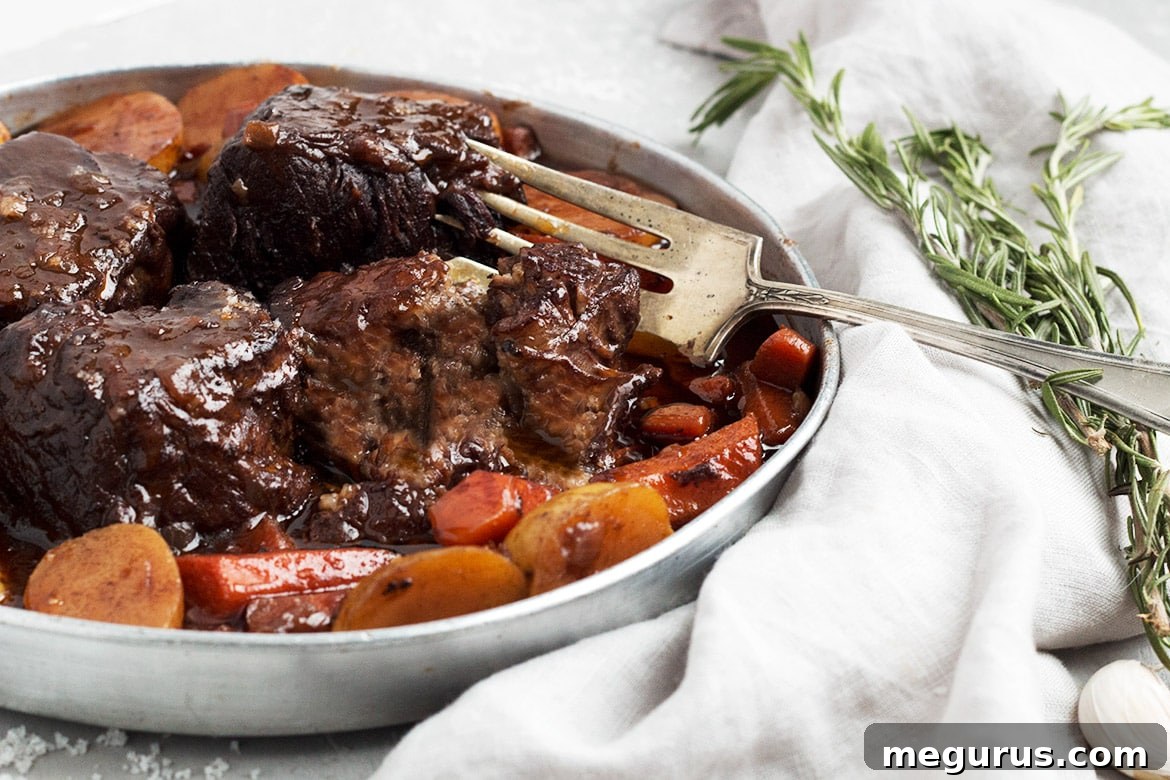
Embrace the Winter Warmth: Why Braised Short Ribs Are a Must-Try
As the new year unfolds and the coldest weeks arrive, there’s nothing quite like a hearty, soul-warming meal to chase away the winter blues. This recipe for Red Wine Braised Boneless Short Ribs delivers on all fronts, offering a deep sense of satisfaction that only comes from food cooked with patience and care. It transforms a humble cut of meat into an extraordinary culinary experience.
The Irresistible Appeal of Boneless Short Ribs
Boneless short ribs are a true gem in the world of comfort food. Cut from the chuck section of the cow, they are inherently rich and deeply marbled with fat. This marbling isn’t just for flavor; it’s the secret to their unparalleled tenderness. As the meat slowly braises, this fat renders down, moistening the meat and creating an incredibly rich, luxurious gravy that coats every bite. Unlike other cuts that can dry out, short ribs thrive in a slow-cook environment, becoming succulent and fall-apart tender without losing their robust beefy flavor.
The Magic of Low and Slow Braising
Braising is an ancient cooking technique that involves searing meat at high heat, then slowly cooking it in a liquid in a covered pot. This method is perfectly suited for short ribs, allowing their connective tissues to break down gently over hours. The result is a textural masterpiece: meat so tender it can be cut with a fork, bathed in a deeply flavorful sauce. The “low and slow” approach ensures that every fiber of the short rib absorbs the rich flavors of the red wine, herbs, and broth, creating a dish that is far greater than the sum of its parts. It’s a hands-off process that yields gourmet results, making it ideal for cozy weekend dinners or impressive holiday meals.
A Symphony of Flavors: Red Wine, Herbs, and Aromatic Vegetables
This dish is a celebration of classic flavor pairings. A robust dry red wine forms the foundation of the braising liquid, lending complexity, acidity, and a beautiful deep color to the sauce. Fresh herbs like parsley, thyme, and rosemary infuse the entire dish with aromatic notes, while a bay leaf adds a subtle depth. A medley of finely diced carrots and onions provides a sweet, earthy base, caramelizing slightly to enhance the overall richness. The tomato paste adds a touch of umami and helps to thicken the sauce. Together, these ingredients create a harmonious blend that is both comforting and incredibly delicious, elevating the natural taste of the beef to new heights.
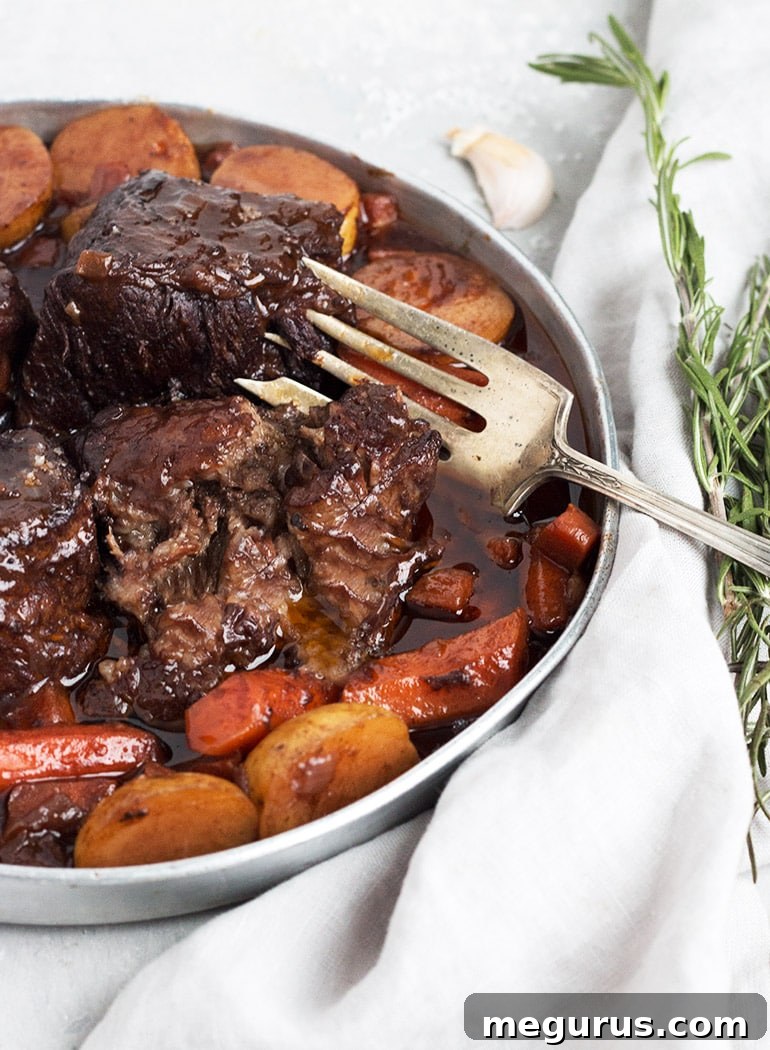
Mastering the Braise: Essential Tips for Success
While the concept of braising is straightforward, a few key considerations can elevate your Red Wine Braised Boneless Short Ribs from good to absolutely unforgettable. Pay close attention to these cook’s notes to ensure a dish that will impress every time.
Choosing the Perfect Red Wine for Braising
The wine you choose for braising plays a pivotal role in the final flavor profile of your short ribs. The general rule of thumb is to select a dry red wine that you would genuinely enjoy drinking. There’s no need to splurge on an expensive bottle, but avoid anything labeled “cooking wine,” as these often contain added salt and preservatives that can negatively impact your dish. A good quality, inexpensive bottle will do the trick.
- Dry Red is Key: Opt for dry reds over sweet ones to prevent an overly sugary sauce. The natural sugars in dry wine will concentrate beautifully during reduction.
- Recommended Varietals:
- Cabernet Sauvignon: A classic choice, offering bold fruit flavors, firm tannins, and a savory finish that pairs wonderfully with beef.
- Merlot: Softer than Cabernet Sauvignon, Merlot provides rich plum and cherry notes with a smooth texture.
- Cabernet Merlot Blend: This blend offers a fantastic balance of structure and fruit, often a go-to for many home cooks.
- Zinfandel: If you prefer a richer, spicier flavor, a dry Zinfandel can add intriguing complexity.
- Pinot Noir: For a lighter, more elegant sauce with bright red fruit characteristics, Pinot Noir can be an excellent option.
- The Reduction Step: Don’t rush the wine reduction step in the recipe. Boiling the wine down by half concentrates its flavors, deepens its color, and cooks off the alcohol, leaving behind a rich, complex essence that forms the backbone of your sauce. This crucial step is what truly builds the depth of flavor in your gravy.
The Art of Herb Selection: Fresh vs. Dried
Fresh herbs infuse a vibrant, garden-fresh aroma and flavor that dried herbs simply can’t fully replicate. For this recipe, fresh flat-leaf parsley, thyme, and rosemary are highly recommended. Their essential oils are slowly released during the long braising process, permeating the meat and sauce with their fragrant essence.
- Bundle for Ease: A smart trick for fresh herbs is to tie them together with kitchen-safe string or wrap them in a small piece of cheesecloth to create a “bouquet garni.” This makes them incredibly easy to remove from the pot before serving, preventing stray herb bits in your silky gravy.
- Dried Herb Substitutions: If fresh herbs are unavailable, dried herbs can be used. As a general rule, use about one-third of the amount of dried herbs compared to fresh, as dried herbs are more concentrated. For example, if the recipe calls for 5 sprigs of fresh parsley, use about 2 teaspoons of dried parsley. For thyme and rosemary, use about 1/2 teaspoon of dried for every few sprigs of fresh. Remember that dried herbs benefit from being added earlier in the cooking process to rehydrate and release their flavors.
Broth Beyond Beef: Why Chicken Broth Can Be Your Secret Weapon
While beef short ribs naturally suggest beef broth, a good quality chicken broth can sometimes yield a superior result, especially if you’re wary of store-bought beef broths. Many commercially available beef broths can taste artificial, overly salty, or lack depth.
- Flavor Profile: A high-quality chicken broth offers a lighter, cleaner base that allows the rich beef and red wine flavors to truly shine without overpowering them. It still contributes savory notes without dominating.
- Quality Matters: Regardless of whether you choose chicken or beef, opt for a low-sodium, good-quality broth. This gives you control over the seasoning and ensures a purer flavor. If using homemade broth, even better!
- Taste and Adjust: Always taste your broth before adding it to the pot. If it’s too bland, consider simmering it down slightly to concentrate its flavor.
Achieving Silky Smooth Gravy: Expert Fat Removal Techniques
The beautiful marbling that makes short ribs so tender also means they render a significant amount of fat into the braising liquid, which can make the gravy greasy. Removing this excess fat is crucial for a refined, flavorful sauce. Here are three effective methods:
- Skimming After Cooking: Once the short ribs are cooked, carefully remove the meat and vegetables to a separate bowl. Let the pot of gravy sit undisturbed for 10-15 minutes. The fat will naturally rise to the surface, forming a distinct layer that you can easily spoon off and discard. Then, return the ribs and vegetables to the de-fatted gravy and gently reheat on the stove-top. This method works well for immediate serving.
- Using a Gravy Separator: A gravy separator is a handy kitchen tool designed specifically for this purpose. After removing the ribs and vegetables, pour the entire contents of the pot into the separator. The fat, being less dense, will float to the top, while the flavorful gravy settles at the bottom. You can then pour off the lean gravy from the bottom spout, leaving the fat behind. This is a very efficient and clean method.
- Refrigeration for Make-Ahead Meals: If you’re preparing this dish a day in advance (which is highly recommended as the flavors deepen overnight), the process becomes even easier. After cooking, allow the entire pot to cool completely before transferring it to the refrigerator. As it chills, the fat will solidify into a thick, easily removable layer on top. Simply scoop off this solid fat and discard it before reheating your short ribs and gravy. This method yields the cleanest gravy and is perfect for entertaining.
Prepping Your Vegetables for Optimal Results
The initial diced carrots and onions are key aromatics, providing a foundational sweetness and depth. These should be finely diced to melt into the sauce. For the added vegetables (larger carrots and potatoes), their timing is important. Adding them midway through the cooking process ensures they become tender without turning to mush. If you prefer, you can omit the potatoes from the braise and serve the short ribs over a creamy side instead.
Serving Suggestions: What to Pair with Your Braised Short Ribs
These Red Wine Braised Boneless Short Ribs are incredibly versatile and pair beautifully with a variety of side dishes that soak up their rich gravy. The classic choice is often something creamy and substantial.
- Creamy Mashed Potatoes: The ultimate pairing, offering a velvety canvas for the rich sauce.
- Polenta: Creamy polenta provides a luxurious, slightly grainy texture that complements the tender meat.
- Pasta: A wide, flat pasta like pappardelle or tagliatelle is excellent for tossing with the short ribs and their gravy.
- Root Vegetable Purees: Consider a parsnip, celeriac, or sweet potato puree for a different flavor profile.
- Crusty Bread: Don’t forget a loaf of crusty sourdough or baguette to sop up every last drop of that incredible gravy.
- Green Vegetables: To balance the richness, serve with a simple side of steamed green beans, roasted asparagus, or sautéed spinach.
Get the Recipe: Red Wine Braised Boneless Short Ribs
Boneless short ribs braised low and slow with red wine and fresh herbs. Cooked with vegetables for an easy and delicious one-pot meal.
Rated 4.85 stars from 71 ratings
Pin This
Leave a Review
15 mins
3 hrs
3 hrs 15 mins
4 servings
Ingredients
- 1 Tbsp olive oil
- 2 lb. boneless short ribs, about 4 pieces
- 1 medium carrot, peeled and quite finely diced
- 1 medium onion, diced
- 1 Tbsp all purpose flour
- 1 Tbsp tomato paste
- 1 1/2 cups dry red wine, *see notes
- 1 1/2 cups chicken broth, or beef broth
- 5 sprigs flat-leaf parsley, or 2 tsp dried parsley
- 4 sprigs fresh thyme, or 1/2 tsp dried thyme
- 1 sprig fresh rosemary, or 1/2 tsp dried rosemary
- 1 bay leaf
- Salt and freshly ground pepper, to taste
Vegetables to add mid-cook:
- 8-10 mini potatoes, halved
- 1 large carrot, peeled, halved and cut into 2-inch slices
Instructions
- Preheat oven to 350°F (175°C).
- In a Dutch oven or large, oven-safe pot with a lid, heat olive oil over medium-high heat. Add the boneless short ribs and sear on all sides until deeply golden brown. This step is crucial for building flavor. Remove the short ribs from the pot and set aside on a plate.
- Carefully remove most of the rendered fat and oil from the pot, leaving about 1 tablespoon. Add the finely diced carrots and onions to the pot and cook, stirring frequently, over medium heat until the onions are softened and translucent, about 5 minutes. Stir in the all-purpose flour and tomato paste and continue cooking, stirring constantly, for another minute to cook out the raw flour taste.
- Pour the dry red wine into the pot. Bring it to a boil, then reduce the heat to medium-low and simmer until the wine reduces by about half (this usually takes 20-25 minutes). Do not rush this step, as it concentrates the wine’s flavor. Once reduced, add the chicken or beef broth and the fresh herbs (tied in a bundle, if using) to the pot and stir to combine. Return the seared short ribs to the pot, nestling them into the liquid. Cover the pot with its lid and cook in the preheated oven for 1 hour and 15 minutes.
- After 1 hour and 15 minutes, remove the pot from the oven. Stir in the larger pieces of carrots and the halved mini potatoes (if you are including them in the braise). Ensure there is sufficient liquid in the pot to cook the vegetables; if not, add a little more broth or wine. Return the pot to the oven, covered, for another 1 hour and 15 minutes, or until the short ribs are incredibly tender and pull apart easily with a fork, and the vegetables are cooked through.
- Remove the pot from the oven. Carefully remove and discard the herb bundle and the bay leaf. Taste the sauce and season generously with salt and freshly ground pepper as needed. Transfer the tender short ribs and cooked vegetables to a serving platter. Allow the remaining sauce (gravy) in the pot to stand undisturbed for 10-15 minutes. During this time, any excess fat will rise to the top, where it can be easily spooned off and discarded, leaving you with a rich, silky gravy. Return the short ribs and vegetables to the de-fatted gravy in the pot and gently re-warm on the stove-top before serving.
Notes
*For the best flavor, choose a dry red wine that you enjoy drinking, such as a Cabernet Merlot or Cabernet Sauvignon.
For more detailed tips, substitutions, and variations, refer to the “Mastering the Braise: Essential Tips for Success” section above in the article!
American, Canadian
Main Course
Jennifer Maloney
Nutrition Information (per serving):
Calories: 635kcal, Carbohydrates: 53g, Protein: 53g, Fat: 27g, Saturated Fat: 10g, Cholesterol: 133mg, Sodium: 560mg, Potassium: 2471mg, Fiber: 10g, Sugar: 3g, Vitamin A: 5770IU, Vitamin C: 53mg, Calcium: 147mg, Iron: 16.7mg
Frequently Asked Questions About Braised Short Ribs
Q1: Can I make Red Wine Braised Short Ribs ahead of time?
Absolutely! In fact, this dish is often even better the next day. The flavors have more time to meld and deepen, and the fat removal process becomes significantly easier when chilled. Prepare the entire dish, let it cool, then refrigerate overnight. The next day, simply skim off the solidified fat from the top, then gently reheat on the stove-top or in a low oven until warmed through.
Q2: What if I don’t have a Dutch oven?
A Dutch oven is ideal due to its heavy bottom and tight-fitting lid, which provides even heat distribution and retains moisture. However, you can achieve similar results using any large, oven-safe pot or deep casserole dish with a heavy bottom and a lid. If your pot doesn’t have a lid, you can tightly cover it with aluminum foil to trap the steam and ensure a moist cooking environment.
Q3: Can I use bone-in short ribs for this recipe?
Yes, you can certainly use bone-in short ribs. The cooking time might be slightly longer (add about 30-60 minutes), as the bones add flavor and insulation. The process of searing, braising, and fat removal remains the same. The bones will add even more richness to the sauce!
Q4: How can I thicken the gravy further if it’s too thin?
If your gravy is thinner than desired after the braising is complete and fat has been removed, you have a couple of options:
- Simmer: Remove the short ribs and vegetables, then continue to simmer the gravy over medium-high heat on the stove-top, stirring occasionally, until it reduces and thickens to your preferred consistency.
- Slurry: Mix 1-2 tablespoons of cornstarch or all-purpose flour with an equal amount of cold water to create a slurry. Whisk this mixture into the simmering gravy and cook for another 1-2 minutes until it thickens.
Q5: What wines pair well with the finished braised short ribs?
To complement the rich, savory flavors of the braised short ribs, choose a full-bodied red wine. The same varietals recommended for braising (Cabernet Sauvignon, Merlot, Zinfandel) make excellent choices for drinking alongside the meal. A robust Syrah or a classic Bordeaux blend would also be fantastic pairings, enhancing the dish’s complexity without overwhelming it.
Final Thoughts: A Dish to Savor
These Red Wine Braised Boneless Short Ribs are more than just a meal; they are an experience. The process of slow cooking, the anticipation of rich aromas filling your home, and the pure comfort of each tender bite make this dish truly special. It’s a testament to how simple ingredients, when given time and care, can create something truly extraordinary. Whether you’re gathering loved ones or simply treating yourself to a well-deserved indulgence, this recipe promises to deliver warmth, flavor, and unforgettable satisfaction. Don’t hesitate to make this magnificent dish a staple in your winter comfort food repertoire.
Tried this recipe? If you enjoyed this recipe, please leave a star rating and comment. It helps others to find it!