Delightful Cranberry Swirl Bread: The Ultimate Recipe for Leftover Cranberry Sauce
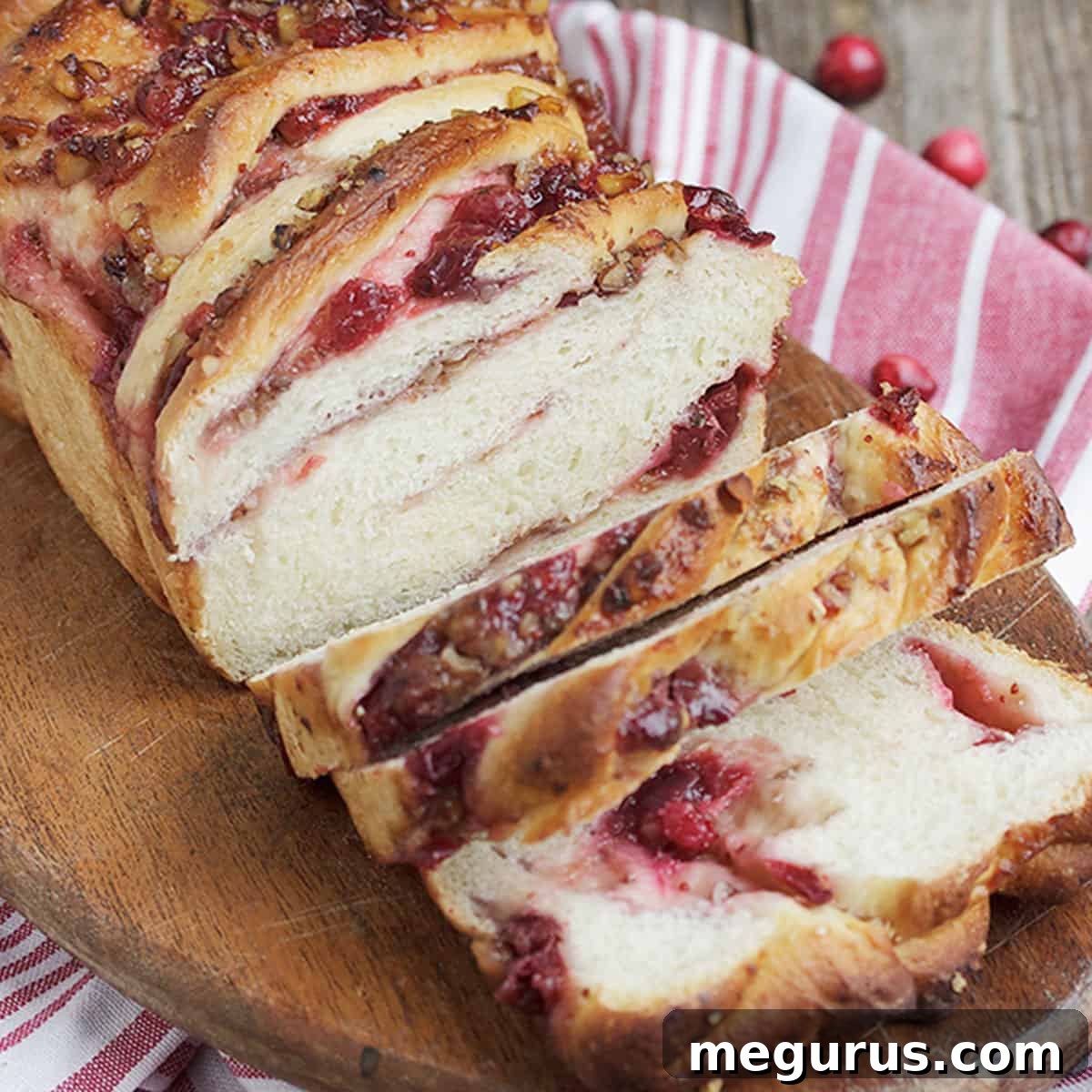
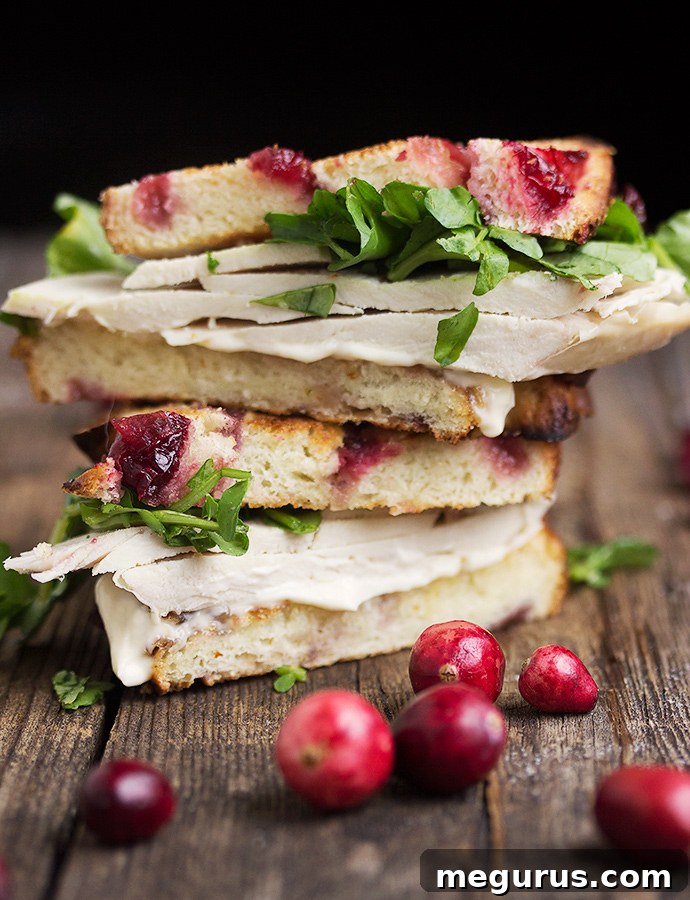
The holidays often leave us with cherished memories, full bellies, and, more often than not, a delightful surplus of cranberry sauce. Instead of letting this festive condiment linger in the back of your fridge, transform it into a culinary masterpiece: a beautiful and delicious Cranberry Swirl Bread. This recipe offers a brilliant way to repurpose those vibrant, tangy leftovers into a soft, sweet, and utterly irresistible loaf, perfect for any time of day. Imagine a fluffy yeast bread intricately swirled with a rich cranberry filling, studded with crunchy walnuts – it’s a sensory delight that makes for an unforgettable breakfast, an indulgent snack, or, as many Canadians can attest, the absolute best leftover turkey sandwich.
From Holiday Feast to Freshly Baked Delight: The Inspiration Behind This Bread
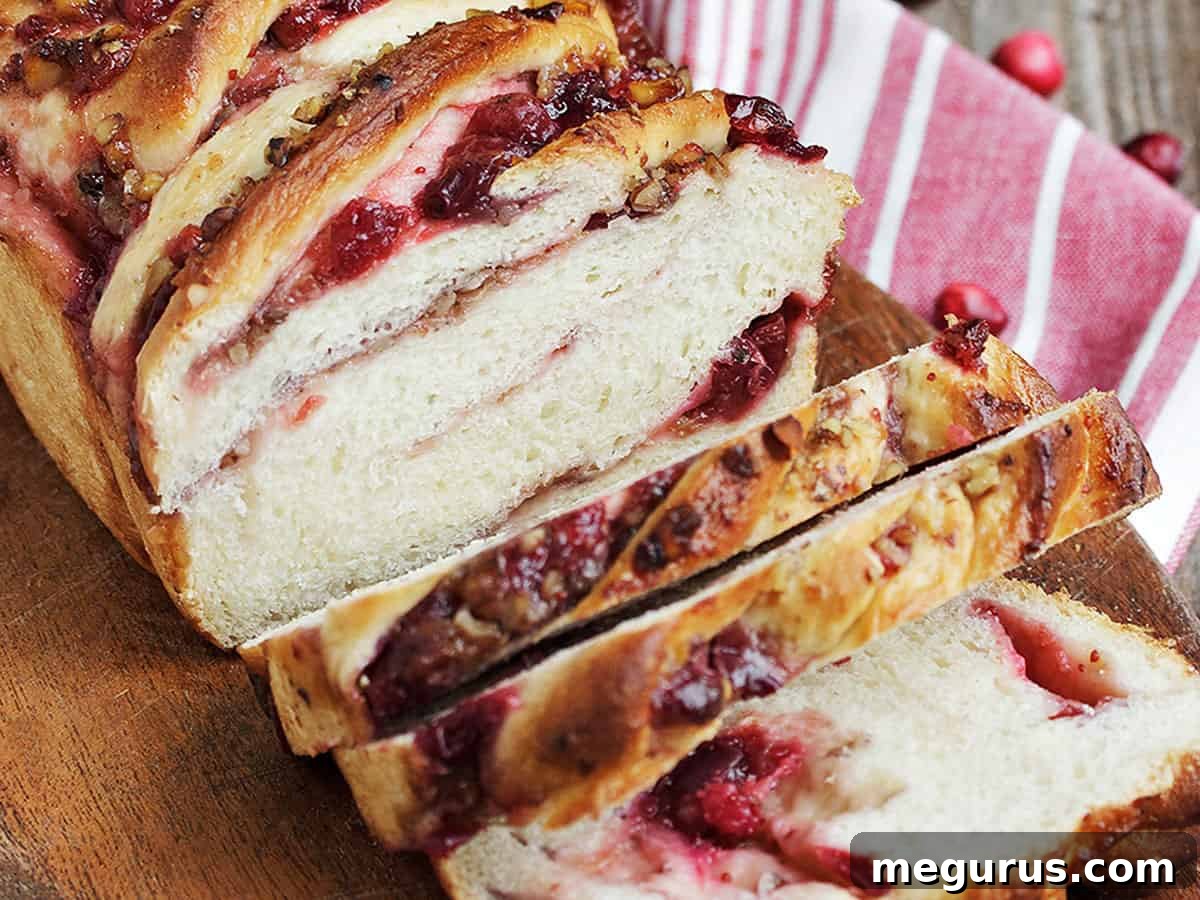
The story of this Cranberry Swirl Bread is a familiar one for many who celebrate Thanksgiving, especially here in Canada where our holiday takes place in October. The annual tradition often includes preparing a generous batch of homemade cranberry sauce. Yet, despite its deliciousness, a significant portion often remains untouched after the main feast. This recurring “dilemma” sparked the inspiration for this particular recipe. Instead of letting that precious cranberry sauce go to waste, why not infuse its bright, fruity flavor into a comforting baked good?
This bread is more than just a clever way to use up leftovers; it’s a celebration of cozy flavors and a testament to the versatility of cranberry sauce. The sweet and tart notes of the cranberry filling cut beautifully through the richness of the tender yeast bread, creating a harmonious balance. It’s a creation that genuinely impressed us, earning its reputation as the perfect complement to a hearty turkey sandwich, or simply enjoyed on its own with a cup of coffee or tea. Get ready to turn your post-holiday pantry into a baker’s paradise!
Essential Ingredients & Smart Substitutions for Your Cranberry Swirl Bread
Creating this delicious swirl bread requires a few staple baking ingredients, along with the star ingredient – cranberry sauce. Here’s a detailed look at what you’ll need and how to make smart substitutions:
Cranberry Sauce: The Vibrant Core
This recipe is truly designed for your **leftover cranberry sauce**. Whether you made a simple homemade version or a more elaborate one with citrus and spices, it will be fantastic here. The key is to have a sauce that isn’t too runny. If your cranberry sauce is particularly loose, gently drain off some of the excess liquid before using it as a filling. This will prevent the bread from becoming soggy and help maintain a beautiful, defined swirl. If you don’t have leftovers, don’t worry! You can easily make a fresh batch using the recipe provided in the instructions below, which includes a delightful hint of orange zest and juice for an added layer of flavor. Canned whole-berry cranberry sauce can also be used in a pinch; just ensure it’s thick enough.
Yeast: The Leavening Agent
The recipe calls for **Instant Yeast**, which is incredibly convenient as it can be directly incorporated into the dry ingredients without needing to be proofed first. Brands like SAF Instant Yeast or typical bread machine yeast are excellent choices. If your pantry only holds **Active Dry Yeast**, a slight modification is needed: you’ll need to “proof” it. To do this, dissolve the yeast in a portion of the lukewarm water specified in the recipe (around 105-115°F or 40-46°C) with a pinch of sugar. Let it sit for about 5-10 minutes until a foamy layer appears on the surface, indicating the yeast is active and ready. Then, proceed with the recipe, adding the proofed yeast mixture along with the other wet ingredients.
Flour: Building the Bread’s Structure
For the best results, **unbleached bread flour** is recommended as its higher protein content develops more gluten, leading to a chewier, more structured bread. However, **all-purpose flour** can certainly be used, and will still yield a wonderfully soft loaf. The key is to spoon and level your flour to ensure accurate measurement, preventing a dry or dense crumb.
Sweeteners: Balancing the Flavors
Both **white and brown sugar** are used in this recipe. White sugar provides a clean sweetness, while brown sugar adds a subtle molasses flavor and a touch of moisture, contributing to the bread’s tender texture. Feel free to adjust the ratio slightly based on your preference for sweetness.
Lukewarm Liquids: Activating the Yeast
**Lukewarm water and milk (or buttermilk)** are crucial for properly activating the yeast. The temperature should be warm to the touch, but not hot – think bathwater warm, around 110°F (43°C). Milk adds richness and helps create a soft crumb, while buttermilk can add a slight tanginess that complements the cranberries beautifully.
Melted Butter or Vegetable Oil: For Tenderness and Flavor
**Melted unsalted butter** provides a wonderful richness and flavor to the bread. If you prefer, **vegetable oil** is a great substitute, offering a neutral flavor and contributing to a very tender crumb. Both options work well to add moisture and improve the texture of the dough.
Walnuts: The Optional Crunchy Addition
We adore the **chopped walnuts** in this bread. They introduce a fantastic textural contrast and a pleasant, nutty counterpoint to the tart cranberries. If walnuts aren’t your preference, or if you have a nut allergy, simply omit them. The bread will still be incredibly delicious on its own. Alternatively, toasted pecans or even a sprinkle of rolled oats could offer interesting variations.
Expert Tips for Baking Your Best Cranberry Swirl Loaf
Baking a swirled bread can seem intimidating, but with a few insider tips, you’ll achieve a perfect loaf every time. Don’t be afraid to get a little hands-on; the results are well worth the effort!
- Embrace the “Hot Mess” Stage: Let’s be honest, working with a sticky, fruit-filled dough can get a bit messy. When you’re rolling the dough with the cranberry sauce and transferring the braided loaf to the pan, it might look less than perfect. Don’t panic! This is completely normal for swirl breads. Trust the baking process; the dough will rise, the filling will set, and you will be rewarded with a beautiful, rustic loaf.
- Cranberry Sauce Consistency is Crucial: The success of your swirl depends heavily on the thickness of your cranberry sauce. A runny sauce will make the dough difficult to handle and might leak excessively during baking. If your sauce is thin, try gently draining off some of the liquid before spreading it. You want a consistency that’s spreadable but holds its shape.
- Dough Texture Matters: When mixing the dough, aim for a soft, pliable, and smooth consistency that’s moist but not overly sticky or tacky. Adding the flour gradually helps you achieve this perfect balance. An over-floured dough will be tough, while a sticky dough will be hard to roll and shape.
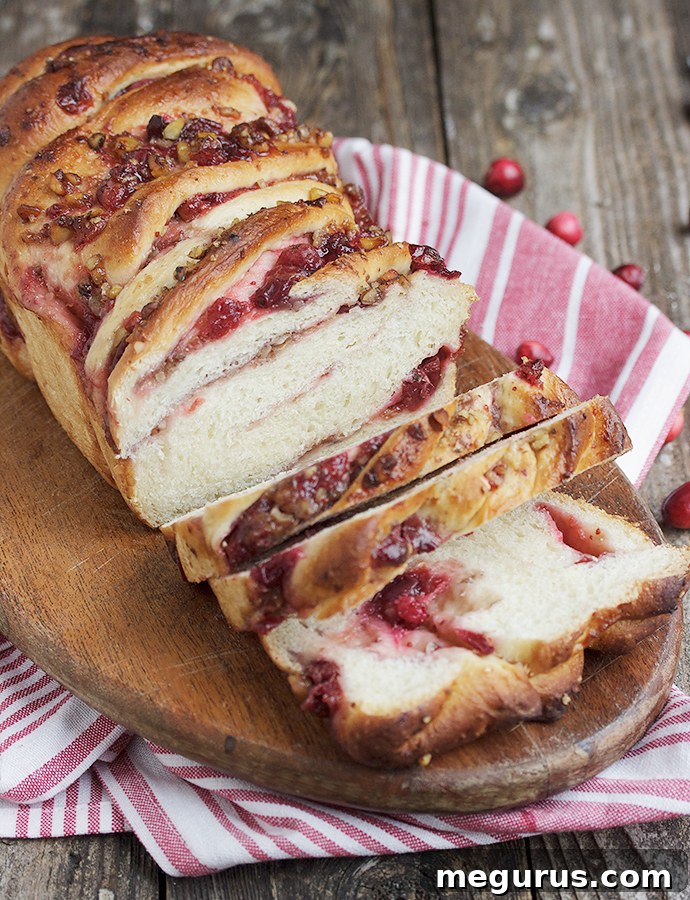
- The Art of Rolling and Braiding: Rolling the dough into an even rectangle and then rolling it tightly into a log, jelly-roll style, is essential for a pronounced swirl. When braiding, ensure the cut sides are facing up as much as possible to showcase the vibrant cranberry layers. Pinching the ends and seams tightly will help contain the filling. (For visual assistance, consider searching for videos on braiding sweet bread doughs.)
- Perfect Proofing Environment: Yeast dough loves warmth and a draft-free environment to rise. A slightly warm oven (turned off, with the light on) or a warm spot in your kitchen covered with plastic wrap is ideal. Proper rising is critical for a light and airy texture. For the second rise in the loaf pan, allow the dough to rise until it crests about an inch above the rim of the pan.
- Checking for Doneness: Don’t rely solely on visual cues. While a golden-brown crust is a good indicator, tapping the bottom of the loaf should produce a hollow sound. For ultimate precision, an instant-read thermometer inserted into the center of the bread should register around 200°F (93°C).
- Cool Completely Before Slicing: It’s tempting to dive into a warm loaf, but for the best texture and clean slices, allow the bread to cool completely on a wire rack. This allows the internal structure to set and the filling to fully firm up.
Storing & Freezing Your Cranberry Swirl Bread for Lasting Freshness
Once your delectable Cranberry Swirl Bread is baked and completely cooled, you’ll want to ensure its freshness for as long as possible. Store the loaf in an airtight container or a clean bread bag at room temperature for up to 2-3 days. To keep it fresh even longer, this bread freezes exceptionally well. Wrap the cooled loaf tightly in plastic wrap, then an additional layer of aluminum foil, and store it in the freezer for up to 3 months. To enjoy, simply thaw the bread at room temperature, or slice and toast individual pieces directly from frozen for a warm, “freshly baked” taste. It’s an ideal make-ahead option for holiday entertaining or to have on hand for quick breakfasts and snacks.
Cranberry Swirl Bread Recipe
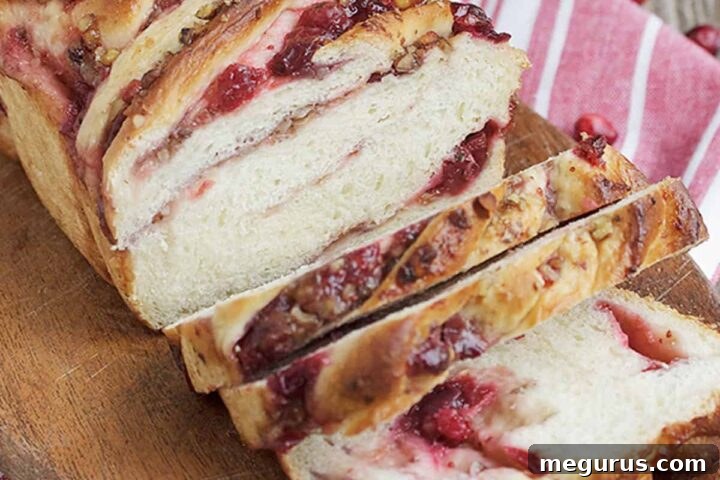
Get the Recipe: Cranberry Swirl Bread
Pin This
Leave a Review
20 minutes
40 minutes
2 hours
3 hours
14
servings
Ingredients
For the bread:
-
3 1/4 cups
unbleached bread or all-purpose flour, spooned and levelled -
1 teaspoon
fine salt -
2 1/2 Tablespoons
white or brown sugar -
2 1/2 teaspoons
instant yeast, *see Notes for Active Dry yeast usage -
1/2 cup
lukewarm water, about 110° F. (43°C) -
1/2 cup
lukewarm milk, or buttermilk -
2 Tablespoons
melted unsalted butter or vegetable oil
For the filling:
-
1 1/2 cups
cranberry sauce, preferably thick; drain a bit of liquid off if too runny -
1/3 cup
chopped walnuts, optional, can substitute pecans
Instructions
-
In a large bowl or the bowl of a stand mixer fitted with a kneading hook, combine 2 cups of the flour, the salt, sugar, and instant yeast. Mix briefly to ensure these dry ingredients are well combined. Add the lukewarm water, milk, and melted butter or oil. Mix on low speed until a shaggy dough forms. Gradually add the remaining 1 1/4 cups of flour, 1/4 cup at a time, mixing until you have a soft and smooth dough that is moist but not tacky. This usually takes about 5-7 minutes of kneading with a stand mixer or 8-10 minutes by hand. Remove the dough to a lightly greased bowl, turn once to coat, cover with plastic wrap, and allow to rise in a warm, draft-free place until doubled in size, typically 45-60 minutes.
-
Once the dough has doubled, gently punch it down to release the air. Transfer the dough to a lightly floured surface. Roll the dough into a large rectangle, approximately 12 inches wide by 18 inches long. Evenly spread your prepared cranberry sauce over the entire surface of the dough, making sure to leave a clear 1-inch margin on the two longest sides. If using, generously sprinkle the chopped walnuts over the cranberry sauce. Starting with one of the short sides, carefully and tightly roll the dough into a log, jelly-roll style. The trick is to lift gently and fold the dough forward in small increments to create a snug roll. Once fully rolled, firmly pinch the seam together to seal, and also pinch the ends to prevent any filling from escaping during baking.
-
To create the signature swirl effect, use a sharp knife or a bench scraper to carefully cut the rolled dough log down its center, lengthwise, from one end to the other, creating two long halves. Gently turn the two pieces so their cut sides are facing upwards, exposing the beautiful cranberry layers. Firmly pinch the two pieces of dough together at one end. Now, proceed to braid the two pieces together by lifting one piece over the other and repeating this motion a couple of times, always striving to keep the cut sides visible. Pinch the other end firmly to seal the braid. (For a visual guide on the braiding technique, you may find similar methods demonstrated in our Cheese Bread Recipe.)
-
Thoroughly grease a standard 9×5-inch loaf pan. Using a spatula or bench scraper, carefully lift the braided dough into the prepared pan. It will look quite full, but it will rise beautifully. Lightly spray a piece of plastic wrap with cooking spray and place it loosely over the top of the pan, allowing plenty of room for the dough to expand. Allow the dough to undergo its second rise in a warm place until it has risen about an inch above the rim of the pan in the center, typically another 45-60 minutes.
-
While the dough is completing its second rise, preheat your oven to 350° F. (175° C. for non-convection ovens). Once the bread has properly risen, carefully remove the plastic wrap. Bake for 30 minutes. At the 30-minute mark, check the bread for even browning and rotate the pan front to back in the oven. If the top of the bread is already well browned, loosely tent it with a piece of aluminum foil to prevent further darkening. Continue to bake for an additional 10-15 minutes, or until the bread is a rich golden brown and sounds hollow when gently tapped on the bottom. For precise doneness, an instant-read thermometer inserted into the center of the loaf should register approximately 200° F. (93° C.).
-
Allow the baked bread to cool in the pan for 5-10 minutes. This allows it to firm up slightly. Then, run a knife around the edges of the pan to loosen the loaf, and carefully remove the bread from the pan. Transfer it to a wire cooling rack to cool completely.
-
Homemade Cranberry Sauce Recipe (if needed): In a small saucepan over medium heat, combine 1/2 cup white sugar, 1/2 cup brown sugar, 1/2 cup orange juice, and 1/2 cup water. Stir until the sugars dissolve. Add a 12 oz. package of fresh or frozen cranberries. Cook, stirring regularly, until the cranberries start to pop (this usually takes about 10-12 minutes) and the liquid thickens slightly. Remove from heat and transfer to a bowl. The cranberry sauce will continue to thicken significantly as it cools. Allow it to cool completely before using as a bread filling.
Notes
The beauty of homemade bread is its adaptability! Feel free to adjust the sweetness of the cranberry sauce to your liking, or add a pinch of warm spices like cinnamon or nutmeg (1/4 to 1/2 tsp) to the bread dough for an extra layer of flavor.
American, Canadian
Bread, Breakfast, Snack, Dessert
Jennifer Maloney
Nutrition Information
Serving: 1slice,
Calories: 182kcal,
Carbohydrates: 37g,
Protein: 3g,
Fat: 2g,
Sodium: 146mg,
Potassium: 63mg,
Fiber: 1g,
Sugar: 14g,
Vitamin A: 15IU,
Vitamin C: 0.6mg,
Calcium: 10mg,
Iron: 1.5mg
Enjoyed this Cranberry Swirl Bread?
If you tried this delightful recipe, we’d love to hear from you! Consider leaving a comment or review to share your experience. Your feedback helps other bakers discover and enjoy this recipe!
Serving Suggestions and Creative Pairings
While this Cranberry Swirl Bread makes the ultimate leftover turkey sandwich, its versatility extends far beyond. Here are a few creative ways to enjoy your freshly baked loaf:
- Breakfast Indulgence: Toast a thick slice and spread it with cream cheese, mascarpone, or even a little extra cranberry sauce for a decadent start to your day. It’s equally delicious simply warmed.
- Afternoon Pick-Me-Up: Enjoy a slice with your favorite coffee, tea, or a glass of milk for a comforting and satisfying snack.
- Elegant Dessert: Serve warm slices à la mode with a scoop of vanilla bean ice cream or a dollop of freshly whipped cream. The warm bread and cool creaminess are a match made in heaven.
- Cheese Board Companion: The sweet and tangy notes of the cranberry swirl beautifully complement a variety of cheeses. Try pairing it with soft goat cheese, creamy brie, or a sharp cheddar for a unique addition to your appetizer spread.
- Festive Brunch Centerpiece: This visually appealing bread is special enough to be the star of any holiday brunch or gathering, adding a vibrant touch and festive flavor.
Frequently Asked Questions About Cranberry Swirl Bread
- Can I use frozen cranberries for the homemade cranberry sauce?
- Yes, absolutely! Frozen cranberries are a perfect substitute for fresh ones when making your own cranberry sauce. There’s no need to thaw them beforehand; simply add them directly to the saucepan as specified in the recipe. They will cook down just as beautifully.
- What if my dough isn’t rising?
- There are a few common reasons for dough not rising. First, check the expiration date on your yeast; old yeast may not be active. Second, ensure your lukewarm water and milk are at the correct temperature (around 105-115°F or 40-46°C). Water that’s too hot will kill the yeast, while water that’s too cold won’t activate it effectively. Finally, make sure your rising environment is warm and free from drafts.
- How do I prevent the cranberry sauce from leaking out during baking?
- The key steps are to use a thick cranberry sauce (drain excess liquid if necessary), roll the dough very tightly into a log, and securely pinch the seam and ends of the log before cutting and braiding. While some minor leakage is natural for a fruit-filled swirl bread, these measures will significantly minimize it.
- Can I add other spices to the bread dough?
- Yes, you can! A pinch of warm, autumnal spices like cinnamon, nutmeg, allspice, or cardamom (start with 1/4 to 1/2 teaspoon) can be added to the bread dough along with the dry ingredients. These spices will complement the cranberry flavor beautifully and add an extra layer of warmth to your bread.
- Is this bread suitable for making ahead?
- Yes, this bread is excellent for making ahead! You can bake it, cool it completely, and then freeze it as instructed in the “Storing & Freezing” section. Thaw it at room temperature and enjoy, or gently warm slices for a comforting treat. The dough can also be prepared and refrigerated for its first rise overnight, then brought to room temperature before shaping and baking the next day.
More Swirl Bread Recipes to Love!
If you enjoyed making this Cranberry Swirl Bread, you’ll love exploring these other delightful variations: