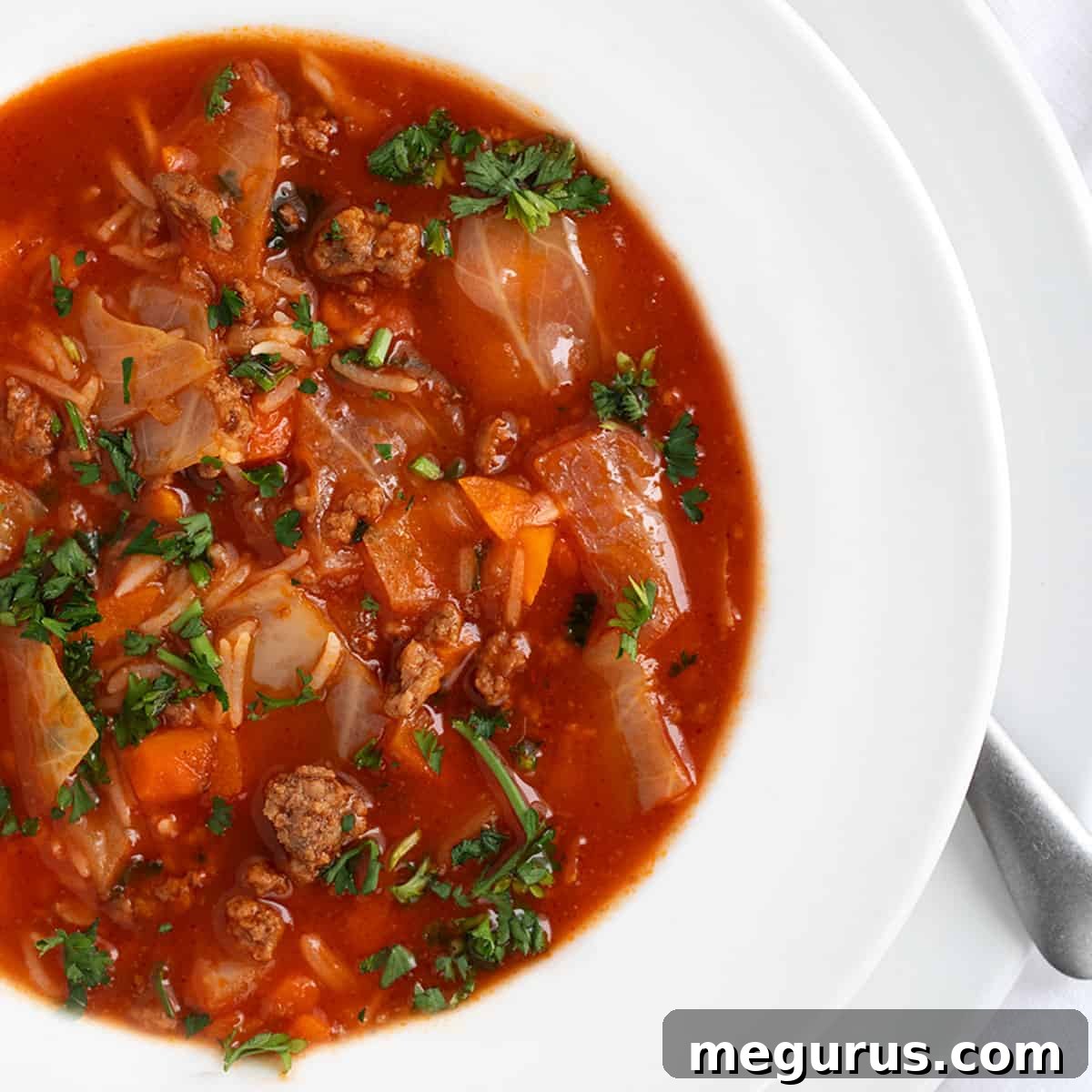
Imagine all the comforting, hearty flavors of traditional cabbage rolls, but transformed into a warm, satisfying soup – easier to make and even more delightful to spoon. This Slow Cooker Cabbage Roll Soup recipe delivers just that, offering a convenient way to enjoy a classic comfort food without the fuss of rolling individual cabbages. It’s perfect for chilly evenings, busy weeknights, or whenever you crave a wholesome meal that practically cooks itself.
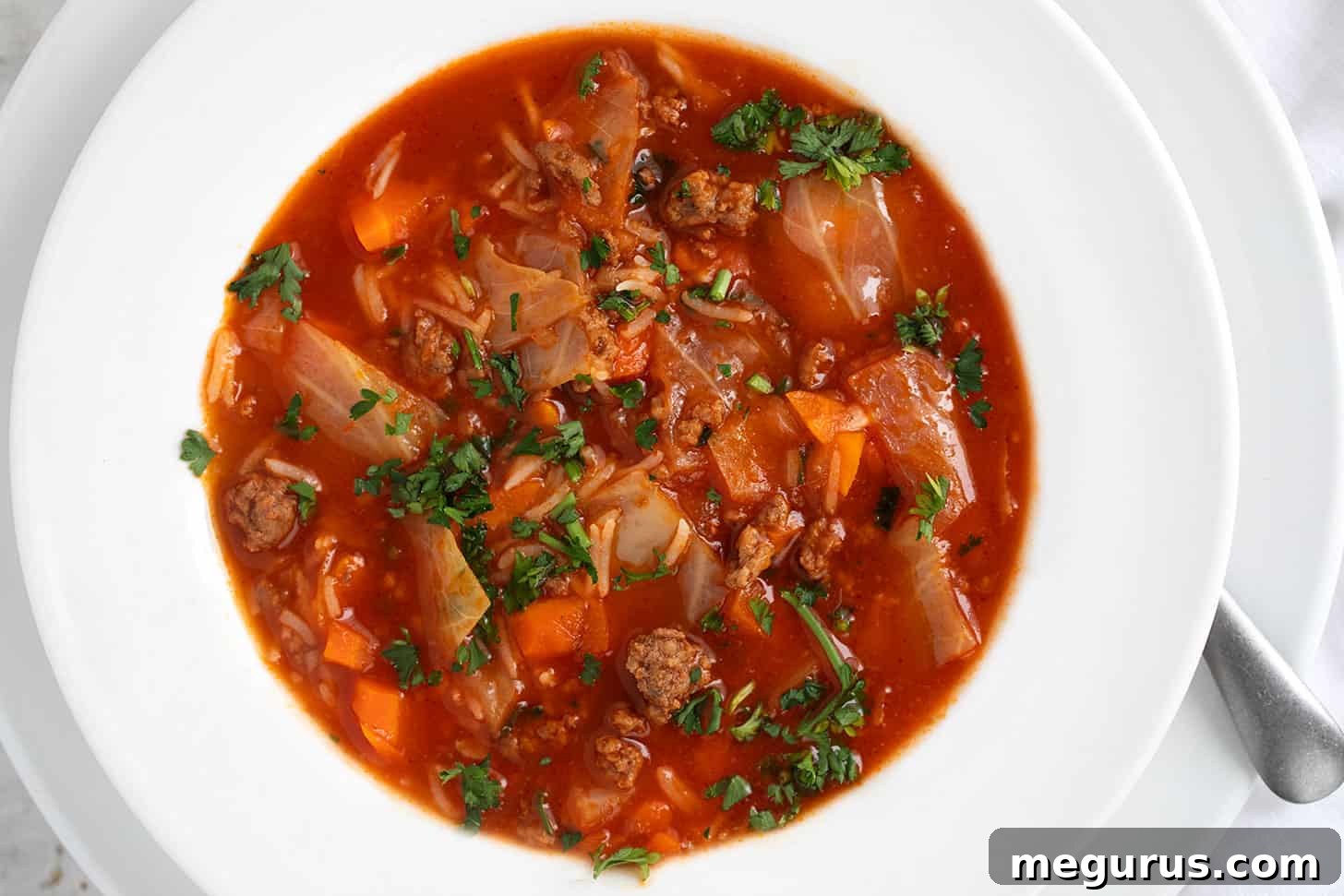
While my slow cooker might not be a daily fixture in my kitchen, it truly shines when the winter chill sets in. There’s an undeniable magic in knowing a warm, robust soup is slowly simmering on the counter, filling your home with inviting aromas, promising a delicious dinner with minimal effort. This Slow Cooker Cabbage Roll Soup embodies that magic, offering a deeply flavorful and nourishing meal. And don’t worry if you don’t own a slow cooker; I’ve also included comprehensive instructions for preparing this delightful soup on the stovetop, ensuring everyone can enjoy its comforting goodness.
Why You’ll Love This Easy Cabbage Roll Soup Recipe
This soup isn’t just a meal; it’s an experience. It captures the essence of homemade comfort, simplifying a beloved dish into an effortless, one-pot wonder. Here’s why it’s bound to become a staple in your recipe rotation:
- Uncomplicated Comfort: Enjoy all the robust flavors of traditional cabbage rolls without the time-consuming process of individual rolling. It’s the perfect shortcut to a classic dish.
- Set-It-and-Forget-It Convenience: The slow cooker does most of the work for you, allowing you to go about your day while a delicious meal simmers to perfection.
- Hearty & Wholesome: Packed with nutritious vegetables like cabbage, carrots, and onions, combined with lean ground beef, this soup is incredibly filling and nourishing.
- Deep, Developed Flavors: Slow cooking allows the ingredients to meld beautifully, creating a rich, complex broth that is both savory and slightly sweet.
- Versatile & Adaptable: Easily customize ingredients to suit your dietary preferences or what you have on hand. Don’t have a slow cooker? A stovetop version is also included!
- Perfect for Meal Prep: This soup holds up wonderfully for leftovers, often tasting even better the next day, making it ideal for batch cooking and freezing.
The Hearty History of Cabbage Rolls and Their Soup Counterpart
Cabbage rolls, or “golubtsi” in Eastern Europe, “sarma” in the Balkans, and “holishkes” among Ashkenazi Jews, are a culinary staple across many cultures. These humble parcels of ground meat and rice, wrapped in blanched cabbage leaves and simmered in a savory tomato-based sauce, represent warmth, family, and tradition. The dish likely originated in the Middle East and was brought to Europe, where it evolved with local ingredients and customs. The slow cooking method ensures the cabbage softens to a tender consistency, while the filling absorbs the rich flavors of the sauce.
The “cabbage roll soup” concept emerged as a brilliant way to capture these cherished flavors in an even more accessible format. It bypasses the delicate, often time-consuming task of rolling each individual leaf, transforming the dish into a more casual, family-friendly soup. This inventive adaptation maintains the authentic taste profile – a harmonious blend of sweet, sour, and savory – while offering a much simpler preparation method, perfect for modern busy lifestyles without sacrificing tradition.
Essential Ingredients for Your Perfect Cabbage Roll Soup
Crafting this flavorful soup begins with selecting quality ingredients. Here’s a closer look at what you’ll need and some helpful notes on substitutions:
Cabbage: The Star of the Show
You’ll want a medium to large head of green cabbage for this recipe. Typically, you’ll use about 1/3 to 1/2 of it, depending on its size and how much cabbage you prefer in your soup. Coarsely chopping the cabbage into manageable pieces will ensure it softens beautifully during the slow cooking process, releasing its subtle sweetness into the broth.
Creative Uses for Leftover Cabbage – Don’t let the rest of that cabbage go to waste! It’s incredibly versatile. Consider making a refreshing coleslaw, adding it to a quick stir-fry, incorporating it into mashed potatoes for a traditional colcannon, sautéing it with butter and bacon in a skillet for a simple side, creating an “egg roll in a bowl” for a deconstructed delight, or roasting cabbage wedges in the oven with olive oil, salt, pepper, and a pinch of red pepper flakes for a surprisingly delicious side dish.
Ground Beef: Your Hearty Protein Base
For the ground beef, you can opt for medium, lean, or extra-lean varieties. While leaner cuts are often preferred for health reasons, any type will work here. We’ll be browning the meat and spooning off any excess fat anyway, which helps keep the soup from becoming greasy. If you’re looking for alternatives, ground turkey, ground pork, or even a plant-based ground meat substitute can be used to adapt the recipe to different dietary needs or preferences.
Tomato Sauce: The Rich Foundation
Start with a large can of plain tomato sauce. I often reach for Hunt’s brand, but any quality brand will do. This forms the essential tangy and sweet base of your soup. If tomato sauce isn’t available, or if you prefer a chunkier texture, a similar-sized can of diced tomatoes, crushed tomatoes, or even a mix of tomato paste and water can serve as excellent substitutes. Adjust seasonings like brown sugar accordingly if using different tomato products, as their sweetness can vary.
Carrots & Onions: Aromatic Vegetables
You’ll need about two medium carrots for this recipe. For the slow cooker version, you can halve or quarter them lengthwise before slicing, as the long cooking time will ensure they become tender. If you’re opting for the stovetop method, it’s best to chop the carrots into smaller, more uniform pieces to guarantee they cook thoroughly in the shorter cooking duration. A finely diced onion (about 1 cup) adds crucial aromatic depth, caramelizing slightly during the initial browning stage and infusing the entire soup with a savory base.
Rice: The Filling Element (Added Separately!)
Long-grain rice is generally recommended for its texture, but basmati rice also works wonderfully, offering a fragrant twist. The key here is to cook the rice separately according to package directions and add it at the very end. I personally enjoy a slightly richer soup, so I start with about 3/4 cup of uncooked rice, which yields approximately 2 cups cooked. If you prefer less rice or a thinner soup, feel free to reduce that amount to about 1/2 cup uncooked rice (yielding about 1 1/2 cups cooked). The reasons for cooking the rice separately are crucial and detailed in the ‘Recipe Tips’ section below.
Beef Broth & Seasonings: Flavor Depth
A good quality beef broth is essential for the soup’s robust flavor. You’ll need about 4 cups. Alongside this, a touch of brown sugar balances the acidity of the tomatoes and enhances the overall sweetness, mimicking the classic cabbage roll taste. Worcestershire sauce adds an umami punch, deepening the savory notes. A single bay leaf will infuse the soup with subtle herbal complexity, which you’ll remove before serving. Don’t forget to season generously with salt and freshly ground black pepper to taste throughout the cooking process.
Crafting Your Cabbage Roll Soup: Step-by-Step Guide
This section provides a detailed summary of the steps to create this comforting slow cooker cabbage roll soup. Remember to always refer to the complete recipe card below for precise measurements and additional notes. If you’re making this on the stovetop, please skip ahead to the dedicated “Stovetop Cabbage Roll Soup” section for specific instructions.
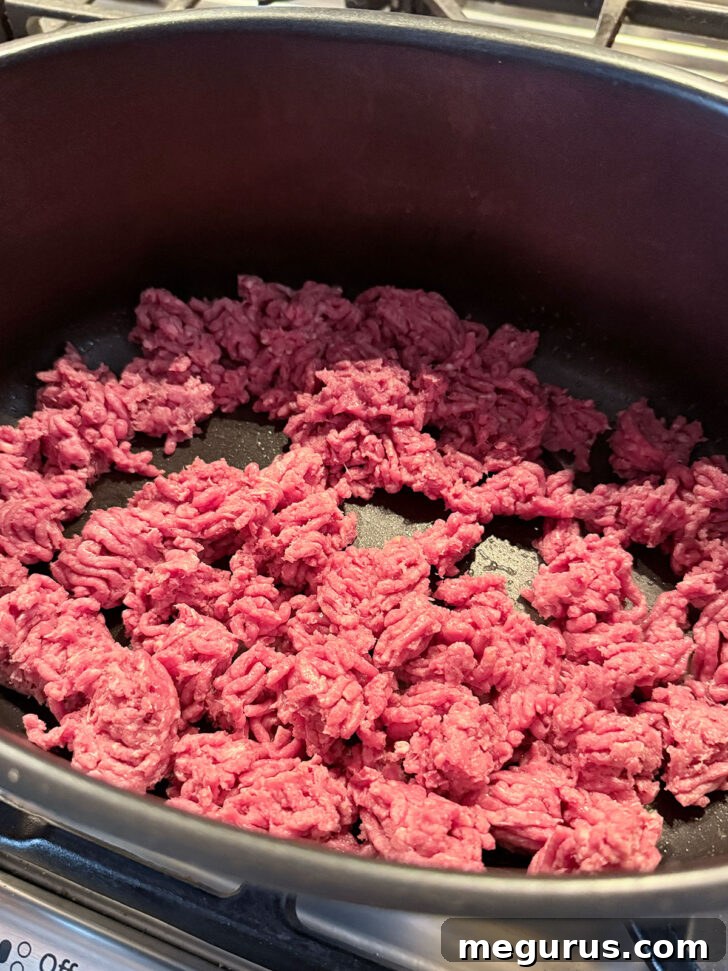
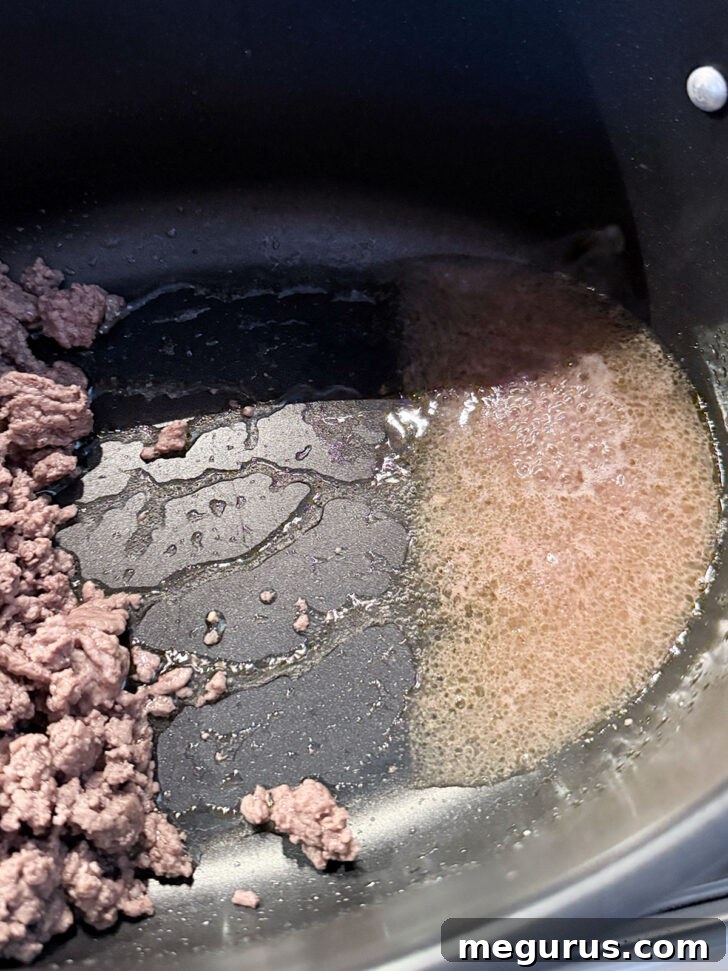
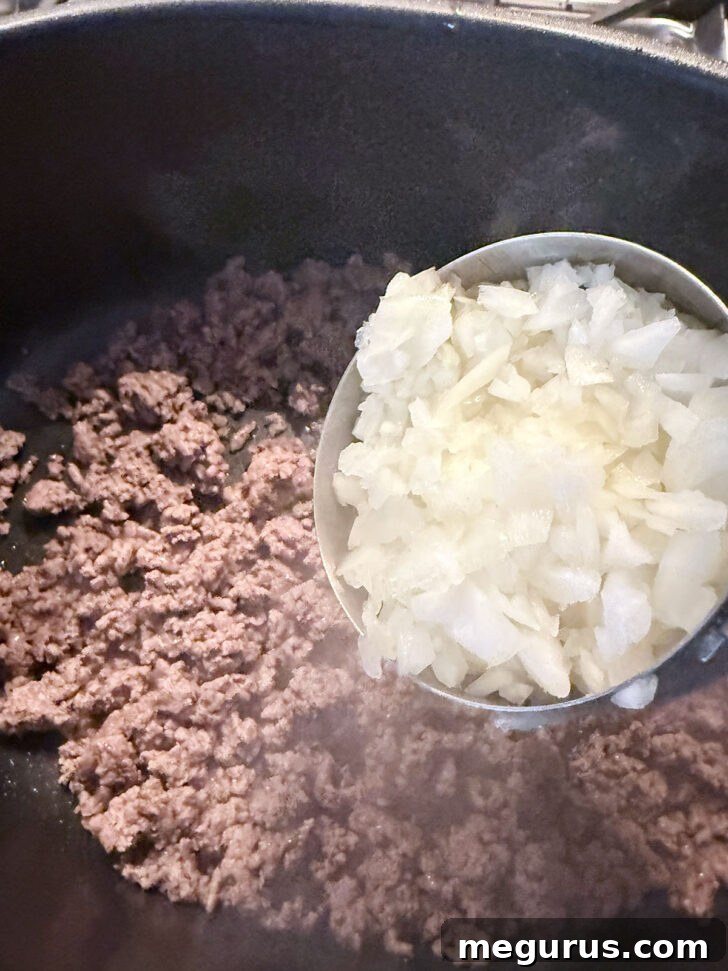
- Prepare Your Cooking Vessel: If you have a two-piece slow cooker with a stovetop-safe insert, you can brown the meat directly in it. Otherwise, use a large skillet on your stovetop to cook the ground beef and onion, then transfer it to your slow cooker once done.
- Brown the Ground Beef: Heat the olive oil in your skillet (or slow cooker insert) over medium heat. Add the ground beef and cook, breaking it up with a spoon, until it is thoroughly browned, which typically takes about 4-5 minutes.
- Drain Excess Fat: Carefully spoon off and discard any excess fat that has rendered from the beef. This step is important for preventing a greasy soup.
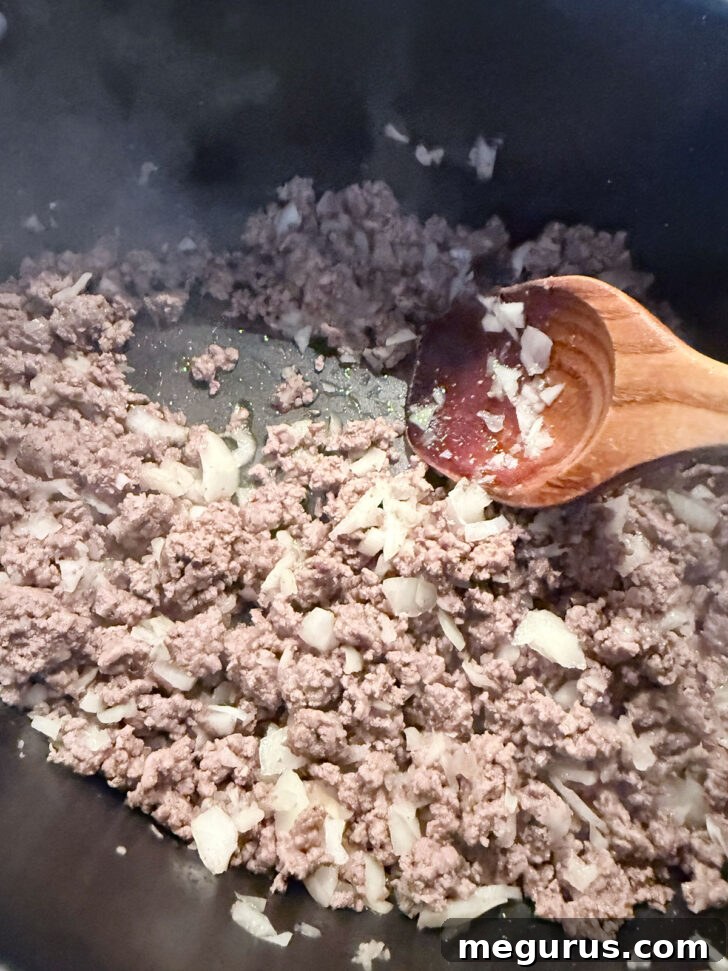
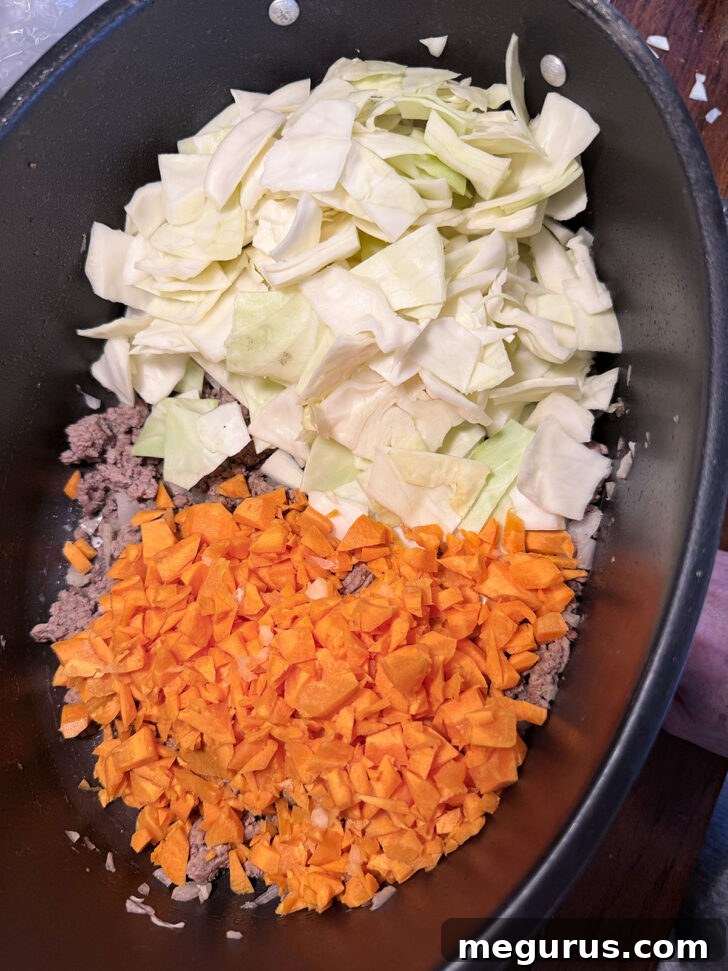
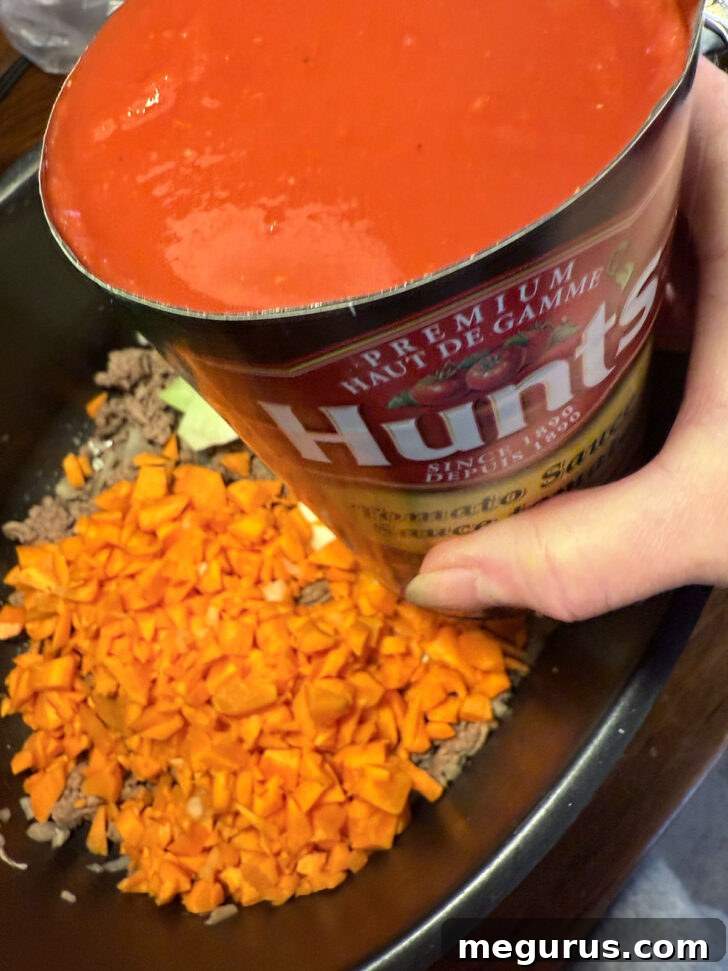
- Sauté the Onion: Add the finely diced onion to the skillet with the browned beef. Cook, stirring occasionally, until the onion softens and becomes translucent, which usually takes about 2-3 minutes. This step builds a foundational flavor layer for the soup.
- Combine in Slow Cooker: If you used a separate skillet, transfer the beef and onion mixture into your slow cooker. Then, add the coarsely chopped cabbage and diced or sliced carrots to the slow cooker.
- Add Tomato Sauce: Pour the canned tomato sauce over the ingredients in the slow cooker.
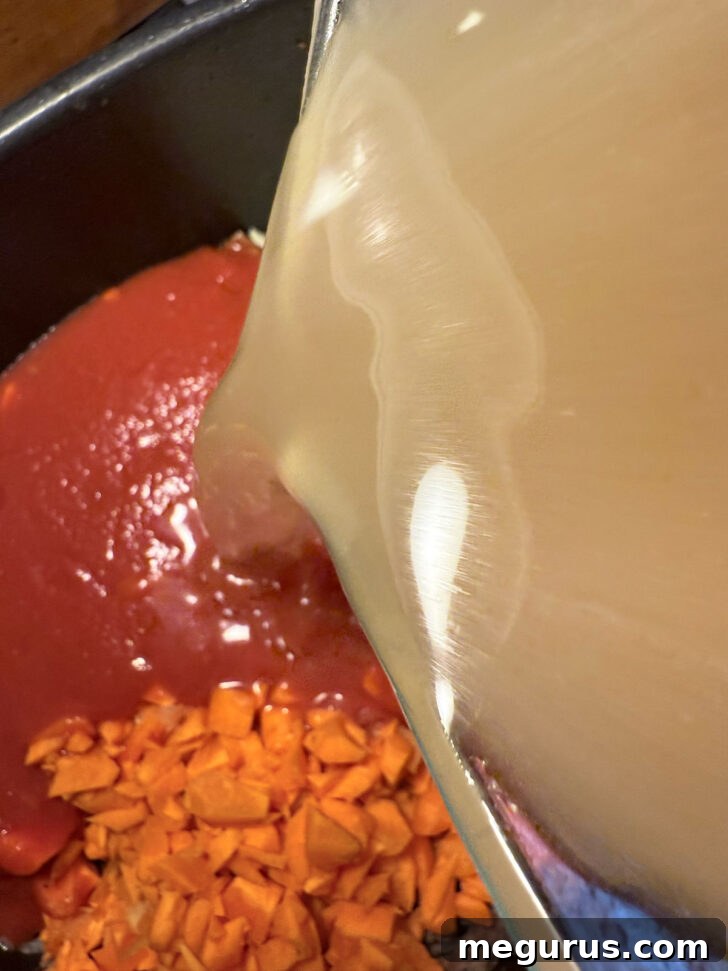
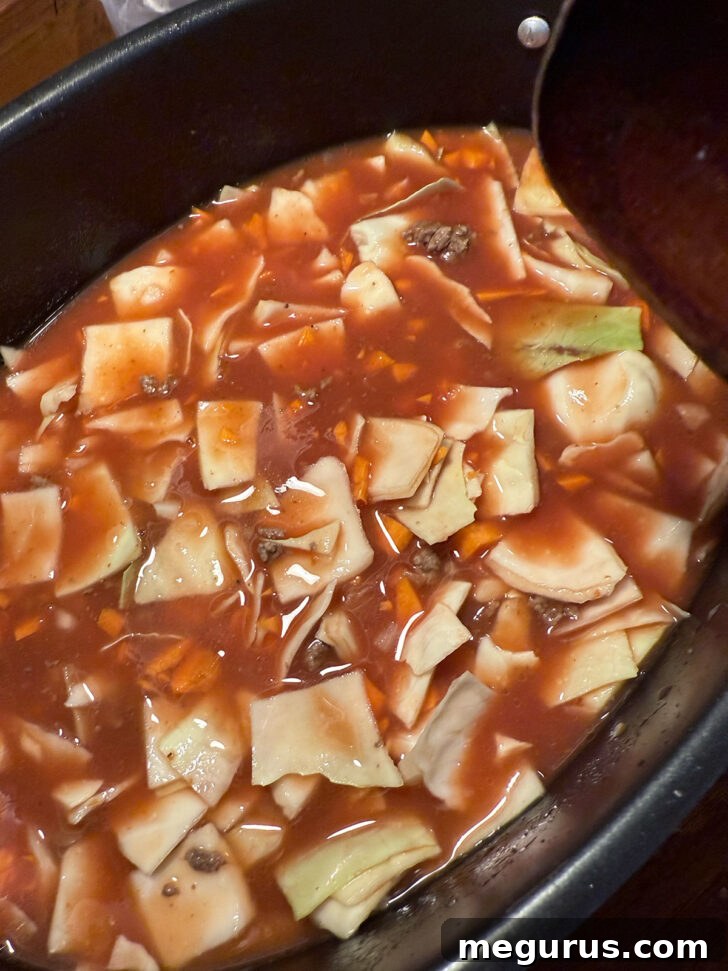
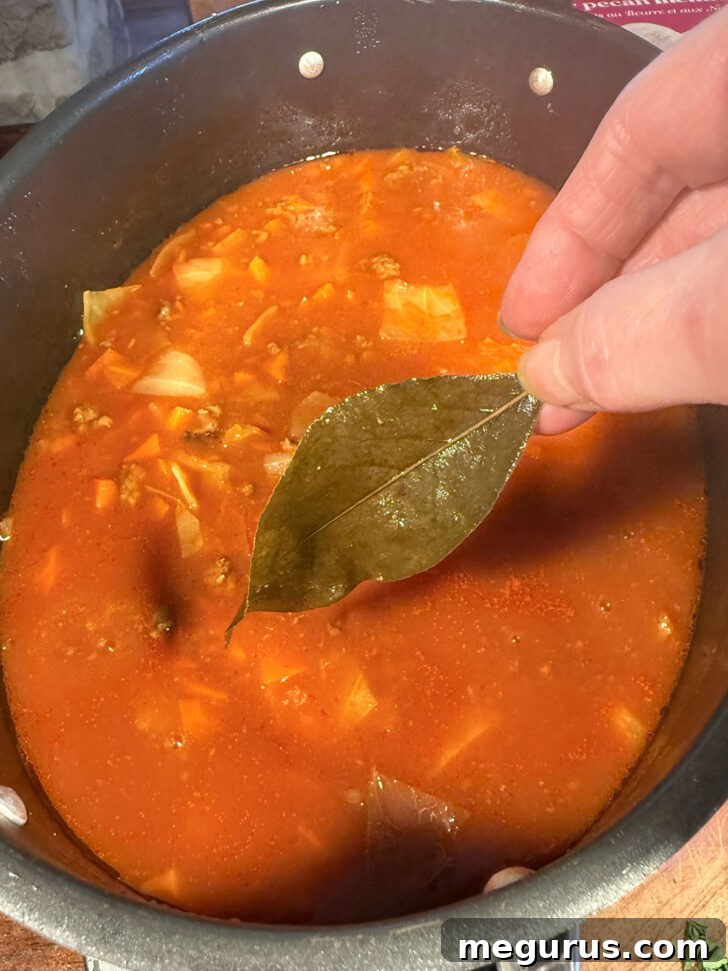
- Add Broth and Seasonings: Pour in the beef broth. Stir in the brown sugar and Worcestershire sauce. Add a pinch of salt and pepper to start, remembering you can always adjust later. Finally, tuck in the bay leaf. Stir everything gently to combine.
- Slow Cook to Perfection: Cover the slow cooker with its lid. Cook the soup for 4 hours on the HIGH setting or for 8 hours on the LOW setting. The longer, slower cooking time truly allows the flavors to deepen and the cabbage to become wonderfully tender.
- Discard Bay Leaf: Once the cooking time is complete, carefully remove and discard the bay leaf. It has served its purpose in flavoring the soup.
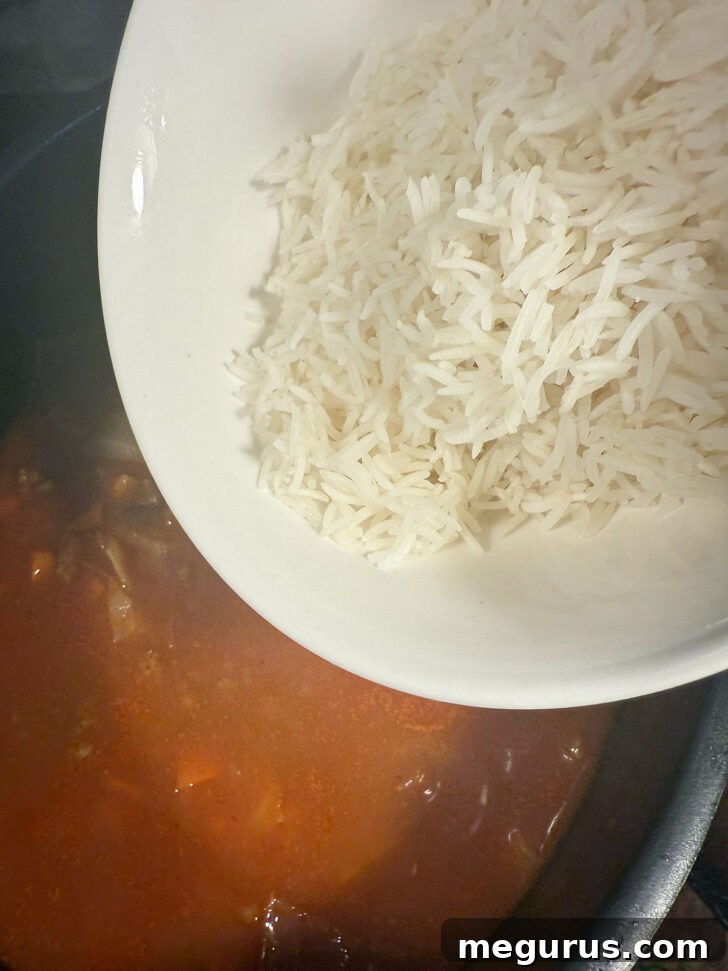
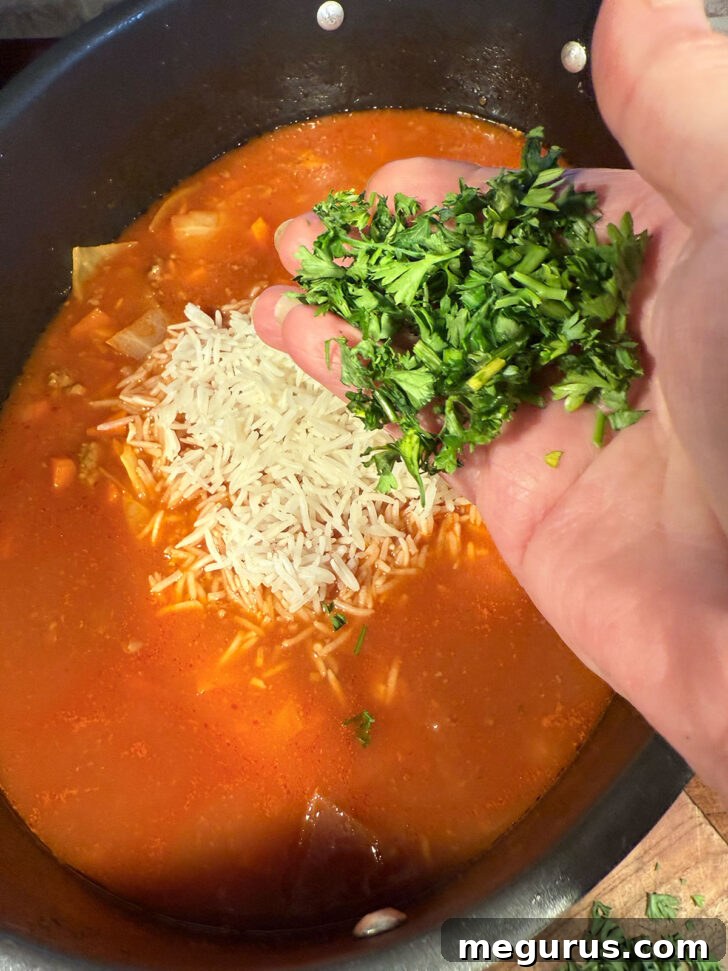
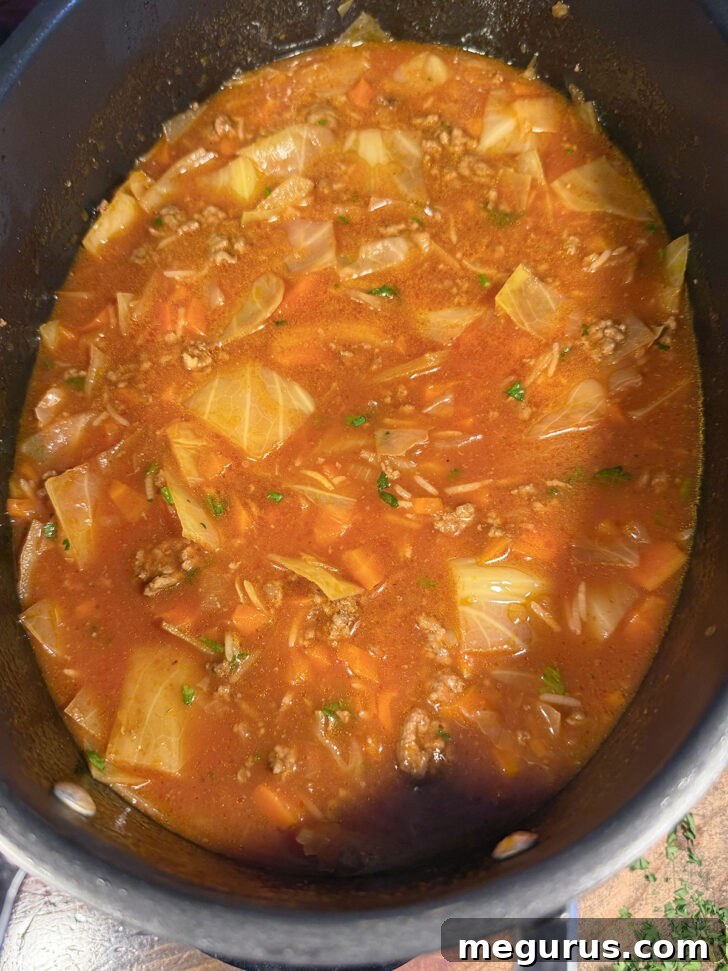
- Prepare the Rice: Approximately 30-40 minutes before the soup is scheduled to be finished, cook your long-grain or basmati rice according to the package instructions in a separate lidded saucepan or a rice cooker.
- Incorporate Rice & Parsley: Stir the cooked rice directly into the hot soup. Alternatively, for greater control over texture and for meal prep, you can ladle the hot soup over individual servings of cooked rice in bowls. Stir in the fresh chopped parsley (or dried parsley) at this stage.
- Adjust Seasoning: Taste the soup and add additional salt and freshly ground pepper as needed. Proper seasoning is crucial – if the soup tastes “flat,” it likely needs more salt to bring out its full range of flavors. Serve hot and enjoy!
Stovetop Cabbage Roll Soup: A Quicker Alternative
No slow cooker? No problem! This delicious Cabbage Roll Soup can be easily adapted for stovetop cooking, offering a faster route to this comforting meal. Here’s how to do it:
- Brown Beef and Sauté Onions: In a large soup pot or Dutch oven, heat the olive oil over medium heat. Add the ground beef and cook, breaking it apart, until it is fully browned (about 4-5 minutes). Drain any excess fat. Add the finely diced onion to the pot and cook, stirring, until it softens and becomes translucent (another 2-3 minutes).
- Add Remaining Ingredients (Excluding Rice): To the pot with the beef and onions, add the coarsely chopped cabbage, diced carrots, beef broth, tomato sauce, brown sugar, Worcestershire sauce, and the bay leaf. Stir everything together until well combined.
- Simmer the Soup: Bring the soup mixture to a boil over medium-high heat. Once boiling, reduce the heat to medium-low, cover the pot, and let it simmer for about 25-30 minutes, or until the cabbage and carrots are tender.
- Cook and Add Rice (Optional): At this point, you have two options for the rice:
- Cook rice directly in the soup: If you want the rice to cook with the soup, stir in 1/2 cup of uncooked long-grain rice (or basmati) directly into the simmering soup. Continue to simmer, covered, for another 15-20 minutes, or until the rice is tender and has absorbed some of the broth. Be aware that this method will result in a thicker soup and the rice may become mushier if reheated.
- Cook rice separately: For better texture control and for leftovers, cook 1/2 to 3/4 cup of uncooked rice in a separate saucepan according to package directions. Add the cooked rice to individual bowls before ladling in the hot soup.
- Finish and Serve: Remove and discard the bay leaf. Stir in the fresh chopped parsley. Taste the soup and adjust seasonings with salt and pepper as needed. Serve hot!
Expert Tips for the Best Cabbage Roll Soup
- Seasoning is Key: Don’t be shy with salt and pepper! Proper seasoning brings out the full depth of flavors. Taste and adjust multiple times throughout the process, especially before serving. If your soup tastes a bit bland, it almost certainly needs more salt.
- Don’t Overcrowd the Slow Cooker: Ensure there’s enough space for the cabbage to cook down. Cabbage looks like a lot at first, but it wilts significantly.
- Customizing Vegetables: Feel free to add other vegetables like diced bell peppers, celery, or even a can of drained corn for extra flavor and nutrients. Add these at the beginning with the carrots and cabbage.
- Sweetness Balance: The brown sugar helps to balance the acidity of the tomatoes. If your tomatoes are particularly tart, you might add a tiny bit more sugar, or if they’re very sweet, a touch of apple cider vinegar can brighten the flavor.
The Rice Dilemma: Why Cook Separately?
- You might be tempted to simply add uncooked rice directly to the slow cooker from the start, thinking it saves a step. However, this is generally not recommended for a couple of key reasons. First, if you add the rice at the beginning of the slow cooking process (4-8 hours), it would be severely overcooked and turn mushy, losing its texture entirely.
- Second, rice is a significant liquid absorber. If cooked directly in the soup, it would soak up a considerable amount of that delicious broth, potentially leaving you with a very thick, stew-like consistency instead of a soupy one, and possibly causing the slow cooker to run dry.
- Adding the rice separately at the end of cooking is a small extra step, but it ensures your rice is perfectly cooked and allows you to control the exact amount you add to your bowl. This method guarantees a delightful texture in every spoonful and helps maintain the desired consistency of your soup.
- Furthermore, keeping the cooked rice separate from the soup until serving is a brilliant strategy if you’re planning for leftovers. When rice sits in soup for extended periods in the refrigerator, it continues to absorb liquid, making the soup much thicker and sometimes pasty. Serving the hot soup over separately cooked rice in a bowl prevents this, ensuring your leftovers remain just as enjoyable as the first serving.
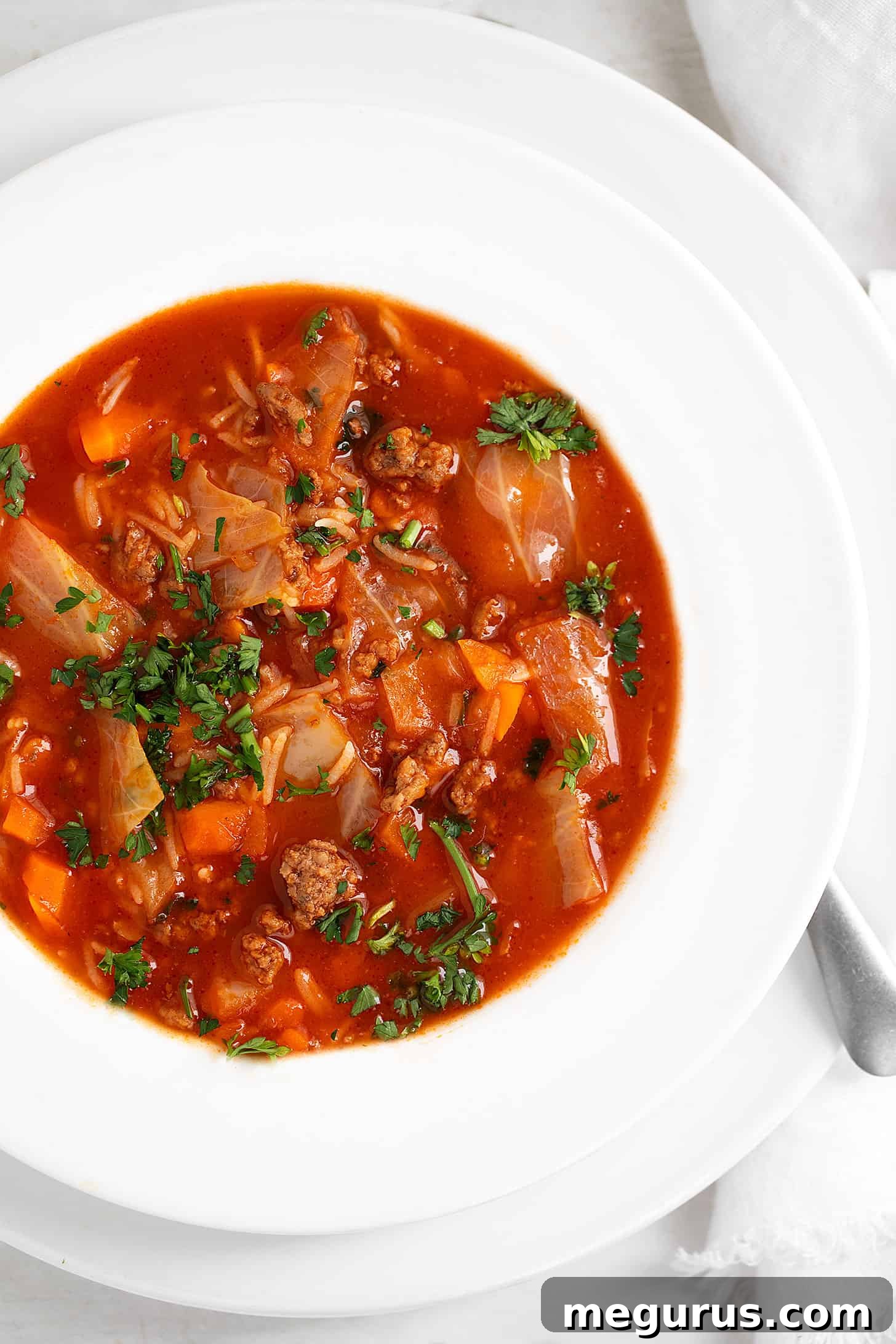
Serving Suggestions to Elevate Your Meal
This Slow Cooker Cabbage Roll Soup is a meal in itself, but a few simple additions can make it even more special:
- Crusty Bread: A warm, crusty loaf of bread or some dinner rolls are perfect for soaking up every last drop of the savory broth.
- Sour Cream or Greek Yogurt: A dollop of sour cream or plain Greek yogurt swirled into each serving adds a creamy tang that complements the tomato base beautifully.
- Fresh Herbs: Beyond parsley, a sprinkle of fresh dill or chives can add another layer of fresh flavor and visual appeal.
- Side Salad: A light green salad with a vinaigrette dressing can offer a refreshing contrast to the rich soup.
- Grated Cheese: A sprinkle of your favorite grated cheese, like cheddar or Parmesan, can add an extra savory touch.
Make Ahead, Storing, and Freezing for Convenience
One of the best features of this cabbage roll soup is how well it stores and freezes, making it an excellent candidate for meal prep or batch cooking.
- Making Ahead: If you plan to prepare the soup in advance, it is highly recommended to store the cooked rice and the soup separately. This prevents the rice from becoming overly mushy or absorbing too much of the broth, which can alter the soup’s texture.
- Storing Leftovers: Store any leftover soup (without the rice, if possible) in an airtight container in the refrigerator for up to 3 days. Store cooked rice in a separate airtight container for the same duration. Reheat gently on the stovetop or in the microwave, adding the rice just before serving.
- Freezing: This soup freezes exceptionally well for up to 3 months. Allow the soup to cool completely before transferring it to freezer-safe bags or containers, leaving some headspace for expansion. Thaw overnight in the refrigerator before reheating. As with storing, it’s best to freeze the soup without the rice. You can cook fresh rice when you’re ready to enjoy the thawed soup, ensuring the best texture.
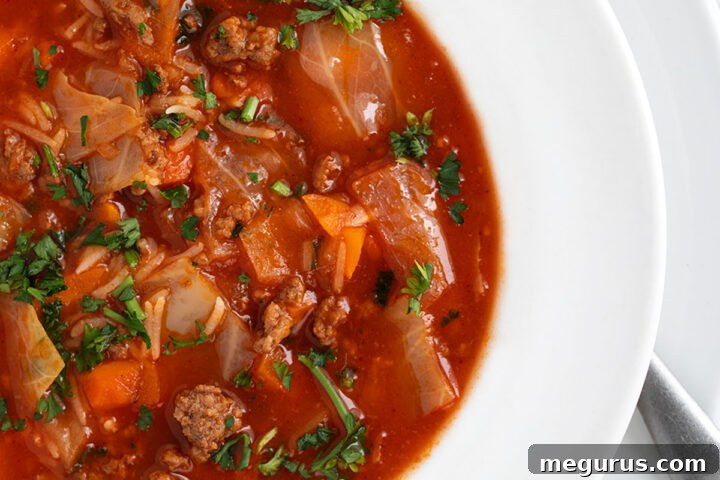
Slow Cooker Cabbage Roll Soup
Enjoy all the beloved flavors of traditional cabbage rolls in this incredibly easy and hearty soup form. Perfect for the slow cooker or stovetop!
- Prep Time: 15 mins
- Cook Time: 4 hrs (on HIGH) or 8 hrs (on LOW)
- Total Time: 4 hrs 15 mins
- Yield: 6 servings
Ingredients
- 2 teaspoons olive oil (or other cooking oil)
- 1 lb ground beef
- 1 cup onion, finely diced
- 4 cups green cabbage, coarsely chopped
- 2 cups carrots, peeled and diced or quartered and sliced
- 4 cups beef broth
- 23 oz (680 ml) canned tomato sauce
- 2 teaspoons brown sugar
- 1 teaspoon Worcestershire sauce
- 1 bay leaf
To add after cooking:
- Salt and pepper, to taste
- 1 1/2 – 2 cups cooked long grain or basmati rice (from 1/2-3/4 cup uncooked rice)
- 2-3 Tablespoons fresh parsley, chopped (or 1 Tbsp dried parsley)
Instructions
- Note: This recipe primarily details the slow cooker method. For stovetop instructions, please refer to the “Stovetop Cabbage Roll Soup” section above.
- If your slow cooker has a stovetop-safe insert, you can brown the ground beef and onion directly in it. Otherwise, use a separate skillet for browning, then transfer to the slow cooker.
- Heat the olive oil in a skillet or slow cooker insert over medium heat. Add the ground beef and cook, stirring and breaking it up, until browned (4-5 minutes). Spoon off and discard excess fat. Add the finely diced onion and cook until softened (2-3 minutes more).
- Transfer the ground beef mixture to the slow cooker (if using a separate skillet).
- Add the coarsely chopped cabbage, diced carrots, beef broth, tomato sauce, brown sugar, Worcestershire sauce, and the bay leaf to the slow cooker. Stir to combine all ingredients.
- Cover the slow cooker with the lid and cook for 4 hours on HIGH or 8 hours on LOW.
- Approximately 30 minutes before the soup is done, cook the rice according to package instructions in a separate saucepan or rice cooker.
- Once the soup is cooked, carefully remove and discard the bay leaf.
- Stir the cooked rice into the soup. Alternatively, for better control over texture and for meal prep, you can serve the hot soup over individual servings of cooked rice in bowls.
- Stir in the fresh chopped parsley. Taste the soup and adjust seasonings with additional salt and freshly ground pepper as needed. A well-seasoned soup is a flavorful soup!
Notes
Stovetop Cabbage Roll Soup Method: Refer to the dedicated “Stovetop Cabbage Roll Soup” section above for full instructions on how to make this soup without a slow cooker.
Tips for Rice: It is strongly recommended to cook rice separately and add it at the end, or to individual bowls, to prevent it from becoming mushy and absorbing too much broth during cooking or storage. See the “Expert Tips” section for a detailed explanation.
- Cuisine: American, Canadian
- Course: Soup
- Author: Jennifer Maloney
Nutrition Facts (per serving)
Serving: 1 serving, Calories: 341kcal, Carbohydrates: 28g, Protein: 18g, Fat: 17g, Saturated Fat: 6g, Polyunsaturated Fat: 1g, Monounsaturated Fat: 8g, Trans Fat: 1g, Cholesterol: 54mg, Sodium: 1215mg, Potassium: 900mg, Fiber: 5g, Sugar: 11g, Vitamin A: 7759IU, Vitamin C: 31mg, Calcium: 86mg, Iron: 3mg