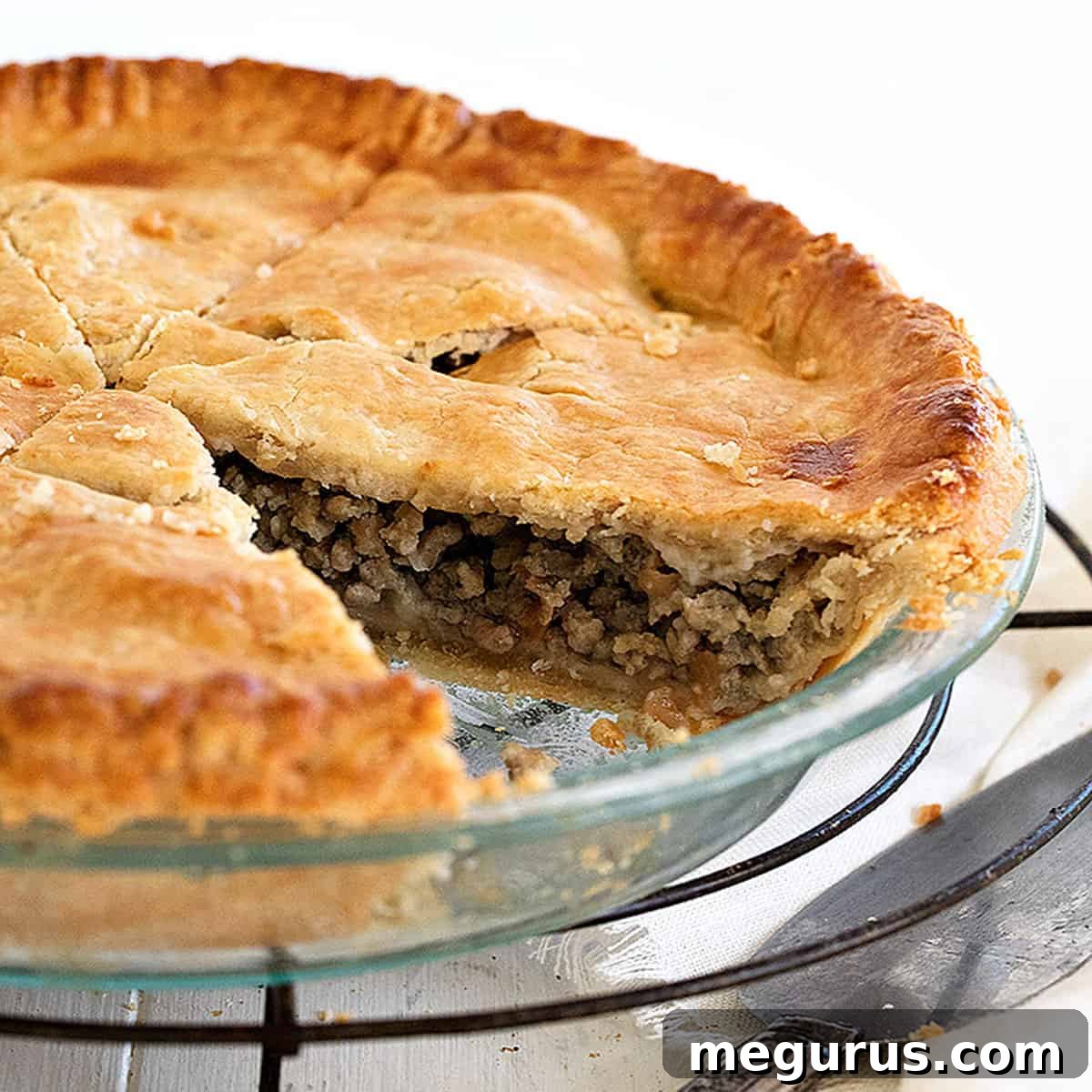
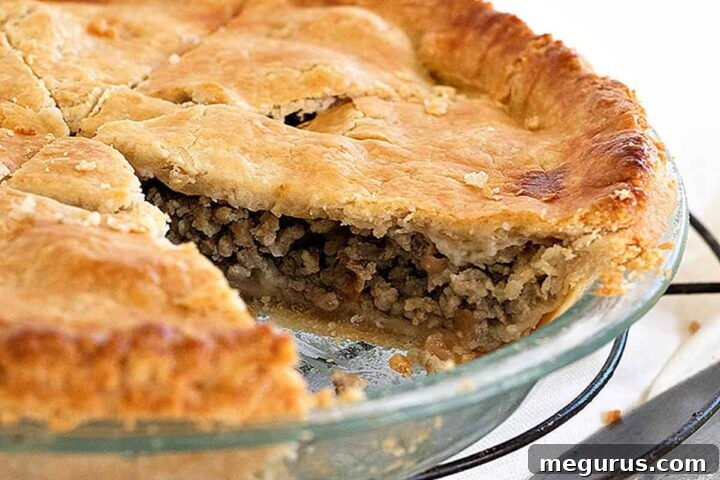
Discover the heartwarming essence of French-Canadian cuisine with this classic Tourtière recipe. Featuring a delightfully spiced ground pork filling encased in a golden, homemade flaky pastry, this traditional meat pie is a culinary journey to the heart of Quebec. Whether it’s a cherished holiday tradition or a comforting meal on a cold winter’s night, our Tourtière promises a taste of authentic Canadian heritage.
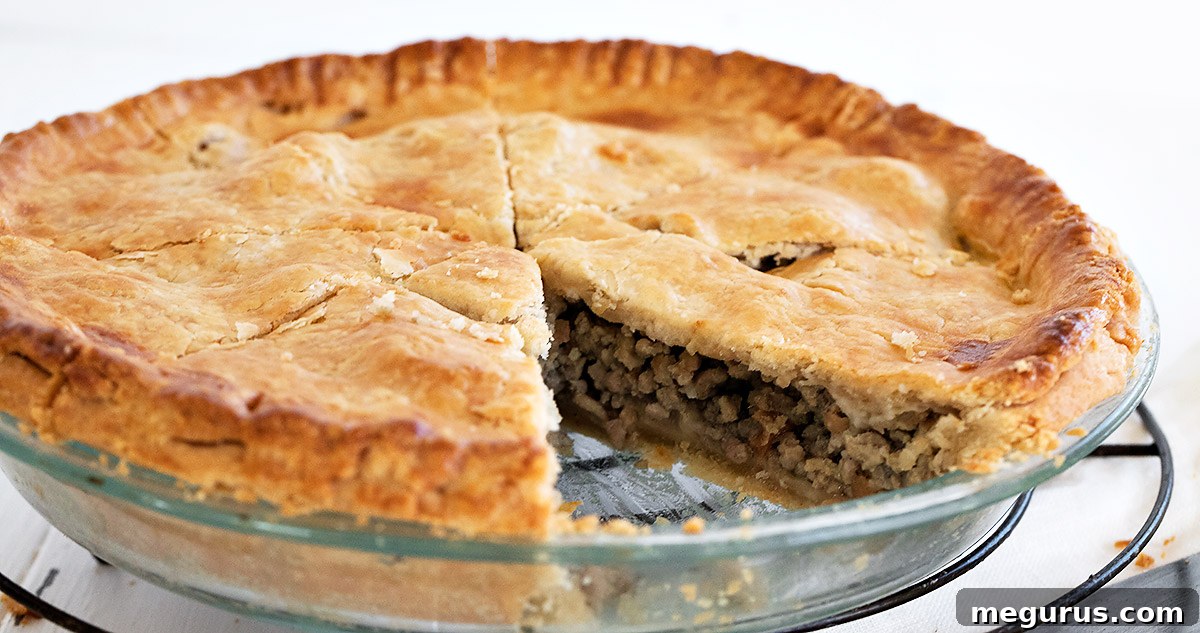
Classic French-Canadian Tourtière: A Hearty Holiday Tradition
Tourtière, a beloved French-Canadian meat pie, holds a special place in the hearts and on the tables of many Canadian families, particularly during the festive season. Traditionally served on Christmas Eve or New Year’s Eve, it embodies comfort and celebration. This particular recipe is a cherished family heirloom, passed down from my mother, and stands out as one of my absolute favorites. Its hallmark is a rich, moist ground pork filling, delicately seasoned with a blend of traditional spices that evoke warmth and nostalgia.
For those unfamiliar, the pronunciation of Tourtière can be a bit tricky. While some might suggest “tor-tee-air,” you’ll more commonly hear it pronounced with just two syllables, like “tor-tyair” or “tour-tyair.” No matter how you say it, the taste is universally delightful.
The Secret to the Perfect Tourtière: Flaky Lard Pastry
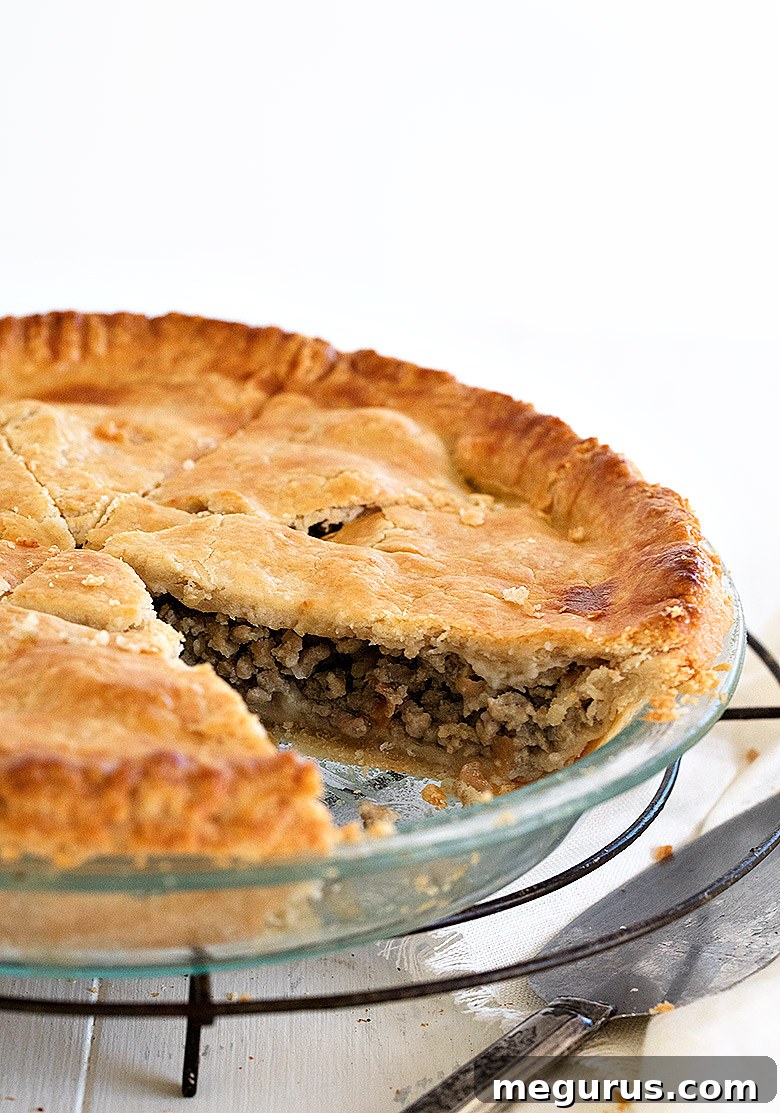
In my experience, what truly elevates a great Tourtière is an exceptionally flaky, tender, and flavorful lard-based pastry. This is why I’ve included a straightforward pastry recipe here. As someone who’s often found pastry-making a challenge, I can confidently say this recipe is approachable even for beginners. The unique properties of lard contribute to a superior texture and richer flavor that vegetable shortenings or even butter simply cannot replicate. Lard, being an animal fat, creates distinct pockets of steam during baking, resulting in that coveted airy, flaky crust. However, we understand the holiday season can be incredibly busy, so if you opt for a high-quality store-bought pastry, rest assured, there will be no judgment here – the goal is to enjoy this wonderful tradition!
Planning Ahead: Make-Ahead & Freezing Advantages
One of the many beautiful things about Tourtière is its incredible versatility for advance preparation. This pie freezes beautifully, both before and after baking, making it a true lifesaver during the bustling holiday period. Imagine having a homemade meal ready to go, waiting in your freezer for those days when time is short. It’s not just a time-saver; a homemade Tourtière also makes for a thoughtful and much-appreciated gift, bringing warmth and flavor to friends and family. This make-ahead capability allows you to spread out your holiday cooking tasks, reducing stress and increasing enjoyment.
Key Ingredients & Thoughtful Substitutions
Understanding the role of each ingredient and knowing your substitution options is key to mastering your Tourtière. Here’s a closer look:
Lard: In many parts of Canada, brands like Tenderflake™ are synonymous with quality lard, but any rendered animal fat will work. Lard differs significantly from vegetable shortening because it is animal-based. This distinction is crucial for both texture and flavor. Lard contributes to an incredibly flaky and tender crust with a subtle, savory richness that enhances the pie’s overall profile. If lard is not an option, butter is a superior substitute to vegetable shortening, though vegetable shortening can be used in a pinch, it won’t yield the same delicate flakiness.
Cake and Pastry Flour: This specific type of flour, commonly found in Canada and often packaged by brands like Monarch (look for the red checkered bag!), is a soft wheat flour. It has a lower protein content compared to all-purpose flour, which is ideal for creating a tender and delicate pastry. If you can’t find flour explicitly labeled “Cake and Pastry Flour,” you can substitute it with a combination of all-purpose flour (roughly 2 tablespoons less per cup) and a small amount of cornstarch (2 tablespoons per cup of flour removed) to reduce the protein content, or simply use a good quality unbleached all-purpose flour for a slightly chewier crust.
Ground Pork: While this recipe champions an all-pork filling for its rich, succulent flavor and moist texture, Tourtière is incredibly versatile. You can certainly use a blend of ground meats, such as pork and beef, or even incorporate other options like ground veal, lamb, or wild game like venison or moose. The key is to ensure the meat is finely ground to achieve the characteristic smooth texture of a traditional Tourtière filling. The fat content of the pork is important; a medium-fat ground pork works best to keep the filling moist without being greasy.
Savory (Herb): As a Canadian, typing “savory” without a “u” always feels a little strange! However, it’s important to note that savory is an herb, not a spice mix, and indeed, it contains no “u” in its spelling. This herb, with its slightly peppery and minty undertones, is a signature flavor in classic Tourtière but is not as common in modern recipes. If you don’t typically keep it on hand and don’t wish to purchase a whole new jar for a small amount, you can omit it entirely (it’s only 1/8 of a teaspoon) or use a pinch of marjoram as a decent substitute. Savory comes in both ground and coarse leaf forms (often labeled Summer Savory). The measurement of 1/8 tsp almost certainly refers to ground savory; if you only have the coarser leaf version, use a slightly larger pinch to ensure its subtle flavor comes through.
Bread Crusts (Fresh Breadcrumbs): This ingredient might seem unconventional, but it plays a crucial role in the filling’s texture and moisture balance. Using fresh bread crusts, crumbled, is essentially a way to incorporate fresh breadcrumbs. The fresh nature of the crumbs allows them to absorb excess moisture from the meat as it cooks, preventing a watery filling while still providing a tender, cohesive texture. Dry breadcrumbs, which absorb liquid differently, are not recommended as they can result in a drier, more crumbly filling. You can easily crumble the crusts in a food processor for a finer texture if preferred.
Other Traditional Spices: While this recipe keeps the spice profile subtle to let the meat shine, some Tourtière variations include warm spices like cloves, cinnamon, or allspice. If you enjoy these flavors, a small pinch (e.g., 1/8 teaspoon of ground cloves or cinnamon) can be added to the meat filling. The goal is to complement, not overpower, the savory meat with these aromatic notes, contributing to a truly nuanced and inviting pie.
Mastering Your Tourtière: Expert Recipe Tips
Achieving Tourtière perfection involves a few key techniques. Here are some tips to guide you:
Pastry Management: The provided pastry recipe yields enough for three 2-crust pies, but the filling recipe here is designed for two pies. This means you will have extra pastry. This is because scaling down pastry recipes, especially those involving eggs, can be tricky (e.g., needing 1/3 of an egg!). Don’t worry; the excess pastry can be wrapped tightly and refrigerated for a few days or frozen for several weeks to use in another pie or pastry creation. If you wish to make three pies, simply scale up the filling recipe by 50%.
Spice Considerations: Cloves are a frequent addition to many Tourtière recipes, lending a distinct aromatic warmth. However, personal preference often dictates their inclusion. If you’re a fan of cloves, a delicate pinch (about 1/8 teaspoon) can be added to the meat mixture. Similarly, other warm spices like cinnamon and allspice occasionally find their way into Tourtière fillings. When experimenting with these additions, remember that subtlety is key; you want to enhance the flavor profile, not mask the delicious taste of the meat.
Cooling the Meat Filling: This is a crucial step for achieving a perfect pie. Always ensure your meat mixture is completely cooled, and ideally refrigerated, before you place it into your pastry crust. Adding a warm filling to cold pastry can cause the pastry to soften, become greasy, or even begin to cook prematurely, compromising its flaky texture. Preparing the filling earlier in the day and allowing it to chill thoroughly is an excellent strategy for successful assembly and baking.
Top Tip for Flaky Pastry
For the absolute flakiest lard pastry, temperature control is paramount. Always strive to keep your pastry as cold as possible throughout the preparation and assembly process. Work quickly to minimize handling, which can transfer warmth from your hands to the dough. If at any point the pastry feels too warm or soft, don’t hesitate to pop the assembled pie (or even just the dough discs) into the freezer for 5-10 minutes before baking. This quick chill helps firm up the fat within the dough, ensuring those desirable flaky layers.
Serving Your Classic Tourtière
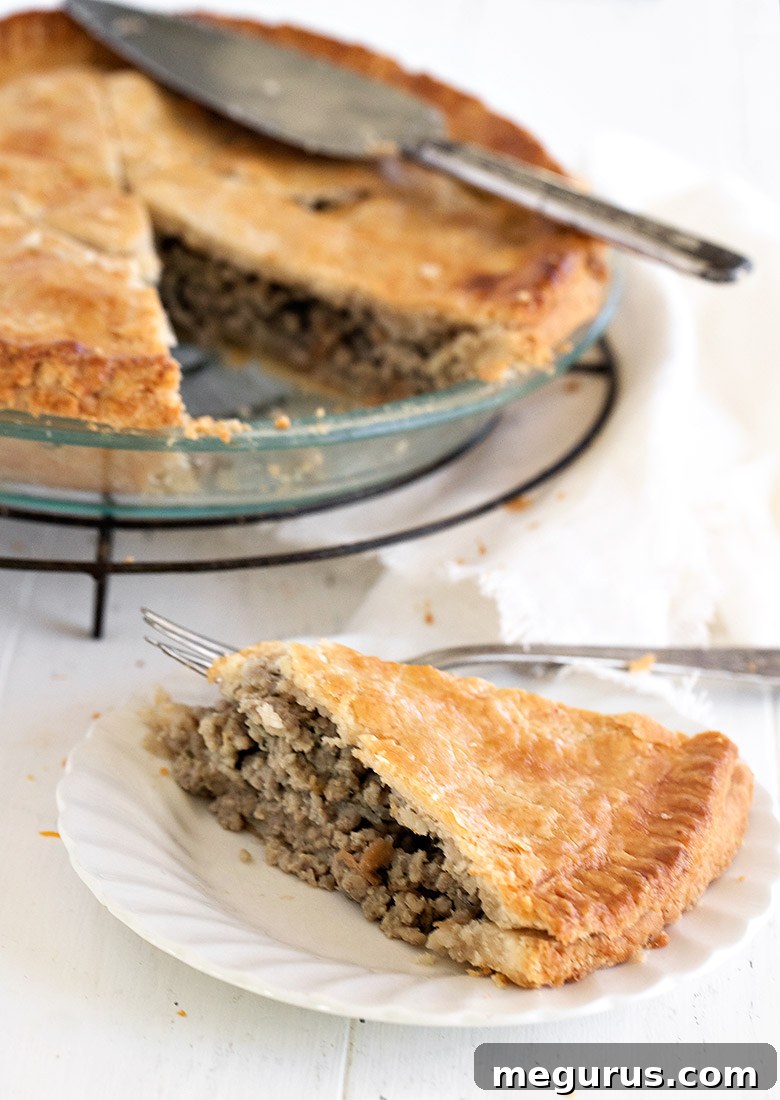
A beautifully baked Tourtière is a meal in itself, but it truly shines when served with complementary accompaniments. To balance the richness of the meat pie, offer an assortment of condiments. Classic choices include ketchup or a zesty chili sauce. Personally, I find a good mustard—whether it’s a smooth yellow, sweet honey mustard, or a robust grainy mustard—provides a delightful counterpoint. The acidity and pungency of mustard cut through the richness beautifully. Some also suggest tangy pickles, such as pickled beets or quick-pickled vegetables, for the same reason. While Tourtière is substantial, a simple side dish is often preferred. A crisp green salad provides a refreshing contrast, making for a perfectly balanced and satisfying meal without requiring too much fuss.
How to Freeze Your Tourtière for Future Enjoyment
Tourtière is an ideal dish for batch cooking and freezing, allowing you to savor its flavors long after the holiday season. Here’s how to do it effectively:
Freezing Unbaked Tourtière: For the absolute best results, freeze your Tourtière after it has been fully assembled but before baking. To do this, wrap the assembled, unbaked pie tightly in several layers of plastic wrap, followed by a layer of aluminum foil to prevent freezer burn. It can be stored in the freezer for up to 3-4 months. When you’re ready to bake, there’s no need to thaw it! Simply transfer the frozen pie directly to a preheated oven (you may need to extend the baking time by about 20-30 minutes, keeping an eye on it for even browning). Before placing it in the oven, remove the plastic wrap and foil, and brush the top generously with an egg wash (one egg whisked with 1 tablespoon of water) for a beautiful golden crust.
Freezing Cooked Tourtière: If you have leftover baked Tourtière, it can also be frozen. Allow the pie to cool completely to room temperature. Then, wrap it well in plastic wrap and aluminum foil. Cooked Tourtière can be stored in the freezer for up to 4 months. To reheat, there’s no need to thaw. Simply place the frozen, cooked Tourtière (covered loosely with foil to prevent over-browning) in a 350°F (175°C) oven. Bake until a knife inserted into the center comes out hot, indicating it is thoroughly warmed through.
Get the Recipe: Classic Tourtière
Pin This
Leave a Review
Ingredients
Meat Filling (for 2 pies):
- 2 lb ground pork
- 1 medium onion, finely diced
- 2 teaspoons salt
- 1 teaspoon dry mustard
- 1 teaspoon dried thyme leaves
- 1/2 teaspoons dried sage leaves
- 1/4 teaspoon savory, or marjoram or omit
- 1 cup water
- Crust from 4 or 5 slices of bread, crumbled
Pastry (see Notes):
- 1 lb lard
- 5 1/2 cups cake and pastry flour
- 4 Tablespoons brown sugar
- 1/2 teaspoon baking soda
- 1 teaspoon salt
- 1 large egg
- 1 Tablespoon vinegar
- Water, as needed
For brushing before baking:
- 1 large egg
- 1 Tablespoon water
Instructions
-
Prepare the filling: Mix all of the filling ingredients together in a saucepan. Cook over medium heat, stirring constantly, until the meat is no longer pink. Do not brown the meat. Lower heat and simmer uncovered for 30 minutes. Crumble bread crusts into mixture and stir until absorbed into the mixture. Remove mixture to a bowl, cover and refrigerate until chilled before using.
-
Make the pastry: In a large bowl, combine the flour, sugar, baking soda and salt. Cut in the lard with a pastry blender or two knives until the lard is incorporated. In a one cup measuring cup, beat together the egg and vinegar, then add enough water to the measuring cup until it measures 1 cup. Add this mixture to the flour mixture, adding about 2/3 of it at first, stirring, then adding just as much more as is needed to make a moist dough. Divide dough into 4 pieces, wrap in plastic wrap and chill in the refrigerator for at least 1 hour.
-
Preheat oven to 400F. (regular bake setting/not fan assisted)
-
Take out 1 piece of dough and place onto a well-floured work surface. Roll dough into a circle large enough for a 9-inch pie plate. *Note: You will have plenty of dough. Roll to the desired thickness and trim off the excess. Place in bottom of pie plate. Add 1/2 of the meat filling. Roll another piece of dough large enough to cover. Pinch or use a fork to seal the edges together around the outside. Repeat with two more pieces of dough and the rest of the meat filling to make 2 pies. *Your excess dough can be refrigerated or frozen for another time and purpose, if you like.
-
Mix an egg with 1 Tbsp of water and generously brush the tops of the pies. Cut a few slits in the middle to allow the steam to escape.
-
Place in preheated oven (*If using glass pie plates, reduce the oven to 375F once the pies are placed in the oven and bake for about 40-45 minutes), otherwise, bake at 400F for 35-40 minutes, or until golden. If at any time you think your pastry may over-brown, simply lay a sheet of aluminum foil over-top for the last part of baking.
-
Serve warm.
Notes
Cloves are a common addition to Tourtière, but I’m not fond of them in this pie myself. If you are a clove lover, you can certainly add a pinch to the mix.
As mentioned above, you can use all ground pork (my favourite version) or use a mixture of ground meats, such as beef, pork and or veal.
Be sure to read the notes above the recipe card for more tips, tricks and substitution suggestions for this recipe.