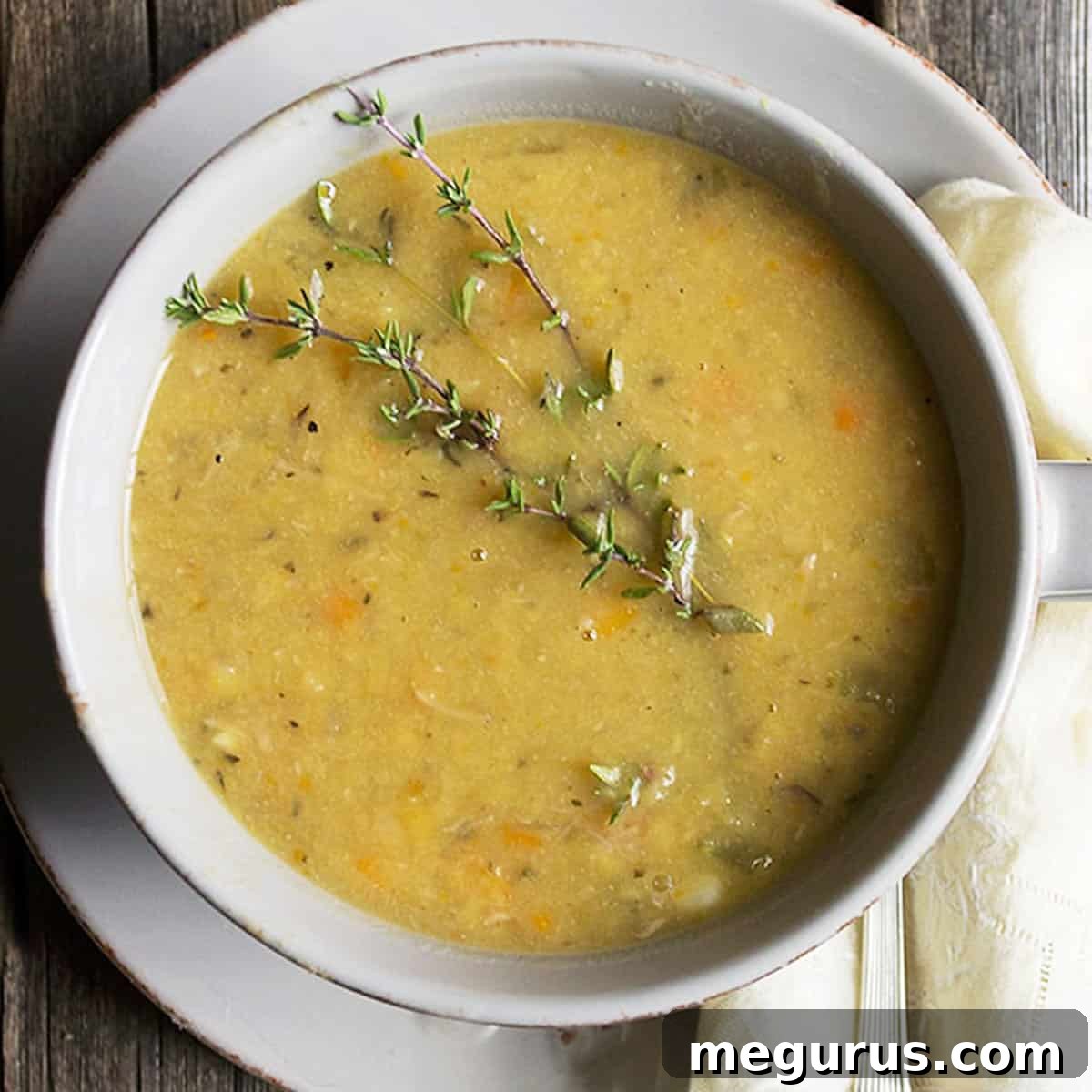
Embrace the cozy warmth of a classic with this **Quebec-Style Yellow Split Pea Soup**. A truly delicious and hearty meal, this traditional French-Canadian recipe simmers low and slow, blending wholesome yellow split peas with savory vegetables and the rich, smoky depth of a ham hock. The result is a profoundly satisfying soup, perfect for a comforting lunch or a fulfilling dinner, especially as the cooler seasons arrive.
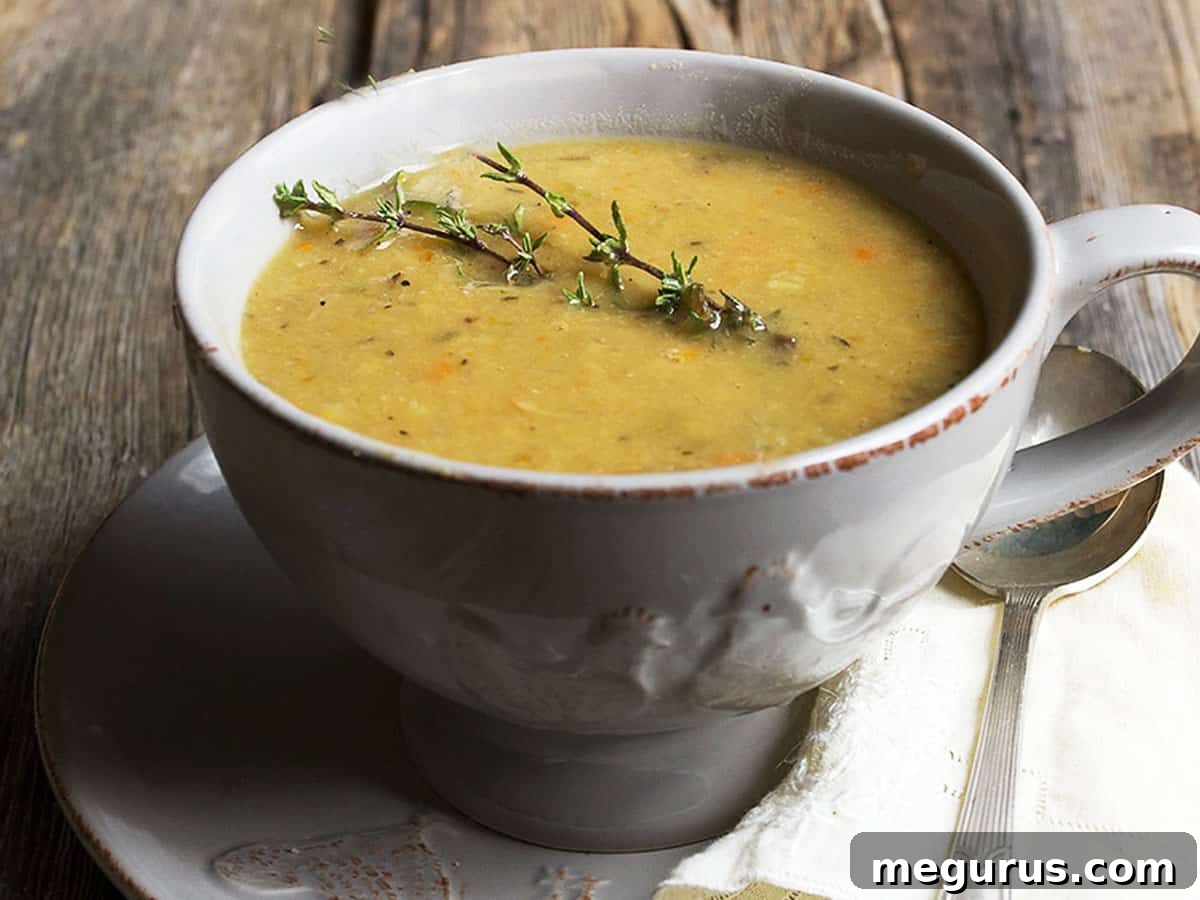
Discovering the Heart of French-Canadian Comfort Food
As autumn’s crisp air settles in, signaling the official start of soup season, there’s no better dish to welcome the change than a steaming bowl of **Quebec-Style Split Pea Soup**. This isn’t just any pea soup; it’s a culinary journey to the heart of French-Canadian traditions, where robust flavors and nourishing ingredients come together to create an unforgettable experience. Made with dried yellow split peas, a medley of aromatic vegetables, and the unparalleled flavor contribution of a ham hock, this soup embodies rustic charm and deep comfort.
The magic of this **hearty split pea soup** lies in its long, gentle simmer. This slow cooking process allows the flavors to meld beautifully, transforming simple ingredients into a rich, thick, and wonderfully textured soup. While it’s a year-round favorite for many, it truly shines during the colder months. It’s also an excellent way to make use of that leftover ham bone from your holiday feasts, infusing the broth with even more delectable flavor. If you grew up enjoying classic pea soups like Habitant™, you’ll find this homemade version superior in its depth and authentic taste.
Why Choose This Quebec-Style Recipe?
What sets this specific **yellow split pea soup** apart as “Quebec-Style”? It’s a faithful homage to the classic French-Canadian preparation, known for its distinct characteristics: the exclusive use of yellow split peas, the inclusion of a ham hock for unparalleled flavor, and finely diced vegetables that integrate seamlessly into the soup. The texture is key—it’s wonderfully thick and subtly smooth, achieving a consistency that is both substantial and comforting. This isn’t a thin broth; it’s a meal in itself, brimming with flavor and nourishment.
Beyond its cultural significance, this soup is remarkably adaptable. It’s hearty enough to serve as a standalone dinner, especially with generous bits of ham dispersed throughout. For a complete meal, pair it with a crisp green salad and a crusty loaf of artisanal bread, perfect for soaking up every last drop. Its straightforward preparation also makes it an accessible dish for home cooks looking to explore traditional recipes without complexity.
Essential Ingredients for Authentic Split Pea Soup
Crafting the perfect **Quebec-Style Yellow Split Pea Soup** begins with selecting the right ingredients. Each component plays a vital role in achieving that rich, satisfying flavor profile.
-
Ham Hock: The Flavor Foundation
The ham hock is the soul of this soup. Many grocery stores stock frozen ham hocks, typically found in the frozen meat section. While smoked ham hocks are readily available and will impart a distinct smoky flavor, I personally prefer an unsmoked, fresh ham hock. This choice allows the pure, rich pork flavor to shine through, contributing a savory depth to the broth without overpowering the other ingredients. If you adore smoked notes, feel free to use a smoked hock, but be mindful that you may need to adjust the final seasoning, as smoked products often contain more salt. -
Dried Yellow Split Peas: The Star Ingredient
Look for dried yellow split peas in the dried bean and lentil aisle of your supermarket. It’s crucial to start with fresh peas. Even though they are dried, peas can become overly dry and stubborn to cook if they’ve been sitting in your pantry for too long. Always opt for a newly purchased package. Before cooking, ensure you rinse the peas thoroughly in a colander under cold running water. Afterwards, spread them out and quickly pick through them, discarding any discolored or unusual-looking pieces to ensure the best quality. -
Chicken Broth: For Enhanced Flavor (or Alternatives)
For this **easy split pea soup**, I recommend using a low-sodium chicken broth. This allows you to control the final salt content, adding it to taste at the end of the cooking process. Some culinary wisdom suggests that adding salt too early can hinder dried legumes from softening, so holding off is a good practice. For those seeking a vegetarian option, simply substitute chicken broth with vegetable stock. Alternatively, if you prefer a simpler approach or don’t have broth on hand, you can use the same quantity of water; however, broth undeniably contributes an extra layer of flavor that enhances the overall soup experience. -
Additional Ingredients for Depth and Aroma:
Beyond the core components, a selection of fresh vegetables and aromatic spices create the foundation of flavor. You will need finely diced **carrots, celery, and onion**, which form a classic mirepoix. A single **bay leaf** adds a subtle herbal note, while **dried savory** and **dried thyme** are traditional French-Canadian spices that provide characteristic warmth and earthiness. Finally, plain **water** helps to achieve the perfect consistency, and **salt and pepper** are added to taste, bringing all the wonderful flavors together.
Frequently Asked Questions About Quebec-Style Split Pea Soup
What truly defines “Quebec-Style” Split Pea Soup?
This soup is a beloved staple in Quebecois cuisine, characterized by its use of yellow split peas, a ham hock (often unsmoked for a purer pork flavor), and finely diced vegetables. The hallmark of authentic Quebec-style pea soup is its thick, somewhat smooth texture, a delightful contrast to thinner, brothy soups. It’s comforting, hearty, and steeped in tradition.
Can I use a smoked ham hock for this recipe?
Absolutely! If you enjoy a smoky flavor, a smoked ham hock will certainly add that distinctive taste to your soup. It’s a matter of personal preference. Just be aware that smoked hocks typically contain more salt, so you might need to reduce the amount of added salt at the end of cooking. Always taste and adjust seasoning carefully.
Is it necessary to soak the dried peas before cooking?
No, one of the great advantages of dried split peas is that they cook relatively quickly without the need for pre-soaking. Unlike many dried beans, split peas will generally become tender in about 30-45 minutes on the stovetop, making this a convenient meal to prepare without extensive planning.
What if my peas refuse to soften after cooking for hours?
While this is uncommon, if your split peas remain hard after extended cooking, there are a couple of potential culprits. The most frequent reason is that the peas are old or excessively dried out. Always try to buy fresh packages. Another factor can be hard water. Water with a very high mineral content can sometimes prevent dried legumes from softening properly. If you suspect hard water is an issue, consider using filtered water.
Can this soup be prepared in a slow cooker or Instant Pot?
Yes, this **traditional split pea soup** can certainly be adapted for modern kitchen appliances, though I don’t have specific instructions as I primarily use the stovetop method. For a slow cooker, aim to mimic the low and slow simmer of the stovetop recipe, potentially reducing the liquid slightly as less evaporation occurs. For an Instant Pot, pressure cooking will drastically reduce the time; a general guideline for split peas is 10-15 minutes at high pressure with a natural release, adjusting liquid as needed. Experimentation is encouraged, and if you discover optimal settings, sharing them in the comments would be invaluable to other cooks!
How can I make this soup suitable for vegetarians?
Transforming this into a delicious vegetarian dish is simple: omit the ham hock entirely and substitute the chicken broth with vegetable stock. To add a touch of smoky depth reminiscent of ham, you could crumble some vegetarian “bacon” bits on top before serving. A dash of smoked paprika can also enhance the savory profile.
Is this soup a gluten-free option?
Most likely, yes! The core ingredients—yellow split peas, vegetables, and ham hock—are naturally gluten-free. However, it’s always wise to double-check your chicken or vegetable broth label to ensure it’s certified gluten-free, as some brands may contain hidden gluten ingredients. Similarly, verify the packaging of your dried split peas if you have severe gluten sensitivities.
What are my options if ham hocks are unavailable?
If you’re struggling to find ham hocks, you can still infuse your soup with a delightful ham flavor. Simply stir in some pre-cooked, diced ham into the soup during the last 30 minutes of simmering. While it won’t provide the same gelatinous richness as a ham hock, it will contribute a lovely savory note.
Why is there no clove in this traditional recipe?
It’s true that some French-Canadian pea soup recipes traditionally include cloves. However, cloves are a very potent spice, and their distinct flavor can be divisive. To ensure broader appeal, this recipe omits cloves. If you are a fan of this spice or are accustomed to it in your pea soup, you are absolutely welcome to add a pinch or two along with the other spices during cooking.
Chef’s Notes for the Perfect Bowl of Soup
Achieving the perfect consistency and flavor balance in your **Quebec-Style Yellow Split Pea Soup** involves a few key steps and personal touches. These cook’s notes will guide you to a truly exceptional bowl.
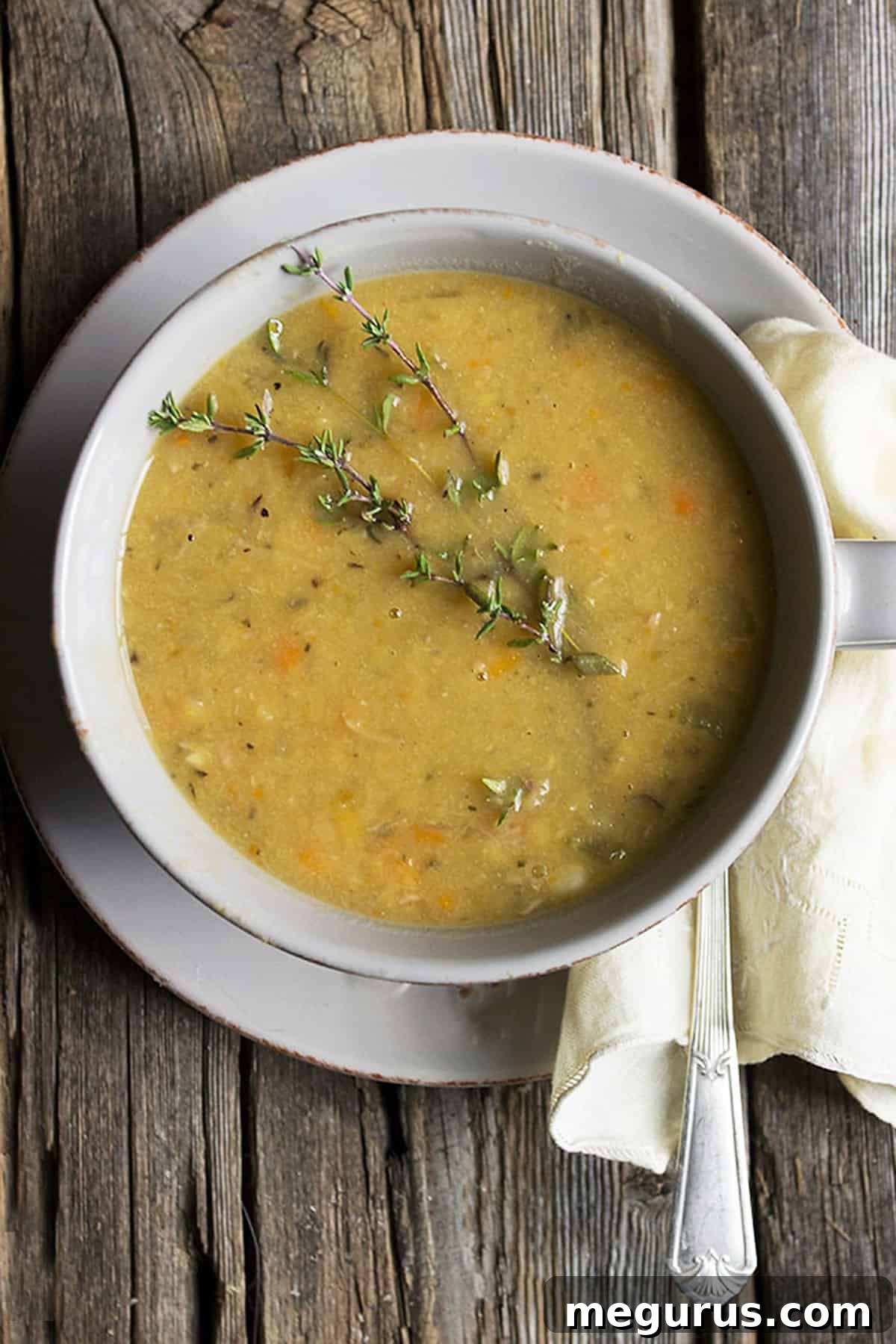
I find that a quick blitz with an immersion blender can significantly improve the soup’s texture. The goal isn’t to create a completely smooth puree, but rather to gently blend a portion of the peas into the broth. This subtle emulsification thickens the soup beautifully, giving it that characteristic rich and velvety consistency without losing all its rustic charm. Alternatively, you can scoop out about a cup of the cooked soup, blend it in a standard blender, and then stir it back in. Or, if you prefer a chunkier soup, feel free to leave it as is—the choice is yours! Just remember to **remove the bay leaf** before any blending takes place.
When it comes to seasoning, I always recommend holding off on adding most of the salt and pepper until the very end of the cooking process. The ham hock and chicken broth (even low-sodium ones) contribute their own levels of salt. By seasoning at the end, after the ham has been reincorporated and the flavors have fully developed, you prevent the risk of an overly salty soup. Taste your soup generously and season until it truly sings. Proper seasoning is crucial; it elevates all the wonderful flavors and transforms a good soup into a great one.
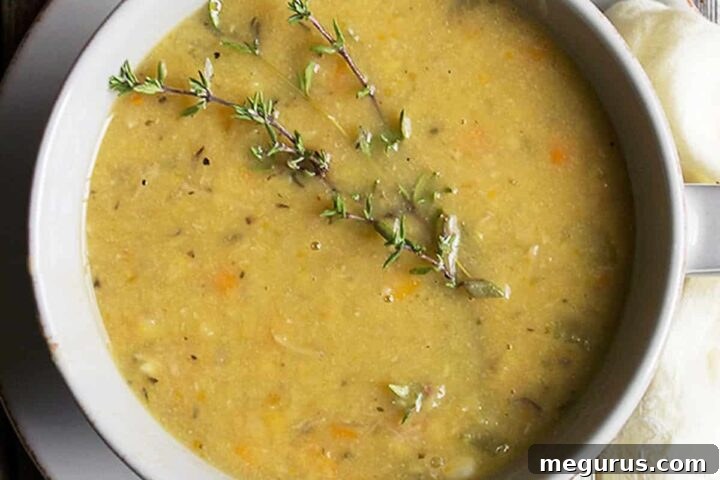
Get the Recipe: Quebec-Style Yellow Split Pea Soup
Pin This
Leave a Review
15
2
2 15
6 servings
Ingredients
- 1 lb unsmoked ham hock
- 2 Tablespoons butter, or cooking oil
- 2 medium carrots, peeled and finely diced
- 1 rib celery, finely diced
- 1 medium onion, finely diced
- 1 3/4 cups dried yellow split peas, rinsed well and sorted through
- 1 bay leaf
- 1 teaspoon dried savory
- 1 teaspoon dried thyme
- 4 cups chicken broth, or vegetable broth
- 3 cups water
- Salt and pepper, to taste
Instructions
-
Trim off and discard skin from ham hocks.
-
In a large soup pot or Dutch oven, melt butter over medium heat. Add carrots, celery and onion. Cook, stirring regularly, until softened, about 10 minutes.
-
Stir in dried split peas, bay leaf, savory and thyme. Cook, stirring, for about 2 minutes.
-
Stir in chicken broth and water. Add the ham hock. Bring to a boil, then reduce heat to medium-low, cover the pot and simmer, stirring occasionally, until the peas are very soft and soup is thickened, about 1 1/2 – 2 hours. *NOTE: You may need to add additional water or stock if soup gets too thick.
-
PICK OUT AND DISCARD BAY LEAF and remove the ham hock to a plate. *Note: I prefer a thicker soup, so I blend just a bit of the soup with an immersion blender or blender. Just do a quick blend (or blend just a cup of the soup. You don’t want a completely pureed soup. You want it to retain most of its texture, but the bit of pureed soup will incorporate with the broth for a thicker soup.)
-
Let ham hock cool slightly, then remove any meat on the hock and add it back to soup. Discard the fat and bone from the hock.
-
Stir to combine meat with soup. Taste and generously season with salt and pepper, to taste.