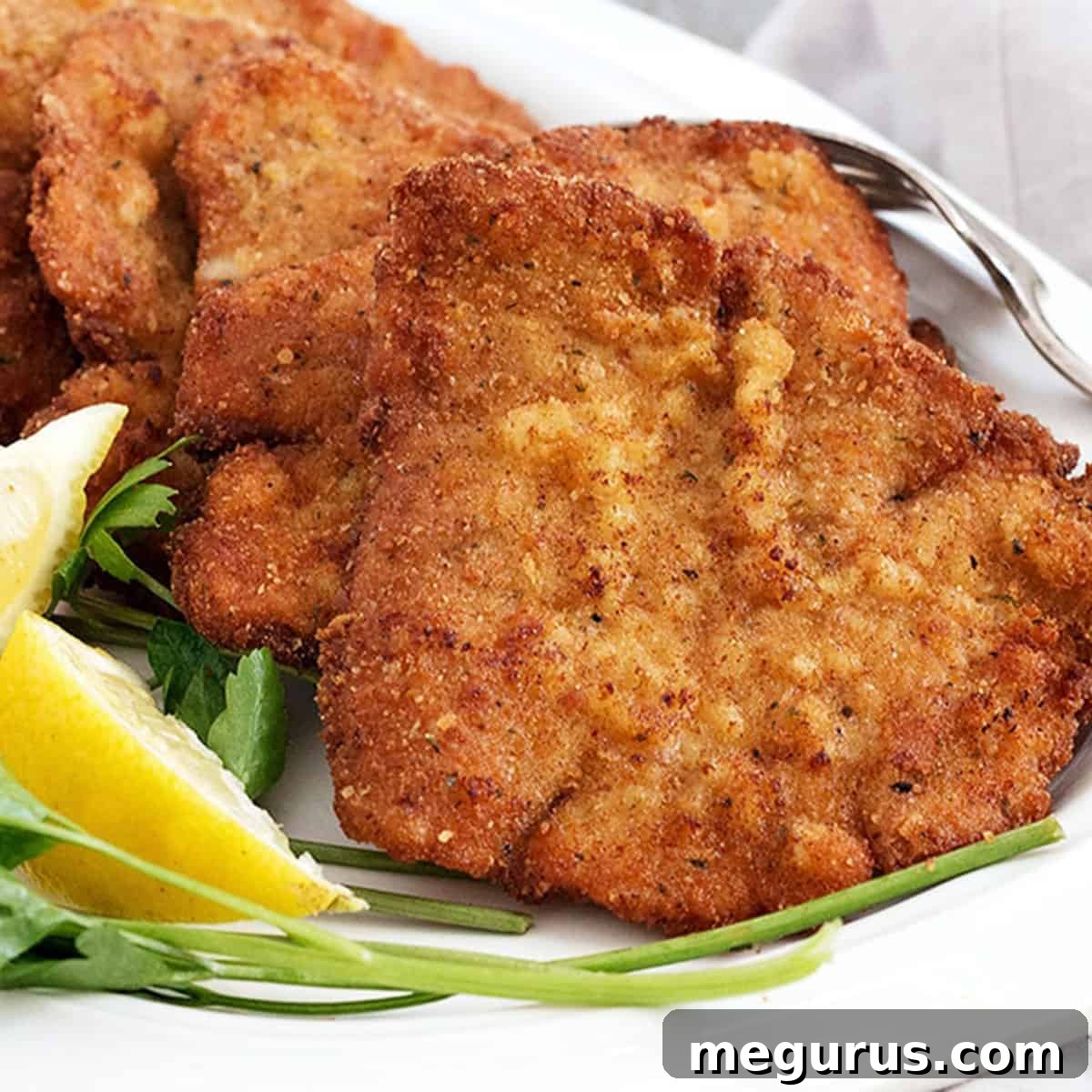
Delve into the comforting world of German cuisine with this classic pork schnitzel recipe, a dish celebrated for its exquisite simplicity and satisfying flavor. I’m excited to share all my accumulated wisdom and perfected techniques to help you create the absolute best authentic pork schnitzel right in your own kitchen.
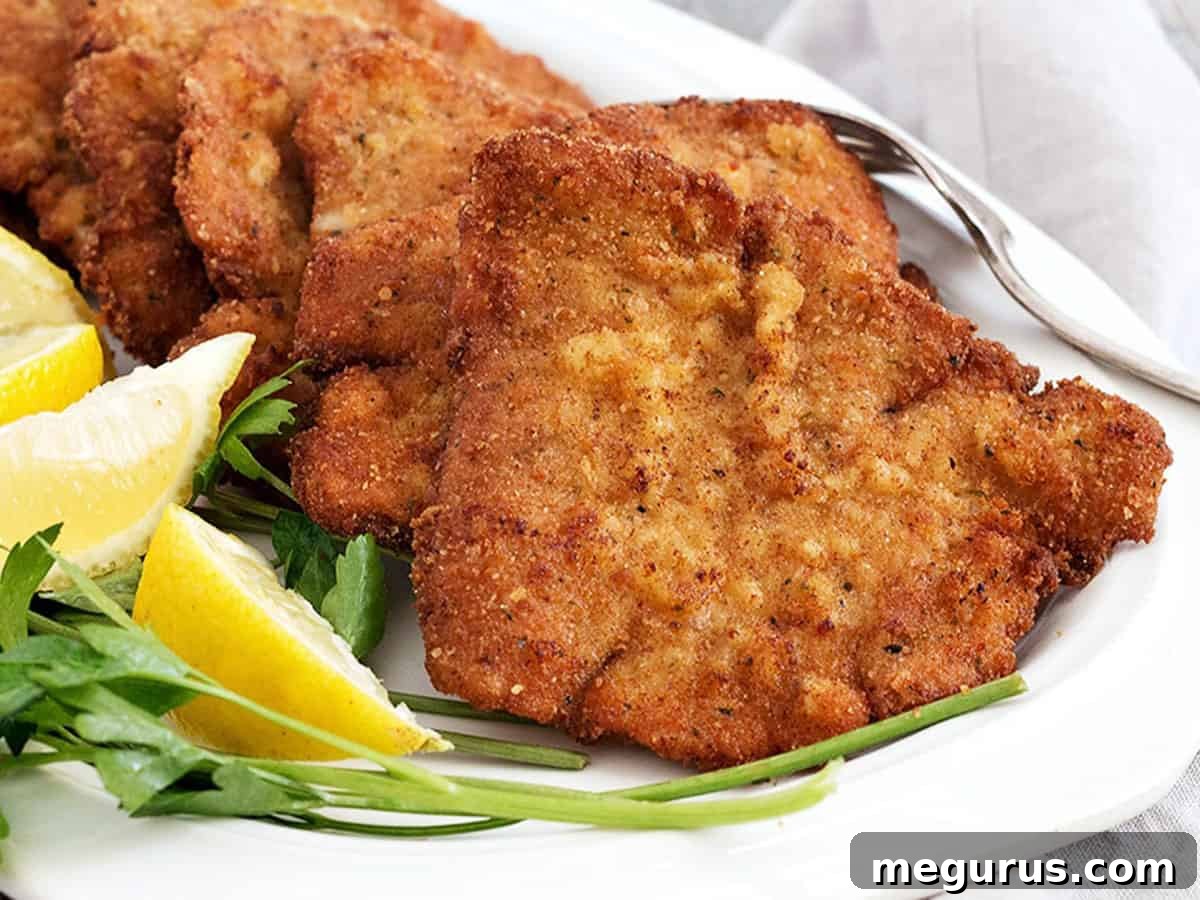
My journey with schnitzel began many years ago during my university days in Kitchener-Waterloo, Ontario – a region famous for hosting North America’s largest Oktoberfest celebration outside of Germany. It was there, amidst the festive atmosphere, traditional beers, and hearty German fare, that I truly fell in love with schnitzel. This immersion gave me a foundational understanding of what makes a truly great schnitzel, tips that I’ve refined and cherished over decades of home cooking.
Now, I’m thrilled to pass on these essential insights and practical advice to you, ensuring you can replicate that perfect, authentic pork schnitzel experience. Don’t be intimidated by the detailed explanations ahead; making schnitzel is fundamentally straightforward, but achieving perfection lies in understanding the nuances. Consider this your comprehensive guide to mastering this beloved German delicacy.
Why This Classic Pork Schnitzel Recipe Will Become Your Favorite
This recipe isn’t just another set of instructions; it’s a culmination of years of passion and practice. Here’s why you’ll adore it:
- Unmatched Authenticity: Having prepared this schnitzel for decades, I can confidently say it rivals any I’ve sampled, even those in traditional German eateries. It embodies the true spirit of this iconic dish.
- Elegant Simplicity: The beauty of classic pork schnitzel lies in its straightforward nature. There’s no need for complex ingredients or techniques. Just lean pork, perfectly pounded thin, coated in a seasoned, fine breadcrumb mixture, and pan-fried to achieve a gloriously golden, irresistibly crispy finish.
- Expert Tips for Perfection: I’m sharing all my tried-and-true secrets and nuanced tips. These aren’t just basic steps; they are the keys to consistently making absolutely perfect schnitzel at home, every single time.
- A Taste of German Comfort: Schnitzel is the quintessential German comfort food. This recipe delivers that heartwarming, satisfying experience that makes it a favorite across generations.
- Impressive Yet Easy: While it presents as an impressive meal suitable for guests, the actual preparation is surprisingly simple, making it perfect for both weeknight dinners and special occasions.
Visual Guide: Step-by-Step Overview
For those who prefer a visual demonstration, a step-by-step video guide illustrating the entire process, from preparing the pork to achieving the perfect golden-brown crust, is typically embedded here to enhance your cooking experience. The video is designed to provide clear, actionable visuals for each stage of the recipe, ensuring you can follow along with confidence and ease.
Your Essential Schnitzel FAQ
Mastering schnitzel involves understanding a few key principles. Here, I address the most common questions to help you navigate the process like a pro:
For classic pork schnitzel, the ideal cut is boneless, center-cut pork loin chops. These chops are lean, tender, and generally uniform in thickness (typically ½ to ¾ inch thick), making them perfect for pounding. While other cuts like pork tenderloin can be used, loin chops offer the best balance of flavor, texture, and ease of preparation for this dish. When preparing the pork, it’s crucial to trim any visible strips of fat along the edges. This fat can contract significantly when heated, causing the schnitzel to curl and cook unevenly. To prevent this, after trimming, use a sharp knife to make a few shallow ¼-inch slits evenly spaced along the edge where the fat was. These small nicks will allow the meat to relax and stay flat during frying, ensuring an evenly cooked and beautifully presented schnitzel.
The choice of breadcrumbs is pivotal to achieving an authentic schnitzel texture. I always recommend using store-bought, plain dried breadcrumbs. While Panko breadcrumbs are excellent for many breaded dishes, they typically result in a crunchier, flakier crust that deviates from the traditional, finer texture of classic schnitzel. Fresh breadcrumbs are too moist and will not crisp up properly, often leading to a soggy coating. Homemade dried breadcrumbs can be inconsistent in their fineness and dryness, making store-bought a more reliable choice. Plain dried breadcrumbs provide the perfect base for seasoning. I prefer to season them myself with seasoning salt, allowing control over the flavor profile. If you opt for pre-seasoned breadcrumbs, ensure they are not “Italian seasoned,” as the herbs and spices in these are designed for Italian cuisine and will clash with the traditional German flavors of schnitzel. The goal is a delicate, well-adhered, and subtly seasoned crust.
The key to an authentic schnitzel is its incredible thinness. This step cannot be overstated: the pork must be pounded very, very thin. Even if you start with relatively thin pork loin chops, you’ll need to flatten them considerably more. A meat mallet or pounder is the ideal tool for this task. If you don’t have one, a heavy rolling pin or even the bottom of a cast-iron skillet can work effectively. Place the pork between two sheets of plastic wrap or in a large freezer bag to prevent tearing and splattering, then pound steadily and evenly. Continue pounding until the meat is almost translucent, as thin as possible without tearing or falling apart. When cooked, the pork itself should be barely thicker than the combined breading on both sides. If the pork is visibly thick when you cut into it, you’ve made a breaded pork chop, not a true schnitzel. The extreme thinness ensures rapid cooking, tenderness, and a perfect meat-to-crust ratio that defines genuine schnitzel.
This is perhaps the single most crucial tip for ensuring your schnitzel’s breading adheres perfectly and stays delightfully crispy: after breading, allow the pork to rest in the refrigerator, uncovered, for at least one hour before frying. To do this, simply bread each piece of pork, then lay them in a single layer on a cooling rack placed over a baking sheet. Transfer this setup to the fridge. The purpose of this resting period is twofold: first, it allows the moist egg wash and breading to set and slightly dry, creating a stronger bond with the meat. Second, it firms up the breading, making it less prone to separation when it hits the hot oil. This simple, often overlooked step is a game-changer, guaranteeing a beautifully intact and crispy crust throughout the frying process. As long as you fry in oil at the correct temperature, your schnitzel will emerge with its breading perfectly adhered.
Achieving that signature golden, shatteringly crispy schnitzel relies on proper shallow-frying technique. You don’t need to deep-fry; shallow-frying uses less oil but still ensures even cooking and superior crispness. Use a neutral-tasting cooking oil with a high smoke point, such as vegetable, canola, peanut, or sunflower oil. Add enough oil to a large, heavy-bottomed skillet or frying pan so that the schnitzel can “float” as it cooks, rather than resting directly on the pan’s bottom. Aim for about ½-inch of oil to start, adding more as needed for subsequent batches. Heat the oil over medium-high heat until it’s hot but not smoking. Test the temperature by dropping a tiny speck of breadcrumb into the oil; it should immediately sizzle vigorously and float to the surface. Once the oil is ready, carefully add 2-3 pieces of breaded pork. Do not overcrowd the pan; each schnitzel needs ample space to cook evenly and prevent the oil temperature from dropping too much, which leads to greasy results. You will likely need to cook in batches. Use tongs to gently lift and check the underside regularly. Adjust the heat as necessary to maintain a consistent sizzle and browning rate. Each side should cook to a deep, rich golden brown in about 2-3 minutes. Once both sides are golden and crispy, remove the schnitzel to a cooling rack placed over a sheet of paper towel. This allows excess oil to drip away, preserving crispness. If preparing multiple batches, keep cooked schnitzel warm and crispy by transferring them to a baking sheet in a 200°F (95°C) oven.
Top Tips for Flawless Schnitzel
Beyond the FAQs, these additional tips will help you perfect your homemade schnitzel:
- Oil Management for Batches: When cooking several batches of schnitzel, the oil level will naturally decrease. Top it up as needed, ensuring it fully reheats to the correct temperature before adding more pork. If you’re frying a large quantity, consider replacing the oil entirely partway through. Old oil can become “dirty” with breadcrumb residue, which can burn and negatively affect the flavor and appearance of subsequent schnitzel pieces.
- Shallow Frying Safety: Embrace shallow frying, but always prioritize safety. Use a deep, heavy-bottomed pan or skillet that can contain the oil without risk of splashing. Keep a lid (or a baking sheet large enough to cover the entire pan) close by. In the extremely rare event that the oil ignites, you can immediately smother the flames by carefully placing the lid over the pan. Always ensure children are kept at a safe distance from the stove when hot oil is in use.
- Resist Deep Frying: It’s tempting to think deep frying will make schnitzel crispier, but it’s generally unnecessary and can lead to a greasier, heavier result that lacks the delicate crispness of a true shallow-fried schnitzel. Deep frying also requires more oil and can be more challenging to manage. Stick to the shallow-frying method for optimal results.
- Season the Pork Directly: Don’t forget to season the pounded pork cutlets with a pinch of salt and freshly ground black pepper before dredging them in flour. This adds a crucial layer of flavor directly to the meat, enhancing the overall taste of the schnitzel.
- Don’t Overcrowd the Pan: As mentioned, cooking too many schnitzel pieces at once lowers the oil temperature, leading to soggy, less crispy results. Patience is key; cook in batches to maintain consistent heat and crispness.
What to Serve with Your Perfect Pork Schnitzel?
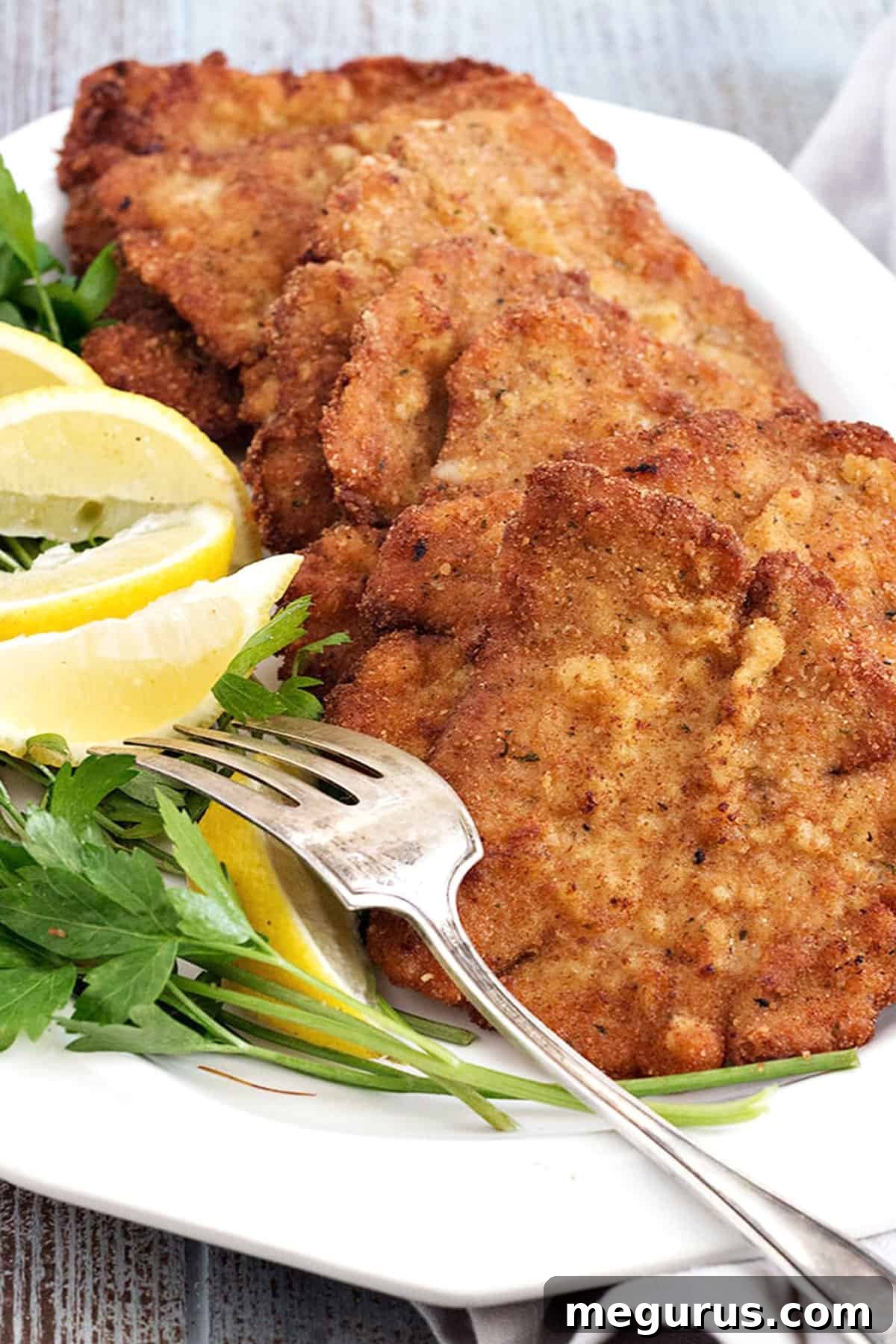
Classic pork schnitzel is incredibly versatile and pairs wonderfully with a variety of side dishes, offering a complete and satisfying meal. Traditionally, potatoes are the go-to accompaniment. This could be a creamy German potato salad (served warm or cold), crispy fried potatoes (Bratkartoffeln), simple boiled potatoes with fresh parsley (Salzkartoffeln), or even a comforting mound of mashed potatoes. Any of these potato preparations provide a delightful contrast to the crispy schnitzel. To round out the meal, consider adding a fresh green salad or a cooked vegetable like steamed green beans, roasted asparagus, or traditional German red cabbage (Rotkohl).
When it comes to what to put on your schnitzel, simplicity often reigns supreme. A simple squeeze of fresh lemon juice from a wedge is the quintessential accompaniment, its bright acidity perfectly cutting through the richness of the fried pork. However, there are many delicious variations: a rich mushroom gravy transforms it into a Jägerschnitzel, while a piquant paprika sauce can make it a Zigeunerschnitzel. A delightful sweet-tart option I’ve enjoyed comes from an Austrian chef who serves his schnitzel with lingonberry sauce. You might recognize lingonberries as the tart Swedish jam available at Ikea; this particular flavor profile offers a fantastic counterpoint to the savory schnitzel. A homemade cranberry sauce, with its similar tartness, would also make a wonderful and easily accessible alternative.
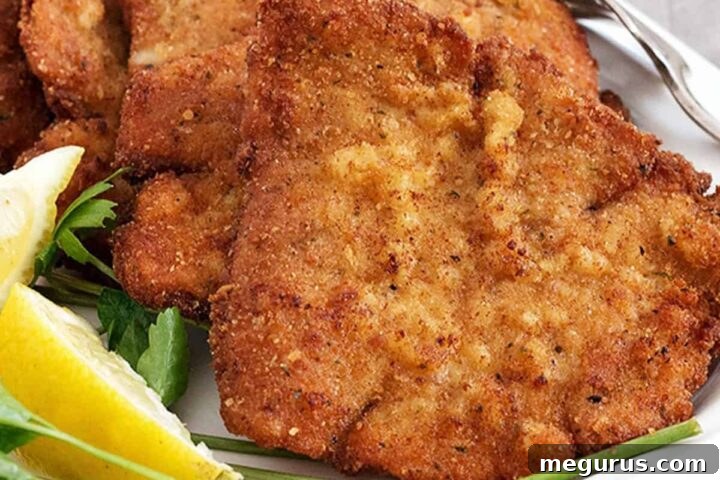
Get the Recipe: Classic Pork Schnitzel
Pin This
Leave a Review
Adjust servings: ½, 1x, 2x, 3x
Ingredients
- 6 boneless, center-cut pork loin chops
Breading:
- 1/2 cup all-purpose flour, unbleached recommended
- Salt and freshly ground pepper, to taste, just a bit if using seasoned breadcrumbs
- 2 large eggs
- 2 Tablespoons water
- 2 cups dried plain or seasoned breadcrumbs, plus more as needed.
- 1/2 – 1 teaspoons seasoning salt, omit if using seasoned breadcrumbs
- Vegetable, canola, peanut or sunflower oil, for shallow frying.
- Lemon slices, for serving
Instructions
-
Trim any fat from the edges of the pork chops. Using the tip of a sharp knife, make about three ¼-inch shallow slits along the edge where the fat was trimmed. Place each piece of pork between two sheets of plastic wrap or inside a large freezer bag. Using a meat pounder or heavy object, pound each pork chop until it is very thin, almost to the point of tearing but still holding together. The goal is for the pork to be nearly translucent. Set aside.
-
Prepare your breading station with three shallow plates or dishes large enough to comfortably hold a piece of pork. In the first plate, spread the all-purpose flour into an even layer and season it lightly with salt and freshly ground pepper. In the second plate, whisk together the eggs and water until well combined. In the third plate, spread the dried breadcrumbs and mix in the seasoning salt (if using plain breadcrumbs). To bread the pork: first, press a pounded pork chop into the seasoned flour, ensuring both sides are fully coated, then shake off any excess flour. Next, transfer the floured pork to the egg mixture, swirling it to coat both sides completely, then lift and allow any excess egg to drip back into the plate. Finally, place the egg-coated pork onto the plate with the seasoned breadcrumbs. Use your fingers or a spoon to gently press breadcrumbs onto the top and sides of the pork. Flip the pork and press down again, ensuring an even and complete coating of breadcrumbs on both sides. If there are any bare spots, sprinkle more breadcrumbs over them and gently press them onto the meat with the palm of your hand.
-
Once breaded, carefully place each piece of pork onto a cooling rack set over a baking sheet, ensuring no pieces overlap. This allows air to circulate. Place the baking sheet with the breaded pork into the refrigerator, uncovered, for at least one hour. This crucial resting step helps the breading adhere firmly to the meat and prevents it from detaching during frying.
-
Approximately 10-15 minutes before the resting time is up, begin heating your oil. Pour about ¼-inch of neutral cooking oil (such as vegetable, canola, peanut, or sunflower oil) into a large, heavy-bottomed, high-sided skillet. Heat the oil over medium-high heat until it is hot but not smoking. To test the oil temperature, drop a few breadcrumbs from the schnitzel into the hot oil; they should immediately sizzle vigorously and quickly float to the top.
-
Once the oil is hot, carefully add 1-2 pieces of breaded pork to the skillet, ensuring not to overcrowd the pan. Each schnitzel should lay flat with a good amount of space around it to allow for even cooking and maintain oil temperature. Cook for approximately 1-2 minutes, then use tongs to regularly check the browning on the underside. Adjust the heat as necessary: lower it if the schnitzel is browning too quickly, or raise it slightly if it’s browning too slowly. The goal is a deep, rich golden-brown color on both sides, which typically takes about 2-3 minutes per side when the oil is at the correct temperature and the pork is pounded thin enough. Once both sides are golden and crispy, remove the schnitzel to a clean cooling rack placed over paper towels (not directly under the meat, but underneath the rack to catch drips) to allow excess oil to drain. Repeat with the remaining pork pieces, cooking in batches as needed. If you are making many schnitzels and wish to keep them warm, transfer cooked pieces to a baking sheet and place them in a preheated 200°F (95°C) oven to stay warm and crispy until ready to serve.
-
Serve your perfectly crispy pork schnitzel immediately with fresh lemon slices, or try it with traditional lingonberry jam for a delightful sweet-tart contrast. Enjoy your homemade German comfort food!
Notes
Calories: 423kcal,
Carbohydrates: 35g,
Protein: 38g,
Fat: 13g,
Saturated Fat: 4g,
Polyunsaturated Fat: 2g,
Monounsaturated Fat: 5g,
Trans Fat: 0.1g,
Cholesterol: 152mg,
Sodium: 817mg,
Potassium: 626mg,
Fiber: 2g,
Sugar: 2g,
Vitamin A: 173IU,
Vitamin C: 1mg,
Calcium: 93mg,
Iron: 3mg
More Delicious Pork Recipes to Explore!
If you loved this classic pork schnitzel, you might be interested in trying some of my other popular pork dishes: