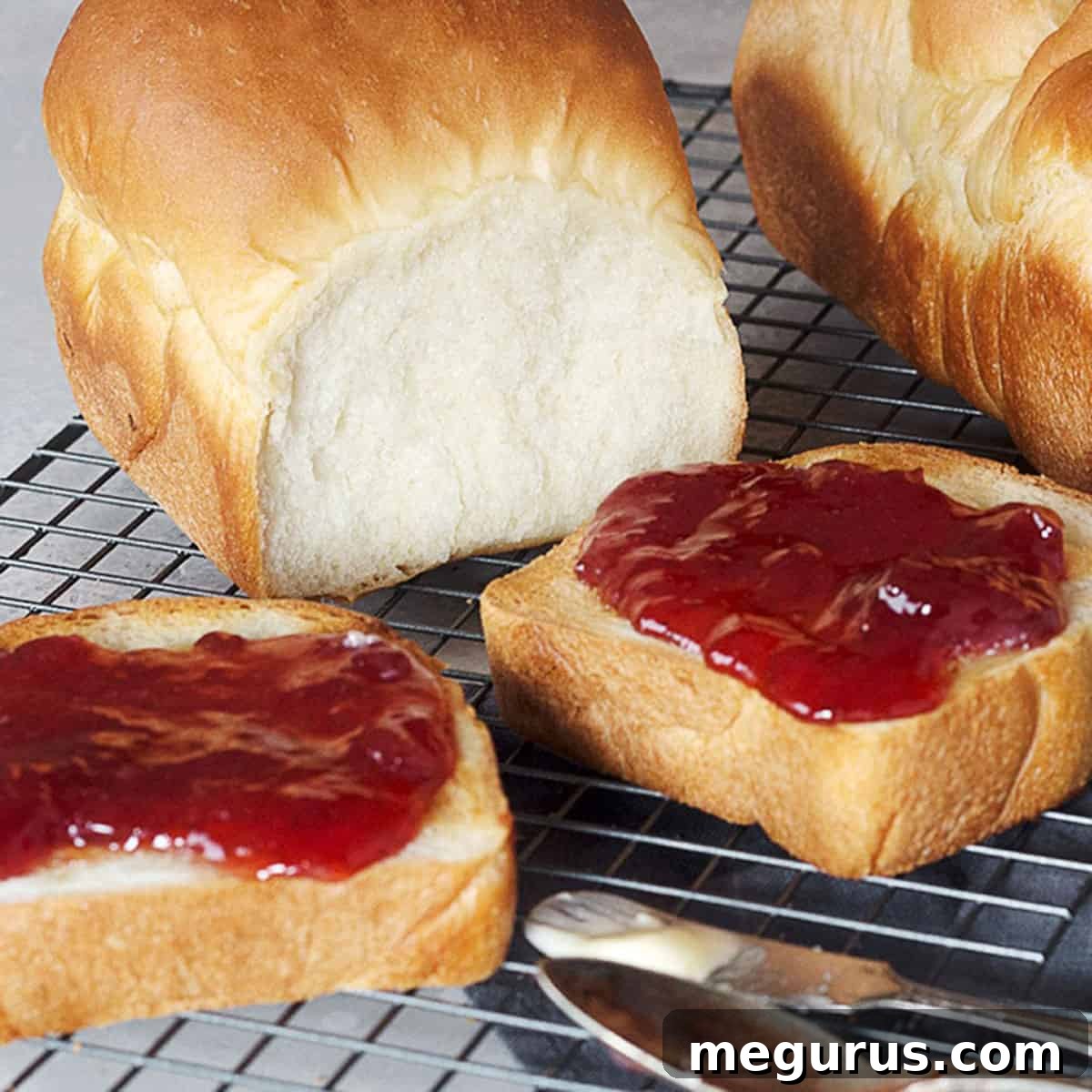
Discover the art of Japanese bread making with this recipe for Shokupan, the classic Japanese sandwich bread. Renowned for its unparalleled softness, light texture, and delightful spongy crumb, Shokupan elevates everyday meals. Whether you’re crafting the perfect toast, assembling gourmet sandwiches, or preparing luscious French Toast, this bread promises an experience of pure culinary bliss.
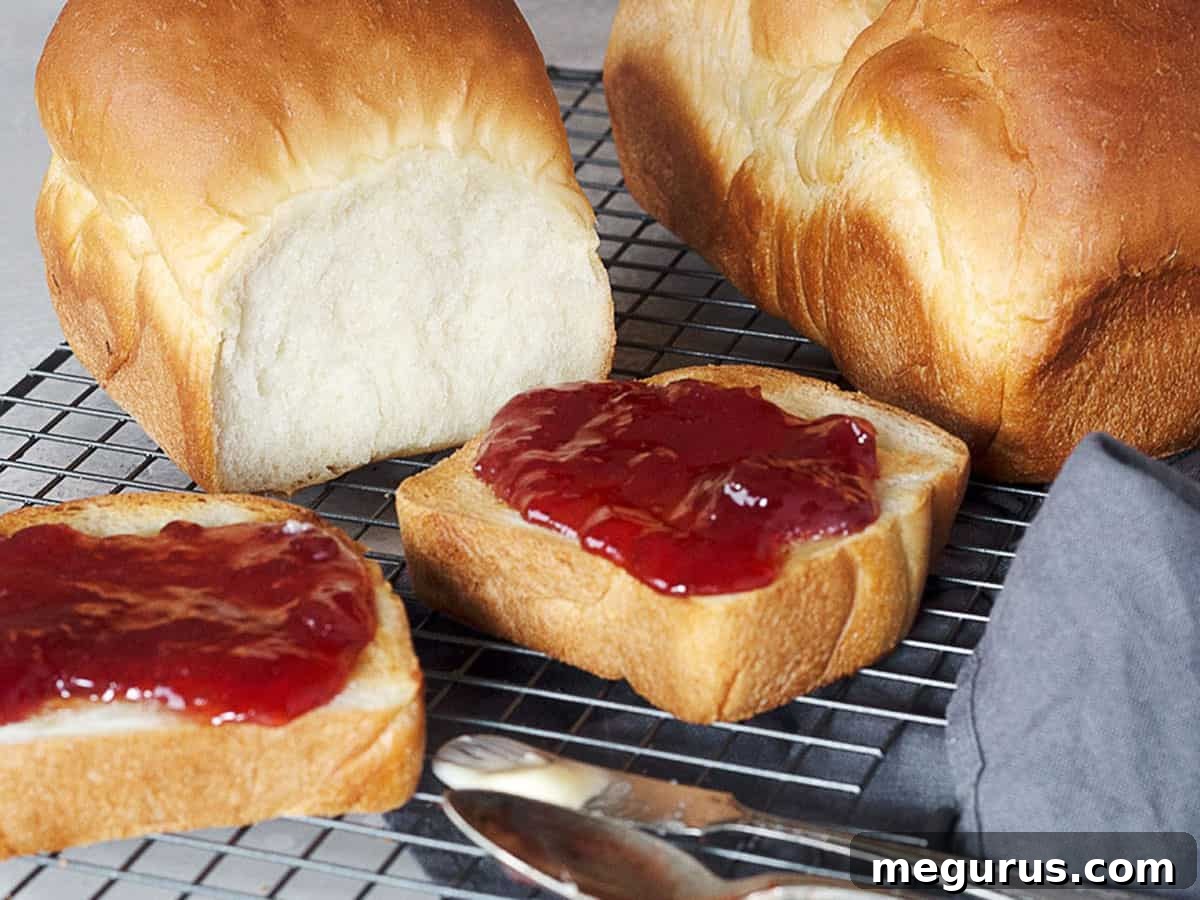
For every devoted bread lover and home baker, embarking on the journey to create your own Shokupan is a truly rewarding endeavor. This iconic Japanese bread, sometimes referred to as Japanese Milk Bread, is a testament to sophisticated simplicity in baking. Its unique charm lies in its ability to be incredibly light and airy, yet simultaneously possess a satisfyingly springy, resilient crumb. It’s a paradox of textures that sets it apart from conventional sandwich breads, making it an indispensable staple in Japanese households and a coveted delight worldwide.
Shokupan isn’t just bread; it’s an experience. Imagine thick slices, perfectly golden and crisp from the toaster, generously slathered with melting butter that seeps into every soft crevice. A dollop of your favorite artisanal jam completes this divine morning ritual. This is Shokupan Toast, a culinary revelation that rivals the comforting warmth of a buttered crumpet, offering a sublime start to any day. Beyond breakfast, Shokupan transforms into an exquisite foundation for sandwiches. Its fine, even texture and subtle sweetness make it ideal for both classic and creative fillings. And for those special brunches, Shokupan is undeniably the premier choice for crafting the most outstanding French Toast, absorbing the custardy mixture beautifully without becoming soggy, leading to a golden-brown exterior and a meltingly tender interior.
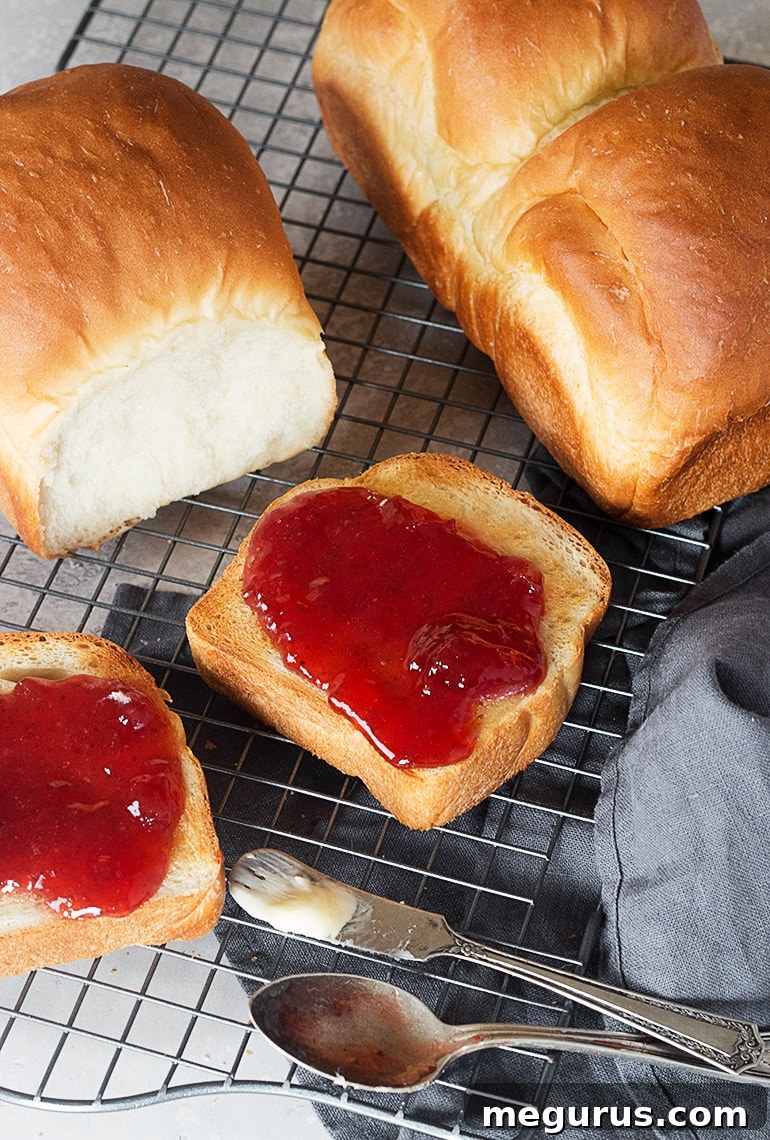
What is Shokupan? A Deep Dive into Japanese Sandwich Bread
Shokupan, literally translating to “eating bread,” is more than just a type of bread; it’s a cultural cornerstone in Japan, embodying everyday comfort and culinary excellence. It’s distinguished by its incredibly soft crust and an interior texture that is both remarkably soft and light, yet incredibly elastic and bouncy. Unlike many Western breads, Shokupan maintains its fresh texture for days, making it a beloved choice for daily consumption.
The Secret to Shokupan’s Signature Texture
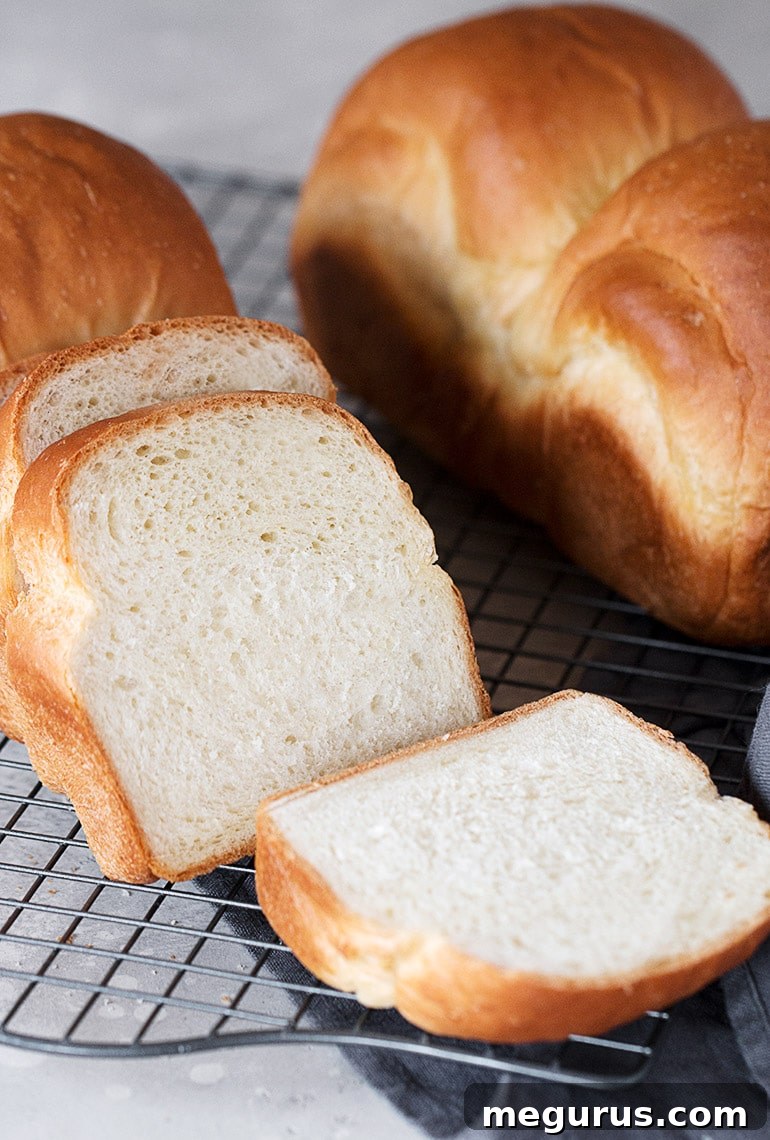
While many Shokupan recipes famously employ the Tangzhong method—a roux-like starter made from flour and water that enhances moisture and extends freshness—this particular recipe achieves similarly stunning results without it. We’ve extensively tested various methods, including those utilizing Tangzhong, and confidently stand by this simpler approach for its consistent delivery of that coveted pillowy texture, as evidenced by the accompanying photographs. This means you can achieve authentic, high-quality Shokupan with fewer steps, making it more accessible for home bakers.
Shokupan’s Distinctive Shapes: Mountain vs. Pullman Loaf
Shokupan is typically baked in two primary forms, each serving a unique aesthetic and practical purpose:
- **”Mountain” Shape:** This rustic form is achieved by baking two (or sometimes more) individual rolls of dough side-by-side in a standard loaf pan. As the dough rises, it spills over the top, creating a beautifully rounded, domed crust that resembles rolling mountain peaks. This shape is often preferred for its visual appeal and yields a softer, more open crumb.
- **Pullman Loaf:** For a perfectly uniform, square slice, Shokupan is baked in a specialized Pullman pan, which features a sliding lid. This innovative design restricts the dough’s vertical rise, resulting in a dense, tight crumb and a perfectly square cross-section. The Pullman loaf is exceptionally suited for creating elegant, crustless sandwiches—a hallmark of Japanese sandwich culture—and ensures uniform toast slices.
Regardless of the shape, the underlying qualities of Shokupan—its irresistible softness and delicate flavor—remain consistent, promising a superior bread experience.
Ways to Savor Your Homemade Shokupan
The versatility of Shokupan is one of its greatest attributes, offering a delightful base for a multitude of culinary creations. Here’s how you can best enjoy your freshly baked loaves:
The Ultimate Toast Experience
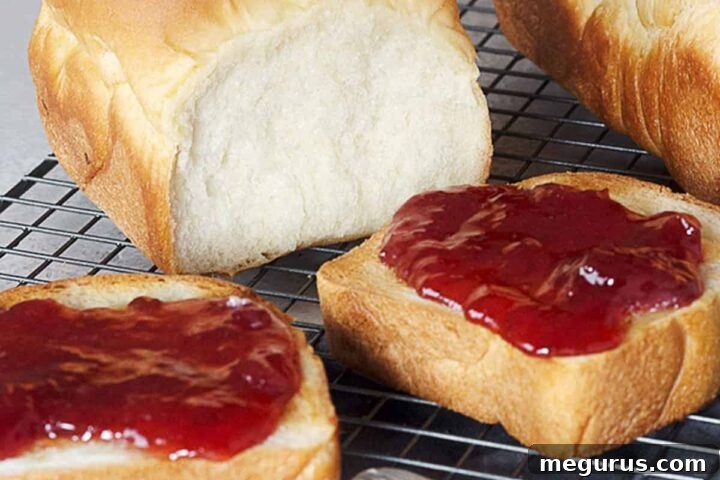
Transforming Shokupan into toast is an art form in itself. Slice your bread generously thick—at least ¾ to 1 inch—to allow for a satisfying contrast between its crisp exterior and soft interior. Toast it to a beautiful golden brown, then, while still warm from the toaster, spread a copious amount of unsalted butter across its surface. The warmth of the toast will cause the butter to melt and soak deeply into the thick crumb, creating an unparalleled richness. Finish with your favorite fruit jam, honey, or even a sprinkle of cinnamon sugar for a truly indulgent morning treat. This thick-cut toast, often referred to as “shokupan-chan” in Japan, is a celebrated breakfast item.
Crafting Exquisite Sandwiches
Shokupan truly shines as a sandwich bread. Its fine, uniform crumb and subtle sweetness complement a vast array of fillings, from savory to sweet. For the iconic Japanese sandwich experience, embrace the perfectly square slices from a Pullman loaf and consider trimming the crusts for an exceptionally refined presentation. Classic Japanese sandwiches, known as “sando,” often feature multiple, neatly layered fillings such as delicate egg salad, creamy potato salad, thinly sliced ham and cheese, and crisp lettuce. Beyond tradition, Shokupan is equally perfect for everyday lunchbox favorites, grilled cheese, or even sweet sandwiches filled with fruit and cream.
Unforgettable French Toast
When it comes to French Toast, Shokupan is virtually unrivaled. Its inherent softness and slightly chewy texture allow it to absorb the egg custard mixture thoroughly without becoming soggy, ensuring a custardy interior and a perfectly caramelized, golden-brown exterior. Prepare your French Toast with thick slices of Shokupan, soak them well, and cook until golden. Serve with fresh berries, maple syrup, or a dusting of powdered sugar for a breakfast or brunch that feels effortlessly gourmet.
Essential Ingredients and Thoughtful Substitutions
Achieving the authentic texture of Shokupan relies on a few key ingredients. Understanding their role can help you make the best choices for your bake:
- Bread Flour:
- While many recipes might suggest that bread flour is optional, for Shokupan, it is absolutely paramount. The high protein content in bread flour (typically 12-14%) is crucial for developing strong gluten networks. This gluten structure is what gives Shokupan its characteristic high rise, elastic crumb, and distinctively chewy-yet-soft texture. Opt for unbleached bread flour for the best results and a more natural flavor profile. In Canada, stores like Bulk Barn often offer unbleached bread flour by weight, allowing you to purchase just the right amount without needing to buy a large bag.
- Yeast:
- Both active dry yeast and instant yeast are suitable for this recipe. If using active dry yeast, it’s advisable to proof it first by dissolving it in a small portion of the lukewarm water (around 100-110°F or 38-43°C) with a pinch of sugar for about 5-10 minutes until foamy. This confirms the yeast is active before adding it to your dry ingredients. Instant yeast, on the other hand, can typically be mixed directly with the dry ingredients without prior proofing, saving a step and speeding up the process.
- Sugar:
- White granulated sugar plays multiple roles in Shokupan. It provides essential food for the yeast, helping it activate and produce carbon dioxide for a good rise. Additionally, sugar contributes to the bread’s subtle sweetness, enhances browning of the crust, and contributes to its overall tenderness and moistness.
- Salt:
- Salt is a flavor enhancer, balancing the sweetness and enriching the overall taste of the bread. Crucially, it also regulates yeast activity, preventing the dough from rising too quickly and allowing for better flavor development. If you plan to use salted butter for brushing, remember to slightly reduce the amount of salt in the dough to prevent it from becoming overly salty.
- Water:
- Lukewarm water is vital for activating the yeast and properly hydrating the flour to form the dough. The temperature should be comfortable to the touch, not too hot to kill the yeast, nor too cold to inhibit its activity. Aim for around 100°F (38°C).
- Unsalted Butter:
- Added toward the end of the kneading process, softened unsalted butter enriches the dough, contributing to Shokupan’s tender crumb, delicate flavor, and luxurious mouthfeel. It also helps in achieving a beautiful, golden crust. Using unsalted butter gives you better control over the total salt content in the recipe.
Essential Equipment for a Successful Shokupan Bake
While baking bread can be a simple pleasure, having the right tools can significantly enhance your experience and the quality of your results.
- Kitchen Scale (Highly Recommended):
- If you’re serious about baking, particularly bread, investing in a simple kitchen scale is a game-changer. Measuring ingredients by weight (grams) is far more accurate and consistent than measuring by volume (cups). This precision is especially critical in baking, where small variations in flour or liquid can dramatically affect dough consistency and final texture. Affordable kitchen scales, often under $20, are readily available. Look for one that measures in grams, ounces, and fluid ounces, and includes a tare (zeroing) function. Using grams simplifies measurement, eliminating the need for complex conversions and reducing mathematical errors, allowing you to focus on the joy of baking.
- Bread Pans:
- To bake this recipe, you will need two standard 8×4-inch loaf pans. These dimensions are ideal for achieving the “mountain” shape of Shokupan, where the dough rises into characteristic rounded tops. Alternatively, if you desire the perfectly square, crustless slices favored for many Japanese sandwiches, you can use a Pullman-type loaf pan with a sliding lid. A Pullman pan ensures a uniform, square loaf with a finer crumb, perfect for neatly layered sandwiches and uniform toast.
Mastering the Shokupan Baking Process: Tips and Techniques
Baking Shokupan is a journey of patience and precision. These tips will guide you to a perfect loaf:
- Precision with a Scale: As mentioned, utilizing a kitchen scale for all dry and liquid measurements (grams/milliliters) will yield the most accurate and consistent results, making your Shokupan success virtually guaranteed.
- Monitor Baking Time and Browning: Shokupan tends to rise significantly and brown relatively quickly. Begin checking your loaves around the 20-minute mark. If you notice the tops are sufficiently browned but the bread isn’t fully baked, loosely tent each loaf with a piece of aluminum foil. This prevents further browning while allowing the bread to continue cooking through for the full 35 minutes, ensuring a tender interior without a burnt crust.
- Dough Consistency is Key: The dough for Shokupan should be soft, slightly tacky, and elastic. Resist the urge to add too much extra flour during kneading or shaping, as this can result in a dry, dense loaf. A lightly floured surface is usually sufficient.
- Ambient Temperature for Rising: Yeast thrives in warm, humid environments. Ensure your rising area is free from drafts and maintains a consistent temperature (ideally 75-80°F or 24-27°C) to encourage optimal and even rising.
Shaping Shokupan for Maximum Rise and Beautiful Loaves
Proper shaping is crucial for Shokupan to achieve its signature texture and impressive height. Follow these steps carefully to ensure a beautiful rise and an even crumb structure.
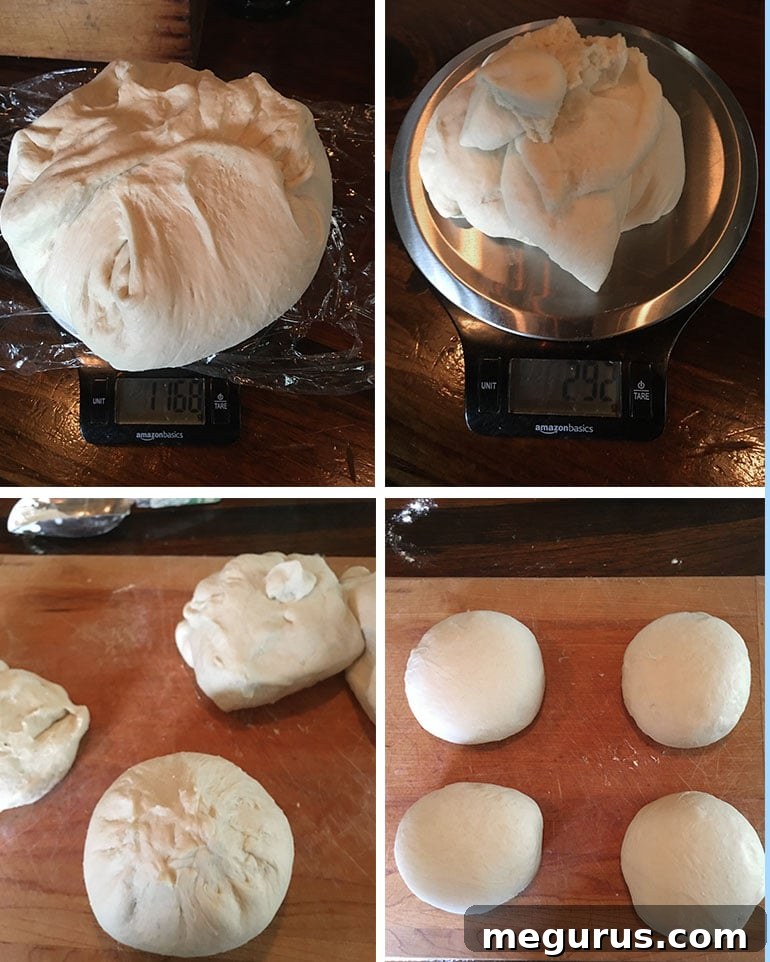
- **Step 1: Divide the Dough Evenly.** After the second rise, gently turn the entire dough ball out onto a lightly floured surface. For ultimate precision and consistent loaf sizes, weigh the entire dough. Then, divide this total weight by four to determine the ideal weight for each individual dough portion. (For instance, if your total dough weighs 1168g, each of your four pieces should be 292g).
- **Step 2: Portion the Dough.** Carefully weigh out four individual pieces of dough, ensuring each piece matches your calculated target weight. This consistency is important for uniform baking and rising.
- **Step 3: Form Smooth Dough Balls.** Take each of the four dough pieces and gently form them into smooth, tight balls. The key here is to bring all the edges of the dough together and pinch them securely at the bottom. Once pinched, flip the ball over so the pinched seam is facing down, creating a smooth, taut surface on top.
- **Step 4: Rest the Dough.** Arrange the formed dough balls on your work surface, seam-side down. Cover them lightly with a clean tea towel. Allow them to rest for a few minutes (5-8 minutes is usually sufficient). This resting period is critical as it allows the gluten, which became tight during cutting and initial shaping, to relax. Relaxed gluten will make the dough much easier to roll out in the subsequent steps without it springing back excessively.
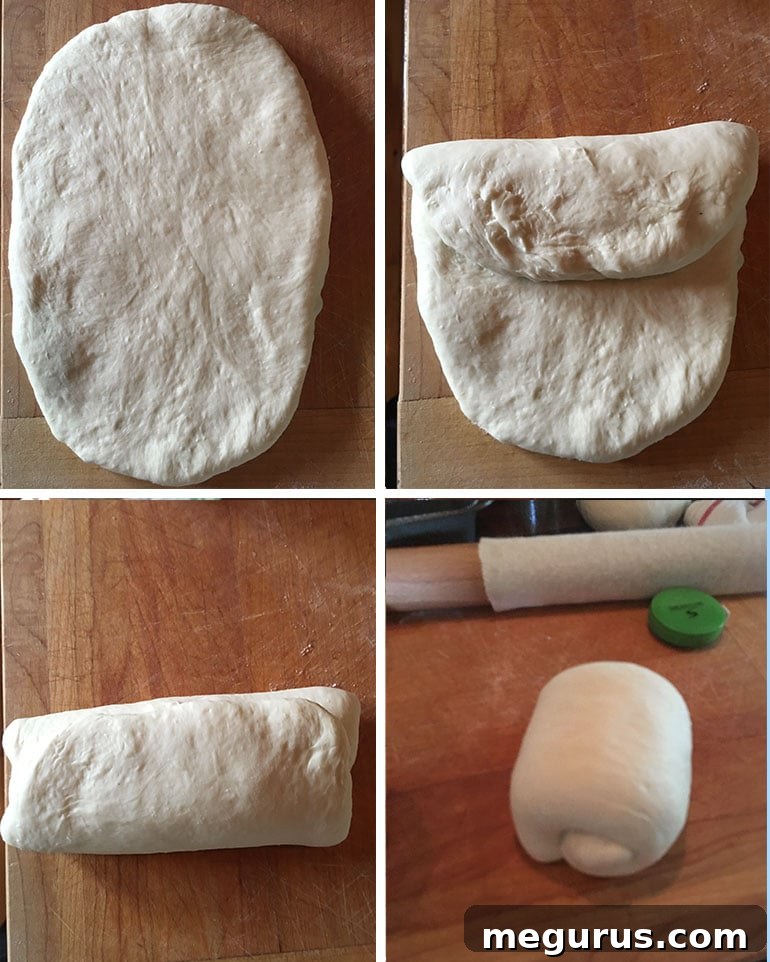
- **Step 5: Roll into a Rectangle.** Take one rested dough ball and, with a rolling pin, carefully roll it into a rectangle approximately 1/2-inch thick. Aim for dimensions of about 9 inches long by 6 inches wide. While striving for a perfect rectangle, don’t worry if the corners are slightly rounded; the dough is quite elastic and may resist perfect squaring.
- **Step 6: First Fold.** Gently fold the top one-third of the rolled dough rectangle downwards. This creates the first layer of the roll and begins to build structure.
- **Step 7: Second Fold.** Now, take the bottom one-third of the rolled dough and fold it upwards, overlapping the previous fold. You should now have a neatly folded, roughly square or rectangular piece of dough. This lamination contributes to the bread’s airy, layered crumb.
- **Step 8: Tight Rolling.** Rotate the folded dough piece 90 degrees. Starting from one end, roll the dough up tightly. As you roll, gently stretch and pull the dough as necessary to ensure a very tight cylinder. A tight roll is essential for creating an even crumb and preventing large air pockets. Once rolled, gently pinch the very end of the roll into the main body of the dough to seal it. This prevents the roll from unraveling during the final proof and baking.
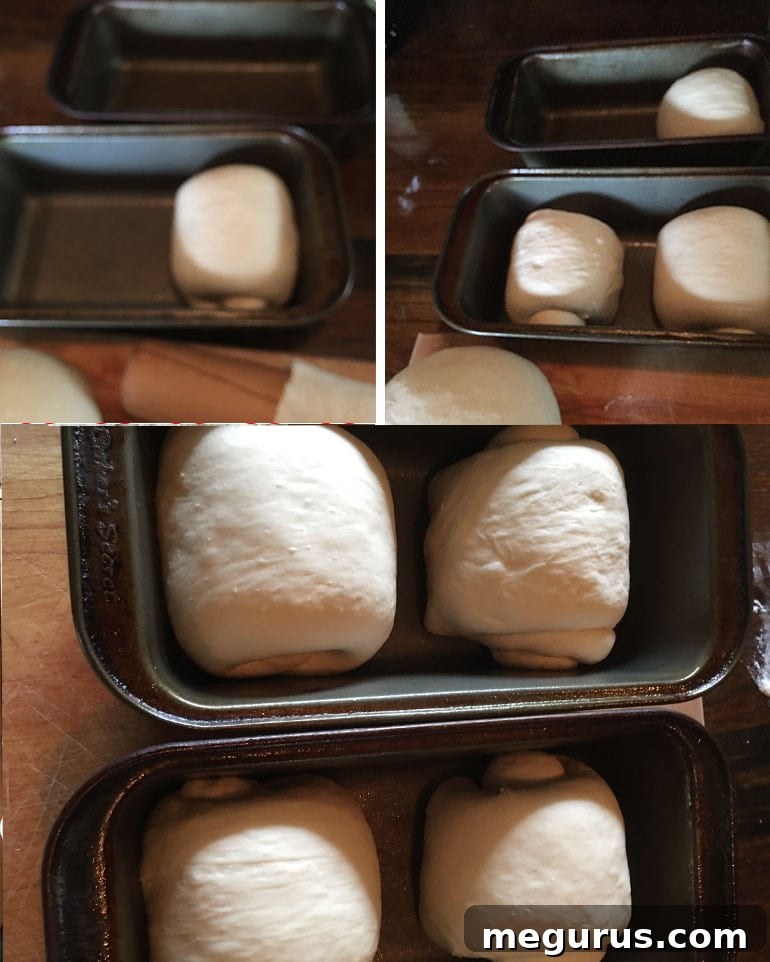
- **Step 9: Correct Placement in Pans.** Before placing the rolled dough into your prepared (greased) bread pans, pay close attention to the direction of each roll. For optimal rise and symmetry, ensure that the dough piece intended for the right side of the pan is rolling towards the right, and the dough piece for the left side is rolling towards the left. This refers to the direction of the final seam/overlap of the rolled dough.
- **Step 10: Arrange in Pan.** Place two perfectly shaped rolls into each 8×4-inch loaf pan. Position them so that the ends of the rolls just barely touch the short ends of the pan, leaving a small, even gap between the two rolls in the center. This arrangement allows for an even rise and prevents the loaves from merging unattractively.
Get the Recipe: Shokupan (Japanese Sandwich and Toasting Bread)
Classic, Japanese sandwich bread. Makes 2 loaves.
Pin This
Leave a Review
Ingredients
Dough:
- 4 cups (625 g) bread flour
- 3 Tablespoons (30 g) white sugar
- 2 1/2 teaspoons (12 g) salt, reduce if using salted butter below
- 2 teaspoons (8 g) instant yeast
- 1 3/4 cups + 2 Tablespoons (450 ml) water, lukewarm, about 100F
- 3 Tablespoons (35 g) unsalted butter, cut into 3 pieces, at room temperature
For brushing baked loaves:
- 2 Tablespoons (25 g) butter, melted
Instructions
- In a large bowl or the bowl of a stand mixer fitted with a kneading hook, stir together the flour, sugar, salt and yeast. With the mixer running (or with a spoon), stir while you slowly add the water to the flour mixture until a shaggy dough forms.
- Mix/knead for about 6-7 minutes on medium-low speed, or until the dough becomes soft, cohesive, and moist. Add the softened butter, one piece at a time, and continue mixing/kneading for another 3-4 minutes until the butter is fully incorporated and the dough comes back together, becoming smooth and elastic. Form the dough into a ball and place it into a lightly greased bowl. Cover with plastic wrap and allow to rise in a warm place for about 40-45 minutes, or until doubled in size. This is your first rise.
- Gently punch the air out of the risen dough. Reshape it into a smooth ball and place it back into the bowl. Cover again with plastic wrap and let it rise for another 30 minutes, or until the dough doubles in size again. This second rise develops more flavor and strengthens the dough.
- To confirm the dough is ready after the second rise, lightly flour a finger and gently poke it into the dough. If the indentation you created remains without springing back, the dough is perfectly proofed and ready for shaping. If the hole shrinks or fills in, the dough needs a little more time to rise.
- Carefully transfer the dough onto a lightly floured work surface. (If using a kitchen scale, weigh the entire dough ball to determine its total weight, then divide that number by 4 to get the target weight for each of your four individual pieces. Each piece should be approximately 280-300g). Divide the dough into 4 equal-sized pieces. Shape each piece into a smooth ball by pinching the seams together at the bottom. Place these dough balls on the counter, seam-side down, and cover them with a clean tea towel. Let them rest for 5-8 minutes to allow the gluten to relax, which will make them easier to roll out.
- Lightly grease two 8×4-inch bread pans (or one Pullman pan) and set them aside, ready for the shaped dough.
- Shaping: Take one dough ball, flip it over so the pinched seam from making the ball is now facing upwards. Using a rolling pin, roll the dough out to about 1/2-inch thick, creating a rectangle approximately 9 inches long by 6 inches wide. Next, fold the top two-thirds of the rolled piece down towards the center. Then, fold the bottom one-third of the rolled piece up to cover the previous fold, creating a compact rectangle. Rotate this folded rectangle 90 degrees. Starting from the short end, tightly roll up the dough, stretching and pulling gently as needed to create a smooth, taut cylinder. Once rolled, firmly pinch together the end of the roll with the main body of the roll to seal it completely. Repeat this process for the remaining three dough pieces.
- Placing in Pan: Before placing each roll into the prepared pans, observe the direction of the final roll (where the seam is). For even rising, ensure that the dough piece for the right side of the pan is oriented so its final roll is heading towards the right, and similarly, the left side piece’s final roll is heading towards the left. Place two shaped rolls into each 8×4-inch pan. Position them so that the ends of the rolls just barely touch the short ends of the pan, and there’s a small, even gap between the two rolls in the center of the pan. This provides space for expansion.
- Cover the pans loosely with a clean tea towel. Allow the dough to undergo its final proof for about 45-50 minutes, or until the dough has risen to about 1 cm (approximately ½ inch) above the sides of the pan. (If using a square/Pullman pan with a lid, the dough should rise to about 1 cm below the rim of the pan before placing the lid on).
- Preheat your oven to 390°F (199°C) (using a regular bake setting, not convection or fan-assisted, for consistent heat).
- Once fully risen, carefully place the pans into the preheated oven and bake for approximately 35 minutes. Around the 20-minute mark, check on your loaves. If the tops are already nicely browned, loosely cover them with aluminum foil to prevent them from burning while the interior finishes baking.
- Once baked, immediately remove the pans from the oven. Carefully take the loaves out of the pans and transfer them to a wire cooling rack. While still hot, brush the tops of the loaves generously with the melted butter. This creates a soft crust and adds a lovely sheen and subtle flavor. Allow the Shokupan loaves to cool completely on the rack before slicing, as slicing warm bread can compromise its texture.
Notes
Be sure to read the detailed notes and tips provided throughout this article, where I share valuable insights, step-by-step shaping photos, options, substitutions, and variations for this recipe. These additional details are designed to help you achieve the best possible Shokupan loaves!
Nutrition Facts
- Serving: 1 serving
- Calories: 154 kcal
- Carbohydrates: 25 g
- Protein: 3 g
- Fat: 4 g
- Saturated Fat: 2 g
- Cholesterol: 9 mg
- Sodium: 378 mg
- Potassium: 36 mg
- Sugar: 2 g
- Vitamin A: 110 IU
- Calcium: 6 mg
- Iron: 0.3 mg
Tried this recipe?
If you enjoyed this recipe, please leave a star rating and comment. It helps others to find it!