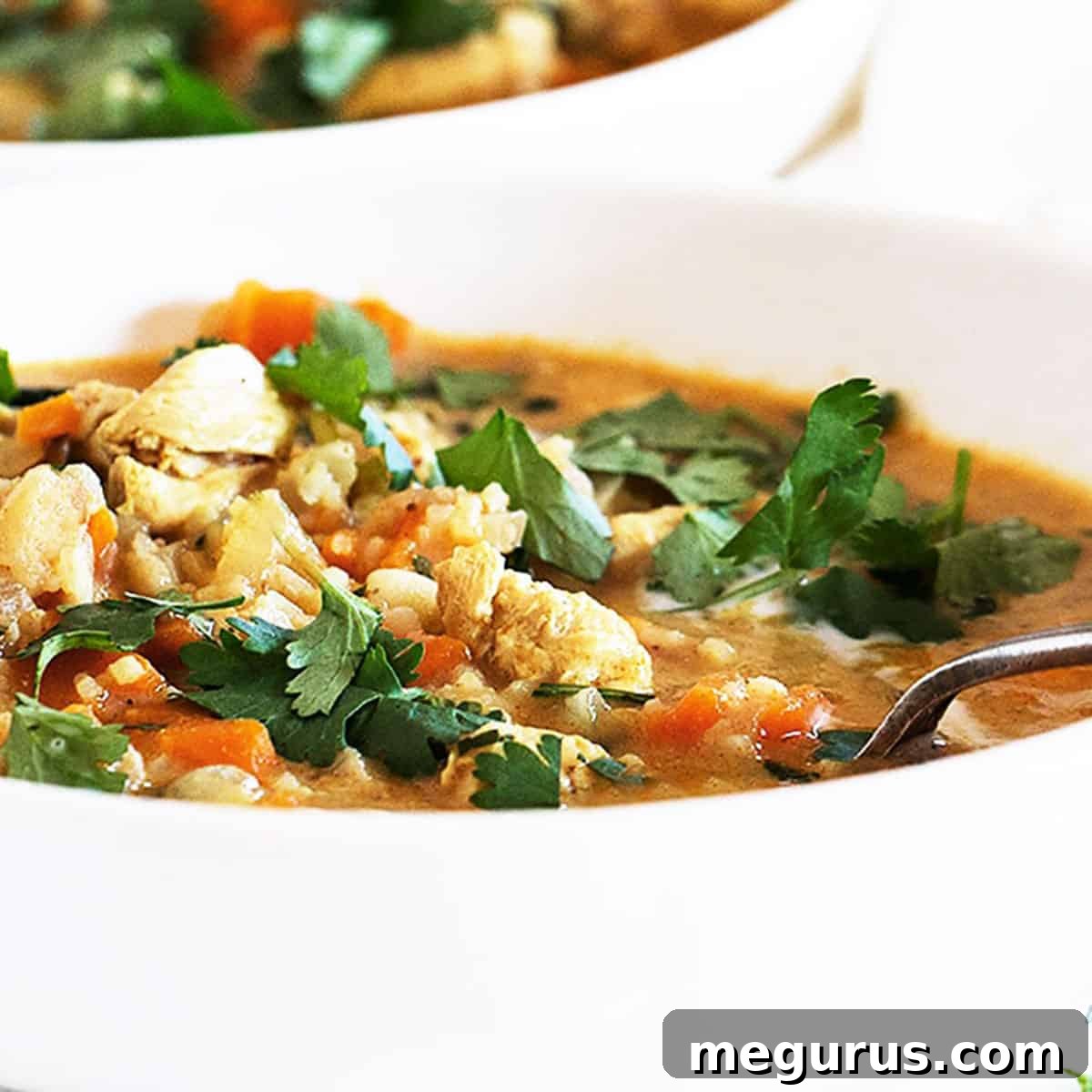
Embrace the cozy warmth of this incredible Chicken Mulligatawny Soup. Featuring tender chicken, creamy coconut milk, a hint of sweet apple, nutritious vegetables, and comforting rice, this recipe delivers a truly hearty and soul-satisfying experience. It’s an easy-to-make, delicious soup infused with the vibrant and aromatic flavors of Indian curry, perfect for any season, especially as the weather turns cooler.
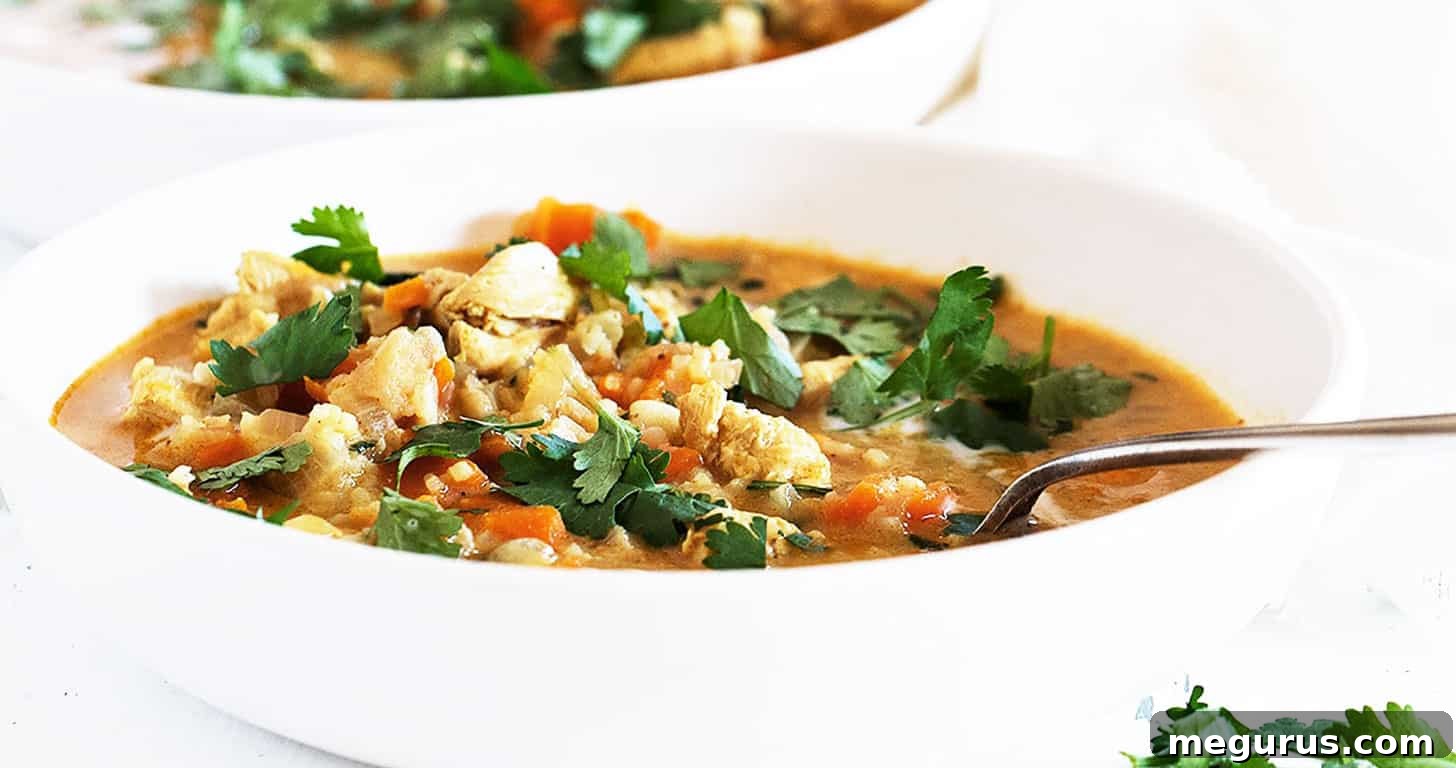
The Allure of Mulligatawny: A Culinary Journey
Originating from the British Raj in India, Mulligatawny soup is a rich culinary fusion that literally translates to “pepper water.” Over centuries, it has evolved into a beloved dish, characterized by its complex blend of spices, creamy texture, and often a touch of tanginess. Our chicken Mulligatawny recipe honors this tradition by delivering an authentic yet accessible version that is wonderfully warming and deeply flavorful.
When the temperature drops, there’s nothing quite like a steaming bowl of Mulligatawny Soup to bring comfort and warmth. The harmonious blend of fragrant spices instantly soothes the soul, making it an ideal choice for crisp autumn evenings and chilly winter days. This soup isn’t just food; it’s an experience that transports you with every spoonful.
Mulligatawny soup is renowned for its versatility, boasting numerous variations across different regions and households. Some recipes feature chicken or beef, while others focus purely on vegetables for a vegetarian delight. Ingredients like rice or lentils are often incorporated to add substance, transforming the soup into a substantial meal. Despite the variations, the unifying elements remain the wonderful warming flavors derived from coconut milk and a rich curry base, which truly define its unique character.
This particular recipe highlights a robust chicken Mulligatawny Soup. We begin by quickly cooking tender chicken pieces, but the beauty of this dish is its adaptability. Feel free to use pre-cooked chicken from last night’s dinner or even shredded meat from a store-bought rotisserie chicken for an even faster preparation. Like many classic Indian curries, Mulligatawny soup is incredibly forgiving and welcomes a wide array of ingredient substitutions, allowing you to tailor it perfectly to your taste and what you have on hand.
Key Ingredients: Unlocking Mulligatawny’s Magic
Understanding the role of each ingredient is key to crafting the perfect bowl of Mulligatawny. Here’s a detailed look at the core components and suggested substitutions to help you personalize this amazing soup.
Chicken: The Protein Powerhouse
For the chicken component, you have excellent flexibility. Boneless chicken breast or succulent chicken thighs both work beautifully. I personally lean towards chicken breast for its lean texture, but thighs offer a richer flavor. If you’re pressed for time or have leftovers, cooked chicken is a fantastic shortcut. Simply shred or dice any leftover roasted chicken, or take advantage of a store-bought rotisserie chicken to dramatically cut down on prep time. When using pre-cooked chicken, you can skip the initial chicken cooking step in the recipe and add it towards the end to warm through.
The Aromatic Foundation: Vegetables
The base of any good soup starts with a flavorful blend of aromatics. Our Mulligatawny uses finely diced celery, carrots, and onions, often referred to as a “mirepoix” in French cooking, though common in many cuisines. These vegetables, when sautéed gently, release their natural sweetness and create a depth of flavor that is essential for the soup’s complexity. Ensure they are finely diced to meld seamlessly into the soup and cook evenly. Carrots add a touch of sweetness and vibrant color, while celery contributes a subtle earthy note.
The Heart of Indian Flavor: Curry Paste or Powder
The distinctive Indian curry flavor is central to Mulligatawny. For this recipe, I highly recommend using a quality Indian curry paste, particularly Madras Curry Paste. Its complex blend of spices offers a robust and authentic taste profile that truly elevates the soup. Brands like Patak’s™ are widely available in most grocery stores’ international aisles, alongside other Indian curry pastes and sauces. Opting for a paste often provides a deeper, more concentrated flavor than powder.
However, if curry paste isn’t readily available, or you prefer using powder, you can certainly substitute it. As a general guideline, approximately 1 teaspoon of Indian curry powder can replace 1 Tablespoon of curry paste, but you may need to adjust to taste. Be mindful that curry powders vary in potency and spice level, so start with less and add more if desired. It’s crucial to stick to an *Indian* curry paste or powder; Thai curry pastes, while delicious, have a distinctly different flavor profile and are not suitable for this traditional Mulligatawny.
For those who love to customize or find themselves without either paste or powder, you can easily create your own Indian curry spice mix. Simply combine 1/2 teaspoon ground coriander, 1/4 teaspoon ground cumin, 1/8 teaspoon turmeric, and a small pinch of cayenne pepper for a touch of heat. This homemade blend provides a fresh and vibrant flavor that can be adjusted to your preference.
Ginger’s Zesty Kick
Ginger adds a crucial layer of fresh, spicy, and aromatic flavor to the soup. I’m a big proponent of ginger paste, as it offers convenience and consistent flavor, and I always keep a tube in my fridge. If you don’t have ginger paste, fresh grated ginger is an excellent alternative, providing the brightest flavor. Approximately 1/2 teaspoon of fresh grated ginger can substitute for 1 teaspoon of paste. As a last resort, a small amount (about 1/8 teaspoon) of ginger powder can also be used, though it has a less vibrant taste.
The Unexpected Sweetness: Apple
The inclusion of apple might seem unusual in a savory soup, but it’s a traditional Mulligatawny ingredient that provides a wonderful balance. The apple’s natural sweetness and subtle tartness beautifully cut through the richness of the curry and coconut milk, adding a refreshing note and complexity. Any variety of apple will work, but tart Granny Smith apples are a popular choice for their ability to provide a noticeable tangy counterpoint. Fuji or Gala apples can also be used for a slightly sweeter soup. I recommend peeling and shredding the apple with a box grater so it melts into the soup, enriching the broth without leaving large chunks.
Creamy Comfort: Coconut Milk
Coconut milk is what gives Mulligatawny its signature creamy texture and rich, slightly sweet undertone that perfectly complements the curry spices. You can use either regular (full-fat) or “lite” coconut milk. The regular version will yield a richer, creamier soup, while the lite version will be slightly less decadent but still delicious. The recipe calls for 2/3 cup, which conveniently equals the contents of many mini (160ml) cans of coconut milk, such as those from Thai Kitchen™. If you’re using a standard-sized can, make sure to shake it well or empty it into a bowl and stir thoroughly before measuring, as coconut cream often separates and solidifies at the top.
The Hearty Base: Rice or Lentils
To make this soup truly hearty and filling, rice is a key ingredient. Basmati rice is my top recommendation for its fragrant aroma and distinct texture that holds up well in soups. Both white and brown basmati rice can be used, with brown offering a nuttier flavor and more fiber. If basmati isn’t available, a good quality long-grain white rice will also work. For those looking for an alternative or a different nutritional profile, red split lentils are an excellent substitute for rice. They cook quickly and add a lovely thickness and earthy flavor, making the soup equally satisfying.
Freshness & Garnish: Cilantro
Fresh cilantro added at the end brightens the soup with its characteristic herbaceous flavor and vibrant green color. If cilantro isn’t to your taste – a common preference – feel free to omit it entirely or substitute with some fresh chopped parsley for a similar visual appeal and a milder, fresh note.
Expert Tips for a Perfect Bowl
- **Freezing Leftover Coconut Milk**: Don’t let unused coconut milk go to waste! It freezes exceptionally well. Pour any remainder from a can into a freezer-safe, zipper-type plastic bag or an ice cube tray. Label the bag with the contents and approximate amount before freezing. This way, you’ll always have some on hand for your next curry or soup, and avoid the common dilemma of forgetting what’s in the freezer!
- **Customizing Spiciness**: The heat level of this Mulligatawny soup is entirely within your control. I find one level tablespoon of Madras curry paste provides a perfectly balanced, medium spice level that’s enjoyable without being overwhelming. If you prefer a bolder, spicier soup, add a heaping tablespoon. For a milder flavor, use a scant tablespoon or slightly less. Always taste and adjust as you go, especially when adding additional curry paste at the end.
- **Achieving Ideal Consistency**: As the soup simmers, the rice will absorb some of the broth, leading to a natural thickening. If you prefer a thinner soup, keep a little extra chicken broth or water on hand to thin it out to your desired consistency when reheating or serving.
- **Ingredient Prep Matters**: Taking the time to finely and uniformly dice your vegetables ensures they cook evenly and integrate beautifully into the soup, creating a harmonious texture rather than distinct chunks.
Making Ahead, Storing, and Freezing
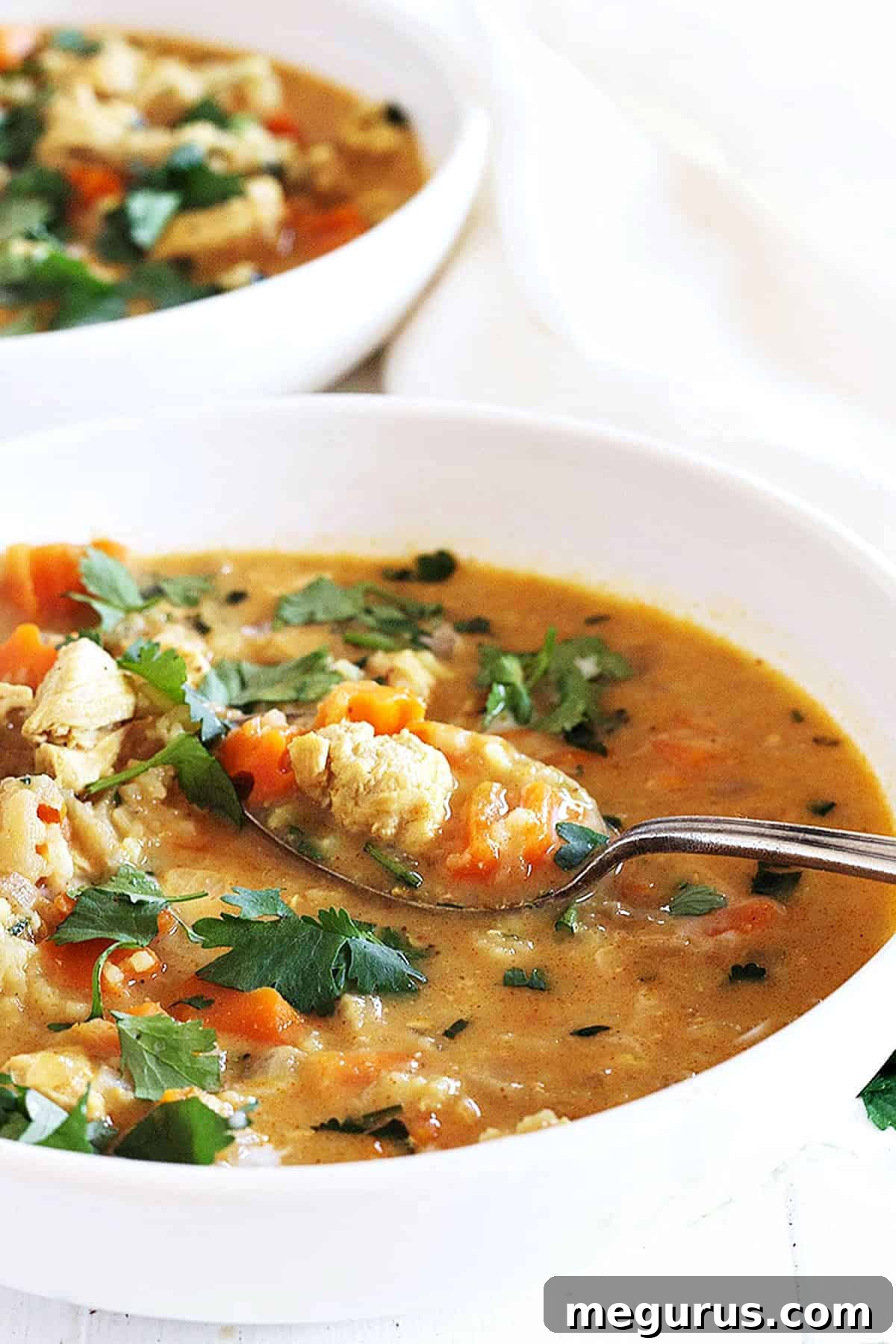
This Mulligatawny soup is excellent for meal prepping and often tastes even better the next day as the flavors have more time to meld. If you’ve made a batch ahead of time or have leftovers, store them in an airtight container in the refrigerator for up to 3-4 days.
It’s important to note that as the soup cools and sits in the fridge, it will naturally thicken considerably. This is primarily because the rice continues to absorb liquid from the broth. You can easily adjust the consistency when reheating by stirring in a bit more chicken broth or water until it reaches your preferred thickness. Personally, I often enjoy it in its thicker, more stew-like state, especially when paired with some crusty bread.
When it comes to freezing, soups with rice can be a bit tricky as rice can become mushy or change texture upon thawing and reheating. If you plan to freeze this Mulligatawny soup, I highly recommend leaving out the rice. You can either replace the rice with lentils (which generally freeze better) or simply add freshly cooked rice directly to the individual portions of soup after they have been reheated. This method ensures the best texture for your rice and maintains the soup’s overall quality after freezing.
Serving Suggestions
A hearty bowl of Chicken Mulligatawny soup is a meal in itself, but it can be enhanced with a few simple accompaniments. Serve it alongside warm naan bread or a slice of crusty artisan bread for dipping into the rich, flavorful broth. A simple side salad with a light vinaigrette can also offer a refreshing contrast to the soup’s robust flavors. For garnishes, a generous sprinkling of fresh chopped cilantro adds a burst of freshness and color. A small drizzle of extra coconut milk swirled on top right before serving can also boost its creamy appeal. For those who enjoy an extra kick, a pinch of chili flakes can be added to individual bowls.
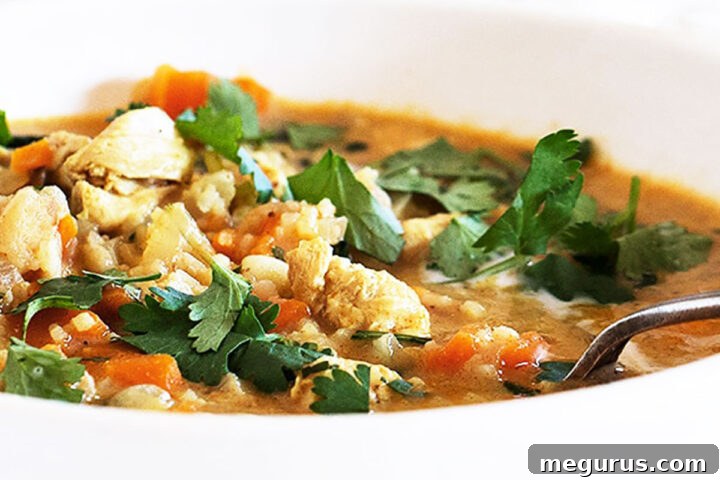
Get the Recipe:
Chicken Mulligatawny Soup
Pin This
Leave a Review
10 mins
30 mins
40 mins
4 servings
Ingredients
For cooking the chicken:
- 1 teaspoon butter, or ghee
- 2 cups chicken, uncooked, cut into bite-sized pieces *or see Note 1 below for using cooked chicken
For the base soup:
- 1 teaspoon butter, or ghee
- 1/4 cup celery, finely diced
- 1 1/4 cups carrot, diced
- 1/2 cup onion, finely diced
- 1 teaspoon ginger paste, or 1/8 tsp ginger powder or 1/2 tsp fresh ginger grated
- 1 Tablespoon Indian curry paste, such as Madras, or 1 tsp curry powder or *see Note 2 below options
- 4 cups chicken broth or stock
- 3/4 cup apple, peeled and shredded
- 1/4 cup basmati rice
To finish the soup:
- 1/4 cup cilantro, fresh, chopped
- 2/3 cup coconut milk
- Salt and freshly ground pepper, to taste
For garnish:
- Additional cilantro, chopped (optional)
- Drizzle of coconut milk, if desired
Instructions
-
Heat 1 teaspoon of butter (or ghee) in a large pot on the stovetop over medium heat. Add the uncooked chicken pieces and cook, stirring frequently, until they are thoroughly cooked through and no longer pink. Remove the cooked chicken from the pot, transfer to a bowl, and set aside.
-
In the same soup pot, add another teaspoon of butter (or ghee) and heat over medium heat. Add the finely diced onion, carrot, and celery. Sauté these vegetables, stirring occasionally, until the onions have softened and become translucent, which typically takes about 3-4 minutes.
-
Stir in the ginger paste and Indian curry paste (or curry powder/homemade spice mix). Cook this mixture, stirring constantly, for about 1 minute to allow the spices to bloom and become fragrant. Then, pour in the chicken broth, add the shredded apple, and the basmati rice. Return the previously cooked chicken to the pot and stir everything to combine.
-
Bring the soup to a gentle boil, then reduce the heat to medium-low. Allow the soup to simmer, uncovered, for approximately 25 minutes. Continue simmering until the rice is fully cooked and the carrots are tender. Taste test a piece of carrot to ensure it has reached your desired tenderness.
-
Stir in the fresh chopped cilantro and the coconut milk. Continue to stir and warm the soup for a few more minutes, ensuring it is heated through but not boiling rapidly. Taste the soup and season generously with salt and freshly ground pepper as needed (it will likely require some seasoning at this stage). If you desire a stronger curry flavor, you can stir in a touch more curry paste now.
-
Serve the Mulligatawny soup warm, garnished with additional chopped cilantro and a delicate drizzle of coconut milk, if you prefer, for an extra touch of flavor and visual appeal. Enjoy!
Notes
- **Using Cooked Chicken**: For convenience, you can start with leftover cooked chicken or chicken from a store-bought rotisserie. If doing so, simply skip the initial step of cooking the chicken in the recipe instructions and add the cooked chicken along with the broth and rice.
- **Curry Paste Alternatives**: My preferred choice is Patak’s Madras curry paste for its authentic flavor. If you only have Indian-style curry powder on hand, substitute with about 1 teaspoon of powder. Alternatively, you can create your own spice blend by mixing together 1/2 tsp ground coriander, 1/4 tsp cumin, 1/8 tsp turmeric, and an optional small pinch of cayenne for a touch of heat.
Leftover Mulligatawny soup will thicken significantly as it sits in the refrigerator due to the rice absorbing more liquid. You can easily thin it with additional chicken broth or water when reheating, or simply enjoy it in its richer, more stew-like form.
For more detailed tips, ingredient variations, and substitution suggestions, please refer to the “Key Ingredients” and “Expert Tips” sections above the recipe card!
Indian
Soup
Jennifer Maloney
Serving:
1
serving
,
Calories:
306
kcal
,
Carbohydrates:
20
g
,
Protein:
14
g
,
Fat:
19
g
,
Saturated Fat:
11
g
,
Cholesterol:
48
mg
,
Sodium:
958
mg
,
Potassium:
590
mg
,
Fiber:
2
g
,
Sugar:
5
g
,
Vitamin A:
6932
IU
,
Vitamin C:
23
mg
,
Calcium:
51
mg
,
Iron:
2
mg
Tried this recipe?
If you enjoyed this recipe, please leave a star rating and comment. It helps others to find it!
More Chicken Soup Recipes to Love!