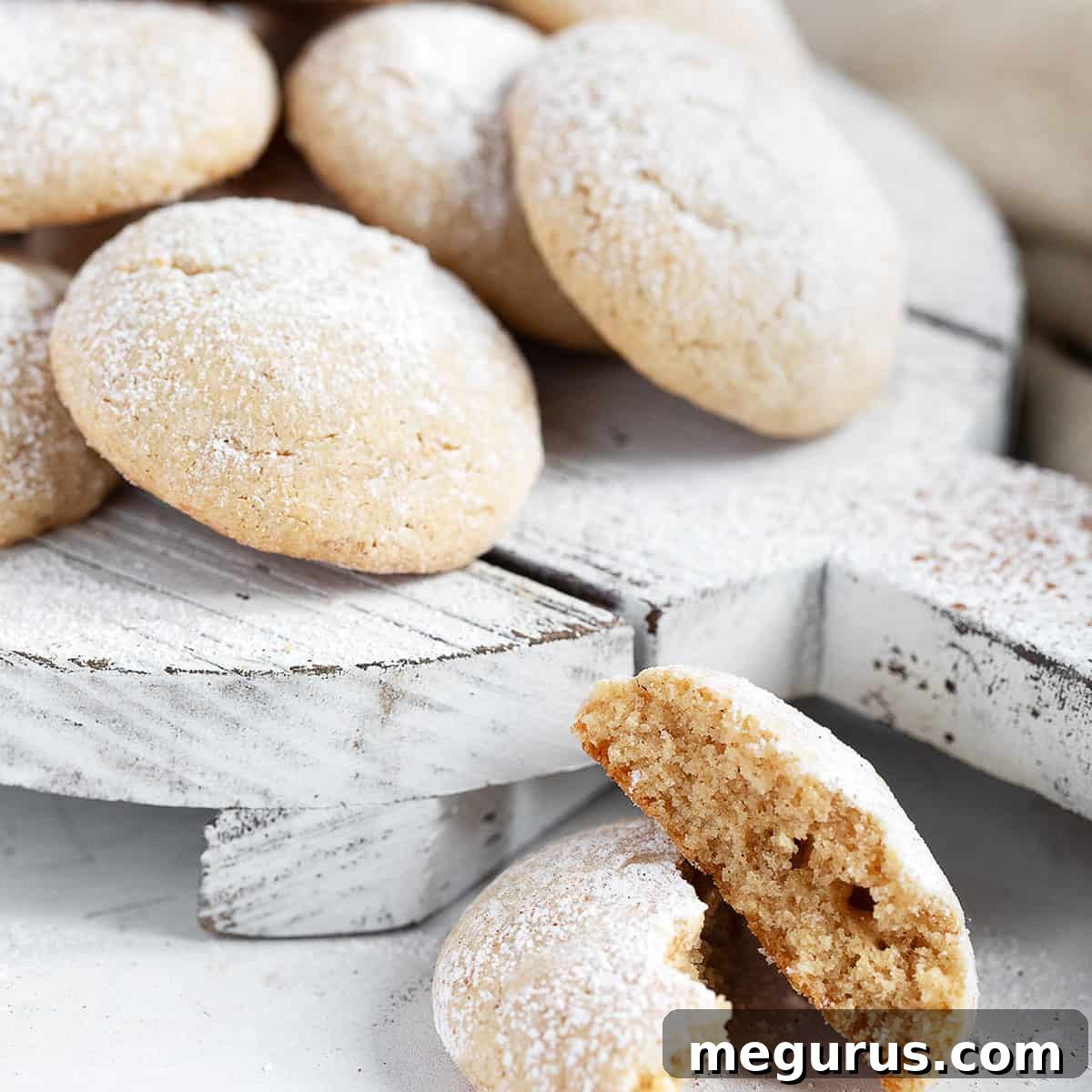
Step into a world of rich, comforting flavors with these incredible Brown Butter Cinnamon Cookies. While their humble appearance might not immediately catch your eye, their taste is an absolute revelation that will leave a lasting impression. The secret lies in the golden, nutty depths of brown butter, which forms a luxurious foundation, perfectly complementing the sweet warmth of vanilla and the inviting spice of cinnamon. Each bite offers a delightful balance of a crispy exterior and a wonderfully chewy center, making them an irresistible treat for any occasion.
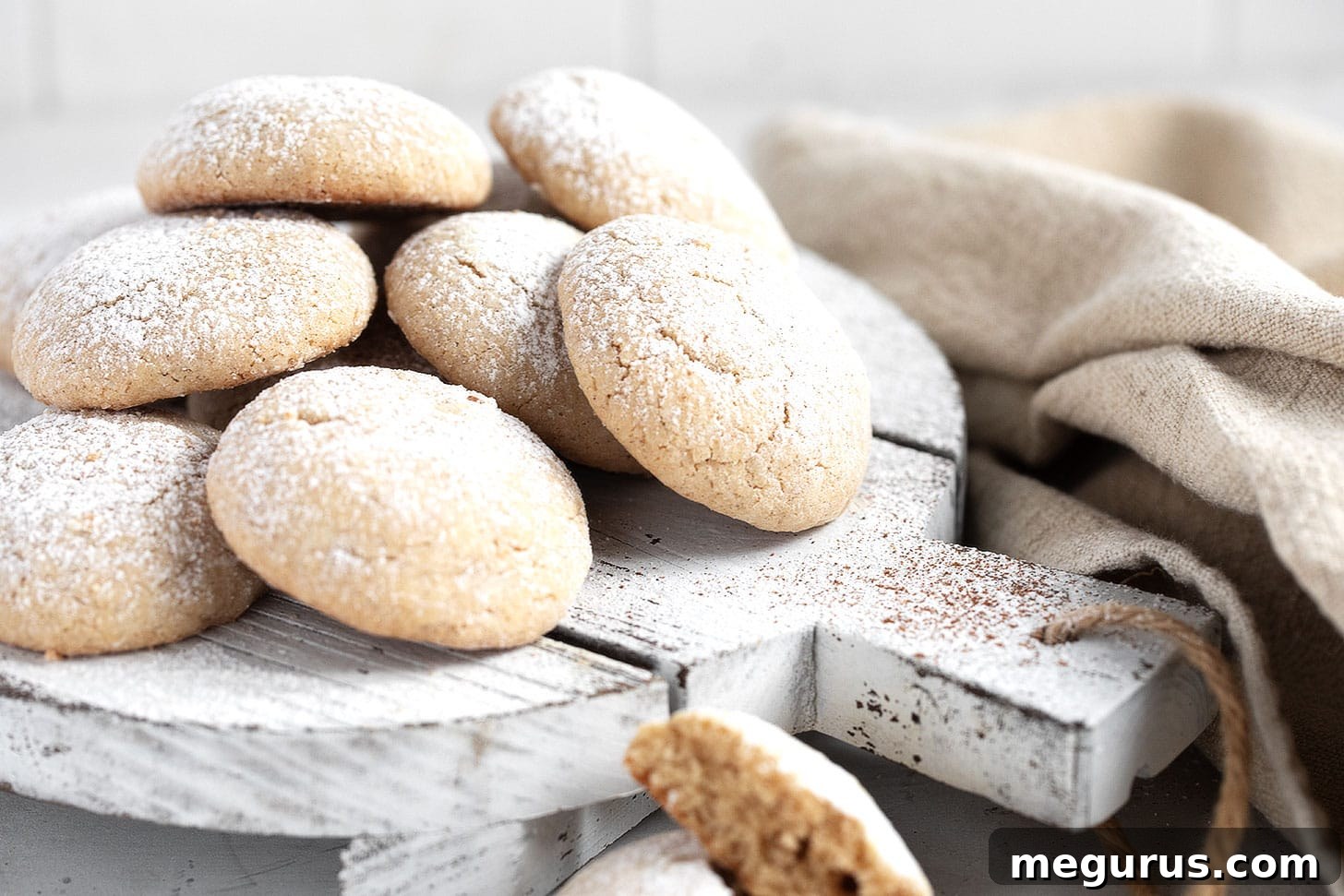
These delightful cookies are more than just a delicious dessert; they are incredibly versatile and practical. They make an exceptional addition to any holiday cookie box, thanks to their robust nature that allows them to travel exceptionally well and maintain their freshness for an extended period. For those who like to plan ahead, these cookies are also freezer-friendly, allowing you to whip up a batch and save some for later cravings. Personally, I find myself reaching for these year-round, as they are the ultimate companion to a soothing cup of tea or a robust coffee. For an extra touch of indulgence, try dunking them in your coffee, much like you would a classic biscotti, to unlock an even deeper symphony of flavors.
The Magic Behind Brown Butter: A Culinary Revelation
Before we dive into the recipe, let’s talk about the star ingredient that elevates these cookies from great to unforgettable: brown butter, also known as beurre noisette. This culinary technique involves gently cooking butter past its melting point until the milk solids separate and toast to a beautiful golden-brown hue, infusing the butter with an incredibly rich, nutty, and slightly caramel-like flavor. This simple transformation adds an unparalleled depth and complexity that cannot be achieved with regular butter, providing a sophisticated backdrop that perfectly highlights the vanilla and cinnamon in our cookies.
The process of browning butter is straightforward yet requires a keen eye. As the butter melts, it will foam, then the milk solids will sink to the bottom of the pan and begin to toast. It’s during this stage that the magic happens, as those tiny solids release their incredible aroma and flavor. The resulting browned butter is then cooled to a specific consistency before being incorporated into the dough, ensuring that all its glorious notes are fully integrated into the cookie batter.
Why You’ll Love This Brown Butter Cinnamon Cookie Recipe
There are countless reasons why these brown butter cinnamon cookies deserve a spot in your baking repertoire. Firstly, the unique flavor profile is truly something special. The nutty depth of the browned butter creates a warm, sophisticated base, harmonizing beautifully with the comforting spice of cinnamon and the sweet, aromatic notes of vanilla. This isn’t just a cinnamon cookie; it’s a cinnamon cookie with an extra layer of gourmet flavor.
Beyond taste, the texture is equally captivating. These cookies boast perfectly crispy edges that give way to a soft, chewy, and tender interior. The subtle crackle from the icing sugar coating adds another dimension of textural delight, making each bite an experience. They are substantial enough to feel satisfying yet delicate enough to melt in your mouth.
Furthermore, their versatility makes them a household staple. Whether you’re looking for a cozy treat on a cold evening, a delightful addition to a festive holiday platter, or simply a sweet bite to accompany your morning coffee, these cookies fit every bill. They’re relatively straightforward to make, even for novice bakers, and the simple ingredients come together to create something truly extraordinary. Plus, their excellent keeping qualities and freezer-friendliness mean you can always have a stash on hand for unexpected guests or sudden cravings.
Essential Ingredients for Perfect Brown Butter Cinnamon Cookies
Creating these delectable cookies starts with understanding the role of each key ingredient. Here’s a closer look at what you’ll need and why it matters:
- Butter (Unsalted Recommended): Butter is the foundation of our brown butter magic. Unsalted butter is generally recommended for browning because it allows you more precise control over the overall saltiness of your bake. Browning can intensify the salty flavor, so starting with unsalted butter helps prevent an overly saline result. Additionally, salted butter tends to foam more aggressively when heated, which can obscure your view of the milk solids browning, making it harder to gauge the perfect color. However, if salted butter is all you have, it will work; just be sure to reduce the added salt in the recipe by 1/4 teaspoon to compensate, as noted in the recipe card below.
- All-Purpose Flour (Spoon and Levelled): Flour provides the structure for our cookies. Accurate measurement is crucial for proper texture. Always spoon the flour into your measuring cup and then level it off with the back of a knife. Scooping directly from the bag can compact the flour, leading to too much flour and dry, crumbly cookies.
- Baking Powder: This is our leavening agent, responsible for giving the cookies a slight lift and a tender crumb. Ensure your baking powder is fresh for optimal results.
- Ground Cinnamon: The namesake spice! Cinnamon brings warmth, sweetness, and a comforting aroma. The quality of your cinnamon can significantly impact the final flavor, so opt for a good quality ground cinnamon.
- Salt: A crucial flavor enhancer, salt balances the sweetness of the sugars and brings out the nutty notes of the brown butter. Adjust as necessary if using salted butter.
- White Granulated Sugar: Granulated sugar contributes to the crispness of the cookies’ edges and overall sweetness.
- Light Brown Sugar (Packed): Brown sugar adds moisture, chewiness, and a subtle molasses flavor that complements the brown butter beautifully. Always pack brown sugar firmly into your measuring cup.
- Large Eggs: Eggs act as a binder, provide moisture, and contribute to the rich texture of the cookies. Ensure they are at room temperature for better incorporation into the batter.
- Vanilla Extract: A good quality vanilla extract enhances all the other flavors, adding a layer of aromatic sweetness. Don’t skip it!
- Icing Sugar or White Granulated Sugar (for rolling): This coating creates the characteristic crispy, slightly crackled exterior. Icing sugar (confectioners’ sugar) provides a finer, melt-in-your-mouth coating, while granulated sugar offers a slightly coarser, sparkling finish. Both work wonderfully.
Crafting Your Cookies: A Step-by-Step Guide to Perfection
This section provides a detailed breakdown of each step, designed to ensure your brown butter cinnamon cookies turn out perfectly every time. Always refer to the complete instructions in the Recipe Card below for exact measurements and timing.
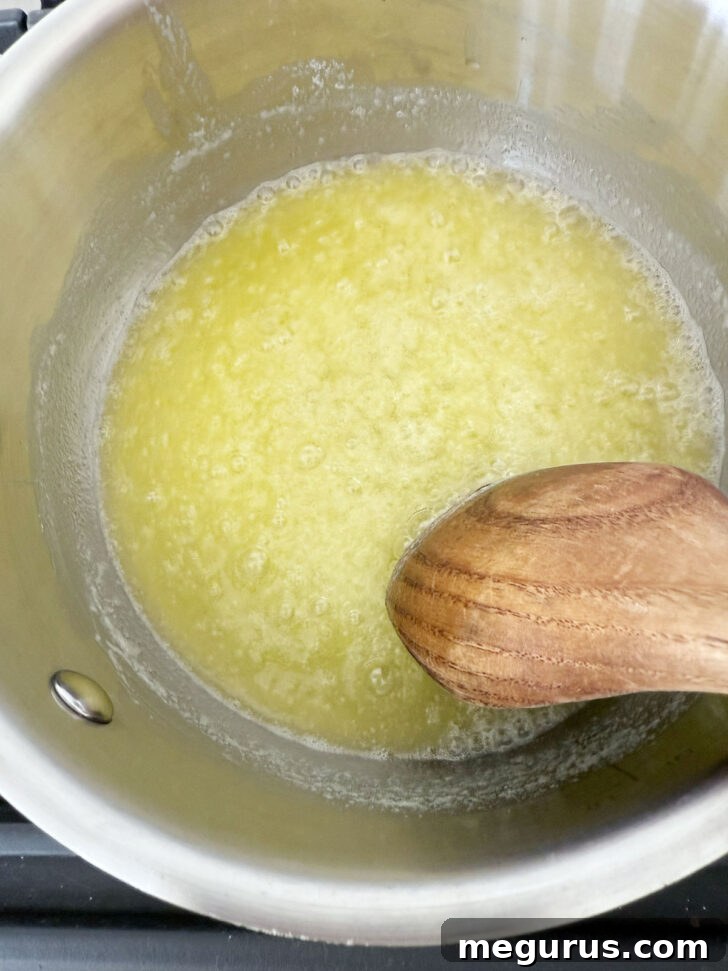
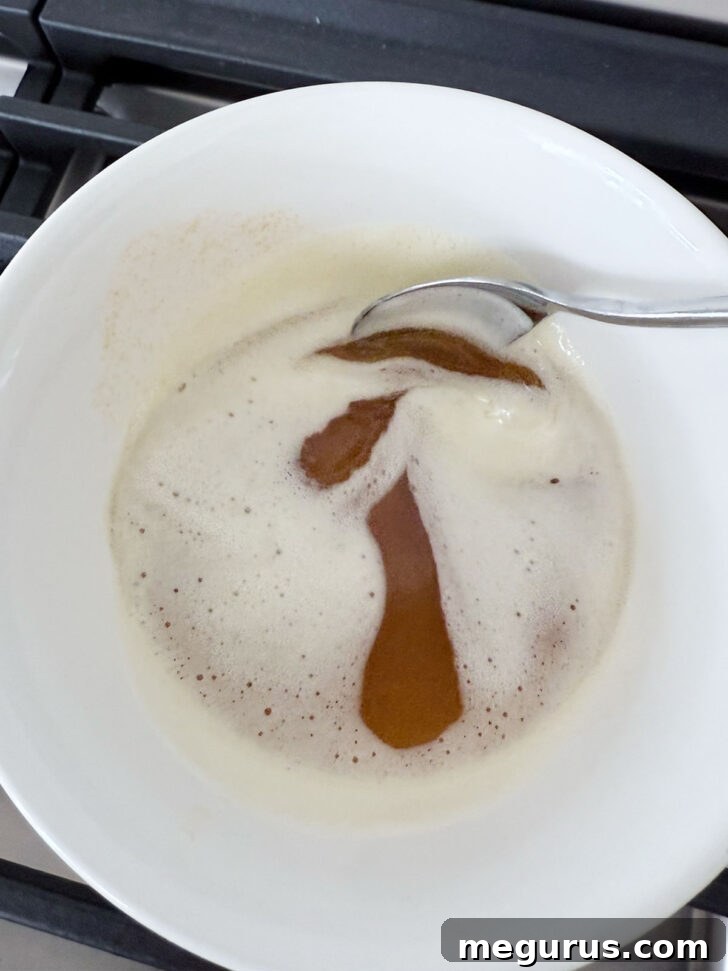
- Mastering the Brown Butter: Begin by preparing the star ingredient. Place the butter in a medium-sized, light-colored saucepan over medium heat. A light-colored pan is essential because it allows you to clearly monitor the color changes of the butter. Stir the butter constantly as it melts and heats. It will first melt, then begin to foam. Continue stirring, watching for the milk solids at the bottom of the pan to turn from yellow to a light golden, then to a rich, deep amber color with a wonderfully nutty aroma. This entire process typically takes about 5-8 minutes. As soon as it reaches this deep golden hue, immediately pour the browned butter into a small, heat-proof bowl to halt the cooking process. Do not let it turn black, as burnt butter will taste bitter. Allow the brown butter to cool for approximately 1 hour at room temperature, or until it has completely cooled but remains liquid. It should still be pourable.
- Preparing the Dry Ingredients: While the butter cools, combine your dry ingredients. In a medium bowl, whisk together the all-purpose flour (remember to spoon and level!), baking powder, ground cinnamon, and salt. Whisking ensures these ingredients are thoroughly combined and evenly distributed throughout the mixture, preventing clumps and ensuring a consistent rise and flavor in your cookies. Set this bowl aside.
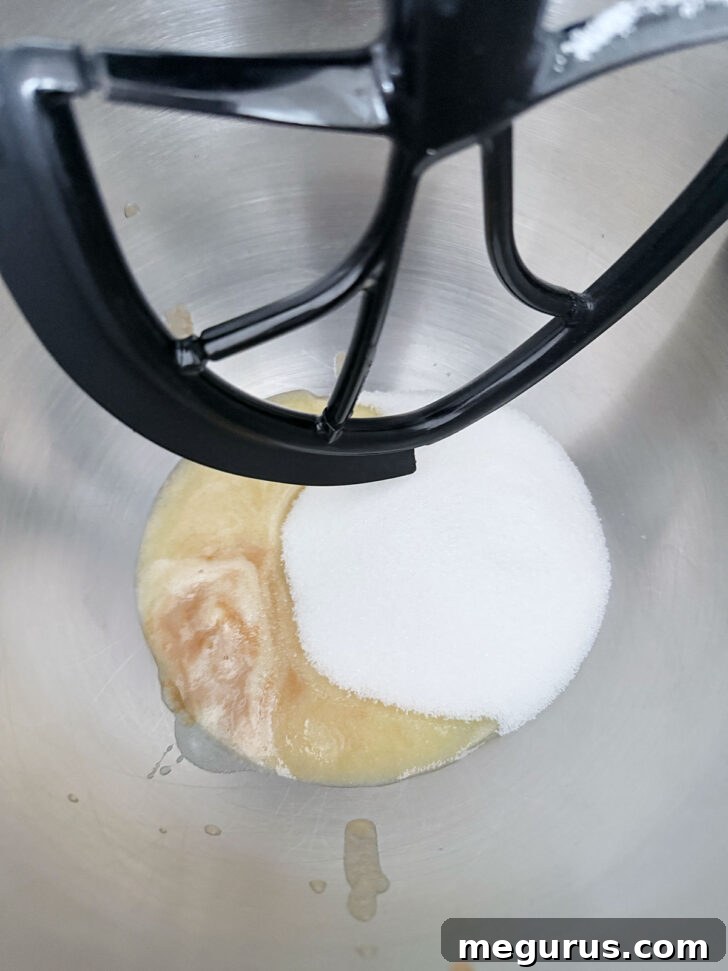
- Creaming Butter and Sugar: Once your brown butter has cooled to the right consistency (cooled but still liquid), transfer it to the bowl of a stand mixer fitted with the paddle attachment, or use a large mixing bowl with an electric hand mixer. Add both the white granulated sugar and the light brown sugar. Cream these together with the brown butter on medium speed for about 2 minutes. The mixture should become light, fluffy, and noticeably paler in color. This step incorporates air, which contributes to the cookies’ final texture.
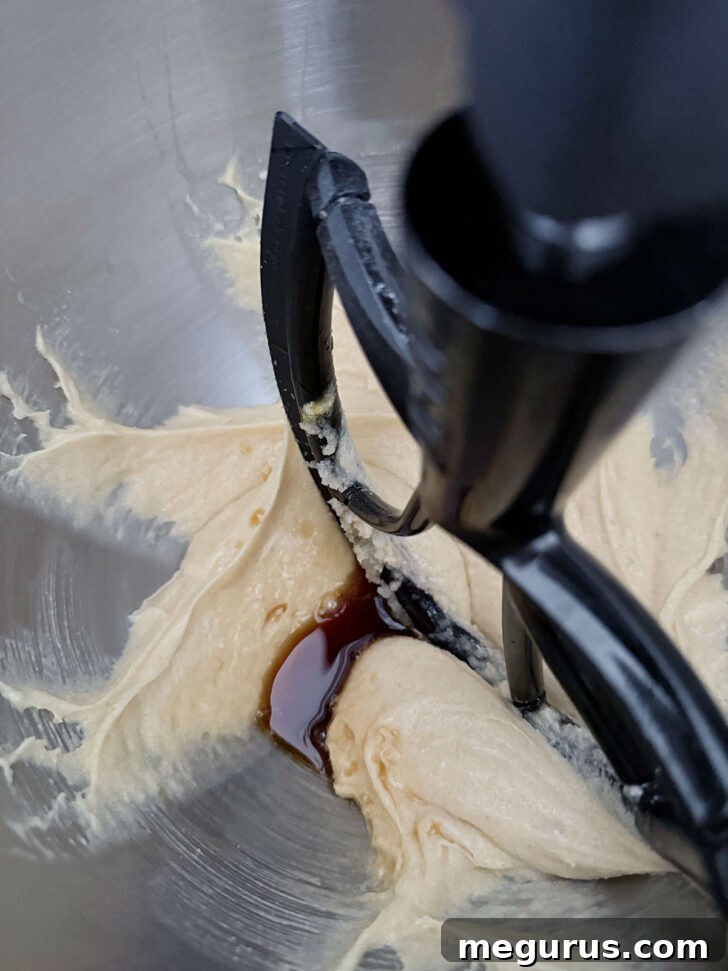
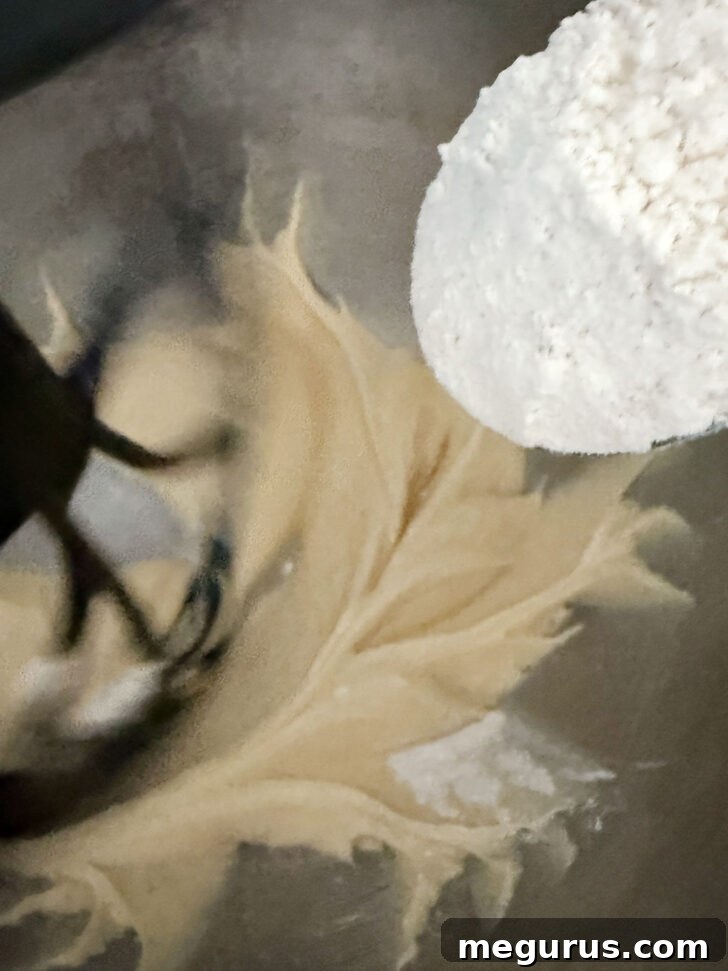
- Incorporating Eggs and Vanilla: After creaming the butter and sugars, add the large eggs one at a time, beating well after each addition until fully incorporated. Scrape down the sides of the bowl as needed to ensure everything is evenly mixed. Finish by beating in the vanilla extract. The mixture should appear smooth and slightly glossy.
- Combining Wet and Dry Mixtures: With your mixer on low speed, gradually spoon in the reserved flour mixture (the dry ingredients). Mix only until the flour is just combined and no streaks remain. Be careful not to overmix, as this can develop the gluten in the flour too much, leading to tough cookies. As soon as the flour is incorporated, remove the bowl from the mixer.
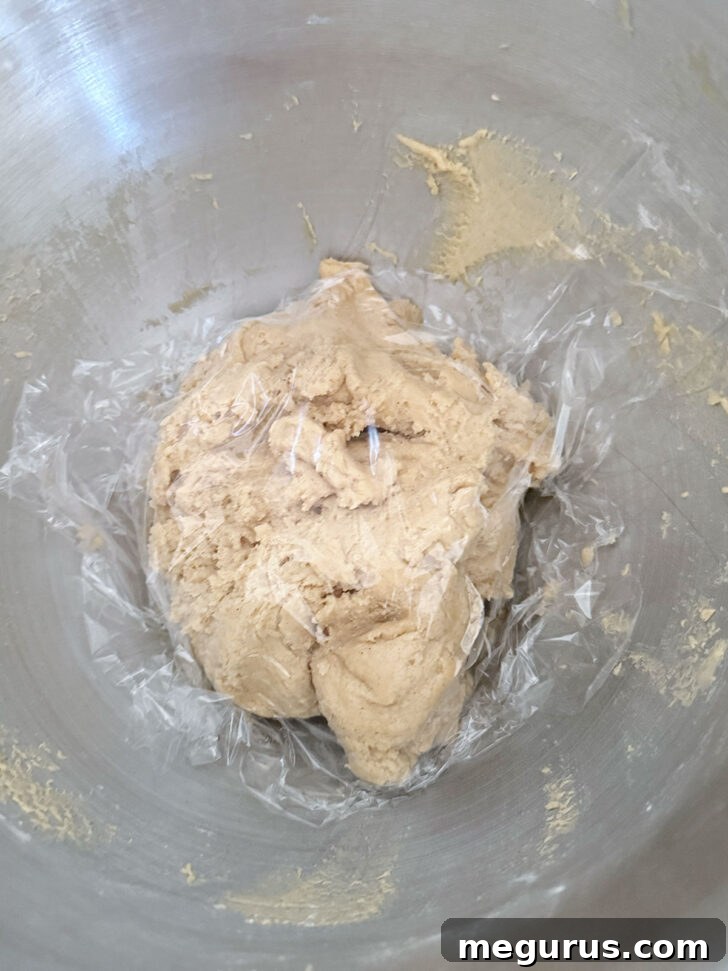
- Chilling the Dough: Cover the cookie dough tightly with plastic wrap. Ensure the plastic wrap is pressed directly onto the surface of the dough to prevent a skin from forming. Place the bowl into the refrigerator to chill for approximately 30 minutes. This chilling period is crucial as it allows the flavors to meld, the butter to firm up (which prevents excessive spreading during baking), and makes the dough easier to handle.
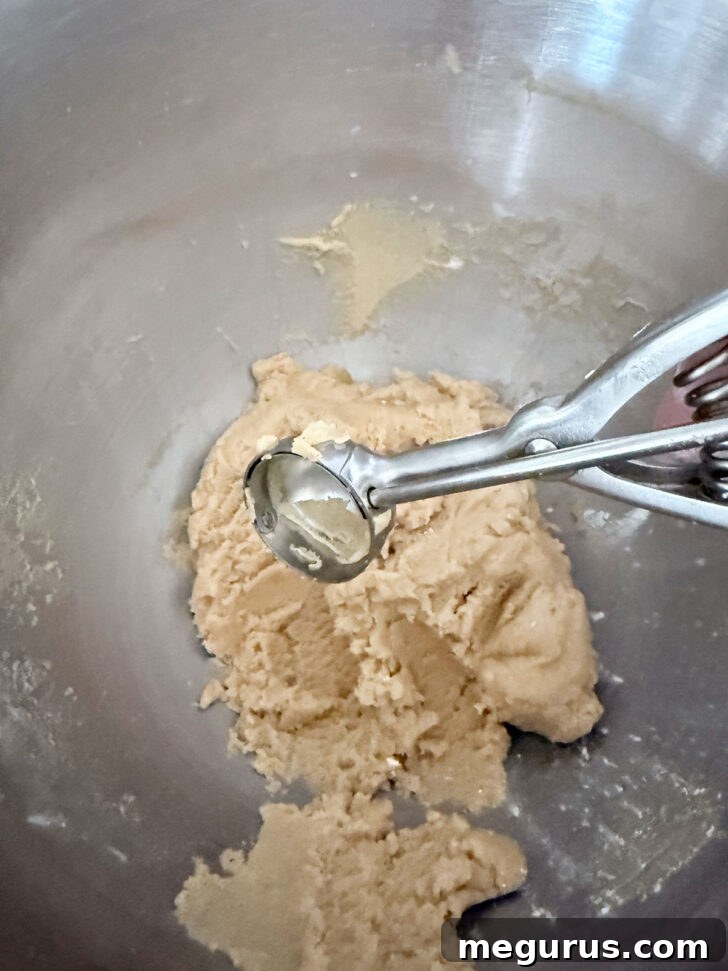
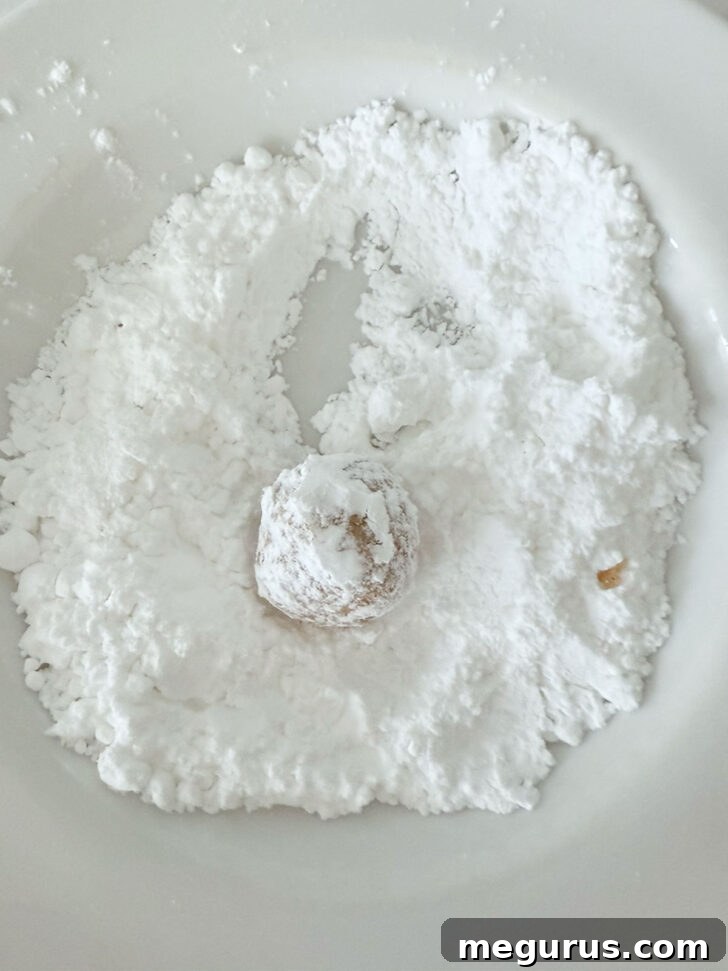
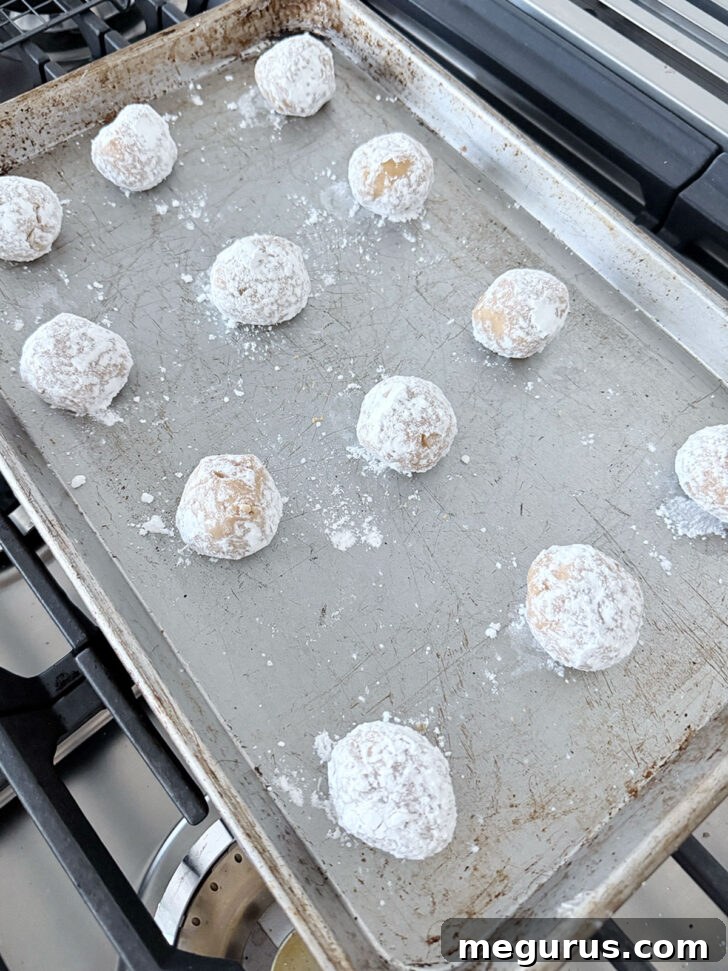
- Preheat Oven and Prepare for Baking: While the dough is chilling for the final few minutes, preheat your oven to 350°F (175°C) for a non-convection oven. If you have a convection oven, you may need to reduce the temperature slightly (e.g., to 325°F/160°C) or shorten the baking time. Prepare a large, ungreased baking sheet. Have a shallow bowl ready with icing sugar or white granulated sugar for rolling your cookie dough balls.
- Portioning and Rolling the Dough: Once the cookie dough has sufficiently chilled, use a cookie scoop to portion out the dough. For smaller “button” cookies, use about 1 tablespoon of dough (one small scoop). For larger cookies, use approximately 2 tablespoons of dough (two small scoops). Roll each portion of dough into a smooth ball between your palms. Then, roll each dough ball thoroughly in the icing sugar (or granulated sugar) to create a generous coating. Place the coated dough balls onto the ungreased baking sheet, ensuring they are spaced a couple of inches apart to allow for spreading during baking.
- Baking to Golden Perfection: Place the baking sheet into the preheated oven. Bake the cookies for 8-9 minutes for the smaller “button” cookies, or 11-12 minutes for the larger cookies. Baking times can vary slightly depending on your oven, so watch for the edges to be set and lightly golden, while the centers still look slightly soft and puffed. They will continue to set as they cool. Once baked, remove the cookies from the oven and allow them to rest on the hot baking sheet for 1 minute. This allows them to firm up slightly before you move them. After 1 minute, carefully transfer the cookies to a wire cooling rack to cool completely.
Pro Tips for Brown Butter Cinnamon Cookie Success
- Flour Measurement Matters: Achieving the perfect cookie texture heavily relies on accurate flour measurement. If possible, use a kitchen scale to weigh your flour (282g for 2 1/4 cups). If you don’t have a scale, always use the “spoon and level” method: gently stir the flour in its container, then spoon it lightly into your dry measuring cup until overflowing, and level off the excess with the back of a knife. Never scoop flour directly with the measuring cup, as this compacts it and can lead to dense, dry cookies.
- Don’t Rush the Chill: The 30-minute chilling period for the dough is not optional! It allows the brown butter to firm up, preventing the cookies from spreading too much during baking and ensuring those beautiful, chewy centers. It also gives the flavors a chance to deepen.
- Keep an Eye on the Brown Butter: Browning butter can go from perfect to burnt very quickly. Stay by the stove, stir constantly, and use a light-colored pan. As soon as you see those amber milk solids and smell that distinct nutty aroma, remove it from the heat and transfer it to a cool bowl immediately.
- Avoid Overmixing: Once you add the flour mixture, mix only until just combined. Overmixing develops the gluten in the flour, which can result in tough, dense cookies instead of the desired tender, chewy texture.
- Uniformity is Key: Using a cookie scoop ensures that all your cookies are the same size. This leads to even baking, meaning all your cookies will be perfectly done at the same time.
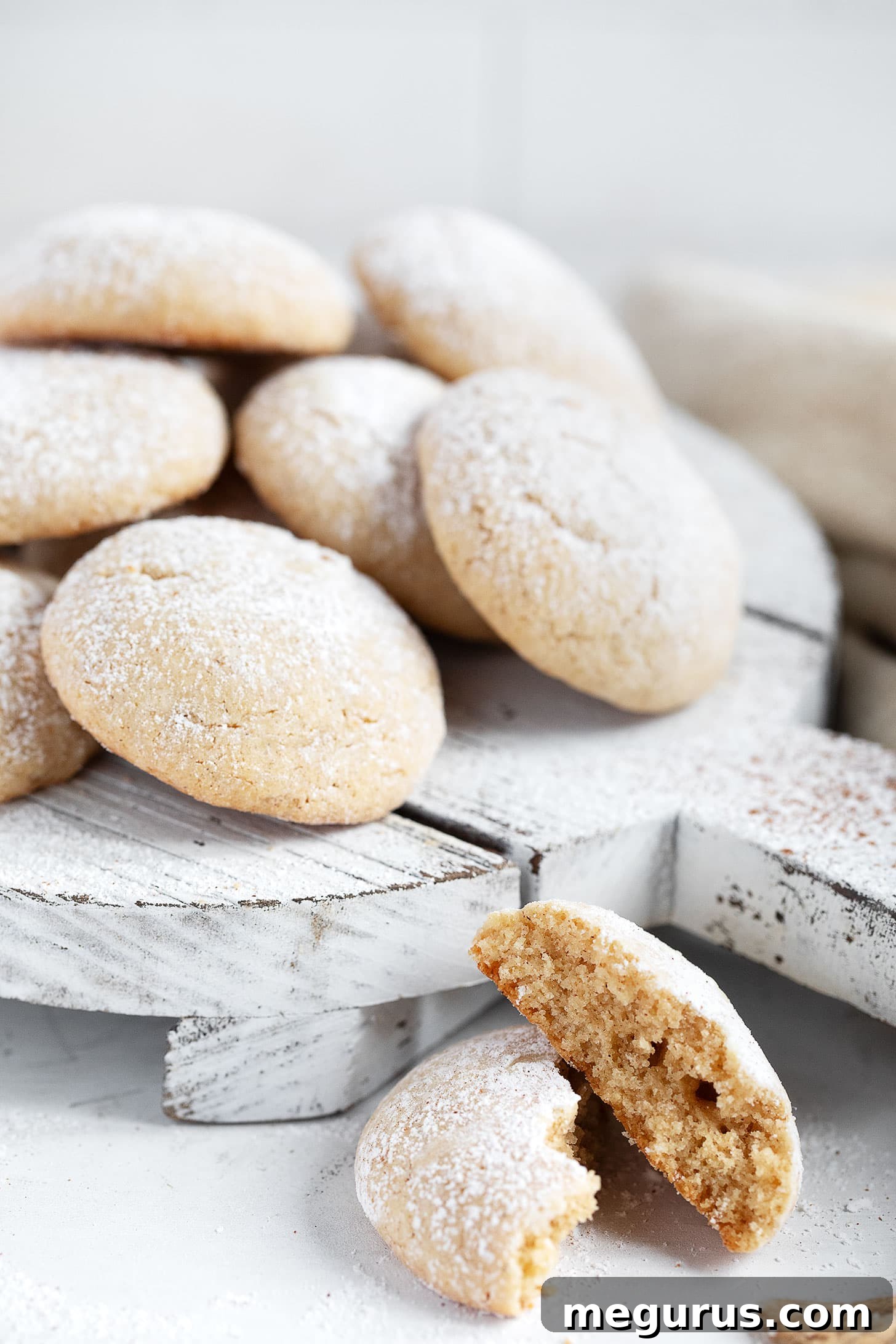
- The Icing Sugar Coating: The icing sugar coating is designed to melt and create a thin, crispy, and sweet shell on the outside of the cookie, often resulting in a beautiful crackle pattern. Don’t be alarmed if most of it disappears during baking; that’s its purpose! For an enhanced visual appeal, I often like to dust the cooled cookies with a little extra icing sugar after baking, but this is entirely optional and purely for presentation.
Storage, Freezing, and Serving Suggestions
Storage
These brown butter cinnamon cookies store exceptionally well. Once completely cooled, transfer them to an airtight container. They will maintain their freshness and delightful chewiness at room temperature for up to 5-7 days. For optimal texture, you can place a slice of bread in the container with the cookies; the bread will absorb moisture, keeping the cookies soft.
Freezing Instructions
These cookies are perfect for freezing, allowing you to enjoy them long after they’re baked.
- Freezing Baked Cookies: Allow the cookies to cool completely. Arrange them in a single layer on a baking sheet and flash freeze for about 30 minutes until solid. This prevents them from sticking together. Once solid, transfer the frozen cookies to a freezer-safe airtight container or heavy-duty freezer bag, layering them with parchment paper if desired. They will keep well for up to 3 months. Thaw at room temperature for a few hours before serving.
- Freezing Cookie Dough: You can also freeze the unbaked cookie dough balls. After rolling them in sugar, arrange them on a baking sheet and flash freeze until solid. Transfer the frozen dough balls to a freezer-safe bag or container. When ready to bake, you can bake them directly from frozen, adding an extra 2-4 minutes to the baking time. This is a fantastic way to have fresh, warm cookies on demand!
Serving Suggestions
While these cookies are utterly delicious on their own, here are a few ideas to elevate your serving experience:
- Classic Pairing: Enjoy them with a hot cup of coffee, tea, or a glass of cold milk. The nutty, spiced flavors complement these beverages perfectly.
- Dessert Enhancement: Crumble a warm cookie over a scoop of vanilla bean ice cream for an instant gourmet dessert.
- Holiday Platters: Their festive flavor and sturdy nature make them ideal for holiday cookie exchanges and gift boxes.
- Afternoon Treat: Pack them in lunchboxes or enjoy them as a satisfying afternoon pick-me-up.
- Dunking Delight: As mentioned, try dunking them in your coffee or hot cocoa for a softened, flavor-infused bite.
Frequently Asked Questions (FAQ)
Q: Can I use salted butter instead of unsalted?
A: Yes, you can. If you only have salted butter, reduce the amount of added salt in the recipe from 1/2 teaspoon to 1/4 teaspoon. Be aware that salted butter tends to foam more during browning, which can make it slightly harder to see the milk solids toast. Always monitor carefully.
Q: My brown butter burned. What went wrong?
A: Browning butter requires constant attention. It transitions quickly from perfectly golden to burnt. Ensure you’re using medium heat and stirring continuously. As soon as you see those deep amber specs and smell a nutty aroma, immediately remove it from the heat and pour it into a cool bowl. A light-colored pan helps visibility.
Q: Why did my cookies spread too much?
A: Several factors can cause excessive spreading:
- Warm Butter: If the brown butter wasn’t cooled sufficiently, or if the dough itself wasn’t chilled, it will spread.
- Overmixing: Overmixing develops gluten, which can lead to flatter cookies.
- Too Little Flour: Incorrect flour measurement (e.g., not spooning and leveling) can result in a dough that’s too wet.
- Oven Temperature: An oven that isn’t hot enough can cause cookies to spread before they set. Use an oven thermometer to verify accuracy.
Q: Can I add other spices to this recipe?
A: Absolutely! While cinnamon is traditional, you can experiment with a pinch of nutmeg, ground ginger, or even a touch of cardamom for a different flavor profile. Just be mindful of the quantities, as some spices are stronger than others.
Q: What’s the difference between icing sugar and granulated sugar for rolling?
A: Icing sugar (confectioners’ sugar) is very fine and creates a delicate, melt-in-your-mouth crispy coating that often produces a more pronounced “crackle” effect. Granulated sugar, on the other hand, provides a slightly coarser texture and a sparkling, crystalline finish. Both work well, so choose based on your preference for texture and appearance.
The Full Recipe Card: Brown Butter Cinnamon Cookies
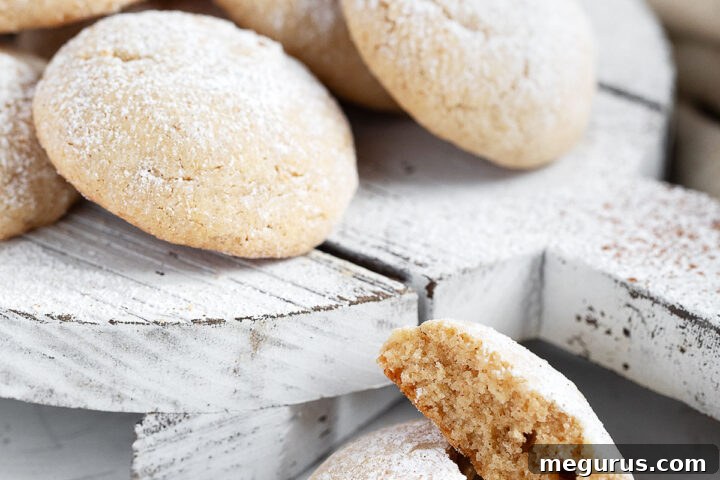
Brown Butter Cinnamon Cookies
These simple, buttery cookies bring together the nutty flavor of brown butter and vanilla, together with the warmth of cinnamon. They are perfect alongside a cup of tea or coffee.
Average Rating: 5 out of 5 stars (based on 5 ratings)
Print Recipe |
Pin This |
Leave a Review
Prep Time: 15 mins
Cook Time: 30 mins (This refers to total baking time, including multiple batches. Individual batches bake in 8-12 minutes.)
Cooling and Refrigerating Time: 1 hr 30 mins
Total Time: 2 hrs 15 mins
Yield: 18 cookies
Adjust servings: ½ 1x 2x 3X
Ingredients
- 10 Tablespoons (140 g) butter
- 2 1/4 cups (282 g) all-purpose flour, spooned and levelled
- 1 teaspoon baking powder
- 1 1/4 teaspoons ground cinnamon
- 1/2 teaspoon salt (**Reduce to 1/4 tsp if using salted butter)
- 1 cup (200 g) white granulated sugar
- 1/4 cup (45 g) light brown sugar, packed
- 2 large eggs
- 2 teaspoons vanilla extract
- Icing sugar or white granulated sugar, for rolling
Instructions
- Tip! How you measure your flour matters, especially when making cookies! If you have a kitchen scale, use it to weigh the flour out. If not, be sure you stir your flour and spoon it into the dry measuring cup, levelling it off with the back of a knife.
- Start by making the brown butter. Add the butter to a medium saucepan and melt over medium heat. Stir constantly while the butter heats, watching for color change from yellow to light golden, to a nice deep golden (not black) color. As soon as it reaches that point, immediately pour the butter into a small bowl. Set aside to cool for about 1 hour, until completely cooled, but still liquid.
- In a medium bowl, whisk together the flour, baking powder, cinnamon, and salt. Set aside.
- Once the brown butter has cooled, add it to the bowl of a stand mixer fitted with the paddle attachment or to a large bowl with an electric beater. Add the sugar and cream it together with the brown butter at medium speed for about 2 minutes, until light and fluffy. Beat in the eggs one at a time, beating well after each addition. Beat in the vanilla.
- With the mixer on low, spoon in the flour mixture and mix in until well combined. Remove the bowl from the mixer, cover the cookie dough with plastic wrap, and place the bowl into the refrigerator to cool for about 30 minutes.
- Preheat the oven to 350F (non-convection/not fan-assisted). Have a large baking/cookie sheet ready and a bowl of icing/confections’ sugar (or white granulated sugar) ready for rolling the cookies before baking.
- Tip! You can make small “button” cookies or larger cookies. For small button cookies, use 1 small cookie scoop of dough (about 1 Tbsp). For larger cookies, use two small cookie dough scoops of dough (about 2 Tbsp).
- Once the cookie dough has chilled, use a cookie scoop to portion out the dough. Roll into a ball. Roll the dough ball in the icing sugar to coat thoroughly and place onto the baking sheet a couple of inches apart.
- Bake the cookies 8-9 minutes for small “button” cookies and 11-12 minutes for larger cookies. Allow the cookies to sit on the baking sheet for 1 minute before transferring them to a cooling rack to cool completely.
- Tip! Much of the icing sugar coating will melt during baking. Its purpose is to make a sweet coating on the cookie for a nice, crispy outside. I like to dust the cookies with more icing sugar after they are baked for presentation. That is optional.
Notes
Nutritional information and yield are for the larger cookies.
These cookies keep really well stored in an airtight container at room temperature. They also freeze well up to 3 months.
Be sure to read the notes above this recipe card for more tips on making this recipe. You’ll also find step-by-step photos that you might find helpful.
Cuisine: American, Canadian
Course: Dessert
Author: Jennifer Maloney
Nutrition Information (per 1 cookie serving)
- Calories: 177kcal
- Carbohydrates: 26g
- Protein: 2g
- Fat: 7g (Saturated Fat: 4g, Polyunsaturated Fat: 0.4g, Monounsaturated Fat: 2g, Trans Fat: 0.3g)
- Cholesterol: 37mg
- Sodium: 124mg
- Potassium: 54mg
- Fiber: 1g
- Sugar: 14g
- Vitamin A: 225IU
- Vitamin C: 0.01mg
- Calcium: 21mg
- Iron: 1mg
More Delicious Cookie Recipes to Explore!