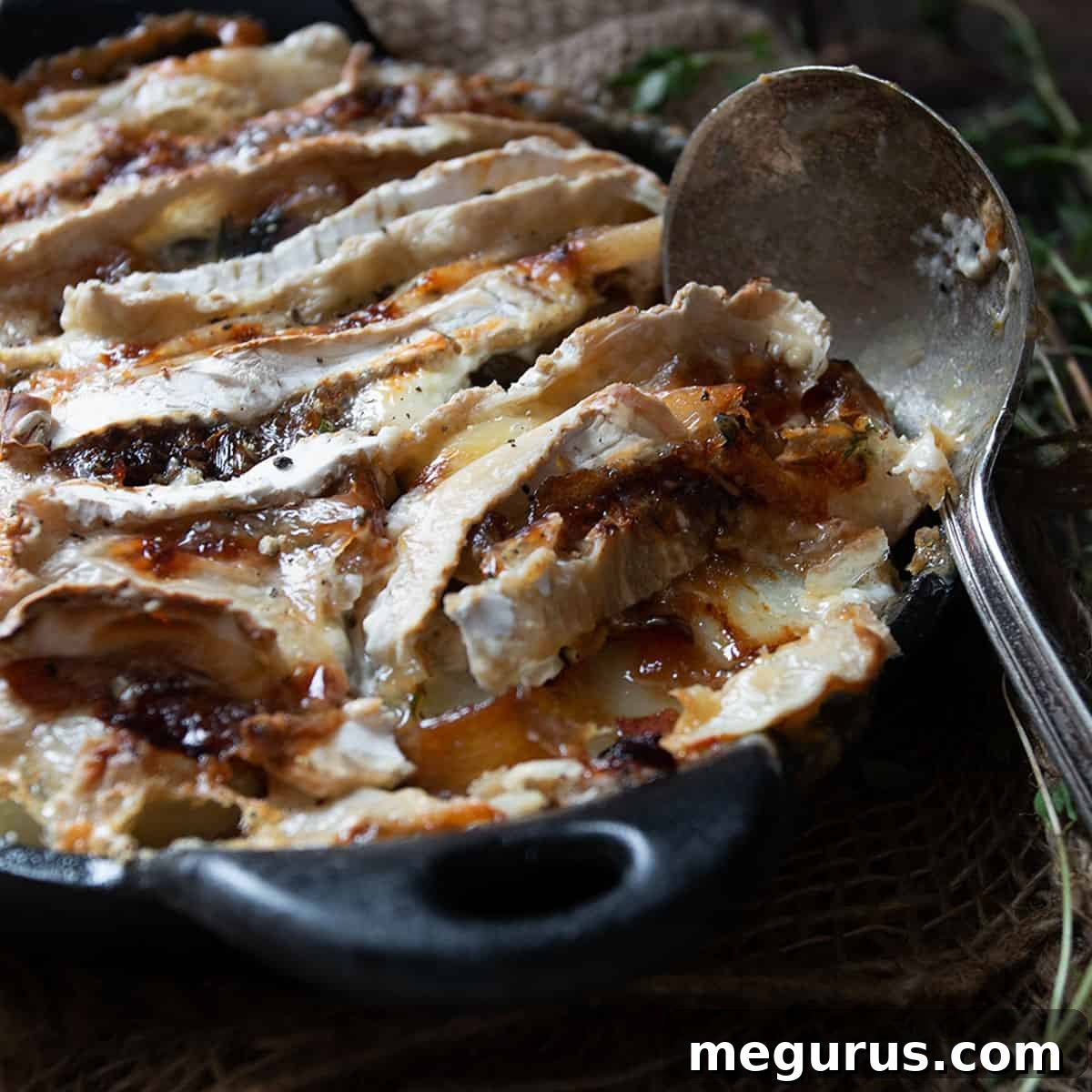
Step aside, ordinary scalloped potatoes! Prepare your palate for an extraordinary culinary journey with this elegant Tartiflette recipe, reimagined for the modern home chef. Our indulgent version features tender, perfectly cooked potatoes layered with sweet, caramelized onions, rich Brie cheese, and a luxurious drizzle of Crème Fraîche. This isn’t just a side dish; it’s a symphony of flavors that promises to transform your meal into a memorable French-inspired feast.
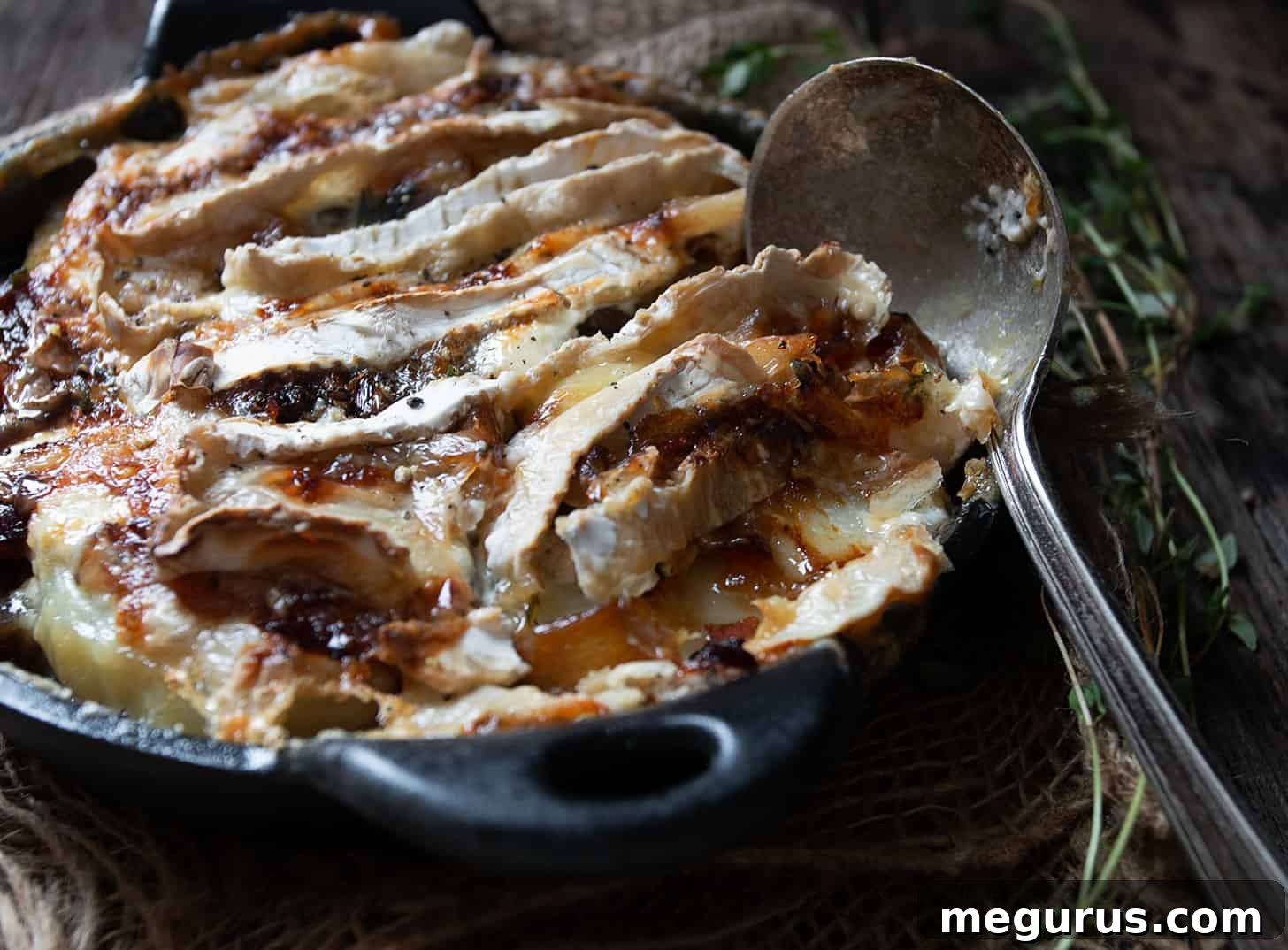
The allure of French cuisine lies in its ability to transform simple, high-quality ingredients into dishes of profound depth and flavor, without excessive complication. Tartiflette stands as a perfect testament to this philosophy. While traditionally a hearty dish from the Savoie region of the French Alps, ours captures that spirit of rustic elegance. Imagine the harmonious blend of earthy potatoes, sweet and savory onions, the delightful tang of Crème Fraîche, and the irresistibly melty, nutty goodness of Brie cheese creating a comforting casserole that’s both sophisticated and incredibly satisfying. This recipe elevates everyday ingredients into something truly special.
Unveiling Tartiflette: A French Alpine Classic
Before diving into the recipe, let’s explore the origins of Tartiflette. This celebrated potato gratin hails from the beautiful Savoie region in the French Alps. Historically, it was created by the Reblochon cheese syndicate in the 1980s to boost sales of their local cheese. The traditional version features potatoes, lardons (small pieces of bacon), onions, and a generous topping of Reblochon cheese, all baked until golden and bubbling. Our recipe offers a delicious twist, substituting the harder-to-find Reblochon with readily available Brie and omitting the bacon for a versatile, vegetarian-friendly option that’s equally decadent.
Key Ingredients for the Perfect Tartiflette
Crafting this delightful Tartiflette requires a thoughtful selection of ingredients. Here are some essential notes on the components that make this dish shine:
Potatoes: The Foundation of Flavor
For an authentic and creamy Tartiflette, the choice of potato is paramount. We highly recommend using Russet potatoes or other starchy baking potatoes. Their high starch content ensures they become wonderfully tender and absorb the rich flavors of the dish without turning mushy. They create that delightful, melt-in-your-mouth texture that is characteristic of a great potato gratin. While scrubbing them clean is crucial, peeling is optional for some, but for a truly refined gratin, we suggest a light peel to ensure uniform texture. Always cut them into even slices to guarantee consistent cooking.
Crème Fraîche: The Creamy Secret
Crème Fraîche is a cultured cream known for its rich, tangy flavor and high fat content, which prevents it from curdling under high heat or when combined with acidic ingredients like wine. This makes it an ideal choice for a baked dish like Tartiflette. Fortunately, Crème Fraîche has become much easier to find in most major grocery stores in recent years. However, if you’re feeling adventurous or simply can’t locate it, don’t worry! We’ve included instructions on how to make your own at home, ensuring you can still achieve that signature creamy texture and subtle tang.
Reblochon or Brie Cheese: The Heart of Tartiflette
The traditional French Tartiflette proudly features Reblochon cheese, a semi-hard, washed-rind cheese from the Savoie region. Reblochon boasts a nutty, earthy flavor and melts beautifully, creating an irresistibly gooey topping. If you’re fortunate enough to have access to a specialty cheese market, we wholeheartedly encourage you to seek out genuine Reblochon for an authentic experience. However, for many home cooks, Brie cheese is a fantastic and widely available substitute. Brie offers a similar creamy texture and mild, buttery flavor that complements the potatoes and caramelized onions wonderfully. When using Brie, you have a choice regarding the rind. We opted to leave the rind on our Brie, finding that it adds a pleasant, subtle nuttiness to the cooked dish, losing any potential bitterness it might have when raw. Feel free to trim it off if you prefer a purer, milder cheese flavor.
Serving Wisdom: A Little Goes a Long Way
Due to the rich nature of this Tartiflette, a small serving is often incredibly satisfying. This recipe, prepared in a modest-sized pan, yields 3 to 4 generous servings. Each spoonful is packed with flavor and indulgence, making it a surprisingly filling dish. If you’re hosting a larger gathering or simply want more to share, feel free to easily double or even triple the recipe. Adjust the size of your baking dish accordingly to accommodate the increased volume.
Finding the Perfect Crème Fraîche Substitute
Crème Fraîche is a star ingredient in this Tartiflette, primarily because its high butterfat content ensures it won’t curdle when subjected to high cooking temperatures or mixed with acidic components like white wine. Since both of these factors are at play in our recipe, any substitute we choose should ideally share a similar high-fat profile to maintain the dish’s creamy consistency and prevent an unpleasant grainy texture.
- Option 1: Homemade Crème Fraîche. If you have 24-36 hours of lead time, making your own Crème Fraîche is the best alternative. It’s surprisingly simple and yields a product with superior flavor and texture. See our detailed instructions below for how to prepare it at home.
- Option 2: Heavy Cream and Sour Cream Blend. A quick and effective substitute involves combining 1 tablespoon of heavy cream (or whipping cream) with 1 tablespoon of full-fat sour cream. Whisk the heavy cream until it slightly thickens, then gently fold in the sour cream. This blend offers a good balance of fat and tang.
- Option 3: Mexican Crema. If easily accessible in your region, Mexican Crema is another excellent high-fat, slightly tangy option. Its consistency is often thinner than Crème Fraîche but still works well in baked dishes.
- Option 4: Mascarpone. This Italian cream cheese is incredibly rich and high in fat, making it a viable option. However, it is generally more expensive and has a tangier flavor profile than Crème Fraîche. Consider its cost and ensure you have other uses for any leftover mascarpone, as you’ll likely only need a couple of tablespoons for this recipe.
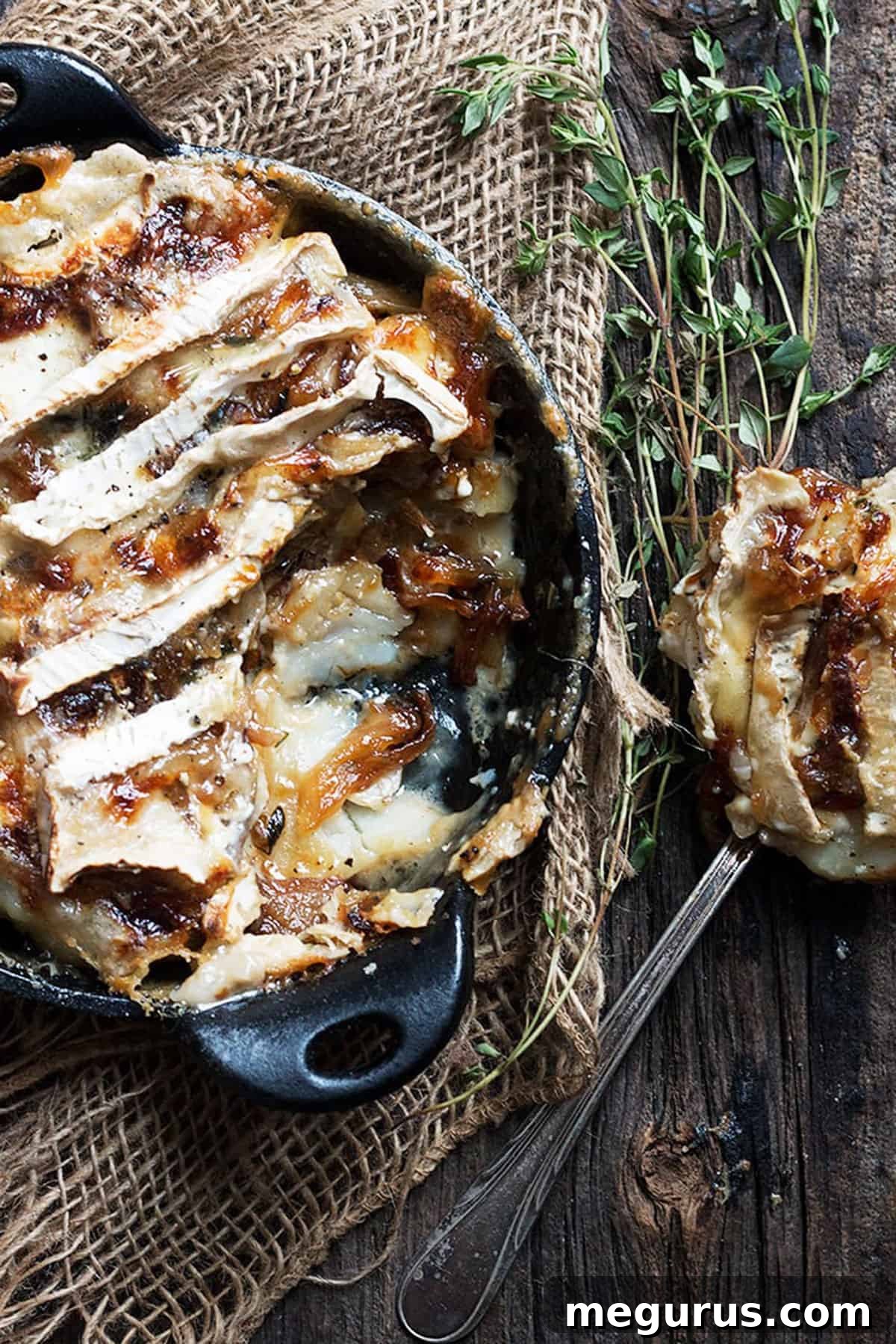
Crafting Your Own Crème Fraîche at Home
Making Crème Fraîche from scratch is a rewarding process that guarantees freshness and allows you to control the ingredients. It’s much simpler than you might think!
Ingredients:
- 1 to 2 tablespoons cultured buttermilk
- 2 cups heavy cream (ensure it is pasteurized, but avoid ultra-pasteurized cream, and check that it contains no additives or stabilizers)
Instructions:
- Combine the buttermilk and heavy cream in a clean saucepan.
- Gently heat the mixture over medium heat, stirring occasionally, until it reaches approximately 85°F (30°C). An instant-read thermometer is ideal for accuracy, or simply warm it until it’s just warm to the touch. Avoid boiling the mixture.
- Carefully pour the warmed cream mixture into a clean glass jar.
- Partially cover the jar – either with a loose lid or a piece of cheesecloth secured with a rubber band – to allow air circulation while preventing contaminants.
- Let the mixture stand at room temperature for 8 to 24 hours, or until it has visibly thickened to a spoonable consistency. The exact time will depend on your room temperature and the activity of the cultures.
- Once thickened, stir the Crème Fraîche well and transfer it to the refrigerator. Allow it to chill for at least 24 hours before using; this helps it firm up further and allows the flavors to deepen.
- Homemade Crème Fraîche will keep fresh in the refrigerator for about two weeks when stored in an airtight container.
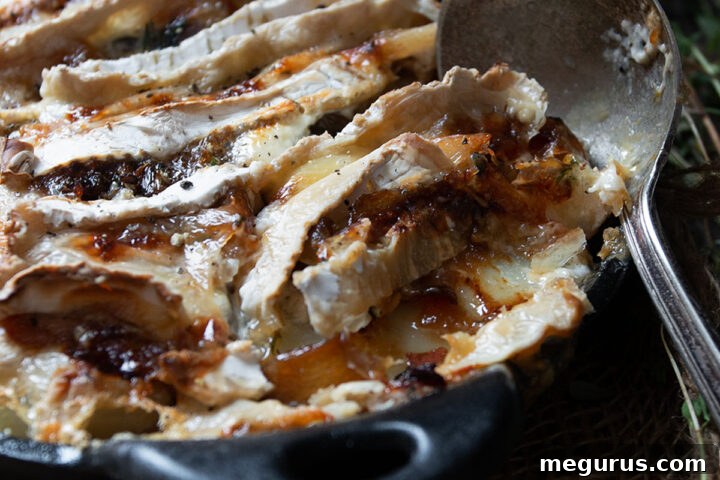
Get the Recipe: Tartiflette
Pin This
Leave a Review
30 minutes
20 minutes
50 minutes
4
servings
Ingredients
-
1 large
russet potato, scrubbed (about 10oz in weight) -
2 Tablespoons
butter -
1 small
yellow onion, halved and thinly sliced - Kosher salt
-
1 1/4 teaspoons
sugar -
1/3 cup
dry white wine -
1 teaspoon
fresh thyme leaves, plus more for garnish -
2 Tablespoons
crème fraîche -
8 oz.
Reblochon or Brie Cheese*, cut into 1/4-inch slices
Instructions
-
Preheat your oven to 400°F (200°C) for non-convection settings. Lightly grease a 7-inch round baking dish and place it on a baking sheet. Set aside.
-
In a medium saucepan, place the unpeeled potato and cover it generously with cold water. Bring the water to a boil over high heat, then reduce the heat to medium and simmer until the potato is just tender when pierced with a fork, approximately 25-30 minutes. Be careful not to overcook. Drain the potato and let it cool slightly. Once cool enough to handle, peel the potato and slice it into 1/4-inch-thick rounds.
-
While the potato is cooking, prepare the caramelized onions. In a large skillet, melt the butter over medium heat. Add the thinly sliced onion along with 2 teaspoons of Kosher salt. Cook, stirring occasionally, until the onions begin to soften and turn a light golden brown, about 8-10 minutes. Stir in the sugar, then pour in half of the white wine, making sure to scrape up any browned bits from the bottom of the pan (this deglazing step adds immense flavor). Continue to cook, stirring, until the liquid has mostly reduced and the onions are beautifully golden, another 8-10 minutes. Add the remaining wine and cook, stirring frequently, until the onions are deep brown, wonderfully soft, and have a jam-like consistency, about 8-10 minutes more. Finally, stir in the fresh thyme leaves. Remove the skillet from the heat.
-
Assemble the Tartiflette in your prepared baking dish. Arrange half of the sliced potatoes in a single layer at the bottom of the dish. Season lightly with a pinch of salt and black pepper. Spread half of the caramelized onion mixture evenly over the potato layer. Repeat this layering process with the remaining potato slices and onions. Drizzle the Crème Fraîche evenly over the top layer of onions, then arrange the slices of Reblochon or Brie cheese over everything.
-
Transfer the baking dish to the preheated oven and bake for 15-20 minutes, or until the cheese is melted and golden brown, and the edges are bubbling enticingly. Serve your Tartiflette immediately, perhaps garnished with a few extra fresh thyme leaves, and enjoy the rich, comforting flavors!
Notes
For more in-depth tips and ingredient substitution advice, please refer to the detailed sections above the recipe card.
French
Side Dish
Jennifer Maloney
Nutrition Information
Calories: 355kcal,
Carbohydrates: 20g,
Protein: 14g,
Fat: 22g,
Saturated Fat: 14g,
Cholesterol: 75mg,
Sodium: 420mg,
Potassium: 510mg,
Fiber: 1g,
Sugar: 3g,
Vitamin A: 560IU,
Vitamin C: 6.8mg,
Calcium: 127mg,
Iron: 1.1mg
Tried this recipe?
If you enjoyed this recipe, please leave a star rating and comment. It helps others to find it!
Serving Suggestions and Wine Pairings for Tartiflette
This decadent Tartiflette is rich and satisfying on its own, making it a wonderful main course for a cozy dinner. However, it also pairs beautifully as a standout side dish. For a balanced meal, consider serving it alongside a crisp, simple green salad dressed with a light vinaigrette to cut through the richness. Roasted chicken or a lean cut of pork would also make excellent companions. When it comes to wine, a dry white wine with good acidity and a mineral backbone, such as a Sauvignon Blanc or a crisp Pinot Grigio, would complement the creamy cheese and onions perfectly. For those who prefer red, a light-bodied Pinot Noir with its earthy notes could also be a delightful pairing.
Make Ahead & Storage Tips
Tartiflette is a fantastic dish for meal prepping or entertaining, as parts of it can be prepared in advance. The caramelized onions can be made up to 2-3 days ahead of time and stored in an airtight container in the refrigerator. You can also par-boil and slice the potatoes a day in advance, keeping them submerged in cold water in the fridge to prevent browning. Assemble the entire dish up to 24 hours before baking; simply cover it tightly with foil and refrigerate. Before baking, allow it to come to room temperature for about 30 minutes. Leftover Tartiflette can be stored in an airtight container in the refrigerator for up to 3-4 days. To reheat, cover it loosely with foil and warm in a 350°F (175°C) oven until heated through and bubbly, or portion it out and microwave for quicker reheating. The flavors often meld and deepen overnight, making leftovers just as delicious!
More Potato Recipes to Love!
Whether you’re celebrating a special occasion or simply craving a taste of French comfort, this Tartiflette recipe is designed to impress. With its layers of perfectly cooked potatoes, sweet caramelized onions, creamy Crème Fraîche, and bubbling Brie, it offers an unforgettable culinary experience that’s both approachable and utterly luxurious. So, gather your ingredients, follow our steps, and prepare to indulge in a dish that truly embodies the art of French cooking. Bon appétit!
We hope you’ve enjoyed this deep dive into the world of Tartiflette and are inspired to create this incredible dish in your own kitchen. Don’t forget to share your culinary creations and let us know your favorite ways to enjoy this classic French gratin!