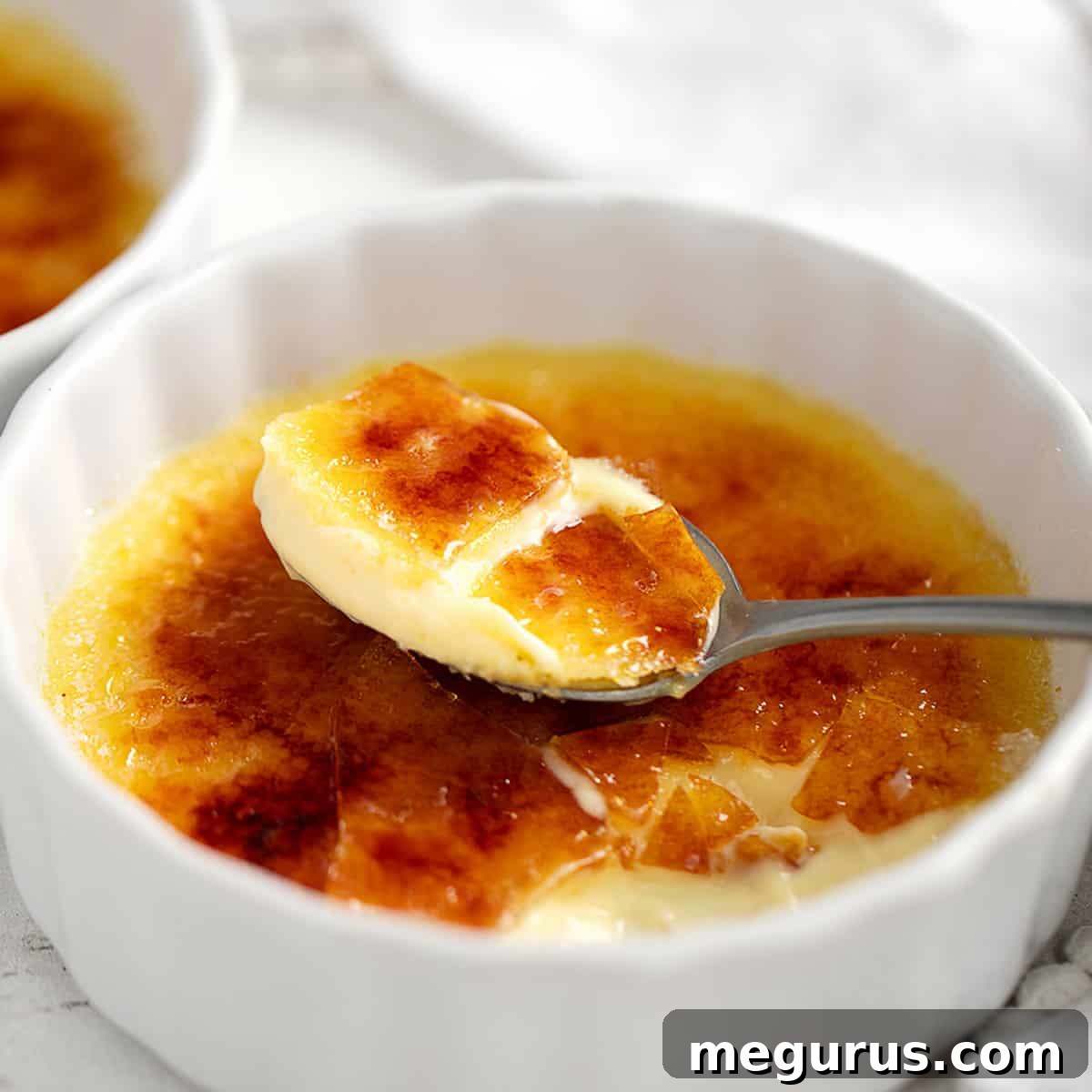
Indulge in Zesty Perfection: The Ultimate Lemon Crème Brûlée Recipe
Prepare to elevate your dessert experience with our exquisite Lemon Crème Brûlée. This isn’t just any Crème Brûlée; it’s a vibrant, citrus-infused rendition of the classic, offering the same irresistible silky-smooth custard and satisfyingly crunchy sugar topping you adore, but with a bright, refreshing lemon twist. It’s a harmonious blend of creamy richness and tart zest that will awaken your palate and leave you craving more.
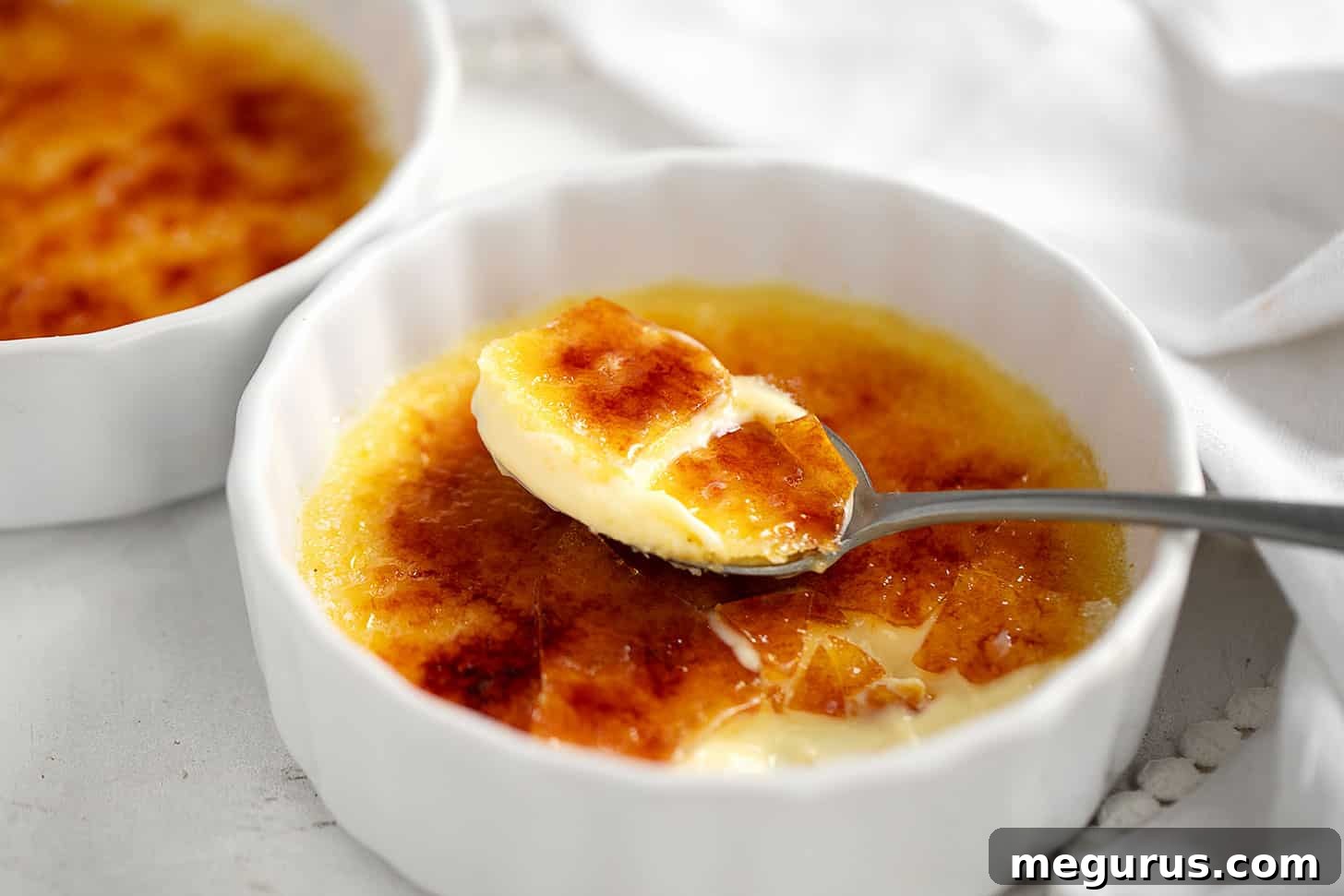
Crème Brûlée has long held a special place in the hearts of dessert lovers worldwide, and for good reason. Its elegant simplicity and delightful textural contrast – a velvety custard hidden beneath a crisp, caramelized sugar crust – make it an unforgettable treat. I’ve always enjoyed exploring new flavor dimensions within this classic framework. Last year, I found immense joy in crafting a Maple Crème Brûlée, which was a delightful autumnal twist. This year, I turned my attention to the sunny, invigorating notes of lemon, and I can confidently say, the results exceeded all expectations. The subtle yet distinct citrus essence transforms this beloved dessert into something truly extraordinary.
The Enduring Allure of Crème Brûlée
Before diving into the lemony specifics, let’s appreciate the heritage of Crème Brûlée. This sophisticated dessert, meaning “burnt cream” in French, boasts a rich history, with culinary historians debating its true origins between France, England, and Spain. Regardless of its precise birthplace, it emerged as a staple in European aristocratic kitchens, celebrated for its luxurious texture and the dramatic presentation of its torched sugar crust. The magic lies in its deceptive simplicity: a few core ingredients – cream, egg yolks, sugar – transformed through precise technique into a culinary masterpiece. Our lemon variation respects this tradition while infusing a modern, vibrant character.
Why Lemon Elevates the Classic
Adding lemon to Crème Brûlée isn’t just a minor tweak; it’s a game-changer. The natural acidity and bright aroma of fresh lemon cut through the richness of the heavy cream and egg yolks, creating a beautifully balanced flavor profile. It prevents the dessert from being overly sweet or heavy, instead offering a refreshing finish that cleanses the palate. The zest provides aromatic oils, infusing the cream with a deep, fragrant lemon essence, while a touch of fresh juice brightens the custard itself. This delicate interplay of rich and zesty makes our Lemon Crème Brûlée a truly sophisticated dessert, perfect for any occasion, from an intimate dinner to a grand celebration.
Essential Ingredients for a Perfect Lemon Crème Brûlée
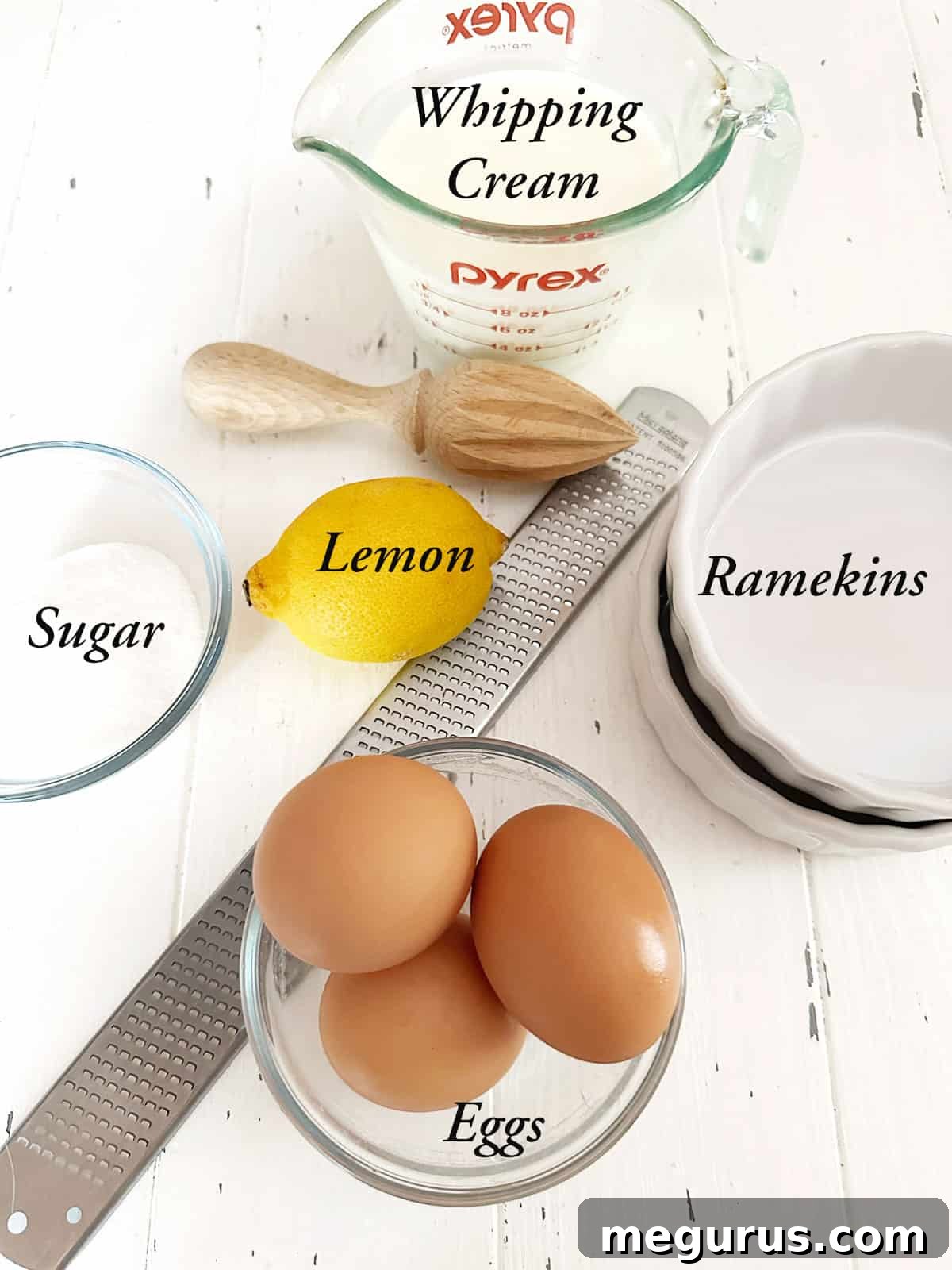
A few crucial notes about the key ingredients that ensure the success of your Lemon Crème Brûlée:
- Heavy Whipping Cream: This is the cornerstone of a truly decadent Crème Brûlée. Heavy cream, also known as whipping cream, typically contains around 35% butterfat. This high fat content is absolutely critical for achieving that signature silky, rich, and incredibly creamy texture. Substituting with lower-fat creams, like light cream or half-and-half, is strongly discouraged as it will result in a thinner, less luxurious custard that may not set correctly.
- Fresh Lemons: The star of this show! You’ll need at least one fresh lemon to harvest both its aromatic zest and its bright, tangy juice. The zest is paramount for infusing the cream with a deep, natural lemon perfume, while the juice provides the essential tartness that balances the sweetness. Avoid using bottled lemon juice, as its flavor profile is often dull and lacks the vibrant freshness that makes this dessert so special.
- Egg Yolks: These provide the primary structure and richness of the custard. The proteins in the yolks coagulate during baking, setting the cream into its luscious form. The number of egg yolks is precise for the given amount of cream, so try to adhere to the recipe for the best consistency.
- Granulated Sugar: Beyond sweetness, sugar plays a vital role in the texture of the custard and, of course, creates that iconic crunchy topping. For the custard, it dissolves to create a smooth base. For the topping, its quick melting and caramelization are key.
Step-by-Step Guide to Crafting Lemon Crème Brûlée
Creating this elegant dessert is a rewarding process. Follow these detailed steps to ensure a flawless and delicious outcome. While the recipe card below provides a concise list, this visual summary offers additional insights and tips.
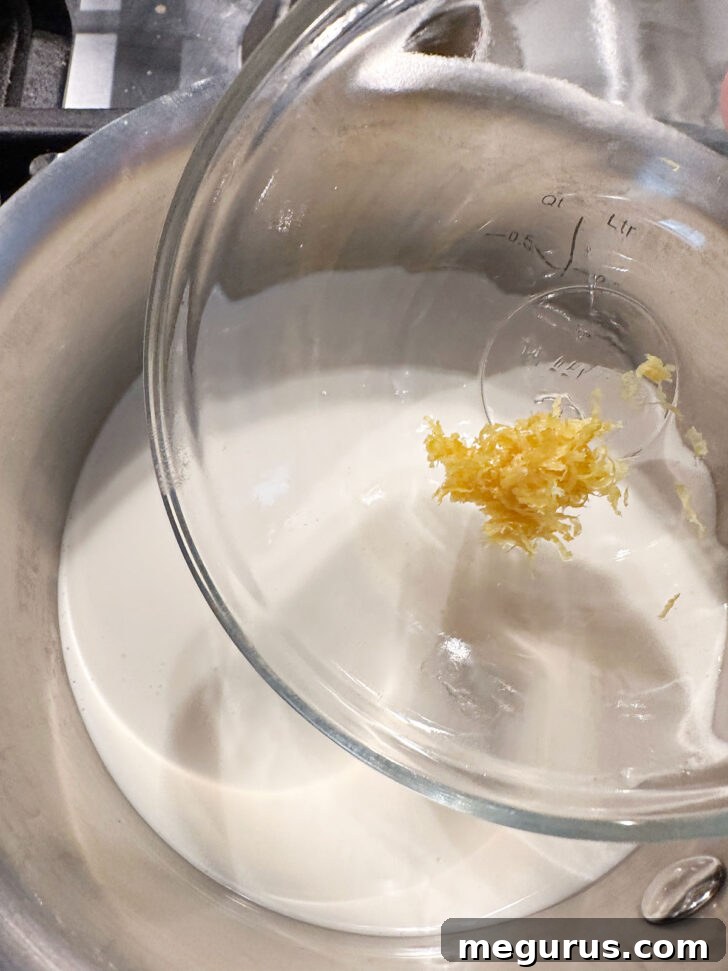
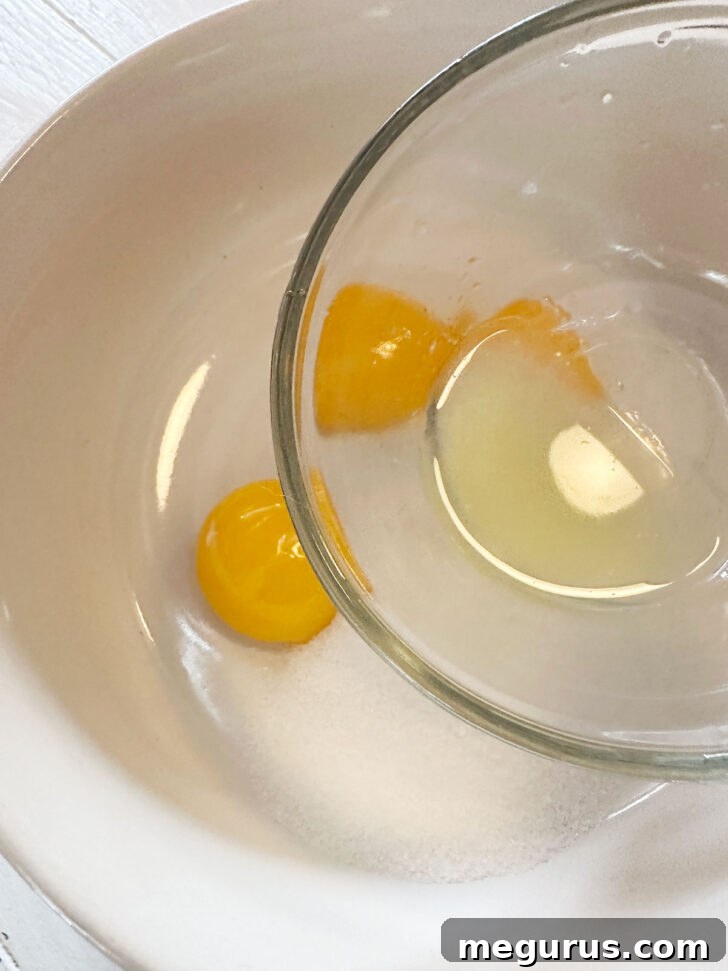
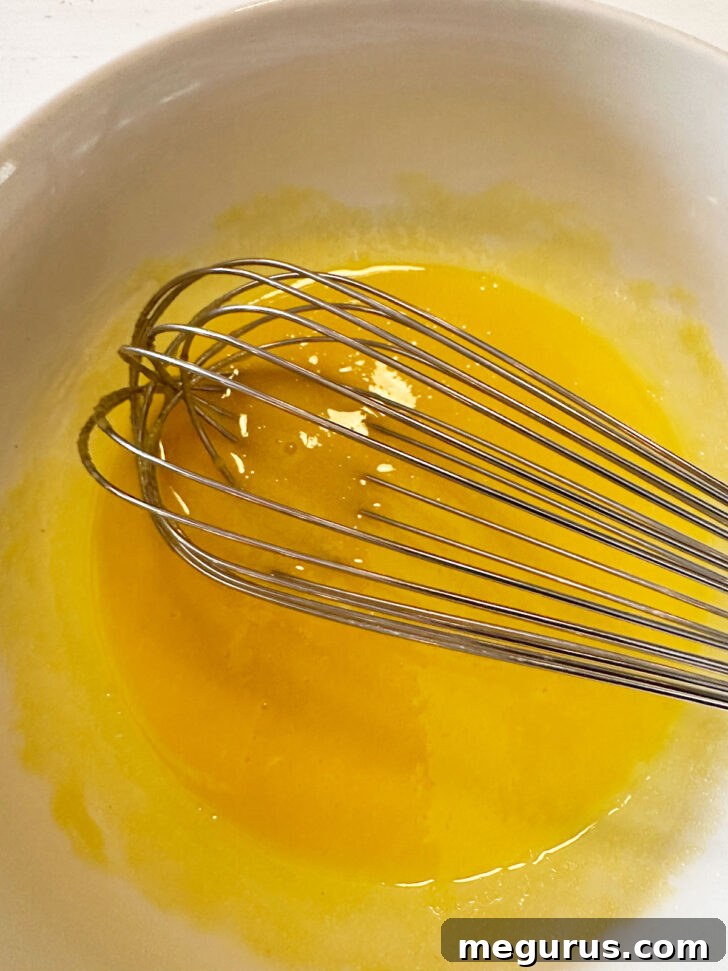
- Infusing the Cream: Begin by combining the heavy whipping cream and fresh lemon zest in a medium saucepan. Gently warm this mixture over medium-low heat, bringing it just to a gentle simmer. Do not let it boil vigorously. Once simmering, remove it from the heat and allow it to stand for about 5 minutes. This crucial step allows the lemon zest to fully infuse its fragrant oils into the cream, creating a deeper, more pronounced lemon flavor.
- Preparing the Egg Mixture: While the cream is infusing, in a separate small bowl, whisk together the egg yolks, granulated sugar, and fresh lemon juice until well combined and slightly lighter in color.
- Tempering the Custard: This is arguably the most critical step to prevent scrambled eggs! Once the cream has rested, begin drizzling it into the egg yolk mixture. Start extremely slowly, adding just a drop at a time, and whisk constantly and vigorously. As the egg yolks gradually warm up, you can increase the cream flow to a slow, steady stream, continuing to whisk without interruption until all the cream has been incorporated. This process, known as tempering, gently raises the temperature of the egg yolks without cooking them.
Chef’s Tip! Achieving a perfectly smooth custard is key. After tempering, if you notice any small bits of cooked egg (which can happen if the cream was too hot or added too quickly), simply pour the entire mixture through a fine-mesh strainer. This will ensure your custard base is beautifully smooth and lump-free.
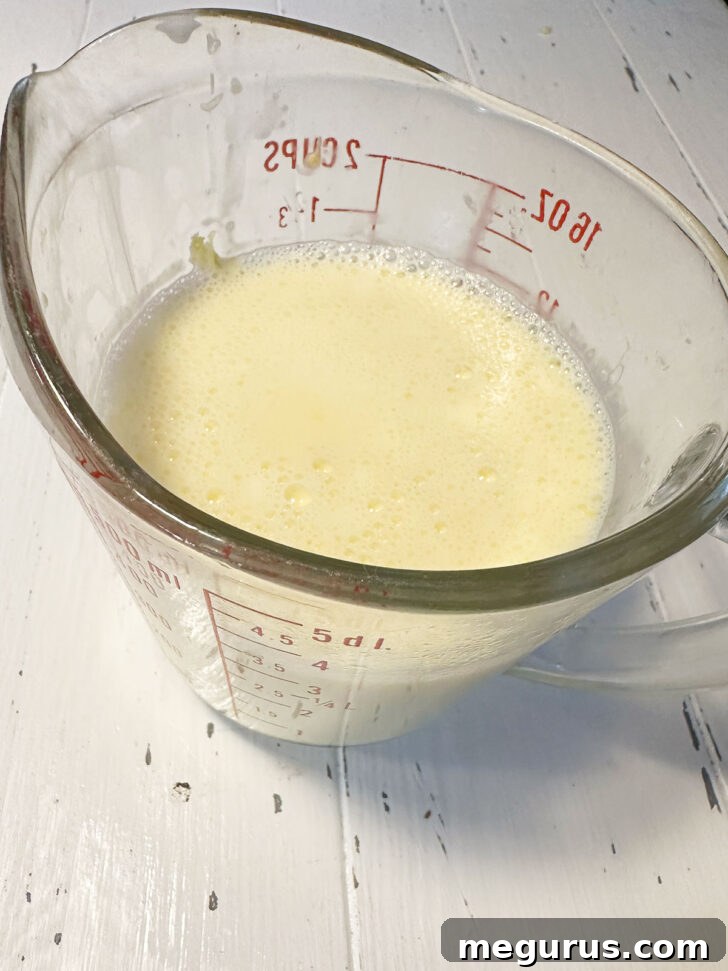
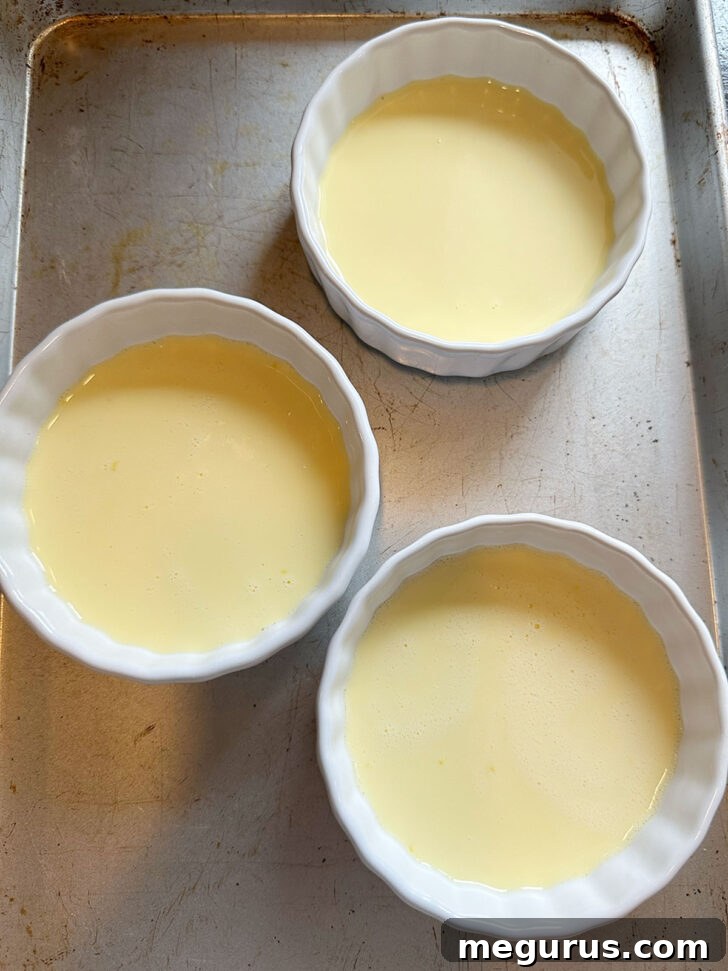
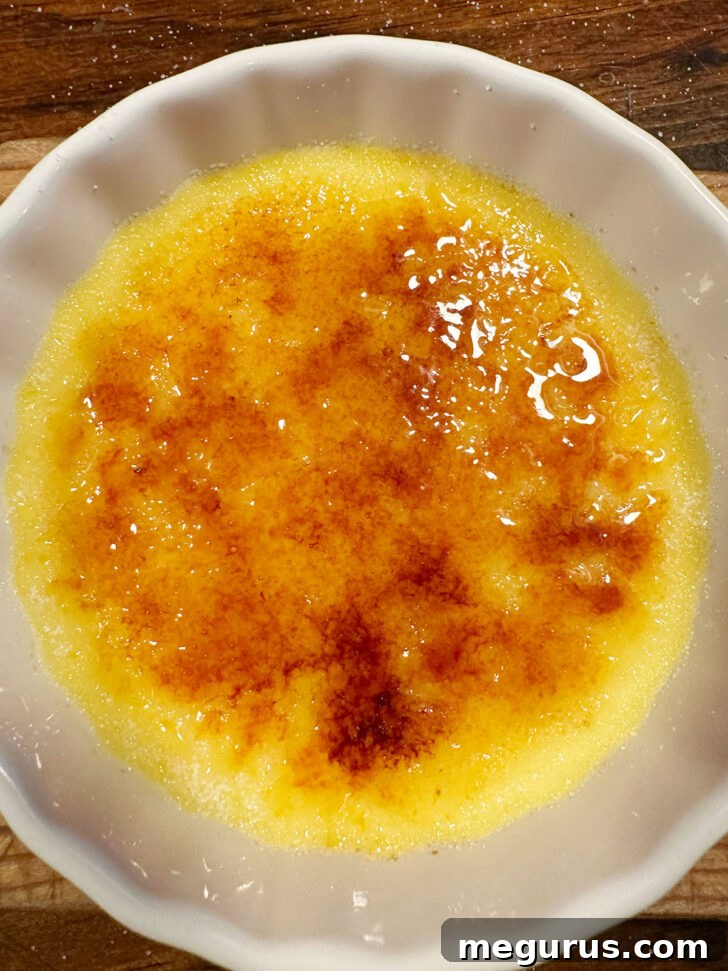
- Prepare for Baking: For easier and cleaner pouring into ramekins, I highly recommend transferring your tempered custard mixture into a large measuring cup with a spout.
- The Water Bath (Bain-Marie): Arrange your ramekins in a deep baking pan or a roasting dish. Carefully pour the custard mixture into each ramekin, ensuring they are filled uniformly. Next, and with utmost care to avoid splashing any water into the custard, pour boiling water into the baking pan until it reaches approximately halfway up the sides of the ramekins. This water bath creates a gentle, even heat environment, preventing the custards from overcooking too quickly and ensuring a silky-smooth texture.
- Baking and Cooling: Bake in a preheated oven until the custards are just set but still have a slight wobble in the center. Remove from the oven, take the ramekins out of the water bath, and let them cool completely on a wire rack at room temperature. Once cooled, cover them tightly with plastic wrap and refrigerate for at least 2 hours, or ideally overnight, to allow them to chill and fully set.
Expert Tip! Before baking, if you notice an excess of small bubbles on the surface of your poured custard, a quick pass with a kitchen torch can magically eliminate them. This little trick ensures a perfectly smooth, unblemished top surface after baking, ready for that gorgeous caramelized sugar crust.
Recipe Video Guide
Watch our step-by-step video to visually guide you through the process of making the perfect Lemon Crème Brûlée. Seeing the techniques in action can make all the difference!
(Video coming soon! For now, please refer to the detailed instructions below.)
Top Tips for Crème Brûlée Perfection!
- Choosing the Right Ramekins: The size and shape of your ramekins significantly impact baking time and final texture. Ideally, use shallow and wide ramekins. My preferred ramekins here are 4 1/2 inches in diameter and 1 1/4 inches high. For the base recipe, three ramekins of this size work, though two larger ones could also be excellent. Aim for at least 1 inch but no more than 2 inches of custard depth for optimal cooking and setting.
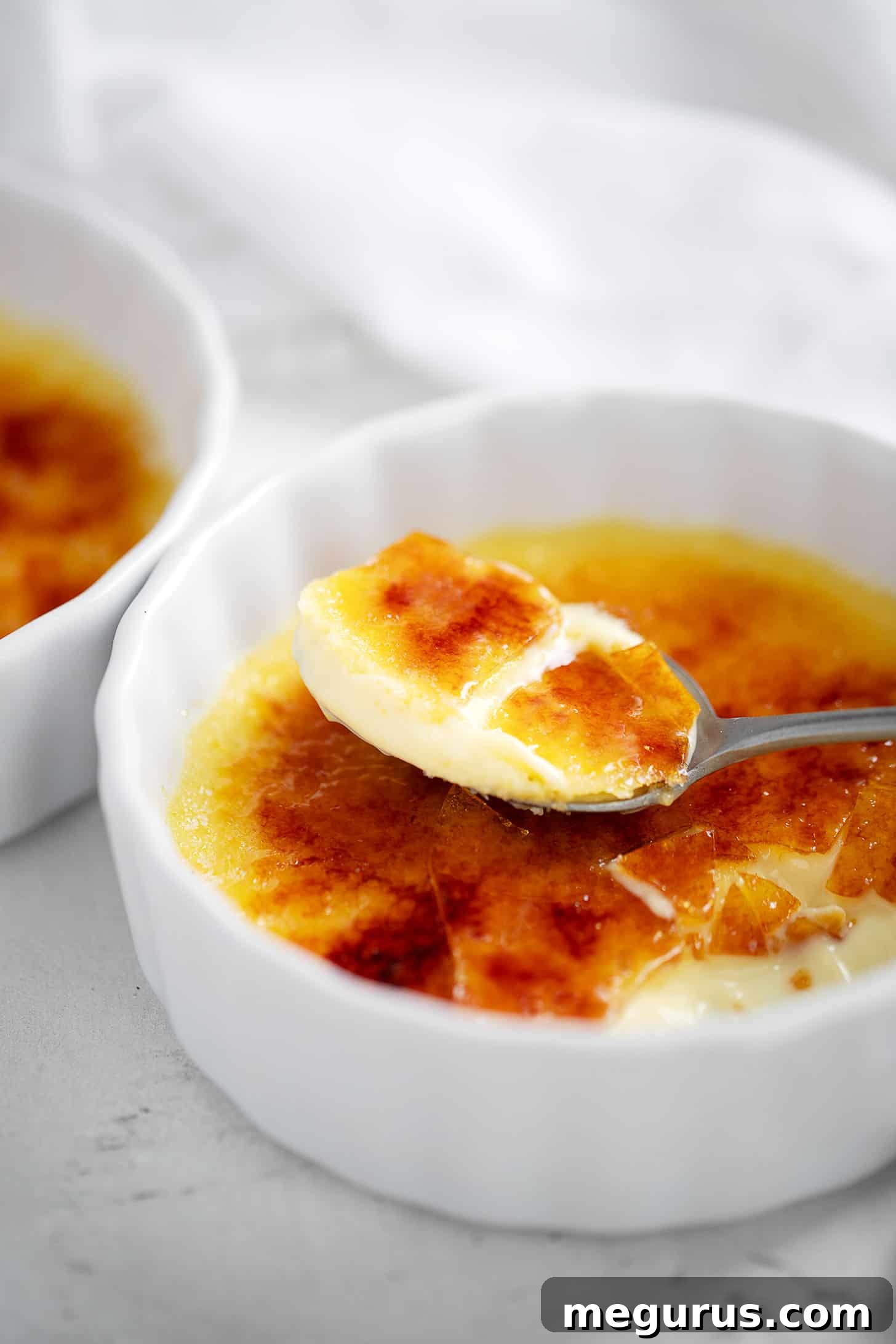
- The Art of Caramelization: While a deeply browned caramel topping is visually appealing, I personally prefer not to over-darken the brûlée. A slightly bitter note from very dark caramel can easily overpower the delicate lemon flavor we’ve worked so hard to achieve. A beautiful deep golden color strikes a nicer balance, allowing the lemon to shine through.
- Kitchen Torch vs. Oven Broiler: A kitchen blow torch is your best friend for a thin, incredibly hard, and evenly caramelized sugar topping. For the perfect crust, apply two thin, even layers of sugar, torching each layer until golden before adding the next. This creates a stronger, more satisfying crack.
- No Torch? No Problem!: If you don’t have a blow torch, don’t despair! Sprinkle a generous, even layer of granulated sugar over the chilled custards. Place the ramekins on a baking sheet and transfer them to a preheated 475°F (245°C) oven. Watch them *constantly* – the sugar melts and caramelizes quickly under high heat. As soon as it turns a beautiful golden brown, remove them from the oven. Immediately transfer them to the refrigerator for a brief period to allow the topping to set and the custard to re-chill.
The Ultimate “Doneness” Test for Crème Brûlée
One of the trickiest aspects of making Crème Brûlée is knowing precisely when it’s perfectly cooked. The baking time will vary based on the size and depth of your ramekins and the specific calibration of your oven. The best and most reliable tip is to understand that the custard will always be *wobbly*, not firm, when it’s done. To test, gently jiggle the baking sheet (or carefully a single ramekin). If the custard sloshes like a liquid, it’s definitely not ready. However, if it moves as one cohesive, wobbly mass – like a very soft jello – then it’s perfectly cooked. Don’t worry if it seems a bit too soft; the custard will firm up considerably as it cools completely and chills in the refrigerator.
Making Ahead and Storing Your Lemon Crème Brûlée
Crème Brûlée is an ideal dessert for entertaining because it requires significant chilling time before serving, meaning much of the work can be done in advance. You can prepare the custard, bake it, and refrigerate it for up to 24 hours prior to serving. It’s crucial to allow the baked custards to cool completely at room temperature for about an hour before covering them tightly with plastic wrap and transferring them to the refrigerator. This prevents condensation from forming and affecting the custard’s texture.
While the custard can be made ahead, I highly recommend torching the sugar topping within about an hour of serving. The beautiful, crisp caramel layer tends to soften and melt if it sits in the refrigerator for too long after torching. I’ve found great success torching them a couple of hours ahead, refrigerating them uncovered (to maintain crispness), and then serving. This ensures the perfect crunchy contrast against the cool, creamy custard.
Lemon Crème Brûlée Recipe Card
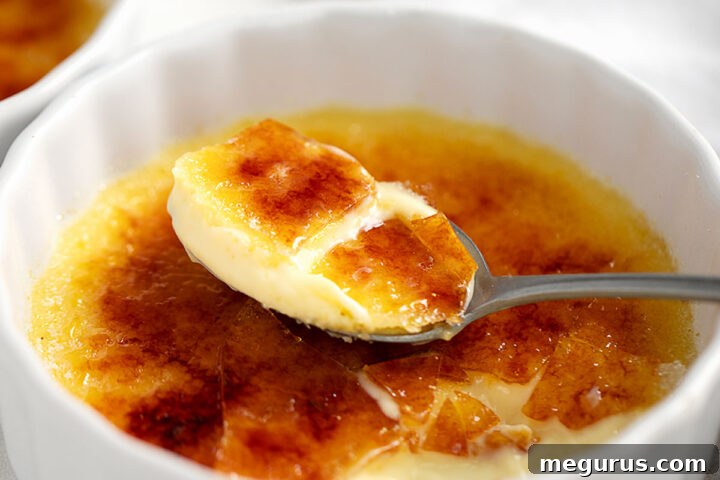
Get the Recipe: Lemon Crème Brûlée
A delightful twist on a classic, this Lemon Crème Brûlée offers a silky-smooth custard infused with vibrant lemon, topped with a perfectly caramelized, crunchy sugar crust. An elegant dessert that’s surprisingly easy to make!
Prep Time: 15 mins
Cook Time: 25-35 mins
Total Time: 40-50 mins (plus chilling)
Yield: 2-3 servings
Pin This
Leave a Review
Ingredients
- 1/2 teaspoon fresh lemon zest
- 1 cup heavy whipping cream (35% butterfat)
- 3 large egg yolks
- 2 1/2 Tablespoons white granulated sugar
- 1 teaspoon fresh lemon juice
For the Topping:
- 1/2 cup white granulated sugar (for caramelizing)
Instructions
- Preheat your oven to 300ºF (150ºC) using the regular bake (non-convection) setting. Begin boiling water for the water bath in a separate kettle or pot.
- To make the custard, combine the heavy cream and lemon zest in a medium saucepan. Heat slowly over medium-low heat until it just reaches a simmer. Remove from heat and let it steep for 5 minutes. Tip: Transfer the infused cream to a measuring cup with a spout for easier, slow pouring.
- Meanwhile, in a separate bowl, whisk together the egg yolks, 2 1/2 tablespoons sugar, and lemon juice until well blended.
- After the cream has rested, very slowly and gradually add the warm cream to the egg yolk mixture, whisking continuously. Start with a drop at a time, then gradually increase to a slow, steady stream until all the cream is incorporated. If any cooked egg bits are present, strain the mixture through a fine-mesh sieve.
- Place your ramekins (shallow and wide are best) in a deep roasting pan. Divide the custard evenly among the ramekins, filling each at least 1 inch and up to 2 inches deep. Carefully pour boiling water into the roasting pan, ensuring not to splash the custard, until the water reaches halfway up the sides of the ramekins. Tip: If bubbles form on the custard surface, a quick pass with a kitchen torch will eliminate them.
- Carefully transfer the roasting pan to the preheated oven. Bake for approximately 25 to 35 minutes. Baking time will vary based on ramekin size and custard depth. The custard is done when it is set but still has a distinct wobble in the center (it should move as one wobbly mass, not slosh like liquid).
- Remove from the oven, then carefully transfer the ramekins from the water bath to a cooling rack. Let them cool completely at room temperature (about 1 hour). Once cooled, cover with plastic wrap and refrigerate for at least 2 hours, or up to 24 hours, to allow them to fully chill and set.
- When ready to serve (or up to 2 hours before), sprinkle an even layer of granulated sugar over the top of each chilled custard. Caramelize the sugar with a kitchen blow torch until golden brown and bubbly. For a thicker, harder crust, add a second thin layer of sugar and torch again.
- Torch-free method: If you don’t have a kitchen torch, preheat your oven to 475°F (245°C). Place the sugar-topped ramekins on a baking sheet and put them in the preheated oven. Watch continuously and remove immediately once the sugar topping is a perfect golden brown.
Notes
The custard for Crème Brûlée must be made ahead to allow ample time for chilling before serving. You can prepare and refrigerate the baked custards for at least 2 hours or up to 24 hours. Ensure they cool completely at room temperature before covering with plastic wrap and refrigerating.
For the best crunchy topping, I highly recommend caramelizing the sugar within about 1-2 hours of serving. The sugar crust tends to soften and lose its crispness if refrigerated for many hours after torching.
Refer to the detailed tips and step-by-step photos above the recipe card for more insights and guidance on making this delectable dessert.
Cuisine: American, Canadian
Course: Dessert
Author: Jennifer Maloney
Nutrition Information (per serving):
Serving: 1 serving, Calories: 552kcal, Carbohydrates: 21g, Protein: 7g, Fat: 50g, Saturated Fat: 30g, Polyunsaturated Fat: 3g, Monounsaturated Fat: 14g, Cholesterol: 410mg, Sodium: 45mg, Potassium: 145mg, Fiber: 0.1g, Sugar: 20g, Vitamin A: 2117IU, Vitamin C: 2mg, Calcium: 112mg, Iron: 1mg
Tried this recipe? If you enjoyed this recipe, please leave a star rating and comment. It helps others to find it!