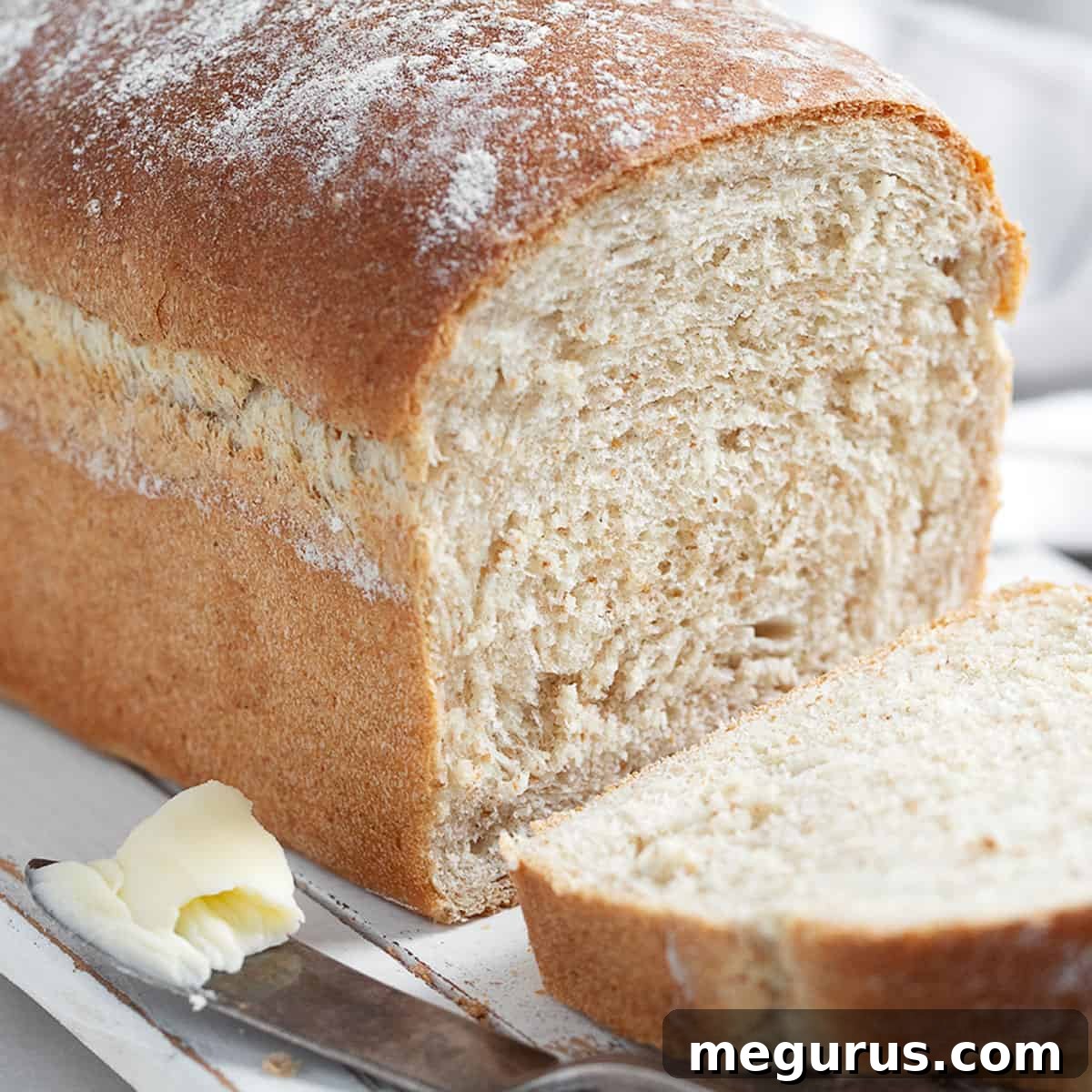
Welcome to the ultimate guide for baking a truly delightful Honey Wheat Bread! This isn’t just another bread recipe; it’s a journey into crafting a loaf that perfectly balances the wholesome goodness of whole wheat flour with the light, tender crumb of all-purpose flour. Sweetened with just the right touch of honey, this bread transcends the ordinary, becoming an instant favorite for everyday enjoyment. Imagine soft slices perfect for your morning toast, robust enough for your favorite sandwiches, and possessing a subtle sweetness that makes it irresistible at any meal. Get ready to bake a homemade bread that will fill your kitchen with an inviting aroma and become a staple in your home.
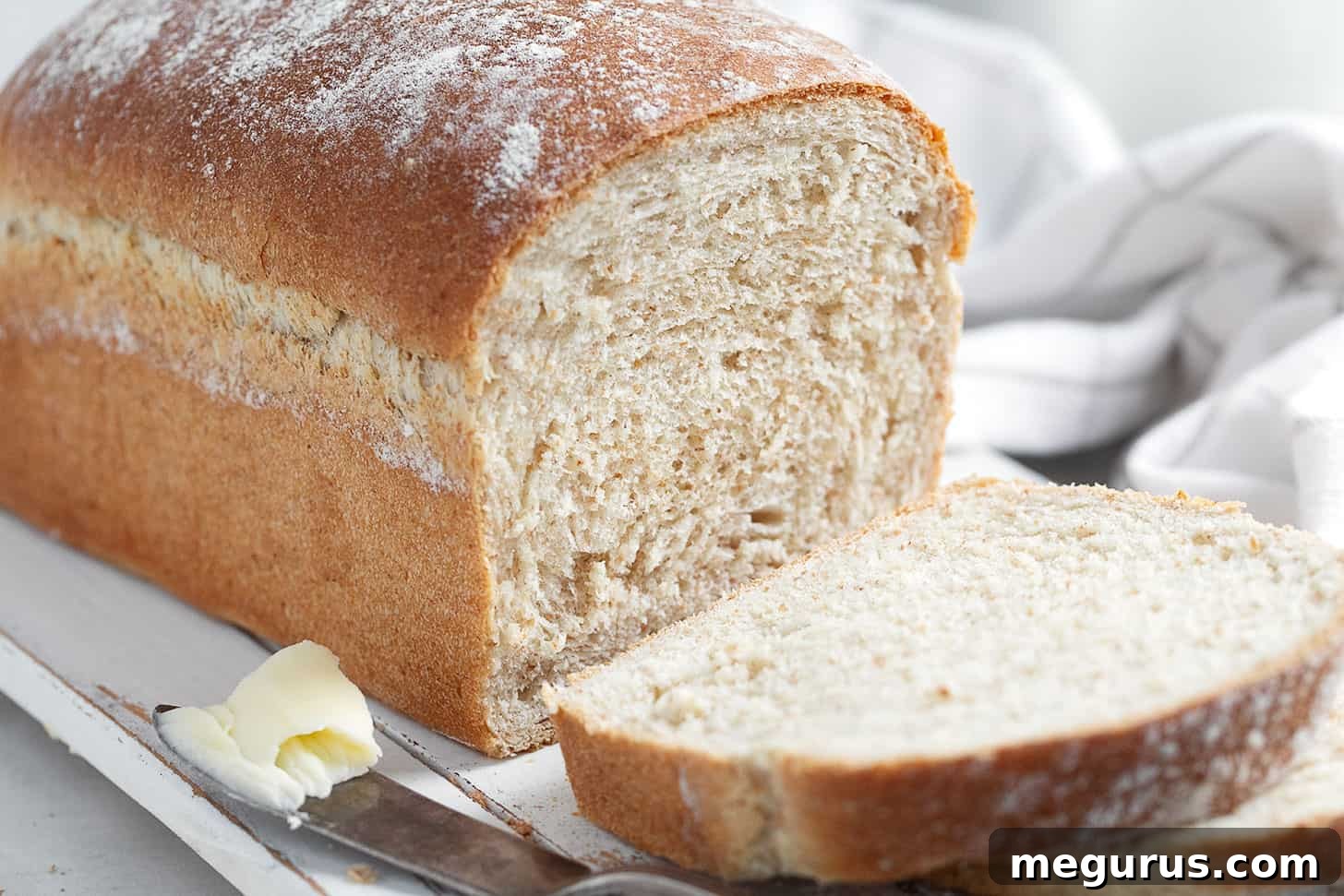
Why This Honey Wheat Bread Will Become Your New Go-To Recipe!
- The Perfect Everyday Loaf: For many home bakers, sandwich bread is a weekly ritual. Among countless recipes, this honey whole wheat bread consistently stands out. Its versatility makes it an ideal choice for everything from hearty breakfast toasts with butter and jam to delicious lunch sandwiches filled with your favorite ingredients. Its consistent texture and delightful flavor mean you’ll reach for it again and again.
- Beginner-Friendly Baking: If you’re new to the wonderful world of bread baking, this recipe is an excellent starting point. The dough is remarkably easy to handle, forgiving for novice hands, and rises quickly, offering a rewarding experience without the usual long wait times. It builds confidence and teaches fundamental bread-making techniques in a straightforward manner.
- Harmonious Blend of Flours: What truly sets this loaf apart is its thoughtful combination of whole wheat and all-purpose flour. This strategic mix ensures the bread retains the nutritional benefits and subtle nutty flavor of whole wheat without becoming overly dense or heavy. It’s the ideal balance that even the pickiest eaters will appreciate, allowing you to feel good about serving a healthier, yet incredibly delicious, bread to your family.
- Subtly Sweet Honey Infusion: The addition of honey is not just for sweetness; it imparts a delicate, aromatic flavor that elevates the entire loaf. It’s sweet enough to be enjoyable on its own or with savory toppings, but never overpowering. This natural sweetener also contributes to the bread’s beautiful golden crust and soft texture, making every bite a truly satisfying experience.
Essential Ingredients for Your Honey Wheat Bread
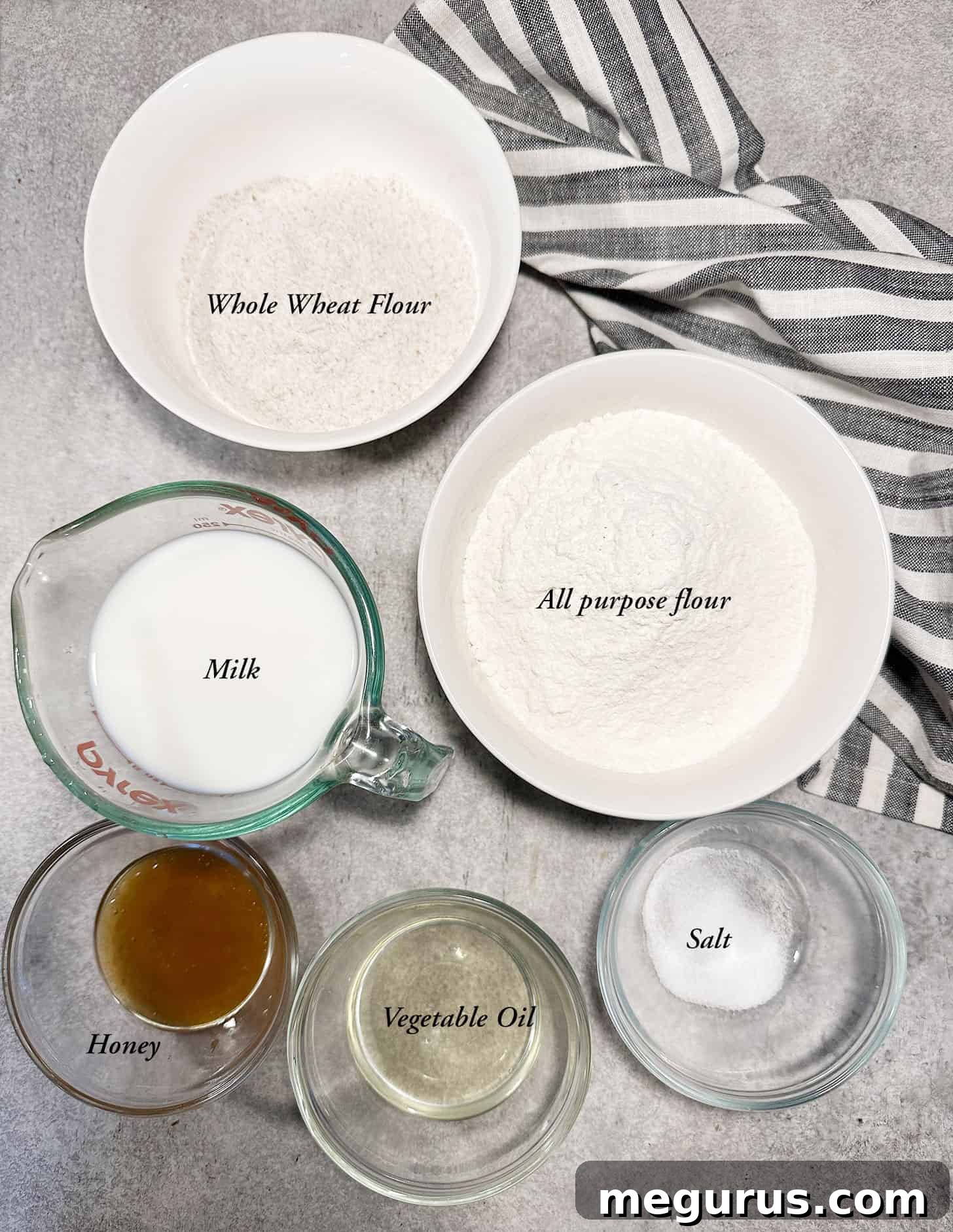
Active Dry or Instant Yeast: Yeast is the living organism responsible for the bread’s rise and distinctive airy texture. Both active dry and instant yeast work wonderfully in this recipe. Active dry yeast typically requires proofing (dissolving in warm liquid with sugar to activate), while instant yeast can often be mixed directly with the dry ingredients. However, for this recipe, a short proofing step is included for both, ensuring your yeast is active and ready to perform. Using fresh, active yeast is crucial for a successful rise. If you’re uncertain about which type to use or how to handle it, consider exploring resources on understanding different types of yeast and getting started with yeast bread baking to deepen your knowledge.
Honey: Beyond its natural sweetness, honey contributes moisture, a subtle depth of flavor, and helps achieve a beautiful golden-brown crust. A neutral-flavored honey will allow the other ingredients to shine, but feel free to use your favorite variety to impart different nuances. The amount of honey can be adjusted slightly to suit your personal sweetness preference. If honey isn’t available, an equal amount of maple syrup makes an excellent substitute, offering a different but equally delicious flavor profile. In a pinch, 1/4 cup of granulated white sugar can be used, though it will alter the flavor slightly and you might miss the unique qualities honey brings to the bread.
All-Purpose Flour: This recipe cleverly utilizes a blend of whole wheat and all-purpose flour. The all-purpose flour is key to achieving a lighter, more tender loaf. While unbleached all-purpose flour is generally preferred by bakers for its superior gluten development and flavor, regular all-purpose flour will also yield excellent results. Using a good quality, unbleached flour can make a noticeable difference in the texture and overall quality of your homemade bread, contributing to a chewier and more structured crumb.
Whole Wheat Flour: Incorporating whole wheat flour adds fiber, nutrients, and a wonderfully rustic flavor to the bread. It’s important to adhere to the specified amount in the recipe. Whole wheat flour absorbs more liquid than all-purpose flour, and adding an excessive amount without proper adjustments to the liquid content can lead to a dense, heavy loaf that struggles to rise. It’s a balance, and this recipe is designed to give you the benefits of whole wheat without compromising on texture or rise. Resisting the urge to add more than recommended will ensure a light, airy loaf with that desired whole-grain character.
Milk and/or Water: The choice of liquid can subtly influence the bread’s texture and flavor. Using a combination of half water and half milk (warmed) is recommended for its ability to produce a tender crumb and a richer flavor, thanks to the milk fats and sugars. However, for a simpler or dairy-free alternative, using all water works just as well. Warm liquids are essential for activating the yeast, so ensure they are at the correct temperature (around 105°F / 40°C) – not too hot to kill the yeast, and not too cold to inhibit its activity.
Vegetable or Canola Oil: A neutral-tasting oil, such as vegetable or canola oil, is ideal for this bread as it provides moisture and contributes to a softer crumb without imparting any distinct flavor. If you prefer, other oils like light olive oil can be used, but be mindful that they might slightly alter the taste. For a richer bread, an equal amount of melted butter can be substituted for the oil, adding a delicious buttery note to the finished product.
Salt: Salt plays a multifaceted role in bread baking. It’s not just a seasoning that enhances the flavor of the bread; it also acts as a natural yeast suppressant, controlling the rate of fermentation. This control is crucial for proper gluten development and a well-structured loaf. Adjusting the salt content slightly to taste is possible, but always keep its role in managing yeast activity in mind. Too little salt can result in an overly fast rise and a bland flavor, while too much can inhibit yeast significantly.
Step-by-Step Guide to Making Delicious Honey Whole Wheat Bread
This detailed guide will walk you through each phase of creating your perfect loaf of honey wheat bread, from mixing the dough to baking it to golden perfection.
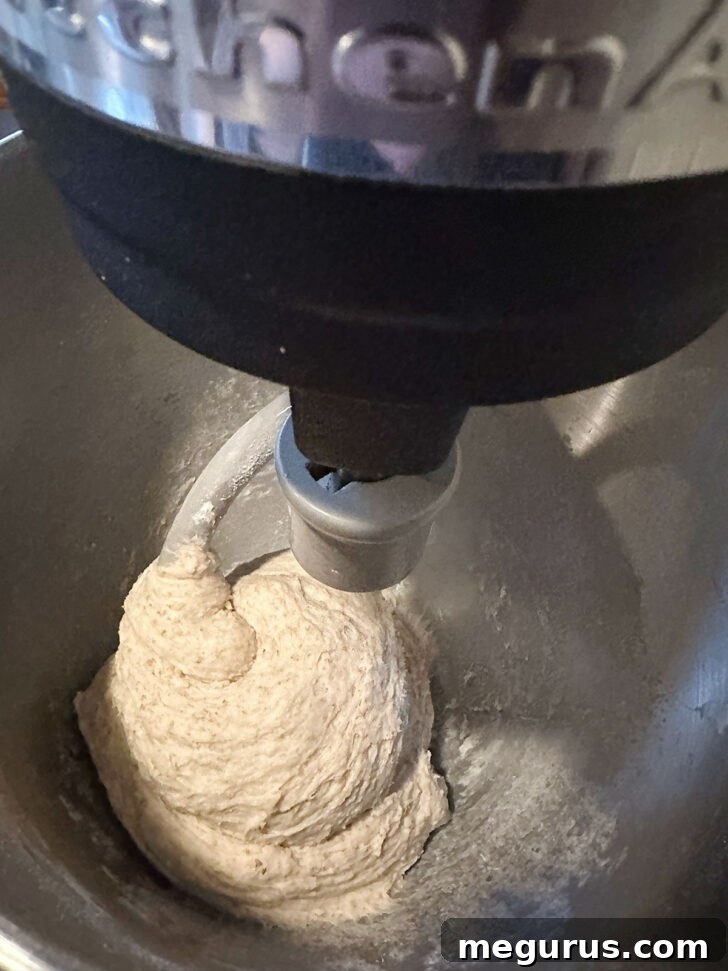
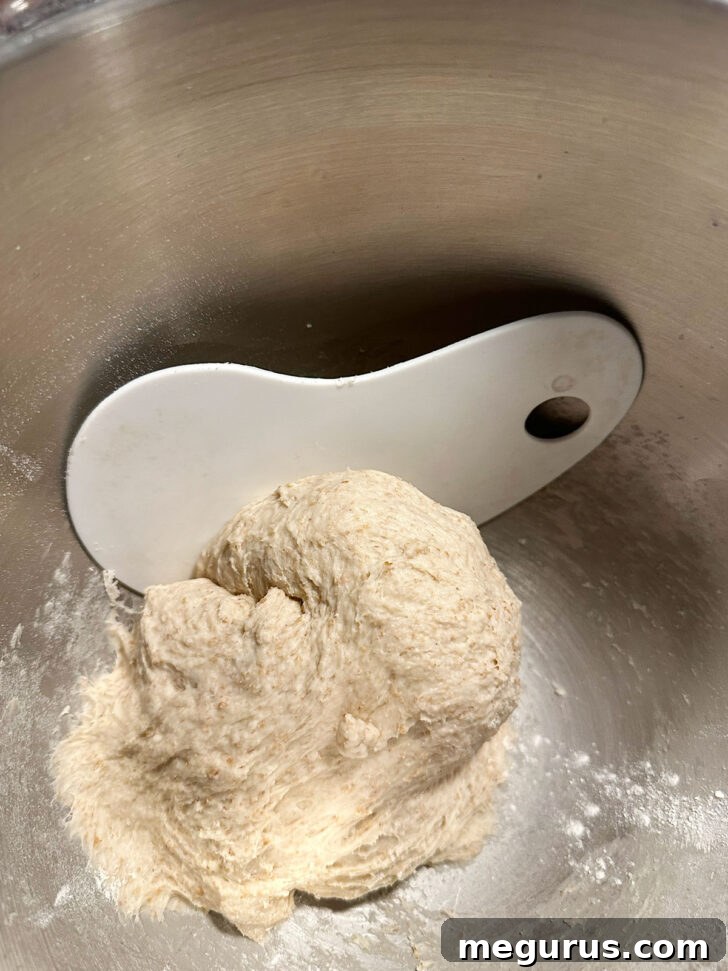
- Mixing the Dough: Combine your ingredients as directed in the full recipe card below. When the dough is perfectly mixed and kneaded, it should gather cleanly around the kneading hook of your stand mixer, leaving the sides of the bowl mostly clean. You might notice a small, slightly sticky patch at the very bottom of the bowl, roughly the size of the dough ball on the hook. This indicates optimal hydration and gluten development, crucial for a light and airy loaf. Over-mixing or adding too much flour at this stage can lead to a dry, tough bread.
- First Rise (Bulk Fermentation): Gently remove the dough from the mixer bowl onto a lightly floured work surface. A silicone scraper can be incredibly helpful for handling sticky dough. Knead the dough briefly, adding only a minimal amount of additional flour if it sticks significantly to your hands or the surface. The goal is to maintain the dough’s hydration. Transfer the dough to a lightly greased bowl, turning it once to coat the entire surface with oil. Cover the bowl tightly with plastic wrap or a clean kitchen towel to prevent drying. Allow it to rise in a warm, draft-free place until it has visibly doubled in size, which typically takes about 45 to 60 minutes, depending on your kitchen’s temperature and humidity.
For visual learners and those new to shaping bread, the process of forming the loaf can be best understood by watching. Please refer to the dedicated Recipe Video further down in this article for a clear demonstration of how to shape a perfect yeast loaf.
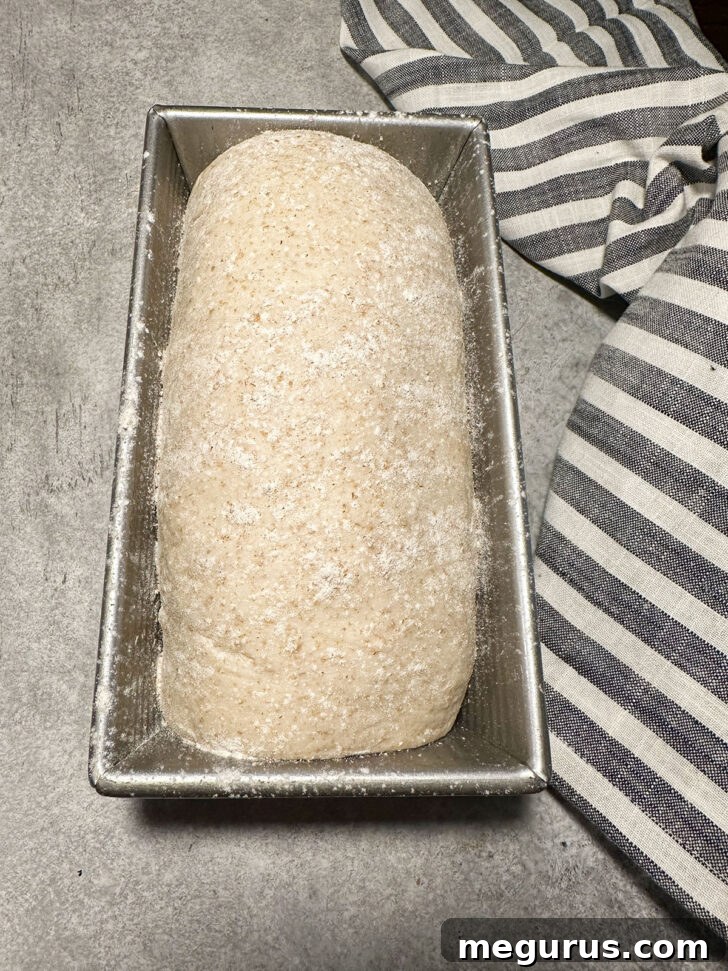
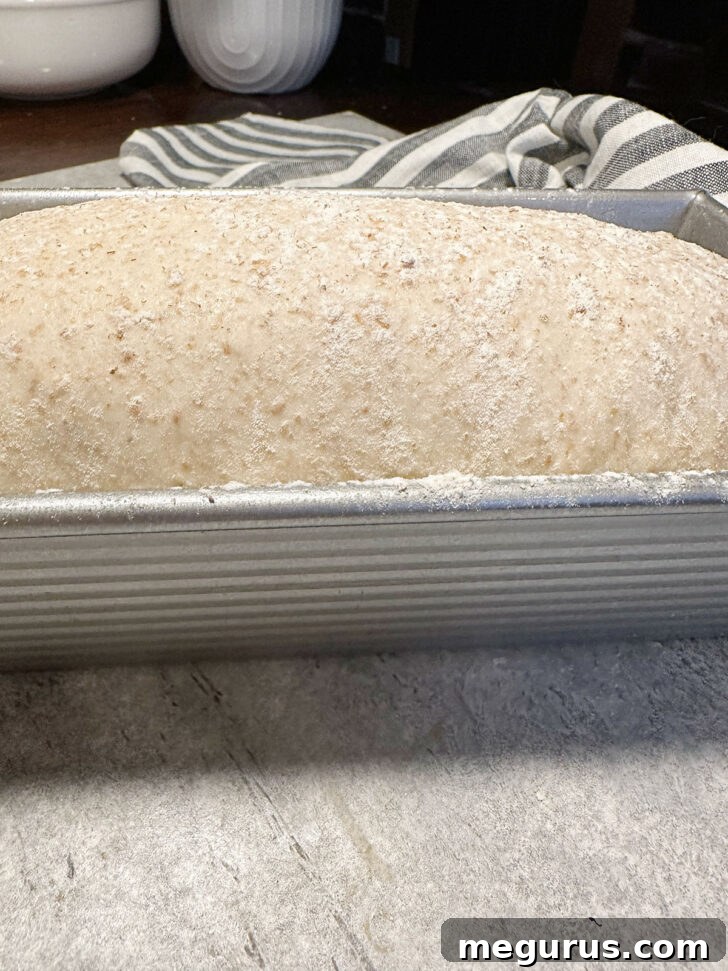
- Second Rise (Proofing): Once the dough has completed its first rise, gently punch it down to release the trapped gases. Turn it out onto a lightly floured surface and shape it into a loaf. For best results, aim for a tight, even shape. Place the shaped dough into a greased 8.5 x 4.5-inch loaf pan. Cover the pan loosely with greased plastic wrap to prevent the dough from sticking as it expands. Allow the dough to rise again in a warm spot until it has doubled in size and crests about 1 inch above the center of the pan. This secondary rise typically takes approximately 30 minutes, but always go by visual cues rather than strict timing.
- Baking Preparation: As your dough approaches its full rise, preheat your oven to 375°F (190°C). This ensures the oven is at the correct temperature when the bread is ready to bake, providing an immediate burst of heat that encourages a final impressive rise. If you desire a rustic look, lightly dust the top of the risen loaf with a small amount of whole wheat flour just before placing it into the hot oven. This adds a beautiful visual appeal and a subtle textural contrast to the crust.
Recipe Video for Visual Guidance
A comprehensive video demonstration of the entire baking process, with a special focus on shaping the perfect loaf, is available. This visual aid is particularly helpful for beginners to ensure each step is executed correctly. Look for the video embedded within the original article source for detailed instructions.
Expert Tips for Baking Your Best Honey Wheat Bread
- Flour Amount is Key: When mixing bread dough, the precise amount of flour can vary based on factors like humidity, the type of flour, and even the accuracy of your measurements. Always aim to add just enough flour until the dough mostly cleans the sides of your mixing bowl, leaving only a small, slightly sticky spot at the bottom. This ensures your dough is adequately hydrated, which is crucial for a tender, moist loaf. Adding too much flour is a common pitfall that can result in a dry, crumbly, or dense bread. Refer to the photos or the recipe video for visual cues on the ideal dough consistency. Trust your dough; it will tell you when it has had enough.
- Mastering Rising Times: Rising times provided in recipes are always estimates. The actual time your dough takes to double in size will depend heavily on the ambient temperature in your kitchen and the freshness of your yeast. A warmer environment will generally lead to a faster rise, while cooler temperatures will slow it down. Instead of rigidly adhering to the clock, observe your dough closely. It should be allowed to rise just until it has visibly doubled in volume. This honey wheat bread is known for being an especially fast riser, so stay nearby and keep an eye on it! Don’t let it over-proof, as this can lead to a less structured loaf.
- Scaling Up the Recipe: This recipe is written to yield one perfectly sized loaf, ideal for a standard 8.5 x 4.5-inch loaf pan. However, if you’re baking for a larger family, meal prepping, or simply want to have extra loaves on hand for freezing, this recipe is incredibly easy to scale. You can effortlessly double or even triple the ingredients to make two or three loaves simultaneously. For convenience, many digital recipe cards offer an automatic scaling function (often marked with “2X” or “3X” buttons), which can adjust the ingredient quantities for you instantly, making batch baking a breeze.
- Understanding Gluten Development: Proper kneading, whether by hand or with a stand mixer, is essential for developing the gluten in your dough. Gluten creates the elastic network that traps the gases produced by the yeast, giving bread its characteristic rise and chewiness. Knead until the dough is smooth, elastic, and passes the “windowpane test” (stretching a small piece of dough until it’s thin enough to see light through without tearing). This indicates sufficient gluten development.
- Baking Temperature and Doneness: An accurate oven temperature is vital for even baking and a beautiful crust. Consider using an oven thermometer to ensure your oven is truly at the preheated temperature. For determining doneness, while visual cues like a golden-brown crust are helpful, the most reliable method is to use an instant-read thermometer. Insert it into the bottom of the baked loaf; a temperature between 195-200°F (90-93°C) indicates the bread is fully cooked through.
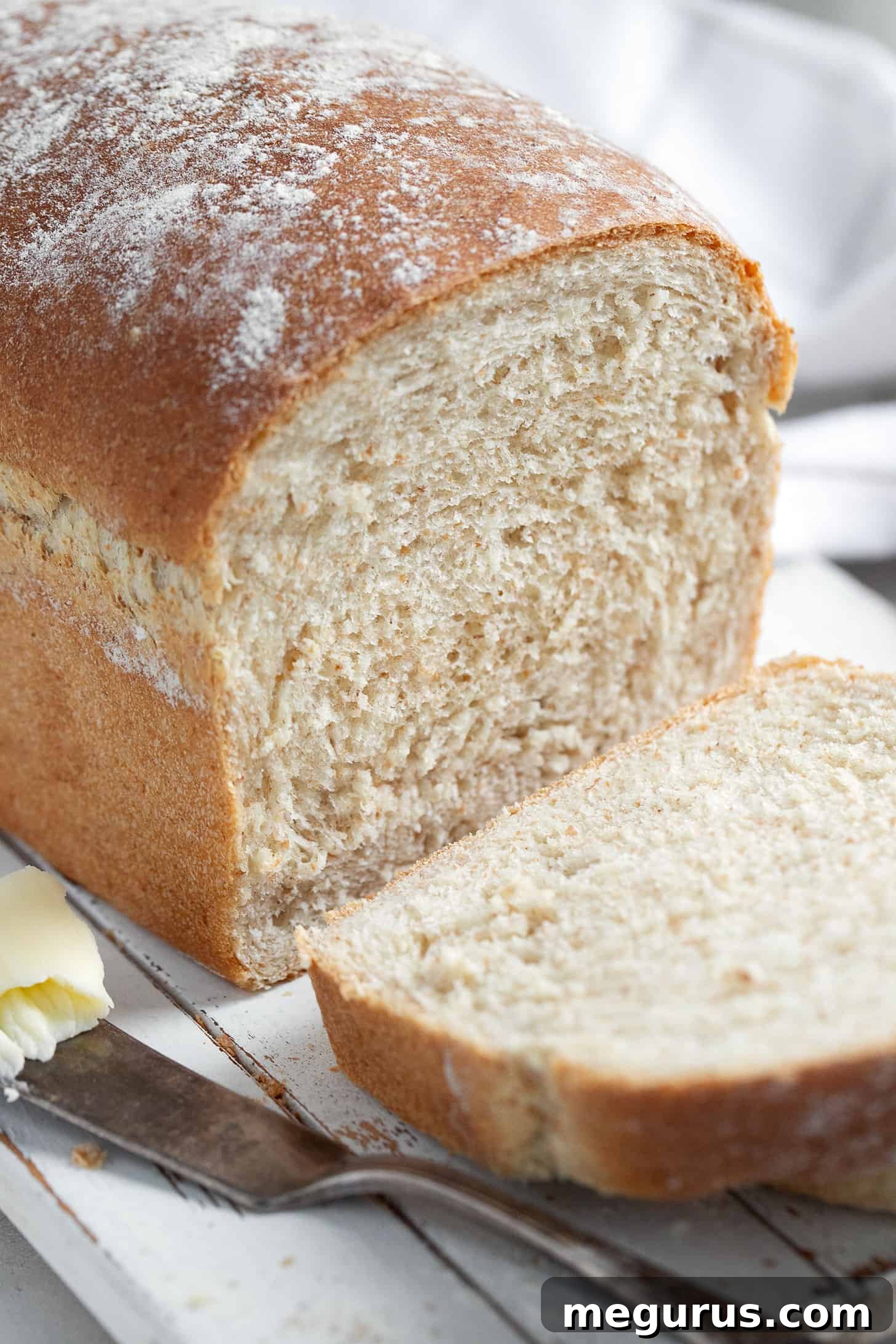
Storing and Freezing Your Homemade Honey Wheat Bread
Proper storage is essential to maintain the freshness and quality of your homemade honey wheat bread. Once completely cooled, store the bread in an airtight container or a bread bag at room temperature. It will remain wonderfully fresh for 3-4 days. To extend its shelf-life further, especially in warmer climates, you can transfer it to the refrigerator after the first day. Refrigerated, your bread will stay fresh and delicious for up to a week, though it may become slightly firmer.
For longer-term storage, this bread freezes exceptionally well. To freeze, ensure the loaf is completely cooled. Wrap it tightly in plastic wrap, followed by a layer of aluminum foil, or place it in a freezer-safe bag. This double-layer protection helps prevent freezer burn. Frozen bread can be stored for up to 3 months. To enjoy, simply thaw the bread at room temperature or gently warm slices in a toaster or oven. Freezing is an excellent way to always have homemade bread on hand, ensuring you can enjoy its fresh taste whenever a craving strikes.
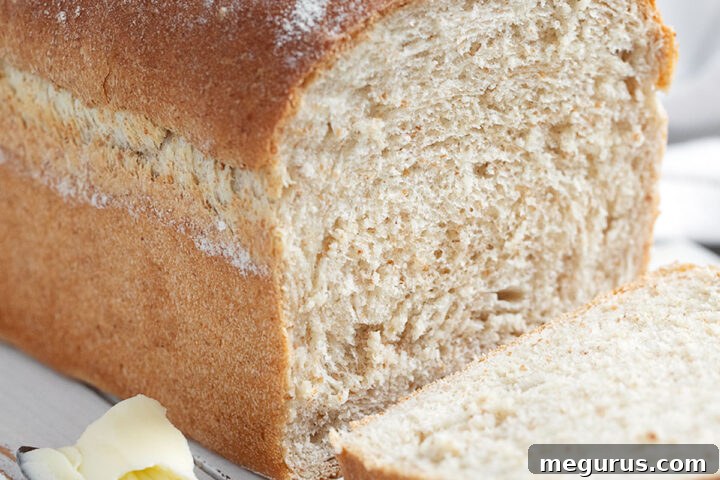
Get the Recipe: Honey Wheat Bread
This delicious honey wheat bread is a fantastic everyday bread, perfect for making gourmet sandwiches and excellent toast!
Recipe Rating: 4.91 stars from 11 ratings
Print Recipe |
Pin This Recipe |
Leave a Review
Prep Time: 20 mins | Cook Time: 35 mins | Rising Time: 1 hr 15 mins | Total Time: 2 hrs 10 mins
Yield: 14 servings (1 loaf)
Ingredients
- 1/2 cup (125 ml) lukewarm water, warmed to about 105F
- 1/2 cup (125 ml) milk, warmed to about 105F, or replace milk with more water
- 1 cup (125 g) whole wheat flour, spooned and levelled
- 2 1/4 teaspoons active dry or instant yeast
- 1/2 teaspoon fine sea salt
- 3 Tablespoons honey
- 3 Tablespoons vegetable oil, or canola oil or other neutral tasting oil
- 2 cups (250-280 g) all-purpose flour, spooned and levelled, plus more as needed
Instructions
-
This recipe is designed to make one 8 1/2 x 4 1/2-inch loaf. For optimal results and a beautifully golden crust, it’s highly recommended to use a metal loaf pan of the specified size. You can easily double or triple the recipe as needed to produce multiple loaves.
-
Gently warm the water and milk until lukewarm. This can be done in a microwave for short bursts or in a small saucepan over low heat. It’s crucial that the liquid is not too hot, as excessive heat can kill the yeast and prevent your bread from rising. Ideally, use a thermometer to confirm the temperature is around 105°F (40°C). If it gets too hot, allow it to cool before proceeding. Pour the lukewarm water and honey into a large mixing bowl or the bowl of a stand mixer equipped with a kneading hook. Sprinkle the yeast over the liquid, stir gently to combine, and let it stand for 5-10 minutes. You should see a light foam or bloom on the surface after about 5 minutes, indicating the yeast is active and ready.
-
Baking Tip! Accurate flour measurement is critical for bread recipes. To avoid adding too much flour, which can lead to a dry, dense, and crumbly dough, always stir the flour in its container first to aerate it. Then, spoon the flour into your measuring cup until it’s overflowing, and finally, level it off with a straight edge or the back of a knife. For the most precise results, especially for baking, using a kitchen scale to weigh your flour is highly recommended.
-
To the yeast mixture, add the whole wheat flour, salt, and vegetable oil. Mix these ingredients thoroughly until they are just combined. Begin gradually adding the all-purpose flour, starting with about 1/2 cup at a time, mixing well after each addition. As the dough begins to form and thicken, reduce the amount of flour added per increment to just a tablespoon or two. Continue adding flour until the dough pulls cleanly away from the sides of the bowl and wraps around the dough hook. There might still be a small, slightly sticky area at the very bottom of the bowl, which is perfectly normal and desired. You may not need to use all of the specified all-purpose flour; trust the feel of the dough. Once combined, knead the dough on Speed 2 of your stand mixer for approximately 5 minutes to develop the gluten.
-
Helpful Hint! For a visual reference of the ideal consistency of the finished dough, please consult the recipe video located just above this recipe card. It provides an excellent demonstration of what you should be aiming for after kneading.
-
If you are kneading by hand, transfer the dough onto a lightly floured work surface. Knead continuously for about 10 minutes, using a push-fold-turn motion. Add only a minimal amount of additional flour, just enough to prevent the dough from sticking excessively to your hands or the counter. The goal is to achieve a smooth, elastic, and supple dough.
-
Once the dough is smooth and elastic from kneading, transfer it to a clean, well-oiled bowl or a large measuring cup. Turn the dough several times within the bowl to ensure its entire surface is coated with a thin layer of oil. This prevents it from drying out and sticking during the rising process. Cover the bowl tightly with plastic wrap or a damp kitchen towel. Place the covered bowl in a warm, draft-free location and allow the dough to rise until it has visibly doubled in size. This primary fermentation typically takes approximately 45-60 minutes, but actual time will vary with temperature.
-
Before you begin shaping, take a moment to prepare your loaf pan. Generously grease an 8 1/2 x 4 1/2-inch loaf pan to prevent the bread from sticking. This simple step ensures easy removal of your beautifully baked loaf later.
-
Carefully remove the risen dough from the bowl onto a lightly floured work surface. If you are preparing multiple loaves, divide the dough into equal-sized portions at this stage. Gently press the dough down to deflate it, releasing the accumulated gases. Then, work it into a rectangular shape, aiming for roughly 8 inches wide and 12 inches long. Begin rolling the dough tightly from one of the short sides, pinching the seam together with each roll to create tension. Once fully rolled, firmly pinch the final seam closed and place the dough into the greased loaf pan(s) with the seam-side down.
-
Important Tip! If you’re looking for guidance on how to professionally shape a sandwich loaf for an even rise and perfect slice, be sure to watch the detailed shaping technique demonstrated in the Recipe Video located directly above this Recipe Card.
-
Lightly spray a piece of plastic wrap with non-stick cooking spray or oil, then loosely place it over the loaf pan with the greased side facing down towards the dough. This prevents the dough from sticking as it rises. Allow the shaped loaf to undergo its final rise (proofing) in a warm place until the dough has doubled in volume and crests approximately 1 inch above the rim of the baking pan in the center. This typically takes about 30 minutes, but rely on visual cues. If desired, just before placing the loaf in the oven, lightly sprinkle the top surface with a touch of whole wheat flour for a rustic appearance.
-
As the dough approaches its full rise, preheat your oven to 375°F (190°C). Make sure to use the regular bake setting, not a fan-assisted or convection setting, unless you are experienced with adjusting baking times for convection ovens. A properly preheated oven is crucial for achieving an optimal rise and a beautifully browned crust.
-
Bake the bread in the preheated oven for 30 – 40 minutes. The loaf is done when its crust is golden brown, and an instant-read thermometer inserted into the bottom of the bread reads between 195-200°F (90-93°C). In most ovens, this loaf will typically require about 35 minutes of baking time. Immediately after baking, carefully remove the hot bread from its pan and transfer it to a wire cooling rack. Allow the loaf to cool completely before slicing. Slicing a yeast bread while it is still hot can cause the crumb to become gummy and compromise its texture. Patience at this stage will be rewarded with a perfectly textured slice.
-
Once your homemade honey wheat bread has cooled entirely, store it in an airtight container or a sealed bag at room temperature. It will retain its freshness and delightful texture for approximately 3 days. For extended storage, particularly if you’ve made multiple loaves, wrap the cooled bread meticulously in plastic wrap, then an additional layer of aluminum foil, or place it in a freezer-safe bag. It can be frozen for up to 3 months. When you’re ready to enjoy it again, simply thaw the bread at room temperature or toast individual slices directly from frozen.
Notes
The provided nutritional information is calculated for one entire loaf, assuming it is cut into 14 slices. Please note that the actual number of slices you obtain from your loaf may vary based on your slicing thickness.
Should you wish to bake more than one loaf, this recipe is perfectly adaptable for batch cooking. Utilize the scaling feature (often represented by “2X” or “3X” buttons) in the digital recipe card to automatically adjust all ingredient quantities for making 2 or 3 loaves.
For further comprehensive guidance and to ensure the best possible outcome for your bread, make sure to read all the notes and tips provided above this Recipe Card. You will also find step-by-step photographs and a detailed recipe video that offer invaluable visual assistance throughout the baking process.
Cuisine: American, Canadian | Course: Bread | Author: Jennifer Maloney
Nutritional Information:
- Serving: 1 serving
- Calories: 143 kcal
- Carbohydrates: 25g
- Protein: 4g
- Fat: 4g
- Saturated Fat: 1g
- Polyunsaturated Fat: 2g
- Monounsaturated Fat: 1g
- Trans Fat: 0.02g
- Cholesterol: 0.4mg
- Sodium: 88mg
- Potassium: 84mg
- Fiber: 2g
- Sugar: 4g
- Vitamin A: 17 IU
- Vitamin C: 0.03mg
- Calcium: 17mg
- Iron: 1mg
Have you tried this incredible recipe? If you enjoyed baking and tasting this honey wheat bread, we would love to hear from you! Please consider leaving a star rating and a comment on the original article. Your feedback not only helps other aspiring bakers discover this delicious recipe but also encourages us to keep sharing wonderful culinary creations.