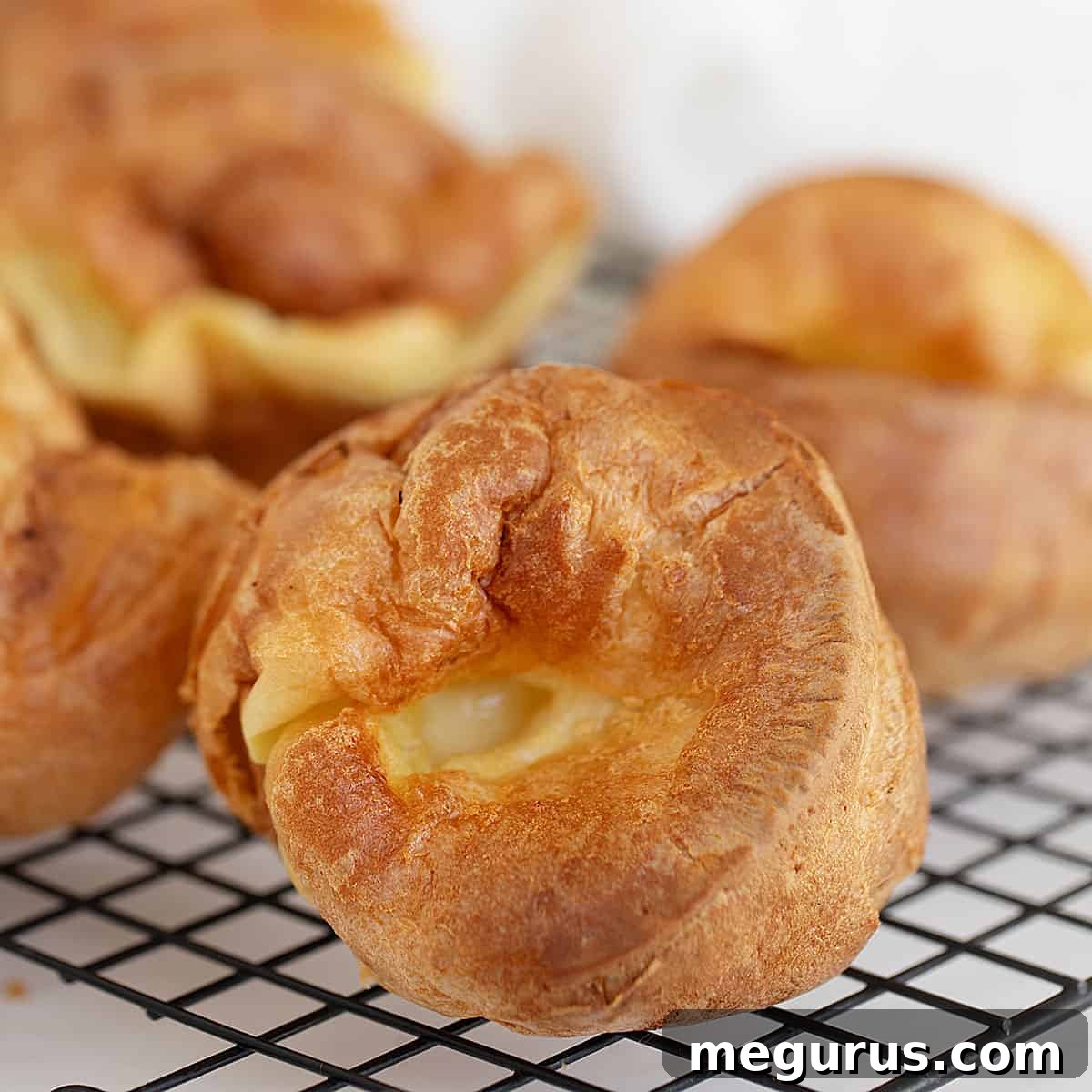
Discover the art of crafting perfect, traditional Yorkshire Puddings with this comprehensive guide. Whether you’re a seasoned chef or a first-time baker, this tried-and-true recipe, perfected over decades, provides all the essential tips and troubleshooting information you need to achieve beautifully risen, crispy, and flavorful Yorkshire Puddings every time. Say goodbye to soggy failures and hello to your new favorite side dish!

Classic, traditional Yorkshire Pudding is, without a doubt, the quintessential accompaniment to a hearty roast beef dinner, especially when paired with rich, savory gravy. However, I believe these delightful, puffed wonders shouldn’t be reserved solely for roast beef. Their light texture and ability to soak up delicious sauces make them the ideal side for virtually any dish featuring gravy, transforming an ordinary meal into something extraordinary.
The beauty of Yorkshire Pudding lies in its deceptively simple list of ingredients and straightforward process. Yet, despite this apparent simplicity, mastering the perfect Yorkshire Pudding can be a culinary challenge. Many home cooks have experienced what is affectionately known as a “Yorkshire #fail” – puddings that refuse to rise, turn out heavy, or become greasy. If you’re new to making them, anticipate a slight learning curve. But fear not! This guide is designed to help you navigate those potential pitfalls, ensuring more successes than setbacks.
My recipe is a subtly refined version of the renowned Joy of Cooking Yorkshire Pudding recipe. It’s a method that consistently delivers delicious results. If you’re an experienced Yorkshire Pudding maker who hasn’t tried this specific approach, I encourage you to give it a go. For beginners, this recipe serves as an excellent foundation, and I’m here to share all the insights I’ve gathered to help you avoid the common mistakes I once made, making your journey to perfect Yorkshire Puddings much smoother.
Essential Ingredients and Smart Substitutions for Perfect Yorkshire Pudding
Creating the perfect Yorkshire Pudding relies on a few key ingredients. Understanding their role and knowing when substitutions are appropriate can make all the difference in your final result.
All-Purpose Flour: For this recipe, standard all-purpose flour is your go-to. It provides the necessary structure without being too dense. Avoid self-raising flour, as its leavening agents will interfere with the unique rise of Yorkshire Puddings. Both bleached and unbleached varieties of all-purpose flour will work equally well.
Eggs: This recipe calls for 3 large eggs, contributing to the rich flavor and the impressive rise. However, if you prefer a slightly less “eggy” pudding or are working with fewer ingredients, 2 large eggs will also yield good results. I personally lean towards the extra egg for a more pronounced flavor and a slightly richer texture. Feel free to experiment with 2 or 3 eggs to discover your ideal preference.
Milk: The fat content in milk plays a crucial role in the texture and richness of your Yorkshire Puddings. Full-fat, whole milk (3.5% butterfat) is highly recommended for the best flavor and a wonderfully tender interior. If whole milk isn’t available, 2% milk can be used as a good alternative. I haven’t personally tested lower-fat or non-dairy milks in this specific recipe, so I cannot guarantee similar results.
Fat for the Pan: The type of fat you use for cooking is paramount to achieving that coveted crispy exterior and preventing sticking. Beef drippings are the traditional and superior choice, imparting an unparalleled depth of flavor, especially when serving alongside roast beef. If beef drippings aren’t available, lard or shortening are excellent alternatives. Alternatively, a cooking oil with a high smoke point, such as vegetable oil or canola oil, will also work effectively. It’s important to steer clear of olive oil and butter, as their lower smoke points make them unsuitable for the high temperatures required to cook Yorkshire Puddings properly, leading to burning and an unpleasant taste.
You will also need: A touch of water to achieve the right batter consistency, and fine salt to enhance the overall flavor profile of your puddings.
Choosing the Right Pan for Your Yorkshire Pudding Adventure
The choice of pan significantly impacts the shape, size, and even the cooking dynamics of your Yorkshire Puddings. For beginners, it’s wise to select one type of pan and stick with it for a few attempts, allowing you to fine-tune your technique and understand how your oven interacts with that specific pan. Once you’ve built confidence, you can then branch out and explore different pan shapes and sizes.
Muffin Tin: This is arguably the most common and accessible pan for many home kitchens, making it an excellent starting point for individual Yorkshire Puddings. Its familiar shape allows for easy portioning and consistent results. Don’t be afraid to use an older, “dodgy” muffin tin; Yorkshire Pudding making can sometimes be a bit hard on cookware due to the high heat involved.
Popover Pan: Similar in concept to a muffin tin, a popover pan features deeper, narrower cups. This design is specifically engineered to encourage a magnificent, tall rise, resulting in dramatically puffed Yorkshire Puddings. You may need to experiment slightly with the batter depth to achieve the most impressive height and structure.
Traditional 4-Cup Yorkshire Pudding Pan: While not as common in North America, dedicated Yorkshire Pudding pans are a classic choice in the UK. These pans often feature four larger cups designed specifically for traditional Yorkshire Puddings. They are available through online retailers if you’re keen to experience an authentic setup.
One Large Baking Pan: For a family-style presentation, Yorkshire Puddings can also be made as a single, large slab. This is typically baked in a rectangular pan, such as one measuring around 7×11 inches, or any pan that allows for an approximate batter depth of about 1/4 inch. A large cast-iron skillet is another fantastic option for achieving a wonderfully crisp, large-format pudding.
Remember, each type of pan will conduct heat and interact with your oven differently. What works perfectly in a muffin tin might require slight adjustments when using a popover pan or a large baking dish. By understanding the fundamental process outlined below, you’ll be well-equipped to make these necessary tweaks and achieve stellar results regardless of your chosen cookware.
Mastering the Process: Step-by-Step Photos and Instructions
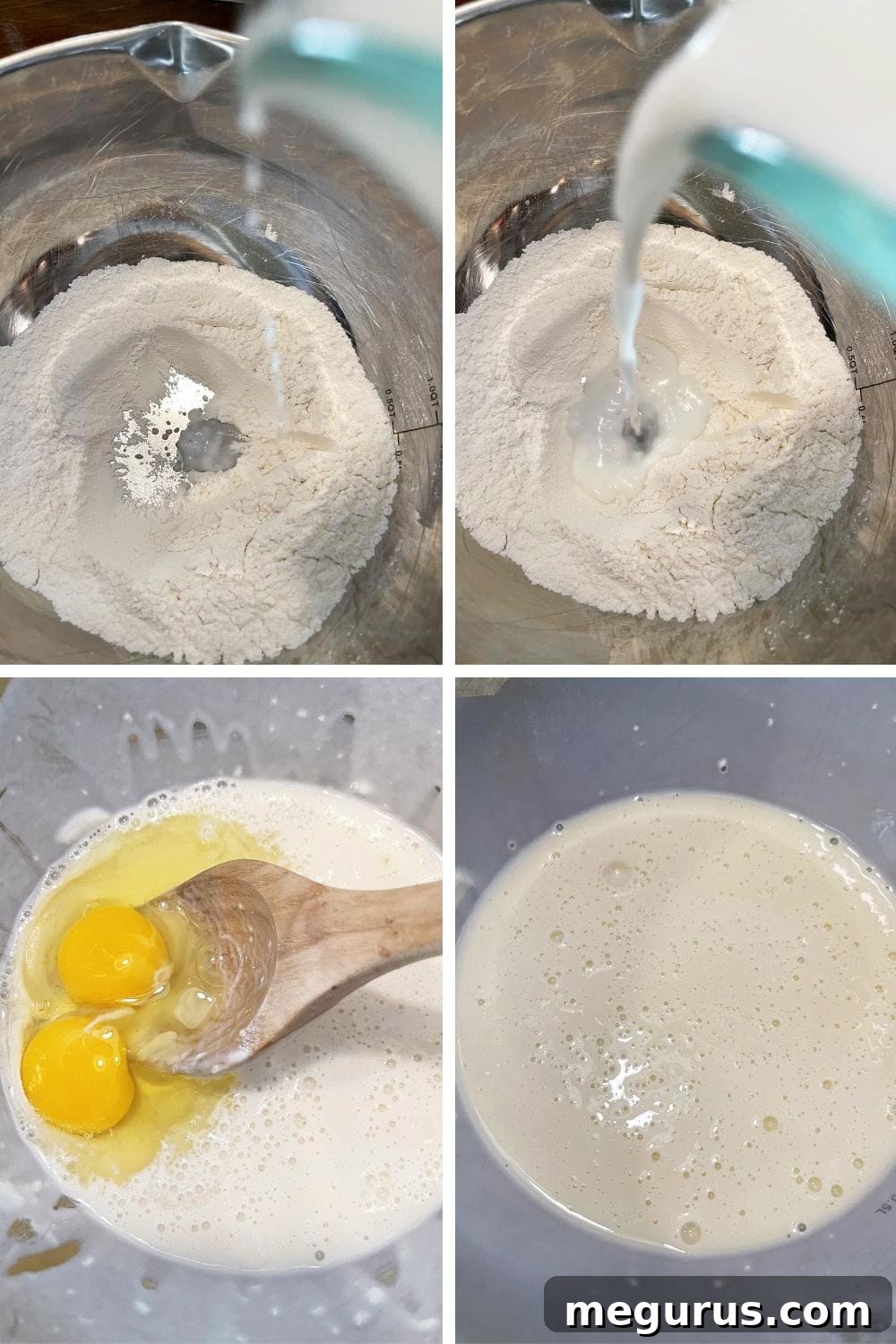
1. Mix the Batter to Perfection: The initial mixing of Yorkshire Pudding batter is surprisingly forgiving. Whether you prefer to hand-beat with a whisk, use a paddle attachment on your stand mixer, or employ a whisk attachment, the key is to achieve a completely smooth batter. Mix thoroughly for one to two minutes until it develops a slight thickness – think closer to light cream than milk – and you observe some larger bubbles forming around the edge of the bowl. This indicates proper aeration and gluten development, crucial for a good rise.
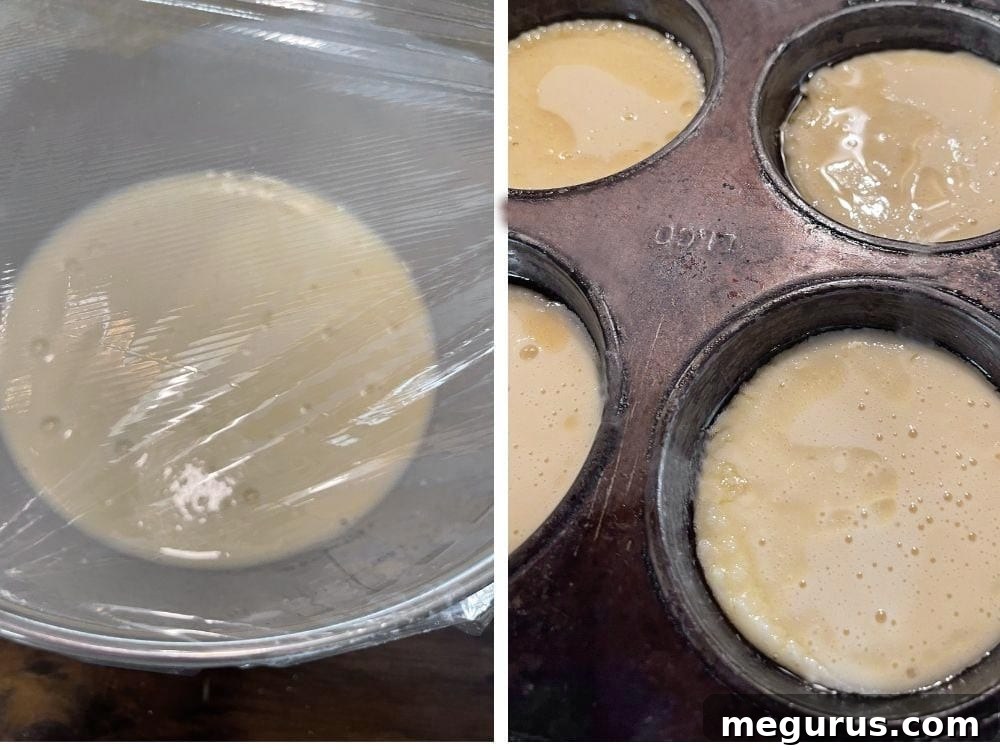
2. Allow the Batter to Rest: This step is often overlooked but vital for tender and well-risen puddings. Once mixed, cover the bowl of batter and let it rest at room temperature for at least 30 minutes. This resting period allows the flour to fully hydrate and the gluten to relax, contributing to a lighter, more ethereal texture in the final product.
3. Prepare and Superheat the Pan with Fat: This is arguably the most critical stage in the entire Yorkshire Pudding process. For beginners, I strongly recommend brushing a thin, even layer of oil into each muffin cup, as this provides better control over the amount of fat. Place your chosen pan into a preheated oven and leave it until the fat is visibly smoking hot. The exact time will vary depending on your pan’s material and thickness, but a minimum of 10 minutes is usually required for minimal oil, extending to 15 minutes or more for a slightly larger quantity of fat. Ensure your kitchen fan is on or take other necessary precautions to manage any potential smoke, as a smoking hot pan is non-negotiable for success.
4. Re-mix, Pour, and Bake Immediately: Just before retrieving the super-hot pan from the oven, give your rested batter a quick re-whisk. Pour the batter into a 2-cup measuring cup with a spout; this makes for quick and easy pouring. Have it ready right beside the oven. Carefully remove the smoking hot pan and swiftly pour the batter into the muffin cups, filling them approximately 1/2 to 2/3 full. You should hear an immediate sizzle as the batter hits the hot fat – this is the sound of success! Immediately return the pan to the oven and bake. After an initial 15 minutes at a high temperature, you will reduce the oven temperature. It is crucial not to open the oven door at any point during the baking process until the puddings are ready to be removed. Once baked to a golden crisp, remove them from the oven. Most Yorkshire Puddings will lift right out of the pan; if any resist, simply run a thin knife around the edge. Transfer them to a cooling rack and serve warm, ideally with plenty of gravy.
Troubleshooting Common Yorkshire Pudding Fails
Even with a reliable recipe, Yorkshire Puddings can sometimes be temperamental. Here are my top tips for decoding the common challenges and ensuring your puddings rise to the occasion every time:
The #1 Culprit: Insufficiently Hot Oil in the Pan. This is by far the most frequent reason for Yorkshire Pudding failure. The magic of a perfectly risen Yorkshire Pudding occurs when the cool batter hits intensely hot fat in a super-heated pan. If the oil isn’t hot enough, the batter won’t instantly seal and cook on the outside. Instead, it will absorb the oil, resulting in puddings that are soggy, greasy, and dense, rather than light and airy. When the oil is smoking hot, the batter cooks immediately upon contact, forming a crisp outer shell that encourages the pudding to puff up spectacularly.
The #2 Challenge: Too Much Oil in the Pan. While it might seem counterintuitive, an excessive amount of oil can also lead to issues. It’s not necessarily “too much oil” in terms of quantity alone; rather, the problem often lies in failing to heat that larger volume of oil sufficiently. More oil requires a longer pre-heating time in the oven to reach the critical smoking hot temperature. The heat retention properties of your specific pan also play a role here; some pans heat up and transfer heat more efficiently than others. If you consistently end up with soggy Yorkshire Puddings, try reducing the amount of oil slightly and ensuring it gets adequately hot before adding the batter.
With these points in mind, for beginners, the easiest path to success is to start with less oil. You are much less likely to underheat the oil if there is a smaller quantity of it. As your confidence grows and you understand how your oven and pan perform, you can gradually increase the oil and extend the pre-heating time until you discover your personal “sweet spot.” Traditional Yorkshire Puddings truly benefit from cooking in a small pool of oil or drippings, so aim to work your way up to that ideal. A general guideline is about 1/2 teaspoon per regular muffin cup, or 1-2 teaspoons for larger popover or dedicated Yorkshire Pudding pans. A single large pan may require a bit more fat, distributed evenly across its surface.
Finally, Experiment with Batter Volume: The amount of batter you pour into each cup or pan section can also affect the final shape and rise. I’ve found that filling muffin cups about 1/2 to 2/3 full works well in most cases. However, depending on the specific dimensions and shape of your pan, you might find that slightly less or more batter yields better results. Don’t hesitate to test this by filling one or two cups with varying amounts of batter during a batch, then observe the finished puddings to determine what works best for your setup.
Frequently Asked Questions About Yorkshire Pudding
Got more questions about Yorkshire Puddings? Here are answers to some common queries to further refine your baking skills.
What is the difference between Yorkshire Pudding and Popovers? While both are beloved for their puffy, hollow centers and similar batter compositions, I believe there’s a distinct difference. Having made countless popovers, I can attest that Yorkshire Puddings typically have a lighter, more delicate texture, a larger hollow cavity, and a more pronounced eggy flavor. Their unique texture comes from the intense steaming action that occurs inside as they bake at high heat, which can differ subtly from popovers.
Can I use a glass or silicone pan for Yorkshire Pudding? Neither glass nor silicone pans are recommended for making Yorkshire Puddings. This is due to both their heat retention capabilities (they don’t heat up as quickly or intensely as metal) and the extremely high temperatures required for proper Yorkshire Pudding development. A sturdy metal pan of some kind is always the best choice.
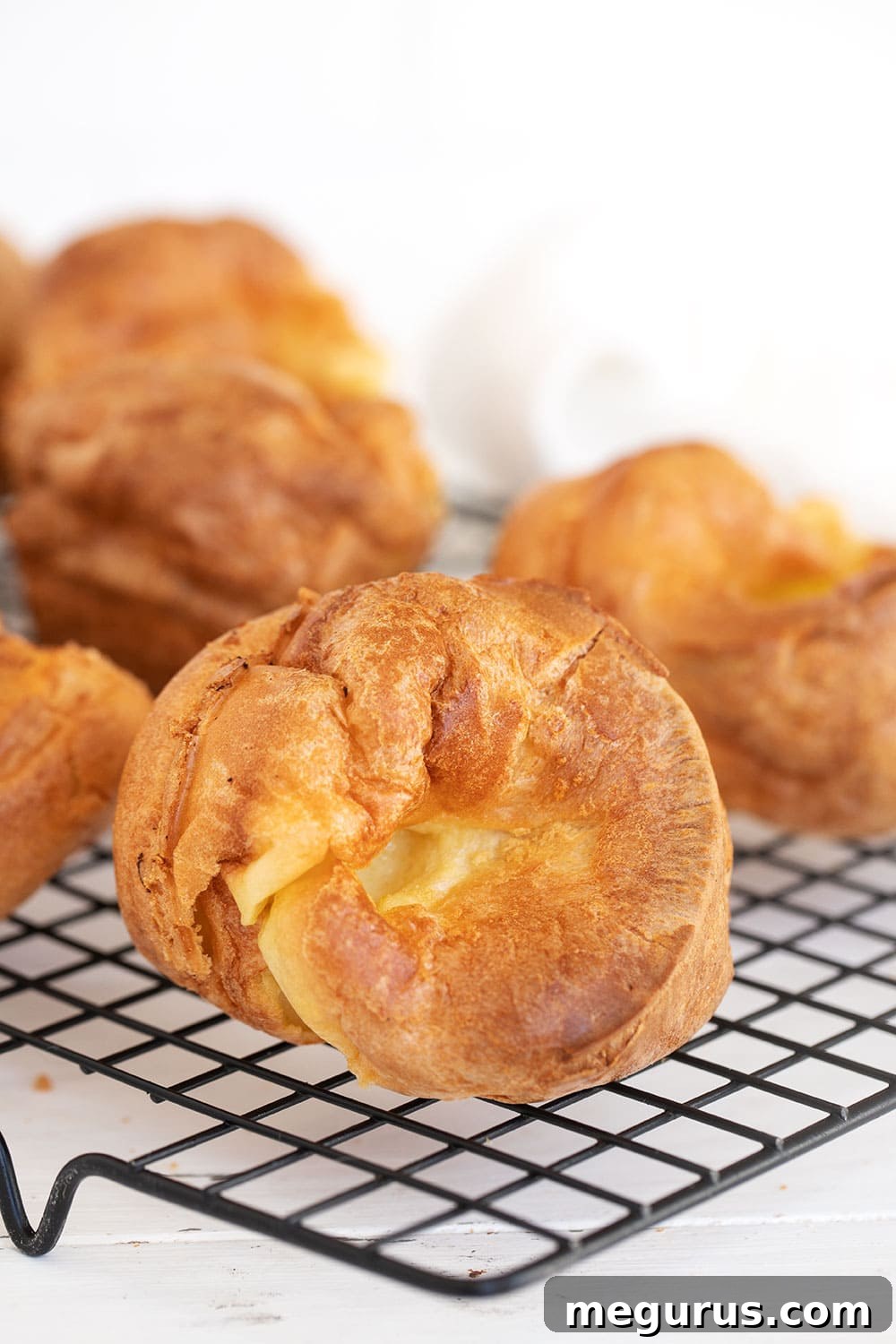
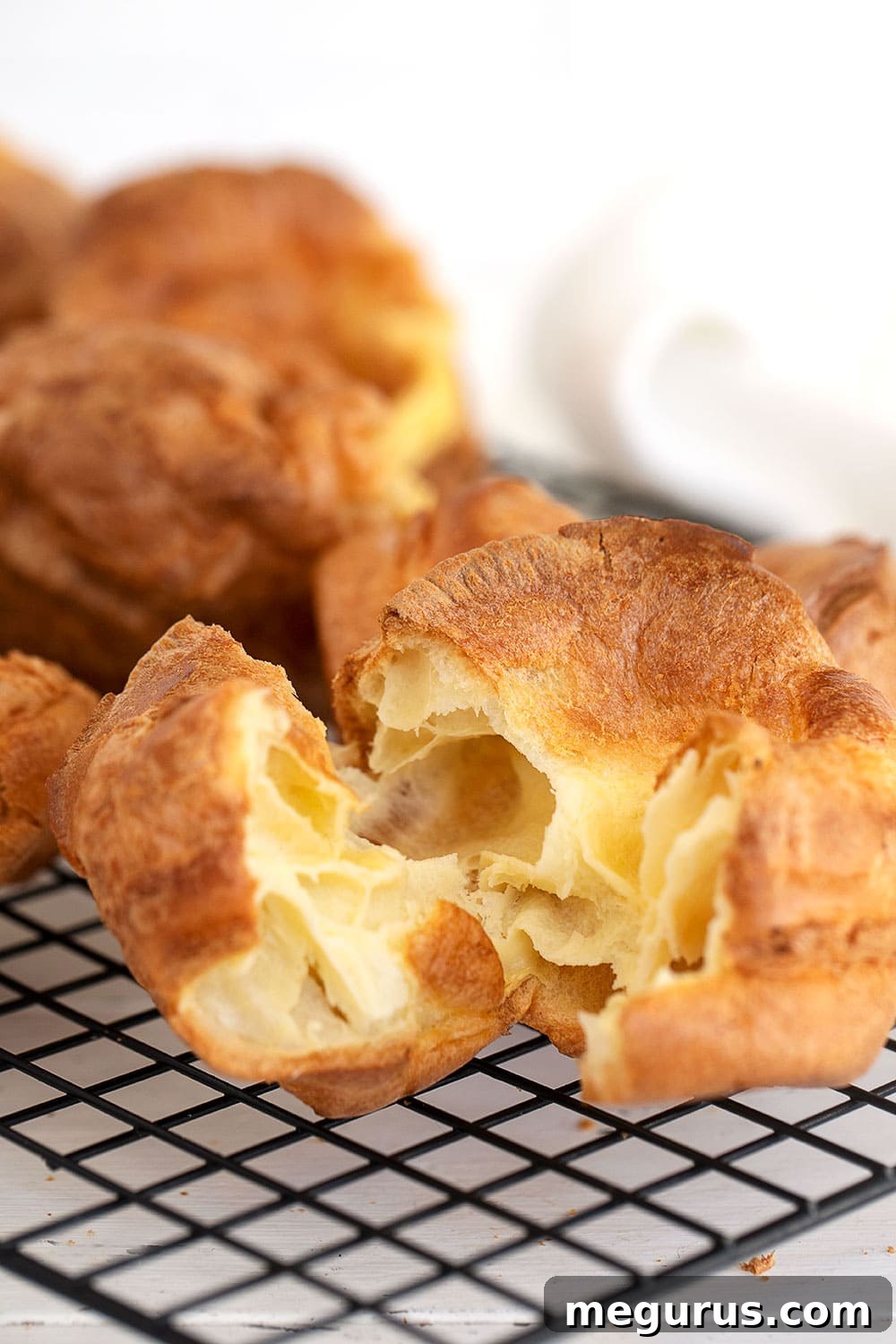
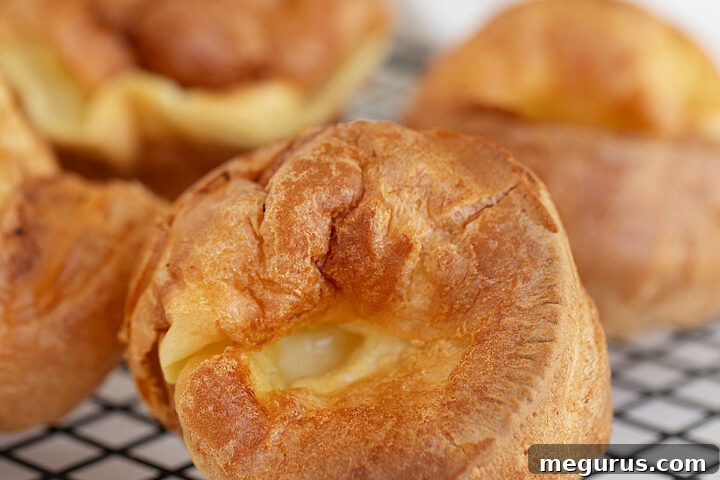
What should my Yorkshire Pudding look like when cooked? Should it be hollow? Absolutely, a perfectly cooked Yorkshire Pudding should indeed be hollow! This isn’t a sign of failure but a desirable characteristic, as it creates the perfect pocket for holding gravy. The interior of the Yorkshire Pudding should be moist yet fully set, often feeling slightly cool to the touch due to the residual moisture – reminiscent of choux pastry. The exterior should be beautifully golden and possess a light crispness, though it won’t be extremely rigid. They often, but not always, form a distinct hole or crown in the top center. Embrace the individuality of Yorkshire Puddings; even those cooked side-by-side can vary in shape and size!
Can you make Yorkshire Pudding ahead of time? Yes, you can certainly prepare Yorkshire Puddings earlier in the day. After baking, simply let them cool completely on a wire rack until dinner. To re-warm, place them on a baking sheet and heat in a 375°F (190°C) oven for about 3-5 minutes, or until thoroughly warmed through and slightly re-crisped.
Can you freeze Yorkshire Pudding? Freezing Yorkshire Puddings is an excellent way to prepare them for future meals. Once completely cooled, simply place them in a freezer bag or an airtight container and freeze for up to 2 months. To re-warm from frozen, arrange the puddings on a baking sheet and bake in a 400°F (200°C) oven for approximately 6-8 minutes, or until hot and crisp.
How do I make cupped-shape Yorkshire Pudding? To achieve a tall, beautifully crowned Yorkshire Pudding, use room temperature batter. If you prefer a cupped shape, which is perfect for holding a generous amount of gravy, refrigerate the batter for 1 hour after mixing. Then, add the cold batter to the smoking hot pan; the temperature difference helps create that lovely cupped cavity.
Get the Recipe: Yorkshire Pudding
Pin This
Leave a Review
10 mins
28 mins
30 mins
1 hr 8 mins
8 servings
Ingredients
- 3/4 cup + 2 Tablespoons all-purpose flour
- 1/2 teaspoon fine salt
- 1/2 cup whole milk (full-fat 3.5% or 2% recommended)
- 1/2 cup water
- 3 large eggs (can use 2 eggs as well, see Notes)
- Meat Drippings, cooking oil, or shortening (for the pan)
Instructions
-
In a medium bowl, stir together the flour and salt. Create a well in the center and pour in the milk and water. Beat until the mixture is fluffy, then add the eggs and continue beating until large bubbles begin to rise to the surface. Cover the bowl and let the batter rest at room temperature for 30 minutes.
-
Preheat your oven to 425°F (220°C) (avoid using a fan-assisted setting) with the oven rack positioned in the center.
-
Generously brush muffin cups with beef drippings, lard, shortening, or a high smoke-point cooking oil like vegetable or canola oil. For a slightly more generous amount of fat, measure in about 1/2 teaspoon for each regular muffin cup, or 1 teaspoon for a larger muffin tin, Yorkshire Pudding pan, or popover pan.
-
Place the empty pan into the preheated oven and heat until it is very hot, about 12-15 minutes, ensuring the fat is smoking. Before removing the pan from the oven, quickly re-whisk the batter and pour it into a 2-cup measuring cup for easy pouring. Keep it ready right next to the oven.
-
Carefully remove the hot pan from the oven and quickly pour the batter into the muffin cups, filling them approximately 1/2 to 2/3 full. The batter should sizzle immediately upon contact with the hot pan.
-
Immediately place the pan back into the oven and bake for 15 minutes at 425°F (220°C). Then, reduce the oven temperature to 350°F (175°C) and continue baking for an additional 10-15 minutes. *Use the shorter baking time for smaller puddings and the longer time for larger ones, depending on the pan size you are using. Do not open the oven door during baking.
Notes
I have also adjusted the oven temperature from the original recipe, which called for 400°F (200°C) for 20 minutes, followed by 350°F (175°C) for 10-15 minutes. I found that an initial bake starting at 425°F (220°C) for 15 minutes, then reducing to 350°F (175°C) for approximately 15 minutes more, worked better in my kitchen for achieving a spectacular rise and crisp exterior. Feel free to experiment between these temperature profiles to find what works best with your specific oven. The initial high heat is crucial for the dramatic puff, while the subsequent lower heat sets the pudding.
This batter yields approximately 8 puddings when using a regular-sized muffin tin. For Popover or dedicated Yorkshire Pudding pans, expect around 6 puddings. To make one large Yorkshire Pudding, a 9×13-inch pan is usually appropriate, or any pan that allows the batter to settle at about a 1/2-inch depth.
Using room temperature batter will typically result in a taller, more crowned Yorkshire Pudding. If you desire a distinctive cupped shape, perfect for holding gravy, place the batter in the refrigerator for 1 hour after mixing (instead of resting at room temperature), then add the cold batter to the hot pan.
For even more detailed guidance and visual aids, please refer to the extensive Notes, Tips, and Step-by-Step photos provided above the recipe card.
American, Canadian
Side Dish
Jennifer Maloney
Calories: 148 kcal,
Carbohydrates: 21 g,
Protein: 7 g,
Fat: 4 g,
Saturated Fat: 1 g,
Trans Fat: 1 g,
Cholesterol: 118 mg,
Sodium: 198 mg,
Potassium: 91 mg,
Fiber: 1 g,
Sugar: 1 g,
Vitamin A: 193 IU,
Calcium: 39 mg,
Iron: 2 mg
Tried this recipe?
If you enjoyed this recipe, please leave a star rating and comment. It helps others to find it!