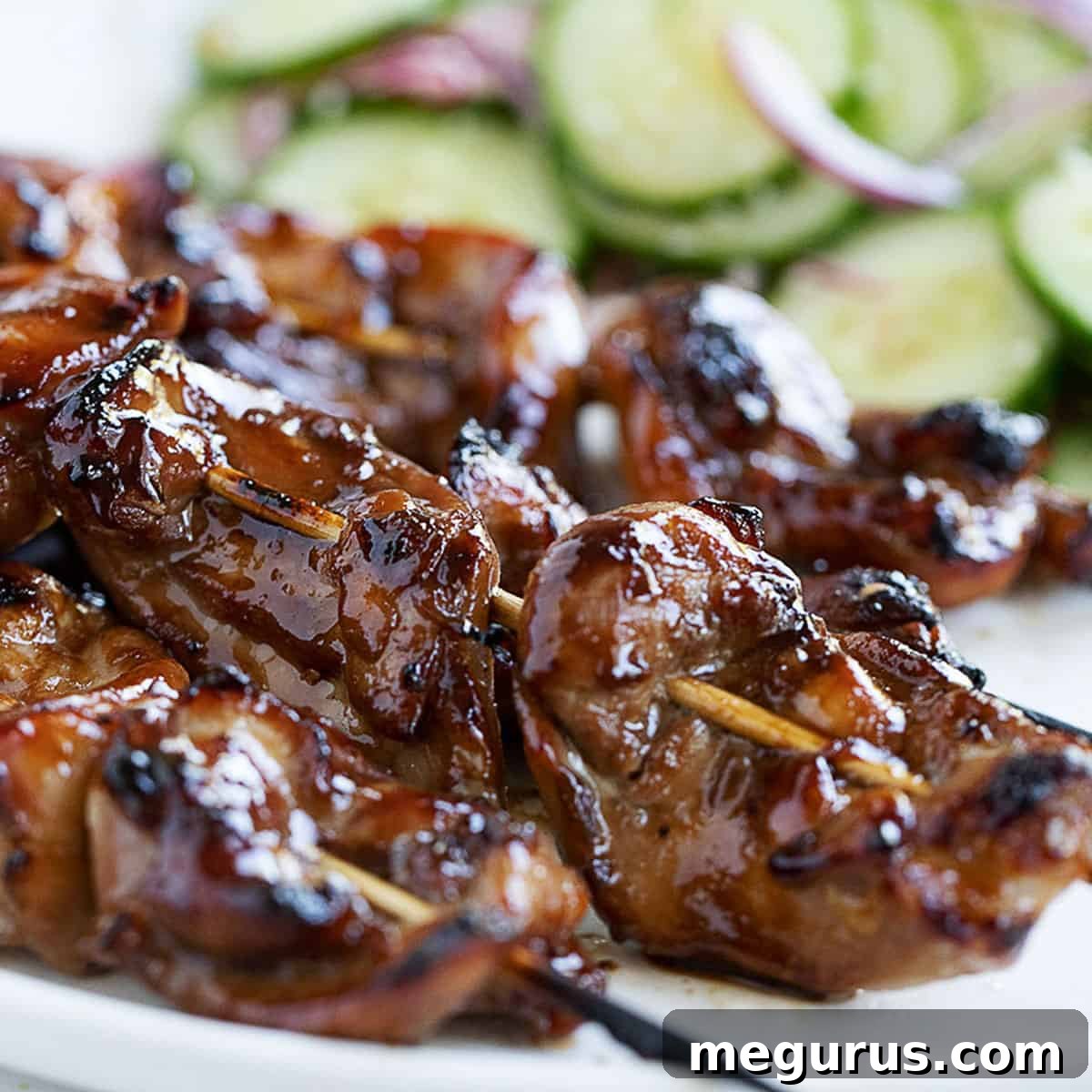
Embark on a culinary adventure with these wonderfully delicious homemade Yakitori chicken skewers. Crafted with succulent boneless chicken thighs and glazed in an easy, no-sake-required sauce, this recipe brings the authentic flavors of Japanese grilled chicken straight to your kitchen. Perfectly complemented by a refreshing, Asian-inspired fresh cucumber salad, it’s an ideal meal for any occasion, from casual weeknight dinners to vibrant summer gatherings.
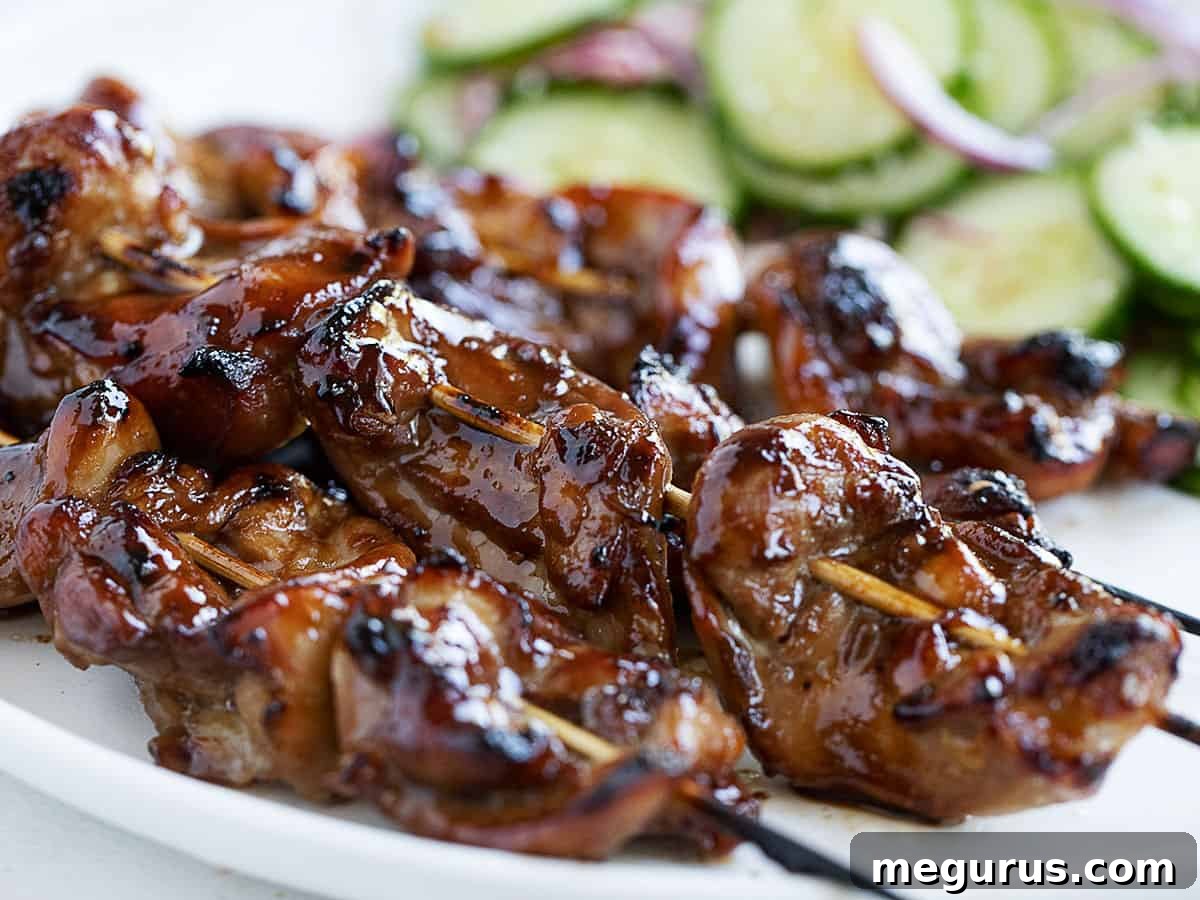
Master the Art of Yakitori at Home: Your Ultimate Guide to Japanese Chicken Skewers
Yakitori, a beloved staple of Japanese street food and izakaya dining, translates simply to “grilled bird.” While traditionally featuring various cuts of chicken meticulously skewered, our home-style version focuses on accessibility without sacrificing an ounce of authentic flavor. This recipe for Yakitori chicken skewers simplifies the process, making it achievable for any home cook, regardless of grilling experience. We utilize juicy boneless chicken thighs and an incredibly flavorful, easy-to-make sauce that skips the sake without losing its signature savory-sweet depth.
Whether you prefer cooking on a traditional barbecue grill or in the comfort of your oven, this recipe provides versatile methods to achieve perfectly cooked, tender chicken with that irresistible glaze. Our approach includes a slight deviation from traditional tight skewering, opting for a looser arrangement. This allows the chicken to cook more evenly and, perhaps more importantly, creates increased surface area for our delicious Yakitori sauce to adhere to, resulting in maximum flavor and beautiful caramelization on every bite. Paired with a vibrant, fresh cucumber salad, this meal offers a delightful balance of rich, umami chicken and crisp, tangy refreshment.
What is Yakitori? A Culinary Journey
At its core, Yakitori is a Japanese dish involving chicken pieces, typically bite-sized, skewered and grilled. It’s more than just grilled chicken; it’s an art form, deeply ingrained in Japanese culinary culture, often enjoyed with beer or sake at casual eateries called izakayas. While purists might use every part of the chicken, from breast to skin to liver, our recipe streamlines this experience for the home kitchen. We aim to capture the essence of Yakitori – that perfect harmony of sweet, salty, and umami flavors, along with a slightly charred exterior and tender interior – using readily available ingredients and simpler techniques. This “home” version acknowledges traditional methods but adapts them for practicality, ensuring a delicious and authentic-tasting experience accessible to everyone.
Why Boneless Chicken Thighs Are the Star of Our Yakitori
Choosing the right cut of chicken is paramount for achieving succulent Yakitori. Boneless, skinless chicken thighs are, without a doubt, the superior choice for this recipe, offering distinct advantages over other cuts. Their higher fat content ensures the chicken remains incredibly moist and tender throughout the cooking process. As the fat renders, it bastes the meat from within, infusing it with flavor and preventing it from drying out, even if cooked slightly longer than intended. This makes chicken thighs very forgiving for new cooks.
Furthermore, the natural richness of chicken thighs contributes significantly to the overall flavor profile of the Yakitori. This inherent depth works beautifully with the savory-sweet sauce, allowing for a more robust and satisfying taste. When grilled or baked, the fat also helps achieve that desirable slight crispness and aids in the caramelization of the sauce, creating a glossy, appetizing finish. While boneless chicken breasts can be used as an alternative, be aware that they are leaner and may result in a slightly drier texture. If opting for breast meat, consider brining it first and be extra vigilant with cooking times to maintain as much moisture as possible. For the most flavorful, tender, and effortlessly juicy Yakitori, chicken thighs are truly unmatched.
Essential Ingredients for Your Perfect Yakitori
Crafting truly memorable Yakitori at home begins with understanding the core ingredients that build its distinctive flavor profile. Our recipe focuses on creating a rich, balanced sauce and a vibrant accompanying salad using common pantry staples, proving that exceptional Japanese cuisine is well within your reach.
Crafting the Signature Yakitori Sauce (No Sake Needed!)
The heart of any great Yakitori lies in its glossy, savory-sweet sauce, known as tare. This delicious glaze is what transforms simple grilled chicken into an irresistible treat. Our recipe delivers an exceptional flavor experience without requiring sake, an ingredient not always on hand in every kitchen.
- Chicken: For unparalleled flavor and consistently moist results, boneless, skinless chicken thighs are the undisputed champion here. Their natural fat content keeps them juicy and tender, even when grilled or baked at higher temperatures. However, if boneless chicken breasts are what you have, they will certainly work. Just be mindful that they may cook faster and require closer attention to prevent drying out. Cut them into similar-sized pieces to ensure even cooking.
- Mirin: This “Sweet Japanese Rice Cooking Wine” is a cornerstone of Japanese cooking, contributing a unique sweetness and depth that’s hard to replicate. Mirin is thankfully much easier to find these days, available at most major grocery stores in the Asian foods aisle, online retailers like Amazon, or your local Asian market. While traditional Mirin contains alcohol, a non-alcoholic “Mirin Style” version is widely available and performs wonderfully in this recipe – it’s what I typically use. Look for brands like Kikkoman, often in a bottle with a bright yellow label. If Mirin isn’t an option, a good substitute is rice wine vinegar (also known as rice vinegar), whether seasoned or unseasoned. To balance the vinegar’s acidity, add an extra 1/2 tablespoon of white sugar for every 1/4 cup of rice wine vinegar used.
- Soy Sauce: A high-quality soy sauce forms the savory foundation of our Yakitori sauce, providing that essential umami depth. I prefer using a low-sodium variety to better control the overall saltiness of the dish, allowing the other flavors to shine without being overwhelmed. However, regular soy sauce works just as well; simply be aware that you might need to adjust other seasonings slightly or dilute it slightly if you find it too potent.
- Garlic and Ginger: While optional, adding a small amount of finely grated fresh garlic and ginger elevates the sauce with a wonderful aromatic complexity. These pungent ingredients introduce subtle spicy and earthy undertones that perfectly complement the sweet and savory notes, creating a more dynamic flavor profile. A fine grater or microplane makes quick work of preparing them, ensuring they integrate seamlessly into the sauce.
- White Granulated Sugar: Essential for achieving that perfect sweet-savory balance that defines Yakitori. The sugar not only adds a touch of sweetness but also plays a crucial role in the beautiful caramelization of the sauce on the chicken as it cooks, creating a glossy, appealing finish.
- No Sake? No Problem!: Many authentic Yakitori recipes call for sake, a Japanese rice wine, in their tare sauce. My recipe intentionally omits sake, not because it wouldn’t be delicious, but for the practical reason that it’s not a pantry staple for everyone and can sometimes be hard to source. Rest assured, this recipe proves that you can achieve incredibly flavorful and satisfying Yakitori without it, making it more accessible for home cooks without sacrificing quality or taste.
The Refreshing Asian-Inspired Cucumber Salad
This bright and tangy cucumber salad serves as the perfect counterpoint to the rich, savory Yakitori. It’s light, crisp, and incredibly easy to assemble, offering a refreshing palate cleanser with every bite.
- Cucumber: I highly recommend using long English cucumbers for this salad. They have a thin skin, minimal seeds, and a crisp texture that holds up exceptionally well in the dressing, resulting in beautifully uniform and refreshing slices. If English cucumbers are unavailable, Persian cucumbers or even regular slicing cucumbers (peeled and deseeded) can work.
- Red Onion: Red onion not only adds a vibrant splash of color to the salad but also a slightly milder, sweeter flavor compared to yellow onions. Its crisp texture and gentle bite are perfect for a fresh salad dressing. If red onion isn’t available, regular yellow cooking onion or a sweet onion can be used in a pinch, though the visual appeal and subtle flavor profile may vary.
- Rice Vinegar: Also known as rice wine vinegar, this ingredient provides the essential tang and acidity for the salad dressing. You can use either seasoned (which often contains sugar and salt) or unseasoned varieties. If opting for unseasoned rice vinegar, you might want to add a touch more brown or white sugar and a pinch more salt to the dressing to achieve the desired flavor balance.
- Brown Sugar (or White Sugar): A small amount of sugar is crucial to balance the acidity of the vinegar, creating a harmonious sweet-and-sour profile for the dressing. Brown sugar adds a slightly deeper, molasses note and richer color, but white granulated sugar works perfectly fine if that’s what you have on hand.
- Sesame Seeds and Sesame Oil: Toasted sesame seeds add a lovely nutty crunch and visual appeal to the salad, sprinkled generously on top. A dash of sesame oil (whether regular or toasted, depending on your preference for intensity) infuses the dressing with a distinctive aromatic depth that unmistakably ties the salad to its Asian inspiration.
- Red Pepper Flakes: For those who appreciate a little kick, 1/8 to 1/4 teaspoon of red pepper flakes adds a subtle warmth and gentle heat to the salad, enhancing its freshness and complementing the savory chicken. Adjust the amount to your personal spice preference.
- Salt and Freshly Ground Pepper: These basic seasonings are essential for enhancing all the other flavors and bringing the vinaigrette together. Season to taste, ensuring the dressing is well-balanced.
Recipe Tips for Success
Achieving perfectly cooked and flavorful Yakitori at home is simple with these helpful tips, whether you’re a grilling enthusiast or prefer the convenience of your oven.
- Mastering the Grill for Perfect Yakitori: Yakitori is traditionally cooked “low and slow” to prevent the sugars in the sauce from burning too quickly while ensuring the chicken cooks through to perfection. To adapt this on your barbecue grill, preheat your grill to a moderate temperature, ideally around 350-375°F (175-190°C). Place the skewers on the top rack, which offers indirect heat, and close the lid. This allows the chicken to cook thoroughly without scorching. For that signature char and glossy caramelization, transfer the skewers to the main grate over direct heat for just a minute or two per side at the very end. This two-stage cooking ensures juicy chicken with a beautifully glazed and slightly crispy exterior.
- Oven Baking Perfection: If outdoor grilling isn’t an option, your oven can yield equally delicious results. Preheat your oven to a slightly higher temperature, around 425°F (220°C), to mimic the grill’s intense heat for browning. Arrange your skewers on a baking sheet, ideally fitted with a wire rack. This setup allows for better air circulation around the chicken, promoting more even cooking and crispier edges. Remember that strategic basting is key to building layers of flavor during the baking process.
- The Power of the Yakitori Sauce: Make Ahead & Versatility: Our Yakitori sauce is incredibly versatile and convenient! You can easily double or triple the recipe and store any extra sauce in an airtight container in the refrigerator for up to a month, or even longer. This makes meal prep a breeze for future Yakitori nights or for quickly adding an Asian flair to other dishes. Beyond chicken, this delectable sauce pairs wonderfully with other proteins such as pork tenderloin, beef strips, or even salmon fillets, transforming them into flavorful skewers or glazed main courses.
- Serving Versatility: Beyond the Salad: While the refreshing Asian cucumber salad is a fantastic accompaniment for a lighter summer meal, don’t limit your options. Yakitori chicken is wonderfully versatile and can be paired with various sides. Serve it over a bed of fluffy white or brown rice to create a satisfying and complete rice bowl, perhaps adding steamed or stir-fried vegetables like broccoli, bell peppers, or snap peas for extra nutrients and crunch. It also pairs beautifully with a simple side of miso soup, a fresh green salad, or even nestled into soft bao buns for a unique twist.
- Soaking Bamboo Skewers: A Crucial Step: A small but highly important detail when using bamboo skewers! Always remember to soak them in cold water for at least 20-30 minutes before threading your chicken. This simple step saturates the wood with water, preventing the skewers from charring, burning, or even breaking during the cooking process, especially when grilling over direct heat. It ensures they remain intact and easy to handle, allowing your chicken to be the star.
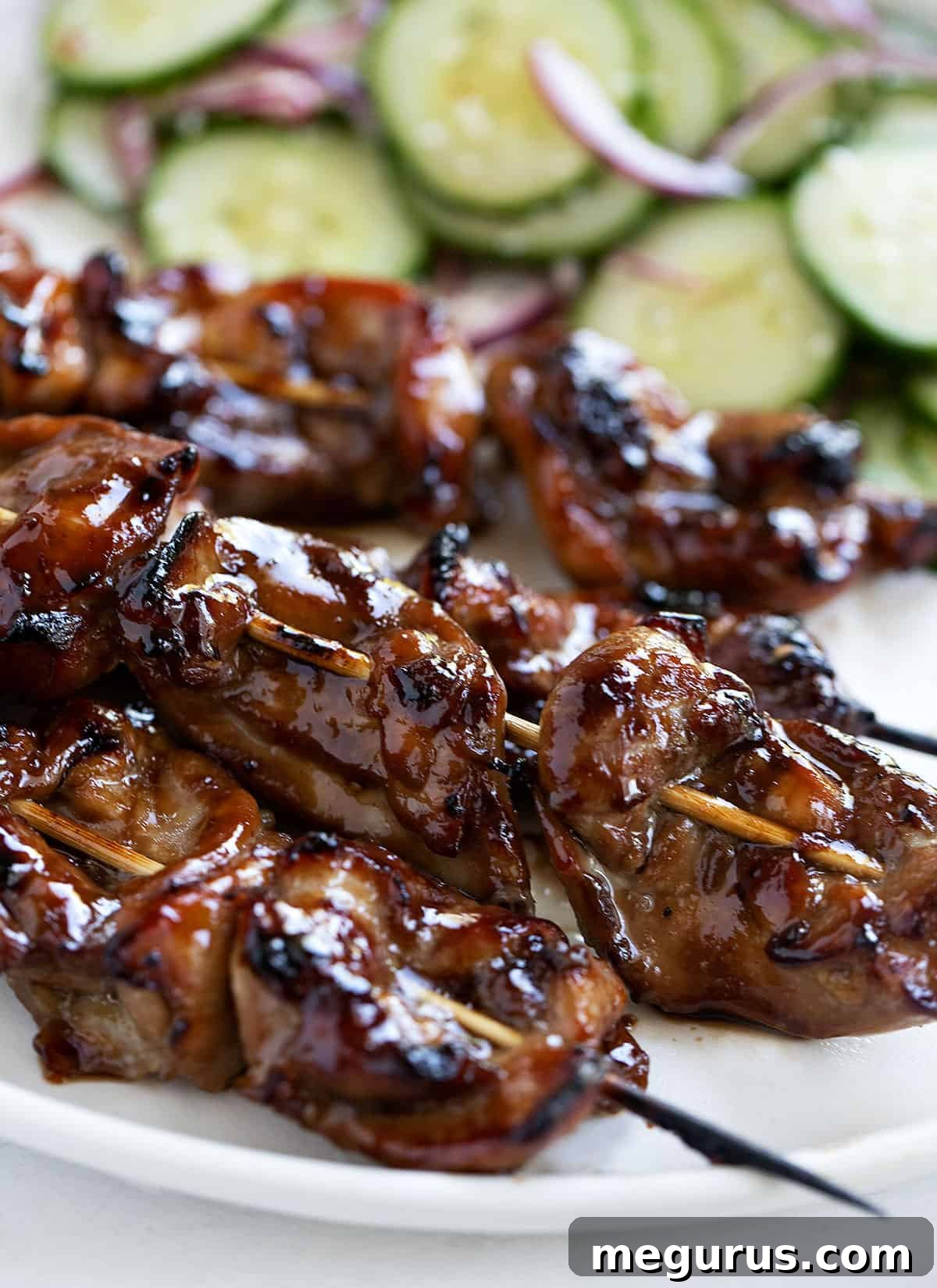
Yakitori Chicken Skewers with Asian Cucumber Salad Recipe
Prepare wonderfully delicious Yakitori chicken skewers using boneless chicken thighs and an easy, sake-free sauce, perfectly complemented by an optional Asian-inspired fresh cucumber salad. This recipe is designed for home cooks seeking authentic flavors with minimal fuss.
- Prep Time: 20 minutes
- Cook Time: 20 minutes
- Marinating Time: 30 minutes to 8 hours
- Total Time: Approximately 1 hour 10 minutes (plus marinating time)
- Yield: 3 servings (each serving consists of 2 skewers)
Ingredients
For the Yakitori Chicken Skewers:
- 6 boneless, skinless chicken thighs
- 1/4 cup low-sodium soy sauce
- 1/4 cup Mirin (*see Note 1 below for details and substitutions)
- 1 Tablespoon white granulated sugar
- 1 clove garlic, finely grated (optional, but recommended for depth)
- 1/4 – 1/2 teaspoon fresh ginger, finely grated (optional, for aromatic notes)
For the Asian Cucumber Salad (Optional):
- 1/2 English cucumber, thinly sliced
- 1/4 red onion, peeled and thinly sliced
- 1/4 cup unseasoned rice wine vinegar (if using seasoned, slightly reduce sugar and salt below)
- 1 teaspoon brown sugar (or white sugar)
- 1 teaspoon sesame seeds
- 1/2 teaspoon sesame oil (regular or toasted for more intense flavor)
- 1/8 – 1/4 teaspoon red pepper flakes (adjust to your spice preference)
- Salt and freshly ground pepper, to taste
Equipment
- 6 long bamboo skewers (remember to soak these in cold water for 20 minutes prior to use)
- Small saucepan
- Mixing bowls (various sizes for marinating and salad)
- Baking sheet (essential for oven method) or outdoor grill (for BBQ method)
- Fine grater or microplane (for garlic and ginger)
Instructions
Step 1: Prepare the Irresistible Yakitori Sauce
- In a small saucepan, combine the low-sodium soy sauce, Mirin, white granulated sugar, and the finely grated garlic and ginger (if you’re including them for extra flavor). Stir all these ingredients together thoroughly to ensure they are well mixed.
- Place the saucepan over medium heat and bring the mixture to a gentle boil. Once boiling, reduce the heat to medium-low (or even lower, if necessary) to maintain a steady, gentle simmer. Allow the sauce to simmer for approximately 10-15 minutes. During this time, the sauce will reduce by about half, developing a beautiful glossy sheen and thickening slightly to a perfect glazing consistency.
- Once the sauce has reached the desired consistency, carefully remove it from the heat and pour it into a clean bowl. It is absolutely crucial to let the sauce cool completely to room temperature before proceeding. This step is vital for food safety: never add raw chicken to warm or even slightly warm sauce, as it could promote bacterial growth and unevenly cook the chicken. Plan for about 30-45 minutes for the sauce to cool down thoroughly.
Step 2: Prepare and Marinate the Chicken for Maximum Flavor
- Take your boneless chicken thighs and unfold them. Cut each thigh into three uniform strips. You’ll often find a thinner, natural section that easily forms one strip; cut the remaining larger piece into two additional strips. Repeat this process for all chicken thighs and place the cut pieces into a clean, large mixing bowl.
- Once the Yakitori sauce from Step 1 has completely cooled, spoon out 2-3 tablespoons of this sauce into a separate small bowl. Cover this reserved portion and refrigerate it immediately. This small amount will be used later for the final, safe glaze after the chicken is cooked.
- Pour the remaining cooled sauce from the main batch over the prepared chicken strips in the large bowl. Stir thoroughly, ensuring every piece of chicken is generously coated with the sauce. Cover the bowl tightly and refrigerate the chicken to marinate for a minimum of 30 minutes, or for best results and deeper flavor, up to 8 hours. A marinating time of at least 4 hours is highly recommended if your schedule allows.
- While the chicken is marinating, remember to soak your bamboo skewers in cold water for at least 20 minutes. This essential step prevents them from burning or charring excessively during the cooking process, ensuring they remain sturdy and easy to handle.
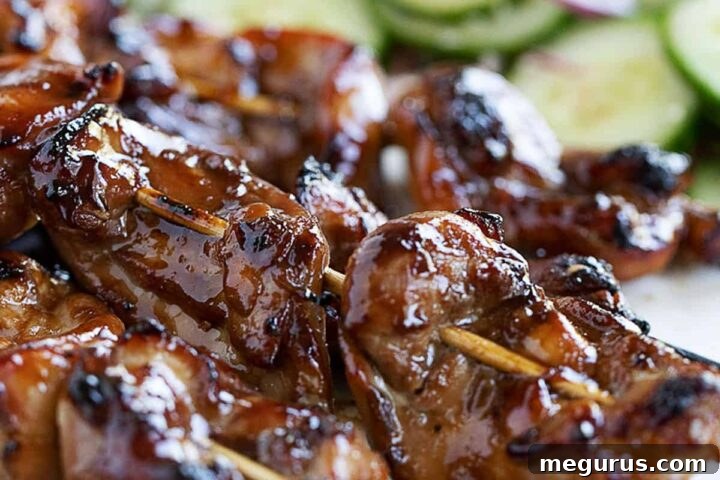
- When you are ready to cook, retrieve the marinated chicken. Thread three marinated chicken pieces onto each pre-soaked bamboo skewer. Thread the chicken lengthwise, ensuring both ends of each strip are caught, then gently spread the chicken out along the skewer to prevent overcrowding and promote even cooking. Make sure to RESERVE any remaining marinade from the marinating bowl; this will be used for basting during the initial cooking phase.
Step 3: Cook Your Yakitori Skewers to Perfection
Oven Method for Delicious Indoor Yakitori:
- Preheat your oven to 425°F (220°C). Prepare a baking sheet, ideally lined with parchment paper or foil for easy cleanup, and place a wire rack on top.
- Arrange the threaded chicken skewers on the wire rack over the baking sheet. Place them in the preheated oven and cook for approximately 18-20 minutes. After the first 10 minutes of cooking, carefully remove the tray from the oven and baste the skewers generously with the reserved marinade from the marinating bowl (the one that was in contact with raw chicken, which will be cooked off). Return to the oven to finish cooking.
BBQ (Grill) Method for Classic Outdoor Char:
- Preheat your barbecue grill to a medium-high heat, aiming for approximately 375-400°F (190-200°C).
- Place the skewers on the top rack of the grill, utilizing indirect heat, and close the BBQ lid. Allow them to cook for 8-10 minutes. At this point, open the lid and baste the skewers well with the reserved marinade from the marinating bowl. Close the lid and continue cooking for a few more minutes.
- To achieve that beautiful, characteristic char and irresistible caramelization, move the skewers directly onto the main grill grate, over the flame, for just 1-2 minutes per side. Watch them closely to prevent burning, aiming for a lovely golden-brown finish.
- Once the chicken skewers are thoroughly cooked and removed from the oven or grill, take the small bowl of sauce that you refrigerated separately at the beginning (this is the sauce that was never in contact with raw chicken). Brush this fresh, reserved sauce liberally over the hot chicken skewers. The heat from the chicken will warm and slightly loosen the sauce, transforming it into a glossy, flavorful final glaze that truly makes the Yakitori shine.
Step 4: Prepare the Refreshing Asian Cucumber Salad
- While the chicken is cooking or resting, thinly slice the English cucumber and the peeled red onion. Place these crisp vegetables into a medium-sized mixing bowl.
- In a separate small bowl, whisk together the unseasoned rice wine vinegar, brown sugar (or white sugar), sesame seeds, sesame oil, red pepper flakes, salt, and freshly ground pepper. Continue whisking until the sugar has completely dissolved and all the ingredients are well combined to form a flavorful vinaigrette.
- Pour the prepared vinaigrette over the sliced cucumber and red onion mixture. Toss gently to ensure all the vegetables are evenly coated with the dressing.
- Allow the salad to stand at room temperature for approximately 15 minutes before serving. This brief resting period allows the flavors to meld beautifully and the vegetables to slightly soften, enhancing the overall taste and texture.
Notes for the Home Cook
- About Mirin: The Sweetheart of Japanese Cuisine: Mirin, or Sweet Japanese Rice Wine, is a fundamental and indispensable ingredient in Japanese cooking, known for imparting a distinct sweetness, subtle tang, and a beautiful gloss to dishes. It’s widely available these days, easily found online (check major retailers like Amazon) or at most Asian grocery stores in the condiments aisle. While traditional Mirin is an alcoholic rice wine, a “Mirin Style” non-alcoholic version is commonly available and perfectly suitable for this recipe; it’s what I typically use for convenience. Look for reputable brands like Kikkoman, often identifiable by a bright yellow label, usually located near the soy sauce. If you find yourself without Mirin, the best substitute is typically rice wine vinegar (also called rice vinegar), whether seasoned or unseasoned. When substituting, add an additional 1/2 tablespoon of white sugar for every 1/4 cup of rice wine vinegar used to balance its acidity and replicate Mirin’s sweetness.
- Nutritional Information Overview: The nutritional data provided below is calculated for the Yakitori chicken skewers only. If you choose to include the optional Asian cucumber salad with your meal, it would add approximately 50 additional calories per serving. Each serving size for this recipe is based on two chicken skewers, offering a balanced and satisfying portion.
Important Food Safety Reminders for Your Kitchen:
- Cooling the Sauce is Crucial: Always ensure your homemade Yakitori sauce is completely cooled to room temperature before you add any raw chicken for marinating. Introducing raw chicken to warm or even slightly warm sauce is a significant food safety risk; it can create an environment conducive to bacterial growth and may also cause the chicken to begin cooking unevenly, affecting texture and safety.
- Safe Basting Practices: When basting the chicken skewers during the initial stages of grilling or oven baking, you may use the marinade that the raw chicken was in, as it will be cooked off thoroughly at high temperatures. However, it is paramount that you *never* use this raw chicken marinade to baste the skewers after they are fully cooked and removed from the heat. For the final, delicious glaze, always use the separate, reserved portion of sauce that was set aside at the beginning and never came into contact with raw chicken. This prevents any risk of cross-contamination.
Recipe Details
- Cuisine: Asian, Japanese
- Course: Main Course
- Author: Jennifer Maloney
Nutritional Facts (Approximate, per 2 skewers)
- Calories: 573kcal
- Carbohydrates: 14g
- Protein: 98g
- Fat: 12g
- Saturated Fat: 3g
- Polyunsaturated Fat: 2g
- Monounsaturated Fat: 3g
- Trans Fat: 1g
- Cholesterol: 289mg
- Sodium: 1755mg
- Potassium: 1720mg
- Fiber: 1g
- Sugar: 9g
- Vitamin A: 136IU
- Vitamin C: 6mg
- Calcium: 28mg
- Iron: 2mg
Craving More Chicken Skewer Recipes? Explore Global Flavors!
If you’ve loved mastering these delightful Yakitori chicken skewers, you’re in for a treat with our collection of other mouth-watering chicken skewer recipes! From the zesty flavors of the Mediterranean to the rich spices of India, these recipes offer exciting new ways to enjoy chicken on a stick. Perfect for grilling on a warm evening, baking for a simple weeknight meal, or pan-frying for a quick appetizer, each recipe brings its unique global flavors to your table, promising a fun and delicious culinary adventure. Expand your repertoire and discover new favorites with these fantastic options!