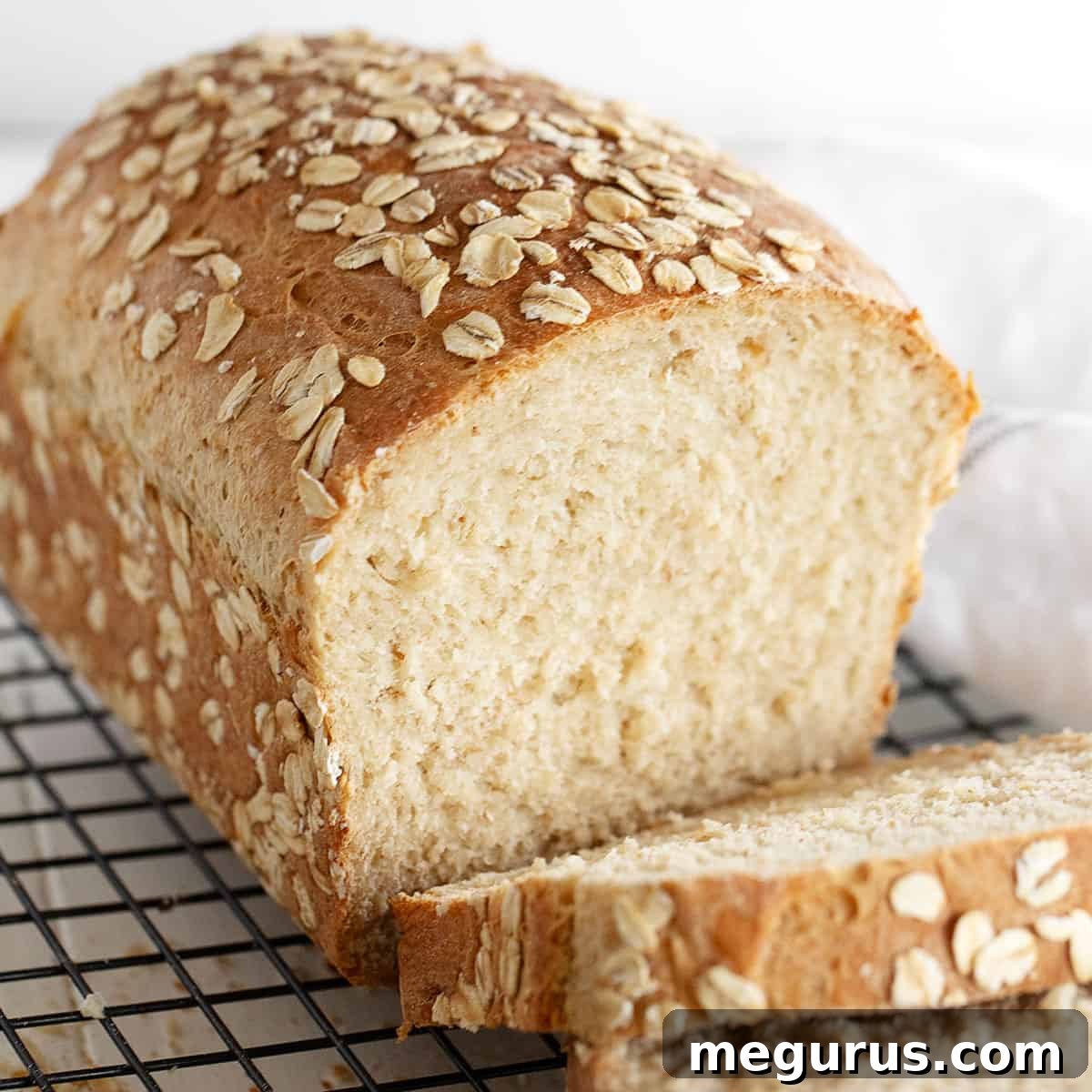
Welcome to the delightful world of homemade bread baking! If you’re searching for a loaf that perfectly balances wholesome goodness with irresistible tenderness, look no further than this fantastic Honey Oat Bread. Infused with the rich flavor of rolled oats and the natural sweetness of honey, this bread also benefits from a touch of whole wheat flour, creating a hearty yet remarkably soft crumb. It’s the kind of bread that stays wonderfully fresh for days, making it an ideal candidate for your everyday sandwiches or a comforting companion for your morning toast.
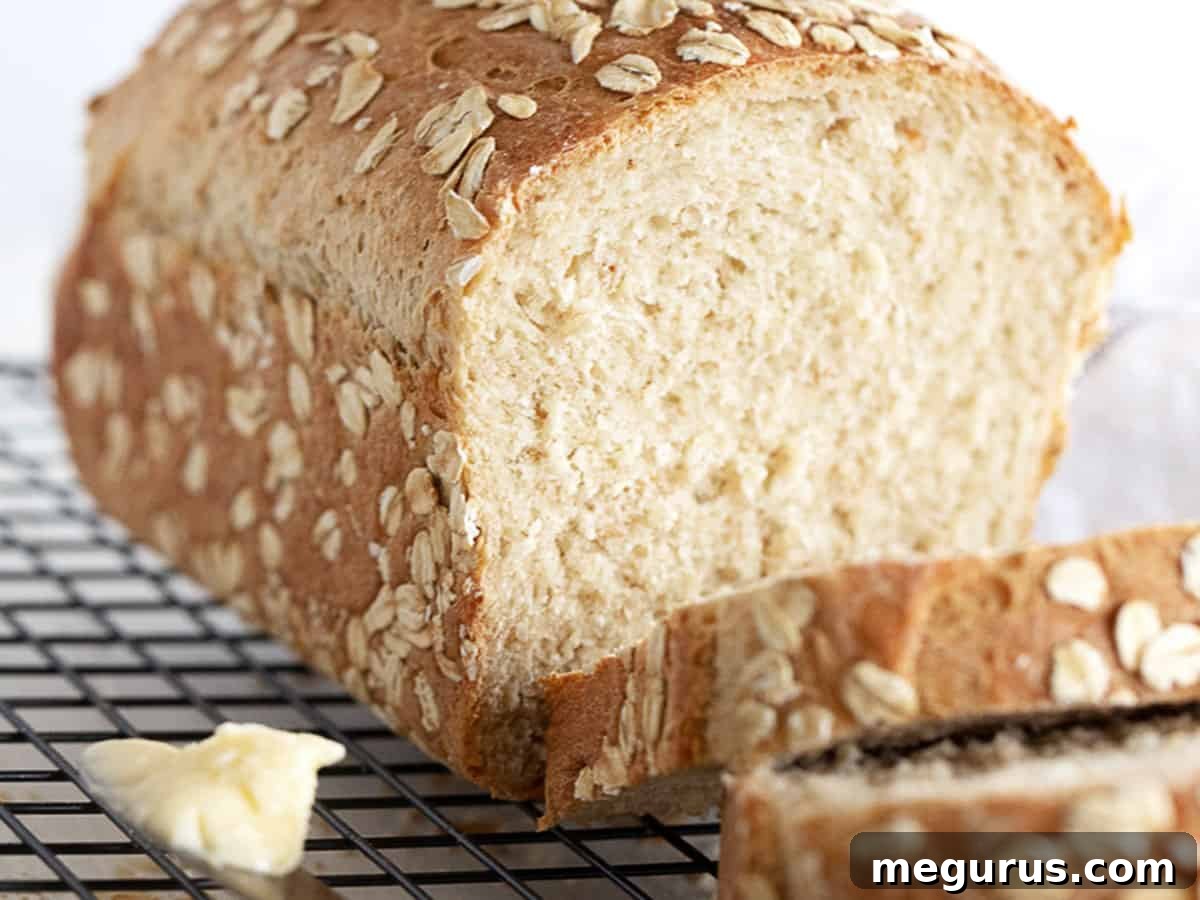
There’s a special satisfaction that comes with baking your own bread, and this Honey Oat Bread truly delivers. Much like our popular Seeded Multigrain Sandwich Bread, it strikes a harmonious balance between robust whole grains and a wonderfully soft texture. The generous addition of rolled oats and a subtle hint of whole wheat flour contribute to its incredible flavor and nutritional value, without compromising on the light and airy crumb everyone loves.
What makes this loaf truly stand out is its deep, comforting flavor profile, a direct result of the oats and honey mingling together. The tender, moist crumb is a sheer pleasure, while its rustic, oat-rolled appearance adds to its homemade charm. This isn’t just a pretty loaf; it’s designed to keep beautifully, slice effortlessly, and elevate any sandwich to a new level of deliciousness. Get ready to impress your family and friends with this simple yet sophisticated bread.
Why You’ll Love Baking This Honey Oat Bread
Baking bread at home is a rewarding experience, and this Honey Oat Bread recipe makes it especially enjoyable. Here’s why this loaf is destined to become a staple in your kitchen:
- Unmatched Flavor and Aroma: The combination of sweet honey and earthy oats creates a distinct, comforting flavor that fills your home with an inviting aroma as it bakes. It’s a taste that speaks of warmth and homemade goodness.
- Superior Texture: With its soft, moist crumb and a slight chewiness from the oats, this bread offers a delightful mouthfeel. It’s hearty enough to hold up to your favorite fillings but tender enough to melt in your mouth.
- Wholesome Goodness: Rolled oats and whole wheat flour add fiber and essential nutrients, making this a healthier alternative to many store-bought options. You can feel good about serving this bread to your family.
- Incredibly Versatile: From classic sandwiches and toast with jam to serving alongside a hearty soup or stew, this bread adapts beautifully to any meal or snack. It’s also excellent for breakfast with a smear of butter or cream cheese.
- Keeps Fresh for Days: Thanks to the honey and oats, this loaf retains its moisture wonderfully, staying soft and delicious for several days when properly stored. This means less waste and more enjoyment!
- Beginner-Friendly: While it produces impressive results, the process for making this honey oat bread is straightforward and forgiving, making it an excellent recipe for those new to yeast bread baking.
Essential Ingredients for Your Honey Oat Loaf
Crafting the perfect Honey Oat Bread starts with understanding the role each ingredient plays. Here’s a closer look at what you’ll need and some helpful substitution notes:
- Rolled Oats: We recommend using large-flake, old-fashioned rolled oats. These provide the best texture and visual appeal, giving the bread its characteristic rustic charm. Quick oats can also be used in a pinch, though they will result in a slightly different texture and less visible oat flecks in the finished loaf. Avoid instant oats as they absorb liquid too quickly and can alter the dough consistency.
- Whole Wheat Flour: This ingredient adds a lovely depth of flavor and contributes to the bread’s wholesome profile. Both regular whole wheat flour and white whole wheat flour work well here. White whole wheat flour is made from a different wheat berry and has a lighter color and milder flavor, which might be preferred if you’re looking for a less pronounced “whole wheat” taste. If you don’t have whole wheat flour, you can substitute it with an equal amount of all-purpose flour, but be aware that this will change the flavor and nutritional content.
- All-Purpose Flour: Unbleached all-purpose flour is generally recommended for its consistent quality and flavor. However, regular bleached all-purpose flour will also yield excellent results. This flour provides the primary structure of the bread and ensures a soft, tender crumb. The recipe calls for a range (2 1/2 – 3 cups) because flour absorption can vary based on humidity and how packed your flour is. Always add the last portion gradually until the dough reaches the right consistency.
- Honey: This is a star ingredient, providing natural sweetness, moisture, and a distinct flavor. Any mild-flavored runny honey will work beautifully. If you don’t have honey, you can substitute an equal amount of maple syrup for a different, but equally delicious, flavor, or use brown sugar, which will also add a lovely molasses note. Honey also aids in browning and helps keep the bread fresh longer.
- Water: Lukewarm water is crucial for activating the yeast. The ideal temperature is around 105-115°F (40-46°C). Water that is too hot will kill the yeast, while water that is too cold will inhibit its activation. Boiling water is initially used to soak the oats, butter, and salt, allowing the oats to soften and the mixture to cool before the yeast is added.
- Active Dry or Instant Yeast: Both types of yeast will work for this recipe. If using active dry yeast, you’ll need to “proof” it first by dissolving it in lukewarm water with a pinch of sugar (if not already included in the recipe water/honey) until it becomes foamy. Instant yeast can typically be mixed directly with the dry ingredients, but for consistency and to ensure activity, we’ll proof it here as well.
- Butter (or Vegetable Oil): Butter adds richness and tenderness to the bread. If you prefer a dairy-free option, an equal amount of vegetable oil can be used instead.
- Fine Salt: Salt is vital for flavor balance and also plays a role in regulating yeast activity and strengthening the gluten structure. Use fine salt rather than coarse salt for even distribution.
How to Make Honey Oat Bread: A Step-by-Step Guide
Making homemade bread can seem daunting, but this recipe breaks it down into easy, manageable steps. Follow along to create a loaf of Honey Oat Bread that will be the envy of all!
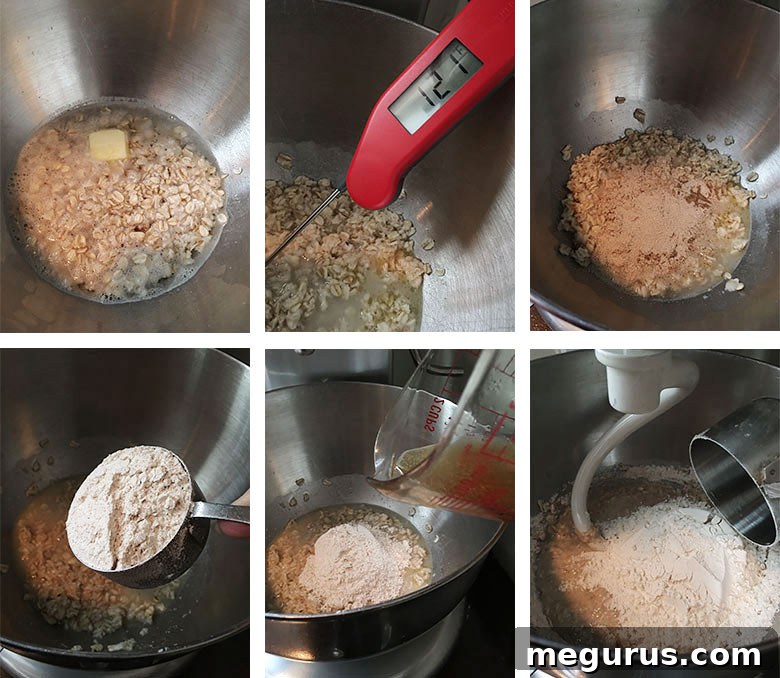
- Step 1: Prepare the Oat Mixture. In a large mixing bowl (or the bowl of your stand mixer), combine the rolled oats, salt, and butter. Pour the boiling water over this mixture and stir thoroughly. Let this mixture stand for 20-25 minutes. This step is crucial for softening the oats and allowing the mixture to cool down to a safe temperature for the yeast.
- Step 2: Check Temperature and Activate Yeast. Before proceeding, ensure the oat mixture has cooled to lukewarm, ideally between 105°F and 110°F (40-43°C). If it’s too hot, it will kill the yeast, and your bread won’t rise. If you don’t have a thermometer, simply ensure it’s just lukewarm to the touch. In a separate small bowl, combine the lukewarm water (105°F) and yeast. Stir gently and let it sit for about 5 minutes until it becomes foamy, indicating the yeast is active.
- Step 3: Combine Wet and Dry Ingredients. Once the oat mixture is sufficiently cooled and the yeast is proofed, add the honey, the proofed yeast mixture, whole wheat flour, and the first cup of all-purpose flour to the bowl. If using a stand mixer, attach the dough hook.
- Step 4: Mix and Knead the Dough. Begin mixing the ingredients on low speed. Gradually add the remaining all-purpose flour, about half a cup at a time, allowing each addition to fully incorporate before adding more. Continue adding flour until you achieve a moist, soft dough that wraps around the dough hook and starts to clean the sides of the bowl. The bottom might still be slightly sticky, which is perfectly fine. Knead for 7-10 minutes in the stand mixer or turn the dough out onto a lightly floured surface and knead by hand until smooth and elastic. Add only minimal extra flour as needed to prevent sticking.
- Step 5: First Rise (Bulk Fermentation). Form the kneaded dough into a smooth ball. Lightly grease a large bowl with oil or cooking spray, place the dough ball in it, and turn it once to coat. Cover the bowl tightly with plastic wrap or a clean kitchen towel. Let the dough rise in a warm, draft-free place until it has doubled in size, typically about 1 hour. This allows the flavors to develop and the gluten to relax.
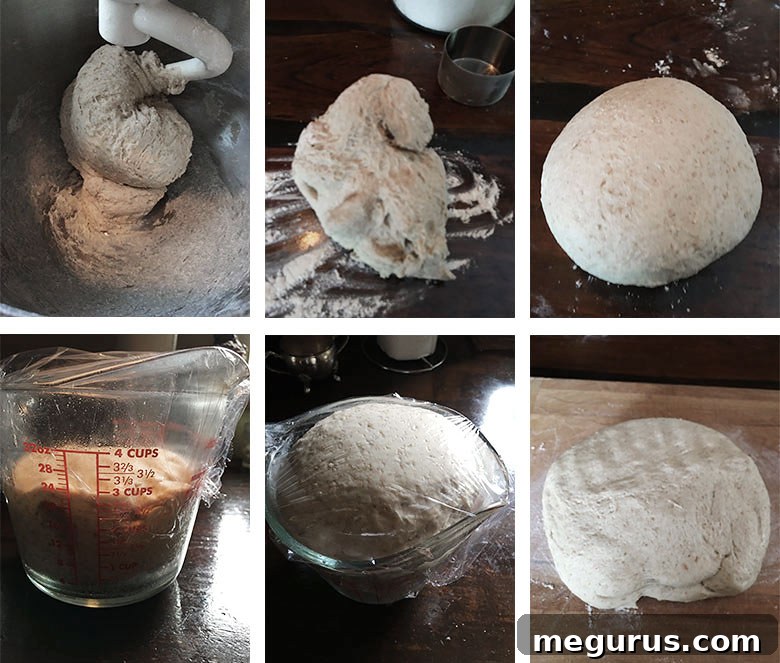
- Step 6: Prepare Loaf Pan and Deflate Dough. While the dough is rising, grease an 8×4-inch loaf pan and set it aside. Once the dough has doubled, gently remove it from the bowl onto a lightly floured surface. Using the palms of your hands, gently deflate the dough, pressing out the air.
- Step 7: Shape the Loaf. Form the dough into a rough oval, approximately the length of your loaf pan. To create a well-structured loaf, flip the dough over. Pinch in from the long sides towards the center, creating a seam down the middle. Pinch the ends of the loaf together as well to seal them. This method creates tension on the surface of the dough, which helps it rise evenly and prevents large air pockets. Flip the dough back over, seam-side down.
- Step 8: Coat with Oats. Scatter a generous amount of rolled oats onto your clean work surface. Lightly brush the top and sides of your shaped dough with water (just a light coating, not saturated). Roll the dough over the scattered oats, ensuring the top, sides, and bottom of the loaf are thoroughly coated. This creates a beautiful, rustic crust.
- Step 9: Second Rise (Proofing). Carefully place the oat-coated loaf into your prepared 8×4-inch loaf pan. Spray a piece of plastic wrap with cooking spray and loosely cover the top of the pan. Let the loaf rise again in a warm, draft-free place until it has doubled in size, which usually takes about 45-60 minutes. This second rise, or proofing, is essential for a light and airy texture.
- Step 10: Preheat Oven. About 15-20 minutes before the second rise is complete, preheat your oven to 350°F (175°C) (using a regular bake setting, not fan-assisted).
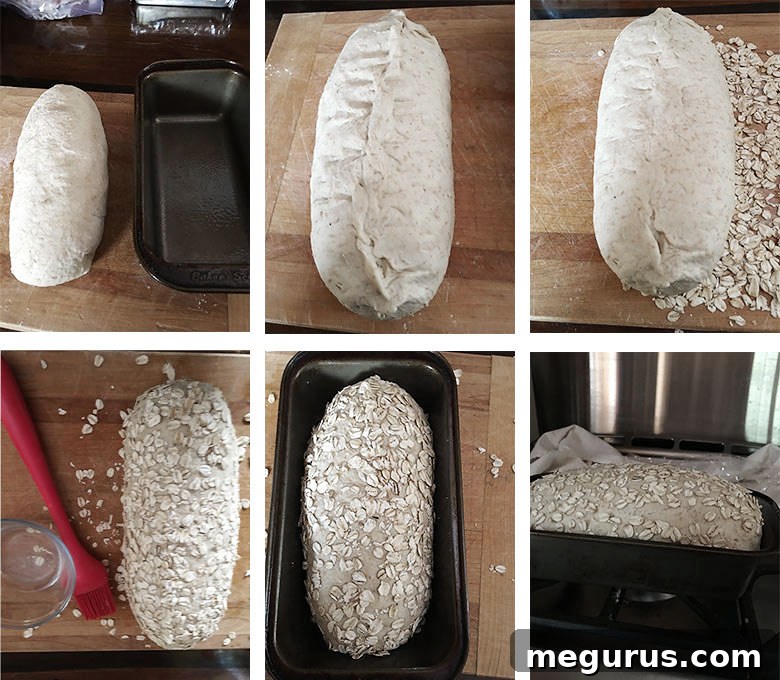
- Step 11: Bake to Perfection. Once the loaf has doubled in size, carefully remove the plastic wrap. Place the loaf pan in the preheated oven and bake for about 45 minutes. The baking time may vary slightly depending on your oven.
- Step 12: Check for Doneness. The most accurate way to check for doneness is to use an instant-read thermometer. The bread is fully baked when its internal temperature reaches at least 200°F (93°C). Insert the thermometer into the dead center of the loaf for the most accurate reading. If you don’t have a thermometer, you can tap the bottom of the loaf – it should sound hollow. If in doubt, err on the side of baking a few extra minutes, as under-baked bread can be gummy in the middle.
- Step 13: Prevent Over-Browning (if necessary). While it’s unlikely this loaf will over-brown due to its longer bake time, it’s always good to check it after about 35-40 minutes. If the crust appears to be browning too quickly, loosely tent a sheet of aluminum foil over the top for the remainder of the baking time.
- Step 14: Cool Completely. As soon as the bread is done, remove it from the oven and immediately take it out of the loaf pan. Transfer it to a wire cooling rack to cool completely. This step is crucial, as slicing warm bread can result in a gummy texture. Cooling allows the internal structure to set and steam to escape, resulting in the perfect crumb.
Expert Tips for Honey Oat Bread Baking Success
Achieving a consistently delicious loaf of Honey Oat Bread is easy with these expert tips:
- Master Yeast Bread Basics: If you’re new to the wonderful world of bread making, taking a moment to understand the fundamentals can make all the difference. Our Getting Started With Yeast Bread Baking resource page is an excellent guide to demystify the process and build your confidence.
- The Crucial Role of Temperature: Yeast is a living organism, and its activity is highly dependent on temperature. Ensure your water for activating yeast is lukewarm (105-115°F/40-46°C) – too hot will kill it, too cold won’t activate it. Similarly, make sure your oat mixture has cooled sufficiently before adding the activated yeast.
- Don’t Rush the Bake: This Honey Oat Bread, with its lovely moisture from the soaked oats, requires a solid 45 minutes in the oven. This is a bit longer than many standard bread loaves. Patience is key to ensure it’s baked through and not gummy in the center.
- Invest in a Thermometer: An instant-read thermometer is your best friend in bread baking. It takes the guesswork out of determining doneness. Aim for an internal temperature of at least 200°F (93°C) when inserted into the center of the loaf. If you don’t have one, it’s safer to leave the bread in the oven for a few extra minutes rather than risk an under-baked middle.
- Proper Kneading is Key: Whether by hand or mixer, ensure your dough is kneaded until it’s smooth and elastic. This develops the gluten, which is essential for the bread’s structure and texture. A well-kneaded dough will pass the “windowpane test” – you should be able to stretch a small piece thin enough to see light through it without tearing.
- The Art of the Second Rise (Proofing): Don’t underestimate the importance of the second rise. This final proof allows the dough to develop a lighter, airier texture. Look for the dough to be visibly doubled and slightly springy to the touch. Over-proofing can lead to a collapsed loaf, while under-proofing results in a dense crumb.
Customizing Your Honey Oat Loaf: Delicious Variations
While this Honey Oat Bread recipe is perfect as written, it also serves as a fantastic base for creativity. Feel free to experiment with these delicious variations:
- Nutty Additions: For added crunch and flavor, fold in 1/2 cup of chopped walnuts or pecans during the final stages of kneading. They pair wonderfully with the sweetness of honey and the earthiness of oats.
- Fruity Twists: Sweet dried fruits like raisins, dried cranberries, or chopped dried apricots can be incorporated into the dough. Add about 1/2 to 3/4 cup during the last few minutes of kneading for a touch of fruity sweetness.
- Spiced Up: A hint of spice can elevate your loaf. Add 1 teaspoon of ground cinnamon or 1/2 teaspoon of ground nutmeg to the dry ingredients for a warm, comforting flavor.
- Seed Sensation: For extra texture and nutrition, mix in a few tablespoons of sunflower seeds, pumpkin seeds, or flax seeds with the dry ingredients. You can also sprinkle them on top before baking for a decorative touch.
- Different Flours: While whole wheat flour is recommended, you can experiment with other flours. For a richer, darker loaf, try substituting a small amount of rye flour for some of the whole wheat flour.
- Savory Options: If you prefer a less sweet bread, slightly reduce the honey and consider adding savory elements like dried herbs (rosemary or thyme) or a small amount of grated cheese.
Storing Your Homemade Honey Oat Bread
One of the many joys of homemade bread is its freshness, and this Honey Oat Bread is designed to stay delightful for days. Here’s how to store it best:
This bread will keep beautifully wrapped at room temperature on your counter for several days. To maintain its moisture and prevent it from drying out, ensure it’s tightly wrapped in plastic wrap, aluminum foil, or stored in an airtight bread box or container. For optimal freshness and flavor, we recommend consuming it within 3-4 days.
For longer storage, Honey Oat Bread freezes exceptionally well. Once completely cooled, wrap the entire loaf or individual slices tightly in plastic wrap, then place it in a freezer-safe bag. It can be frozen for up to 3 months. To enjoy, simply thaw at room temperature. For slices, you can pop them directly into a toaster for a quick, fresh-tasting snack.
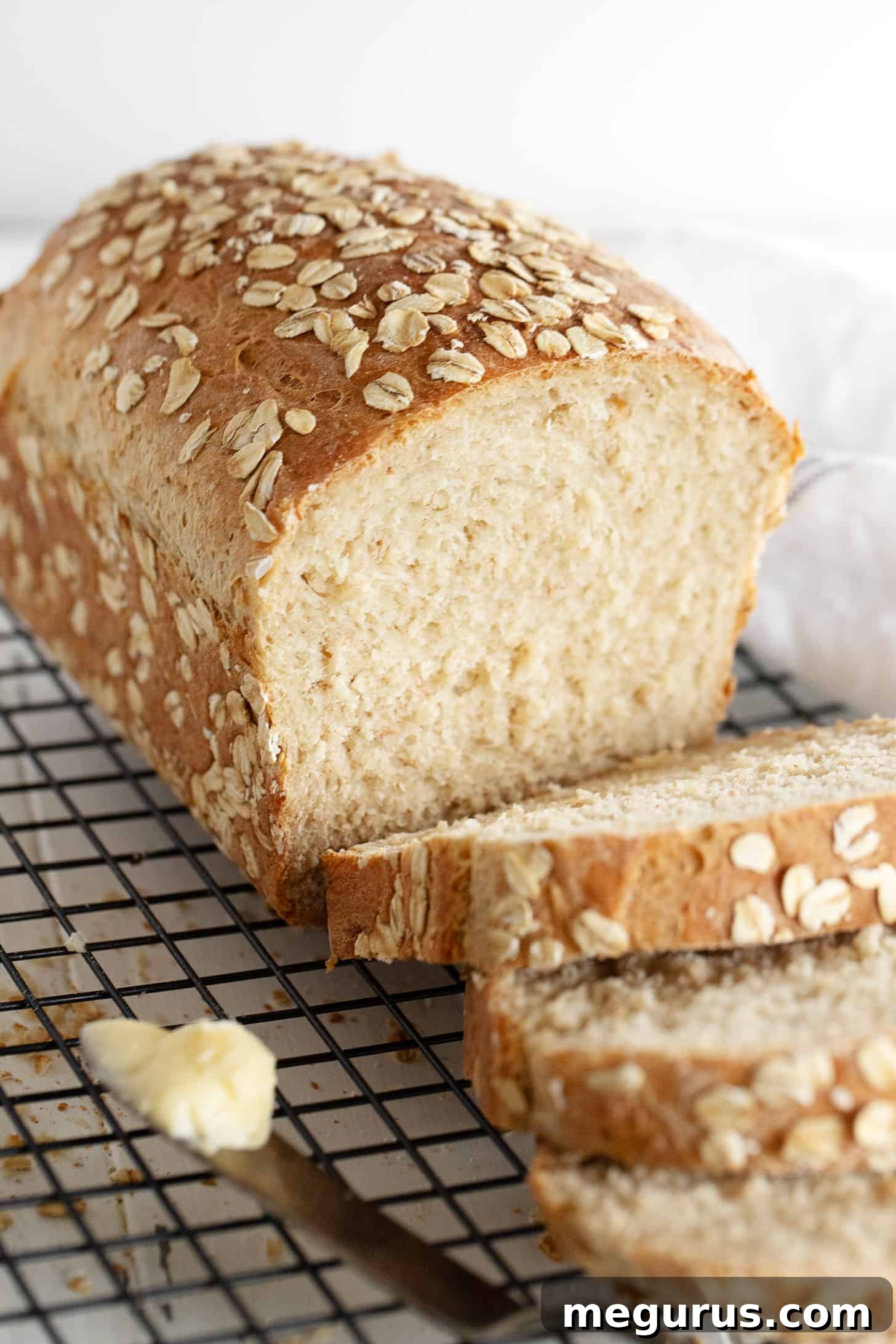
Honey Oat Bread Recipe
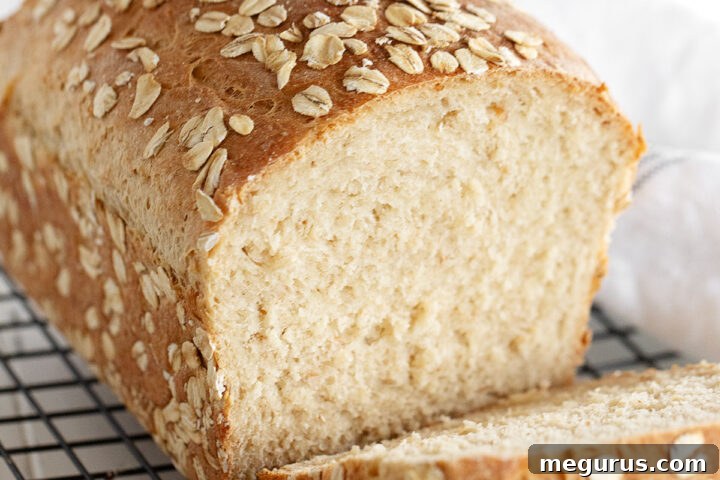
Get the Recipe: Honey Oat Bread
A lovely moist bread, flavored with rolled oats and honey, with a bit of whole wheat flour as well. Makes great sandwich bread!
Overall Rating: 4.89 stars from 35 ratings
For printing and sharing options, please refer to the print/pin buttons found on the original recipe page.
Prep Time: 20 mins
Cook Time: 45 mins
Rising Time: 1 hr 45 mins
Total Time: 2 hrs 50 mins
Yield: 12 servings
Serving adjustments can be found on the original recipe page.
Ingredients
- 1 1/4 cups (285 ml) boiling water
- 3/4 cup large-flake, old-fashioned rolled oats, plus more for coating
- 1/2 teaspoon fine salt
- 2 Tablespoons (28 g) butter, or vegetable oil
- 1/3 cup (75 ml) honey, any mild-flavoured runny honey or substitute an equal amount of maple syrup or brown sugar
- 1/4 cup (55 ml) lukewarm water, about 105F.
- 2 1/4 teaspoons active dry or instant yeast
- 1/2 cup (60 g) whole wheat flour (or more all purpose flour)
- 2 1/2 – 3 cups (300-360 g) all purpose flour, approximately
Instructions
-
Boil some water and measure out 1 1/4 cups. Add to a large bowl or the bowl of a stand mixer. Add the rolled oats, salt and butter and stir to combine. Let stand 20 minutes, to soak and cool. *Be sure your mixture has cooled enough before you add your yeast to the bowl. If it’s too hot, you will kill your yeast. Use a thermometer to test the temperature. It should be around 105F to 110F before you add the yeast. If you don’t have a thermometer, let cool 5 minutes more and make sure it’s just lukewarm.
-
Add the yeast to the lukewarm water. Stir and let stand 5 minutes.
-
Once the oat mixture is cooled enough, add the honey, proofed yeast mixture, whole wheat flour and the 1st cup of all purpose flour to the bowl. Mix to combine with the kneading hook. With the mixer running, begin adding the 2nd cup of flour in small increments, letting it mix in before adding more. Continue adding this cup and additional flour, if needed, until you have a quite moist dough, but one that wraps around the hook and cleans the bowl in spots. It may still have a sticky bit at the bottom of the bowl. That is ok. Remove the dough to a floured surface and knead a few minutes, adding a bit more flour, only as needed, to prevent it from sticking to your hands or the work surface. Form into a ball. Place into a greased bowl. Cover with plastic wrap and let rise until doubled, about 1 hour.
-
Grease an 8×4-inch loaf pan and set aside.
-
Remove dough to a lightly floured surface and gently deflate it by pressing down on it with your palms. Form the dough into a rough oval, about as long as your loaf pan (set your loaf pan next to your work area to judge the length). Flip the dough over and pinch in from the sides to the centre of the dough, pinching a seam down the middle. Pinch in the ends, as well. Flip it back over, right side up. Scatter some rolled oats on your work surface. Lightly brush your dough with water (not too much – just a light coating), then roll it over the oats, rolling to cover top, sides and bottom. Place dough into your prepared loaf pan. Spray a piece of plastic wrap with cooking spray and cover the top of the pan tightly. Allow to rise until doubled again, about 45-60 minutes.
-
Preheat oven to 350F. (regular bake setting/not fan assisted)
-
When dough is ready, remove plastic wrap and bake in preheated oven for about 45 minutes, or until the loaf tests at least 200F with an instant read thermometer. If you don’t have a thermometer, insert a tester in the side and into the centre. It should come out clean and dry. If in doubt, leave it in the oven a few extra minutes, as you probably won’t hurt it. *It is unlikely that your loaf will over-brown, but check it after about 35 minutes and if it looks like it may over-brown, lay a sheet of aluminum foil loosely over-top for the last part of baking.
-
Remove loaf from oven and immediately remove from pan to a cooling rack to cool completely before slicing.
Notes
This bread keeps well for several days stored at room temperature, well wrapped. You can also freeze this bread up to 3 months, though it will best if used within the first month.
Be sure to read the Tips section above the recipe card for more tips for making this bread.
Cuisine: American, Canadian
Course: Bread
Author: Jennifer Maloney
Nutrition Facts (per serving)
- Serving: 1 serving
- Calories: 179 kcal
- Carbohydrates: 35 g
- Protein: 4 g
- Fat: 3 g
- Saturated Fat: 1 g
- Cholesterol: 5 mg
- Sodium: 116 mg
- Potassium: 76 mg
- Fiber: 2 g
- Sugar: 8 g
- Vitamin A: 59 IU
- Calcium: 8 mg
- Iron: 2 mg
If you enjoyed this recipe, please consider leaving a star rating and comment on the original source page. Your feedback helps others discover and love this recipe!