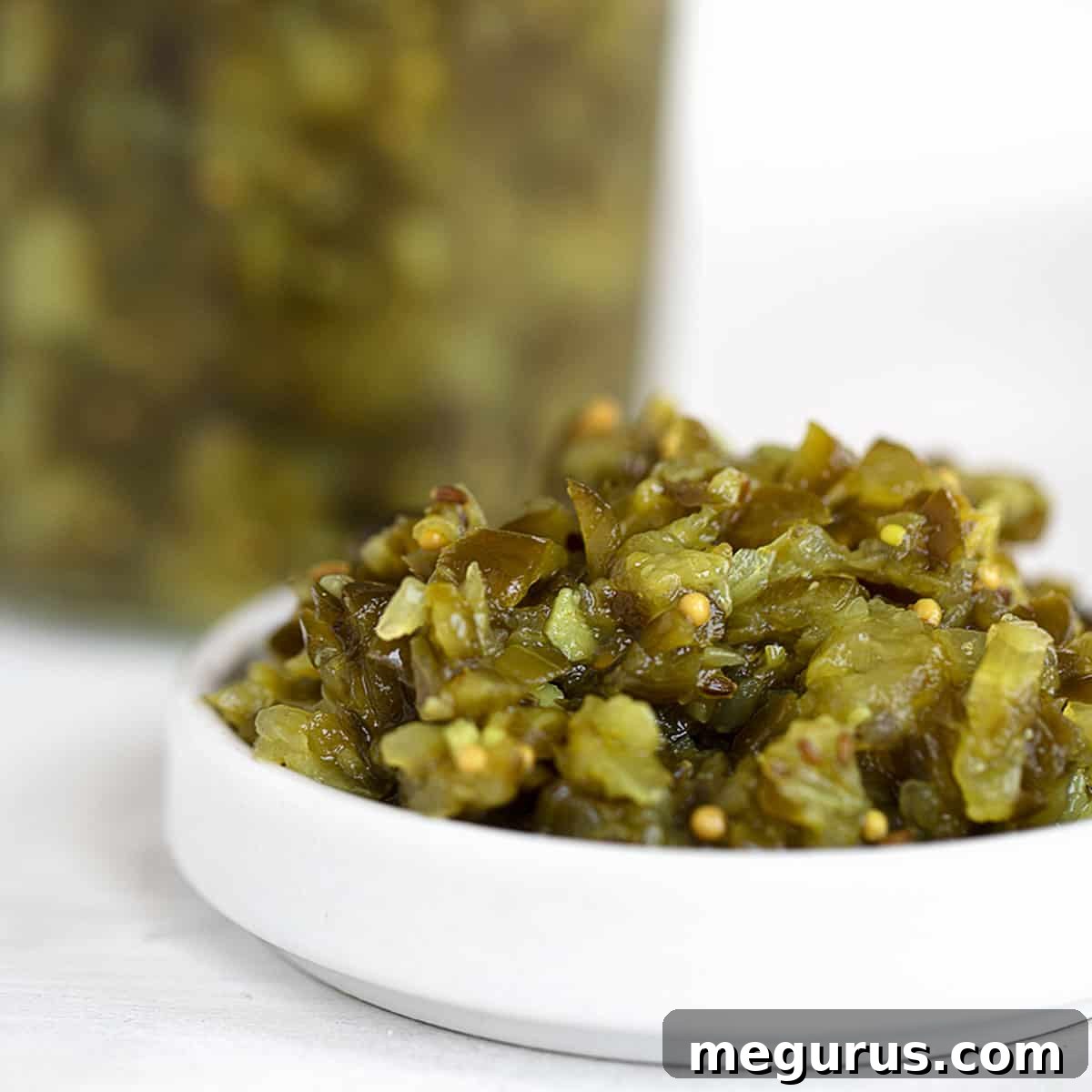
Discover the authentic taste of summer with this incredibly easy and quick dill pickle relish recipe. Bursting with the tangy, savory flavor of classic dill pickles, it’s the perfect accompaniment to your favorite grilled foods. Whether you’re topping juicy hamburgers, sizzling hot dogs, or adding a zesty kick to salads, this homemade relish will elevate any meal. Master a small batch for immediate enjoyment without the fuss of canning, or scale up and preserve it for a pantry staple that lasts all year.
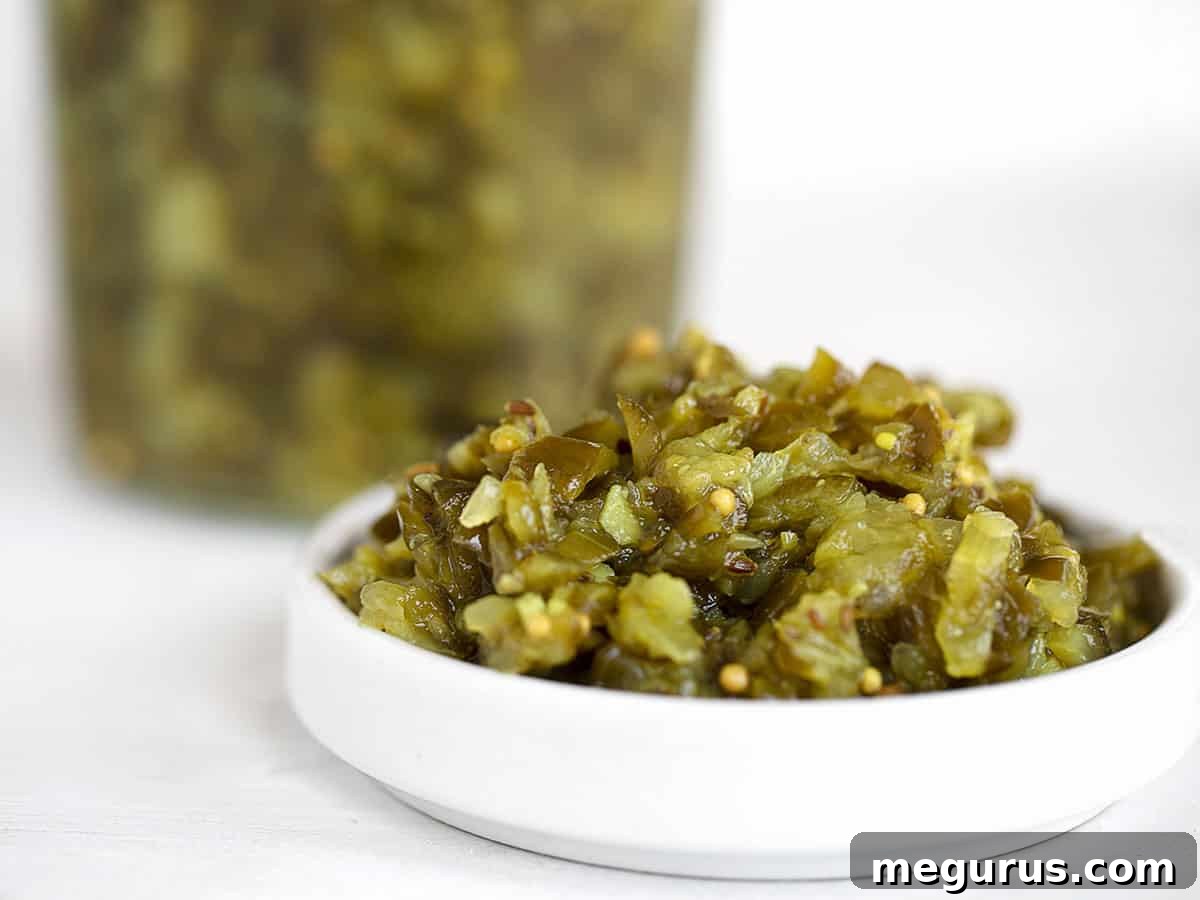
Crafting the Perfect Homemade Dill Pickle Relish
There’s an undeniable charm to homemade condiments, and this quick and easy dill pickle relish recipe is no exception. It’s a true summer favorite, bringing a vibrant, fresh flavor that store-bought varieties simply can’t match. Preparing your own relish allows you to control the ingredients, ensuring a crisp texture and a balanced taste that perfectly complements a wide array of summer dishes. From backyard barbecues to potluck gatherings, this relish will quickly become a beloved staple.
One of the best features of this particular recipe is its flexibility. For those spontaneous cravings or smaller households, a small batch can be whipped up with minimal effort and stored in the refrigerator for immediate use, completely bypassing the traditional canning process. However, if you’re looking to stock your pantry or share this delicious creation with friends and family, the recipe can easily be scaled up for hot water bath canning, ensuring a longer shelf life.
Why Choose Homemade Dill Pickle Relish?
Beyond the simple satisfaction of creating something from scratch, making your own dill pickle relish offers several compelling advantages:
- Unmatched Freshness: Store-bought relishes often contain artificial preservatives and colors. Homemade relish uses fresh, wholesome ingredients, resulting in a cleaner, more natural flavor.
- Customizable Flavor Profile: Do you prefer a slightly sweeter relish, or one with an extra kick of spice? This recipe serves as an excellent base that you can easily adjust to your personal taste. You can vary the chunkiness of the vegetables, the amount of sugar, or even introduce a hint of red pepper flakes for heat.
- Healthier Option: By making it yourself, you avoid high fructose corn syrup and other undesirable additives often found in commercial products, offering a healthier condiment choice for your family.
- Economical: When cucumbers are in season, making relish can be a cost-effective way to preserve their bounty and enjoy their flavors long after summer fades.
- Rewarding Experience: There’s a unique sense of accomplishment in serving a homemade condiment that guests rave about. It’s a simple project that yields impressive results.
Essential Ingredients for Your Dill Pickle Relish
The success of any great recipe lies in its ingredients. Here’s a detailed look at what you’ll need and some helpful substitution tips to ensure your dill pickle relish turns out perfectly every time.
Cucumbers: The Heart of the Relish
For this recipe, mini cucumbers are highly recommended. Varieties like field pickling cucumbers (when in season) or the mini English-style cucumbers readily available at most grocery stores year-round are ideal. The primary reason for this recommendation is their lower moisture content compared to larger cucumbers. Less moisture means a crisper relish and less cooking time to achieve the desired consistency. If mini cucumbers are unavailable, don’t fret! You can absolutely use regular-sized cucumbers. However, to compensate for their higher moisture and larger seeds, it’s crucial to remove and discard the seeded, watery centers before weighing out the required amount. This step is key to preventing a watery relish and maintaining that satisfying crunch.
Coarse Pickling Salt: The Curing Agent
Pickling salt, often labeled as such or as coarse salt, is a vital ingredient. Its primary role is to draw excess moisture out of the cucumbers, which contributes to the relish’s texture and prevents spoilage. It’s also free from anti-caking agents and iodine, which can sometimes cloud pickling liquids or alter flavors. If pickling salt isn’t on hand, you have a couple of excellent alternatives:
- Coarse Kosher Salt: This is a great substitute. Since Kosher salt crystals can be larger than pickling salt, you might need to adjust the quantity slightly. As a general guideline, add an additional 1 1/2 teaspoons to the original 2 tablespoons specified for pickling salt. Always measure by weight if possible for precision.
- Fine Sea Salt: This can also be used in the same quantity as specified for coarse pickling salt. Ensure it’s pure sea salt without additives.
Avoid regular table salt, as the iodine and anti-caking agents can affect the clarity and flavor of your relish.
Dill Seeds: The Signature Flavor
A common point of confusion, but an important distinction: you need dill seeds, not dill weed, for this relish. Dill seeds provide that intense, classic dill pickle flavor that fresh dill weed, while delicious, cannot replicate in this context. Look for them in the spice aisle of your grocery store, usually in small bottles or packets. Their concentrated, slightly pungent, and warm flavor is what makes this relish taste authentically like your favorite dill pickles.
Mustard Seeds: A Traditional Touch
Another essential spice for a truly authentic relish, mustard seeds add a delightful tang and subtle warmth. You’ll want small, whole yellow mustard seeds, not powdered mustard, which has a different flavor profile and texture. Like dill seeds, they can be found in the spice section. They contribute to the complex, savory-sweet balance that makes relish so appealing.
White Vinegar: The Tangy Base
White vinegar is chosen for its clean, crisp acidity and its ability to keep the relish vibrant in color. Its consistent acidity is important for both flavor and preservation, especially if you plan on canning your relish.
Granulated White Sugar: Balancing Act
While this is a dill relish, a touch of sugar is vital for balancing the sharp acidity of the vinegar and the savory notes of the spices. It doesn’t make the relish overtly sweet but rather rounds out the flavors, creating a more harmonious and palatable condiment.
Onions and Garlic: Aromatic Depth
Finely chopped onions and minced garlic contribute aromatic complexity and a savory foundation to the relish, enhancing its overall depth of flavor.
Crafting Your Homemade Dill Pickle Relish: A Step-by-Step Guide
Making dill pickle relish is a straightforward process, but attention to detail ensures the best results. Follow these detailed steps for a perfectly textured and flavorful relish.
Step 1: Prepare the Cucumbers
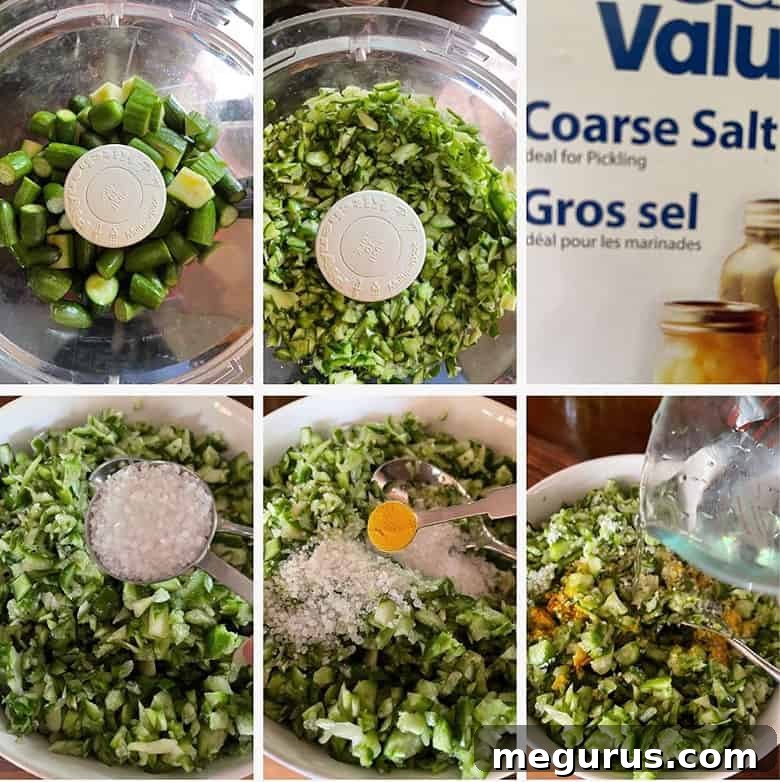
Begin by thoroughly scrubbing your cucumbers and trimming off both ends. Cut them into manageable chunks suitable for your food processor. In batches, if necessary, pulse the cucumber chunks 8 to 10 times in a food processor until they are finely chopped into pieces approximately 1/8 to 1/4 inch in size. The number of pulses will depend on your desired consistency – fewer pulses for a chunkier relish (like chopped dill pickles), more for a smoother texture. Aim for consistency in size for even cooking.
Step 2: Salt Cure and Drain
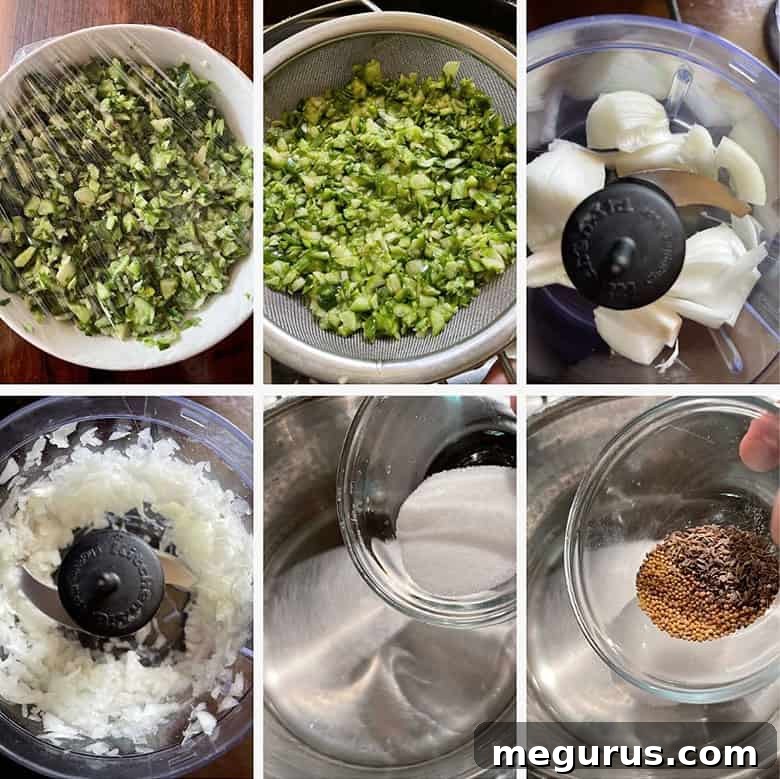
Transfer the chopped cucumbers to a large bowl. Sprinkle them evenly with coarse pickling salt and turmeric. Stir thoroughly to ensure the salt and turmeric are well distributed. Add the cold water and stir again. Cover the bowl and let the mixture stand at room temperature for at least 1 hour. During this time, the salt will draw out a significant amount of moisture from the cucumbers. Stir the mixture a couple of times as it sits to facilitate even curing. After 1 hour, drain the cucumber mixture thoroughly in a large sieve. Rinse the cucumbers very well under cold running water to remove excess saltiness. Drain again, pressing down firmly on the mixture with your hand or the back of a spoon to squeeze out as much remaining moisture as possible. This step is crucial for a crisp relish that isn’t overly salty.
Step 3: Prepare the Brine and Combine Ingredients
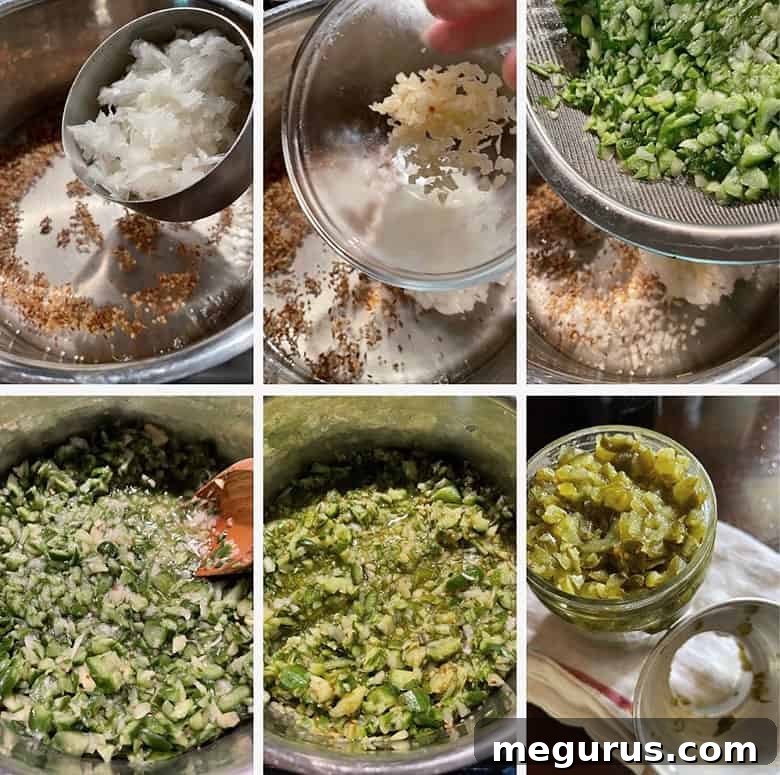
In a large saucepan, combine the white vinegar, granulated white sugar, minced garlic, dill seeds, and mustard seeds. Bring this mixture to a boil over medium heat, stirring occasionally to dissolve the sugar. Once boiling, add the well-drained cucumber mixture and the finely chopped onions to the pot. Stir everything together to combine.
Step 4: Simmer to Perfection
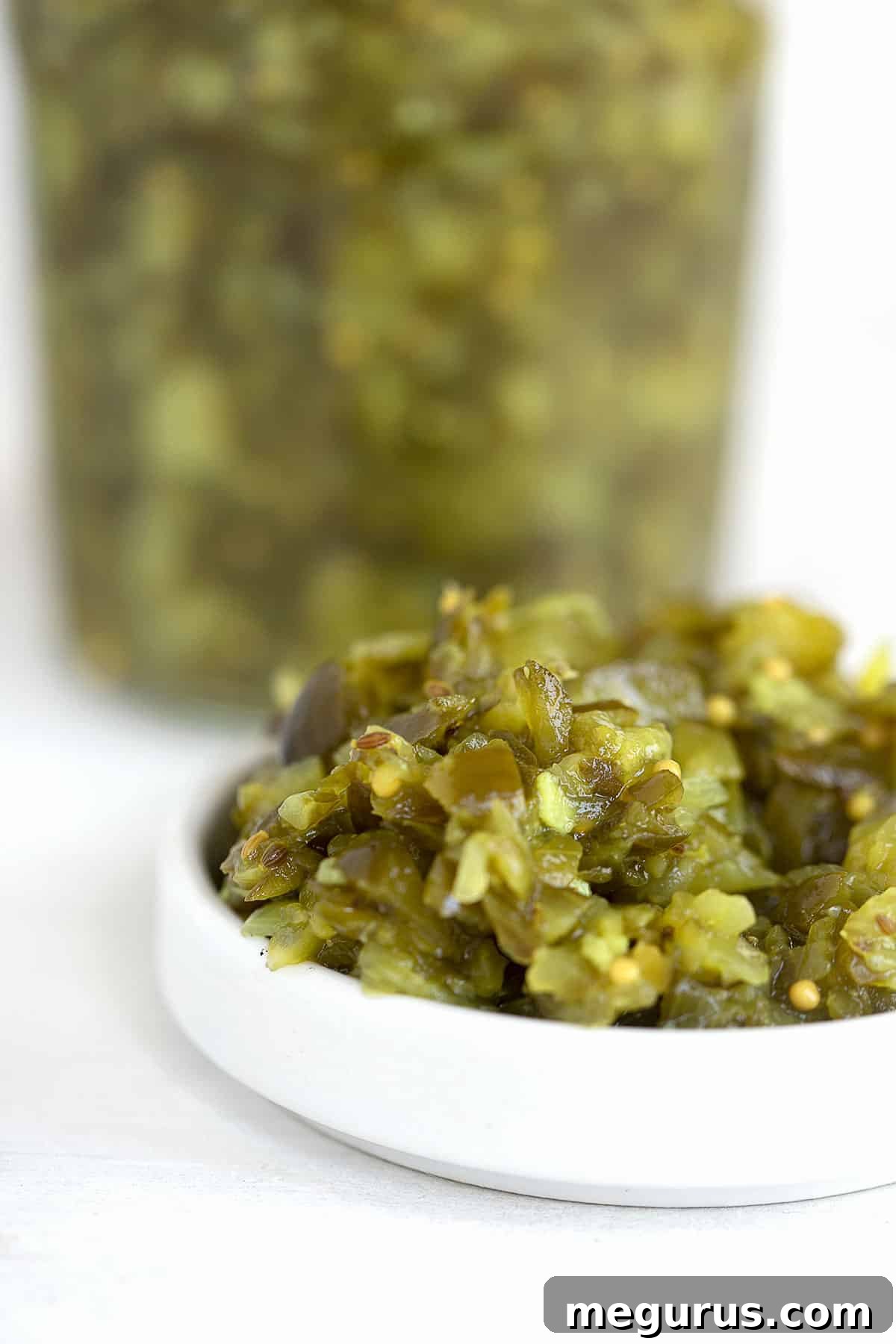
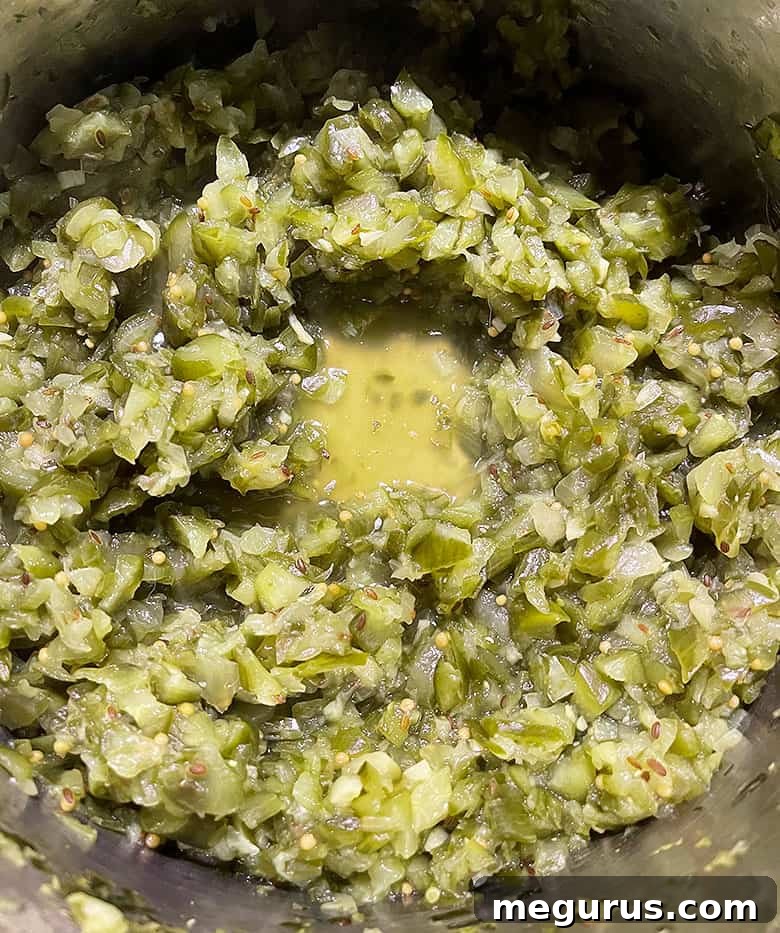
Bring the entire mixture back to a boil over medium heat, continuing to stir often. Once boiling, reduce the heat to medium-low to maintain a gentle simmer. Cook the relish, stirring occasionally, for about 30 minutes, or until the mixture has significantly thickened, the cucumbers have lost their vibrant bright green color, and there is just a thin layer of liquid visible at the bottom of the pan. It’s important not to cook off all the liquid, as a little bit of briny moisture is desirable for relish.
Step 5: Jar and Store
Carefully transfer the hot relish into clean jars. For a small batch intended for refrigeration, ensure your jar(s) are clean and capable of holding about 2 1/2 to 3 cups of relish. Allow the relish to cool slightly at room temperature, then place lids on the jars and refrigerate. Your homemade dill pickle relish will keep well in the fridge for several months.
Serving Suggestions: Unleash the Versatility of Dill Pickle Relish
This homemade dill pickle relish is incredibly versatile, adding a burst of flavor and texture to countless dishes. Move beyond the classic hot dog and hamburger toppings and explore new ways to enjoy its tangy goodness!
- Classic Topping: The quintessential use! Spoon generous amounts onto grilled hot dogs, bratwursts, and hamburgers. The zesty crunch perfectly cuts through the richness of the meat.
- Salad Enhancer: Stir it into your favorite potato salad, macaroni salad, or coleslaw for an extra layer of zesty, briny flavor and satisfying texture. It’s a game-changer!
- Dips and Spreads: Create a delectable dill pickle dip by mixing relish with cream cheese, sour cream, or Greek yogurt. It’s fantastic with chips, crackers, or vegetable sticks. You can also blend it into tartar sauce for a homemade twist.
- Sandwich Sensation: Elevate your sandwiches! Spread it on classic deli sandwiches, add it to grilled cheese, or make it a key component of a Cuban or Reuben sandwich.
- Savory Soups: For an adventurous palate, a spoonful or two can add a surprising depth to creamy potato soups or even a unique dill pickle soup.
- Marinades and Dressings: Whisk it into homemade vinaigrettes or use it as a component in marinades for chicken or fish, imparting a wonderful tangy element.
- Side Condiment: Serve alongside fried chicken, fish and chips, or any grilled meat as a bright, palate-cleansing accompaniment.
Recipe Tips for Success!
- Scaling the Recipe: You can easily double or triple this dill pickle relish recipe. However, if you’re making a larger quantity than you can reasonably consume within a few months, it will need to be properly canned using a hot water bath method to ensure prolonged shelf life at room temperature. Always refer to reputable canning resources for detailed guidance on safe processing times and techniques.
- Chopping Consistency: If you don’t have a food processor, a sharp knife and some patience will do the trick! Hand-chop the cucumbers and onions, aiming for a consistently sized chopped mixture. Uniform pieces ensure even cooking and a better texture in your finished relish.
- Cucumber Preparation (Larger Cucumbers): When using mini or small pickling cucumbers, simply weigh them before trimming the very ends, as little to no moisture-rich interior needs removing. If you must use larger cucumbers, quarter them lengthwise first, then carefully slice off and discard the seeded, moist center before weighing the remaining firm cucumber flesh. This step is crucial for preventing a watery relish.
- Knowing When It’s Done: The relish is cooked to perfection when it has thickened considerably, its color has deepened from bright green, and you can see just a thin layer of liquid at the bottom of the pan. The goal is to cook off most, but not all, of the liquid, leaving enough for that classic relish consistency. This visual cue helps prevent over-reducing and drying out your relish.
Storing Your Homemade Dill Pickle Relish
Proper storage is essential to enjoy your homemade dill pickle relish for as long as possible. The method depends on whether you choose to can it or store it as a fresh condiment.
- Refrigerated Storage (Small Batch): For small batches where you’ve skipped the hot water bath canning process, your relish must be stored in the refrigerator. Placed in clean, airtight jars, it will maintain its excellent flavor and quality for 3-4 months. Always use a clean spoon to retrieve relish to prevent contamination.
- Canned Storage (Long-Term): If you opt to can your relish using the hot water bath method, as detailed in the recipe card notes, the jars, once properly sealed, can be stored at cool room temperature (like a pantry) for approximately 1 year. After opening a canned jar, any remaining relish should be refrigerated and consumed within a few weeks.
Ensure that jars used for canning are properly sterilized and that lids form a secure vacuum seal for safe, long-term storage.
Dill Pickle Relish
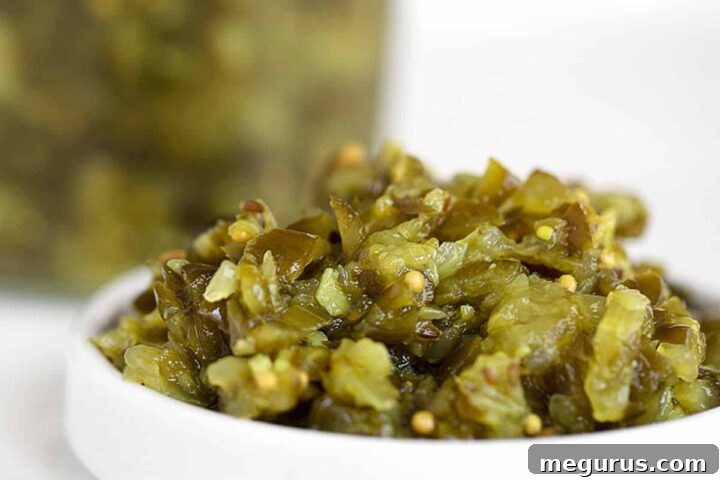
Quick and easy dill pickle relish that tastes just like dill pickles! Great for hamburgers or hot dogs. Make a small batch and skip the canning, or make more and preserve it for longer storage.
Pin This
Leave a Review
Ingredients
- 2 lb pickling or mini cucumbers, see Note 1 below
- 2 Tablespoons Coarse Pickling Salt, see Note 2 below
- 1/4 teaspoon turmeric
- 1/2 cup cold water
- 1 cup white vinegar
- 2 Tablespoons + 2 teaspoons granulated white sugar
- 2 cloves garlic, finely chopped
- 1 1/2 teaspoons dill seeds
- 1 teaspoon mustard seeds
- 3/4 cup onion, finely chopped
Instructions
- Scrub the cucumbers and trim off ends. Cut into chunks.
- In a food processor (in batches if your food processor is small), pulse cucumbers 8 to 10 times to cut into 1/8-1/4 inch pieces. You can make your relish chunky or smoother by simply processing less or more. I like mine a little chunky, to resemble chopped dill pickle. Process a bit more for a smoother relish.
- Place the processed cucumbers into a large bowl. Sprinkle cucumbers with salt and turmeric. Stir well to combine, then add the cold water. Stir again, cover and let stand at room temperature for 1 hour, stirring a couple of times as it sits. Drain cucumber mixture in a large sieve. Rinse well under cold water to remove excess salt. Drain again, using your hand to press down on the mixture to remove as much moisture as possible.
- In a large saucepan, bring the vinegar, sugar, garlic, dill seeds and mustard seed to a boil over medium heat. Add cucumber mixture and onions to the pot and return to a boil, stirring often. Reduce heat to medium low and simmer, stirring occasionally, until the mixture has thickened, has lost its bright green colour and has just a bit of liquid left on the bottom of the pan, about 30 minutes. Cook until you have just a thin layer of liquid visible at the bottom of the pan. You don’t want to cook all the liquid off.
- Add hot relish to a clean jar capable of holding about 2 1/2-3 cups (or several jars). Cover with clean lids and, if not canning, allow to cool at room temperature, then refrigerate to use from the fridge as needed. Will keep well in the fridge for several months.
- If you wish to can this relish, be sure to properly sterilize the jars and lids. After adding the relish to the jars, use a knife to slice through the mixture in the jars to remove any air pockets. Leave 1/2-inch of headspace in the jars. Add canning lid, then canning ring, screw on ring just until resistance is met, then increase to fingertip tight. After placing the lids on, boil the filled jars in a boiling hot water canner for 15 minutes. After water canning, make sure the jars have sealed (indented on top), then the relish can be stored at room temperature for longer storage.
- Makes about 3 cups of relish.
Notes
- Note 1: Small cucumbers are preferred as they have less moisture. If pickling field cucumbers are in season, they would be great. If not, opt for the mini, English-style snacking cucumbers available year-round at the grocery store. If you need to use larger cucumbers, prepare by quartering, cutting away the seeds and moist bits and discarding, then weighing the remaining cucumber.
- Note 2: If you don’t have Coarse Pickling Salt on hand, substitute with an equal amount of fine sea salt or coarse Kosher salt, adding an additional 1/2 Tbsp of Kosher salt to the 2 Tbsp.
- Tips! You can double or triple this dill pickle relish recipe, but do keep in mind that if making more than you can use in the short term that the relish will need to be canned with a hot water bath to prolong the shelf life. Always refer to reputable canning resources for guidance on proper canning techniques. Typically, this relish would require 15 minutes of boiling water processing in sterilized jars.
- If you don’t have a food processor, you can use a sharp knife and hand-chop instead. Be sure to take your time to get a consistently-sized chopped mixture.
- Be sure to read the notes above this recipe card for more tips on making this recipe. You’ll also find step-by-step photos there that you might find helpful.
Nutrition Information
Serving: 1 serving, Calories: 110kcal, Carbohydrates: 20g, Protein: 3g, Fat: 1g, Saturated Fat: 1g, Polyunsaturated Fat: 1g, Monounsaturated Fat: 1g, Sodium: 4661mg, Potassium: 505mg, Fiber: 3g, Sugar: 14g, Vitamin A: 220IU, Vitamin C: 14mg, Calcium: 82mg, Iron: 1mg
Tried this recipe?
If you enjoyed this recipe, please leave a star rating and comment. It helps others to find it!