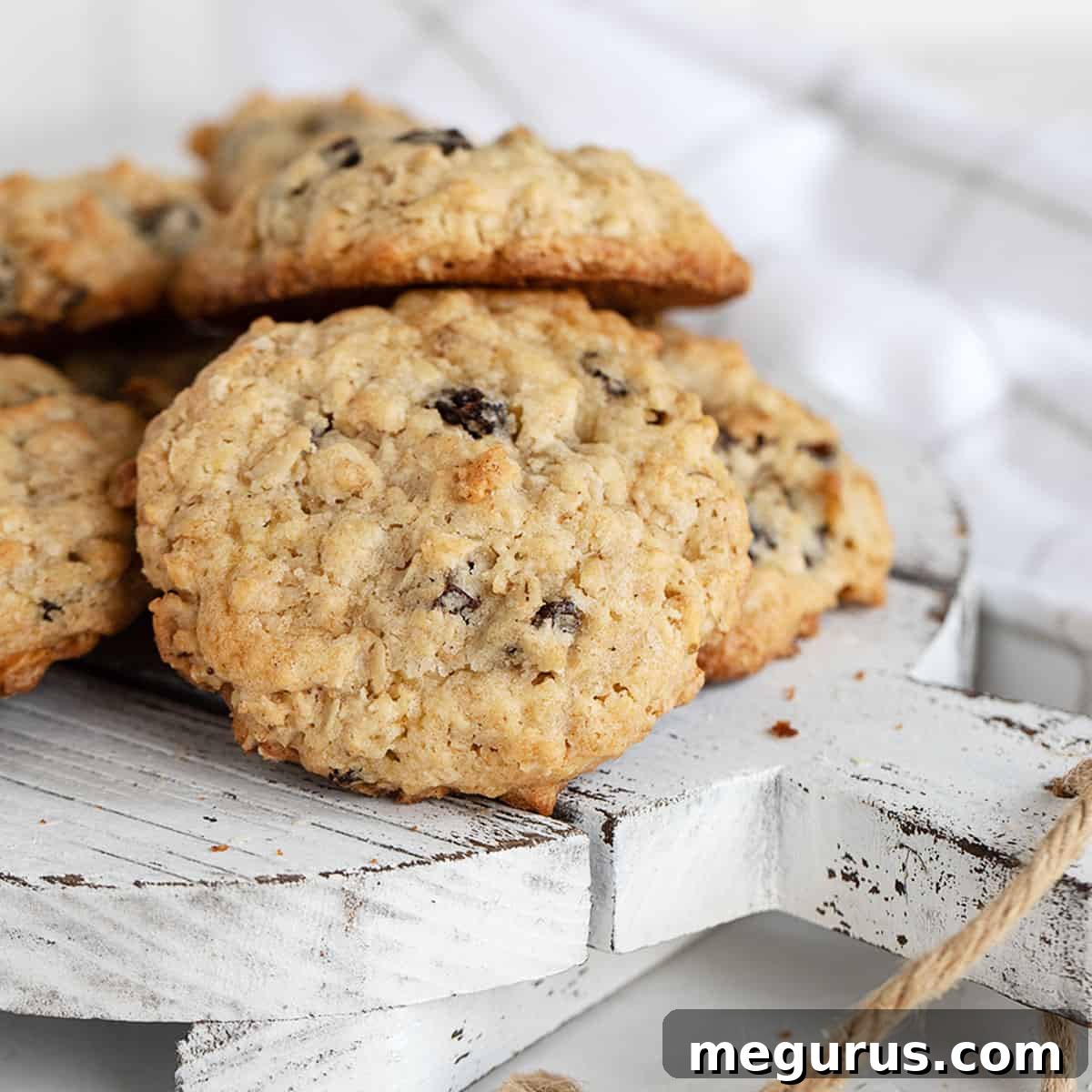
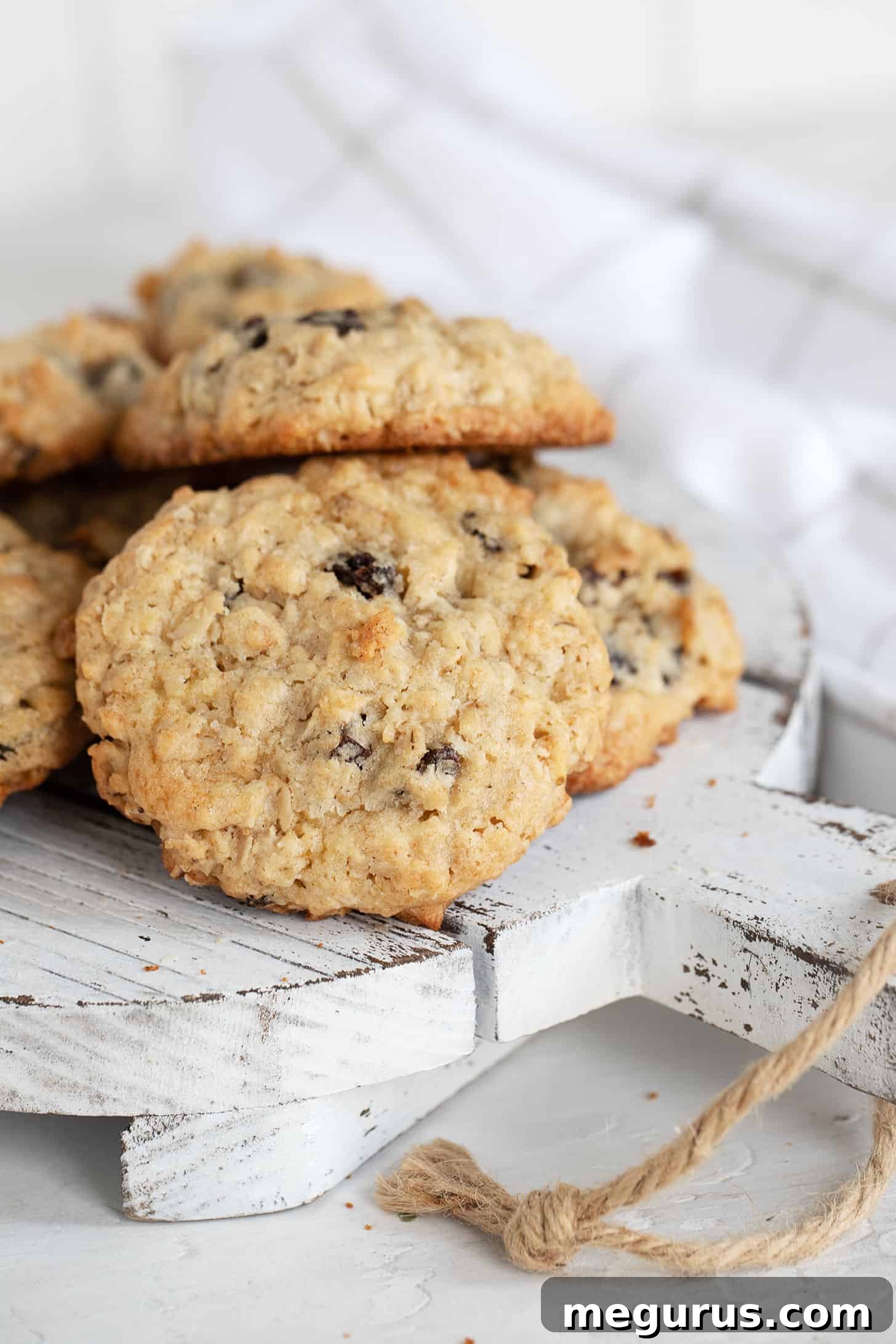
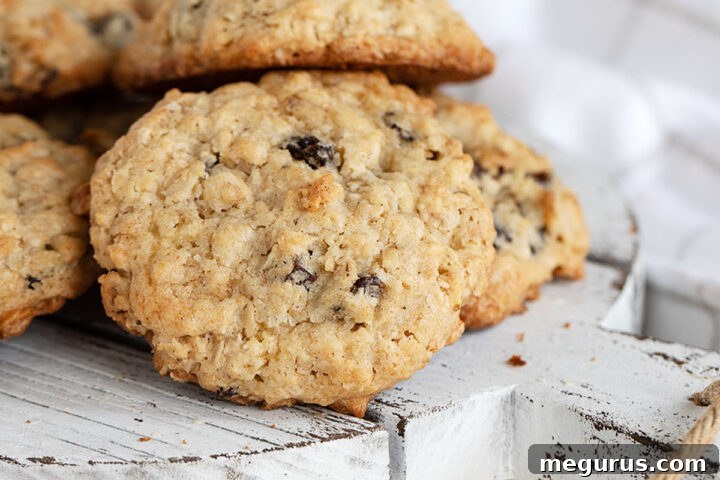
There are some cookies that transcend trends and time, and the classic old-fashioned oatmeal raisin cookie is undoubtedly one of them. With its irresistible charm and comforting aroma, this timeless treat holds a special place in the hearts and memories of many. Imagine biting into a cookie that’s perfectly crispy and caramelized on the edges, giving way to a wonderfully soft, chewy, and tender interior, generously studded with plump, sweet raisins. That unique texture combination, coupled with the warm, inviting spices, makes these cookies a nostalgic favorite that transports you back to simpler times with every single bite.
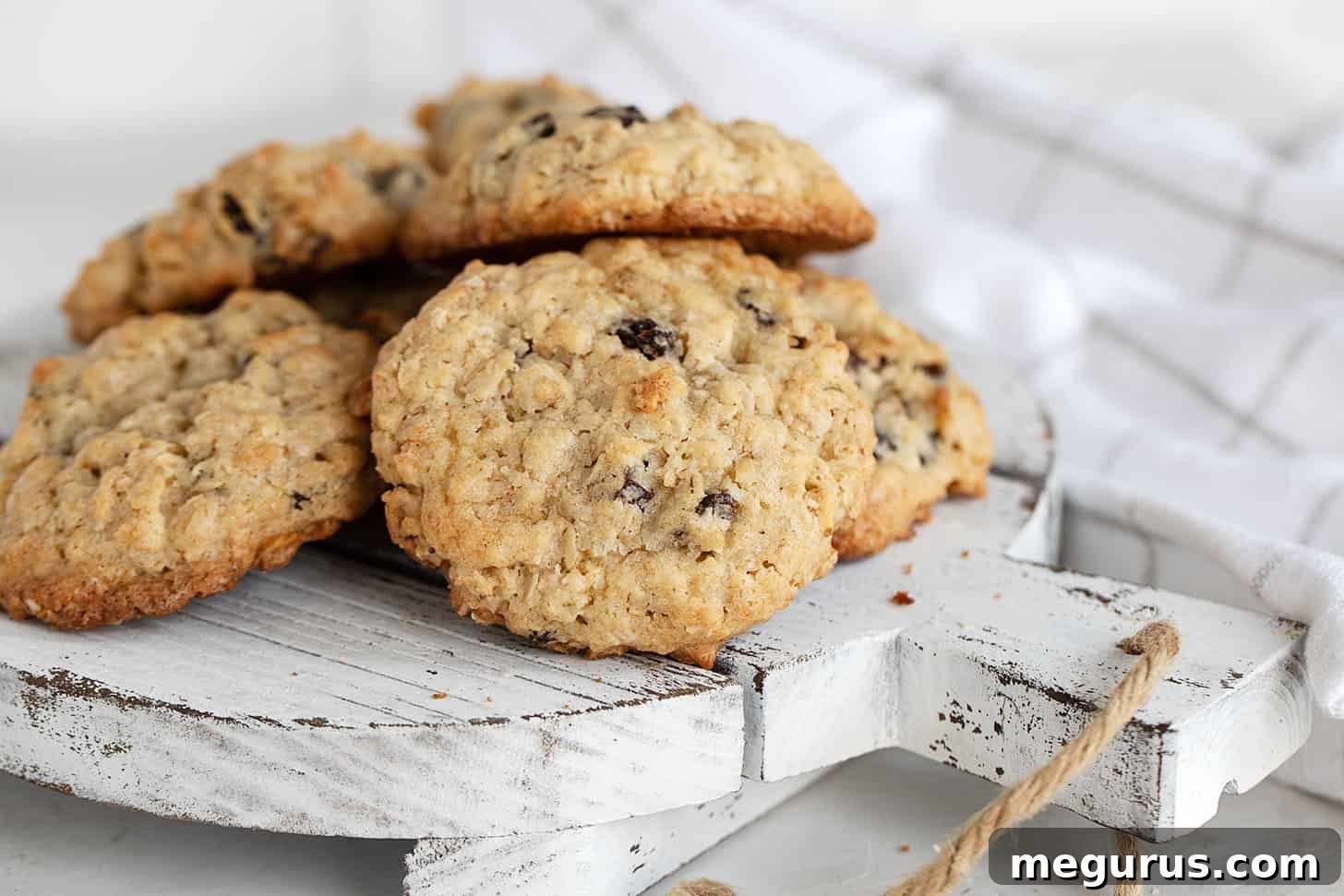
Every home baker needs a reliable, tried-and-true recipe for classic old-fashioned oatmeal raisin cookies, and I’m thrilled to share my absolute go-to version. This recipe consistently delivers on the promise of that ideal texture – a delightful contrast of crispy caramelization on the outside, perfectly balanced by a soft and deeply chewy center. It’s more than just a recipe; it’s a pathway to creating those cherished moments and flavors that linger long after the last crumb is gone.
Unlocking the Perfect Texture: Why These Oatmeal Raisin Cookies Stand Out
What truly sets these old-fashioned oatmeal raisin cookies apart is their exceptional texture. We’re aiming for that magical balance: a golden-brown exterior that offers a satisfying crispness with a hint of caramelized sweetness, while the interior remains wonderfully soft, moist, and delightfully chewy. This isn’t just about good taste; it’s about a sensory experience that defines a truly great cookie. The combination of specific ingredients and precise baking techniques ensures that each cookie delivers this beloved contrast, making them incredibly addictive and utterly unforgettable. Prepare to fall in love with the perfect oatmeal raisin cookie, time and time again.
Key Ingredients for Your Classic Oatmeal Raisin Cookies
Crafting the best oatmeal raisin cookies starts with understanding the role each ingredient plays. While the recipe is straightforward, paying attention to these details can elevate your cookies from good to extraordinary. Here are a few notes about the key components that bring this classic to life:
Oatmeal: The Heart of the Cookie
For the authentic old-fashioned texture that truly shines, this recipe specifically calls for **large-flake, old-fashioned rolled oats**. These oats retain their shape and provide a robust, chewy texture that is crucial for the cookie’s character. Avoid using instant or quick oats, as they tend to absorb too much moisture too quickly, resulting in a softer, almost mushy cookie that lacks the desired chewiness. The larger flakes offer a delightful chew and a hearty mouthfeel that is synonymous with classic oatmeal cookies. When selecting your oats, look for labels that specify “old-fashioned” or “rolled oats” for the best results.
Raisins: Sweet Bursts of Flavor
I traditionally use **Thompson raisins** in these cookies, as they are a classic and readily available choice, offering a perfect balance of sweetness and a pleasant chew. However, feel free to use any type of raisin you prefer or have on hand. Golden raisins offer a slightly tangier flavor and a brighter color, while other dried fruits like chopped dried cranberries, cherries, or even finely diced apricots can also make wonderful substitutions for a twist on the classic. For an extra burst of moisture and flavor, consider briefly soaking your raisins in warm water or a splash of rum/brandy (if preferred) for about 10-15 minutes before draining them well and adding them to the dough. This step helps them plump up and distribute their sweetness more effectively throughout the cookie.
Butter: The Foundation of Flavor and Texture
The quality of your butter significantly impacts the flavor and texture of your cookies. Whether you choose salted or unsalted butter, ensure it is at **room temperature**. Room temperature butter creams beautifully with sugar, creating a light and airy base for your dough, which contributes to the cookies’ tender crumb. If using salted butter, remember to reduce the added fine salt in the recipe to about ¼ teaspoon to avoid overly salty cookies. For unsalted butter, ½ teaspoon of fine salt is typically ideal to balance the sweetness and enhance all the other flavors.
Sugars: The Secret to Crispness and Chewiness
This recipe uses a combination of both **granulated white sugar** and **dark brown sugar**. Granulated sugar helps the cookies spread slightly and contributes to that desirable crispness on the edges. Dark brown sugar, with its higher molasses content, adds moisture, richness, and depth of flavor, which is key to achieving the wonderfully chewy interior and a beautiful caramelized finish. While light brown sugar can be substituted, dark brown sugar offers a more pronounced flavor and chew. This dual sugar approach is essential for the balanced texture we’re aiming for.
Eggs: The Binding and Enriching Agent
Just like butter, using **large eggs at room temperature** is crucial. Room temperature eggs emulsify more easily with the creamed butter and sugar, resulting in a smoother, more uniform batter. They act as a binding agent, holding the cookies together, and contribute to their richness and moist texture. Cold eggs can cause the mixture to curdle and prevent proper emulsification, affecting the final cookie texture.
Flour and Leavening: Structure and Rise
**All-purpose flour**, when measured correctly (spooned and leveled, not scooped directly from the bag), provides the essential structure for these cookies. **Baking powder** is the primary leavening agent, giving the cookies a gentle lift and contributing to their soft, pillowy texture. Combined with a touch of salt and nutmeg, these dry ingredients create the perfect foundation.
Nutmeg: The Warm Spice Factor
A touch of **freshly grated nutmeg** adds an incredibly warm, aromatic, and distinctly old-fashioned flavor that complements the oats and raisins beautifully. While pre-grated nutmeg works, freshly grated nutmeg offers a far superior aroma and more vibrant taste. If you’re a fan of deeper spice notes, you can also add a pinch of ground cinnamon or even a tiny amount of ground cloves to enhance the flavor profile further.
Baking Your Classic Oatmeal Raisin Cookies: A Visual Guide
This section offers a visual summary of the key steps involved in making this recipe. For the most precise and detailed instructions, always refer to the complete Recipe Card below.
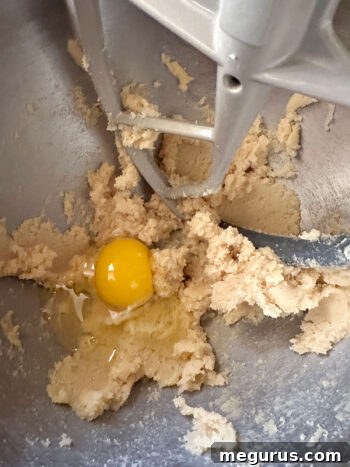
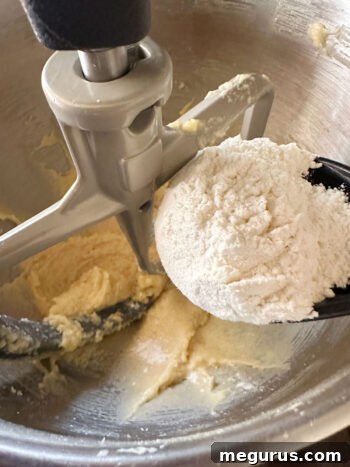
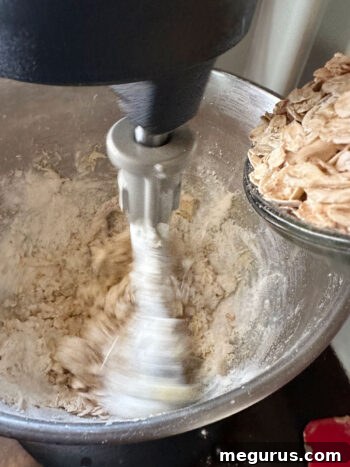
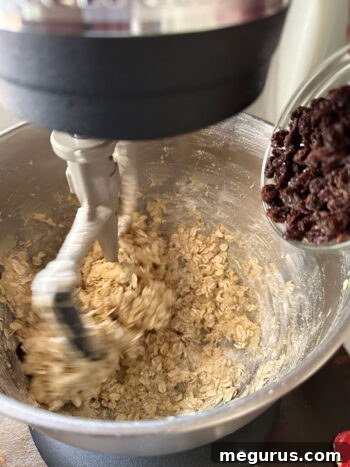
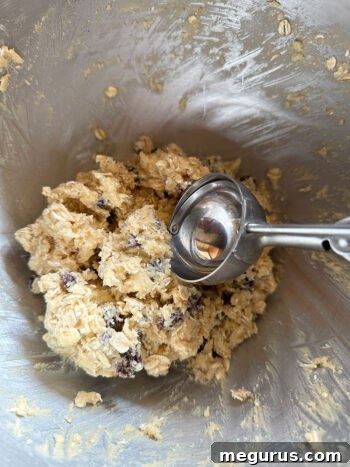
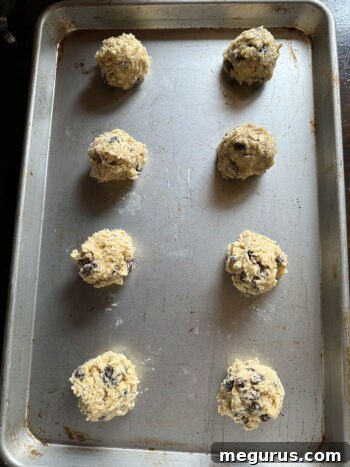
- Cream butter and sugars until light and fluffy.
- Beat in the eggs, one at a time, until fully mixed.
- Gradually add the whisked flour mixture.
- Fold in the large-flake oats.
- Gently mix in the raisins until evenly distributed.
- Scoop dough into 2-inch balls and lightly flatten.
- Place dough balls on a parchment-lined baking sheet, 2 inches apart.
Expert Tips for Flawless Oatmeal Raisin Cookies
Achieving cookie perfection is easier than you think with these expert tips:
- **The Importance of Ingredient Temperature:** Always use room temperature butter and eggs. This allows for better emulsification and a smoother, more uniform dough, leading to a superior texture in the final cookie.
- **Measure Flour Accurately:** To avoid dense or dry cookies, always measure your flour using the “spoon and level” method. Gently spoon flour into your measuring cup until it overflows, then level off the top with a straight edge (like the back of a knife). Do not pack the flour or scoop it directly from the bag.
- **Don’t Overmix:** Once the flour is added, mix only until just combined. Overmixing develops gluten, which can make your cookies tough and less tender.
- **Parchment Paper is Your Friend:** Lining your baking sheets with parchment paper prevents sticking, promotes even baking, and makes for easy cleanup. It also helps the bottoms of the cookies achieve a nice golden color without burning.
- **Know Your Oven:** Oven temperatures can vary significantly. Investing in an inexpensive oven thermometer can help ensure your oven is truly preheated to the correct temperature, leading to more consistent baking results. Watch your first batch closely to gauge the perfect baking time for your oven.
- **For Perfect Round Cookies:** If you desire perfectly round cookies, once they come out of the oven, use a larger round cutter (like an English muffin ring or a biscuit cutter, 3-4 inches in diameter) and place it over a hot cookie on the baking sheet. Gently swirl the cutter around the edges of the cookie to push them inward and reshape them into a perfect circle. Do this immediately after removing from the oven while the cookies are still warm and pliable.
- **The Power of Chilling:** Chilling your dough for at least 30 minutes before baking helps the butter solidify, resulting in less spread and a thicker, chewier cookie. It also allows the flavors to deepen. If you’re baking multiple batches, keep the unbaked dough refrigerated between turns.
Freezing and Storing Your Oatmeal Raisin Cookies
One of the best aspects of these cookies is how well they store, making them perfect for meal prep or enjoying a warm treat on demand.
Recipe Tip! Bake on Demand
These cookies freeze exceptionally well once baked. Simply allow them to cool completely, then transfer them to an airtight container or freezer-safe bag, separating layers with parchment paper. They can be frozen for up to one month. When ready to enjoy, simply thaw at room temperature or warm briefly in a microwave.
Even better, you can form the dough into 2-inch balls and freeze them unbaked. Arrange the dough balls on a cookie sheet and freeze until solid. Once frozen, transfer them to a freezer bag. This “bake on demand” method is a game-changer! There’s truly nothing nicer than the smell and taste of a warm, fresh-from-the-oven oatmeal raisin cookie, ready whenever the craving strikes.
Creative Variations for Your Classic Oatmeal Raisin Cookies
While the classic oatmeal raisin cookie is perfect as is, it also serves as an excellent canvas for creative variations. Feel free to experiment with these delicious additions to customize your batch:
- **Chocolate Chips:** For a delightful hybrid, add 1 cup of semi-sweet, milk, or dark chocolate chips along with the raisins. The combination of oats, raisins, and chocolate is a universally loved trio.
- **Nuts:** Introduce a nutty crunch by folding in ½ to 1 cup of chopped walnuts or pecans. Toasting the nuts lightly before adding them can enhance their flavor significantly.
- **Spiced Up:** Boost the warmth by adding an additional ½ teaspoon of ground cinnamon or a pinch of ground ginger to the dry ingredients. These spices pair wonderfully with oats and raisins.
- **Mixed Dried Fruits:** Instead of just raisins, try a mix of dried cranberries, chopped dried cherries, or even finely diced apricots. This can add different textures and a more complex fruity flavor.
- **Citrus Zest:** For a brighter, zesty note, add 1 teaspoon of orange or lemon zest to the butter and sugar mixture. Citrus complements the sweetness of the raisins beautifully.
Serving Suggestions and Occasions
These versatile old-fashioned oatmeal raisin cookies are perfect for a myriad of occasions. Enjoy them:
- **With a Beverage:** Pair them with a tall glass of cold milk, a warm cup of coffee, or your favorite tea for a comforting snack.
- **As a Dessert:** Serve them slightly warm with a scoop of vanilla ice cream for an indulgent treat.
- **For Breakfast or Brunch:** They make a hearty addition to a breakfast spread, especially alongside fresh fruit.
- **Lunchbox Treat:** A wholesome and satisfying snack for school or work lunchboxes.
- **Homemade Gifts:** Package a batch beautifully for a thoughtful homemade gift that everyone appreciates.
No matter how you choose to enjoy them, these cookies are guaranteed to bring warmth and happiness.
Get the Recipe: Old-Fashioned Oatmeal Raisin Cookies
Pin This
Leave a Review
Ingredients
- 1 1/2 cups (188 g) all-purpose flour, spooned and levelled
- 1/4 – 1/2 teaspoon fine salt, reduce to 1/4 tsp if using salted butter
- 1 teaspoon baking powder
- 1/4 teaspoon freshly grated nutmeg, or pre-grated
- 14 Tablespoons (197 g) salted or unsalted butter, at room temperature
- 3/4 cup + 3 Tablespoons (189 g) granulated white sugar
- 3/4 cup + 3 Tablespoons (189 g) dark brown sugar, can use light brown
- 2 large eggs, at room temperature
- 2 1/2 cups (625 ml) large-flake, old fashioned rolled oats
- 1 1/4 cups (300 ml) raisins
Instructions
-
1. **Prepare Oven and Baking Sheet:** Preheat your oven to 375°F (190°C) without convection/fan-assist. Position the oven rack in the center. Line a baking sheet with parchment paper to prevent sticking and ensure even baking.
-
2. **Combine Dry Ingredients:** In a medium bowl, whisk together the all-purpose flour, fine salt, baking powder, and freshly grated nutmeg. Set this mixture aside.
-
3. **Cream Wet Ingredients:** In the bowl of a stand mixer fitted with the paddle attachment (or a large bowl using a hand mixer), beat the room-temperature butter until it’s smooth and creamy, which typically takes 1 to 2 minutes. Add both the granulated white sugar and dark brown sugar. Beat on medium speed for about 2 to 3 minutes until the mixture becomes light and fluffy, incorporating air. Reduce the mixer speed to low and beat in the room-temperature eggs, one at a time, ensuring each egg is fully mixed into the batter before adding the next. Periodically scrape down the sides of the bowl to ensure all ingredients are well combined.
-
4. **Form the Dough:** Gradually add the reserved flour mixture to the wet ingredients, beating on low speed until just thoroughly combined. Be careful not to overmix the dough. Scrape down the sides of the bowl and the paddle as needed. Finally, add the large-flake rolled oats and raisins. Mix lightly until they are evenly distributed throughout the dough, ensuring not to overwork it.
-
5. **Chill Dough (Optional, for Chewier Cookies):** For thicker, chewier cookies with minimal spread, cover the dough and refrigerate it for a minimum of 30 minutes. This chilling period allows the butter to firm up and the flavors to deepen. If you prefer thinner and crispier cookies, you can skip this step and proceed to baking immediately. If baking in batches, remember to keep the remaining dough refrigerated.
-
6. **Scoop and Bake:** Using a 2-inch ice cream scoop or a tablespoon, form uniform balls of dough. Place these dough balls onto the prepared baking sheet, leaving at least 2 inches of space between them to allow for spreading. For a slightly flatter, more traditional cookie shape, lightly flatten each ball with the palm of your hand. Bake for 10-15 minutes, or until the edges of the cookies are golden brown and the centers appear puffed and feel set when lightly touched. For 2-inch dough balls, 11-12 minutes is often ideal in my oven. Smaller cookies will require less baking time, so watch the first batch closely. The centers might look slightly under-baked, but they will firm up and crisp as they cool.
-
7. **Cool and Enjoy:** Carefully remove the baked cookies from the oven. Immediately transfer them to a wire rack to cool completely. This step is crucial for preventing the bottoms from becoming soggy and allows the cookies to achieve their perfect texture. Allow the baking sheet to cool somewhat before baking additional batches.
Notes
**Shaping Tip for Perfect Rounds:** For perfectly round and thick cookies, once they are fresh out of the oven, use an English muffin ring or a 3-4 inch biscuit cutter. Place the ring over a hot cookie on the baking sheet and gently rotate it around the edges of the cookie to push them inward, rounding the cookie shape. This works best when the cookies are still warm and pliable.
**For More Details:** Be sure to read the comprehensive tips, substitution suggestions, and step-by-step photos provided earlier in this article for additional guidance and helpful insights.