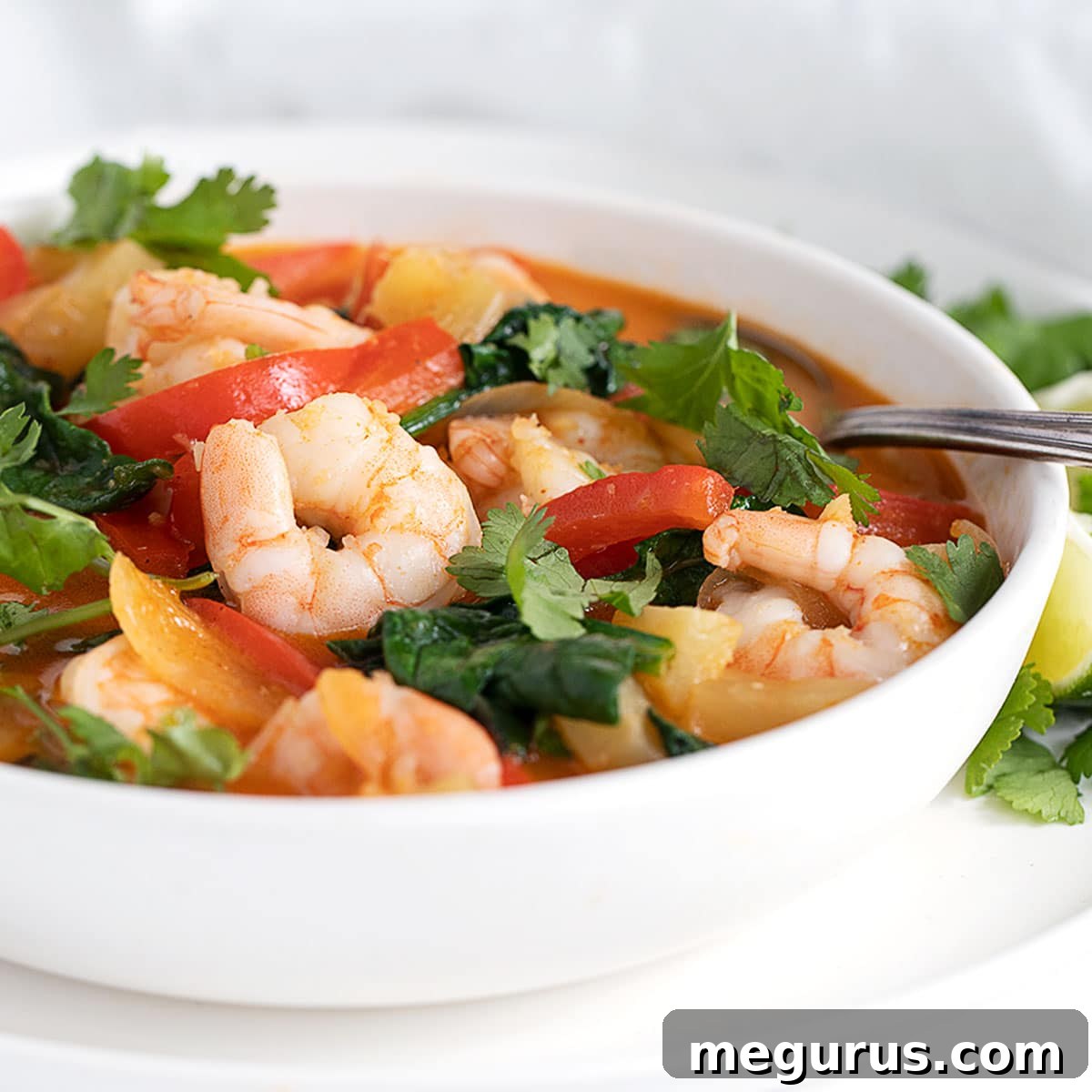
Whip up a delightful and incredibly flavorful Thai Red Curry Shrimp dish in just about 20 minutes! This quick and easy recipe is a perfect solution for busy weeknights, offering a burst of authentic Thai flavors. Simply spoon it over a bed of fluffy rice for a truly satisfying meal that will transport your taste buds straight to Thailand.
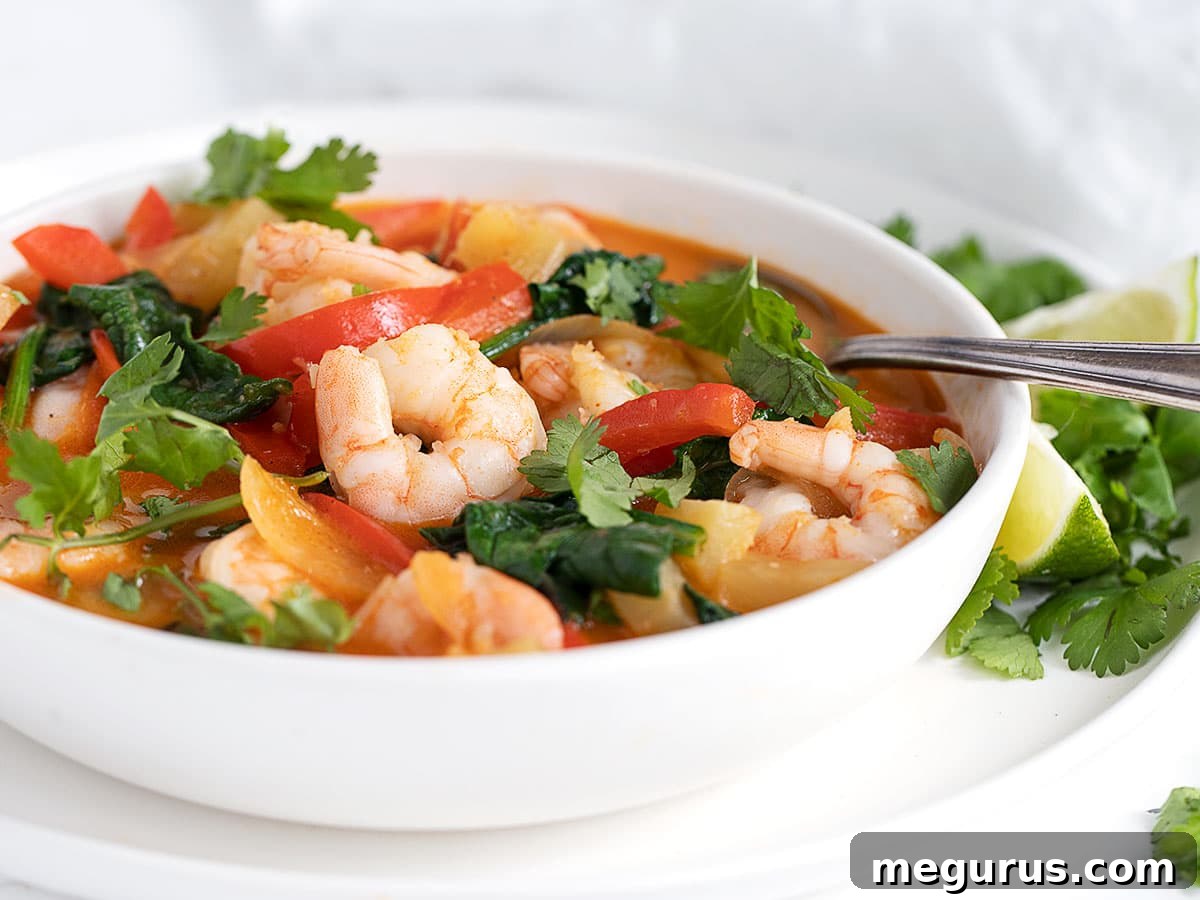
Delicious Thai Red Curry Shrimp: Your Go-To 20-Minute Weeknight Meal
When it comes to crafting a speedy and incredibly satisfying weeknight dinner, it’s hard to overlook the convenience and versatility of frozen shrimp. Just a few weeks ago, we explored the rich, creamy notes of an Indian Butter Shrimp. Today, we’re diving into another equally quick and effortlessly delicious shrimp creation, but this time, with the bold and aromatic essence of Thailand!
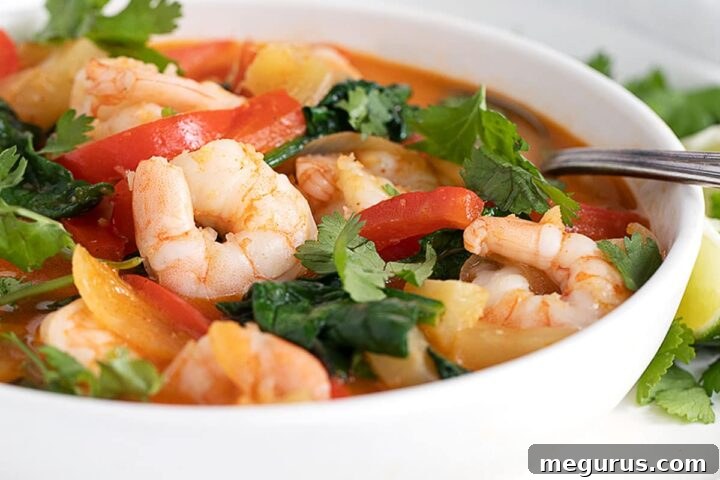
This Thai Red Curry Shrimp recipe masterfully blends succulent frozen shrimp with a colorful medley of fresh ingredients, including crisp bell peppers, sweet onions, and an unexpected yet wonderfully bright touch of pineapple. All of these vibrant components are enveloped in a luscious, creamy coconut milk base infused with authentic Thai red curry paste. The result is a harmonious symphony of sweet, spicy, and savory flavors that truly sings. Serve this delectable curry with a side of fluffy basmati or jasmine rice, and you’ll have an exquisite meal ready on your table in what feels like mere moments.
Why This Thai Red Curry Shrimp Recipe is a Must-Try
Beyond its impressive speed, this Thai Red Curry Shrimp offers a multitude of reasons to become a regular in your meal rotation:
- Unbeatable Flavor Profile: It strikes a perfect balance between the warmth of red curry, the richness of coconut milk, the freshness of vegetables, and the unique tang of pineapple.
- Effortless Convenience: Utilizing frozen shrimp significantly cuts down on prep time, making it ideal for those hectic evenings.
- Healthy & Wholesome: Packed with lean protein from shrimp and vital nutrients from an array of vegetables, this dish is as good for you as it is delicious.
- Highly Customizable: Easily adapt the spice level, add different vegetables, or even swap out the protein to suit your preferences.
- Restaurant-Quality at Home: Achieve authentic Thai flavors in your own kitchen without needing to dine out.
Essential Ingredients & Smart Substitutions
Understanding your ingredients is key to perfecting any recipe. Here are a few detailed notes on the stars of this Thai Red Curry Shrimp:
Shrimp: For the best texture and a “meatier” bite, I highly recommend using large, raw, peeled, and deveined frozen shrimp. Larger shrimp are also more forgiving and less prone to becoming overcooked and rubbery. If you opt for smaller shrimp, simply use a few more to achieve a satisfying portion. You can also use cooked frozen shrimp if that’s what you have on hand; just remember they only need a couple of minutes in the sauce to warm through, as further cooking is unnecessary. The beauty of peeled shrimp is that you don’t even need to thaw them – simply add them frozen to the simmering sauce!
Bell Peppers: Feel free to use all red bell pepper for a consistent sweet flavor and vibrant color, or get creative with a mix of colors like green, yellow, or orange bell peppers. Each adds a slightly different nuance and visual appeal to the dish.
Pineapple: While perhaps an unexpected addition to a Thai curry, pineapple introduces a wonderfully fresh, sweet, and tangy note that beautifully complements the rich, savory curry. It’s a game-changer, and I wholeheartedly encourage you to try it! I typically use a couple of canned pineapple rings, cutting them into bite-sized chunks. A pro tip: if you don’t use the whole can, freeze the remaining rings or chunks in a freezer-safe bag. This way, they’re ready for your next batch of curry or another delightful dish.
Fresh Spinach: Baby spinach is ideal for this recipe as it wilts quickly, adding a lovely pop of color and a boost of nutrients without altering the dish’s texture significantly. Any other quick-wilting leafy green, such as baby kale or finely chopped bok choy, would also work beautifully.
Creamy Coconut Milk: The recipe calls for an amount of coconut milk equivalent to one of the smaller 160ml (5.4oz) cans, like those from Thai Kitchen™. This is fantastic as it prevents having a large can open with leftovers you might not know what to do with. However, if you only have larger cans, don’t fret! Simply stir the can thoroughly before measuring out the required amount, then easily freeze the remaining coconut milk in an ice cube tray or small container for future culinary adventures. Remember to always stir full-fat coconut milk before use, as the cream often separates to the top.
Thai Red Curry Paste: The heart of the curry’s flavor! Use your favorite brand of Thai Red Curry Paste. Brands vary in spice level and flavor complexity, so tasting and adjusting is key. If you happen to have green or yellow Thai curry paste instead, both can be excellent substitutes. Keep in mind that green curry paste tends to be spicier, so you might need a slightly smaller amount, while yellow curry paste is generally milder and sweeter, meaning you might want to add a bit more to achieve your desired flavor intensity.
Fish Sauce & Brown Sugar: These two ingredients are crucial for achieving the authentic balance of sweet, salty, and umami that defines Thai cuisine. Fish sauce adds a deep savory dimension, while brown sugar mellows the spice and enhances the overall flavor profile. Adjust to your taste.
Ginger & Lemongrass Paste: These aromatics elevate the curry’s fragrance and depth. While fresh minced ginger and lemongrass are fantastic, pastes offer convenience without compromising flavor. They contribute to the vibrant, fresh notes of the dish.
Crafting Your Perfect Thai Red Curry Shrimp: A Step-by-Step Guide
Here’s a quick, visual overview of the simple steps involved in making this mouth-watering recipe. For precise measurements and detailed instructions, always refer to the complete recipe card below.
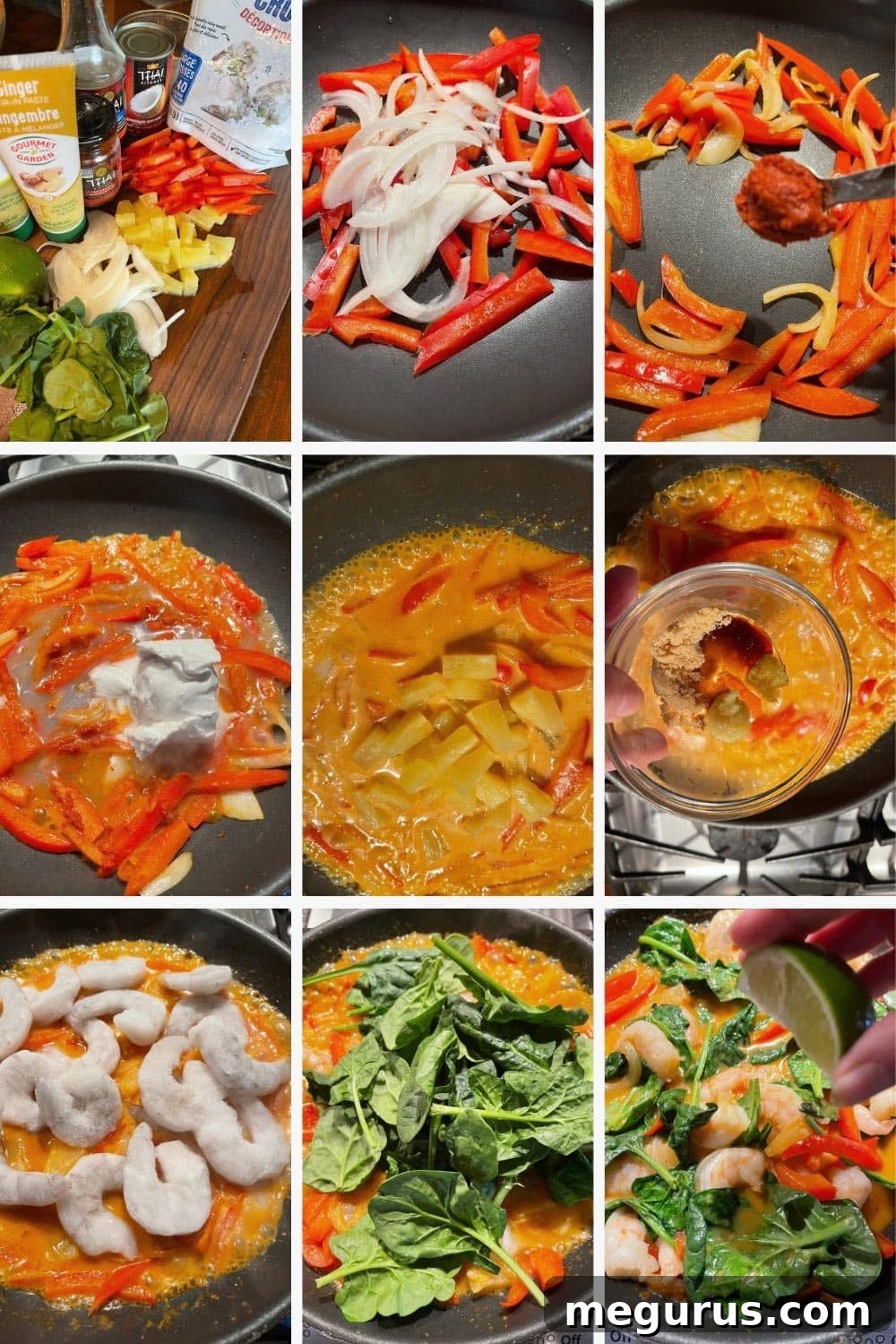
Making this Thai Red Curry Shrimp is incredibly straightforward. You’ll begin by sautéing your bell peppers and onions until they’re tender-crisp, creating a sweet and savory base. Next, the red curry paste is added, allowing its aromatic spices to bloom in the hot pan, intensifying its flavor. Then, the creamy coconut milk, vibrant pineapple, and essential seasonings like fish sauce, brown sugar, ginger, and lemongrass are stirred in, forming the rich curry sauce. Once the sauce is simmering beautifully, the frozen shrimp are introduced, cooking quickly until perfectly pink and tender. Finally, fresh spinach is stirred in to wilt, adding a touch of green freshness, and a squeeze of lime juice brightens the entire dish, bringing all the flavors into perfect harmony. A quick taste test allows you to adjust the spice or seasoning to your exact preference.
Expert Recipe Tips for Success!
- Customize Your Spice: Thai red curry paste potency can vary greatly by brand. Start with the recommended amount, then taste the sauce at the end of cooking. If you desire more heat or depth of flavor, simply stir in a bit more curry paste, a quarter teaspoon at a time, until it’s perfect for your palate.
- Timing is Everything with Rice: This dish comes together in a flash, so if you plan to enjoy it with rice, make sure to start cooking your rice *before* you begin preparing the curry. This ensures your fluffy rice is perfectly ready and waiting when your aromatic curry is piping hot.
- Achieving Your Desired Thickness: Traditional Thai curries are often thin and brothy, designed to be spooned generously over rice, allowing you to enjoy as much or as little sauce as you prefer. However, if you prefer a thicker, more substantial curry sauce, it’s easy to achieve! At the end of cooking, create a cornstarch slurry by whisking 1 tablespoon of cornstarch with 1 tablespoon of cold water until smooth. Add this mixture to the simmering curry a little at a time, stirring constantly, until the sauce thickens to your liking.
- Don’t Overcook the Shrimp: Shrimp cooks very quickly, especially when added frozen. Raw shrimp typically need only about 4-5 minutes to turn pink and opaque. Pre-cooked shrimp will only need 2-3 minutes to warm through. Overcooked shrimp can become tough and rubbery, so keep a close eye on them!
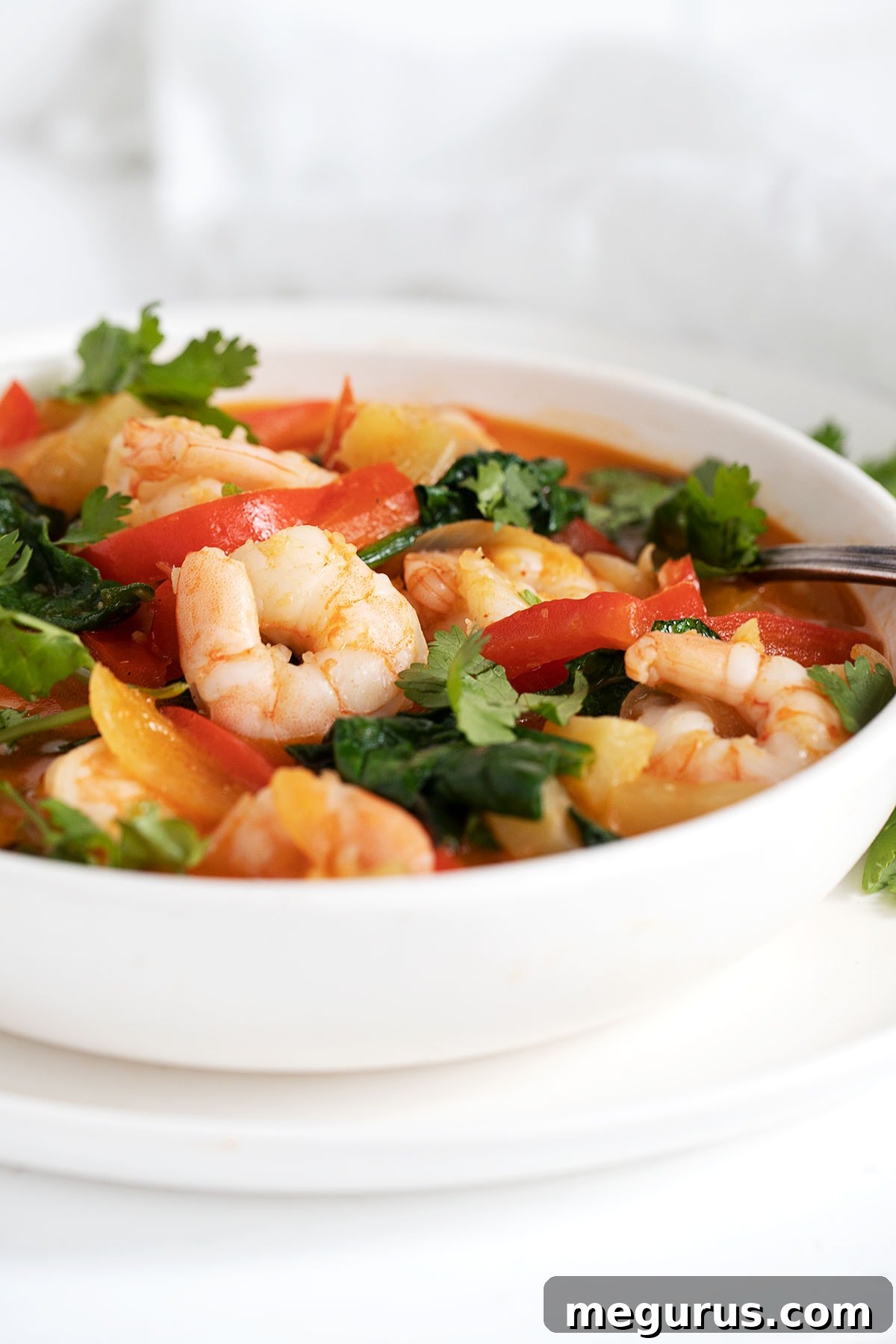
Delicious Variations & Creative Adaptations
One of the many joys of curries is their incredible adaptability. They are a fantastic canvas for utilizing whatever fresh ingredients you might have in your refrigerator or pantry. Here are some ideas to customize your Thai Red Curry Shrimp:
- Add More Vegetables: This recipe is wonderfully versatile. Consider incorporating asparagus spears, thinly sliced carrots, crisp green beans, or tender broccoli florets. When adding these, be mindful of their cooking times. Heartier vegetables like carrots or broccoli may benefit from a slight pre-cook (e.g., a quick blanch or sauté) before being added to the skillet, or you can simply extend their cooking time in the sauce to ensure they are tender before proceeding with the curry paste and coconut milk. Peas, mushrooms, or snap peas are also excellent additions.
- Protein Swaps: While shrimp is the star here, this curry base is delicious with other proteins. Try thin slices of chicken breast or thighs, firm tofu cubes (pan-fried first for extra texture), or even scallops for an elevated seafood experience. Adjust cooking times accordingly.
- Make it a Noodle Bowl: Instead of serving with rice, this curry is fantastic over rice noodles, especially wide flat rice noodles.
- Extra Fresh Herbs: Beyond cilantro, consider garnishing with fresh basil leaves (Thai basil if you can find it) or chopped mint for an extra layer of aroma.
Perfect Serving Suggestions
This Thai Red Curry Shrimp is incredibly versatile when it comes to serving. While basmati rice is a classic choice, don’t limit yourself!
- Classic Rice Pairing: Serve generously over fluffy basmati rice, jasmine rice, or even healthy brown rice. The rice soaks up the flavorful curry sauce beautifully.
- Low-Carb Options: For a lighter meal, spoon the curry over cauliflower rice or quinoa.
- Noodle Delight: Pair it with vermicelli or wide rice noodles for a hearty noodle bowl experience.
- Fresh Garnishes: Always finish with a sprinkle of freshly chopped cilantro and a few lime wedges for drizzling. The fresh lime juice brightens all the flavors. For an extra kick, a sprinkle of red chili flakes or chopped peanuts can add texture and heat.
Storage and Reheating Tips
Leftover Thai Red Curry Shrimp can be a real treat the next day!
- Refrigeration: Store any leftovers in an airtight container in the refrigerator for up to 2-3 days.
- Reheating: Gently reheat the curry on the stovetop over medium-low heat, stirring occasionally, until warmed through. You might need to add a splash of water or extra coconut milk if the sauce has thickened too much in the fridge. Be careful not to aggressively boil the shrimp, as this can make them tough. Microwaving is also an option, but stovetop reheating generally yields better results.
- Freezing: While technically possible, freezing cooked shrimp can sometimes alter its texture, making it a bit tougher. If you do freeze, use a freezer-safe container for up to 1-2 months. Thaw overnight in the refrigerator before reheating gently.
Frequently Asked Questions (FAQ)
Here are answers to some common questions you might have about making Thai Red Curry Shrimp:
Q: Can I use fresh shrimp instead of frozen?
A: Absolutely! Fresh raw shrimp will work just as well. Ensure they are peeled and deveined. The cooking time will be similar, around 3-5 minutes, until they turn pink and opaque.
Q: How spicy is this Thai Red Curry Shrimp?
A: The spice level is largely determined by the brand and amount of Thai red curry paste you use. Start with the recommended amount and adjust to your taste. If you prefer a milder curry, use less paste; for more heat, add a bit more. Some brands are inherently spicier than others.
Q: What if I don’t have fish sauce?
A: Fish sauce is crucial for authentic Thai flavor, providing umami and saltiness. If you absolutely can’t use it, you can try a splash of soy sauce or a pinch of salt, but the flavor profile will be slightly different.
Q: Can I make this dairy-free?
A: Yes, this recipe is naturally dairy-free as it uses coconut milk for its creamy base. It’s a great option for those with dairy sensitivities.
Q: Can I add different vegetables?
A: Yes, this curry is incredibly flexible. Feel free to add quick-cooking vegetables like snow peas, thinly sliced carrots, bell peppers of other colors, mushrooms, or baby corn. Add them alongside the bell peppers and onions, adjusting cooking time until they reach your desired tenderness.
Get the Recipe:
Thai Red Curry Shrimp
★
★
★
★
Pin This
Leave a Review
5
15
20
2
servings
Ingredients
- 2 teaspoon cooking oil, for pan
- 1/2 medium bell pepper, cored, thinly sliced and cut into bite-sized lengths
- 1/2 small onion, thinly sliced
- 1 1/2 teaspoon Thai red curry paste, plus more to taste
- 2/3 cup full-fat coconut milk, stirred (or all of a 160ml/5.4oz can)
- 1/3-1/2 cup canned pineapple chunks, or rings, cut into chunks
- 1 teaspoon fish sauce
- 1 teaspoon brown sugar, optional
- 1 teaspoon ginger paste, or 1/2 tsp fresh ginger minced
- 1 teaspoon lemongrass paste, optional
- 14-16 large frozen raw or cooked shrimp
- 2-3 handfuls baby spinach
- Juice of 1/4 lime
For serving:
- Chopped fresh cilantro
- Lime wedges, for drizzling
Instructions
-
Prepare and gather all your ingredients, ensuring everything is chopped and ready for cooking (this is called “mise en place”).
-
Heat the cooking oil in a large skillet or wok over medium-high heat. Add the thinly sliced bell pepper and onion, and cook, stirring frequently, until they become tender-crisp, about 4 minutes. This builds a foundational sweetness and aroma for your curry. Next, add the Thai Red Curry Paste to the skillet and cook, stirring constantly for about 30 seconds. This step, known as “blooming” the curry paste, helps release its full aromatic potential.
-
Pour in the full-fat coconut milk, then add the pineapple chunks, fish sauce, brown sugar (if using), ginger paste, and lemongrass paste (if using). Stir all ingredients together well to combine, ensuring the curry paste is fully dissolved into the sauce. Reduce the heat to medium and let the sauce gently simmer for a minute or two to allow the flavors to meld. Add the frozen shrimp and cook in the simmering sauce for about 4-5 minutes if using raw shrimp, or until they turn pink and opaque. If using pre-cooked shrimp, simply cook until they are thawed and warmed through, about 2-3 minutes. Avoid overcooking to keep the shrimp tender. Finally, scatter the baby spinach over the top of the curry. Cook for another minute, stirring the spinach into the sauce as it wilts down. Finish by drizzling with the fresh juice from 1/4 of a lime, which brightens and balances the rich flavors.
-
Taste the sauce and adjust seasonings as needed. If you prefer a bolder curry flavor, stir in a bit more curry paste, a quarter teaspoon at a time. The fish sauce provides saltiness, but you may find a touch more salt is needed to suit your personal preference.
-
Serve your delicious Thai Red Curry Shrimp immediately. Garnish generously with freshly chopped cilantro and offer extra lime wedges on the side for guests to drizzle over their meal. This curry is particularly delightful when spooned over a warm bed of basmati rice.
Notes
Thai
Main Course
Jennifer Maloney
Nutrition Information
Calories: 287kcal,
Carbohydrates: 15g,
Protein: 12g,
Fat: 21g,
Saturated Fat: 15g,
Trans Fat: 1g,
Cholesterol: 106mg,
Sodium: 599mg,
Potassium: 515mg,
Fiber: 2g,
Sugar: 10g,
Vitamin A: 4356IU,
Vitamin C: 54mg,
Calcium: 125mg,
Iron: 5mg
Tried this recipe?
If you enjoyed this recipe, please leave a star rating and comment. It helps others to find it!
More Shrimp Recipes to Love!