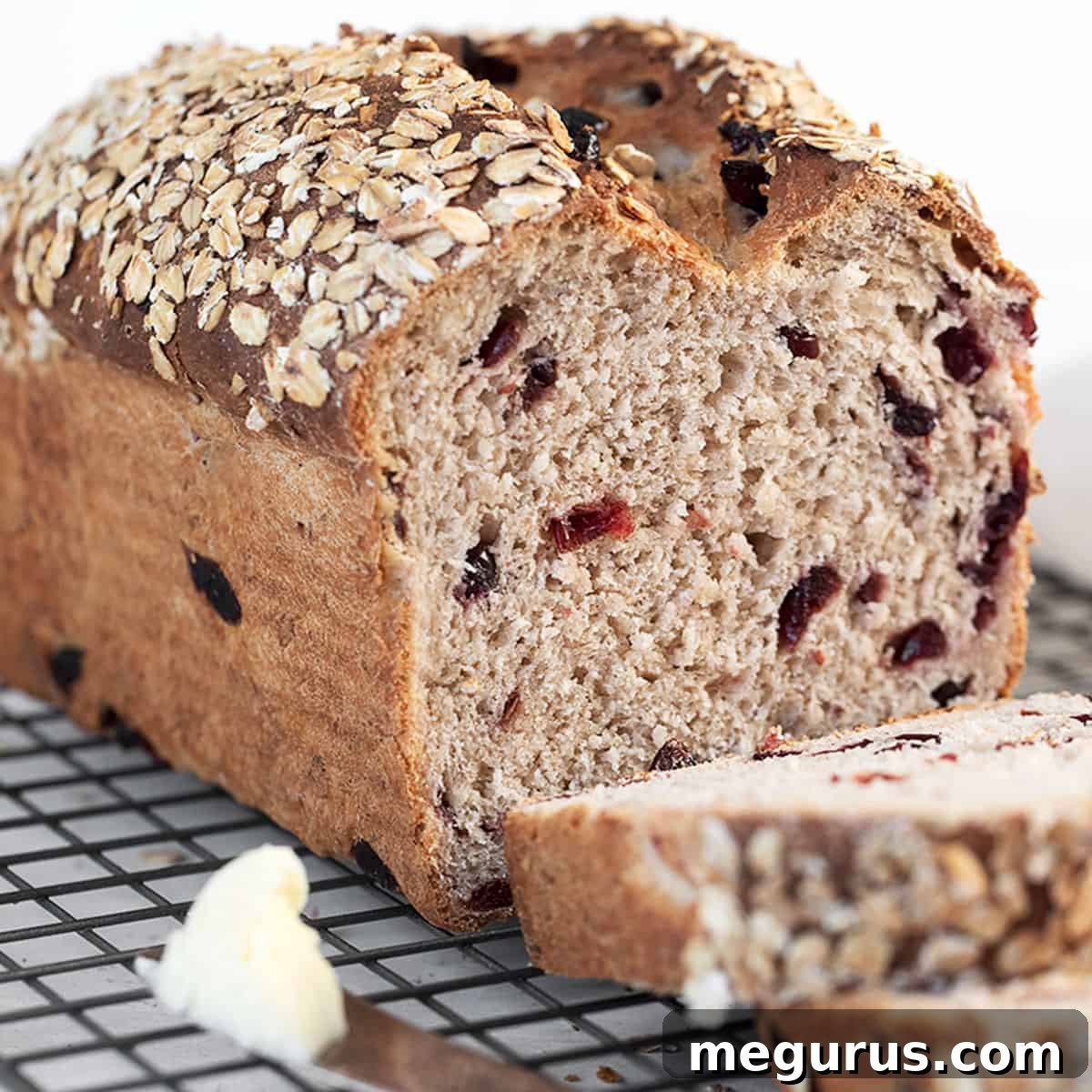
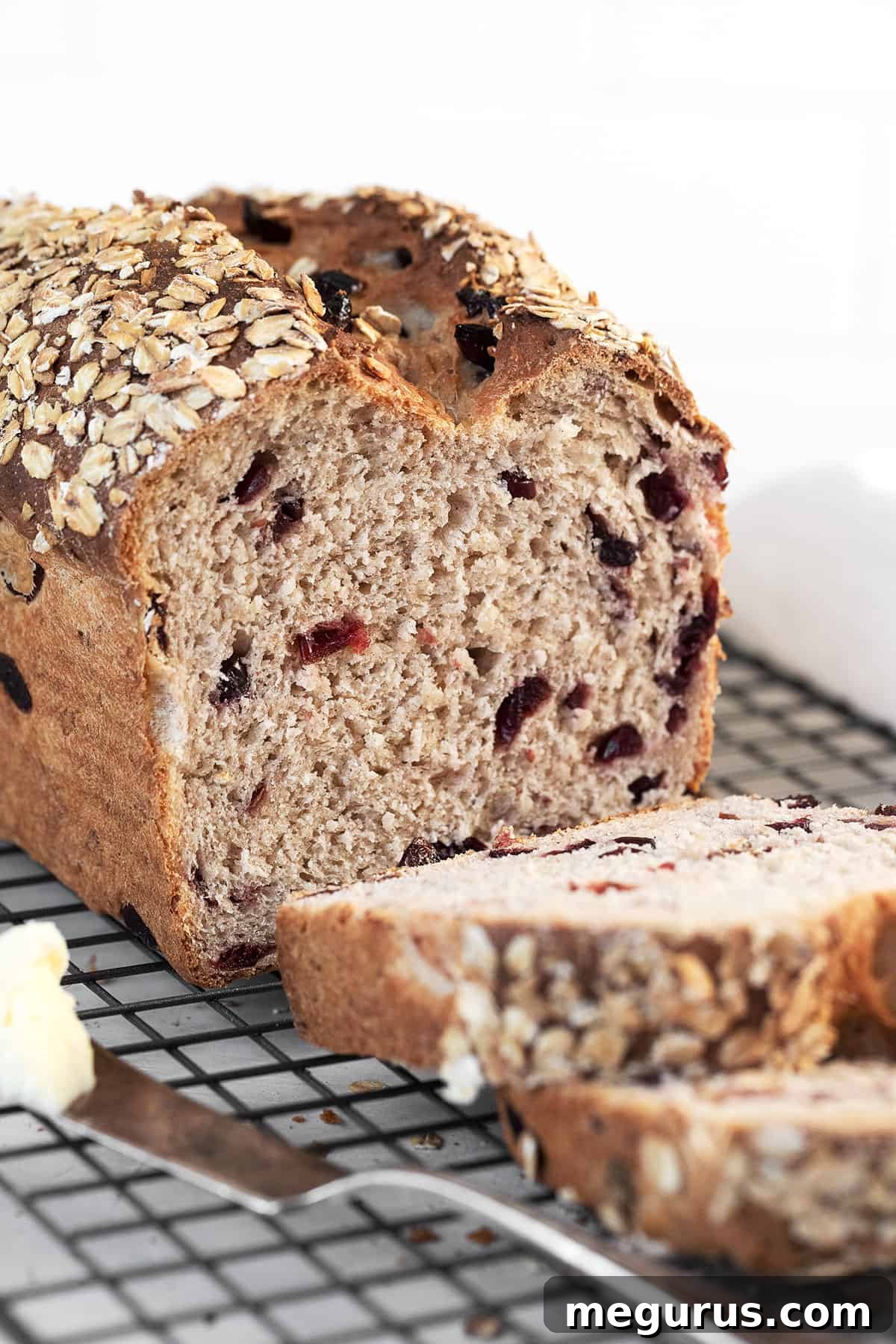
Discover the heartwarming delight of homemade Cranberry Oatmeal Bread, a truly exceptional yeast bread that’s generously studded with plump, dried cranberries. Infused with a hint of warm cinnamon and a bright touch of orange zest, this loaf offers a symphony of flavors. Crowned with a beautiful toasted oat topping, it’s not just a treat for the palate but also a feast for the eyes, making it a perfect addition to any meal or a thoughtful gift.
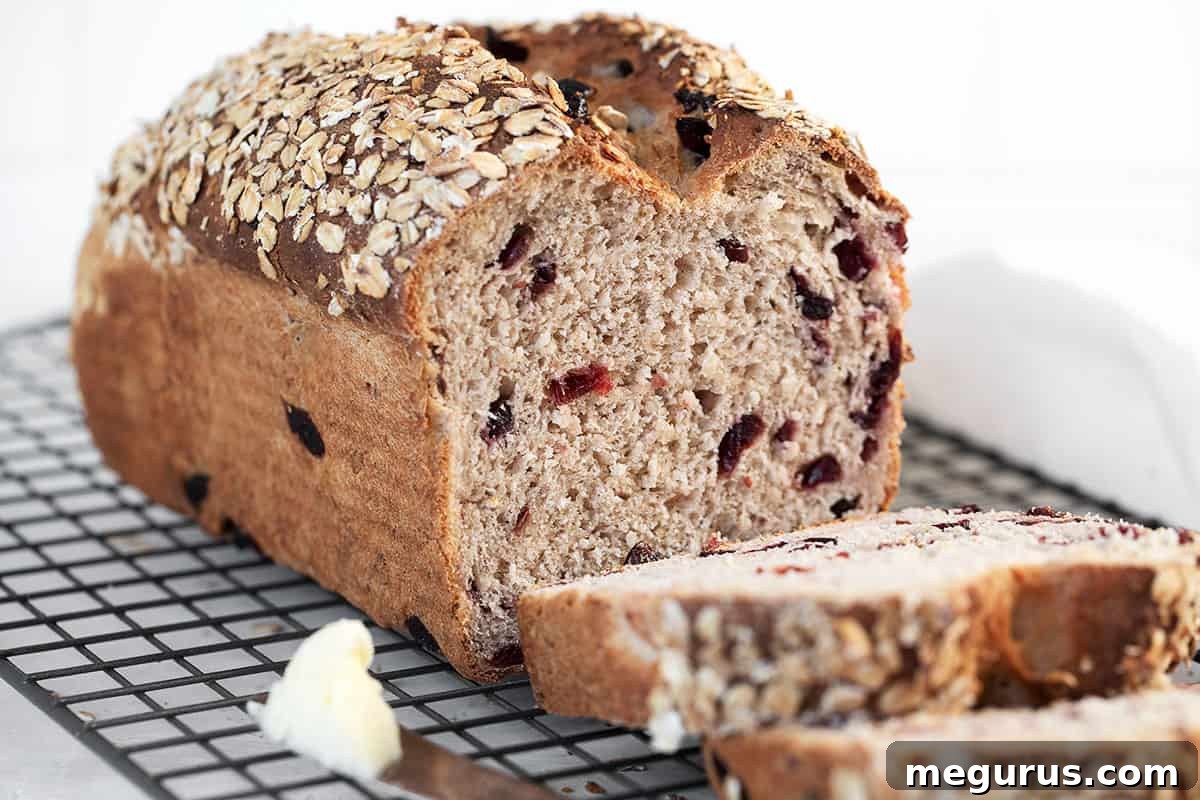
Why This Cranberry Oatmeal Bread Will Become Your New Favorite
There’s an undeniable charm to a loaf of freshly baked bread, and this Cranberry Oatmeal Yeast Bread takes that charm to an exquisite level. If you’re searching for a comforting and flavorful bread recipe, look no further. Here’s why this particular loaf is destined to be a beloved staple in your kitchen:
A Burst of Flavor in Every Bite
What truly sets this bread apart is the abundance of juicy dried cranberries. Each slice delivers a delightful sweet-tart burst, ensuring that the vibrant cranberry flavor is present in every single bite. This isn’t just an occasional speck of fruit; it’s a truly cranberry-rich experience.
Perfectly Complemented Flavors
Beyond the cranberries, the dough itself is a canvas of complementary flavors. A gentle pinch of cinnamon adds a warm, inviting spice, while a delicate touch of orange zest introduces a bright, citrusy note. This combination elevates the bread, creating a sophisticated flavor profile that perfectly harmonizes with the cranberries, making it an ideal choice for the cozy seasons of Fall and Winter. It’s a taste that truly evokes the spirit of the holidays.
Superior Texture and Moisture from Oats
The inclusion of oats in this homemade bread recipe is a genius stroke. Oats are renowned for their ability to contribute to an incredibly soft and moist crumb, lending a wholesome depth of flavor and a pleasing texture that keeps the bread fresh longer. As for the topping, a generous sprinkle of old-fashioned rolled oats toasts beautifully during baking, adding a delightful crunch and nutty aroma that perfectly contrasts the tender interior.
Versatility for Every Occasion
This Cranberry Oatmeal Bread is wonderfully versatile. Enjoy a thick slice simply spread with butter for a satisfying breakfast or a delightful afternoon snack. Its robust texture also makes it an excellent candidate for toast, transforming your morning routine into something special. And should you be lucky enough to have any left over (a rare occurrence!), this cranberry yeast bread makes for truly exceptional French toast or a decadent bread pudding, giving it a second life in a delicious way. Imagine it as the base for a holiday stuffing or even cubed and toasted for sweet croutons in a winter salad!
A Loaf as Beautiful as it is Delicious
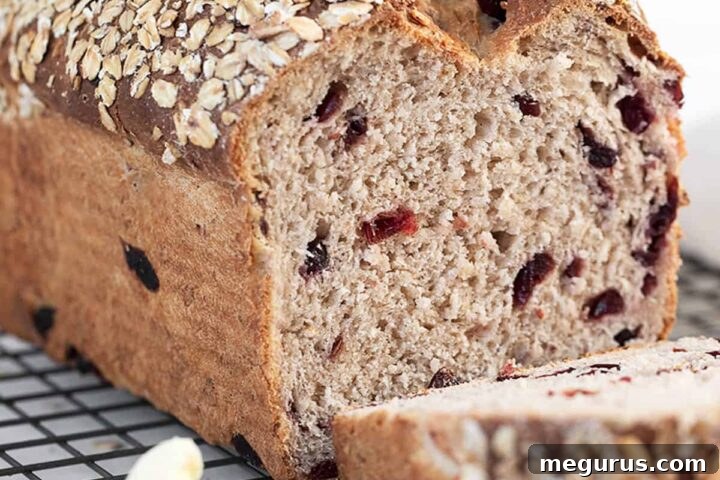
Finally, the visual appeal of this bread is simply stunning. The deep red cranberries peeking through the golden crumb, contrasted with the rustic, golden-brown toasted oat topping, make for a truly beautiful loaf of bread. Whether it’s gracing your breakfast table, being shared at a gathering, or given as a homemade gift, its aesthetic charm is sure to impress.
Essential Ingredients and Smart Substitutions for Your Cranberry Oatmeal Bread
Creating this delicious Cranberry Oatmeal Bread starts with understanding the role of each ingredient. Here’s a closer look at what you’ll need and how you can adapt the recipe with thoughtful substitutions.
Dried Cranberries: The star of the show! You can use any brand or type of dried cranberries you prefer. Whether sweetened or unsweetened, they will infuse the bread with their signature tart-sweet flavor. For an extra touch of flavor, consider soaking them in orange juice or a touch of rum for 10-15 minutes before adding to the dough, then drain well. Other dried fruits like raisins, chopped dried apricots, or even dried cherries would also be wonderful alternatives, offering a slightly different but equally delightful sweetness.
Oats: For the best results and that characteristic soft, moist crumb, we highly recommend using large-flake, old-fashioned rolled oats. These oats absorb liquid gradually, contributing to the bread’s texture and moisture. While quick oats might work in a pinch, they are cut finer and absorb liquid faster, which could potentially alter the dough consistency and final texture. If using quick oats, you might need to adjust the amount of flour slightly. Instant oats, however, are not recommended as they are too processed and will likely result in a gummy texture.
Flour: The foundation of any good bread. You have flexibility here; both all-purpose flour and bread flour will yield excellent results. Bread flour, with its higher protein content, will create a slightly chewier crumb and provide more structure. If using bread flour, be mindful not to over-add, as it can absorb more liquid. Start by holding back a small amount (about a quarter cup) and add it only if the dough truly needs it. For a heartier loaf with increased fiber and a nuttier flavor, you could substitute up to 3/4 cup (90g) of the all-purpose flour with whole wheat flour. Be aware that this substitution will likely result in a denser loaf with a slightly different texture, so adjust your expectations accordingly.
Yeast: This recipe is designed for a classic two-rise bread, which allows for deeper flavor development and a superior texture. Therefore, you’ll need either Active Dry Yeast or regular Instant Yeast (sometimes called “bread machine yeast,” like SAF Brand). It’s crucial to avoid quick or rapid-rising yeast for this recipe, as its fast-acting nature can interfere with the specific knead and rest cycles, leading to a less developed flavor and potentially a less satisfying crumb. Always check the expiration date on your yeast to ensure it’s active and fresh for optimal rising power.
Unsalted Butter: Butter adds richness and tenderness to the bread. Using unsalted butter allows you to control the overall salt content of your recipe. If you only have salted butter, reduce the added salt in the recipe by about ¼ teaspoon per stick (1/2 cup) of butter used. For a dairy-free alternative, a neutral-flavored oil (like canola or vegetable oil) or a plant-based butter substitute can be used, though the flavor profile may vary slightly.
Fine Salt: Salt is not just for flavor; it also plays a critical role in controlling yeast activity and strengthening gluten structure. Use fine salt for even distribution. As mentioned, adjust the amount if using salted butter.
Cinnamon and Orange Zest: These aromatics are optional but highly recommended for the depth they add. The warmth of cinnamon and the bright, fresh notes of orange zest create a beautiful balance with the cranberries. Always use fresh orange zest for the most vibrant flavor. If you don’t have an orange, a tiny splash of orange extract or even a dash of nutmeg or cardamom could offer an interesting twist.
Boiling Water: Used to hydrate the oats and cranberries, this is a crucial step. Ensure it cools to the specified lukewarm temperature (around 105°F / 40°C) before adding yeast, as water that’s too hot will kill the yeast, and water that’s too cold won’t activate it.
The Art of Making Cranberry Oatmeal Bread: A Step-by-Step Guide
Baking this Cranberry Oatmeal Bread is a rewarding process. Follow these detailed steps to achieve a perfectly moist and flavorful loaf. The unique knead-and-rest method ensures a wonderful texture!
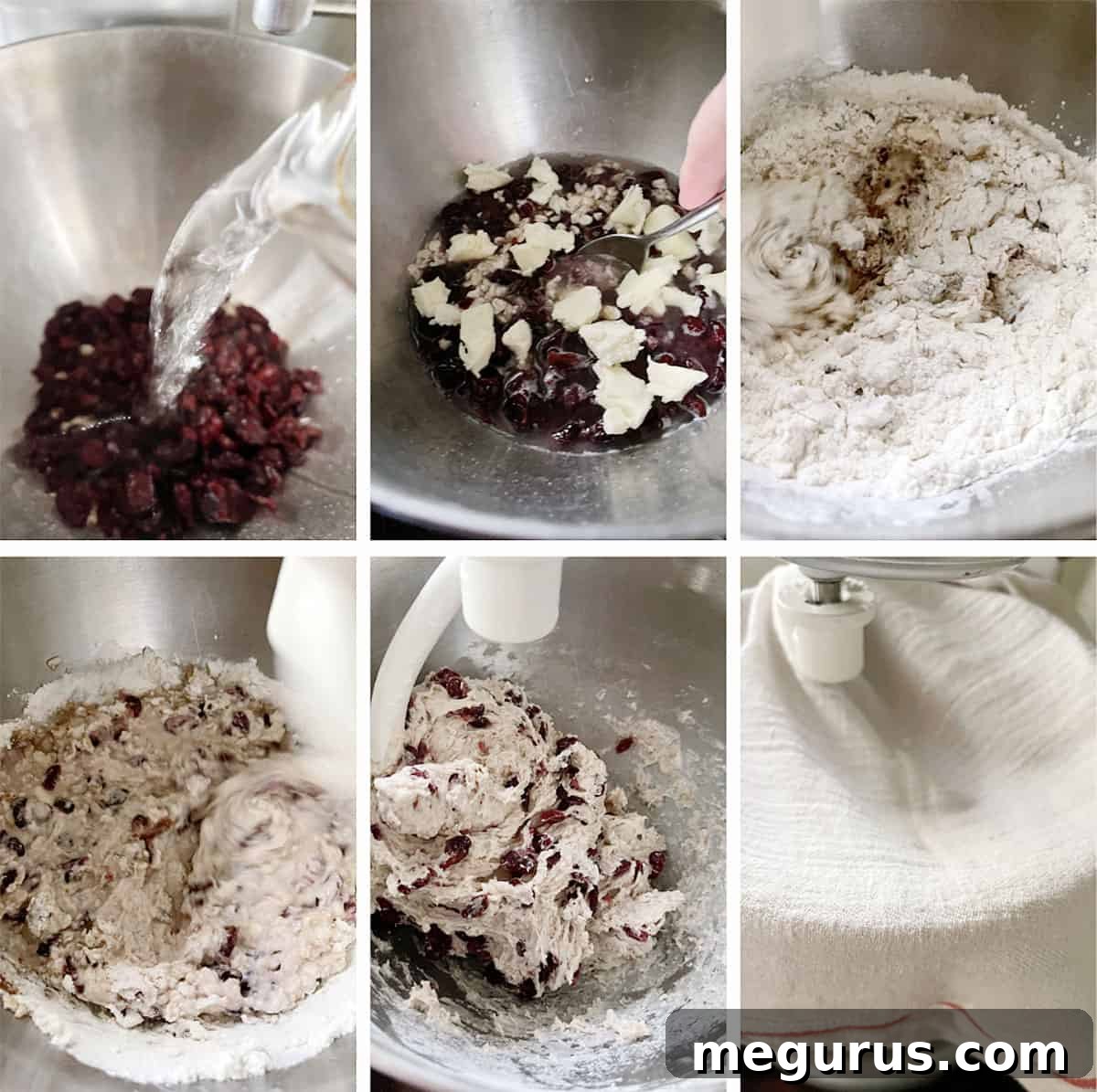
Step 1: Hydrate the Oats and Cranberries, Then Mix the Dough
Begin by combining your large-flake rolled oats and dried cranberries in a large mixing bowl or the bowl of your stand mixer, if using. Pour the boiling water over them and stir thoroughly to ensure all oats and cranberries are submerged and begin to absorb the liquid. Let this mixture stand for 15-20 minutes. This crucial step allows the oats to soften and swell, creating that desirable moist crumb, and also plumps up the cranberries. Before proceeding, ensure the mixture has cooled to just lukewarm, approximately 105°F (40°C). Use a thermometer to verify the temperature; it’s vital that the mixture isn’t too hot, which would kill your yeast, or too cold, which would hinder its activation.
Once the oat and cranberry mixture is lukewarm, break the unsalted butter into small pieces and add them to the bowl, stirring until the butter has fully melted into the warm mixture. This adds richness and tenderness to the dough.
In a separate medium bowl, whisk together 3 cups of the all-purpose flour, the fine salt, cinnamon, and orange zest. If using instant yeast, add it to these dry ingredients. (Important for Active Dry Yeast: If using Active Dry Yeast, do not add it to the dry ingredients. Instead, sprinkle it directly onto the lukewarm oat/cranberry mixture after it has cooled sufficiently. Let it sit for a few minutes until it looks foamy, indicating it’s active, then proceed with adding the dry ingredients.)
Add the dry ingredient mixture to the wet oat/cranberry mixture in the stand mixer bowl (or large mixing bowl if kneading by hand). With the kneading hook attached to your stand mixer, begin to mix on low speed. Gradually add the remaining 3/4 cup of flour, a little at a time, until the dough starts to come together into a moist, sticky mass that wraps around the dough hook. The dough will look quite sticky and soft at this stage – that’s perfectly normal and expected! It should clear the sides of the bowl, but it won’t necessarily clean it entirely. Resist the urge to add more flour at this point; the oats will continue to absorb liquid as the dough rests, and adding too much flour now will result in a dry, dense loaf. Cover the bowl with a clean tea towel and let the dough rest for 10 minutes. If using a stand mixer, you can simply leave the kneading hook in place and cover the bowl.
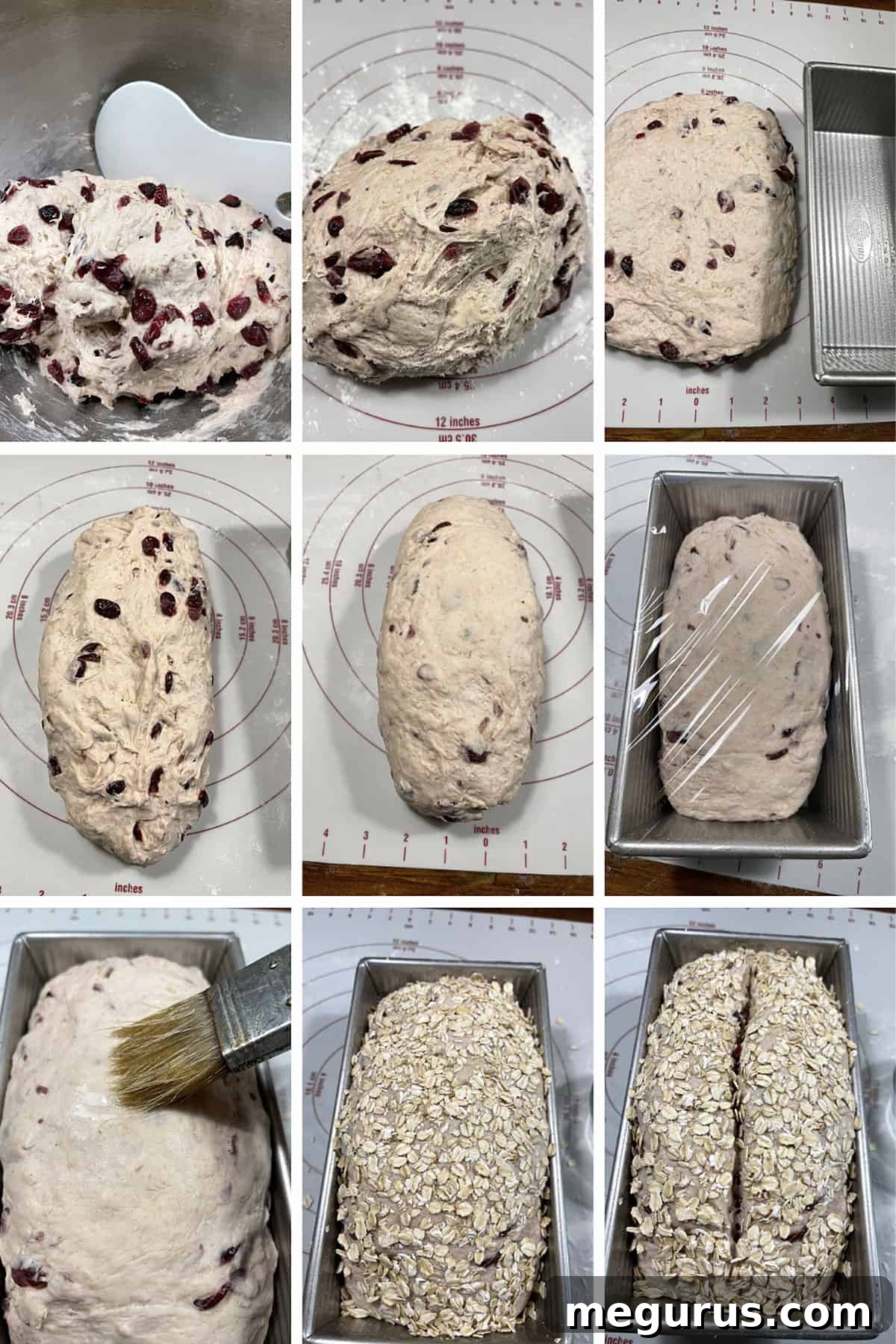
Step 2: Knead and Rest Cycle, Shaping, Second Rise, and Preparing for Baking
This bread employs a series of short knead and rest steps instead of a single, long first rise. After the initial 10-minute rest:
- Knead and Rest Cycle: Knead the dough for just 10 seconds. If using a stand mixer, simply turn it on for 10 seconds. If kneading by hand, oil your hands lightly to manage the sticky dough and knead gently for 10 seconds. Then, cover the bowl again and let the dough rest for another 10 minutes.
- Repeat: Repeat this 10-second knead and 10-minute rest sequence two more times, for a total of three knead-and-rest cycles. This gentle process helps to develop the gluten structure gradually, contributing to a tender and elastic dough. If you find it hard to keep track, a simple note next to your mixer with checkboxes can be very helpful!
- Final Rest: After the three cycles are complete, cover the dough again and let it rest undisturbed for 30 minutes. During this time, the dough will continue to hydrate and develop flavor.
- Shape the Dough: Lightly flour your work surface and your hands. Gently turn the dough out onto the surface. Pat it out into a rectangle, roughly 8 inches long (to match the length of your loaf pan) and about 5-6 inches wide. Gently roll the dough from one of the long sides, creating a log. Pinch the seam firmly along the bottom and at the ends to seal the loaf.
- Second Rise: Place the shaped dough, seam-side down, into a greased 8 1/2 x 4-inch loaf pan. Cover the pan loosely with greased plastic wrap or a clean, damp tea towel to prevent drying. Allow the loaf to rise in a warm, draft-free place until it has risen by about half its original size and crests the pan by approximately 1 to 1 1/2 inches in the center. This typically takes 60-90 minutes, depending on the warmth of your kitchen. The dough should feel light and airy.
- Prepare for Baking: While the loaf is in its final stages of rising, preheat your oven to 425°F (220°C). Once the loaf has adequately risen, gently brush the top with a little water. This helps the oats adhere and creates a crispier crust. Generously press a handful of extra rolled oats onto the top of the loaf. Finally, using a very sharp knife (or a lame), make a single, decisive slash down the center of the loaf, cutting about 1/2 to 3/4 inch deep. This slash allows the bread to expand evenly during baking, preventing uncontrolled tearing.
- Bake, Cool, and Enjoy: Place the loaf in the preheated oven. Bake for approximately 50 minutes. After about 25 minutes of baking, loosely tent the top of the loaf with aluminum foil to prevent it from over-browning. The bread is done when it’s a deep golden brown and an instant-read thermometer inserted into the center reads around 195°F (90°C). Remove the loaf from the oven and immediately transfer it from the loaf pan to a wire cooling rack. Allow it to cool completely before slicing to ensure the interior sets properly and to prevent a gummy texture. Patience is key for the perfect slice!
Expert Baking Tips for a Perfect Loaf Every Time
Achieving bakery-quality bread at home is incredibly rewarding. Here are some invaluable tips to ensure your Cranberry Oatmeal Bread turns out perfectly:
- The Power of a Kitchen Scale: While cup measurements are provided, for the most consistent and accurate results in bread baking, weighing your ingredients (especially flour) with a kitchen scale is highly recommended. Flour can vary greatly in weight depending on how it’s scooped. If you’re serious about baking, a digital scale is a small investment that pays huge dividends in precision and predictable outcomes. You won’t regret adding this essential tool to your kitchen arsenal!
- Trust the Sticky Dough Process: Oatmeal-based yeast breads naturally tend to be a bit stickier and moister than other doughs. It’s crucial to resist the urge to add extra flour during the mixing and kneading phases, even if the dough seems quite “un-kneadable” initially, especially if you’re using a stand mixer. Trust that the oats will continue to absorb liquid as the dough rests, leading to a manageable and ultimately tender loaf. Adding too much flour will result in a dry, dense bread.
- The Unique Knead and Rest Sequence: This recipe’s preparation, with its series of short kneads and rests rather than a single long first rise, is a key factor in its success. While it requires a little more attention than a conventional first rise, it’s far from onerous. If you’re like me and can sometimes forget how many quick kneads you’ve done, a simple written note or tally marks next to your mixer can be a helpful reminder to keep track of each completed cycle!
- Stand Mixer vs. Hand Kneading: Given the moist nature of this dough, a stand mixer fitted with a dough hook is definitely the easiest way to knead it effectively. However, if you don’t have a stand mixer, don’t despair! You can absolutely knead this dough by hand. Simply lightly oil your hands periodically as you knead. This prevents the sticky dough from clinging excessively and makes the process much more manageable. You might also want to oil your work surface slightly instead of flouring it heavily, which can dry out the dough.
- Proofing Environment: Yeast loves warmth! Ensure your dough rises in a warm, draft-free environment. A slightly warm oven (turned off, with just the light on) or a warm spot on your kitchen counter can work wonders, especially in cooler climates.
- Don’t Over-Bake: Over-baking can lead to a dry loaf. Always use an instant-read thermometer to check for doneness (195-200°F / 90-93°C internal temperature). The foil tent after 25 minutes helps prevent the crust from becoming too dark while the interior finishes baking.
- Cool Completely: As tempting as it is, slicing into warm bread can release steam and make the interior gummy. Allow your loaf to cool completely on a wire rack. This allows the internal structure to set and ensures the best texture and flavor.
- Customize Your Loaf: Feel free to experiment! A sprinkle of turbinado sugar on top along with the oats can add an extra sweet crunch. You could also add a tablespoon of poppy seeds or finely chopped nuts to the dough for added texture and flavor.
Storing and Freezing Your Delicious Cranberry Oatmeal Bread
To enjoy the fresh taste and perfect texture of your homemade Cranberry Oatmeal Bread for as long as possible, proper storage is essential.
- Room Temperature Storage: Once completely cooled, store the bread in an airtight container or a large, sealable plastic bag at room temperature. It will remain wonderfully fresh and moist for 2-3 days. Avoid refrigerating yeast breads, as it can actually cause them to stale faster due to a process called “retrogradation of starch.”
- Freezing for Longer Enjoyment: For extended storage, freezing is an excellent option. Ensure the loaf is completely cool. You can freeze it whole, in half, or sliced. For best results, wrap the bread tightly in plastic wrap, then an additional layer of aluminum foil, or place it in a freezer-safe bag. This double-layer protection helps prevent freezer burn. Properly wrapped, the bread will keep well in the freezer for up to 2 months.
- Thawing and Reheating: To thaw, simply remove the bread from the freezer and let it sit at room temperature, still wrapped, for several hours or overnight. For a warm, “just baked” experience, you can gently reheat thawed slices in a toaster or the whole loaf (unwrapped) in a preheated oven at 350°F (175°C) for 10-15 minutes until warmed through.
Get the Recipe: Cranberry Oatmeal Bread
Leave a Review
Pin This
Prep Time: 15 mins
Cook Time: 50 mins
Rising/Kneading Time: 2 hrs
Total Time: 3 hrs 5 mins
Yield: 12 servings
Ingredients
- 3/4 cup (65 g) large-flake old fashioned rolled oats, plus extra for topping
- 1 1/4 cups (175 g) dried cranberries
- 1 2/3 cups (375 ml) boiling water
- 3 1/2 Tablespoons (50 g) unsalted butter
- 3 3/4 cups (450 g) all purpose flour, spooned and levelled, plus more as needed
- 1 1/2 teaspoon fine salt, reduce slightly if using salted butter
- 1/2 teaspoon cinnamon
- 1/2 teaspoon orange zest, optional, but a nice addition if you have an orange handy
- 1 teaspoon instant yeast, not quick or rapid-rise yeast **see Instructions below for Active Dry yeast
Instructions
- Put the rolled oats and dried cranberries in a large bowl or the bowl of a stand mixer fitted with a kneading hook. Add the boiling water and stir. Let stand for 15-20 minutes, or until the mixture is just lukewarm. *About 105°F (40°C). Test with a thermometer, to be sure it is cooled enough before adding yeast.
- **For Active Dry Yeast: Do not add active dry yeast to the dry ingredients, as it needs to be activated in warm water. Add directly to the lukewarm oat/cranberry mixture, making sure it has cooled to about 105°F (40°C) before adding the yeast. Let stand a few minutes until foamy, then proceed as below.
- Break the butter into small pieces and add to the warm cranberry/oat mixture and stir in until melted.
- In a medium bowl, stir together the 3 cups of the flour, the salt, cinnamon, orange zest and instant yeast. Add the dry ingredients to the cooled oat/cranberry mixture to the bowl and mix. Begin adding the remaining 3/4 cup of flour just until dough comes together into a moist mass that wraps around the dough hook. It should clear the bowl, but not necessarily clean it, as it will still be quite sticky at this point. *You may not need to add all of the remaining flour to get the dough to this point or possibly, you may need to add a tiny bit more. Cover the bowl with a tea towel and let stand 10 minutes. *If making in the stand mixer, I just leave the kneading hook in and throw the towel over the top of the bowl. If making without a mixer, simply throw the towel over the dough on the counter.
- Knead dough for 10 seconds (either by just turning on the mixer for 10 seconds or kneading by hand with oiled hands), then leave for ten minutes to rest. Repeat this knead-and-rest sequence twice more at 10 minute intervals, then cover the dough and leave undisturbed for 30 minutes.
- Pat the dough into a rectangle roughly 8-inches long and 4-inches wide, bring the long sides together in the middle and pinch together to form a seam, then place seam-side down into an 8 1/2×4-inch greased loaf pan. Cover the pan with greased plastic wrap and let rise until risen by half, or it crests the pan by about 1 – 1 1/2 inches in the centre of the loaf.
- Heat the oven to 425°F (220°C). Brush the top of the loaf with water, then press on a handful of oats. Cut a gash down the middle with a sharp knife (cutting into the loaf roughly 1/2-3/4-inch).
- Bake the loaf for about 50 minutes, covering the top loosely with foil after 25 minutes of baking to prevent over-browning. Loaf should reach about 195°F (90°C) when measured with an instant-read thermometer.
- Remove from oven and immediately remove from loaf pan to a wire cooling rack to cool completely before slicing.
Notes
Be sure to read the notes above this Recipe Card, for more tips on making this bread. You will also find Step-by-Step photos there that you might find helpful.
Cuisine: American, Canadian
Course: Bread
Author: Jennifer Maloney
Serving: 1 serving, Calories: 233 kcal, Carbohydrates: 44g, Protein: 5g, Fat: 4g, Saturated Fat: 2g, Polyunsaturated Fat: 1g, Monounsaturated Fat: 1g, Trans Fat: 1g, Cholesterol: 9mg, Sodium: 293mg, Potassium: 76mg, Fiber: 3g, Sugar: 8g, Vitamin A: 103IU, Vitamin C: 1mg, Calcium: 12mg, Iron: 2mg
Tried this recipe? If you enjoyed this recipe, please leave a star rating and comment. It helps others to find it!