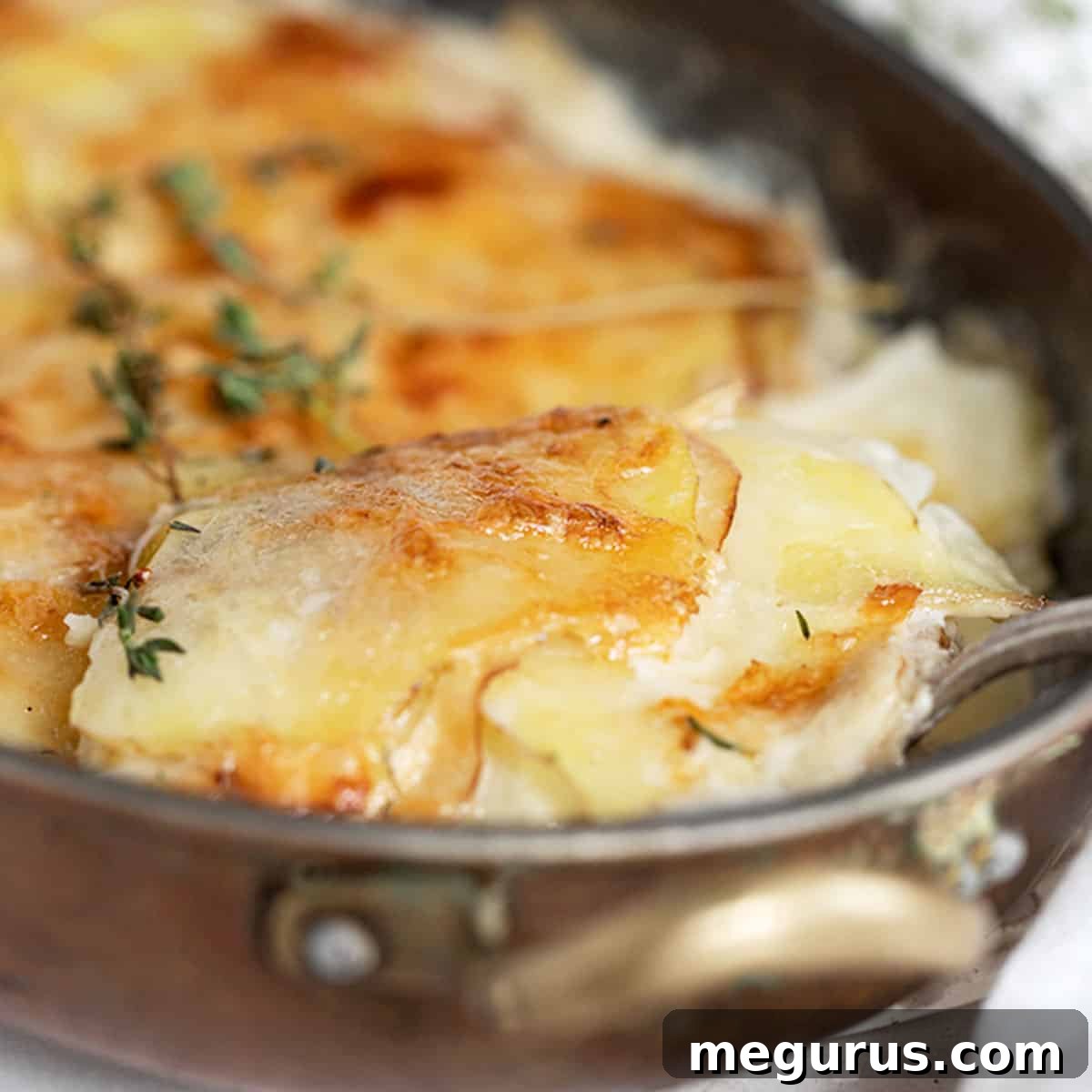
Pear Potato Gratin: A Delightfully Unique Side Dish
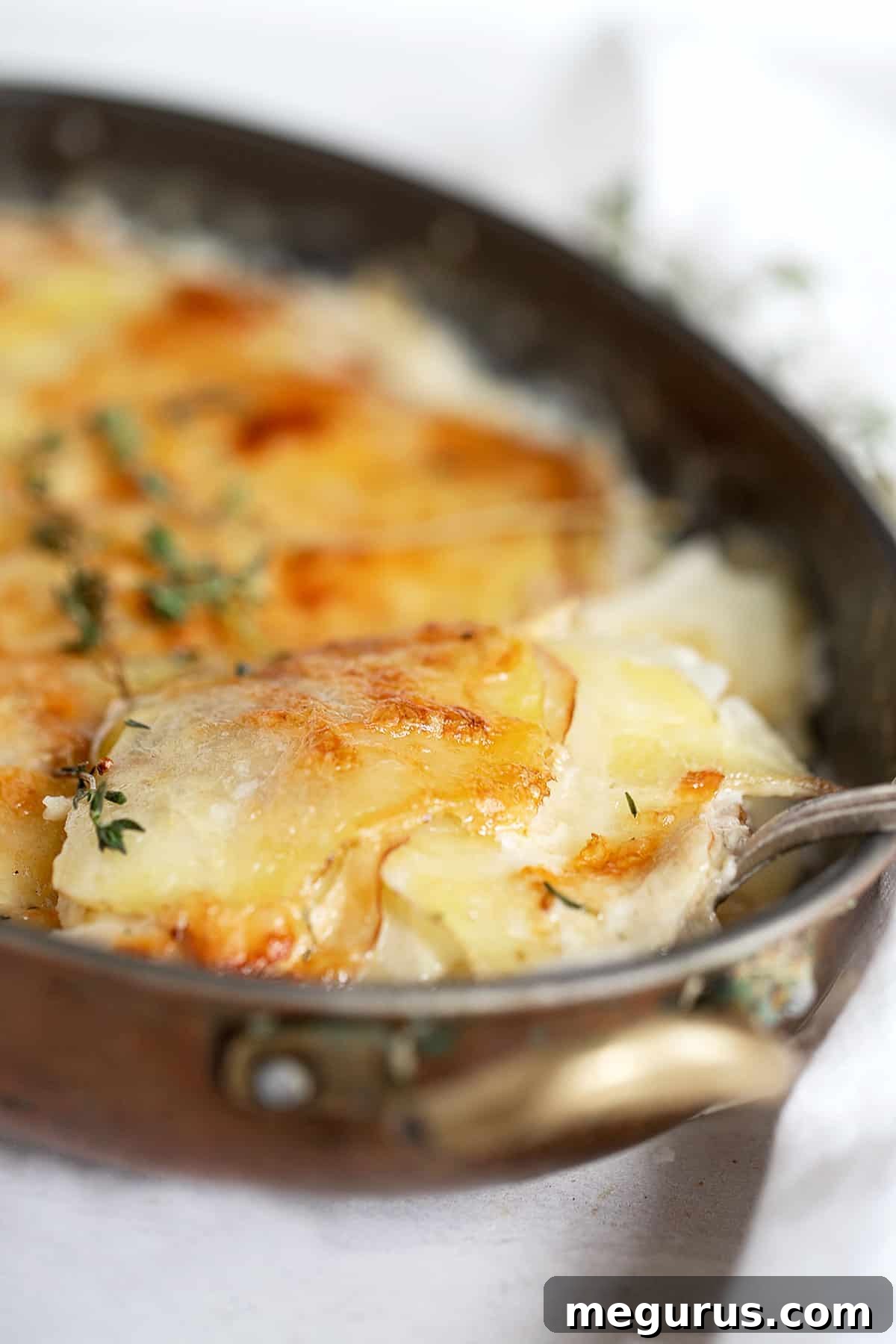
Discover the unexpected harmony of sweet and savory with this extraordinary Pear Potato Gratin. Thinly sliced potatoes, rich heavy cream, and nutty Gruyere cheese come together with a hint of perfectly ripe pear, creating a side dish that is both comforting and elegantly different. It’s a culinary revelation that will elevate any meal from ordinary to unforgettable, promising a delightful surprise for your palate.
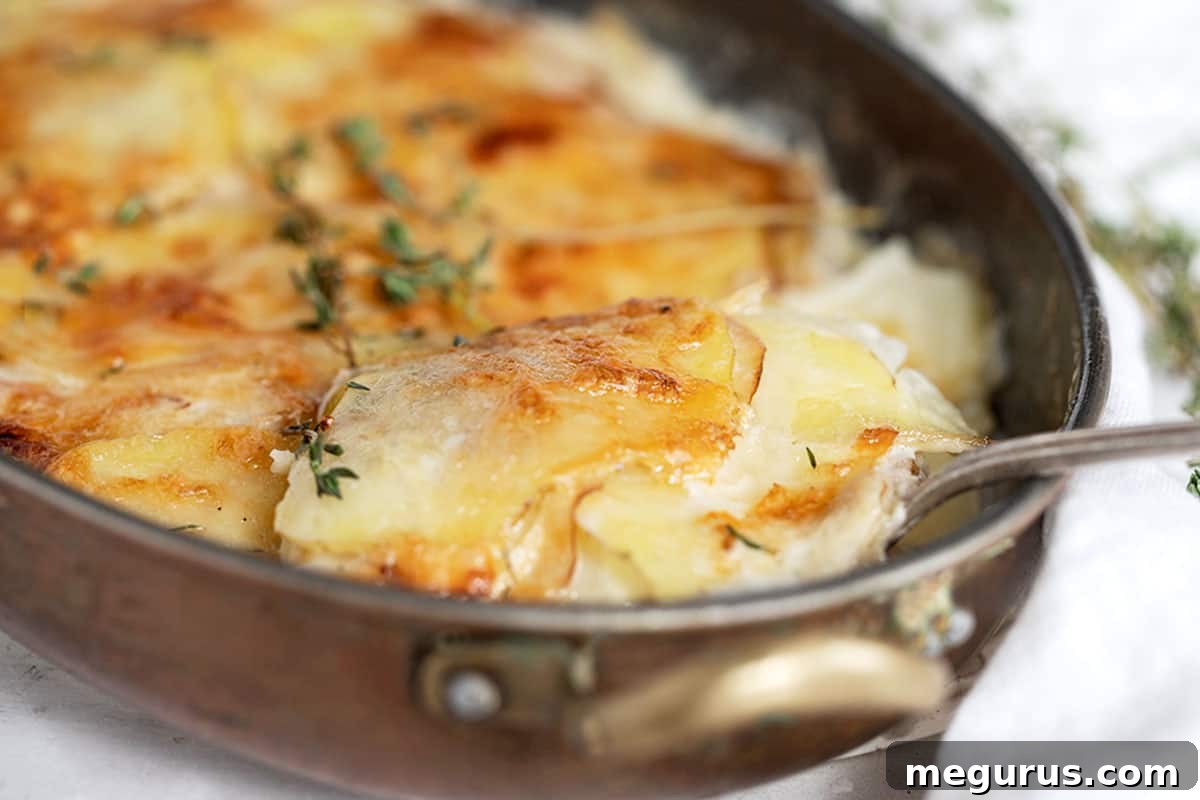
Why This Pear Potato Gratin Will Become Your New Favorite
There’s a reason why potato gratins are a timeless classic on dinner tables worldwide: the irresistible combination of tender, creamy potatoes baked with rich cheese is pure perfection. But what if you could take that perfection and infuse it with an intriguing, subtle sweetness that makes everyone wonder what your secret ingredient is?
-
An Unexpected Flavor Revelation
The addition of pear to a classic potato gratin is a game-changer. It introduces a delicate, fruity note that complements the earthy potatoes and nutty Gruyere without overpowering them. It’s a sophisticated blend that adds depth and an exciting dimension you won’t find in traditional gratins.
-
Elevated Comfort Food
This dish takes the beloved comfort of a potato gratin and elevates it to gourmet status. It looks impressive on the table, yet it’s surprisingly straightforward to prepare. Perfect for impressing guests at a dinner party or adding a touch of elegance to a family meal.
-
Versatile Pairing for Any Occasion
Whether you’re serving a simple grilled chicken, a succulent roasted pork loin, or a festive holiday ham, this pear potato gratin is the ideal accompaniment. Its unique flavor profile makes it suitable for a wide range of main courses, enhancing rather than competing with other flavors.
The Magic Behind the Gratin: A Brief Culinary History
The term “gratin” originates from the French word “gratter,” meaning “to scrape,” referring to the crispy, browned crust that forms on top of the dish. A gratin is typically a dish baked in a shallow oven-proof dish, often topped with breadcrumbs, cheese, or a creamy sauce, and browned under a broiler or in a hot oven until golden and bubbly. While potato gratin (Gratin Dauphinois) is perhaps the most famous variation, the technique can be applied to vegetables, pasta, or even fruits. The beauty of a gratin lies in its simplicity and the contrasting textures: tender, creamy interior beneath a glorious, crunchy crust.
Key Ingredients for a Perfectly Balanced Pear Potato Gratin
Crafting this unique gratin begins with selecting the right components. Each ingredient plays a crucial role in achieving the exquisite balance of flavors and textures.
Potatoes: The Foundation of Flavor and Texture
For this gratin, yellow-fleshed potatoes like Yukon Gold are highly recommended. Their waxy-starchy texture holds its shape well when sliced thin, yet becomes wonderfully creamy when baked. They also have a naturally buttery flavor that complements the other ingredients beautifully. You can choose to peel your potatoes for a refined look or leave the skin on for added rustic charm and nutrients – the choice is yours.
Pear: The Sweet, Subtle Star
The star of the show, the pear, requires careful selection. Opt for Bosc pears that are ripe but still firm. This firmness is vital, as it allows for precise, thin slicing (ideally with a mandolin) and ensures the pear retains some textural integrity during baking, rather than turning to mush. Bosc pears also offer a subtle sweetness and a delicate aroma that integrates seamlessly with the savory elements. If Bosc pears aren’t available, choose other firm varieties like Anjou or Forelle, ensuring they are not overly soft.
Gruyere Cheese: The Nutty Backbone
Yes, Gruyere can be a little pricey, but its distinctive nutty, earthy, and slightly sweet flavor is truly unparalleled in this dish. It melts beautifully, creating a rich, savory layer that perfectly balances the sweetness of the pear. You only need a moderate amount, so it’s worth the investment. For alternatives, Emmental or Jarlsberg are excellent choices, offering a similar nutty profile. Other good substitutes include Comté or a mild Fontina cheese.
Heavy Cream: The Essence of Indulgence
To achieve the signature richness and creamy consistency of a true gratin, heavy whipping cream (35% b.f.) is non-negotiable. Its high fat content ensures a luxurious mouthfeel and prevents the sauce from separating or becoming watery. Lighter creams or milk simply won’t provide the same decadence or bind the dish as effectively. If you absolutely must use a lighter cream, consider whisking in a teaspoon of cornstarch before pouring it over the potatoes to aid in thickening.
Essential Seasonings: Enhancing Every Layer
Beyond the main ingredients, a few simple seasonings are critical. Salt is paramount, especially to balance the sweetness introduced by the pear. Don’t be shy with it! Freshly ground black pepper adds a subtle bite, and a pinch of nutmeg enhances the creamy, cheesy flavors with its warm, aromatic notes, a classic addition to many gratins. A tablespoon of melted butter helps ensure a golden, crispy top layer.
Visual Guide and Preparation Steps
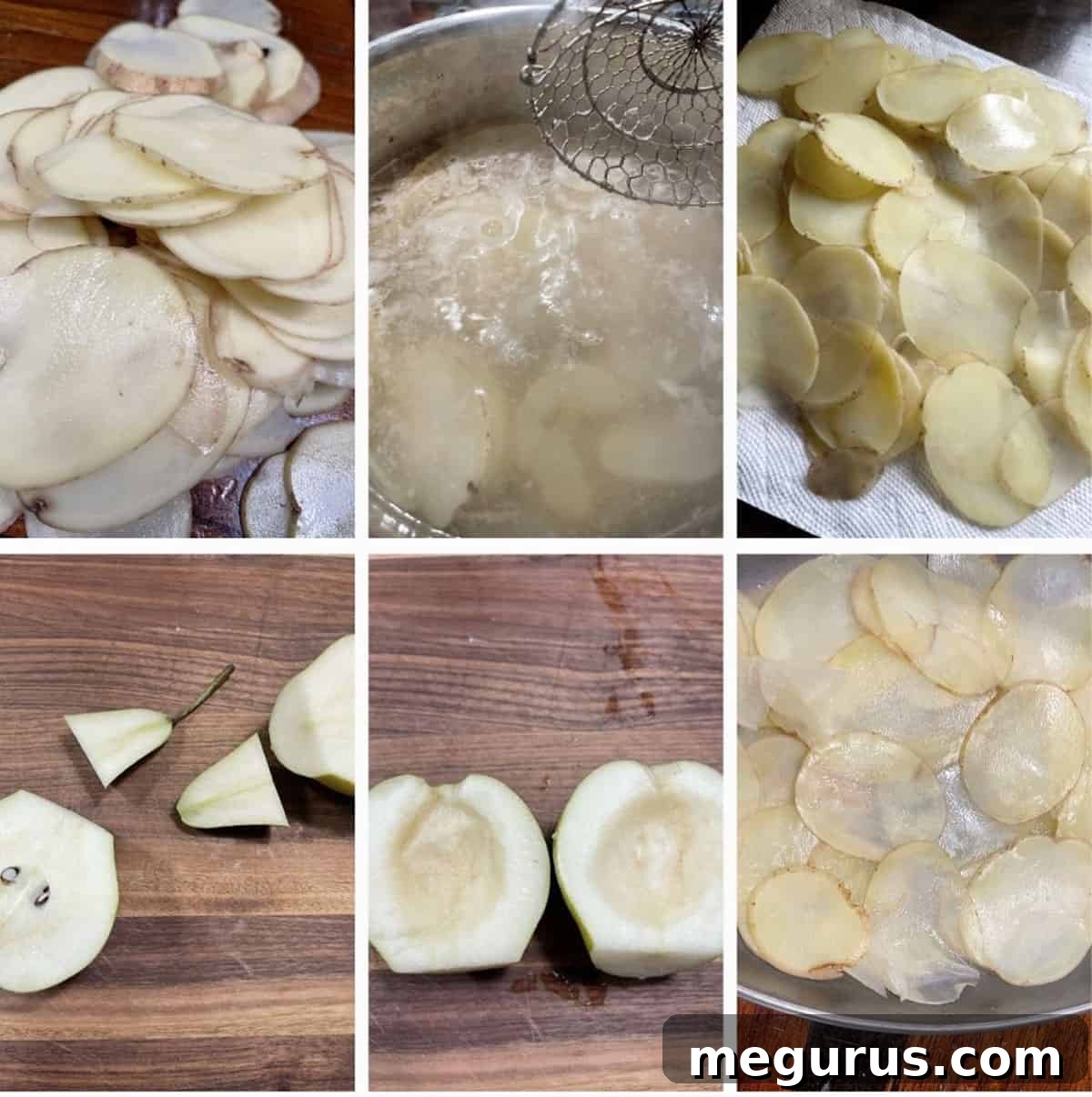
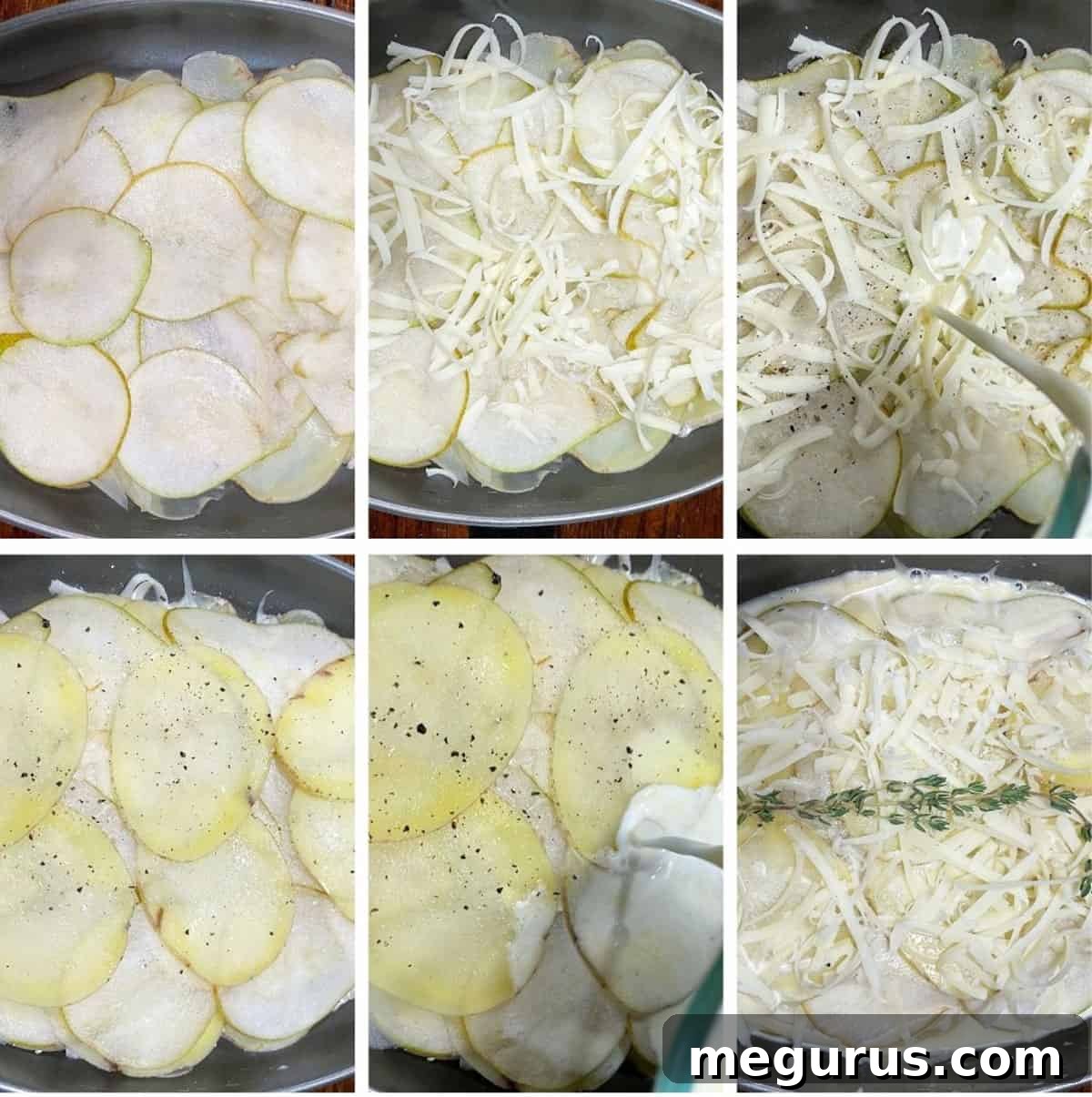
Seeing the process can make all the difference. These images illustrate key stages in creating your perfect Pear Potato Gratin.
Expert Tips for Gratin Perfection
Achieving a truly exceptional gratin involves a few key techniques and considerations:
-
The Art of Thin Slicing
A mandolin is truly your best friend for this dish. It effortlessly produces consistent, paper-thin slices (1/16 to 1/8-inch thick) of both potatoes and pears, which is crucial for even cooking and a tender, melt-in-your-mouth texture. If you’re slicing by hand, use your sharpest knife and strive for the thinnest, most uniform slices possible. Thicker slices will require a longer baking time.
-
Pre-Boiling Potatoes: A Crucial Step
While it adds an extra step, briefly pre-boiling the potato slices in generously salted water offers two significant advantages. Firstly, it seasons the potatoes from the inside out, building flavor in every bite. Secondly, it drastically reduces the overall baking time of the gratin, ensuring the potatoes are perfectly tender without the cream drying out or the cheese burning.
-
Navigating Garlic and Pear: A Delicate Balance
Many traditional potato gratins incorporate garlic for flavor. However, with the subtle sweetness of pear, I’ve found that garlic can be too strong and easily overpower the delicate fruit notes. For this specific recipe, I recommend omitting garlic to allow the unique pear and Gruyere combination to shine through. If you love garlic, consider a very mild infusion by rubbing the baking dish with a cut garlic clove, rather than adding minced garlic to the cream.
-
The Importance of Salt
Salt is a critical ingredient in any potato dish, but even more so here. The pear adds a touch of sweetness, which needs to be balanced by a slightly more generous hand with salt than you might typically use. Season as you layer the gratin, and don’t forget to liberally salt the water when pre-boiling the potatoes. A sprinkle of a flaky finishing salt just before serving can also add a delightful crunch and boost the overall flavor.
-
Cheese: Less is Often More
It’s tempting to load up on cheese, but with a flavorful cheese like Gruyere, less is often more in this gratin. Gruyere has a distinct and strong flavor that can easily overwhelm the subtle pear. Using the recommended amount ensures a harmonious blend where all flavors are present and balanced.
-
Choosing Your Pears Wisely
As mentioned, firmness is key. Avoid overly ripe or mushy pears. They won’t slice well and can disintegrate during baking, leading to a less appealing texture.
-
Pan Selection Matters
A shallow gratin dish (like a 7×10-inch rectangle for this recipe) is ideal. It allows for more surface area, encouraging even browning and the formation of that coveted crispy top layer. A ceramic or cast iron dish works wonderfully for even heat distribution.
-
Adapting for Personal Taste: The Pear-Free Option
Not entirely convinced about the pear? No problem! This recipe is incredibly versatile. You can simply replace the pear with an equal amount of additional thinly sliced potatoes. You’ll still have an incredibly rich and delicious Gruyere potato gratin, just without the unique fruity twist.
Serving Suggestions and Perfect Pairings
This Pear Potato Gratin is incredibly versatile and pairs wonderfully with a variety of main dishes. Its rich, creamy texture and unique flavor profile make it a standout side. Consider serving it alongside:
- Roasted Meats: Perfect with roast chicken, turkey, pork loin, or even a slow-cooked beef roast. The sweetness of the pear beautifully complements savory meat drippings.
- Grilled Dishes: Elevate a simple grilled steak, pork chops, or sausages with this sophisticated side.
- Holiday Feasts: A fantastic addition to Thanksgiving, Christmas, or Easter dinners, offering a fresh take on traditional potato dishes.
- Fish: For a more adventurous pairing, try it with seared salmon or baked cod for a delightful contrast.
For a complete meal, add a simple green salad with a light vinaigrette to cut through the richness of the gratin, or some steamed green beans for freshness.
Storage and Reheating Tips
This gratin tastes best fresh from the oven, but leftovers are still delicious. Here’s how to handle them:
- Storage: Allow the gratin to cool completely, then cover tightly with plastic wrap or aluminum foil. Store in the refrigerator for up to 3-4 days.
- Reheating: For best results, reheat individual portions in the microwave until warmed through. For larger portions or to restore some crispiness to the top, reheat in an oven preheated to 325°F (160°C) for 15-20 minutes, or until hot and bubbly. You may want to cover it loosely with foil to prevent excessive browning.
- Freezing: While possible, freezing gratins can sometimes alter the texture of the potatoes and cream, making them a bit grainy upon thawing. If you choose to freeze, ensure it’s fully cooled, then wrap tightly in several layers of plastic wrap and foil. Freeze for up to 2-3 months. Thaw in the refrigerator overnight before reheating in the oven.
Frequently Asked Questions (FAQ)
Can I prepare this gratin ahead of time?
Yes, to a certain extent. You can slice and pre-boil the potatoes and pears, then assemble the gratin layers up to a day in advance. Cover it tightly and refrigerate. When ready to bake, let it sit at room temperature for about 30 minutes before putting it in the oven, and you may need to add an extra 10-15 minutes to the baking time.
What can I use if I don’t have a mandolin?
A very sharp chef’s knife is perfectly fine! Just focus on creating slices that are as thin and uniform as possible. Consistency in thickness is more important than achieving absolute paper-thin slices, as it ensures even cooking.
Are there other pear varieties suitable for this recipe?
Absolutely! Besides Bosc, firm Anjou or Forelle pears work well. The key is to choose a pear that is ripe but firm enough to hold its shape when sliced thinly and baked. Avoid very soft or watery pear varieties, as they tend to become mushy.
Do I have to peel the potatoes and pears?
No, peeling is entirely optional. Leaving the skins on can add a rustic look and extra fiber. Just make sure to scrub them thoroughly if you choose not to peel.
Can I make this gratin dairy-free?
Replacing the heavy cream and Gruyere with dairy-free alternatives will significantly change the flavor and texture of the gratin, and it may not achieve the same classic creamy consistency. While there are dairy-free creams and cheeses available, they often behave differently during baking. This recipe is specifically designed around dairy for its rich profile.
Pear Potato Gratin Recipe
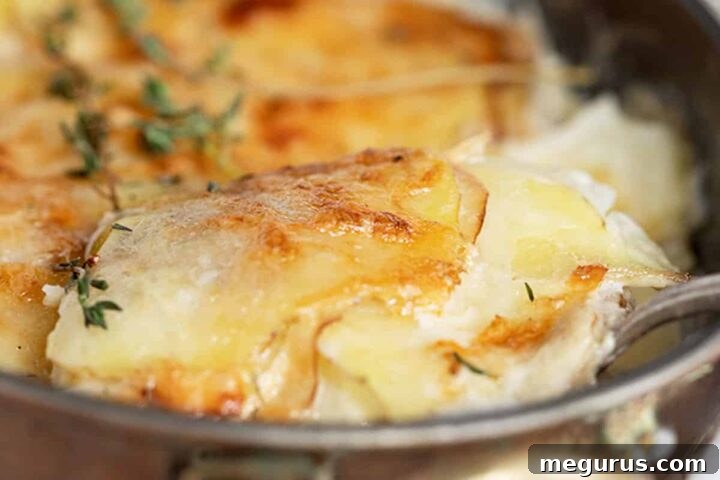
This Pear Potato Gratin combines thinly sliced potatoes, rich cream, nutty Gruyere, and a hint of sweet pear for a perfect, deliciously different potato side dish.
Pin This
15 mins
45 mins
1 hr
4 servings
Ingredients
- 1 1/4 lbs. yellow potatoes, such as Yukon Gold, about 4 medium
- 1 large Bosc pear, or 2 if smaller
- 1/3-1/2 cup heavy whipping cream, 35% b.f., as needed
- 1 Tablespoon butter, melted
- 1/4 teaspoon salt
- Pinch nutmeg
- Freshly ground pepper
- 1/2 cup Gruyere cheese, shredded, DIVIDED
Instructions
-
Bring a medium saucepan of water to a boil, then season generously with salt.
-
Prepare potatoes: You can peel the potatoes or not, as you like. Using a mandolin or a sharp knife, slice the potatoes 1/16 – 1/8-inch thick (1/16-inch thick is very easy to do with a mandolin. If cutting by hand, just slice as thin as you possibly can). Add potatoes to boiling water and boil 3 minutes (if slices are thicker, boil an extra minute, for 4 minutes). Remove to doubled-up paper towel, then pat the top of the potatoes dry. Let cool while you proceed with the recipe.
-
Preheat oven to 375F.
-
Prepare the pears: You can peel the pears or not, as you like. I like to cut them in half, from stem end to bottom. I’ll usually just cut off the thin top, then scoop out and discard the core. Using a mandolin or sharp knife, slice the pears 1/16 – 1/8-inch thick slices (slice the pears the same thickness as you potato slices). Set aside.
-
Assemble the gratin: Lightly grease a small gratin pan (mine shown here is about 7×10-inches. Spread about 1/2 of the potatoes on the bottom of the pan. Brush potatoes with about 1/2 of the butter, then season with some salt and pepper. Top with 1/2 of the Gruyere cheese, then drizzle with 1/2 of the cream. Top with the pear, then with the remaining potatoes. Brush the remaining butter onto the potatoes, then season top with salt and pepper. Pour over the remaining cream. Sprinkle the remaining Gruyere over-top.
-
Bake uncovered in preheated 375F for 40-45 minutes, or until golden and the potatoes are tender. Let stand 10 minutes to set before serving. Add some finishing salt to the top before serving.
Notes
Be sure to read the detailed notes and tips above this Recipe Card for substitution suggestions and techniques to make this recipe perfect. You will also find Step-by-Step photos there, which you might find helpful for visual guidance.
American, Canadian
Side Dish
Jennifer Maloney
Calories: 296kcal
Carbohydrates: 32g
Protein: 8g
Fat: 16g
Saturated Fat: 10g
Polyunsaturated Fat: 1g
Monounsaturated Fat: 5g
Trans Fat: 1g
Cholesterol: 53mg
Sodium: 242mg
Potassium: 677mg
Fiber: 4g
Sugar: 6g
Vitamin A: 549IU
Vitamin C: 30mg
Calcium: 202mg
Iron: 1mg