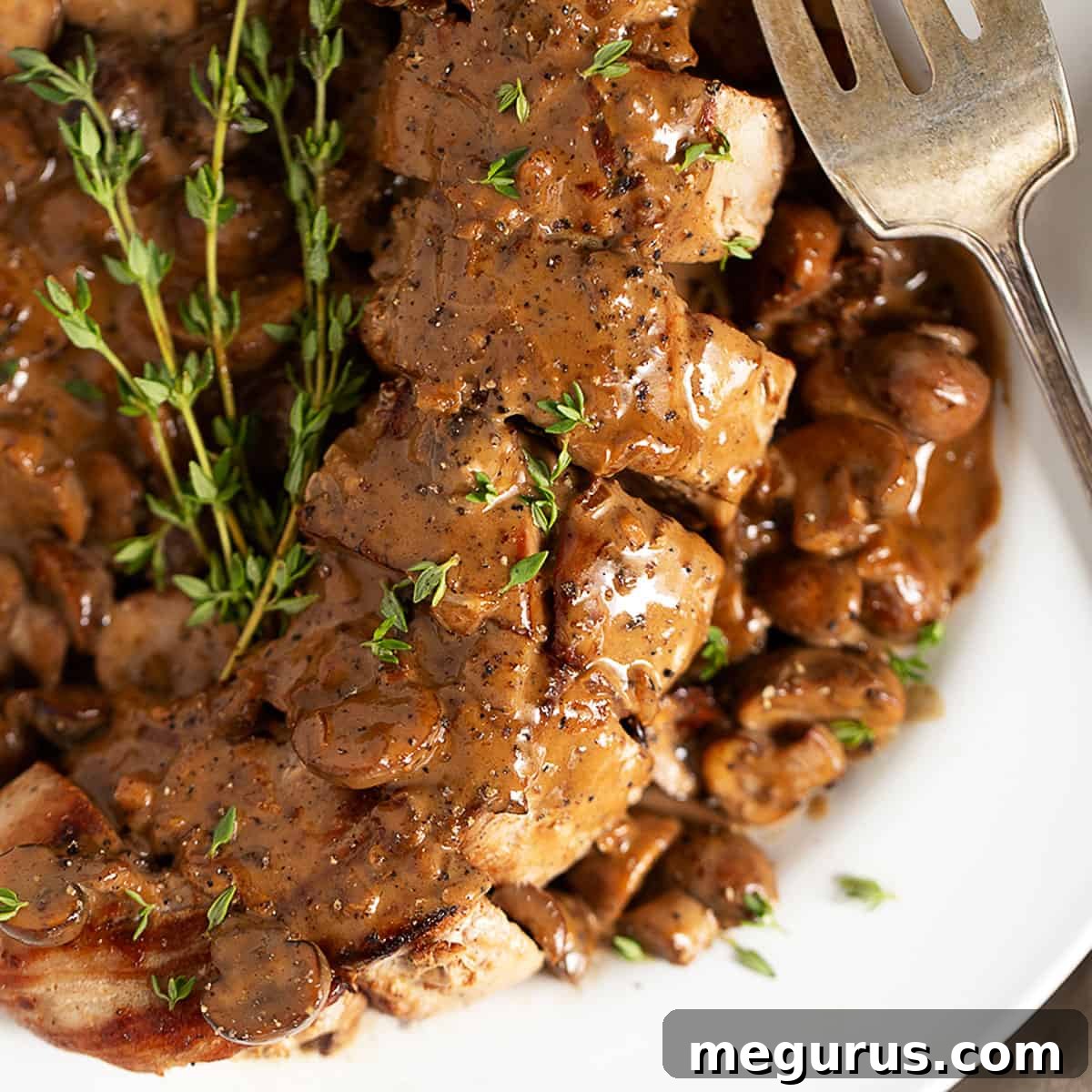
Welcome to a culinary journey that transforms a classic French-American bistro favorite into an accessible, show-stopping weeknight meal: Pork Diane. This recipe spotlights succulent pork tenderloin medallions bathed in a luxurious, creamy mushroom sauce, boasting the rich, sophisticated flavors reminiscent of the renowned Steak Diane. Forget complicated techniques or fiery flambées; our version simplifies the process, ensuring a delicious and elegant dinner can be on your table with minimal fuss.
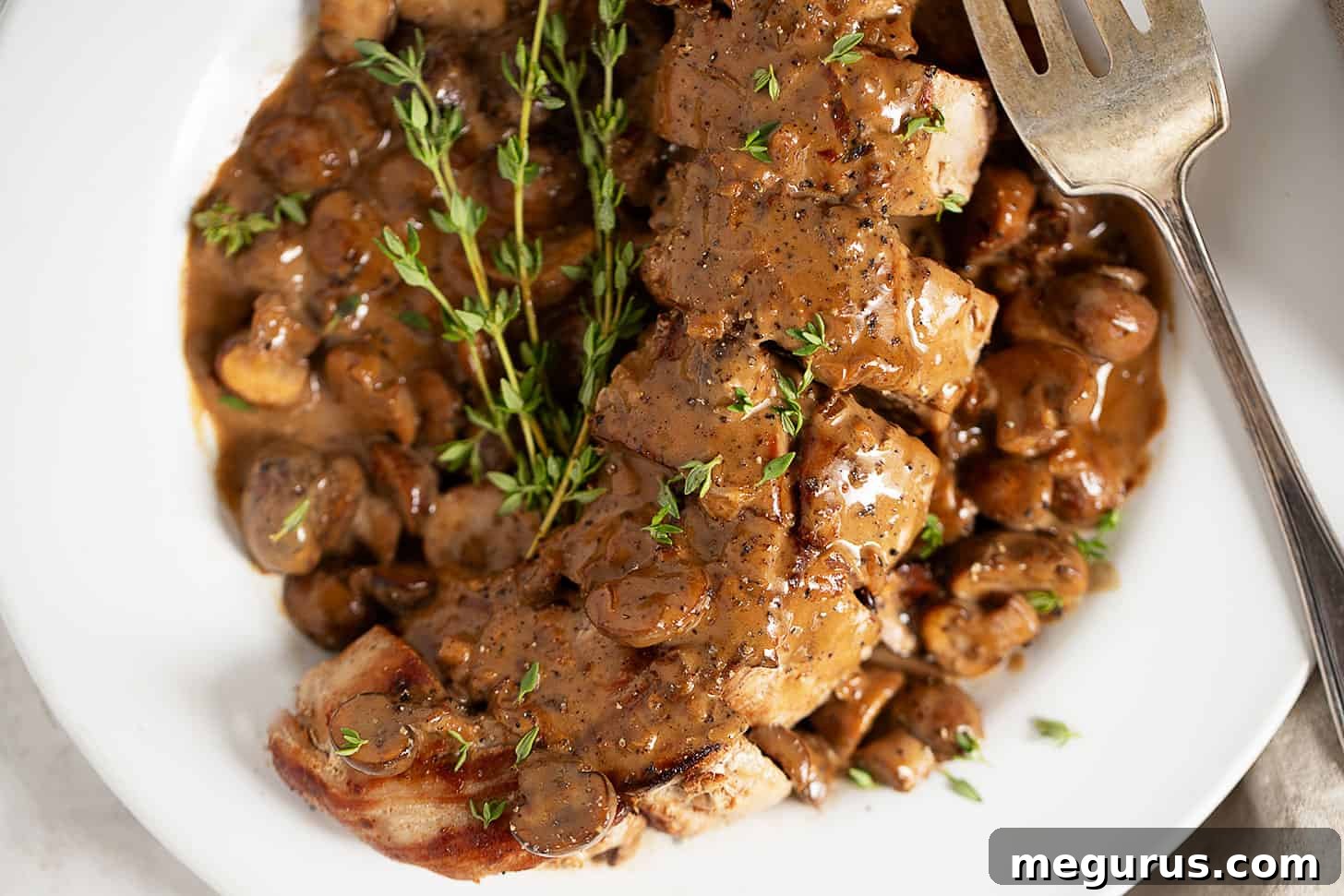
While Steak Diane traditionally features beef, the exquisite blend of cream, tangy mustard, and savory Worcestershire sauce is an absolute revelation when paired with tender pork. This adaptation embraces the iconic flavors you love, swapping the beef for lean pork tenderloin and the classic flaming method for a simple, yet impactful splash of wine. The result is a harmonious symphony of tastes and textures that makes for an ideal, comforting dinner any night of the week.
Our approach to cooking the pork tenderloin draws inspiration from a tried-and-true stove-top method, guaranteeing beautifully browned medallions without ever needing to turn on your oven. This technique ensures maximum flavor development and a perfect sear. Once the pork is cooked to perfection, the rich Diane sauce comes together effortlessly in the same pan, capturing all those precious browned bits (fond) to build an unparalleled depth of flavor. Get ready to impress yourself and your loved ones with this remarkably easy yet utterly gourmet dish.
Ingredients for Your Perfect Pork Diane
Crafting an exceptional Pork Diane starts with selecting the right ingredients. Here’s a closer look at what you’ll need and how each component contributes to the dish’s irresistible flavor profile, along with smart substitution ideas to fit your pantry and preferences.
- Pork Tenderloin: The star of the show. Choose a nice, large pork tenderloin, typically around 1 pound, which should yield 3 to 4 generous servings. Before cooking, it’s crucial to meticulously trim away any visible fat and, importantly, remove the silver skin. This thin, silvery membrane can become tough and chewy when cooked, so carefully sliding a sharp knife underneath and peeling it off will ensure your pork is as tender as possible.
- Mushrooms: Button mushrooms are a fantastic choice, offering a mild, earthy flavor and a lovely texture that holds up well in the creamy sauce. However, feel free to use regular white mushrooms or cremini (baby bella) mushrooms if those are more readily available or preferred. Their robust flavor will enhance the overall depth of the sauce.
- White Wine: A splash of dry white wine is key for deglazing the pan and adding a layer of sophisticated acidity. Opt for any white wine you enjoy drinking – a Pinot Grigio or Sauvignon Blanc works wonderfully. For a more traditional Steak Diane flavor, you could even use a splash of cognac or brandy. If you prefer to cook without alcohol, a good quality beef or chicken broth, or even water, can be used as an effective substitute to deglaze and add moisture.
- Shallots: These delicate members of the onion family provide a milder, sweeter, and more nuanced flavor than regular onions, making them ideal for a refined sauce. If shallots are unavailable, a small amount of finely diced regular cooking onion can be used, though it will impart a slightly stronger onion flavor.
- Heavy Whipping Cream (35% B.F.): This is where the sauce gets its signature richness and velvety texture. Heavy cream is highly recommended due to its high-fat content (35% butterfat). This high fat percentage is crucial for preventing the cream from splitting or curdling when it interacts with acidic ingredients like wine or mustard, ensuring a smooth, luxurious finish. While lighter creams can be used, be aware that the sauce might be thinner and more prone to splitting.
- Beef Base: To truly amplify the savory notes and achieve a restaurant-quality depth in your Diane sauce, incorporating a concentrated beef stock paste, such as Better Than Bouillon, is a game-changer. Unlike diluted boxed beef broth, a beef base provides an intense, rich flavor. If beef base isn’t on hand, a concentrated chicken or mushroom base can also be used effectively. If none are available, you can simply omit it, though the sauce may have a slightly less robust flavor.
- Dijon Mustard: Essential for that signature tang and a subtle, peppery kick. Dijon mustard doesn’t just add flavor; it also helps to emulsify the sauce, contributing to its smooth consistency. Do not substitute with yellow mustard, as the flavor profile is vastly different.
- Worcestershire Sauce: This fermented condiment is a secret weapon for adding a complex layer of umami, depth, and a touch of savory sweetness. It’s an indispensable component of classic Diane sauce.
- Olive Oil & Butter: A combination of these fats is used for browning the pork and sautéing the aromatics. Olive oil provides a higher smoke point, while butter adds a beautiful richness and flavor.
- Salt and Freshly Ground Black Pepper: Seasoning is key to bringing out all the flavors. Remember to season in layers, tasting as you go.
Mastering Pork Diane: A Step-by-Step Guide
Creating this impressive Pork Diane is simpler than you might imagine. Follow these detailed steps to achieve perfectly cooked pork and a luscious sauce that will have everyone asking for your secret.
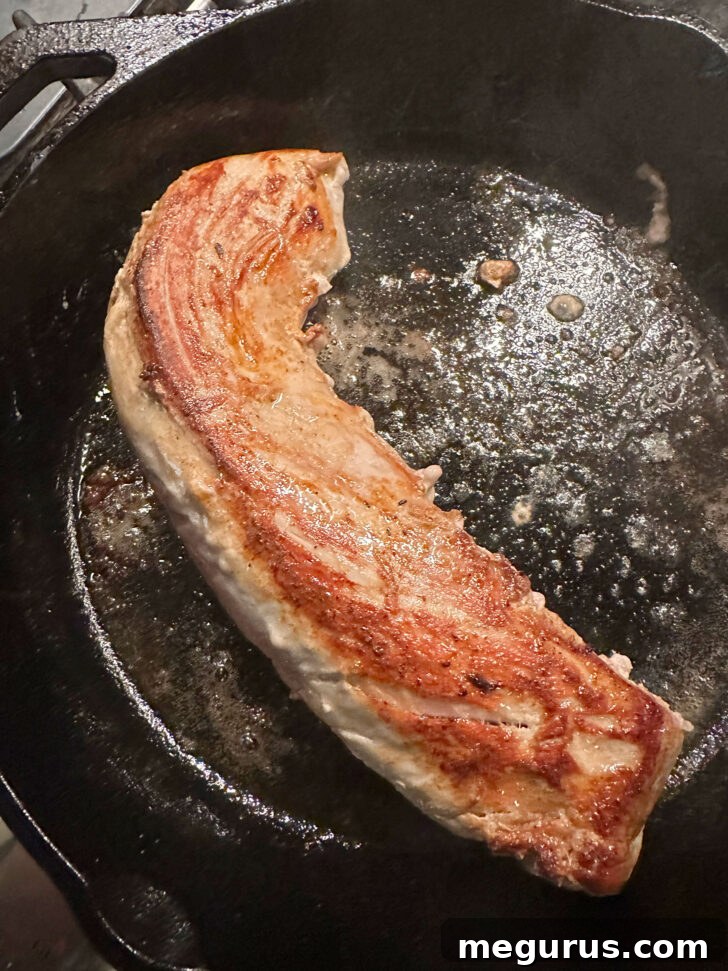
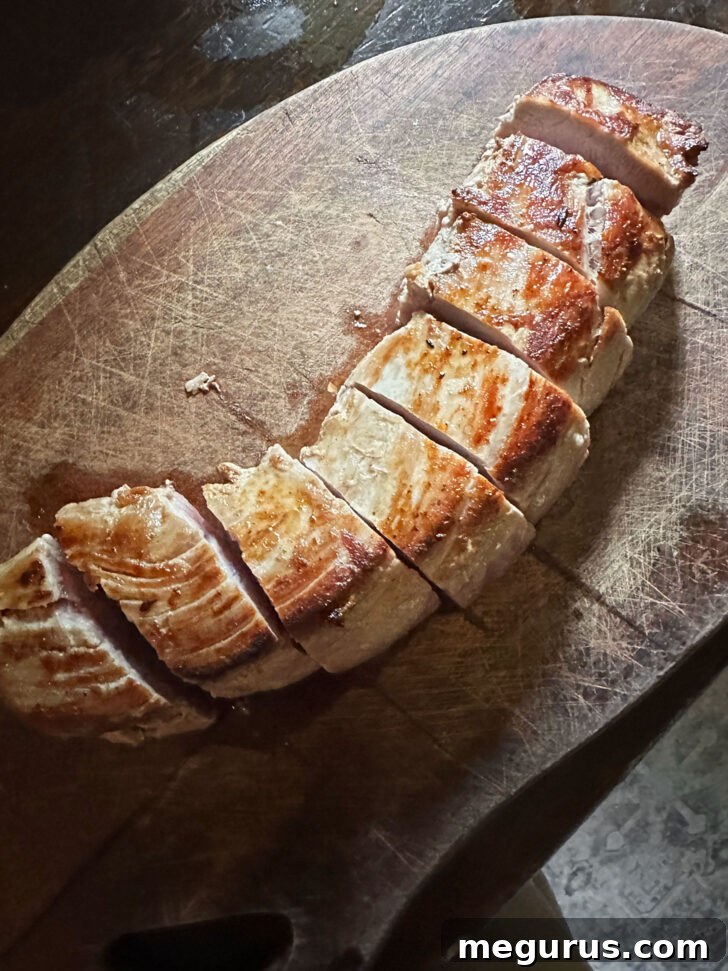
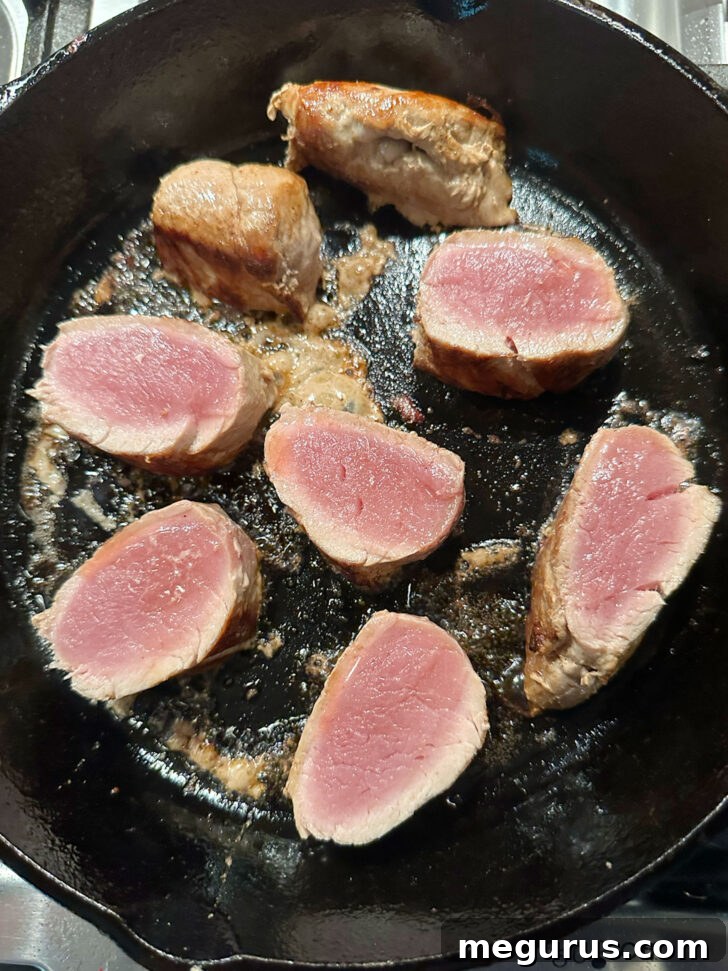
- Prepare the Pork: Begin by patting your pork tenderloin dry with paper towels. This step is crucial for achieving a good sear. Remove any visible silver skin and excess fat. Season the entire tenderloin generously with salt and freshly ground black pepper.
- Sear the Tenderloin: Heat a heavy-bottomed skillet (preferably stainless steel or cast iron, as non-stick pans won’t develop the flavorful fond) over medium-high heat for about 1 minute. Add 1 tablespoon of butter and 1 tablespoon of olive oil. Once the butter has melted and the foaming subsides, carefully place the pork tenderloin into the skillet. Brown it thoroughly on all sides – top, bottom, and both ends – for a total of about 5-6 minutes. The goal here is to develop a beautiful golden-brown crust. When sufficiently browned, the pork will naturally release from the pan; if it’s sticking, it needs more time.
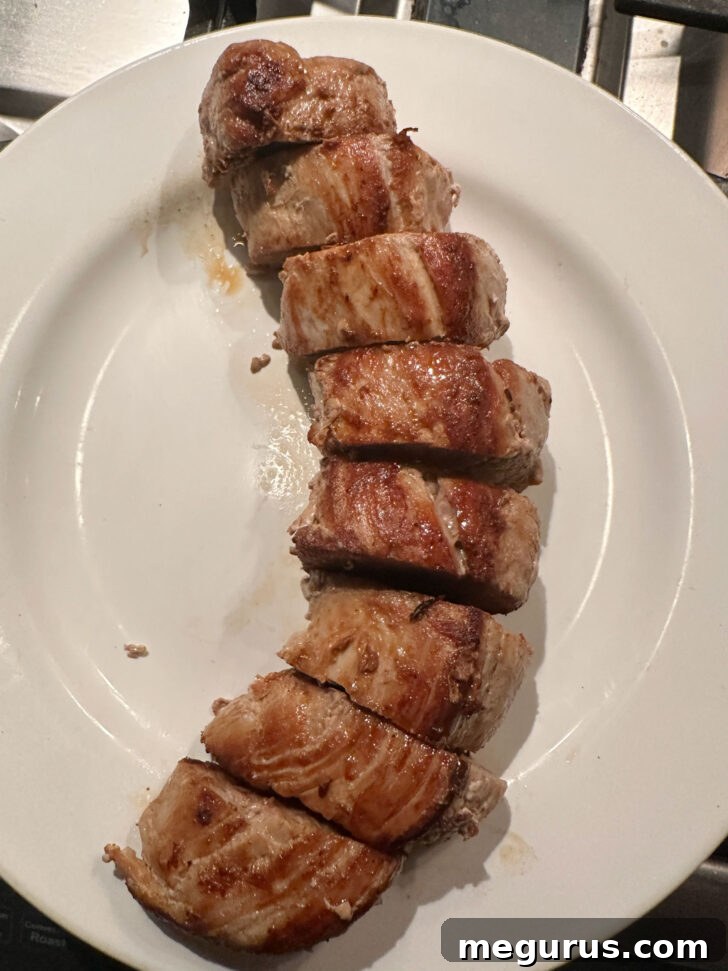
- Slice and Finish Browning: Remove the browned tenderloin to a cutting board and let it rest for a couple of minutes. Carefully slice the pork into approximately 1-inch thick medallions. Return the skillet to medium-high heat, adding another tablespoon of butter and 1 tablespoon of olive oil. Once melted, add the pork medallions back to the pan in a single layer. Sear them for 2-3 minutes per side, until they are beautifully browned and cooked through. An instant-read thermometer should register an internal temperature of 140-143°F (60-62°C). Remember, the temperature will continue to rise slightly as the meat rests.
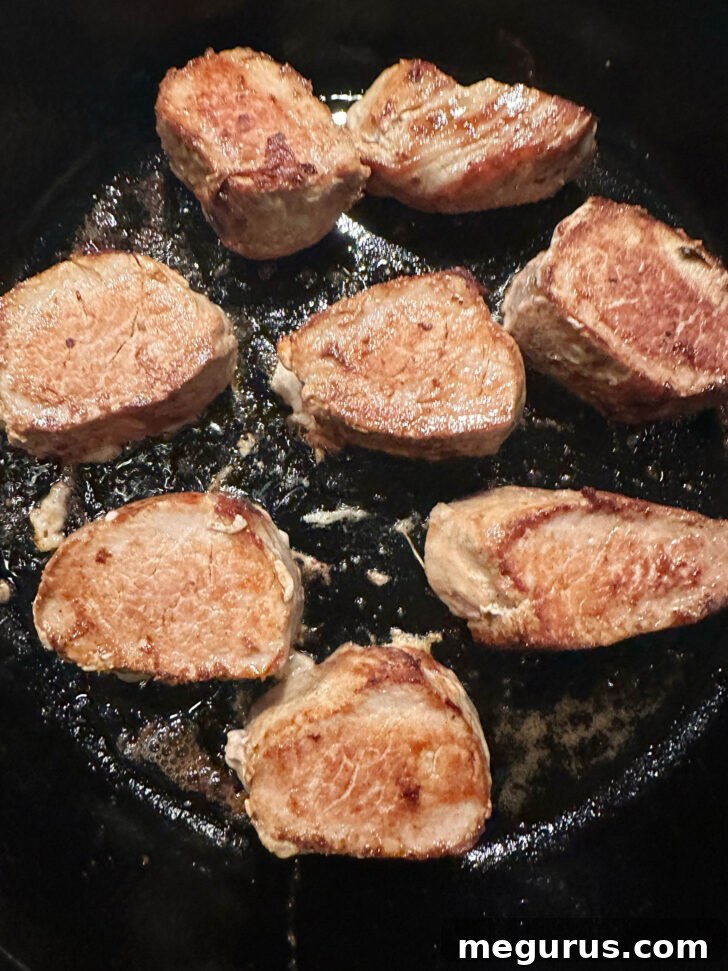
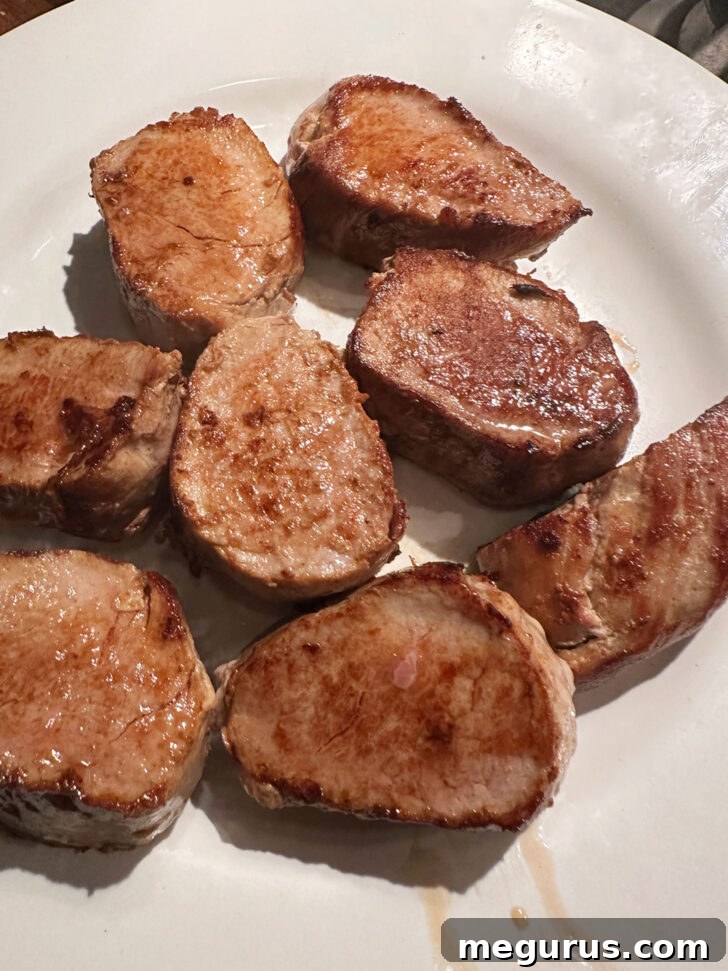
- Rest the Pork: Once cooked, remove the pork medallions from the skillet and transfer them to a plate. Loosely tent them with aluminum foil to keep them warm while you prepare the sauce. Lower the heat under the skillet to medium.
- Sauté Aromatics: Add 1 tablespoon of butter to the skillet. Once melted, add the finely chopped shallots and garlic. Cook, stirring frequently, for about 1 minute until they soften and become fragrant. Be careful not to burn the garlic.
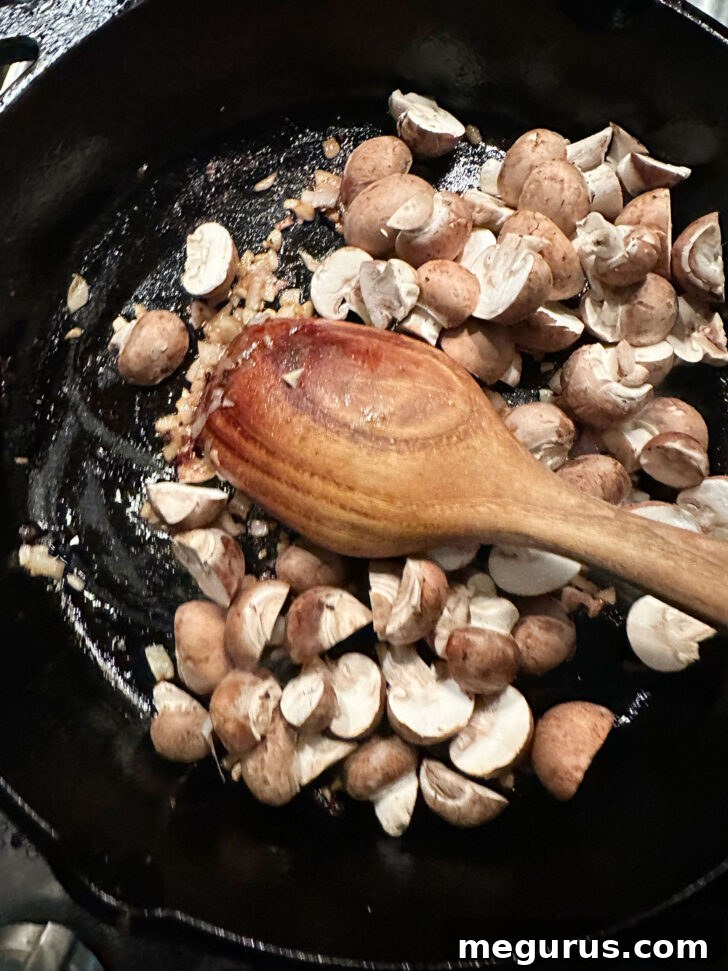
- Cook the Mushrooms: Add the halved or quartered mushrooms to the skillet. Cook, stirring occasionally, until the mushrooms are golden brown and have released most of their moisture, approximately 5-7 minutes. They should be tender and flavorful.
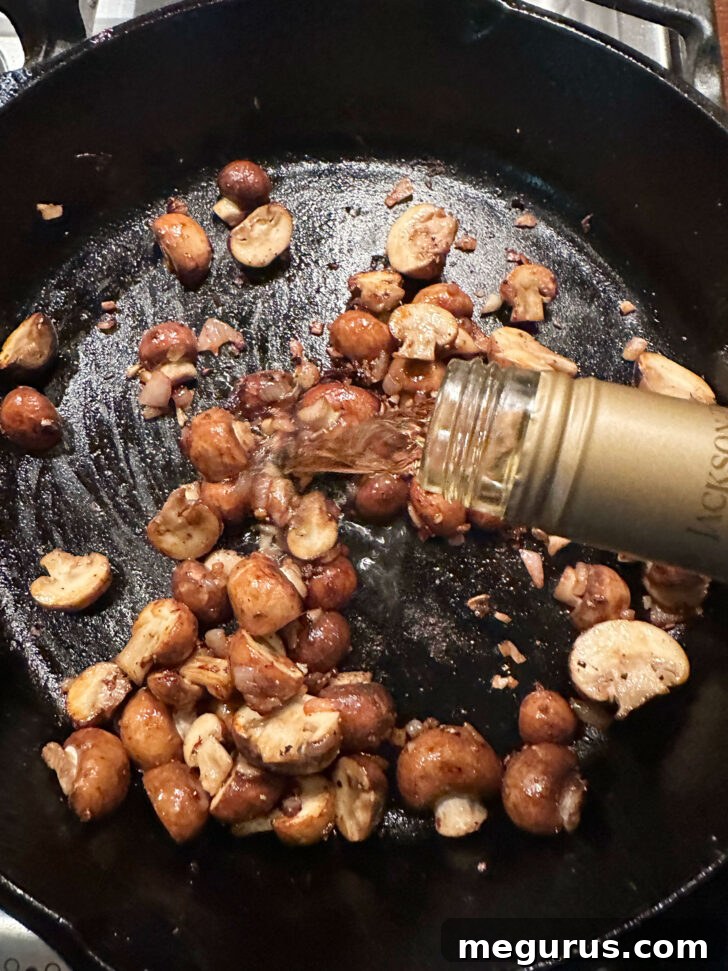
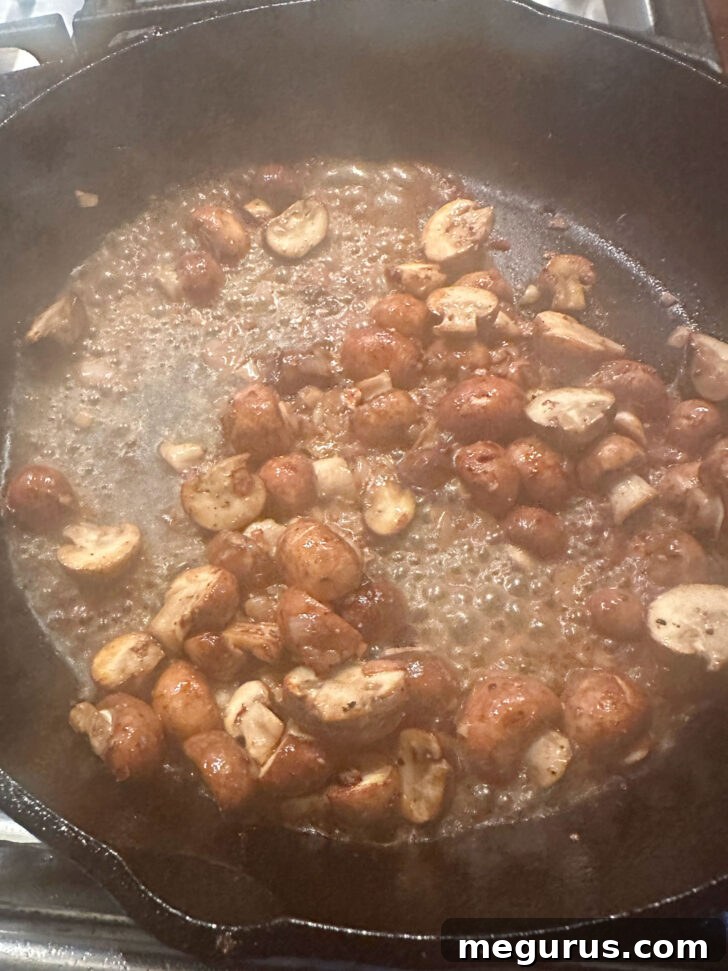
- Deglaze the Pan: Pour a splash of white wine (or your chosen substitute) into the skillet. Use a wooden spoon to scrape up all the delicious browned bits (fond) from the bottom of the pan. This fond is packed with flavor and is crucial for a rich sauce. Allow the wine to simmer and reduce for 1-2 minutes until most of the alcohol has cooked off.
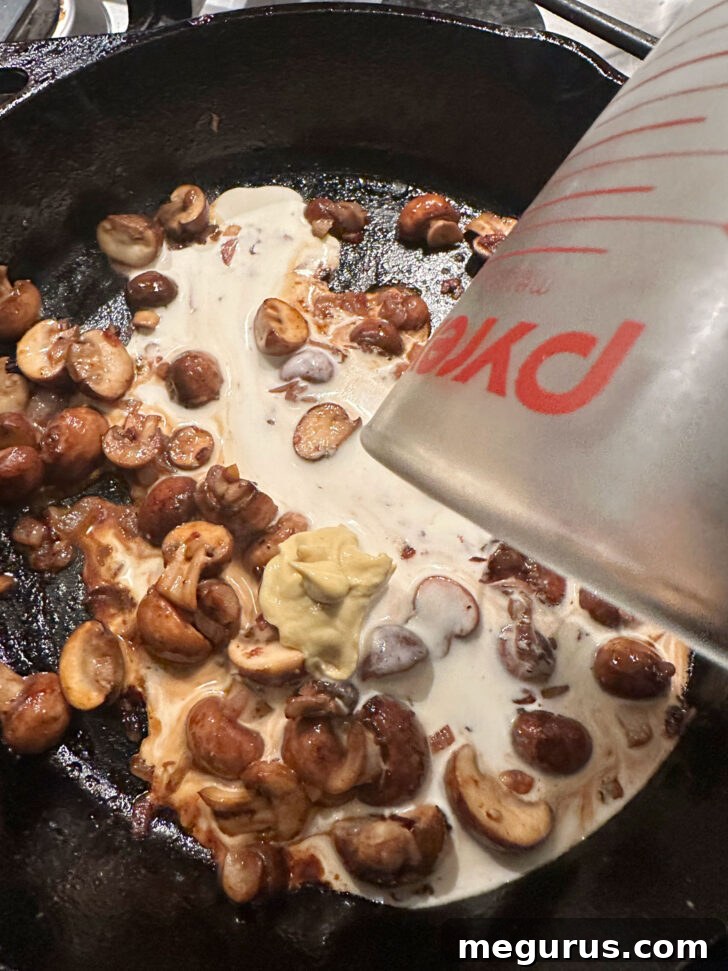
- Create the Creamy Base: Stir in the heavy whipping cream and Dijon mustard. Mix well until everything is combined and the sauce starts to thicken slightly.
- Season the Sauce: Add the concentrated beef stock paste (if using) and Worcestershire sauce. Stir them thoroughly into the sauce. Taste the sauce and adjust seasonings with additional salt and freshly ground black pepper as needed. Remember that Worcestershire and beef base already contain salt, so season cautiously.
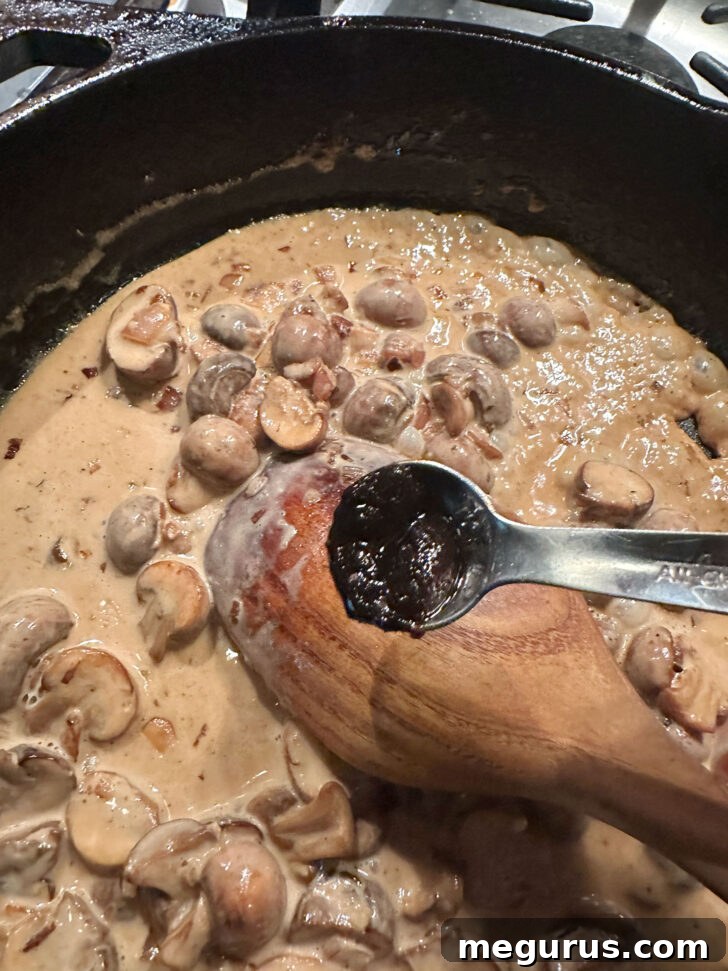
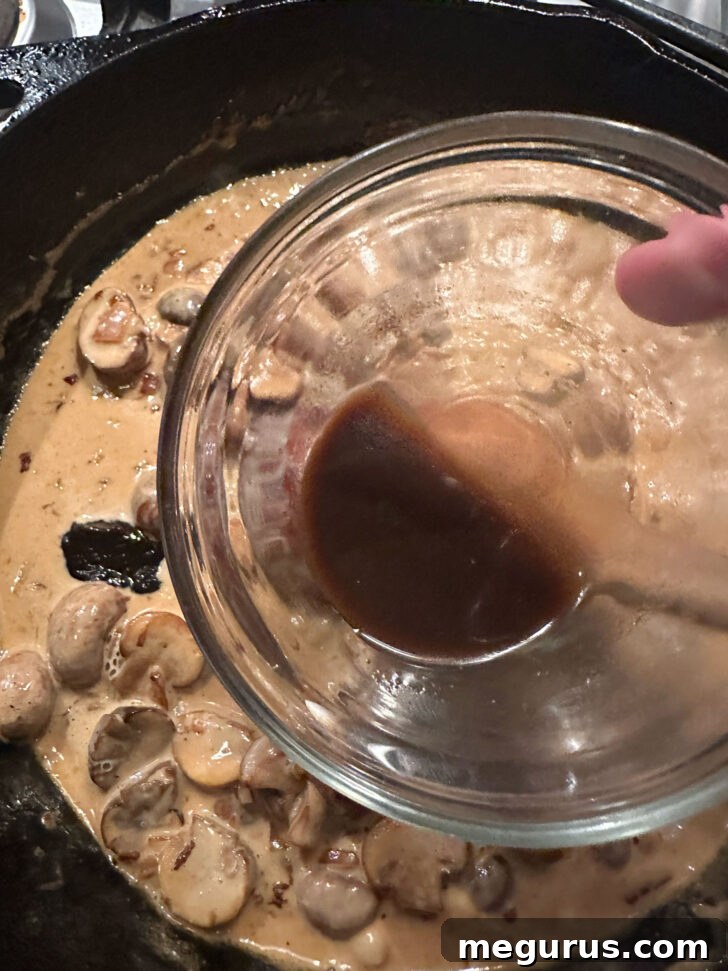
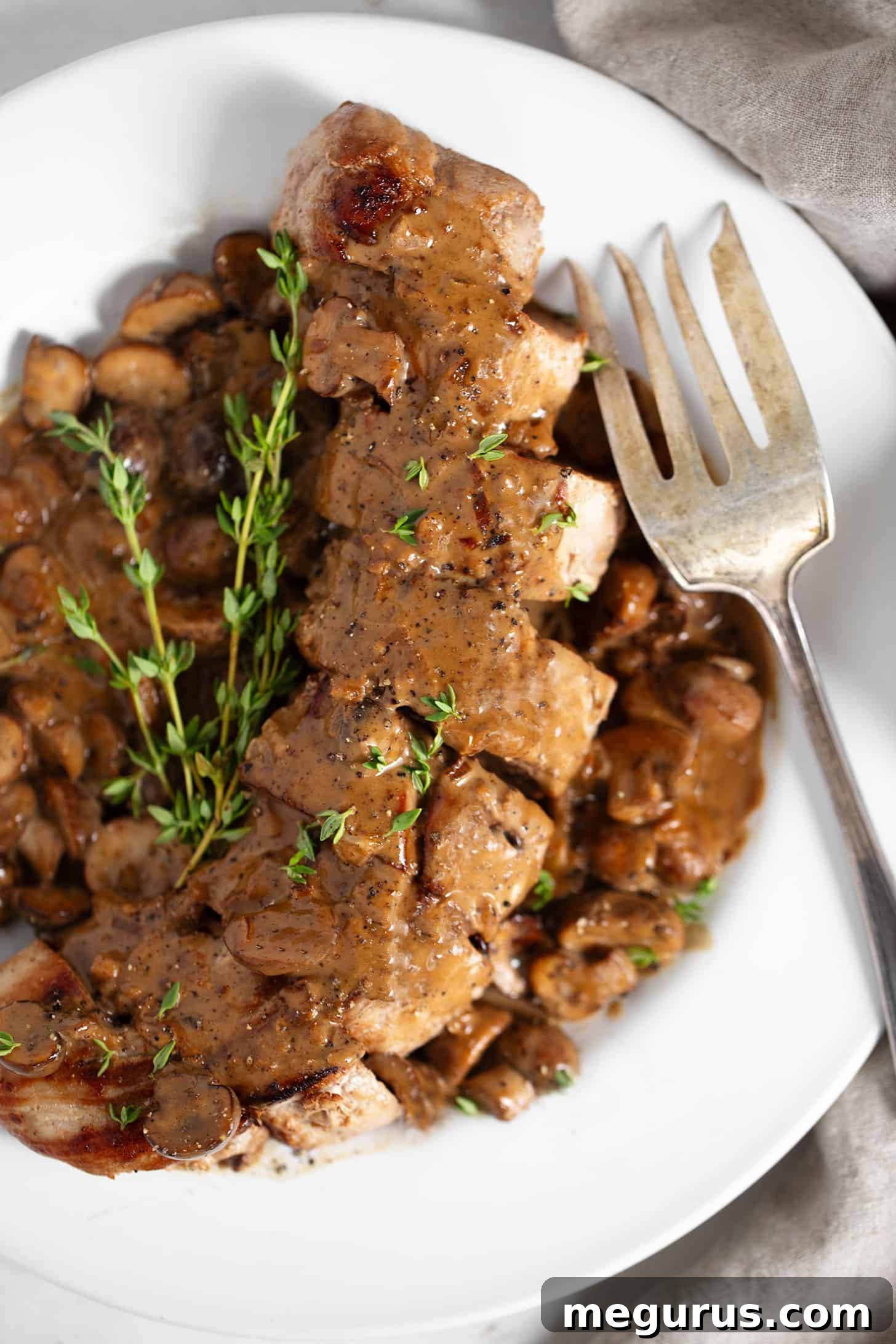
- Serve: Arrange the rested pork medallions artfully on individual serving plates. Spoon a generous amount of the warm, creamy mushroom Diane sauce over the top of the pork. Garnish with fresh thyme leaves or chopped parsley for a burst of color and freshness, if desired. Serve immediately and enjoy!
Expert Tips for the Best Pork Diane
- Pan Choice Matters: For the best results and to develop that crucial “fond” (the browned bits at the bottom of the pan that are flavor powerhouses), use a stainless steel or cast iron skillet. Non-stick pans are great for many things, but they prevent the fond from forming, which means a less flavorful sauce.
- Don’t Overcrowd the Pan: When browning the pork, work in batches if necessary to ensure the pan isn’t overcrowded. Overcrowding lowers the pan temperature and steams the meat instead of searing it, leading to a less desirable crust.
- Accurate Pork Temperature: Pork tenderloin cooks relatively quickly and can dry out if overcooked. An instant-read thermometer is your best friend here. Aim for an internal temperature of 140-143°F (60-62°C) for medium-rare to medium doneness. The pork will continue to cook a few degrees as it rests, reaching a perfect, juicy final temperature.
- Handle Seasoning with Care: Worcestershire sauce and beef base are inherently salty. Be mindful when adding additional salt to the mushrooms and sauce. It’s always easier to add more salt later than to try and fix an overly salty dish. Taste and adjust at the end.
- More Sauce, Please! If you’re a sauce lover – especially if you plan to serve this over mashed potatoes – consider doubling all the sauce ingredients EXCEPT for the mushrooms. This ensures you have plenty of that rich, creamy goodness to go around.
- Silver Skin Removal: Don’t skip removing the silver skin from the pork tenderloin. It’s a tough, chewy membrane that won’t render down during cooking and can detract from the tender texture of the meat.
What to Serve with Pork Diane
Pork Diane, with its rich and creamy sauce, pairs beautifully with a variety of side dishes that can complement its flavors and provide balance to the meal.
- Creamy Mashed Potatoes: This is arguably the most classic and perfect accompaniment. The fluffy, buttery potatoes are ideal for soaking up every last drop of the delectable Diane sauce. Garlic mashed potatoes would be an especially fantastic choice, adding another layer of flavor. As mentioned, if you plan to enjoy ample sauce with your potatoes, consider making a double batch of the sauce (excluding mushrooms) from the recipe card.
- Crisp Green Vegetables: To balance the richness of the pork and sauce, a bright green vegetable is highly recommended. Steamed or roasted broccoli, broccolini, asparagus, or green beans are all excellent options. Their fresh, slightly crisp texture and vibrant color provide a wonderful contrast.
- Rice Pilaf or Quinoa: For a lighter carbohydrate option, a simple rice pilaf or fluffy quinoa can serve as a great base to absorb the sauce.
- Crusty Bread: Don’t underestimate the simple pleasure of a warm, crusty baguette or artisanal bread for mopping up any remaining sauce on your plate.
- Side Salad: A light, fresh green salad with a vinaigrette dressing can cut through the richness and cleanse the palate between bites.
Making Ahead, Storing, and Freezing Your Pork Diane
While Pork Diane is truly best enjoyed freshly cooked for optimal tenderness and sauce consistency, there are practical considerations for leftovers and planning ahead.
- Fresh is Best: The delicate nature of pork tenderloin means it’s prone to overcooking when reheated. Therefore, for the most exquisite dining experience, serve this dish immediately after preparation.
- Storing Leftovers: If you do have leftovers, separate the pork from the sauce if possible. Store them in airtight containers in the refrigerator for 2-3 days. Reheating the pork gently in the sauce on the stovetop over low heat is recommended. You may need to add a splash of water, broth, or cream to loosen the sauce as it can thicken in the fridge. Be careful not to overheat the pork to maintain its tenderness.
- Freezing: Leftover Pork Diane can be frozen for up to 3 months. Again, consider separating the pork from the sauce, or freeze them together in an airtight, freezer-safe container. When reheating from frozen, thaw overnight in the refrigerator, then gently warm on the stovetop. The sauce may need a good whisk and a splash of liquid (water, broth, or cream) to regain its smooth consistency. Keep in mind that the texture of the pork may be slightly less tender after freezing and reheating.
Get the Recipe: Pork Diane
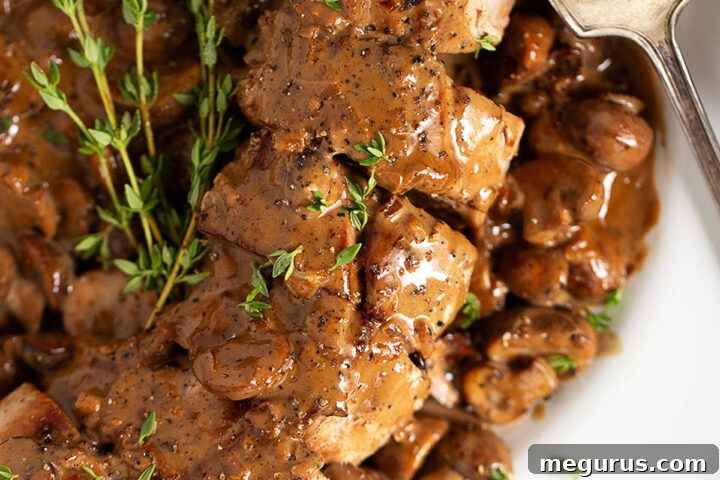
Pork tenderloin medallions topped with a Diane-inspired sauce of creamy mushrooms. Classic flavors in an easy, weeknight-friendly dinner.
Pin This
Leave a Review
Cook Time: 30 mins
Total Time: 40 mins
Ingredients
For the Pork:
- 1 lb pork tenderloin, approx, silver skin and visible fat removed
- 2 Tablespoons extra virgin olive oil, DIVIDED
- 2 Tablespoons butter, DIVIDED
For the Mushroom Sauce:
- 1 Tablespoon butter
- 1 small shallot, finely chopped
- 1 clove garlic, finely chopped
- 4 oz button mushrooms, halved or quartered
- Splash of white wine, or Cognac, brandy or water
- 2 teaspoons Dijon mustard
- 1/4 cup heavy whipping cream, 35% b.f.
- 1/2 tsp concentrated home-style beef stock paste, such as Better than Bouillon (see Note 1 below)
- 2 teaspoons Worcestershire sauce
- Freshly ground black pepper
Instructions
- Prepare the pork tenderloin by removing the silver skin and any visible fat. Season the pork with salt and pepper.
- Heat a stainless steel or cast iron skillet over medium-high heat for 1 minute, then add 1 Tablespoon of butter and 1 Tablespoon of olive oil. When the butter foaming subsides, add the pork to the skillet, curving it if necessary so it lays flat. Brown it well on all sides (top, bottom and both sides), for about 5-6 minutes total. Remove the pork to a cutting board and slide the skillet off the heat for a minute. Cut the pork tenderloin into 1-inch thick slices.
- Return the skillet to the heat, over medium-high heat. Add 1 Tablespoon of butter and 1 Tablespoon of olive oil to the skillet. When the butter has melted, return the pork slices to the skillet and brown well on all sides, about 2-3 minutes on each side. The pork should be cooked through at this point (140-143F internal temperature with an instant-read thermometer).
- Remove the pork slices to a warm plate (or loosely tent the pork slices with aluminum foil). Lower the heat under the skillet to medium heat.
- Add 1 Tablespoon of butter to the skillet over medium heat. Add the shallots and garlic and cook, stirring for about 1 minute or until softened. Add the mushrooms and cook, stirring, until golden. Add a splash of wine to the pan and allow it to cook off for about 1 minute.
- Add the cream and mustard to the pan and stir together. Add the beef base, if using, and the Worcestershire, and stir into the sauce. Taste the sauce and add additional salt and freshly ground pepper, as needed.
- Serve immediately garnished with fresh thyme leaves or chopped parsley, if desired.
Notes
- Note 1 (Beef Base): For a full flavour sauce, it’s great to stir in a bit of concentrated beef stock paste, such as Better than Bouillon. You could use any concentrated beef stock, such as cubes that you just break up and stir in. Avoid boxed beef broth, as it is diluted. If you don’t have beef base, chicken or mushroom base can be used, or simply omit it.
- Tips! If you’d like more sauce (e.g., for mashed potatoes), double all sauce ingredients except the mushrooms.
Course: Main Course
Author: Jennifer Maloney
Nutrition Information
- Serving: 1 serving
- Calories: 453kcal
- Carbohydrates: 5g
- Protein: 34g
- Fat: 33g
- Saturated Fat: 15g
- Polyunsaturated Fat: 3g
- Monounsaturated Fat: 14g
- Trans Fat: 1g
- Cholesterol: 151mg
- Sodium: 346mg
- Potassium: 807mg
- Fiber: 1g
- Sugar: 3g
- Vitamin A: 650IU
- Vitamin C: 2mg
- Calcium: 38mg
- Iron: 2mg
If you enjoyed this recipe, please leave a star rating and comment. It helps others to find it!