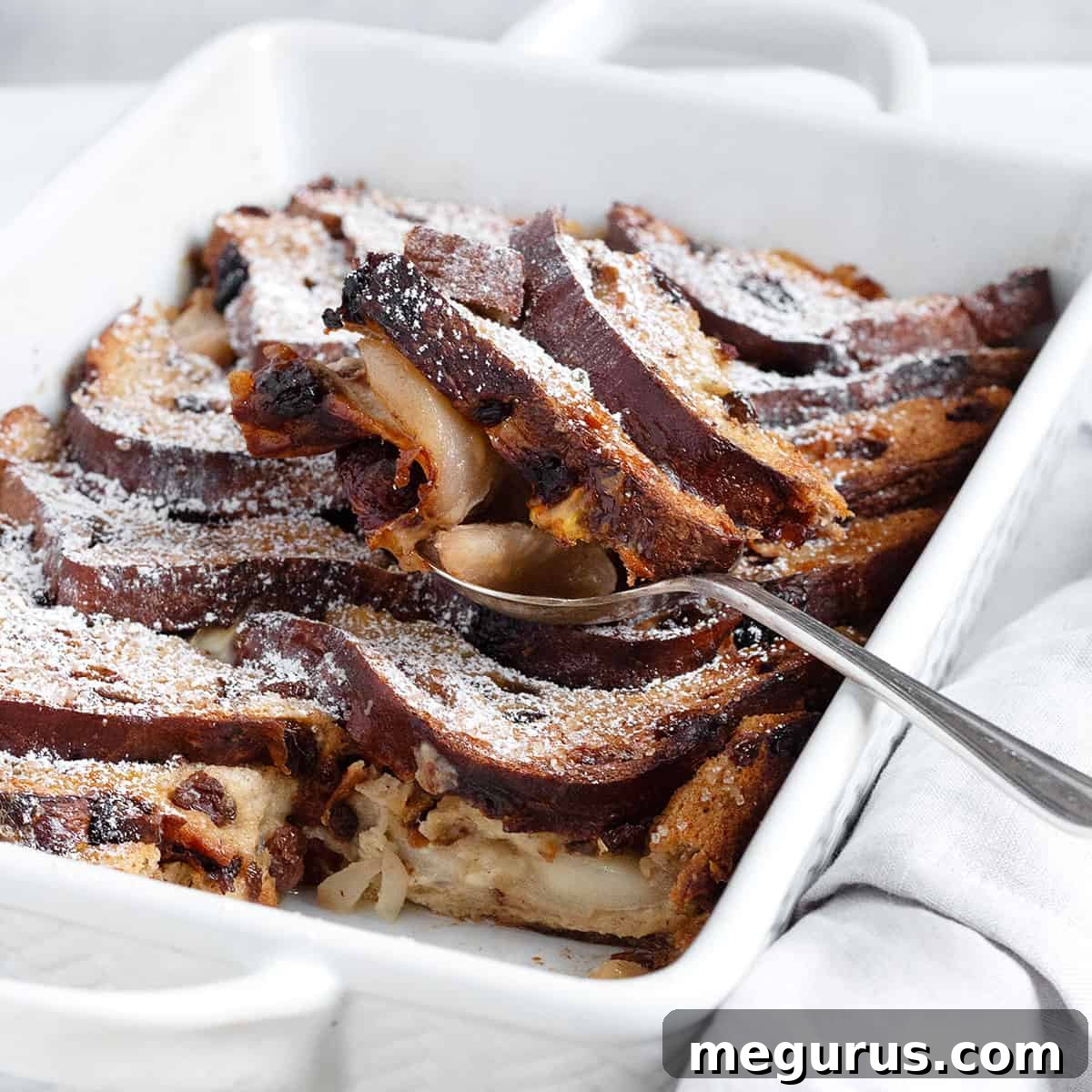
Prepare to elevate your breakfast or brunch experience with this exquisite Gruyere and Pear Bread Pudding. This dish is not just a meal; it’s a culinary masterpiece that promises to be the showstopper at any holiday gathering or weekend brunch. Imagine tender, sweet pears perfectly complemented by the nutty, savory notes of Gruyere cheese, all nestled within layers of cinnamon-infused bread, bathed in a rich, creamy custard. The absolute best part? It comes together effortlessly the night before, allowing you to wake up to the delightful aroma of a freshly baked, comforting dish without any morning rush.
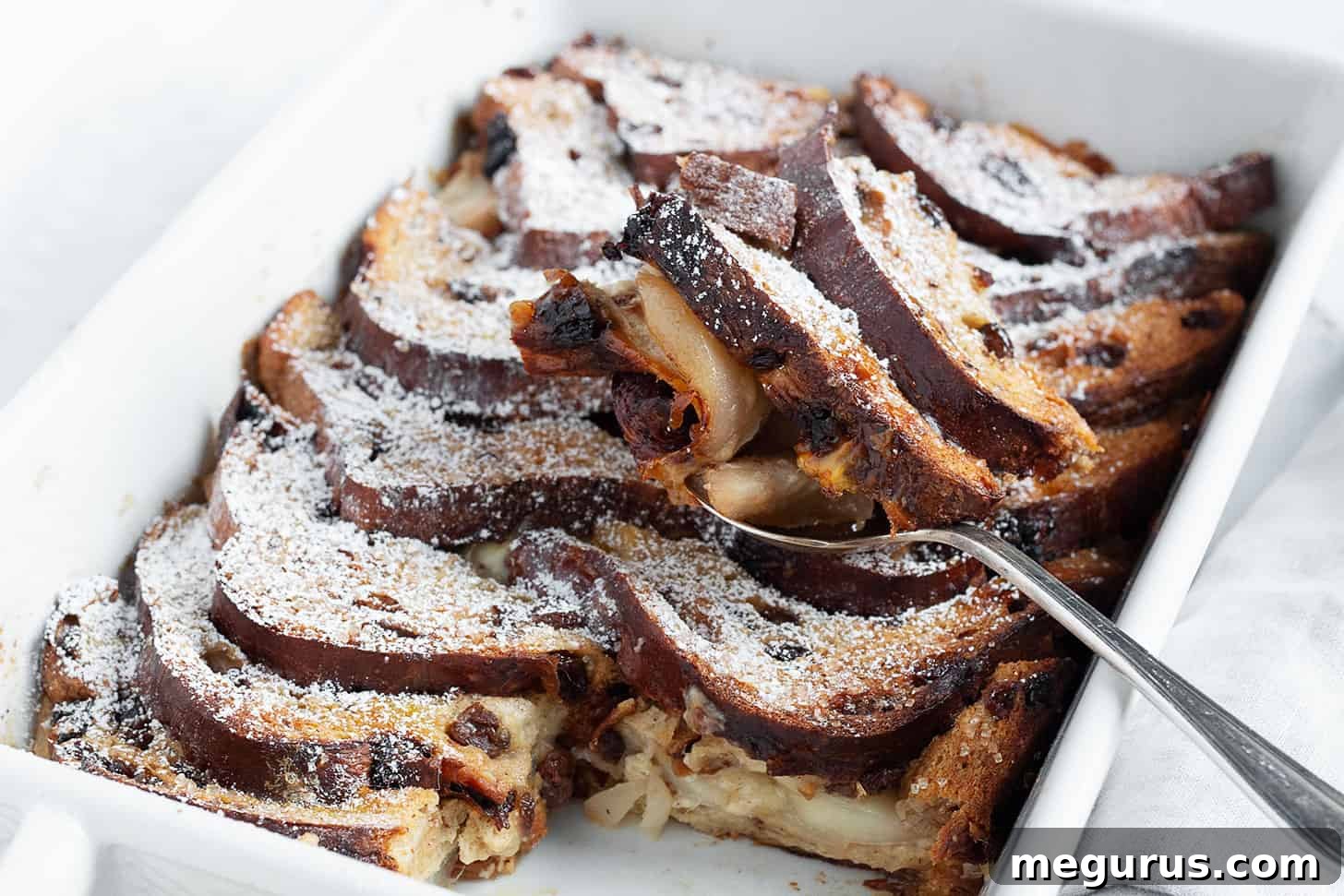
Pears are truly one of nature’s most versatile fruits for baking, their delicate sweetness and firm texture holding up beautifully under heat. When paired with Gruyere cheese, a classic Swiss cheese known for its complex, slightly sweet, and distinctively nutty flavor, they create a harmonious balance that is both unexpected and utterly delightful. This unique sweet and savory combination forms the heart of our bread pudding, built upon a foundation of fragrant cinnamon raisin bread. Each slice of bread eagerly soaks up a luxurious milk and egg mixture overnight, transforming into a moist, flavorful casserole that’s ready to bake and enjoy at your leisure the next morning.
While this French toast casserole offers a wonderful balance of sweet and savory on its own, its flavors are truly enhanced when served alongside something salty and robust. Crispy bacon, savory breakfast sausage links, or even thinly sliced, pan-fried ham make perfect accompaniments, creating a complete and satisfying meal that will impress your guests and family alike. This dish is incredibly versatile; don’t limit it to just breakfast or brunch! We often enjoy it as a hearty “breakfast for dinner” option when we crave something warm and comforting in the evening. Simply assemble it in the morning, let it chill in the refrigerator all day, and then bake it up for a unique and comforting evening meal.
Why You’ll Fall in Love with This Gruyere and Pear Bread Pudding
This recipe isn’t just about combining ingredients; it’s about crafting an experience that simplifies your life while delivering incredible taste. Here’s why this Gruyere and Pear Bread Pudding is destined to become a beloved staple in your repertoire, especially during the colder months or for special occasions:
- Effortless Make-Ahead Magic: The genius of this dish lies in its overnight preparation. Spend a few minutes assembling it the evening before, and wake up to a ready-to-bake breakfast. This is a game-changer for stress-free entertaining, busy holiday mornings, or when you simply want to enjoy a leisurely start to your day.
- A Symphony of Unique Flavors: The pairing of sweet, tender pears with rich, nutty Gruyere cheese is a match made in culinary heaven. Add the comforting warmth of cinnamon-swirl bread and a creamy, vanilla-infused custard, and you have a flavor profile that is both sophisticated and incredibly comforting. It’s a delightful departure from traditional sweet bread puddings.
- Perfect for Any Occasion: Whether you’re hosting a festive holiday brunch (like Christmas or Easter), a casual weekend get-together, or simply want a special treat for your family, this bread pudding fits the bill perfectly. It feels gourmet yet requires minimal active effort.
- Versatile Serving Options: Enjoy it as a standalone dish, or pair it with savory meats for a heartier meal. A dusting of powdered sugar, a light drizzle of pure maple syrup, or even a dollop of whipped cream can add a touch of elegance and extra sweetness if desired.
- Ultimate Comfort Food: There’s something inherently comforting about a warm, custardy bread pudding straight from the oven. This recipe delivers warmth, satisfaction, and a cozy feeling with every single bite, making it the ideal dish for chilly mornings.
Key Ingredients and Smart Substitutions
Understanding the role of each ingredient and knowing your substitution options can make all the difference in achieving the perfect Gruyere and Pear Bread Pudding. Quality ingredients are key to the success of this dish. Here are a few essential notes on the core components:
Pears: The Sweet and Tender Star
For this delightful recipe, I typically opt for Anjou pears. Their firm texture ensures they hold their shape beautifully during baking, preventing them from becoming mushy or disintegrating into the custard, while their mild, sweet flavor shines through beautifully. Bosc pears are another excellent choice, offering a slightly firmer texture and a subtly spicier, earthier note that would also work wonderfully in this sweet and savory context. When selecting your pears, aim for those that are just ripe enough to yield slightly to gentle pressure at the stem but still retain a good degree of firmness. Overly ripe pears tend to break down too much, affecting the pudding’s desired texture. If Anjou or Bosc are unavailable, most firm-fleshed pears like Bartlett (though they soften more) or Comice can be used, just ensure they aren’t overly ripe.
Gruyere Cheese: The Savory Counterpart
Gruyere cheese is an absolute cornerstone of this dish, providing a deep, nutty, and slightly sweet flavor that perfectly complements the pears. Its exceptional melting qualities create a luscious, savory layer within the pudding. While Gruyere can sometimes be a bit pricier than other cheeses, remember that you only need about 4 ounces (which yields approximately 1 cup shredded) for the recipe, so a smaller piece will suffice and is well worth the investment for the flavor it imparts. The distinct, complex taste of Gruyere is truly ideal here, but if it’s unavailable or outside your budget, a good quality Emmental cheese makes an excellent substitute, offering a similar nutty profile and good melt. For a slightly different but still delicious alternative, consider a sharp white cheddar or even a mild provolone, though they will impart a slightly different character to the finished dish.
Milk: The Custard Base Foundation
I highly recommend using whole milk (3% butterfat) for the custard base. Its richness contributes significantly to a creamy, indulgent texture that is essential for a luxurious and satisfying bread pudding. The higher fat content ensures a tender, silky custard. If whole milk isn’t readily available, 2% milk will also work perfectly well without significantly compromising the outcome, though the pudding might be slightly less rich. For an even richer, more decadent pudding, you could consider using half-and-half cream (10% butterfat) or a mix of whole milk and heavy cream (35% butterfat) for an ultra-creamy result, particularly if you’re serving this for a special occasion.
Cinnamon Swirl Bread: The Flavorful Foundation
The choice of bread is crucial for both the overall flavor and the desirable texture of your bread pudding. Cinnamon swirl bread is my preferred option, as it naturally infuses the dish with a comforting spice and a hint of sweetness that harmonizes with the pears and cheese. Alternatively, a good quality raisin bread or a dedicated cinnamon raisin bread works just as wonderfully, adding small pockets of sweetness and chewiness throughout the pudding. For a more neutral base that allows the pear and Gruyere flavors to truly shine, you could use a good quality challah or brioche bread, and then add a touch more cinnamon or vanilla extract to the custard mixture if desired. The most important tip here is to use slightly stale bread; day-old bread absorbs the custard more effectively without becoming soggy, leading to a much better texture.
Chef’s Tip for Serving!
While this bread pudding is utterly delicious on its own, boasting a perfect balance of sweet and savory notes, a light drizzle of pure maple syrup just before serving can add an extra layer of sweetness and warmth that many find irresistible. However, it’s truly optional, as the natural sweetness of the pears and the cinnamon swirl bread often provide enough delightful flavor and richness.
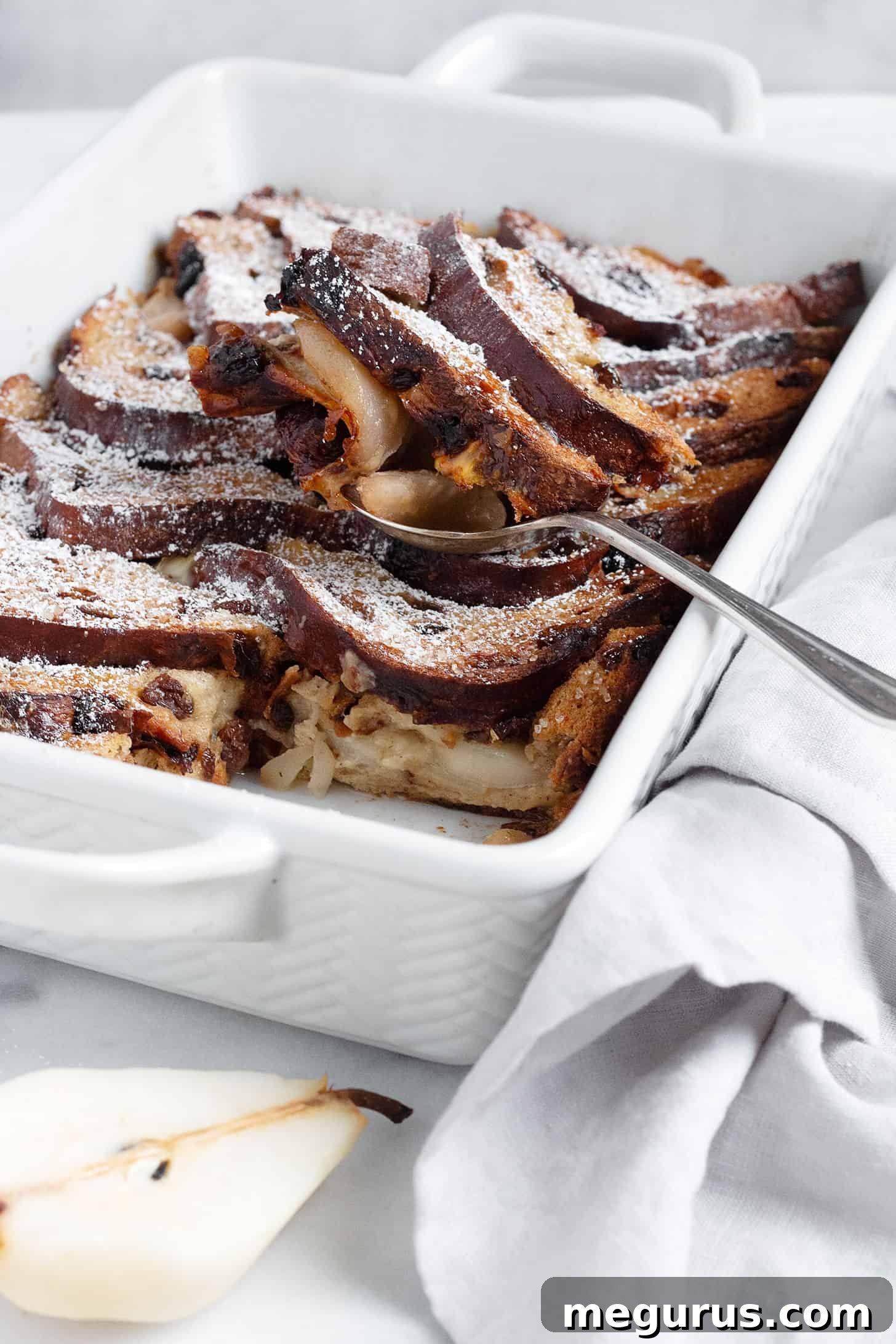
Making Ahead, Storing, and Freezing Your Bread Pudding
One of the greatest advantages of this Gruyere and Pear Bread Pudding is its make-ahead potential, making it perfect for entertaining or ensuring a stress-free, leisurely morning. Proper storage also ensures you can savor any delicious leftovers or prepare batches in advance for future enjoyment.
Overnight Preparation for Ultimate Convenience
To fully benefit from the flavors melding and the bread soaking up every last drop of the rich custard, assemble this bread pudding the night before you plan to bake it. Once all the layers are meticulously arranged and the custard is poured over, cover the baking dish tightly with plastic wrap or aluminum foil. This prevents the surface from drying out and helps the bread absorb the liquid uniformly. Refrigerate it for at least 8 hours, or ideally, overnight, to allow the bread to become fully saturated. In the morning, simply remove it from the fridge while your oven preheats, allowing it to come closer to room temperature for more even baking. Then, bake as directed for a perfectly golden, custardy, and irresistible treat.
Storing Leftovers
Should you be fortunate enough to have any delectable leftovers (a rare occurrence, I assure you!), proper storage is key to maintaining their freshness. Allow the baked bread pudding to cool completely to room temperature before storing. Then, transfer any remaining portions to an airtight container or keep the entire baking dish tightly covered with plastic wrap or aluminum foil. Store it in the refrigerator, where it will remain fresh and delicious for 2-3 days. To reheat, simply warm individual portions in the microwave until heated through, or place the entire dish, covered with foil, in a preheated oven (around 300°F/150°C) until thoroughly heated to your liking.
Freezing Baked Bread Pudding
Yes, baked bread pudding freezes surprisingly well! If you want to prepare a larger batch for meal prepping, or simply wish to enjoy portions at a much later date, allow the baked bread pudding to cool completely to room temperature first. Once cool, you can cut it into individual serving sizes or larger portions, depending on your needs. Wrap each portion tightly in plastic wrap, and then wrap it again in aluminum foil. This double layer of protection helps prevent freezer burn and preserves the texture and flavor. Store in the freezer for up to 2 months. To enjoy, thaw overnight in the refrigerator. Once thawed, reheat in the oven (covered with foil) until warmed through, or microwave individual slices. This makes it an ideal freezer-friendly option for quick, satisfying, and comforting breakfasts or desserts.
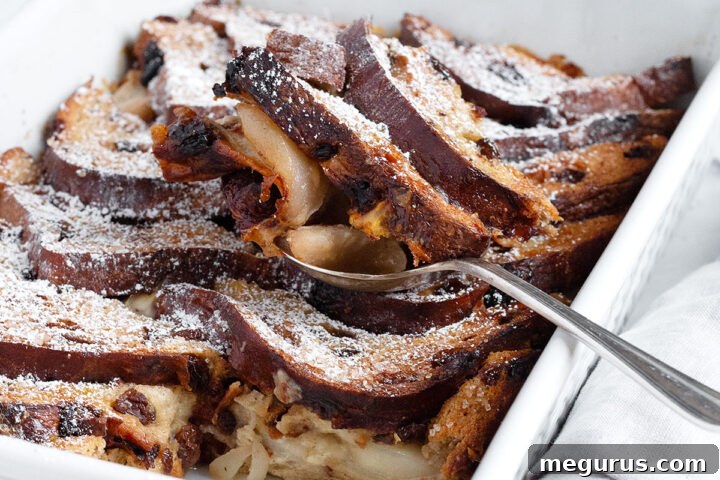
Get the Recipe: Gruyere and Pear Bread Pudding
Pin This
15
55
8
1
10
8
servings
Ingredients
- 4 cups Anjou or Bosc pears, peeled and sliced
- 2 teaspoons butter, melted
- 1 Tablespoon granulated white sugar
- 16-20 slices cinnamon swirl bread, cut in half diagonally (or raisin bread)
- 1 cup Gruyère cheese, shredded, about 4 oz
- 1 1/2 cups whole milk (3% b.f.), or half and half cream (10% b.f.)
- 5 Tablespoons granulated white sugar
- 5 large eggs
- 1/2 teaspoon ground cinnamon
- 1 Tablespoon turbinado sugar, or white granulated sugar
For serving:
- Icing/confectioners’ sugar, for dusting
- 1/2 cup maple syrup, optional
Instructions
-
In a medium bowl, combine the sliced pears, melted butter, and the 1 Tablespoon of sugar. Toss gently to coat, ensuring all pear slices are lightly covered.
-
In a greased 11 x 7-inch glass or ceramic baking dish, arrange half of the bread slices in an even layer on the bottom of the pan. Evenly spoon the pear mixture over the bread. Then, top the pears with an even layer of the shredded Gruyere cheese. Arrange the remaining bread slices on top of the cheese layer.
-
In a separate medium bowl, whisk together the milk, 5 Tablespoons granulated sugar, eggs, and ground cinnamon until all ingredients are thoroughly combined and the mixture is smooth. Carefully pour this custard mixture evenly over the bread and cheese layers in the baking dish. Use the back of a spatula or your hands to gently press down on the bread slices, ensuring they are fully submerged in the custard. This is crucial for proper soaking and a moist, uniform final texture. Cover the dish tightly with plastic wrap or aluminum foil and refrigerate for a minimum of 8 hours, or preferably overnight, to allow the bread to fully absorb the liquid and flavors to meld.
-
When you are ready to bake, preheat your oven to 350°F (175°C). Ensure you are not using a fan-assisted (convection) setting, as this can affect baking time and browning.
-
Remove the covering from the baking dish. Sprinkle the turbinado sugar (or an equal amount of white granulated sugar) evenly over the top of the bread pudding. Bake for approximately 55 minutes, or until the top is beautifully golden brown and a knife inserted into the center comes out clean, indicating the custard is fully set. If the top begins to brown too quickly before the center is cooked, you can loosely tent it with aluminum foil. Allow the bread pudding to stand for 10 minutes after baking to firm up slightly before serving. This resting period helps the custard set. Cut into squares and serve warm, optionally dusted with icing/confectioners’ sugar and/or a delightful drizzle of pure maple syrup.
Notes
Nutrition Information (per serving)
- Serving Size: 1 serving
- Calories: 433 kcal
- Carbohydrates: 66 g
- Protein: 14 g
- Fat: 13 g
- Saturated Fat: 6 g
- Cholesterol: 141 mg
- Sodium: 311 mg
- Potassium: 373 mg
- Fiber: 4 g
- Sugar: 35 g
- Vitamin A: 450 IU
- Vitamin C: 3.5 mg
- Calcium: 300 mg
- Iron: 2.2 mg
Tips for Achieving Bread Pudding Perfection
Even though this recipe is straightforward, a few key tips can elevate your Gruyere and Pear Bread Pudding from delicious to absolutely extraordinary. Pay attention to these details for the best possible results:
- Use Slightly Stale Bread: This is a crucial, often overlooked tip for any bread pudding. While not explicitly stated in the original recipe, using bread that’s a day or two old is ideal. Stale bread has lost some moisture, making it much more absorbent for the custard mixture. This prevents a soggy texture and ensures a custardy interior with distinct bread pieces. If your bread is fresh, you can lightly toast it in the oven for 10-15 minutes at 300°F (150°C) to dry it out slightly before cutting.
- Don’t Skimp on Soaking Time: The overnight refrigeration is absolutely crucial for this recipe. It allows the bread to fully absorb the eggy custard mixture, transforming it into a moist, flavorful pudding throughout. Resist the temptation to rush this step, as insufficient soaking will result in a dry and unevenly textured pudding.
- Ensure Even Submersion: When you pour the custard over the bread and cheese layers, gently press the bread down with the back of a spatula or even your hands. This ensures all pieces are thoroughly soaked in the custard, which is key to a uniform and moist texture in the final baked product.
- Perfect Pears for Best Texture: Choose pears that are firm to the touch but ripe enough to have flavor. Anjou and Bosc are excellent choices as they hold their shape well during baking and offer a pleasant texture contrast to the soft bread pudding. Avoid overly soft or mushy pears, as they can break down too much.
- The “Clean Knife” Test for Doneness: To accurately check for doneness, insert a thin knife or a wooden skewer into the center of the pudding. If it comes out clean with no wet streaks, the custard is fully set and the pudding is cooked through. If it still has wet streaks, continue baking for a few more minutes and re-test.
- Allow to Rest After Baking: After removing the bread pudding from the oven, resist the urge to cut into it immediately. Let it sit for about 10 minutes on a wire rack. This resting period allows the custard to fully set and firm up, making it much easier to cut into neat squares and preventing it from falling apart when served.
Serving Suggestions and Flavor Variations
This Gruyere and Pear Bread Pudding is truly fantastic on its own, offering a complex balance of sweet and savory. However, there are many ways to enhance your serving experience or introduce exciting new flavor variations to suit any preference:
Classic Pairings for a Complete Meal
- Savory Sides: As mentioned throughout, crispy bacon, savory maple sausage links, or thinly sliced, pan-fried ham are ideal for balancing the sweetness of the pears and bread. Their salty notes create a perfect counterpoint.
- Fresh Fruit: A light and refreshing side of mixed berries (strawberries, blueberries, raspberries) or a simple fruit salad adds freshness, vibrant color, and a juicy contrast to the rich pudding.
- A Light Salad: For an elegant brunch setting, a small side salad with mixed greens and a light vinaigrette (perhaps apple cider or balsamic) can provide a refreshing and tangy contrast to the richness of the bread pudding.
Sweet Enhancements for a Decadent Touch
- Maple Syrup Drizzle: A classic for a reason! A generous drizzle of pure maple syrup just before serving adds a wonderful depth of sweetness and a hint of caramelized flavor.
- Powdered Sugar: A simple dusting of confectioners’ sugar (icing sugar) adds a pretty, elegant finish and a delicate touch of extra sweetness without overwhelming the dish.
- Caramel Sauce: For an extra decadent treat, a warm drizzle of homemade or good quality store-bought caramel sauce would be absolutely divine, especially if serving this as a dessert.
- Whipped Cream or Ice Cream: If you’re serving this bread pudding more as a dessert, a dollop of freshly whipped cream or a scoop of premium vanilla bean ice cream takes this pudding to an entirely new level of indulgence.
Creative Variations to Explore
Don’t be afraid to experiment with the core recipe to customize it to your taste or what you have on hand:
- Nutty Crunch: Add about half a cup of chopped pecans, walnuts, or even slivered almonds to the pear mixture before layering for an added textural element and nutty flavor.
- Different Fruits: While pears are fantastic, consider other firm-fleshed fruits like apples (Granny Smith for tartness, Honeycrisp for sweetness), thinly sliced peaches (fresh or frozen), or even a mix of berries for a different, fruity flavor profile.
- Spice It Up: Enhance the warm spices by adding a pinch of freshly grated nutmeg or a touch of ground cardamom to the custard mixture. A hint of ginger could also be lovely with pears.
- Herbaceous Twist: For an unexpected and sophisticated savory note, a subtle hint of fresh thyme or rosemary (finely chopped) with the pears can add a unique aromatic dimension.
- Cheese Alternatives: Experiment with other semi-hard, nutty, or savory cheeses. Fontina, a good quality aged white cheddar, or even a smoked Gouda could provide interesting cheesy dimensions.
- Boozy Kick: For an adult-only version, add a tablespoon or two of pear brandy, Calvados (apple brandy), or a good quality bourbon to the custard mixture for an extra layer of warmth and complexity.
- Chocolate Chips: For those who love a sweet and savory combo with a chocolate twist, a handful of dark chocolate chips layered with the pears and cheese can be surprisingly delicious!
Frequently Asked Questions (FAQ)
Here are answers to some common questions you might have about making and enjoying this delicious Gruyere and Pear Bread Pudding:
Can I use different types of bread for this recipe?
Absolutely! While cinnamon swirl or raisin bread adds a lovely, complementary flavor, you can certainly use other rich, slightly sweet breads like challah, brioche, or even a good quality sourdough for a tangier note that contrasts nicely with the sweet pears. The most important factor is to ensure the bread is slightly stale (day-old is ideal) as it absorbs the custard mixture more effectively, leading to a superior texture.
Is this dish suitable for vegetarians?
Yes, this Gruyere and Pear Bread Pudding is naturally vegetarian. It contains no meat products, relying on eggs and dairy for its richness. If serving to vegetarians, simply ensure all accompaniments you choose (like side dishes or breakfast meats) are also vegetarian-friendly.
Can I prepare this in advance and freeze it unbaked?
While some bread puddings can be frozen unbaked, for the best results with this particular recipe, it’s generally recommended to bake it first and then freeze the cooked leftovers. The texture of the fresh pears and the Gruyere cheese might be affected by freezing raw, potentially leading to a less desirable outcome once baked.
How do I know if the bread pudding is cooked through?
The best indicator for doneness is the “clean knife” test. Insert a thin knife or a wooden skewer into the very center of the pudding. If it comes out clean, the custard is fully set and the pudding is thoroughly cooked. The top should also be beautifully golden brown and slightly puffed. If the knife has wet streaks, continue baking for a few more minutes and re-test.
Can I make this dairy-free or gluten-free?
Making this dish dairy-free would require substituting both the milk and the Gruyere cheese with plant-based alternatives. While possible, these substitutions might significantly alter the original flavor profile and texture. For a gluten-free version, you would need to use a sturdy, good quality gluten-free bread, ensuring it’s dense enough to hold up to the overnight soaking and baking process without crumbling.
More Delicious Bread Pudding Recipes to Explore!