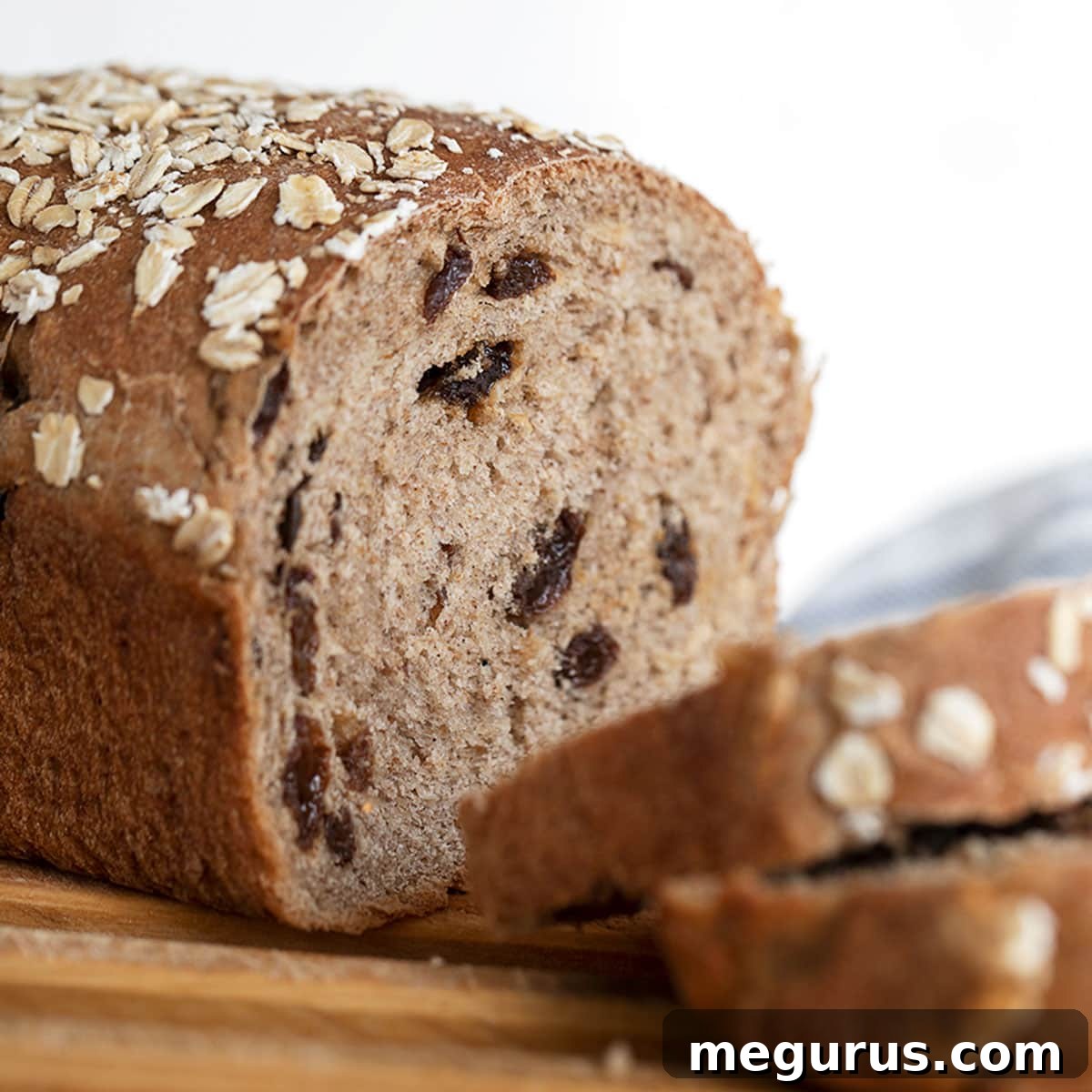
Irresistible Cinnamon Raisin Oatmeal Bread: Your New Favorite Homemade Loaf
There’s nothing quite like the comforting aroma of freshly baked bread filling your home, and this Cinnamon Raisin Oatmeal Bread takes that experience to a whole new level. Crafted with wholesome rolled oats and a touch of whole wheat flour, this loaf delivers a delightful texture and a rich, satisfying flavor that makes it arguably the perfect morning bread. Imagine a lovely crispy crust giving way to a moist, tender crumb, generously studded with plump, sweet raisins and infused with warm cinnamon. It’s a sensory delight, making every slice a moment to savor.
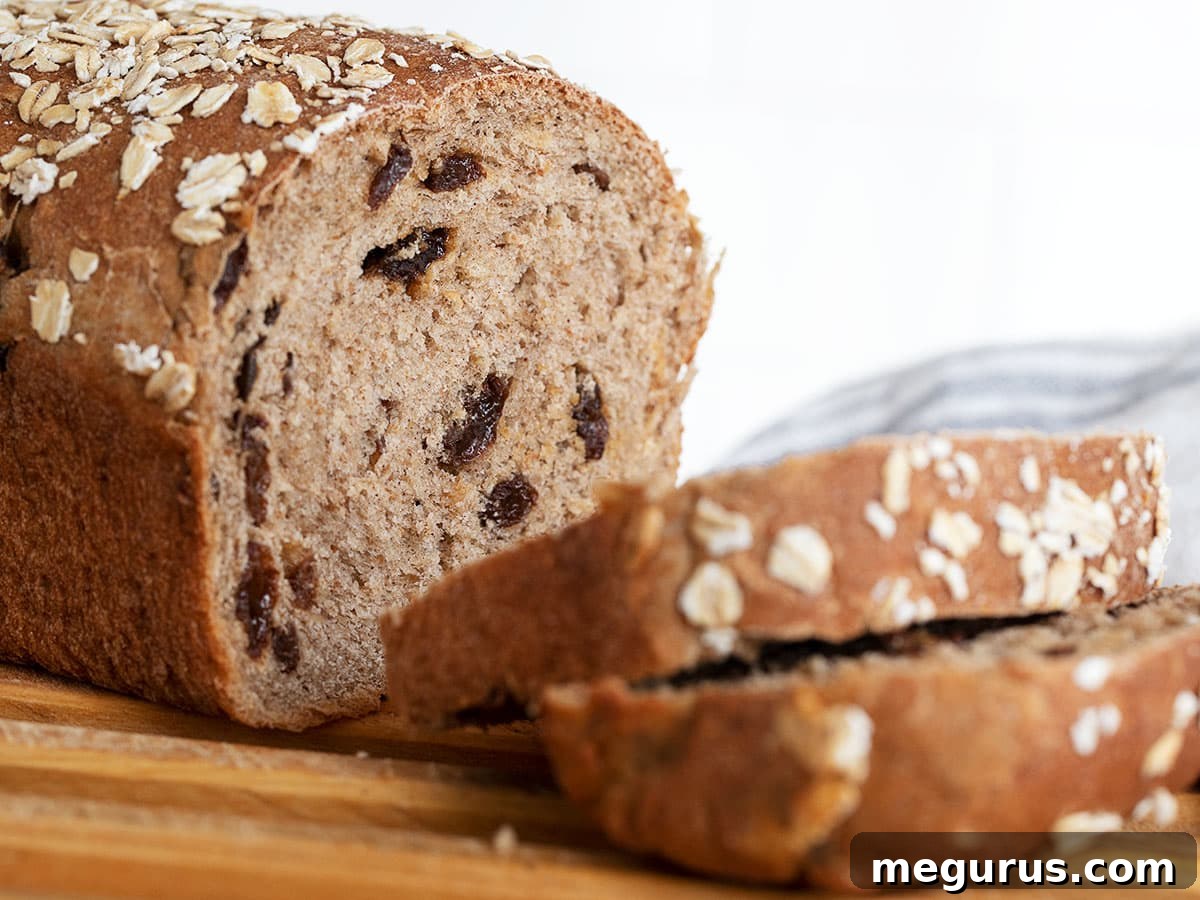
This isn’t just a breakfast bread; it’s a versatile culinary canvas. While it shines brightly when toasted, filling your kitchen with an enchanting scent, and is utterly delicious simply slathered with butter, its potential extends far beyond the breakfast table. Transform it into an extraordinary sandwich bread, lending a sweet and savory note to your midday meal. Or, for a truly indulgent treat, use any leftover slices to create the most incredible French toast or a decadent bread pudding. This recipe promises a hearty, satisfying bake that will quickly become a cherished staple in your kitchen, offering warmth and flavor with every bite.
Why You’ll Love This Wholesome Homemade Bread
Baking your own bread is a rewarding experience, and this Cinnamon Raisin Oatmeal Bread offers even more reasons to fall in love with it. Its unique blend of hearty oats and the subtle nuttiness of whole wheat flour creates a bread that is not only incredibly flavorful but also boasts a wonderful texture. The oats contribute a tender crumb and a slight chewiness, making it distinct from purely white flour loaves. The natural sweetness of the raisins, combined with the spicy warmth of cinnamon, makes for a harmonious flavor profile that is both comforting and invigorating. It’s surprisingly simple to make, even for those new to yeast baking, yielding consistently delicious results that are far superior to store-bought options. Plus, the satisfaction of slicing into a loaf you’ve baked yourself is unmatched!
Key Ingredients & Smart Substitutions for Your Perfect Loaf
Crafting the perfect Cinnamon Raisin Oatmeal Bread begins with understanding your ingredients. Each component plays a crucial role in achieving the desired flavor, texture, and rise. While the recipe is designed for optimal results, we also offer some flexible substitutions to accommodate what you have on hand or specific dietary preferences.
- Yeast: For this classic two-rise loaf, we recommend either Active Dry Yeast or regular Instant Yeast (such as SAF Brand). Both will provide a steady, robust rise essential for a well-developed crumb and flavor. It’s important to avoid quick or rapid-rise instant yeast, as these are formulated for faster, single-rise recipes and may not yield the same depth of flavor or texture in this traditional method. Ensure your yeast is fresh for the best rise; if it’s old, it might not activate properly, resulting in a dense loaf.
- Rolled Oats: Large flake, old-fashioned rolled oats are truly the star here, offering a delightful texture and heartiness to the bread. They absorb liquid gradually, contributing to the moist crumb. If you’re in a pinch, quick oats can be used, but be aware that they absorb liquid more rapidly and may require a slight adjustment to the overall flour quantity (you might need a little less flour). Instant oats, however, are not recommended as their fine texture won’t provide the same structural integrity or bite.
- Raisins: We prefer Thompson raisins for their balanced sweetness and plumpness in this bread, but any type of raisin or sultana will work beautifully. For an extra layer of flavor, consider soaking your raisins in a bit of rum or orange juice before draining and patting them dry. This infuses them with moisture and a subtle hint of complementary flavor.
- Whole Wheat Flour: The small addition of whole wheat flour is highly recommended. It adds a wonderful depth of flavor, a slightly chewier texture, and a boost of nutritional value to the loaf. If you don’t have whole wheat flour, you can certainly substitute it with additional all-purpose flour. Just keep in mind that all-purpose flour behaves differently, so you may need to adjust the total amount of flour slightly (you might need a bit more all-purpose flour to achieve the correct dough consistency).
- Milk: Using milk enriches the dough, contributing to a softer crumb and a richer flavor. If you prefer to avoid dairy, or simply don’t have milk on hand, a straightforward substitution with water will work perfectly fine. The bread will still be delicious, though perhaps slightly less tender.
- Honey: Honey adds a natural sweetness and helps to tenderize the bread, giving it a beautiful golden crust. Maple syrup is an excellent substitute for honey, offering a similar sweetness with its own unique flavor profile. Alternatively, if neither is available, you can use 1 teaspoon of white granulated sugar for the honey to provide the necessary sweetness for yeast activation and flavor.
- Vegetable Oil: Any neutral-tasting oil, such as canola oil or standard vegetable oil, is suitable for this recipe. It contributes to the dough’s moisture and softness without imparting a strong flavor. For a richer bread, you can substitute the same amount of melted unsalted butter.
- Other Essentials: Don’t forget the foundational elements: good quality all-purpose flour to build the structure of the bread, fine sea salt to enhance all the flavors, and extra ground cinnamon to amplify that classic warm spice.
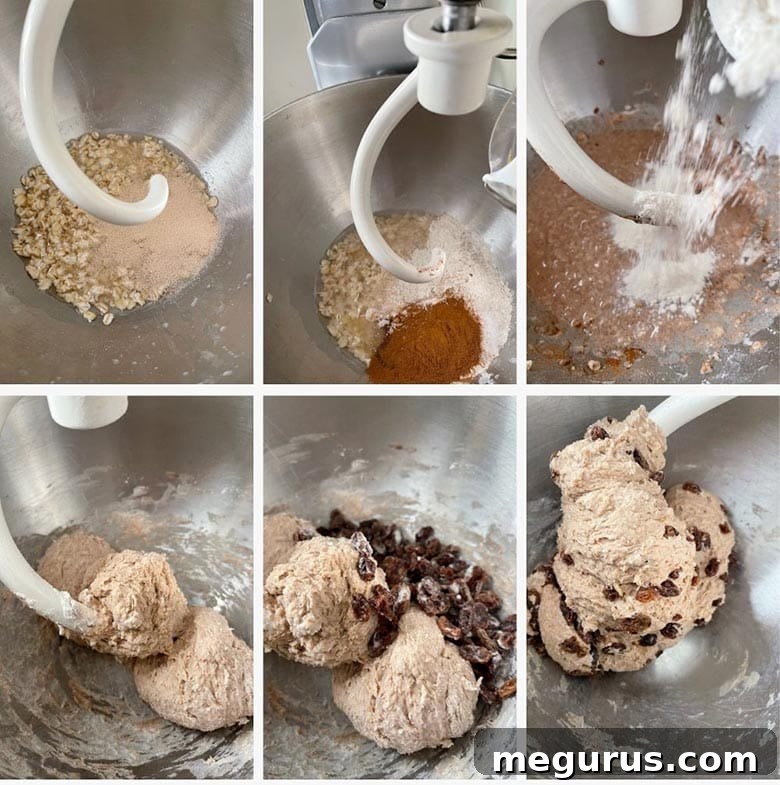
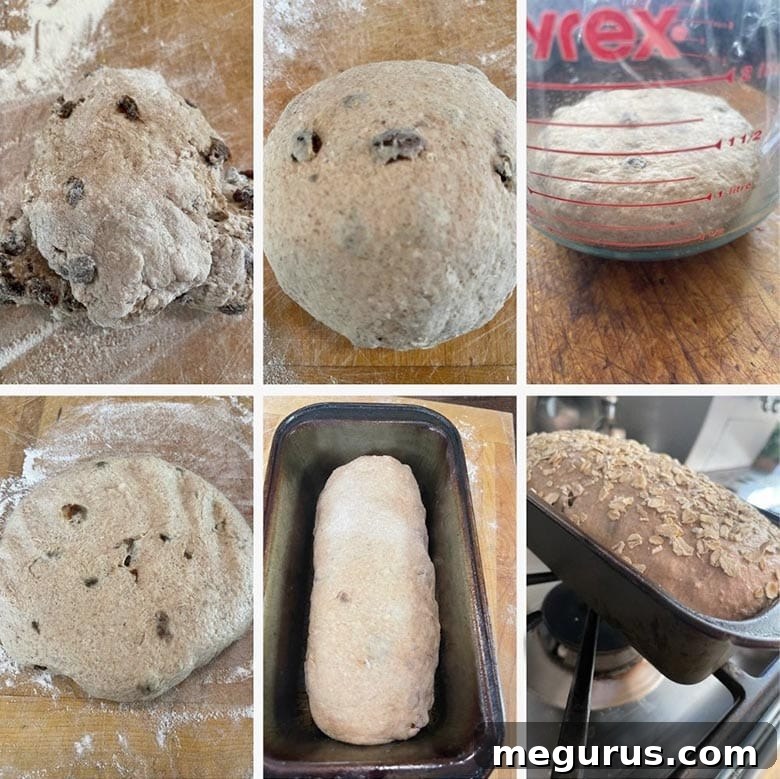
Step-by-Step Visual Guide
While the detailed instructions in the recipe card below are your ultimate guide, these process photos provide a helpful visual summary of key stages in making this delightful bread. Seeing the dough’s consistency and appearance at different points can be incredibly beneficial, especially for novice bakers. Remember, not every single step may be illustrated here, so always refer to the complete written instructions for precision and best results.
Expert Tips for Baking the Best Cinnamon Raisin Oatmeal Bread
Achieving a perfect loaf of homemade bread is incredibly satisfying, and these expert tips will guide you toward a consistently delicious outcome with your Cinnamon Raisin Oatmeal Bread. Pay close attention to these details, and you’ll be rewarded with a beautiful, flavorful, and perfectly textured loaf every time.
- Flour is a Guide, Not a Rule: When adding flour to any yeast dough, especially oatmeal breads, remember that the exact amount can vary. Factors like humidity, the brand of flour, and even the type of oats can influence how much flour your dough needs. Always add flour gradually, only until the dough comes together. Oatmeal breads tend to produce a moist and sometimes sticky dough, which is perfectly normal. Avoid the temptation to add excessive flour in the initial mixing stage, as this can lead to a dense, dry loaf.
- Understanding Dough Consistency: Your oatmeal dough should be moist, but not overly wet. When mixing in a stand mixer, it should eventually wrap around the kneading hook and begin to clean the sides of the bowl. At this point, even if it still feels a little sticky, resist adding more flour to the bowl. Transfer the dough to a lightly floured countertop for final kneading. Here, you can incorporate small amounts of additional flour as needed, until the dough is smooth, elastic, and no longer excessively sticky to the touch. A good test is the “windowpane test”: stretch a small piece of dough; if you can see light through it without it tearing, it’s adequately kneaded.
- The Art of Rising Times: Yeast bread rising times are always approximations. The actual time it takes for your dough to double in size will depend significantly on the ambient temperature of your kitchen. In a cooler environment, such as during winter months, the dough will rise more slowly. Conversely, in a warm summer kitchen, it will rise more quickly. Instead of rigidly adhering to the suggested time, rely on visual cues: let the dough rise until it has clearly doubled in volume. Patience is key!
- Crucial Oven Temperature Adjustment: This step is absolutely vital for developing a beautiful crust and a proper rise. While your oven will be preheated to a high 450°F (230°C) initially, you must immediately reduce the temperature to 375°F (190°C) as soon as the loaf goes into the oven. The initial high heat provides a burst that helps the dough expand rapidly (known as “oven spring”) before the lower temperature allows it to bake through evenly without burning the crust. Forgetting this step will result in an over-browned exterior and an undercooked interior.
- Doubling the Recipe: This recipe can be successfully doubled if you want to make two loaves. However, ensure that your stand mixer is robust enough to handle the increased volume and density of the dough. If you notice your mixer straining or struggling, it’s best to transfer the dough to a clean, lightly floured work surface and finish adding flour and kneading by hand. This prevents damage to your appliance and ensures proper dough development.
- Creative Uses for Leftovers: Should you find yourself with any slices of this delicious bread remaining, don’t let them go to waste! Its rich flavor and tender texture make it ideal for transforming into decadent French toast, soaking up custardy goodness, or incorporating into a comforting bread pudding. It’s also fantastic for savory applications, like croutons.
- Freezing for Future Enjoyment: This bread freezes exceptionally well, making it perfect for meal prep or ensuring you always have a homemade loaf on hand. Wrap the completely cooled loaf tightly in plastic wrap, then again in aluminum foil, and store it in the freezer for up to 3 months. When you’re ready to enjoy it, simply thaw it at room temperature or gently warm it in a low oven for that freshly baked taste.
- Room Temperature Ingredients: For optimal yeast activity and consistent dough development, ensure that your milk and honey are at room temperature (or slightly warm, as specified for the oats). Cold ingredients can shock the yeast, slowing down or inhibiting the rising process.
- Loaf Pan Size Matters: For the best shape and rise, use an 8½ x 4½-inch loaf pan. If your pan is significantly larger or smaller, it may affect the bread’s shape, rise, and baking time. A pan that’s too large can result in a flatter loaf, while one that’s too small can cause it to overflow during the final rise or baking.
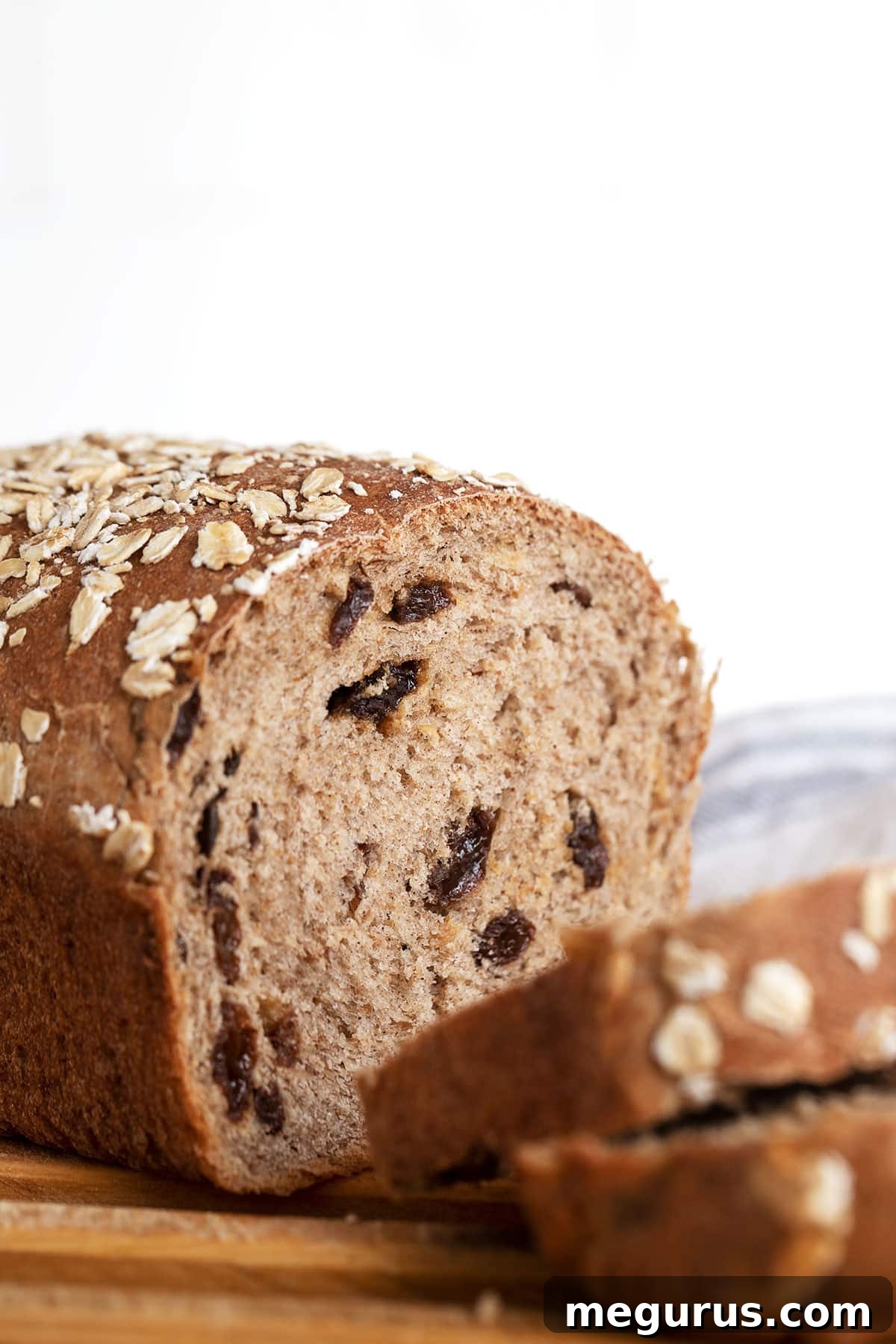
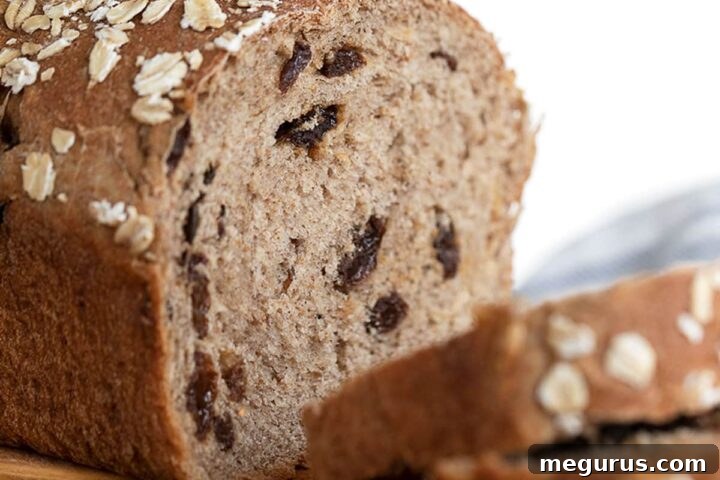
Get the Recipe: Cinnamon Raisin Oatmeal Bread
Pin This
Leave a Review
Ingredients
Dough:
- 1/2 cup (50 g) large flake old-fashioned rolled oats
- 3/4 cup + 2 teaspoons (187 g) boiling water
- 2 1/4 teaspoons (7 g) active dry or instant yeast
- 3 Tablespoons milk
- 1 Tablespoon honey
- 2 Tablespoons vegetable or canola oil
- 1 teaspoon fine sea salt
- 2 1/2 teaspoons ground cinnamon
- 1/2 cup (72 g) whole wheat flour
- 1 3/4 cups (225 g) all purpose flour, approximately
- 2/3 cup (100 g) raisins, soaked in hot water for 15-20 minutes, drained and patted dry
Topping:
- Additional large flake rolled oats
Instructions
-
In a large mixing bowl or the bowl of your stand mixer fitted with the kneading hook attachment, combine the rolled oats and the boiling water. Stir them gently to ensure all oats are moistened, then allow the mixture to stand for approximately 20 minutes. This step softens the oats and begins to release their starches, contributing to the bread’s tender crumb.
-
While the oats are soaking, prepare your raisins. Place the raisins in a separate small bowl and cover them with very hot water. Let them sit for about 20 minutes to plump up. This ensures they are moist and soft, preventing them from drying out in the oven or absorbing moisture from the dough, which could lead to a drier bread.
-
After 20 minutes, check the temperature of the oat and water mixture. For active dry yeast, it should be around 105°F (40°C), and for instant yeast, up to 115°F (46°C). It is crucial that this mixture has cooled sufficiently, as hot liquid will kill the yeast, preventing your bread from rising. If you don’t have a thermometer, simply test with your finger; it should feel comfortably lukewarm, not hot.
-
Now, add the yeast, milk, honey, vegetable oil, fine sea salt, ground cinnamon, and whole wheat flour to the oat mixture. Mix these ingredients thoroughly to combine. Next, begin incorporating the all-purpose flour, starting with about 1 cup. Knead the dough in your stand mixer, adding additional all-purpose flour gradually, in small increments, and kneading between additions. Continue until you achieve a moist dough that effectively wraps around the kneading hook and starts to pull away cleanly from the sides of the bowl. Once the raisins have plumped, drain them thoroughly and pat them very dry with a paper towel. Toss the dried raisins with a tiny bit of flour to prevent them from clumping. Add the floured raisins to the dough and continue kneading until they are evenly distributed. Add a final touch of flour if necessary, until the dough is moist but no longer overly sticky and cleans the bowl well.
-
Transfer the dough from the mixing bowl to a lightly floured work surface. Knead it briefly by hand for a minute or two to ensure it’s smooth. Shape the dough into a smooth ball and place it into a clean bowl that has been lightly greased with oil or cooking spray. Cover the bowl tightly with plastic wrap to prevent the dough from drying out. Allow the dough to rise in a warm, draft-free place until it has doubled in size, which typically takes between 1 to 1½ hours, depending on your kitchen’s temperature.
-
Once the first rise is complete, gently remove the dough from the bowl to a lightly floured work surface. Carefully deflate it to release the air. Pat the dough into an oval shape, roughly 9 inches long and 5 inches wide. To form the loaf, grab the longer edges of the dough and bring them together to meet in the middle. Pinch the seam firmly along its entire length, ensuring it is sealed well. Flip the dough over so the seam is now on the bottom. Carefully transfer the shaped loaf into a greased 8½ x 4½-inch loaf pan. Cover the pan again with plastic wrap and set it aside for its second rise. The dough should rise until it has crested the pan by about 1 inch in the middle, which usually takes between 45 to 60 minutes.
-
While the dough is undergoing its second rise, preheat your oven to 450°F (230°C). Make sure to use the regular bake setting, not a fan-assisted or convection setting, unless specified for your oven.
-
Once the dough has completed its second rise, carefully remove the plastic wrap. Lightly brush the top surface of the loaf with water. This will help the additional rolled oats adhere. Sprinkle a generous amount of large flake rolled oats over the top, gently pressing them down so they stick firmly.
-
Carefully place the loaf pan into the preheated 450°F (230°C) oven. Immediately after placing the loaf inside, reduce the oven temperature to 375°F (190°C). Bake for 20 minutes. After 20 minutes, rotate the pan 180 degrees (front to back) to ensure even browning. Continue baking for an additional 15-20 minutes, or until the internal temperature of the loaf registers between 200-205°F (93-96°C) when tested in the center with an instant-read thermometer. If you notice the crust is browning too quickly, loosely tent the loaf with a piece of aluminum foil for the remaining baking time to prevent over-browning.
-
Once baked, remove the loaf from the oven and immediately transfer it from the loaf pan to a wire cooling rack. Allow the bread to cool completely at room temperature before attempting to slice it. Slicing warm bread can result in a gummy, dense crumb and an overall less desirable texture. Patience here will be rewarded with a perfect slice!