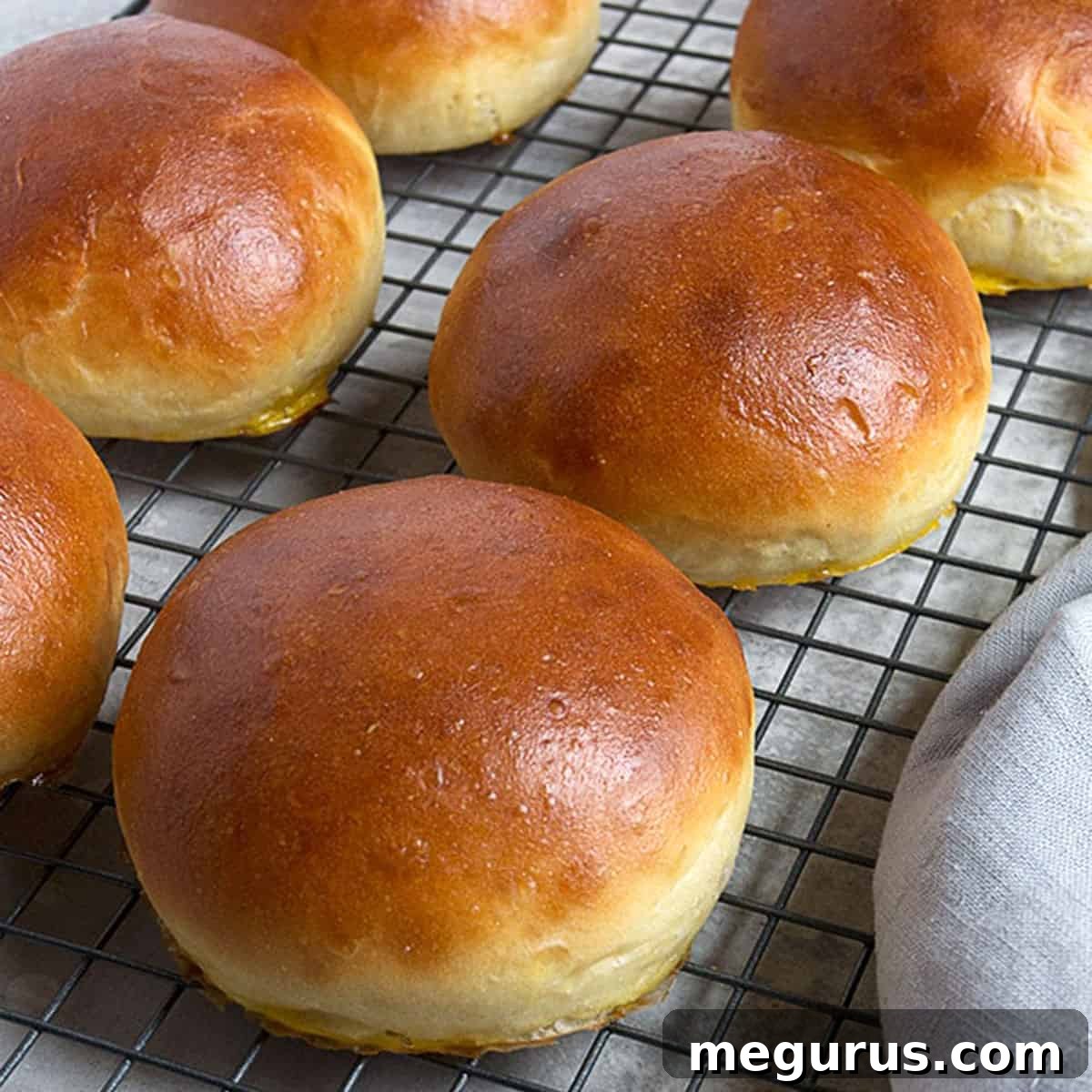
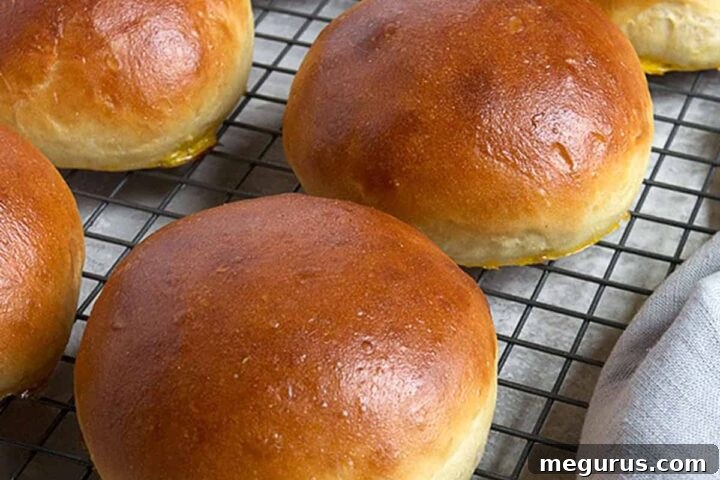
Unlock the secret to an unforgettable burger experience with these remarkably soft, homemade hamburger buns! Crafted to perfection, these brioche-like buns boast a delicate texture and rich flavor that will elevate any sandwich from ordinary to extraordinary. Forget bland, store-bought alternatives; once you try these, you’ll never go back.
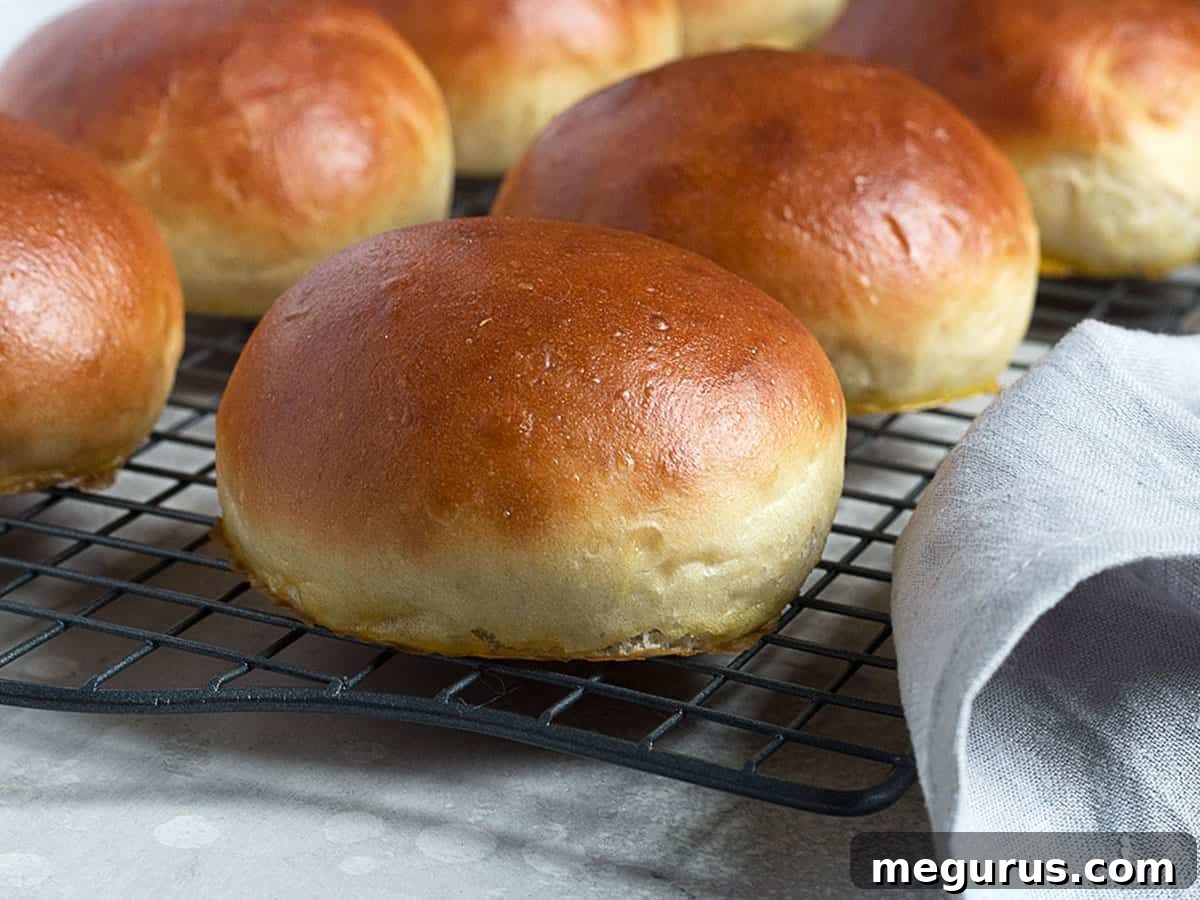
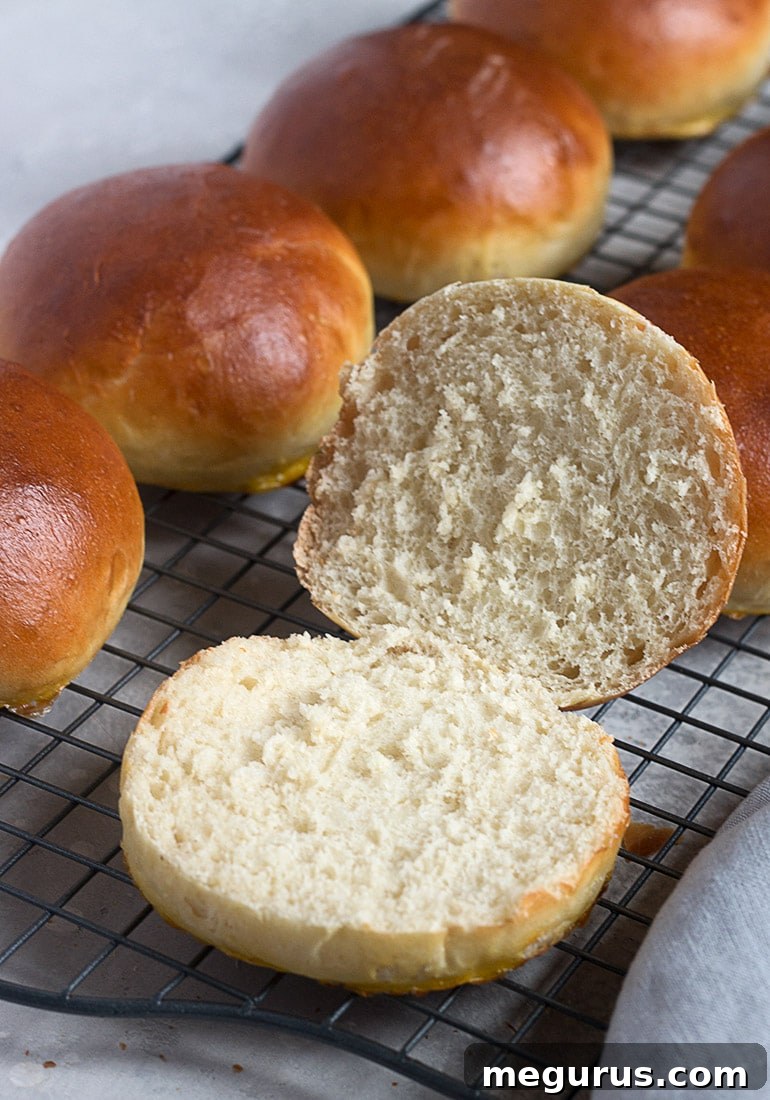
For years, this has been my go-to recipe for crafting the ultimate hamburger buns. What makes them truly special is their unique balance: enriched with eggs and a touch of butter for that classic brioche richness, yet they remain wonderfully light and airy. Despite their tender crumb, these buns are robust enough to cradle even the juiciest burgers and a generous stack of toppings without falling apart, ensuring a satisfying bite every time.
If you’re looking to significantly upgrade your summer BBQ game, these delicious homemade burger buns are the perfect starting point. They are incredibly versatile and freeze beautifully, making them ideal for meal prep. Whip up a double batch, load your freezer, and you’ll always be prepared for an impromptu cookout or a leisurely weekend dinner, guaranteeing fresh, bakery-quality buns at a moment’s notice.
Why Homemade Burger Buns Make All the Difference
There’s a common misconception that baking your own bread is complicated and time-consuming. While it does require a bit of patience, the reward of homemade hamburger buns far outweighs the effort. Store-bought buns often lack flavor, can be dry, or crumble under the weight of a hearty burger. Our brioche-style buns, on the other hand, offer an unparalleled freshness, a delicate crust, and an interior that is both soft and slightly chewy. You control the ingredients, avoiding preservatives and artificial flavors, which translates to a healthier, more delicious product. Plus, the aroma of freshly baked bread filling your kitchen is an experience in itself!
Essential Ingredients for Perfect Hamburger Buns
Understanding the role of each ingredient is key to achieving the best results for your homemade hamburger buns.
Bread Flour: The Foundation of Structure – For superior hamburger buns, starting with bread flour is highly recommended. Bread flour contains a higher protein content compared to all-purpose flour, which means it develops more gluten. This gluten network is crucial for creating the structure that allows the buns to rise high, producing a light, airy, and chewy texture that holds its shape. If you can find unbleached bread flour, even better, as it tends to have a slightly stronger gluten structure. In many grocery stores, unbleached bread flour can be a bit elusive, but specialty baking stores or bulk food retailers often carry it. While you can substitute with all-purpose flour, be aware that your buns might not achieve the same impressive height or chewiness due to the lower protein content.
Active Dry or Regular Instant Yeast: The Leavening Agent – Yeast is the magical component that gives our buns their lift and airy texture. There are two main types suitable for this recipe: Active Dry Yeast and Instant Yeast. Active dry yeast requires “proofing” – dissolving it in warm water (around 105-110°F or 40-43°C) and letting it sit for about 5 minutes until it becomes foamy. This step verifies that the yeast is active and alive. Instant yeast, such as SAF Brand, is more forgiving and generally doesn’t require prior proofing; it can be mixed directly with the dry ingredients. However, for consistency and peace of mind, I still prefer to proof instant yeast in warm water, just as you would active dry yeast. This ensures your dough will rise as expected. Avoid using “quick” or “rapid rise” yeast for this recipe, as they behave differently and may not yield the desired slow, flavorful rise.
Warm Water and Milk: The Liquid Gold – The precise temperature of your liquids is critical for activating the yeast without killing it. Water warmed to about 105-110°F (40-43°C) is ideal – it should feel comfortably warm, not hot. A slightly warmed milk addition contributes to the richness and tender crumb of these brioche-like buns, adding moisture and a subtle sweetness that complements the other flavors beautifully.
Sugar: More Than Just Sweetness – While a small amount of sugar does lend a hint of sweetness to the buns, its primary role here is to feed the yeast, helping it to activate and multiply efficiently, which is essential for a good rise. It also aids in achieving that beautiful golden-brown crust during baking.
Egg: For Richness and Color – A large beaten egg adds incredible richness, moisture, and a lovely golden hue to the interior of the buns, contributing to their brioche-like quality. It also acts as an emulsifier, helping to create a smoother, more uniform dough.
Fine Salt: Flavor and Control – Salt isn’t just for seasoning; it plays a vital role in bread making by controlling the yeast’s activity and strengthening the gluten structure. Too much salt can inhibit yeast, while too little can result in a bland, uncontrolled rise. Fine salt disperses more evenly throughout the dough.
Unsalted Butter: The Key to Tenderness – Softened unsalted butter is incorporated into the dough for unparalleled tenderness and flavor. It contributes to the luxurious, soft crumb and rich taste that defines these exceptional burger buns. Ensure it’s at room temperature for easy incorporation into the flour mixture.
The Art of Handling Dough: Achieving a Light and Fluffy Texture
Many home bakers find the shaping of dough into a perfect “ball” to be the most challenging part of making buns. It’s natural to think you just grab a piece of dough and squeeze it into shape. However, there’s a specific technique to creating surface tension or “tightness” on the top of the dough ball. This tension is crucial for two reasons: it encourages the dough to rise higher and more evenly, and it creates that desirable smooth, rounded top on your finished buns. Moreover, this recipe yields a highly moist, almost sticky dough, which is intentional! This high hydration is what contributes to the incredibly light and tender crumb of the final product. Resisting the urge to add excessive flour during the initial kneading phase is paramount for achieving the best results.
The “Slam and Turn” Technique for Moist Dough: This dough is not meant to be kneaded traditionally right after mixing. Instead, we use a technique that helps develop gluten without incorporating too much flour. Using a dough scraper or silicone spatula, scoop the dough and literally “slam” it back onto a very lightly floured counter. Don’t just drop it; give it a good slam! This motion, combined with turning the dough over a few times with your scraper, helps to build strength and elasticity. Repeat this slamming and turning for about 5-7 minutes. You’ll notice the dough becoming progressively less sticky and more manageable. If it remains excessively sticky, you can very lightly dust your counter with a tiny bit more flour, but do so sparingly. The goal is to develop the gluten through this process, which relies on the dough initially sticking and then stretching as you pull it up. This method is incredibly therapeutic and effective!
Perfecting the Shape: Achieving Beautiful, Uniform Buns
The shaping technique is vital for the aesthetics and rise of your buns. Here’s a detailed breakdown of how to form each portion of dough into a perfect ball, creating that essential surface tension:
- On a lightly floured surface, take one piece of dough. Using the palm of your hand and fingertips, gently stretch the top surface of the dough, pulling it towards yourself and tucking it underneath the ball. This action helps create a smooth, taut top.
- Flip the dough ball over so the smooth side is now on your work surface.
- Take the edges of the dough, one by one, and stretch them inwards towards the center, pinching them firmly together at the bottom. Imagine you’re gathering the dough into a tight bundle.
- Continue this all around the edges until the bottom is securely pinched and the sides feel smooth.
- Flip the ball over once more, so the pinched seam is now facing down on your work surface. Gently cup the dough with your hand and roll it in small circles to further tighten the surface and create a perfectly round shape.
For uniform buns, I highly recommend weighing your entire dough after the first rise and dividing that total weight by eight to get the weight for each individual bun. Then, use a kitchen scale to portion out each piece of dough to that exact weight. This ensures all your buns are the same size, promoting even baking and a professional appearance.
Recipe Tips for Success!
- Embrace the Moisture: The dough for these buns is intentionally very moist and almost sticky. This high hydration is crucial for achieving their light and fluffy texture. Avoid the temptation to add excessive flour during mixing or the initial kneading phase. Only add the bare minimum needed to handle the dough, allowing the gluten to develop properly through the “slam and turn” method.
- Patience is a Virtue (Especially with Rising): This dough is a slow riser. Do not rush the process! Allow it ample time to double in size, whether it takes 1 hour or 2 hours for the first rise, and similarly for the second proofing. The exact time will depend on your kitchen’s ambient temperature; a warmer summer kitchen will naturally speed things up slightly.
- Precision with Portions: For perfectly sized, uniform buns, weigh the entire dough after its first rise. Divide the total weight by 8 to determine the ideal weight for each individual bun. Weighing out each portion ensures consistent results in baking and appearance.
- Optional Toppings for Extra Flair: Just before baking, right after applying the egg wash, consider sprinkling your buns with sesame seeds, poppy seeds, or an “everything bagel” mix. This adds a fantastic texture and flavor boost, giving your homemade buns that gourmet touch.
The Power of a Perfect Egg Wash
Achieving that beautiful, glossy, golden-brown crust on your hamburger buns is all thanks to a simple egg wash. Be meticulous when brushing the egg wash onto the dough: ensure it’s applied evenly and thoroughly over the entire surface of each bun, including the sides and right down to where it meets the baking sheet. Any spots you miss will result in pale, unappealing patches on the finished burger buns. A well-applied egg wash not only provides a lovely color but also creates a subtle, appealing sheen.
Making Ahead, Storing, and Freezing for Convenience
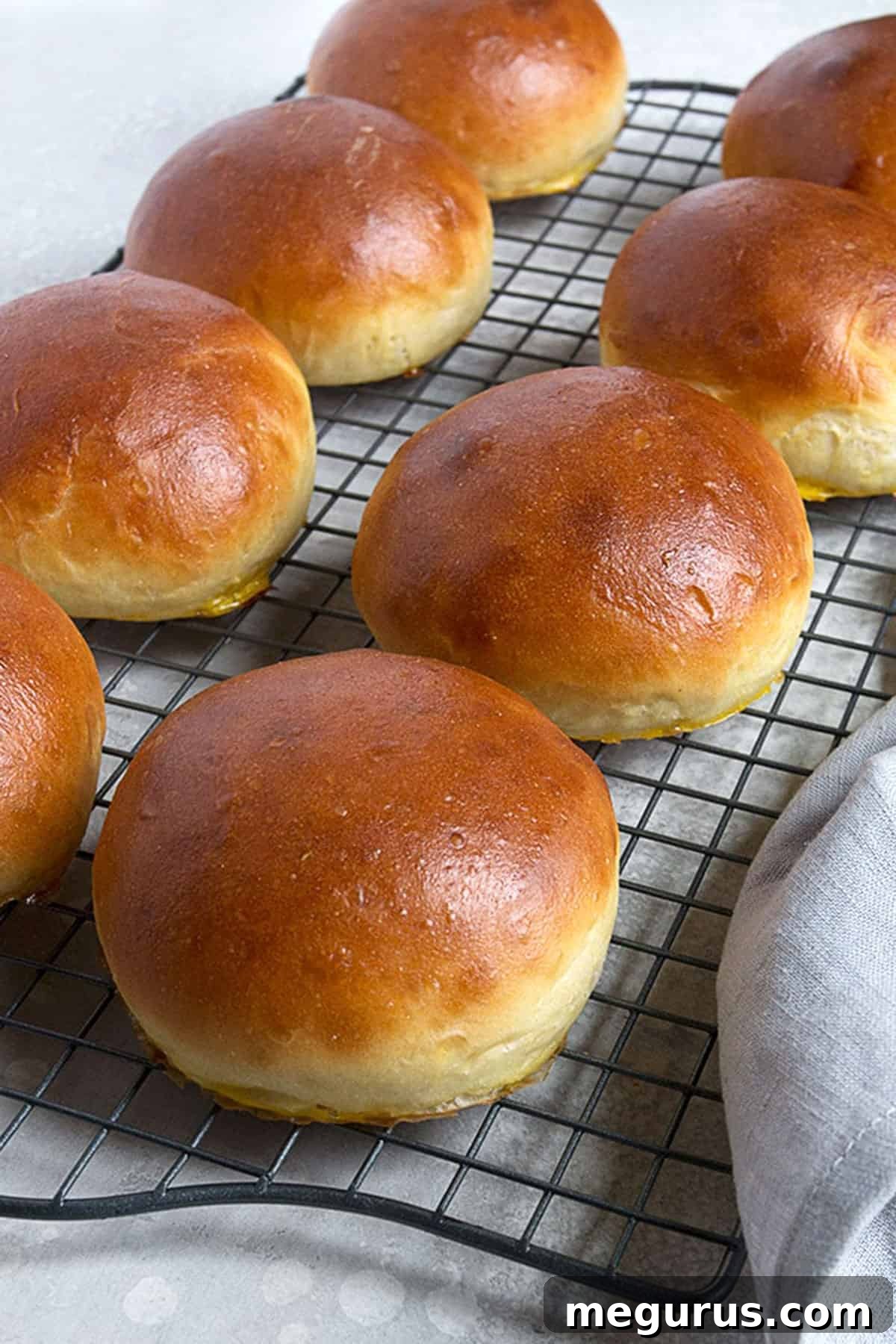
While these homemade hamburger buns are undeniably best enjoyed on the day they are baked, their quality holds up remarkably well for immediate consumption. You can certainly bake them in the morning and serve them fresh for dinner without any loss in flavor or texture.
For short-term storage, place the cooled buns in an airtight container at room temperature. They will remain wonderfully fresh for up to 24 hours. For longer preservation, freezing is your best friend.
These brioche-style buns freeze beautifully for up to 2 months! To freeze, ensure the buns are completely cooled, then transfer them to a freezer-safe bag or container, removing as much air as possible to prevent freezer burn. When you’re ready to use them, simply remove the desired number of buns from the freezer and let them thaw on the counter at room temperature. They typically thaw quite quickly, usually within 30 minutes to an hour. For an extra touch of freshness, you can lightly toast them in a warm oven for a few minutes after thawing.
Get the Recipe: Simply Perfect Homemade Hamburger Buns
Pin This
Leave a Review
Ingredients
- 1 cup (240 g) water, warmed to about 105-110F (40-43C)
- 3 Tablespoons (45 g) milk, warmed slightly to lukewarm
- 2 teaspoons (6 g) active dry yeast or regular Instant yeast, not quick or rapid rise yeast
- 2 1/2 Tablespoons (33 g) white sugar
- 1 large egg, beaten with a fork
- 3 cups (375 g) bread flour, spooned and levelled
- 1/3 cup (45 g) all-purpose flour, spooned and levelled
- 1 1/2 teaspoons (9 g) fine salt
- 2 1/2 Tablespoons (35 g) unsalted butter, at room temperature
For egg wash:
- 1 large egg
- 1 Tablespoon water
- Poppy or sesame seeds, optional, for topping
Instructions
-
Before you begin! Please review the “The Art of Handling Dough” and “Recipe Tips for Success!” sections above for important guidance on working with this moist dough.
-
In a small bowl or a 2-cup measuring cup, combine the warm water, warmed milk, yeast, and sugar. Stir gently and let this mixture stand for about 5 minutes until it becomes noticeably bubbly. This indicates your yeast is active.
-
In a large mixing bowl, whisk together the bread flour, all-purpose flour, and fine salt until well combined. Add the softened unsalted butter. Using your fingertips, rub the butter into the flour mixture until it resembles coarse crumbs and is evenly distributed.
-
Pour the activated yeast mixture and the beaten egg into the flour and butter mixture. Using a sturdy dough scraper or a silicone spatula, stir everything together thoroughly until a moist, sticky dough forms. Avoid overmixing at this stage.
-
Scrape the entire sticky dough onto a very lightly floured counter or clean work surface using your silicone bowl scraper. At this point, the dough will be quite wet and sticky, not suitable for traditional kneading. Resist the strong urge to dust with excessive flour. Instead, employ the “slam and turn” method: Use your dough scraper or spatula to scoop up the dough, then forcefully slam it back down onto the counter. This action is surprisingly therapeutic and effective for gluten development. Use your scraper to turn the dough over a few times, then pick it up and slam it again. Repeat this vigorous slamming and turning action for approximately 5-7 minutes. You should notice the dough gradually becoming less sticky and more elastic. If, after a few minutes, it remains excessively sticky and doesn’t seem to be progressing, very lightly dust the counter with a minimal amount of flour and turn the dough over it to lightly coat. Continue the slam and turn routine. After the recommended time, your dough should be less prone to sticking to the counter, although it will still be moist. You should now be able to form it into a loose ball. *If after 7 minutes, the dough is still too sticky to handle, add a tiny bit more flour, sparingly, until it’s manageable but still moist.
-
Once the dough is workable, shape it into a cohesive ball and transfer it to a lightly greased bowl. Cover the bowl tightly with plastic wrap to prevent a skin from forming, and allow it to rise in a warm place until it has doubled in size. This dough is a slow riser, so be patient; this process can take anywhere from 1 to 2 hours, or even longer depending on your ambient kitchen temperature. Ensure it truly doubles before proceeding.
-
While the dough is on its first rise, prepare your baking sheet. Line a large baking sheet with parchment paper. This will prevent sticking and aid in easy cleanup. Set it aside.
-
Once the dough has doubled, gently deflate it and turn it out onto a lightly floured surface. Using a dough scraper, divide the dough into 8 equal pieces. For precise, uniform buns, I highly recommend weighing the entire dough ball, then dividing that total weight by 8 to determine the exact weight for each individual bun. Then, weigh out each piece to ensure they are all identical. For reference, my last batch yielded individual dough balls of approximately 101g each, but your specific dough may vary.
-
If, at this stage, any of your divided dough pieces feel too sticky to comfortably form into balls, lightly dust your hands or the counter with a tiny bit of additional flour.
-
Carefully form each of the 8 dough pieces into tight, round balls. Refer to the “Perfecting the Shape” section above the recipe card for detailed instructions on achieving the ideal surface tension. Place the shaped dough balls on your parchment-lined baking sheet, ensuring they are spaced about 2-3 inches apart to allow for expansion. Loosely cover the baking sheet with a clean kitchen towel or plastic wrap (greased to prevent sticking) and let them rise again until doubled, which will typically take another 1 to 2 hours.
-
About 20 minutes before the second rise is complete, prepare your oven. Place a large, shallow roasting pan filled with about 1 inch of water on the lowest rack of your oven. This creates a steamy environment, which is excellent for bread baking. Preheat your oven to 400°F (200°C), making sure to use a non-fan assisted setting if your oven has one, and place another rack in the center of the oven for the buns.
-
Once the buns have doubled in size for the second time, prepare the egg wash: in a small bowl, beat the remaining large egg with 1 tablespoon of water. Carefully and thoroughly brush this mixture over the entire surface of each bun. It’s crucial to brush the top and all sides, right down to the pan, as any areas missed will result in pale spots after baking. If desired, this is the perfect time to sprinkle your chosen toppings, such as sesame or poppy seeds, over the egg-washed buns. Gently transfer the baking sheet to the preheated oven. Bake for approximately 15 minutes, rotating the baking sheet 180 degrees halfway through to ensure even browning, until the tops are a rich golden brown.
-
Immediately after removing from the oven, transfer the hot buns to a wire rack to cool completely. Allowing them to cool fully prevents them from becoming soggy and helps set their structure.
Notes
Note 2: While bread flour is highly recommended for its protein content and superior gluten development, if you choose to use all-purpose flour for these buns, be aware that all-purpose flour absorbs less liquid. This will result in a wetter, stickier dough. In this case, it will likely be necessary to add a bit more flour to your work surface during the kneading process to make it manageable.
Note 3: If you prefer to use a stand mixer for this dough, equip it with the paddle attachment or kneading hook. Mix the ingredients on Speed 2 for approximately 5-6 minutes. The mixer will handle much of the gluten development, reducing the need for extensive hand-slamming. Transfer the dough to your counter after mixing and proceed with shaping. You may still need some minimal “slam and turn” action to fully bring the dough together and achieve perfect smoothness.
Note 4: For the most accurate and consistent flour measurements, especially in baking, using a kitchen scale to measure by weight (grams) is always best. If you do not have a scale, ensure you use the “spoon and level” method: gently spoon flour into your measuring cup until it overflows, then level off the excess with a straight edge, rather than scooping directly from the bag.
These homemade buns are truly at their peak freshness on the day they are baked. For optimal enjoyment beyond the first day, freezing is the recommended method for storage, as they thaw beautifully. Store them in a freezer-safe bag or container and thaw at room temperature.
For further guidance, tips, substitution ideas, and variations, please refer to the detailed sections provided above the recipe card.
Troubleshooting Common Homemade Bun Issues
- Buns Not Rising Enough: This is often due to inactive yeast or incorrect water temperature. Ensure your water is warm (105-110°F/40-43°C) but not hot enough to kill the yeast. Also, make sure your yeast is fresh and not expired. Kitchen temperature also plays a role; a cooler room will require a longer rising time.
- Buns Too Dense: Overworking the dough or adding too much flour during the initial mixing/kneading phases can lead to dense buns. Follow the “slam and turn” method diligently and resist the urge to add excess flour. Insufficient rising time can also result in a dense texture.
- Buns Sticking to the Counter: While this dough is intentionally sticky, if it’s unmanageable even after the “slam and turn” routine, you might need a tiny bit more flour on your work surface. However, always add flour incrementally and sparingly to avoid making the dough too stiff.
- Pale Spots After Baking: This indicates an uneven application of the egg wash. Be sure to brush the egg wash thoroughly and uniformly over the entire surface of each bun, including the sides, right down to the baking sheet.
Beyond Burgers: Creative Ways to Enjoy Your Homemade Buns
While these “Simply Perfect Homemade Hamburger Buns” are, of course, stellar with a classic beef patty, their brioche-like richness and sturdy yet tender texture make them incredibly versatile for a multitude of culinary creations. Don’t limit their potential!
- Gourmet Sandwiches: Elevate any sandwich. Think piled-high pulled pork or succulent shredded chicken sandwiches, crispy fried chicken, or even elaborate vegetarian options with grilled portobello mushrooms and roasted vegetables.
- Breakfast Sandwiches: Transform your morning meal. These buns are fantastic for egg, cheese, and bacon/sausage breakfast sandwiches, offering a soft, luxurious start to your day.
- Mini Pizzas or Savory Sliders: For a fun appetizer or kid-friendly meal, split the buns, top with your favorite pizza ingredients, and bake until bubbly. Or use smaller portions of dough to create slider-sized buns for a party spread.
- Sweet Treats: While savory is their main purpose, their slight sweetness can also lean towards dessert. Try them lightly toasted with butter and jam, or even as a base for a sweet fruit topping, similar to a brioche roll.
The possibilities are endless once you have a batch of these glorious homemade buns at your disposal. Enjoy experimenting and discovering your new favorite ways to savor them!
Making your own hamburger buns is a truly rewarding experience that promises superior flavor, texture, and freshness compared to any store-bought alternative. With this recipe, you’ll be able to create light, fluffy, and sturdy brioche-like buns that will take your burgers and sandwiches to an entirely new level. Embrace the process, enjoy the aromas, and prepare for rave reviews from family and friends. Happy baking!