
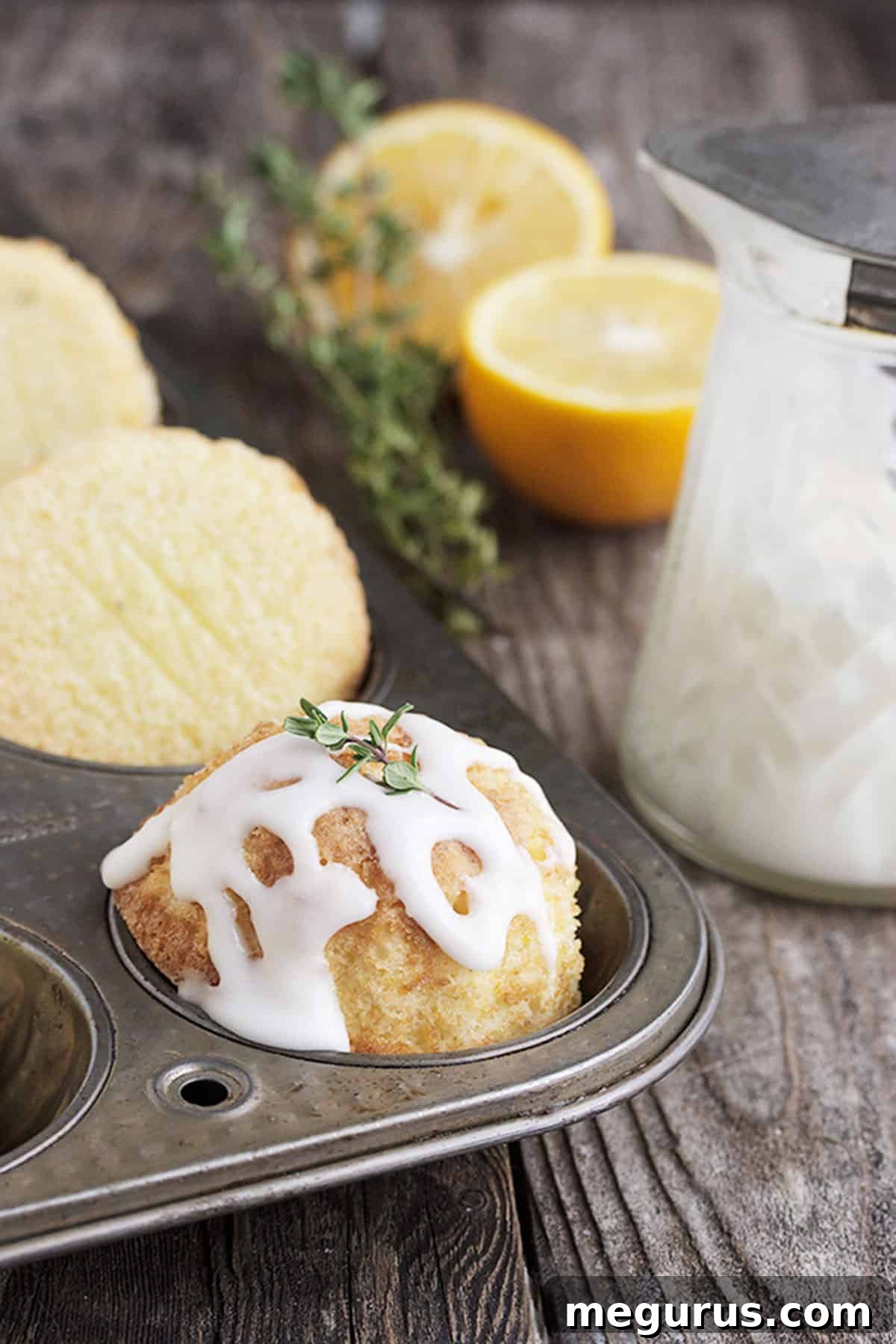
Imagine a bite-sized cake that is wonderfully light, incredibly moist, and bursts with the vibrant essence of lemon, beautifully complemented by a subtle hint of fresh thyme. Topped with a delicate, sweet glaze, these mini olive oil lemon cakes are an absolute delight for your senses. They’re not just a dessert; they’re an experience.

These lovely little lemon thyme olive oil cakes offer an exquisite balance of rich moisture and delicate lightness, infused with just the right amount of citrus brightness. Their petite size makes them not only charming but also offers built-in portion control – perfect for satisfying a sweet craving without overindulging. Whether you’re hosting a gathering, looking for a refined afternoon treat, or simply want a delicious dessert after dinner, these mini cakes are an ideal choice.
The magic of these cakes lies in the harmonious blend of simple yet profound ingredients. Olive oil, a staple of Mediterranean cuisine, lends an unparalleled moistness and a subtle, sophisticated flavor profile that butter simply can’t replicate. Fresh lemon zest and juice provide that quintessential tangy lift, while a whisper of fresh thyme introduces an unexpected, aromatic depth that elevates the entire experience.
Why Bake with Olive Oil? Unlocking the Secret to Superior Moisture and Flavor
Using olive oil in baking, especially for cakes, is a delightful culinary secret that yields astonishing results. Unlike butter, which can sometimes create a denser crumb, good quality extra virgin olive oil contributes an exceptional lightness and profound moisture. This isn’t just about texture; it’s about flavor too. Olive oil imparts a subtle, fruity, and sometimes peppery note that beautifully enhances other ingredients, particularly bright citrus flavors like lemon. It creates a more complex and nuanced taste profile, moving beyond traditional sweet into something more sophisticated and memorable.
Furthermore, baking with olive oil can be a healthier alternative, introducing monounsaturated fats that are beneficial for heart health. When selecting an olive oil for baking, opt for a high-quality extra virgin variety. Its freshness and robust flavor will truly shine through in your finished cakes, making every bite a testament to its premium origins. The quality of your olive oil will directly impact the depth and character of these lemon thyme olive oil cakes, transforming them from good to truly extraordinary.
Essential Ingredients and Thoughtful Substitutions
A few notes about the key ingredients that make these mini cakes so special:
- Lemons: The Zesty Star
I crafted these delectable cakes using fragrant Meyer Lemons, known for their slightly sweeter, less acidic, and more floral flavor compared to standard lemons. However, this recipe is incredibly versatile. You can achieve equally delightful results with regular Eureka or Lisbon lemons for a tarter, brighter kick, or even with oranges, tangerines, or other citrus fruits for a different flavor dimension. The key is fresh zest and juice. Always zest your lemons before juicing them to maximize flavor extraction. For optimal lemon flavor, try to avoid bottled lemon juice.
- Olive Oil: The Moisture Master
For the best texture and flavor, a good quality, extra-virgin olive oil is non-negotiable. Its distinct fruity notes and velvety texture will imbue your cakes with an incredible moistness and a subtle, sophisticated undertone that perfectly complements the lemon and thyme. A lighter, more delicate olive oil might be preferred if you’re new to olive oil baking, while a more robust oil will offer a bolder flavor profile. Choose an oil you enjoy the taste of on its own, as its essence will be present in the final bake.
- Thyme: The Aromatic Whisper
Fresh thyme is undoubtedly superior for this recipe, offering an earthy, slightly floral aroma that harmonizes beautifully with the bright lemon. Finely minced fresh thyme sprigs will distribute evenly and release their delicate oils during baking. While fresh is best, in a pinch, you could use a small amount of dried thyme leaves. Start with a quarter to half a teaspoon of dried thyme, as its flavor is more concentrated, and adjust the amount to your personal taste. Other fresh herbs like rosemary or even a tiny bit of lavender could offer interesting variations.
- All-Purpose Flour: The Foundation
Standard all-purpose flour provides the ideal structure for these light cakes. Ensure it’s sifted to prevent lumps and create a tender crumb.
- White Granulated Sugar: The Sweetener
Granulated sugar sweetens the cakes and contributes to their moist texture and golden-brown crust. It also works beautifully with lemon zest to release more aromatic oils when pulsed together.
- Eggs: The Binder and Leavener
Large eggs add richness, bind the ingredients, and contribute to the cake’s structure and rise. Ensure they are at room temperature for better emulsification with the other liquids.
- Whole Milk: For Added Richness
Whole milk enhances the richness and tenderness of the cakes. You could substitute with buttermilk for a slightly tangier cake, or even a non-dairy milk alternative, though the texture might vary slightly.
- Baking Powder and Fine Salt: The Essential Boosters
Baking powder provides the lift, ensuring your cakes are light and airy. Fine salt balances the sweetness and enhances all the other flavors. Don’t skip it!
Expert Recipe Tips for Perfect Mini Cakes!
Achieving bakery-worthy mini cakes is simpler than you think with these helpful pointers:
- Mind Your Muffin/Bundt Pan Filling: Whatever type of pan you choose – be it a mini Bundt, muffin, or even a cupcake pan – it’s crucial not to overfill the cups. Aim for no more than about two-thirds full. These cakes will rise beautifully in the oven, and overfilling can lead to overflow or a less desirable shape. Baking your pan on a larger baking sheet can act as a safeguard against any potential drips, though it’s usually unnecessary if you adhere to the fill level.
- The Blender/Food Processor Advantage: Using a blender or food processor for the wet ingredients is a fantastic shortcut that helps emulsify the olive oil and liquids into a smooth, thin batter, ensuring maximum moistness. However, be careful not to over-blend once the dry ingredients are added; pulse lightly until just combined to avoid developing the gluten too much, which can result in tough cakes.
- Patience Pays Off: These cakes develop an even more profound moistness and flavor the longer they sit. This makes them absolutely perfect for making a bit ahead of time, allowing the flavors to meld and deepen. They’re an excellent candidate for stress-free entertaining, as you can prepare them a day in advance.
- Testing for Doneness: To check if your mini cakes are done, gently press the top of one with your fingertip. It should spring back. Alternatively, a wooden skewer or toothpick inserted into the center should come out clean. Avoid over-baking, as this can lead to dryness.
- Cooling Process: Allow the cakes to cool in their pan for about 10 minutes after baking. This allows them to firm up slightly, making them easier to remove without breaking. After 10 minutes, carefully loosen the edges with a small knife and invert them onto a wire rack to cool completely before glazing.
Making Ahead, Storing, and Freezing
As highlighted, one of the many charms of these lemon olive oil cakes is that their flavor and texture actually improve with a little time. This makes them an excellent choice for preparing in advance, whether for a special occasion or simply to have a delicious treat ready to hand.
- Storage: Given their mini size, these cakes can dry out more quickly than a larger cake. For optimal freshness and moisture, I highly recommend enjoying them within 24 hours of baking. Once completely cooled, be sure to wrap them tightly in plastic wrap or store them in an airtight container at room temperature. This will help preserve their delicate texture and vibrant flavors.
- Freezing: These lemon olive oil cakes also freeze exceptionally well, allowing you to extend their shelf life and enjoy them whenever a craving strikes. After baking and cooling completely (before glazing), wrap individual cakes tightly in plastic wrap, then place them in a freezer-safe bag or airtight container. They will maintain their quality in the freezer for up to 3 months. To enjoy, simply thaw them at room temperature, then prepare and apply the glaze just before serving.

Glazed Mini Lemon Thyme Olive Oil Cakes
These lovely little cakes are the perfect delicate ending to a dinner party or a delightful treat to enjoy with an afternoon cup of tea. Their charm is matched by their convenience; they actually become more moist and flavorful over time, making them an ideal make-ahead dessert for entertaining.
Ratings: 5 stars from 3 ratings
Pin This
Leave a Review
Prep Time: 15 mins
Cook Time: 25 mins
Total Time: 40 mins
Yield: 8 mini cakes
Ingredients
For the Mini Lemon Thyme Olive Oil Cakes:
- 1 Tablespoon unsalted butter, melted (for greasing pan)
- 1 cup all-purpose flour, plus more for dusting
- 1 1/3 cups white granulated sugar
- 2 Tablespoons grated lemon zest, from about 2 lemons
- 2 large eggs, at room temperature
- 1/4 cup extra-virgin olive oil
- 2/3 cup whole milk, at room temperature
- 1/2 teaspoon baking powder
- 1/2 teaspoon fine salt
- 1 teaspoon finely minced fresh thyme, plus sprigs for garnish
For the Glaze:
- 1 1/2 cups confectioners’/icing sugar
- 3 1/2 to 4 Tablespoons fresh lemon juice, from 1 to 2 lemons
- 2 Tablespoons unsalted butter, melted
Instructions
- Preheat your oven to 350° F. (non-convection) and position an oven rack in the center. Prepare your chosen mini cake, Bundt, or muffin pan (6, 8, or 12-cup capacity). If using a metal tin pan, brush each cup thoroughly with melted butter, then dust with flour, tapping out any excess. For silicone pans, a light coating of cooking spray is usually sufficient.
- In a blender or food processor, combine the granulated sugar and lemon zest. Pulse a few times until the zest is finely incorporated into the sugar, which helps release its aromatic oils. Add the eggs one at a time, blending briefly after each addition. Gradually pour in the olive oil and milk while pulsing, continuing until the mixture is smoothly emulsified into a thin batter. Be careful not to over-blend at this stage, as excessive aeration can lead to cakes that are too puffy.
- In a separate small bowl, whisk together the all-purpose flour, baking powder, fine salt, and the finely minced fresh thyme. This ensures all dry ingredients are evenly distributed. Add this flour mixture to the blender/food processor in two batches, pulsing lightly just until combined. Stop blending as soon as no dry streaks of flour remain, and use a spatula to scrape down the sides of the blender as needed. Overmixing will develop the gluten, resulting in tougher cakes.
- Carefully pour the prepared batter into the buttered and floured pan cups. Remember the golden rule: fill each cup to no more than two-thirds full to allow for proper rising. Bake until the cakes are lightly golden, just begin to pull away from the sides of the pan, and spring back gently when lightly touched in the center. Baking times will vary based on pan size: typically 22 to 25 minutes for a 12-cup Bundt or muffin pan, or 28 to 30 minutes for a 6-cup Bundt pan.
- Once baked, allow the cakes to cool in the pan for 10 minutes. This crucial cooling period helps the cakes firm up, making them easier to handle. After 10 minutes, use a small knife to gently loosen the sides of each cake from the pan, then carefully invert them onto a wire rack to cool completely.
- While the cakes are cooling, prepare the vibrant lemon glaze. In a medium bowl, whisk together the confectioners’ sugar, fresh lemon juice, and melted unsalted butter until the mixture is smooth and lump-free. The desired consistency should be thick enough to coat a spoon but still thin enough to drizzle elegantly. If the glaze is too thick, add a tiny bit more lemon juice, a teaspoon at a time, until the perfect consistency is achieved.
- Once the cakes are cool, generously drizzle the prepared lemon glaze over each mini cake. For an exquisite final touch, garnish each glazed cake with a small, fresh thyme sprig. Serve immediately or store as recommended above.
Notes
Tips for Success:
- The pan filling guideline of 2/3 full is critical to prevent overflow and ensure beautifully shaped cakes. Placing your pan on a baking sheet during baking is a good safety measure.
- These cakes truly improve in flavor and moistness as they rest, making them ideal for preparing a day ahead.
- Don’t hesitate to freeze any extra cakes before glazing; they’re wonderful for enjoying at a later date.
For even more tips, ingredient options, and creative variations for this delightful recipe, please refer to the detailed sections above the recipe card!
Cuisine: American
Course: Dessert
Author: Jennifer Maloney
Nutrition Information (per serving)
- Serving: 1 serving
- Calories: 401kcal
- Carbohydrates: 68g
- Protein: 3g
- Fat: 13g
- Saturated Fat: 4g
- Cholesterol: 54mg
- Sodium: 145mg
- Potassium: 89mg
- Sugar: 56g
- Vitamin A: 230IU
- Calcium: 45mg
- Iron: 1mg
*Nutritional information is an estimate and may vary based on ingredients and preparation.
Tried this recipe? If you enjoyed these Glazed Mini Lemon Thyme Olive Oil Cakes, we would love to hear from you! Please consider leaving a star rating and comment below. Your feedback helps other bakers discover and enjoy this recipe too!
Leave a Review
More Lemon Cake Recipes to Love!
If you’ve fallen in love with the vibrant flavors of these lemon thyme olive oil cakes, you’ll be thrilled to explore more citrus-infused delights. Here are some other fantastic lemon cake recipes to add to your baking repertoire, perfect for satisfying your sweet tooth and impressing your guests: