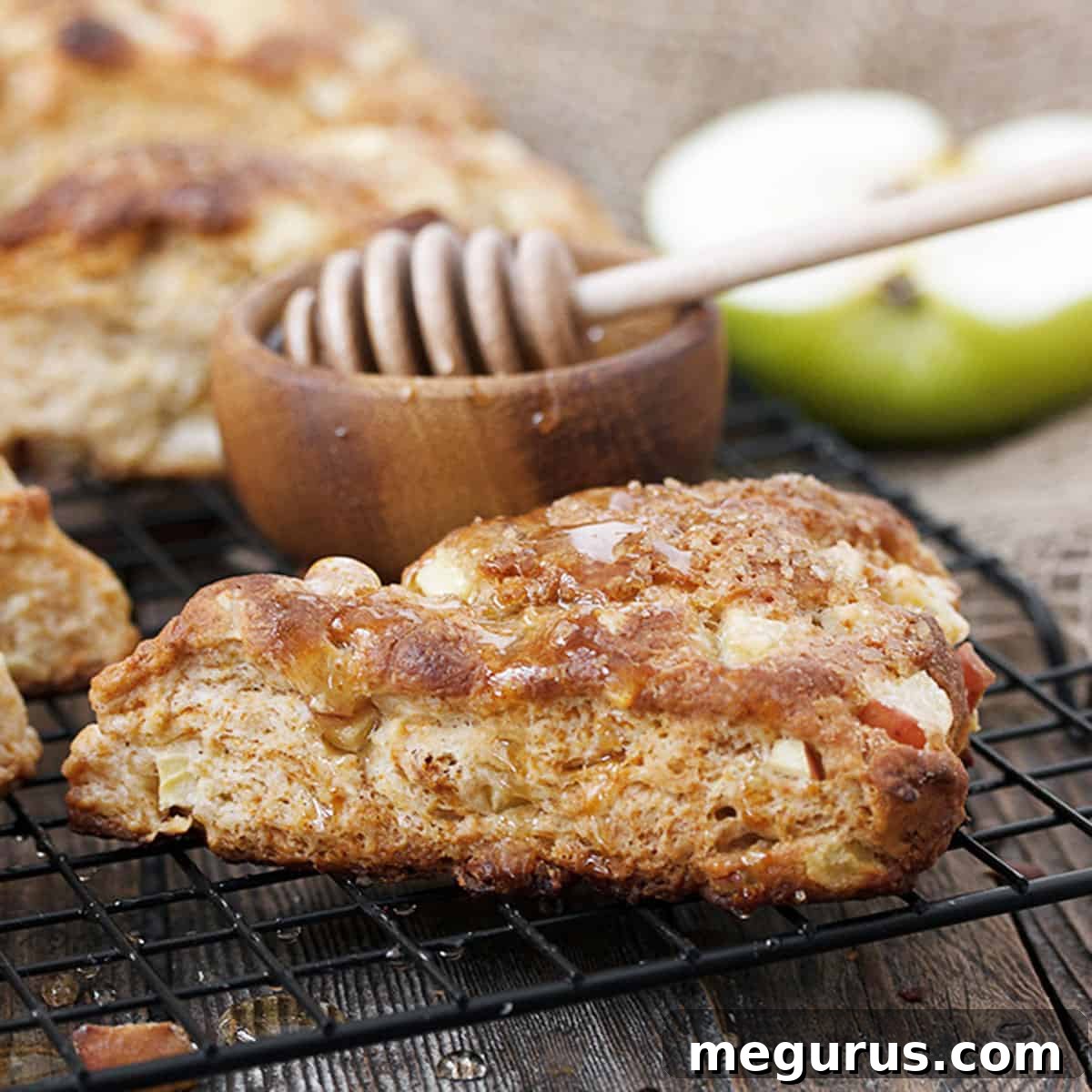
Welcome to the ultimate guide for baking **Easy Honey Apple Buttermilk Scones** – a truly delightful treat that perfectly blends the comforting warmth of apples with the subtle, natural sweetness of honey. Crafted effortlessly with the magic of buttermilk, these scones are bursting with tender, diced apples and gently sweetened, making them an ideal choice for a comforting breakfast, a lovely brunch, or a satisfying afternoon pick-me-up. Get ready to impress yourself and your loved ones with these simple yet exquisite homemade scones.
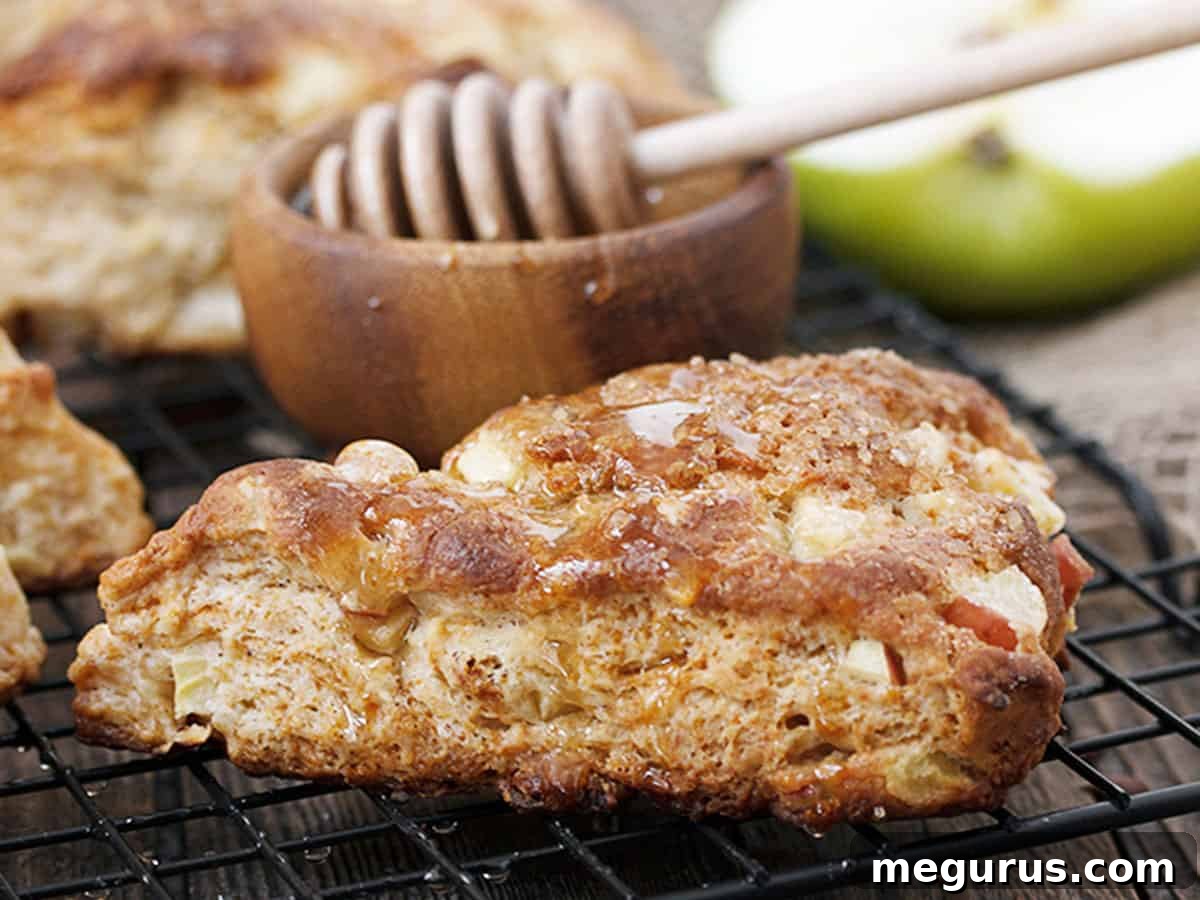
Bake the Perfect Honey Apple Buttermilk Scones: Quick, Flavorful & Wonderfully Tender
Craving the comforting taste of homemade pastries but often find yourself short on time? These Honey Apple Buttermilk Scones are designed for speed and simplicity, ensuring you can enjoy a fresh, warm treat without compromising on flavor or that coveted tender texture. What makes them truly stand out is their delightful combination of a light, fluffy crumb, juicy apple pieces in every bite, and the wholesome, nuanced sweetness imparted by honey. You don’t need to be an experienced baker to master this recipe, and even if you don’t have store-bought buttermilk on hand, we’ll guide you through a simple hack to create your own at home, guaranteeing perfect results every time.
Why These Apple Buttermilk Scones Will Become Your New Favorite
There are countless reasons to fall head over heels for this particular apple scone recipe. From their remarkably easy preparation to their irresistible taste, they are destined to become a cherished addition to your baking collection. Here’s a closer look at what makes this recipe an absolute must-try:
1. Abundant Apple Flavor & No Peeling Required!
One of the most appealing aspects of this recipe is the generous use of diced apples, and the best part? You don’t even need to peel them! Skipping the peeling step not only saves you precious time and effort in the kitchen but also allows the apple skins to contribute a lovely rustic texture and an extra boost of fiber and vital nutrients to your scones. The natural red hues of certain apple varieties will also bake beautifully into the dough, adding delightful flecks of color that make your finished scones as visually appealing as they are delicious. We ensure there’s a substantial amount of apple in each scone, guaranteeing a juicy, fruity burst with every bite.
2. Wholesome Sweetness from Golden Honey
Unlike many scone recipes that often rely on significant amounts of refined sugar, these apple buttermilk scones are consciously sweetened exclusively with honey. This natural sweetener is thoroughly incorporated into the dough, lending a gentle, nuanced sweetness that beautifully complements the natural tartness of the apples. For an extra touch of indulgence and a beautiful glossy finish, a warm drizzle of honey over the freshly baked scones adds another layer of aroma and concentrated sweetness just before serving. It’s a healthier, more flavorful alternative that provides a rich depth of taste without being overly sweet.
3. Surprisingly Quick and Effortless to Prepare
Don’t let the thought of homemade scones intimidate you. This recipe is incredibly straightforward and beginner-friendly, designed to be accessible for bakers of all skill levels. With minimal kneading and simple shaping techniques, you can have these mouth-watering scones prepped and ready for the oven in as little as 10-15 minutes. The entire baking process is so uncomplicated, making it perfect for a spontaneous baking session on a lazy weekend morning, a special brunch, or even a busy weekday when you desire a comforting and homemade treat.
4. The Buttermilk Advantage: Unmatched Tenderness & Flakiness
Buttermilk is truly a secret weapon when it comes to scone baking. Its inherent acidity reacts synergistically with baking soda, producing carbon dioxide gas that creates delicate air pockets throughout the dough. This reaction results in a remarkably light, tender crumb that is moist and exceptionally flavorful. Furthermore, buttermilk helps to tenderize the gluten in the flour, which is crucial for achieving scones that are wonderfully soft and flaky rather than dense or tough. If you find yourself without store-bought buttermilk, there’s no need to fret! We’ll show you an incredibly simple and effective trick to create your own homemade buttermilk using regular milk and a common acidic ingredient, ensuring you can always achieve that essential tang and irresistible tenderness.
Essential Ingredients & Smart Substitutions for Your Scones
The journey to crafting the perfect scone begins with a clear understanding of your ingredients. Here, we delve deeper into the key components of this recipe and offer practical advice on how to adapt them to what you have readily available in your pantry.
Choosing the Best Apples for Baking Scones
The apple is undoubtedly the shining star of these scones, and selecting the right variety can significantly influence the final flavor and texture of your baked goods. While most apples will work adequately, some are inherently better suited for baking than others. For truly optimal results, we highly recommend using a good red cooking apple such as Empire, Ida Red, Honeycrisp, Gala, or Fuji. These varieties are known for holding their shape well during baking, offering a pleasant balance of sweetness and tartness, and softening beautifully within the relatively short oven time of 14-17 minutes. Additionally, their vibrant red skins naturally infuse the scones with lovely, appealing pops of color.
If your preference leans towards a tarter scone with a slightly firmer texture, Granny Smith apples are an excellent alternative. Be mindful that they tend to retain a bit more firmness after baking compared to other cooking apples. It’s generally advisable to avoid apples that become overly mushy or watery when cooked, as they might compromise the texture of your scones. Ultimately, choose an apple variety that you genuinely enjoy eating fresh – it’s a good indicator that it will taste fantastic when baked into these delightful scones!
Buttermilk: The Secret to a Tender Crumb
As previously highlighted, buttermilk is a critical ingredient for achieving the tender, flaky texture and subtle tang that defines a truly great scone. Its acidity is key to activating the baking soda, which then produces the necessary lift. If commercial buttermilk isn’t available, making your own substitute is incredibly straightforward and yields excellent results. Here’s how you can do it:
- Lemon Juice or White Vinegar Method: For every 1 cup of regular milk (whether dairy or a non-dairy alternative like almond or soy milk), simply add 1 tablespoon of fresh lemon juice or white vinegar. Give it a gentle stir and then let the mixture sit undisturbed for 5 to 10 minutes. During this time, the milk will visibly curdle and slightly thicken, indicating it’s ready to be used as a buttermilk substitute. For this specific recipe requiring 3/4 cup of buttermilk, you would combine 3/4 cup of milk with 2 1/4 teaspoons of lemon juice or white vinegar.
- Orange Juice: In a pinch, orange juice can also serve as the acidic component, although lemon juice or white vinegar are generally preferred due to their more neutral flavor profiles, which won’t significantly alter the scone’s taste.
- Plain Milk (As a Last Resort): While using real or homemade buttermilk is strongly recommended for achieving the best possible texture and flavor, if you have absolutely no other options, plain milk can be used. However, be aware that your scones might be slightly less tender and may not rise as high, but they will still be enjoyable.
Honey: The Natural Sweetener
We utilize liquid honey as the sole sweetener for both the scone dough itself and as a luscious drizzle over the finished product. Any good quality liquid honey will work wonderfully. Generally, lighter honeys tend to have a milder, more delicate flavor, while darker varieties can impart a richer, more robust taste. Feel free to choose based on your personal preference and what you have on hand.
Flour, Leavening Agents & Warming Spices
All-purpose flour provides the essential structure for these scones. Baking powder and baking soda are crucial leavening agents that work in conjunction with the buttermilk to give the scones their characteristic lift and incredibly tender crumb. Don’t underestimate the importance of salt; it’s vital for balancing the sweetness and enhancing all the other flavors. Finally, cinnamon and nutmeg add a wonderfully warm, inviting spice profile that perfectly complements the apples, evoking that classic, comforting taste reminiscent of apple pie.
Cold Butter: The Secret to Irresistible Flakiness
Just as with crafting perfect pie crusts or flaky biscuits, the use of cold butter is absolutely paramount for achieving delightfully flaky scones. When very cold butter is cut into the flour, it creates numerous small pockets of butter throughout the mixture. As the scones bake in the hot oven, these tiny butter pieces melt, releasing steam that pushes apart the layers of dough, resulting in that highly desirable flaky and tender texture. It’s essential to ensure your butter is thoroughly chilled and cut into small, uniform cubes before you begin incorporating it into the dry ingredients.
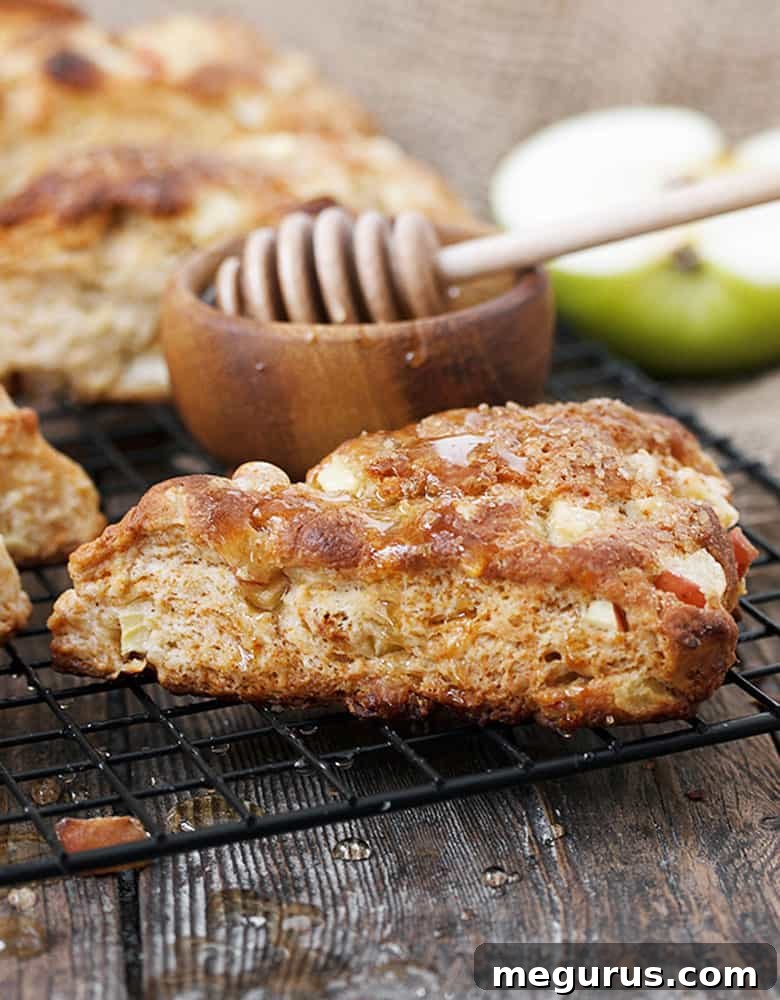
Pro Tips for Baking Perfect Scones Every Single Time
Achieving bakery-quality scones in your home kitchen is much simpler than you might imagine, especially when you follow a few key techniques. Here are some expert tips to ensure your Honey Apple Buttermilk Scones turn out perfectly light, delightfully fluffy, and irresistibly delicious on every attempt.
1. Embrace the Coldness
This is arguably the most critical piece of advice for any scone or biscuit recipe. It’s imperative that your butter is ice-cold, and if feasible, briefly chill your buttermilk before incorporating it into the dough. Cold ingredients prevent the butter from melting too quickly into the flour, which is crucial for preserving those tiny pockets of butter that expand to create a wonderfully flaky texture during baking. Some seasoned bakers even go as far as chilling their flour for 15-20 minutes beforehand for an extra edge.
2. Avoid Overmixing the Dough
Once you begin to combine the wet and dry ingredients, mix just until a cohesive dough barely forms. The temptation to overmix should be resisted, as excessive mixing develops the gluten in the flour, which can lead to tough, dense, and dry scones. A slightly shaggy, somewhat crumbly dough is exactly the consistency you are aiming for. A light, gentle touch is key here.
3. Handle the Dough Gently
When you transfer the dough to a lightly floured surface, strive to handle it as little as possible. Gently fold it over onto itself only two or three times; this is merely to bring it together into a cohesive mass, not to knead it extensively. The less you work the dough, the more wonderfully tender your finished scones will be. If necessary, lightly flour your hands and rolling pin, but be cautious not to incorporate too much additional dry flour into the dough itself.
4. Achieve Clean Cuts
Whether you opt for a round biscuit cutter or prefer to cut the dough into wedges, ensure that your cuts are clean and precise. If using a cutter, press straight down and lift; avoid twisting the cutter, as this can seal the edges of the scone, which in turn can prevent it from rising properly and achieving its full height. For wedges, a sharp, un-floured knife or a pizza cutter works best for clean separation.
5. Ensure Proper Oven Preheat
A thoroughly hot oven is absolutely essential for scones to rise quickly and develop that beautiful, golden-brown crust. Always make sure your oven is fully preheated to the specified temperature of 425°F (220°C) before you place the scones inside. The initial burst of high heat plays a crucial role in rapidly activating the leavening agents, resulting in a superior rise and texture.
6. Don’t Peel Those Apples (Seriously!)
As emphasized earlier, there’s no need to peel the apples for this recipe! The apple skins contribute valuable color, texture, and dietary fiber, lending a charming rustic appeal to your scones. Moreover, it’s a significant time-saver that makes the baking process even more enjoyable. Just give your apples a good wash and dice them evenly.
7. Brushing and Sprinkling for Visual & Textural Appeal
For an extra touch of perfection, brush the tops of your scones with a little heavy cream, half-and-half, or even plain milk just before baking. This simple step helps them achieve a gorgeous golden-brown finish and a slightly crispier top crust. For an added layer of delight, an optional sprinkle of turbinado sugar (also known as raw sugar) or regular white sugar will provide a delightful crunchy crust and a hint of extra sweetness. This step is not just for aesthetics; it truly enhances the overall texture and eating experience.
Delicious Variations & Customizations to Explore
While these Honey Apple Buttermilk Scones are absolutely perfect as written, don’t hesitate to unleash your creativity in the kitchen! Scones are wonderfully versatile, and with a few simple tweaks, you can easily create entirely new and exciting flavor experiences.
- Maple Syrup Scones: As briefly mentioned, trying these scones with maple syrup instead of honey is an excellent idea for a different profile of natural sweetness. Maple syrup offers a distinct earthy, caramel-like flavor that would marry beautifully with the apples. If you experiment with this variation, we’d love to hear how they turn out!
- Introduce Nuts: For an added layer of texture and a delightful nutty flavor, consider folding in 1/2 cup of toasted chopped walnuts or pecans along with the diced apples.
- Boost the Spices: If you’re a fan of bolder flavors, enhance the spice profile with a pinch of ground ginger, allspice, or cardamom for even more warmth, complexity, and aromatic depth.
- Incorporate Dried Fruit: While fresh apples are the heart of this recipe, a small amount (about 1/4 to 1/2 cup) of dried cranberries, raisins, or finely chopped dried apricots could be added for additional chewiness, sweetness, and varied texture.
- Citrus Zest: For a bright and zesty twist, a teaspoon of freshly grated lemon or orange zest folded into the dough would invigorate the flavors and add a wonderful aromatic note.
- Alternative Glaze Options: Beyond a simple honey drizzle, you could opt for a more traditional glaze. A quick mix of powdered sugar with a splash of milk or apple cider makes a delicious, sweet topping that beautifully complements the scone.
Serving and Storage Suggestions
These magnificent scones are truly at their best when enjoyed warm, ideally straight from the oven, with a generous drizzle of additional warm honey. They also pair wonderfully with a dollop of traditional clotted cream, a spoonful of rich apple butter, or your favorite homemade jam. To complete the ultimate comforting experience, serve them alongside a hot cup of freshly brewed tea or a robust coffee.
Storage: Any leftover scones should be stored in an airtight container at room temperature, where they will remain fresh and delicious for up to 2-3 days. For longer-term storage, baked and completely cooled scones can be frozen in a freezer-safe bag or container for up to 1 month. To reheat frozen scones, simply place them in a preheated oven (around 300°F/150°C) for approximately 10-15 minutes, or until they are warmed through and regain their tender texture.
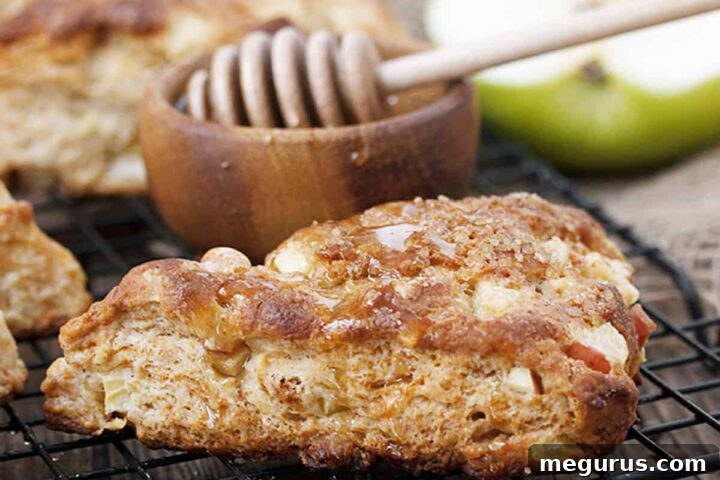
Get the Recipe: Easy Apple Buttermilk Scones
Pin This
Leave a Review
10 minutes
15 minutes
25 minutes
8
scones
Ingredients
-
3/4 cup
buttermilk, or 3/4 cup milk with 2 1/4 tsp. lemon juice – let stand 5 minutes -
1/4 cup
honey, liquid -
2 1/4 cups
all-purpose flour -
2 teaspoons
baking powder -
1/2 teaspoon
baking soda -
1/2 teaspoon
salt -
1/4 teaspoon
cinnamon -
1/4 teaspoon
nutmeg -
1/2 cup
butter, cold, cut into cubes -
1 1/2 cups
apple, diced, skin left on (Empire, Ida Red etc) -
1 Tablespoon
whipping cream, half and half or milk, for brushing tops before baking -
Optional 1 Tbsp. turbinado or white sugar, for sprinkling on tops before baking -
2 Tablespoon
honey, for drizzle on baked scones
Instructions
-
Preheat your oven to 425° F (220°C). Prepare a large baking sheet by lining it with parchment paper. Set this aside.
-
In a liquid measuring cup, thoroughly whisk together the buttermilk and liquid honey until the honey is completely dissolved and incorporated. Set this mixture aside.
-
In a large mixing bowl, whisk together the all-purpose flour, baking powder, baking soda, salt, cinnamon, and nutmeg until well combined. Add the cold, cubed butter to the dry ingredients. Using a pastry cutter or two knives, cut the butter into the flour mixture until it resembles coarse crumbs, with some pea-sized pieces of butter still visible. (Alternatively, you can pulse the mixture lightly in a food processor, then transfer it back to the bowl.) Drizzle approximately 3/4 of the buttermilk/honey mixture over the flour and butter. Using a fork, gently stir the mixture until a soft dough just begins to form, adding more of the remaining buttermilk mixture, a tablespoon at a time, only if needed. The aim is a moist dough that is not overly sticky; you might not use every last drop of the liquid. Finally, gently fold in the diced apples, distributing them evenly.
-
Transfer the dough to a generously floured surface. Gently fold the dough over onto itself 2 or 3 times to bring it together into a cohesive ball, being careful not to overwork it. Lightly flour the top of the dough and then either press it down or gently roll it into an 8-inch (20 cm) circle, roughly 1-inch (2.5 cm) thick. Using a sharp knife or a pizza cutter, cut the circle into 8 equal wedges. Carefully transfer these wedges to your prepared baking sheet, ensuring there’s at least 1 inch (2.5 cm) of space between each scone to allow for even baking and rising. For an extra golden finish and a delightful crunchy topping, brush the tops of the scones with heavy cream (or milk) and sprinkle with turbinado or white sugar, if desired.
-
Bake in the preheated oven for 14-17 minutes, or until the scones are beautifully puffed, deeply golden brown, and cooked through. Once baked, remove them from the oven and transfer them to a wire rack to cool slightly. While the scones are still warm, gently heat the remaining 2 tablespoons of honey (you can warm it in the microwave for a few seconds or in a small saucepan over low heat) and drizzle it generously over the baked scones just before serving. Enjoy your homemade, perfectly tender scones!
Notes
American, Canadian
Snack, Breakfast, Brunch
Jennifer Maloney
Serving: 1scone
,
Calories: 181kcal
,
Carbohydrates: 17g
,
Protein: 1g
,
Fat: 13g
,
Saturated Fat: 8g
,
Cholesterol: 35mg
,
Sodium: 331mg
,
Potassium: 185mg
,
Sugar: 15g
,
Vitamin A: 430IU
,
Vitamin C: 1.1mg
,
Calcium: 86mg
,
Iron: 0.2mg
Tried this recipe?
If you enjoyed this recipe, please consider leaving a star rating and comment to help others discover it!
More Scone Recipes to Love!