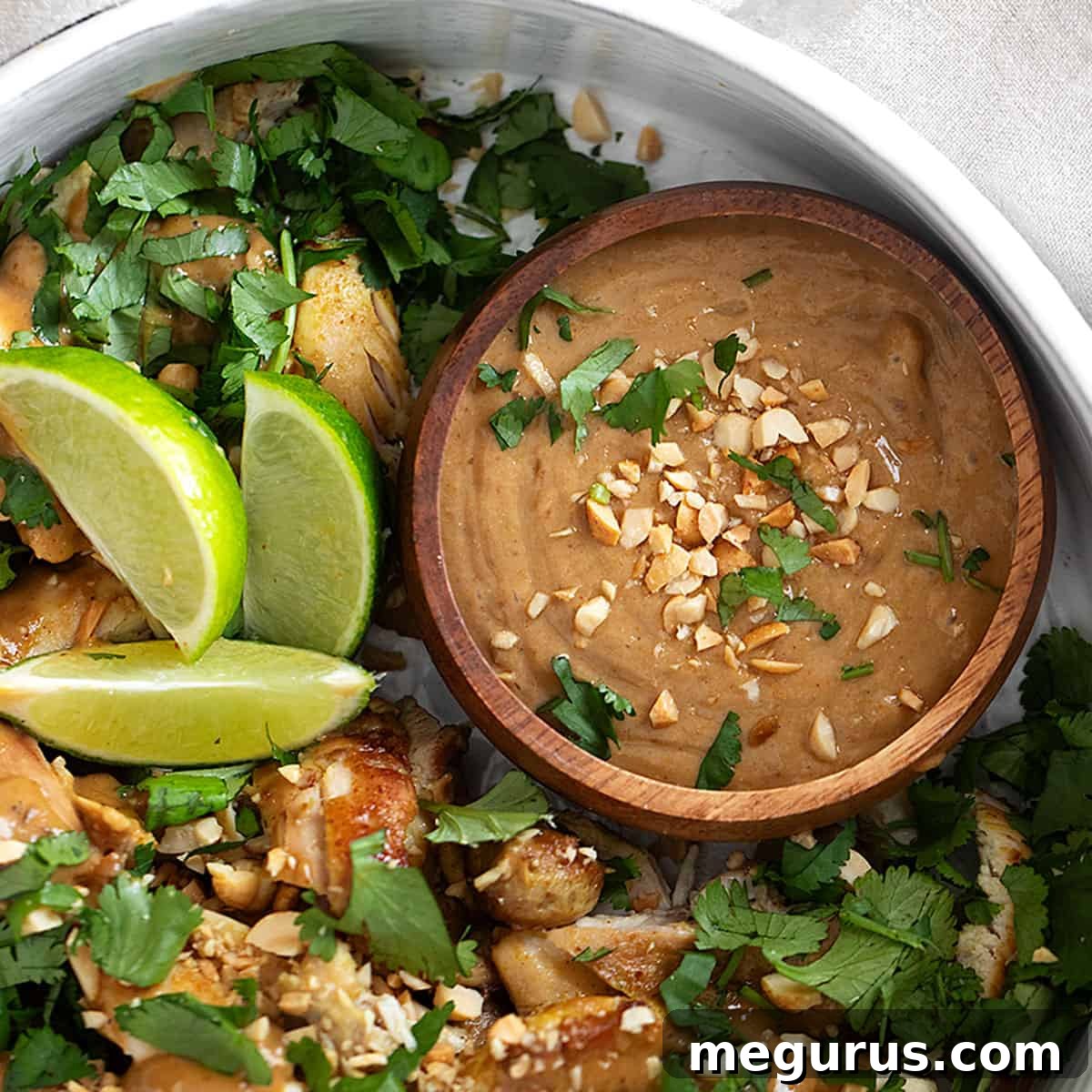
Welcome to a culinary journey where convenience meets exquisite flavor! This easy-to-prepare Coconut Chicken, paired with a luscious satay-style Peanut Sauce, promises to be a weeknight hero. Imagine tender chicken, infused with vibrant lime and rich coconut, effortlessly cooked in your oven, then perfectly complemented by a creamy, savory peanut sauce. Best of all, this delectable dish can be on your table in just about 30 minutes, making it an ideal choice for busy evenings when you crave something truly special without the fuss.
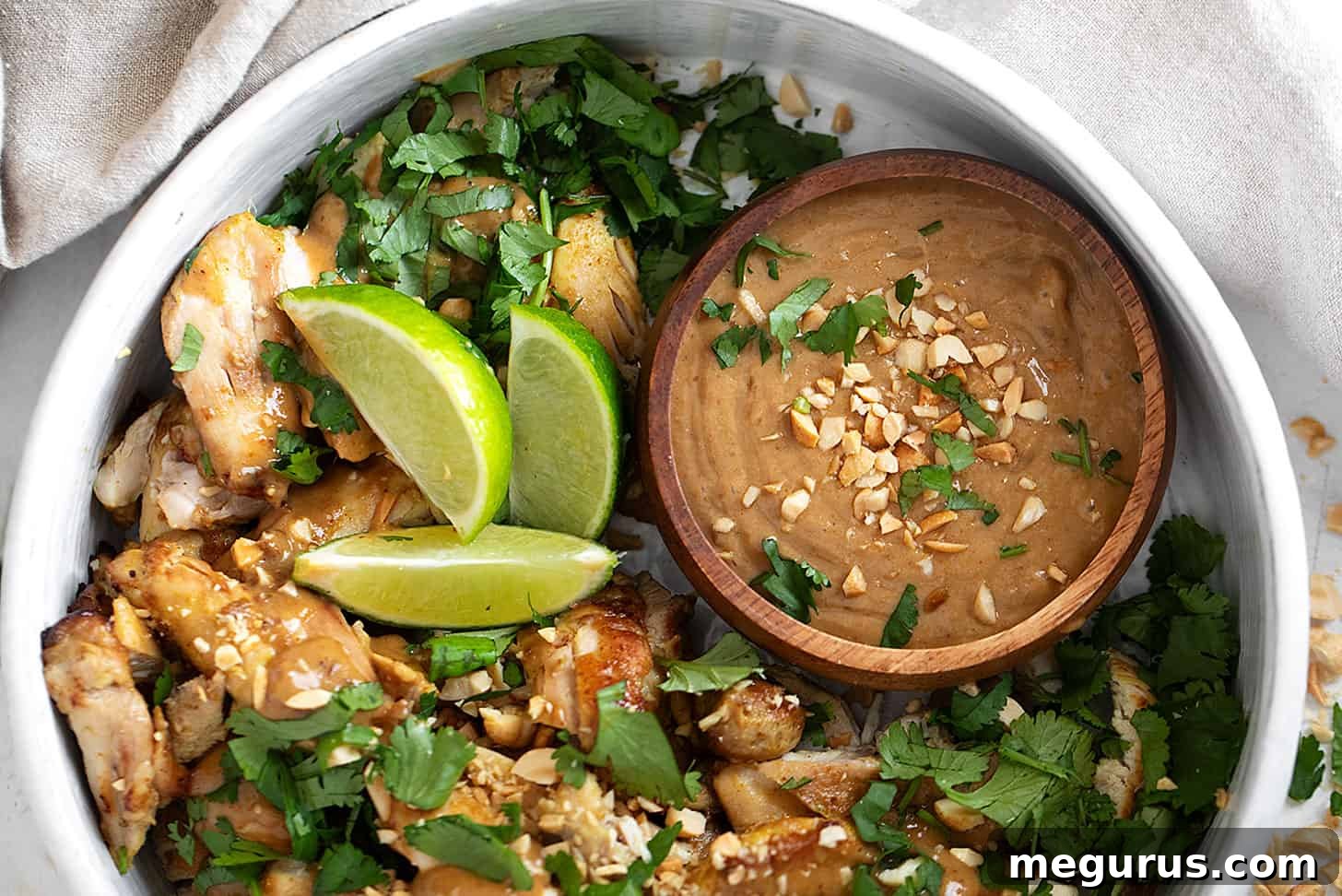
This recipe for Coconut Chicken with Peanut Sauce is more than just a meal; it’s a celebration of bold, aromatic flavors that come together seamlessly. The secret lies in a clever technique: the chicken marinates for a short period before baking, and half of this flavor-packed marinade is reserved to form the irresistible base of our peanut sauce. This brilliant time-saving hack ensures every bite is infused with a cohesive taste profile, making your cooking experience both efficient and rewarding. It’s the perfect dish for those who love exotic flavors but need a quick and straightforward recipe for their daily routine.
Key Ingredients for a Flawless Coconut Chicken
Crafting the perfect Coconut Chicken with Peanut Sauce begins with selecting the right ingredients. Each component plays a crucial role in building the layered flavors that make this dish so outstanding. Here’s a closer look at the stars of our recipe and how to make the best choices for your kitchen:
Boneless Chicken Thighs (The Foundation)
For this recipe, boneless chicken thighs are highly recommended. Their inherent richness and higher fat content ensure they remain succulent and full of flavor even when cooked at higher temperatures. They are far less prone to drying out compared to chicken breasts, resulting in a more tender and enjoyable dish. However, if boneless chicken breasts are what you have on hand, they can certainly be used. To ensure even cooking and maximum flavor absorption, it’s advisable to butterfly the chicken breasts before marinating and baking. This helps them cook quickly and tenderly, mimicking the texture of thighs.
Coconut Milk (The Creamy Heart)
Coconut milk is fundamental to both the chicken’s marinade and the overall flavor profile. You have the flexibility to use either regular (full-fat) or reduced-fat coconut milk. For an intensely creamy sauce and a deeper, more pronounced coconut flavor, full-fat coconut milk is the superior choice. It adds a luxurious texture and richness that elevates the entire dish. Stir the coconut milk well before measuring, especially if it has separated in the can.
Curry Powder (Aromatic Warmth)
The curry powder brings a warm, complex spice blend to the marinade. For a dish that emphasizes flavor without heat, opt for a mild Indian-style yellow curry powder. This will impart all the wonderful aromatic notes of curry without any spiciness. If you prefer a bit of a kick, feel free to substitute some or all of the mild curry powder with a hot curry powder, adjusting to your personal taste preference. Experimenting with different curry blends can also introduce subtle variations to the dish’s character.
Tamarind Paste (The Zesty Secret)
Tamarind paste is an optional yet highly recommended ingredient that adds a unique, bright acidity to the dish. Often found in Thai, Indian, Latin American, and Caribbean cuisines, tamarind offers a distinctive sour-sweet flavor profile—imagine lime with an extra punch and a subtle hint of caramel. It pairs beautifully with coconut milk, tempering its sweetness and adding depth. Beyond flavor, tamarind is also a natural meat tenderizer, which contributes to the chicken’s wonderful texture.
You can typically find tamarind paste in the Asian foods aisle of most well-stocked grocery stores, often sold in a block similar to block dates. If you plan to explore more global recipes, it’s an excellent staple to keep in your pantry; it stores well in the refrigerator for up to 6 months. If tamarind paste is unavailable or you prefer to omit it, consider adding a touch of lime zest to the marinade. This will help to replicate some of that bright, citrusy acidity and keep the flavors balanced.
Peanuts (Crunch and Texture)
Chopped peanuts are a fantastic textural addition to this dish, providing a satisfying crunch that contrasts wonderfully with the tender chicken and creamy sauce. They also reinforce the “satay-style” theme of the peanut sauce. If possible, don’t skip this garnish!
Cilantro (Freshness and Garnish)
Freshly chopped cilantro is an essential garnish, offering a burst of herbaceous freshness that brightens the rich flavors of the chicken and peanut sauce. Its vibrant green color also adds visual appeal. If cilantro isn’t to your taste, flat-leaf parsley can be a suitable substitute, offering a similar fresh, green note without the distinct flavor of cilantro.
Crafting Your Coconut Chicken with Peanut Sauce: A Step-by-Step Guide
Making this flavorful chicken and peanut sauce is surprisingly simple, designed for efficiency without compromising on taste. Here’s a detailed breakdown of the steps, ensuring a smooth cooking process from start to finish. For the exact ingredient quantities and full instructions, please refer to the comprehensive recipe card below.
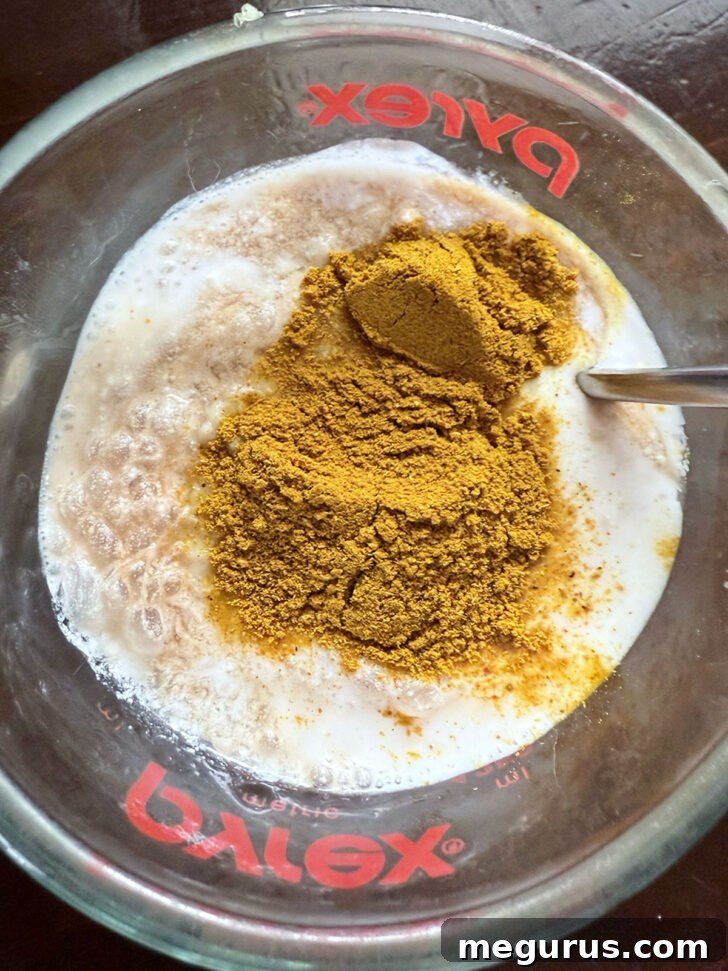
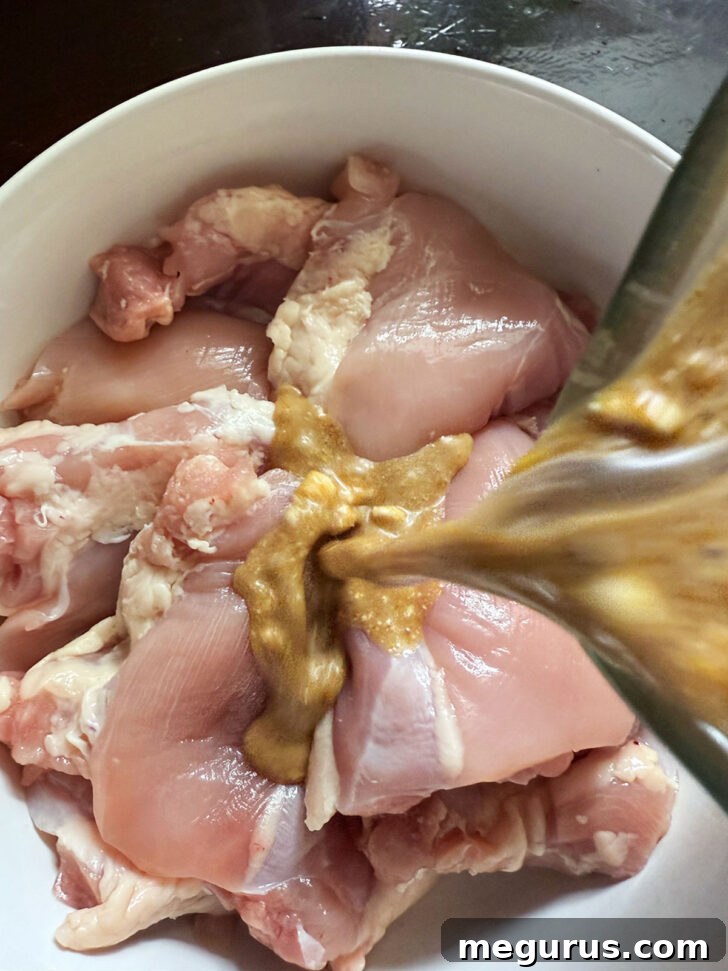
- Prepare the Marinade: Begin by combining all the specified marinade ingredients in a 2-cup measuring cup or a small bowl. Whisk everything together thoroughly until well combined. This ensures all the flavors are evenly distributed, creating a robust base for both the chicken and the sauce.
- Marinate the Chicken: Carefully pour exactly half of the prepared marinade over the boneless chicken thighs, which you should have placed in a separate bowl. Make sure to reserve the remaining half of the marinade in the measuring cup—this will be the foundation for your delicious peanut sauce later.
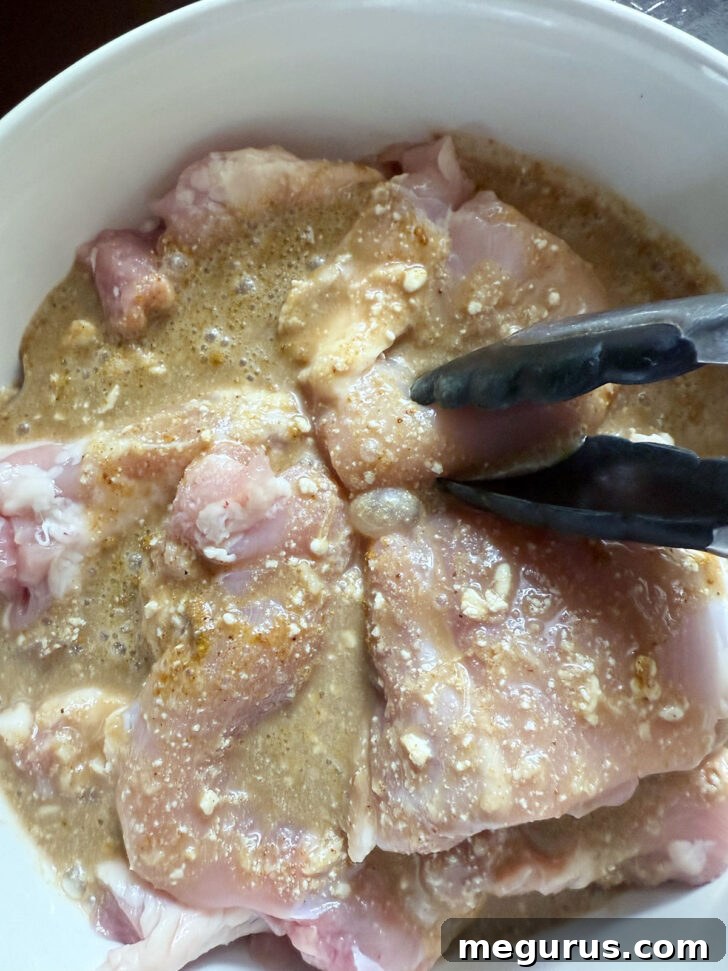
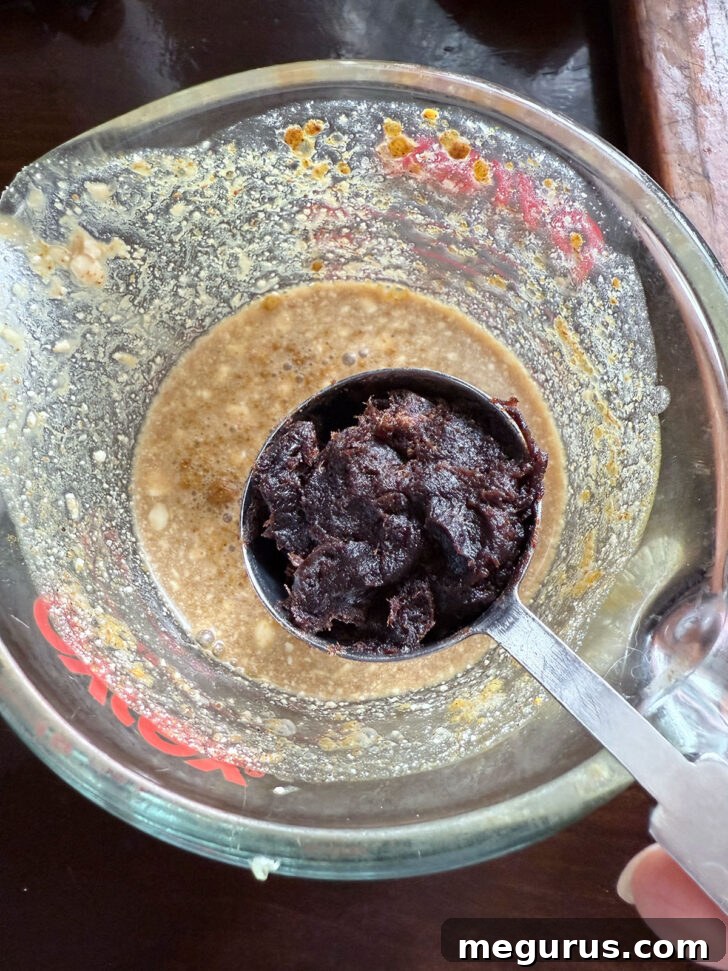
- Cook the Chicken: Toss the chicken thighs vigorously in the marinade to ensure every piece is thoroughly coated. Once coated, place them onto a preheated grill pan in the oven. If a grill pan isn’t available, a foil-lined baking sheet works perfectly. Alternatively, for a smoky flavor, you can grill the chicken on a BBQ. Cook until the chicken is golden brown and cooked through, reaching an internal temperature of 165°F (74°C).
- Prepare the Peanut Sauce: While the chicken is cooking, turn your attention to the peanut sauce. Add the tamarind paste (if you’re using it) to the reserved half of the marinade. This crucial step integrates the tangy note that truly defines the satay-style flavor.
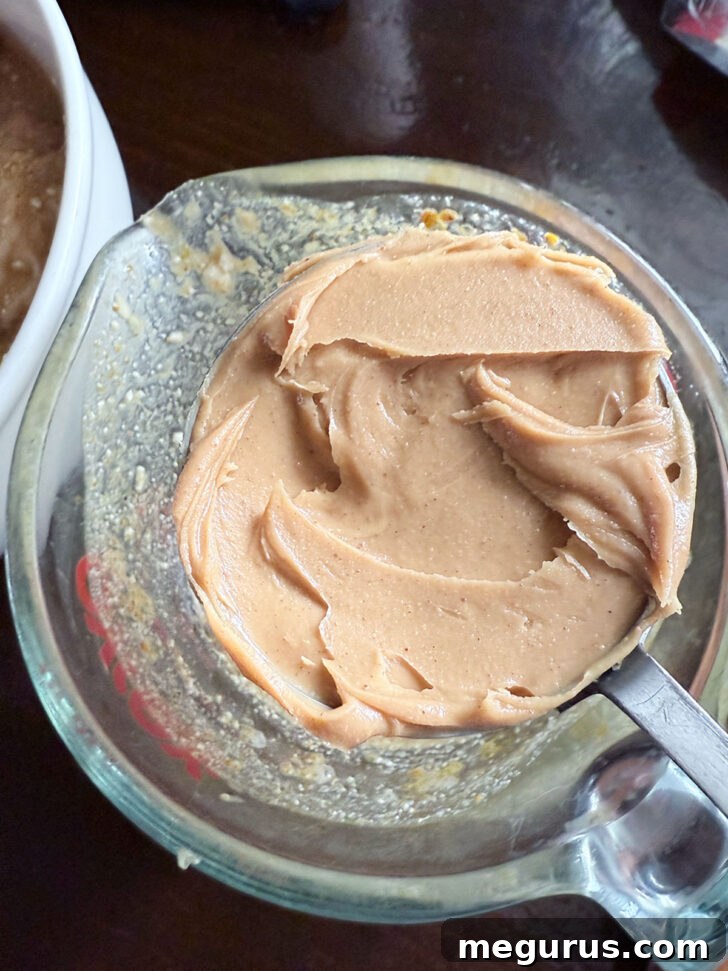
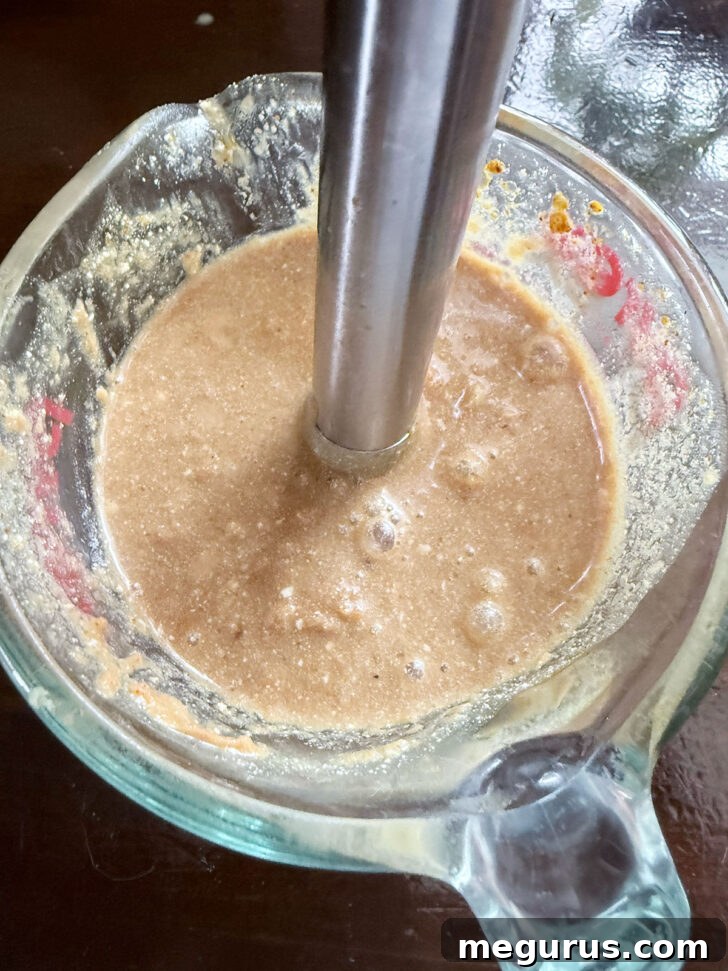
- Complete the Sauce: Next, add the smooth peanut butter to the reserved marinade mixture.
- Achieve Smoothness: Use an immersion blender to blend the sauce until it is wonderfully smooth and thick. If you don’t have an immersion blender, a regular whisk will also work; just ensure you whisk vigorously until any lumps of peanut butter are fully incorporated, and the sauce reaches a consistent, creamy texture.
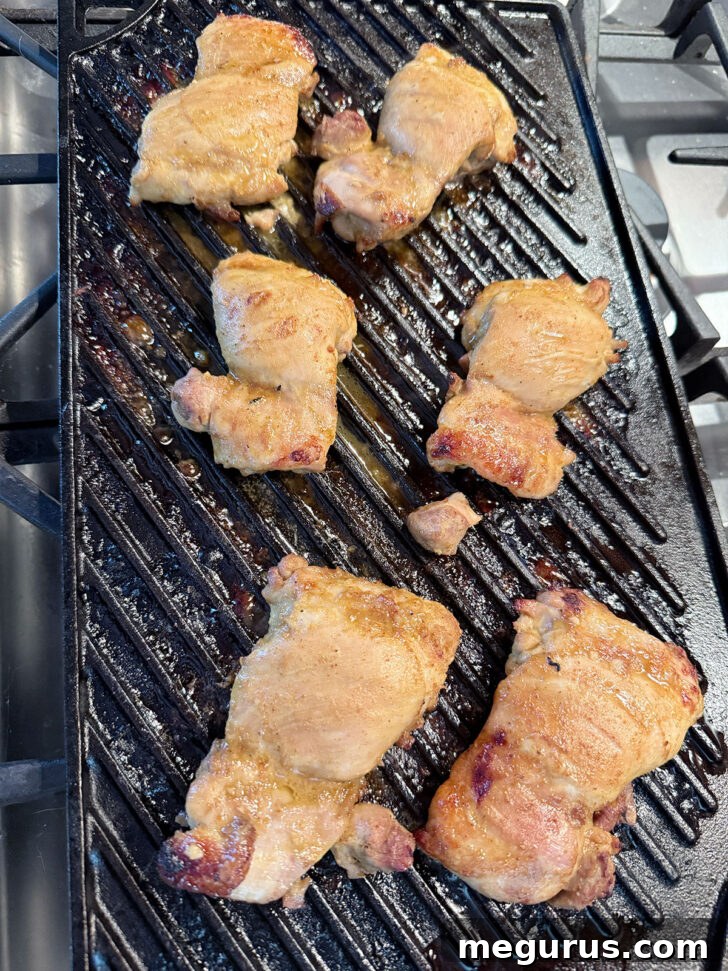
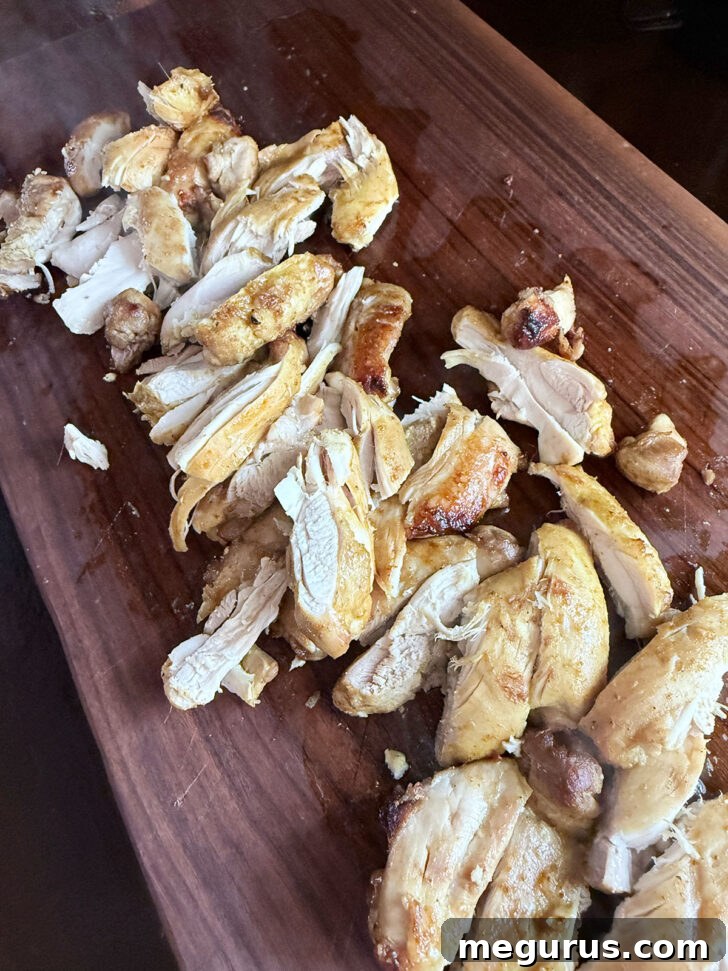
- Rest the Chicken: Once cooked, remove the chicken from the oven and transfer it to a cutting board. Allow it to rest for a few minutes. This resting period is crucial for the juices to redistribute, ensuring the chicken remains incredibly moist and tender when sliced.
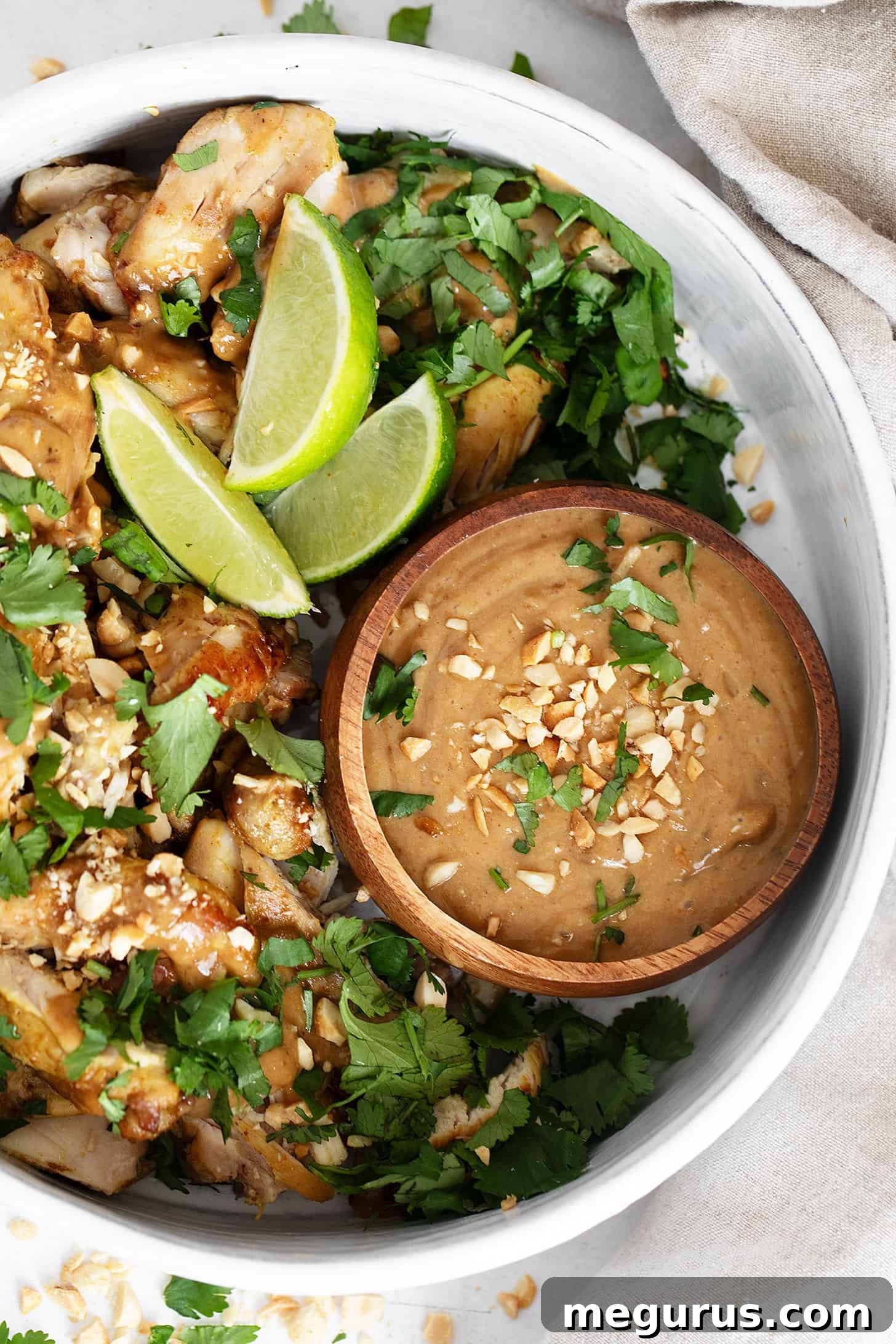
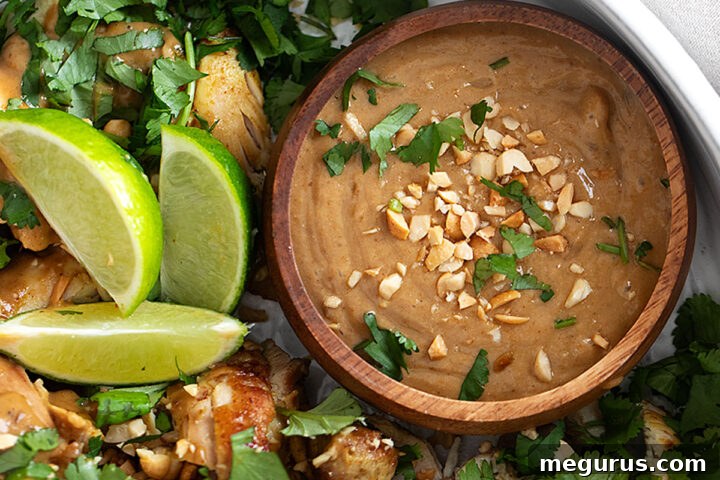
- Slice and Serve: Finally, slice the rested chicken into desired pieces. Arrange it beautifully on a serving platter and drizzle with some of the prepared peanut sauce. Serve the remaining sauce in a small bowl on the side for dipping. Garnish generously with fresh chopped peanuts for crunch and a scattering of fresh cilantro for a burst of color and herbaceous flavor. A few lime wedges on the side allow for an extra squeeze of citrus, enhancing the overall freshness of the dish.
Perfect Pairings: What to Serve with Coconut Chicken
This Coconut Chicken with Peanut Sauce is incredibly versatile and pairs beautifully with a variety of sides, transforming a simple meal into a wholesome and satisfying feast. Here are some ideas to complete your culinary experience:
- Rice Variations: A classic pairing, rice perfectly soaks up the delicious flavors of the chicken and sauce.
- Simple Steamed Rice: Always a good choice.
- Garlic Rice: Elevate your plain rice by cooking it with chicken or vegetable broth instead of water and adding a teaspoon or two of minced garlic to the pot. The subtle garlic infusion adds another layer of aroma.
- Coconut-Lime Cilantro Rice: For an even more tropical touch, cook your rice with a portion of coconut milk mixed with water, and a squeeze of lime juice. Once cooked, stir in a generous handful of fresh chopped cilantro for a vibrant, aromatic side dish that echoes the main course.
- Asian-Inspired Salads: Light, crisp salads offer a refreshing contrast to the rich chicken and sauce.
- Asian Salad: A mix of greens, shredded cabbage, carrots, and bell peppers with a light sesame-ginger dressing.
- Asian Coleslaw: A crunchy coleslaw made with Napa cabbage, carrots, scallions, and a peanut-lime dressing brings both texture and complementary flavors.
- Marinated Cucumber Salad: Thinly sliced cucumbers marinated in a light dressing of rice vinegar, soy sauce, and a hint of sugar can provide a refreshing, tangy counterpoint.
- Fresh Vegetables: Steamed or lightly sautéed vegetables can be a healthy and colorful addition. Think snap peas, broccoli florets, or bok choy.
- Lettuce Wraps: For a lighter, interactive meal, serve the sliced coconut chicken and peanut sauce alongside fresh lettuce leaves (such as butter lettuce or romaine hearts). Guests can then assemble their own flavorful lettuce wraps, perfect for a casual dinner.
Chef’s Corner: Essential Recipe Tips for Success!
To ensure your Coconut Chicken with Peanut Sauce turns out perfectly every time and to help you make the most of this versatile recipe, here are some invaluable tips and tricks:
- Meal Prep Power-Up: This recipe is fantastic for meal prepping! Consider doubling the batch of chicken. You can either freeze half of the marinated, uncooked chicken (ensuring it’s well-sealed in an airtight container or freezer bag) or freeze half of the cooked, sliced chicken. When freezing the chicken, make sure to also package the reserved marinade (for the peanut sauce) separately. This way, you’ll have a quick-start meal ready for another day—simply thaw the chicken and whip up the fresh sauce when needed.
- Tamarind Alternatives: As mentioned previously, if you choose to omit tamarind paste, or simply don’t have it on hand, be sure to add some lime zest to your peanut sauce. The zest will impart a brighter, more pronounced citrus flavor, helping to balance the richness of the peanut and coconut. A squeeze of fresh lime juice at the end of cooking can also boost the fresh notes.
- Versatile Cooking Methods: While oven-baking on a grill pan is our preferred method for achieving delicious results with minimal effort, you have several other options for cooking the chicken to perfection:
- Oven on a Baking Sheet: If a grill pan isn’t available, simply arrange the marinated chicken on a foil-lined baking sheet and bake in the preheated oven. The foil makes for easy cleanup!
- Stovetop Grill Pan: For those who prefer stovetop cooking, a grill pan over high heat can create beautiful char marks and cook the chicken quickly. Ensure the pan is very hot before adding the chicken to get a good sear.
- Outdoor BBQ: For an authentic smoky flavor, grill the chicken on an outdoor barbecue. This method adds a lovely depth of flavor that complements the marinade perfectly. No matter which method you choose, always cook the chicken until it reaches an internal temperature of 165°F (74°C) for safety.
- Adjusting Spice Levels: Don’t be shy about adjusting the curry powder or even adding a pinch of chili flakes to the marinade if you enjoy more heat. For a milder flavor, ensure you use a mild Indian-style curry powder.
- Peanut Butter Choice: For the smoothest sauce, opt for creamy, natural peanut butter. If your peanut butter is very thick, you might need to add a tiny splash of water or extra coconut milk when blending the sauce to achieve the desired consistency.
Storage, Making Ahead, and Freezing
This Coconut Chicken with Peanut Sauce is not only delicious freshly made but also excellent for planning ahead and enjoying later. Proper storage ensures you can savor its flavors for days or even months.
- Storing Leftovers: Leftover cooked chicken and the peanut sauce can be stored separately in airtight containers in the refrigerator for up to 3 days. Reheat the chicken gently in the oven or microwave, and warm the sauce if desired, stirring well before serving.
- Making Ahead: You can prepare the marinade and marinate the chicken a day in advance for even deeper flavor. Store the marinated chicken and the reserved marinade (for the sauce) separately in the refrigerator. This cuts down on prep time significantly on the day of cooking.
- Freezing: This recipe freezes remarkably well, making it perfect for future meals.
- Uncooked Marinated Chicken: Place the marinated chicken thighs in a freezer-safe bag or container. Ensure there’s minimal air to prevent freezer burn. It can be frozen for up to 3 months. Thaw completely in the refrigerator before cooking as per the recipe.
- Cooked Chicken: Once cooked and sliced, the chicken can also be frozen in an airtight container for up to 3 months. Thaw overnight in the refrigerator and gently reheat.
- Peanut Sauce: The prepared peanut sauce also freezes beautifully. Store it in a freezer-safe container for up to 3 months. Thaw in the refrigerator and whisk well before serving, adding a tiny bit of water or coconut milk if it’s too thick after thawing.
Get the Recipe: Coconut Chicken with Peanut Sauce
This easy lime and coconut chicken cooks up quickly in the oven and is sliced and served with a delicious satay-style peanut sauce. Ready to enjoy in just about 30 minutes!
Pin This
Leave a Review
Ingredients
Coconut chicken marinade:
- 1/2 cup coconut milk, stirred (mini can)
- 3 Tablespoons soy sauce, low sodium recommended
- 2 Tablespoons dark brown sugar, can substitute light brown sugar
- 1/3 cup lime juice, about 2 large or 3 small limes
- 2 Tablespoons ginger garlic paste, or 1 Tbsp ginger paste/1 Tbsp minced garlic
- 2 teaspoons mild curry powder, (Indian-style yellow curry powder)
- 1 1/2 lb chicken thighs, about 6 boneless, skinless thighs
To finish sauce:
- 1/3 cup smooth peanut butter
- 1 Tablespoon tamarind paste, optional *see Note 1 below
To serve:
- chopped peanuts
- chopped fresh cilantro
- lime wedges, for drizzling
Instructions
- Place a grill pan in the oven and preheat the oven to 450F (non-convection/not fan-assisted). *Alternately, preheat the oven to 450F and have ready a foil-lined baking sheet to cook the chicken.
- Unfold the chicken thighs and place them into a bowl. Set aside.
- Combine all the coconut marinade ingredients in a 2-cup measuring cup and stir together well. Pour HALF of the marinade over the chicken thighs, reserving the other half in the measuring cup. Toss the chicken thighs in the marinade to coat well.
- Place the chicken thighs onto the preheated grill pan in the oven (or onto the foil-lined baking sheet). Cook the chicken thighs about 10 minutes or until cooked through and 165F internal temperature. You can switch the oven to BROIL for a minute or so to brown the chicken a bit more, if you like.
- While the chicken is cooking, make the peanut sauce by adding the peanut butter and tamarind paste (if using) to the reserved marinade. Use an immersion blender (or whisk) to blend the sauce until well combined and smoother.
- Remove the chicken from the oven to a cutting board. Let rest for a couple of minutes, and then slice the chicken. Place onto a serving plate. Drizzle the chicken with a bit of the peanut sauce, placing the rest of the sauce in a bowl for dipping. Garnish with some chopped peanuts and fresh, chopped cilantro. Add some lime wedges for drizzling.
Notes
Note 1: Tamarind paste brings a bright acidic flavour to dishes, which I would describe as lime with a punch and a slight note of caramel flavour. Look for tamarind paste in with the Asian foods (it’s quite easy to find these days!). It is sold in a block similar to block dates. If you think you’ll use it in other dishes, it’s a great addition to any kitchen. It will keep refrigerated for up to 6 months. If not, you can certainly omit the tamarind. If omitting, consider adding a bit of lime zest to the marinade to bring a bit more lime flavour.
Tips!
- You could substitute boneless chicken breasts for the boneless chicken thighs. I would butterfly them before marinating and cooking. They may take a couple of minutes more oven time. Be sure to cook to 165F internal temperature.
- I like to serve this chicken with rice. Garlic rice is nice. Simply cook the rice with broth instead of water and add some minced garlic to the pot. Cooking the rice with coconut milk or lime juice and stirring in some cilantro at the end also makes great side. You could also serve alongside an Asian salad or Asian coleslaw or try a marinated cucumber salad. Finally, this chicken would be nice enjoyed as a lettuce wrap.
- This is another one of those recipes where it could be a great idea to double up the chicken and freeze half for a later meal. You can freeze it marinated and uncooked or cooked. Package it together with the reserved marinade used for the peanut sauce, and you can quickly finish the sauce when needed.
- There are a number of ways to cook the chicken. You can preheat a grill pan in the oven and place the chicken onto it. You could also place the chicken in the oven on a foil-lined baking sheet. You could also use a grill pan on the stove-top over high heat. Finally, you can grill the chicken on the BBQ.
Be sure to read the notes above this Recipe Card. You will find ingredients substitution suggestions and step-by-step photos that you might find helpful.
Adapted from a Gordon Ramsay recipe.