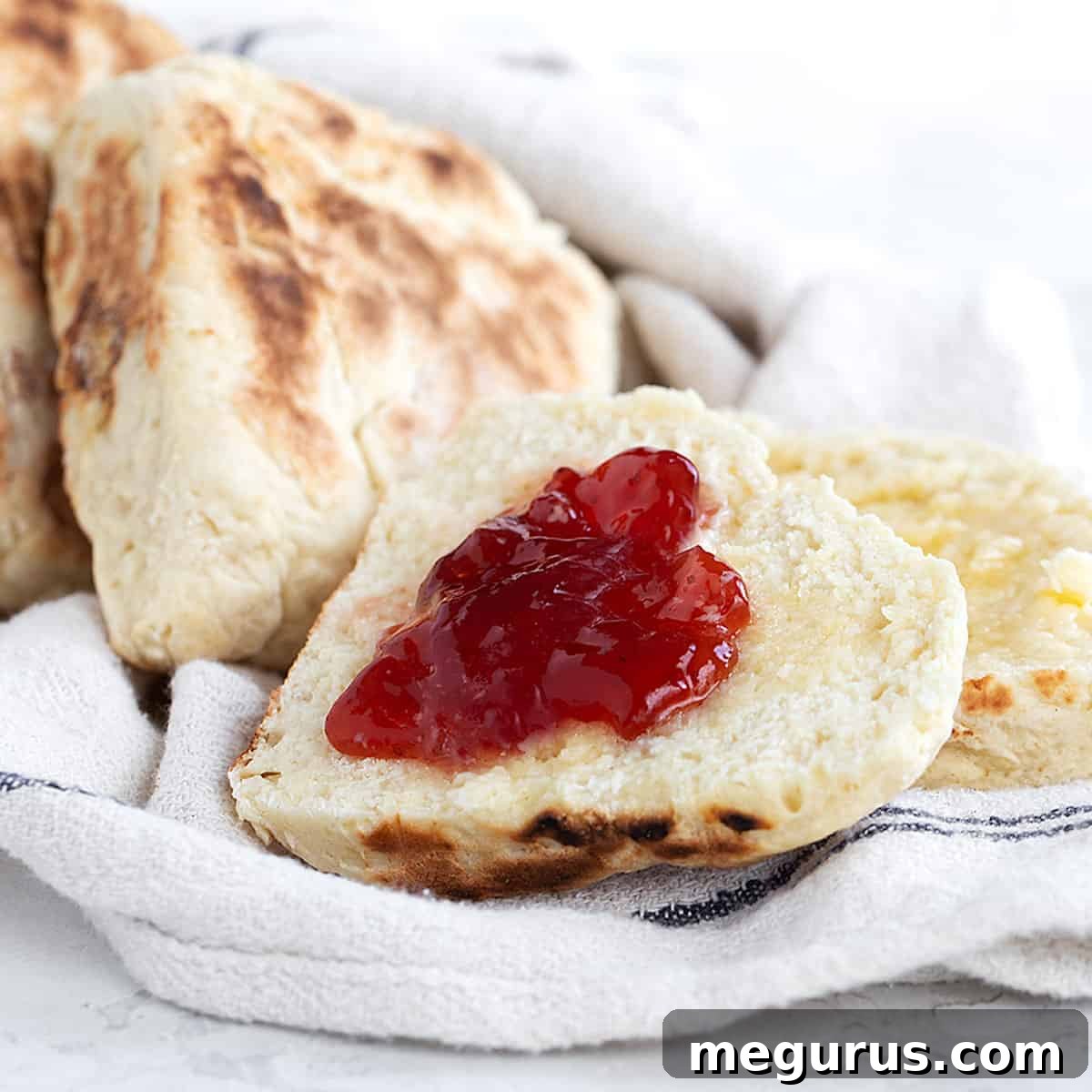
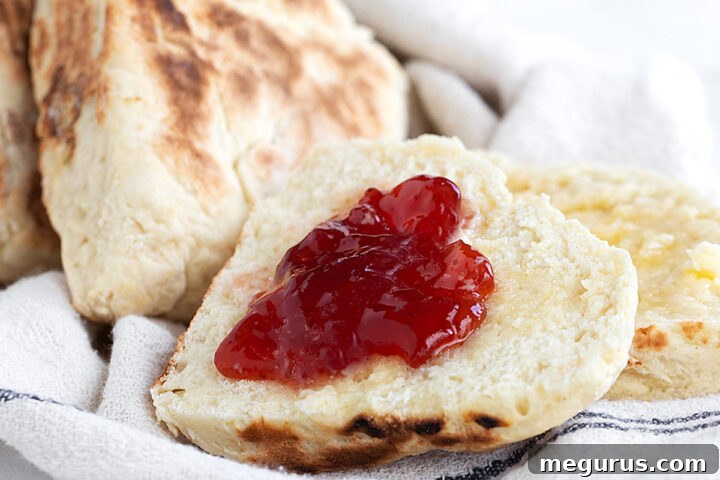
Delight in the simple pleasures of traditional Irish baking with these incredibly easy and delicious Irish Soda Farls. Cooked to golden perfection in a dry skillet, these quartered rounds of tender, soda-leavened bread are a staple of Irish breakfasts and tea times. Split them open and lavish with butter and your favorite jam, or elevate your morning routine by filling them with a fried egg and crispy bacon for an unforgettable breakfast sandwich. This recipe brings the authentic taste of Ireland right into your kitchen, offering a quick and satisfying bake that requires minimal effort and simple ingredients.
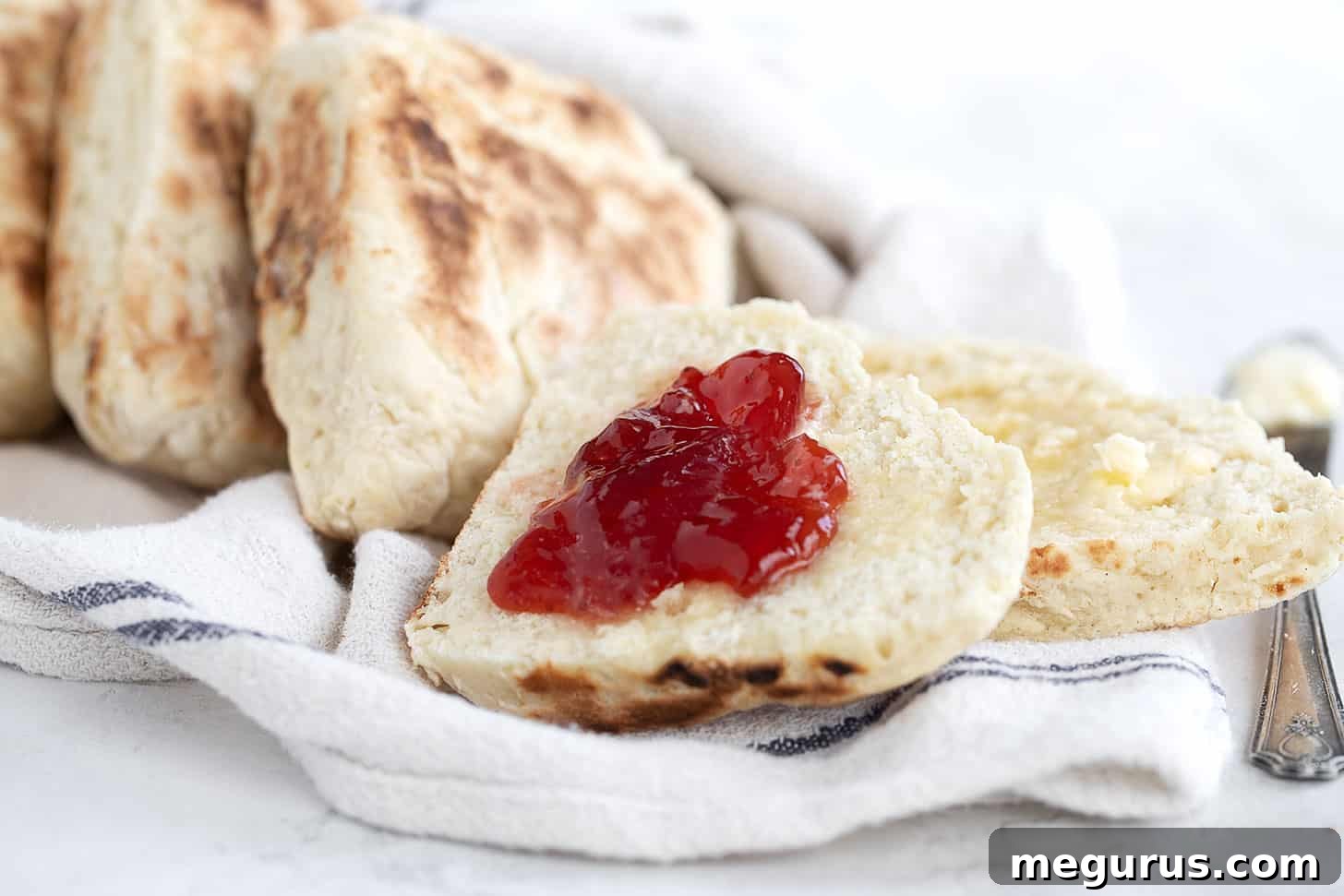
The term “farl” is rooted in Gaelic, meaning “four parts” or “quarters,” a direct reference to the distinctive way these rounds of dough are cut. In Irish culinary tradition, you’ll encounter two primary types of farls: Potato Farls and Soda Farls. While Potato Farls, crafted from mashed potatoes, typically serve as a savory accompaniment to meals, Soda Farls are a delightful relative of soda bread. The key difference lies in their preparation; rather than being baked in an oven, soda farls are quickly cooked on a griddle or in a heavy skillet. Served warm, their soft texture and subtle tang from buttermilk pair wonderfully with classic spreads like butter and jam, making them an ideal treat. Beyond a simple spread, they truly shine as the foundation for a hearty bacon and egg breakfast sandwich, a beloved component of a traditional Irish breakfast.
These versatile bread quarters are more than just a recipe; they’re a taste of Irish heritage, a culinary hug that brings warmth and comfort to any meal. Their quick cooking time and straightforward ingredients make them accessible for even novice bakers, ensuring a rewarding experience with delicious results every time. Whether for a leisurely weekend breakfast or a comforting afternoon tea, Irish Soda Farls are sure to become a cherished addition to your recipe repertoire.
Essential Ingredients and Smart Substitutions
Crafting these delectable soda farls is remarkably simple, demanding only a handful of common pantry staples and a single piece of cookware. The beauty of this recipe lies in its minimalist approach, proving that extraordinary flavor doesn’t require complex lists or fancy equipment.
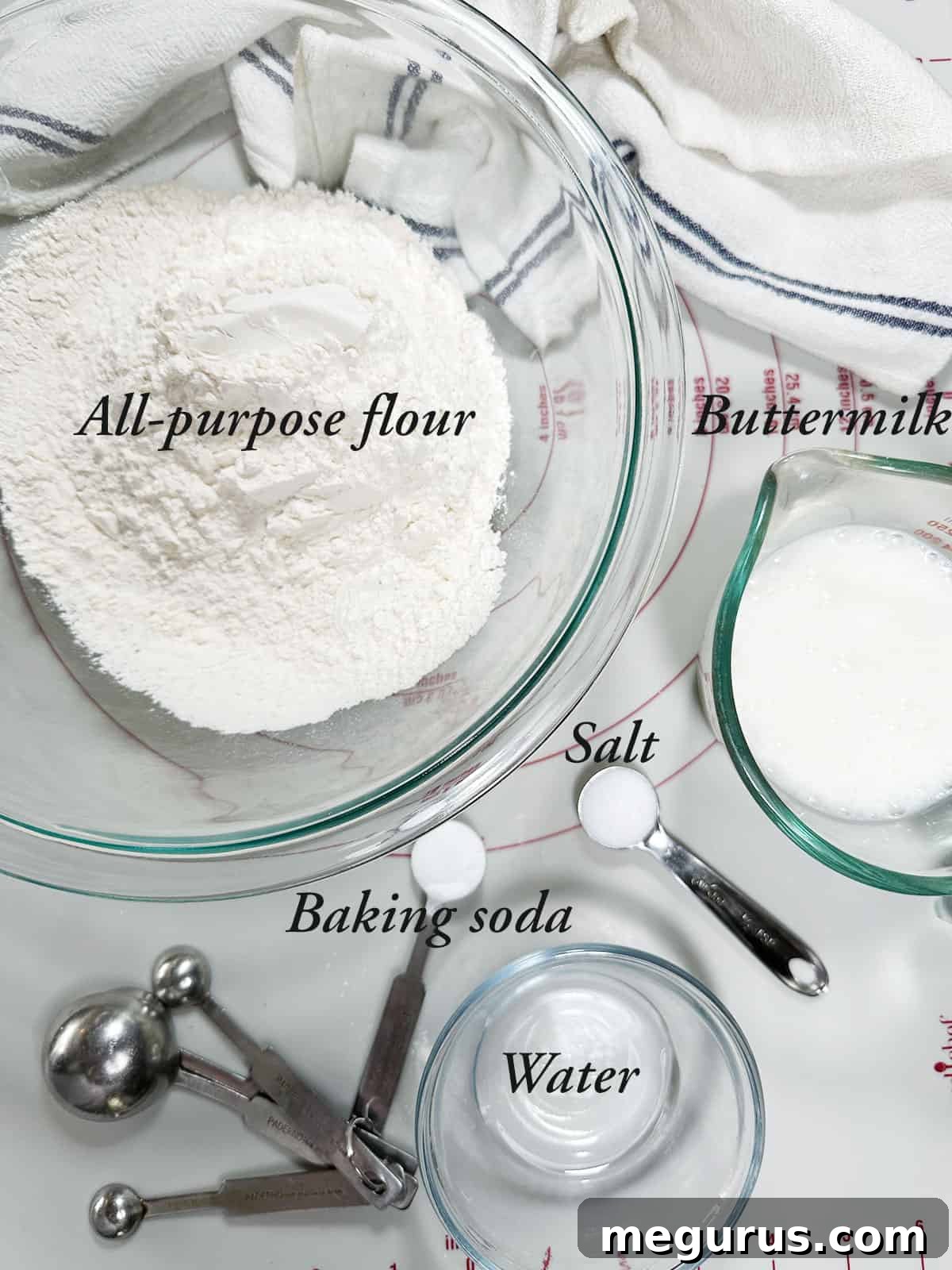
- A Griddle or Cast Iron Skillet: The choice of cooking surface significantly influences the final texture and appearance of your farls. A cast iron skillet is highly recommended due to its exceptional heat retention and even heat distribution, which helps in achieving that perfectly browned crust and a thoroughly cooked interior. For this recipe, a 10-inch skillet (with an 8-inch bottom diameter) or a 12-inch skillet (with a 10-inch bottom diameter) will work beautifully. If a dedicated cast iron griddle is available, it’s an excellent alternative. Should you lack either of these, a good quality heavy-bottomed skillet can certainly be used, though you might need to slightly adjust cooking times to account for differences in heat retention. The goal is a steady, even heat for optimal cooking.
- All-purpose Flour: Also widely known as plain flour, this is the foundation of your farls. Accurate measurement is key to achieving the correct dough consistency. For best results, employ the “stir, spoon, and level” method: gently stir the flour in its container, then spoon it lightly into your measuring cup, leveling off the excess with a straight edge. For ultimate precision, a kitchen scale and the provided gram measurements are highly encouraged, as this eliminates variability caused by flour compaction.
- Buttermilk: The tangy star of soda bread, real buttermilk is crucial for the authentic flavor profile of these farls. Its acidity reacts with the baking soda, providing the leavening needed for a light, tender crumb. If genuine buttermilk is unavailable, you can easily create a suitable substitute at home. Simply combine regular milk with a tablespoon of lemon juice or white vinegar per cup of milk. Let this mixture sit for 5-10 minutes until it slightly curdles and thickens. While a good substitute, the richness of real buttermilk truly elevates the farls.
- Baking Soda: An indispensable ingredient, baking soda (sodium bicarbonate) is the “soda” in soda farls. When combined with the buttermilk’s acidity and heat, it produces carbon dioxide gas, which gives the farls their rise and characteristic texture. Ensure your baking soda is fresh for maximum effectiveness.
-
You’ll also need:
- Salt: A pinch of fine table salt enhances the overall flavor and balances the sweetness.
- Water: Added sparingly, water helps to bring the dough together, ensuring it’s moist but not sticky. The exact amount can vary slightly depending on environmental factors and flour type.
- Clean Tea Towel: An often-overlooked but vital tool! Wrapping the freshly cooked farls in a clean tea towel after removing them from the skillet helps to trap steam, keeping them wonderfully soft and warm until ready to serve. This simple trick prevents them from drying out and ensures a delightful eating experience.
Crafting Your Own Irish Soda Farls: A Step-by-Step Guide
Making Irish Soda Farls is a rewarding and straightforward process. Follow these detailed steps to achieve perfect, tender farls every time.
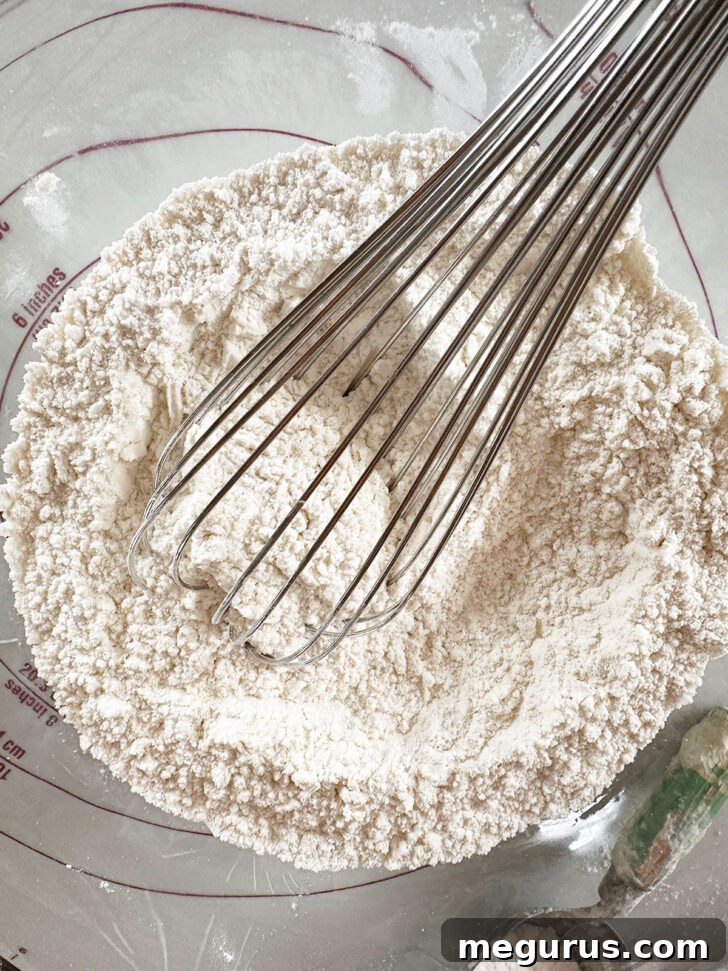
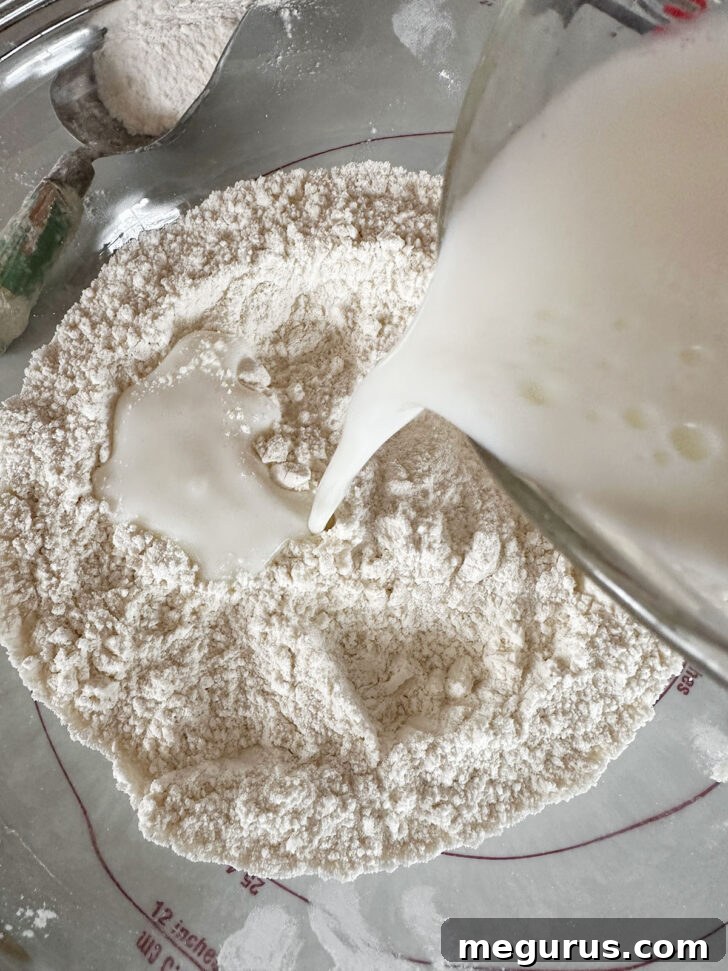
- Combine Dry Ingredients: In a large mixing bowl, thoroughly whisk together the all-purpose flour, baking soda, and salt. Ensure these dry ingredients are well combined to allow for even distribution of the leavening agent throughout the dough.
- Add Buttermilk: Pour the buttermilk into the bowl with the dry ingredients. Using a wooden spoon or spatula, gently stir the mixture. Your goal is to moisten as much of the flour as possible, starting the formation of the dough.
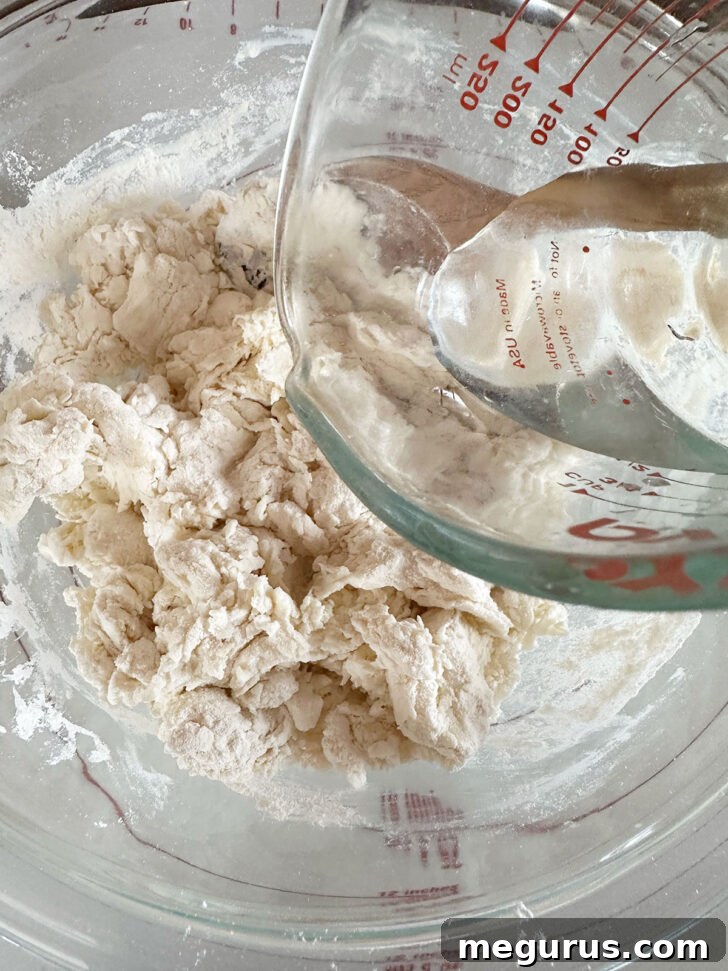
- Adjust with Water (as needed): If, after adding the buttermilk, there are still pockets of dry flour or the dough feels too stiff, drizzle in a small amount of water around the edges of the bowl. Continue to stir until the dough comes together. The ideal consistency is a moist, cohesive dough that is not overly sticky. Resist the urge to add too much water; a little goes a long way.
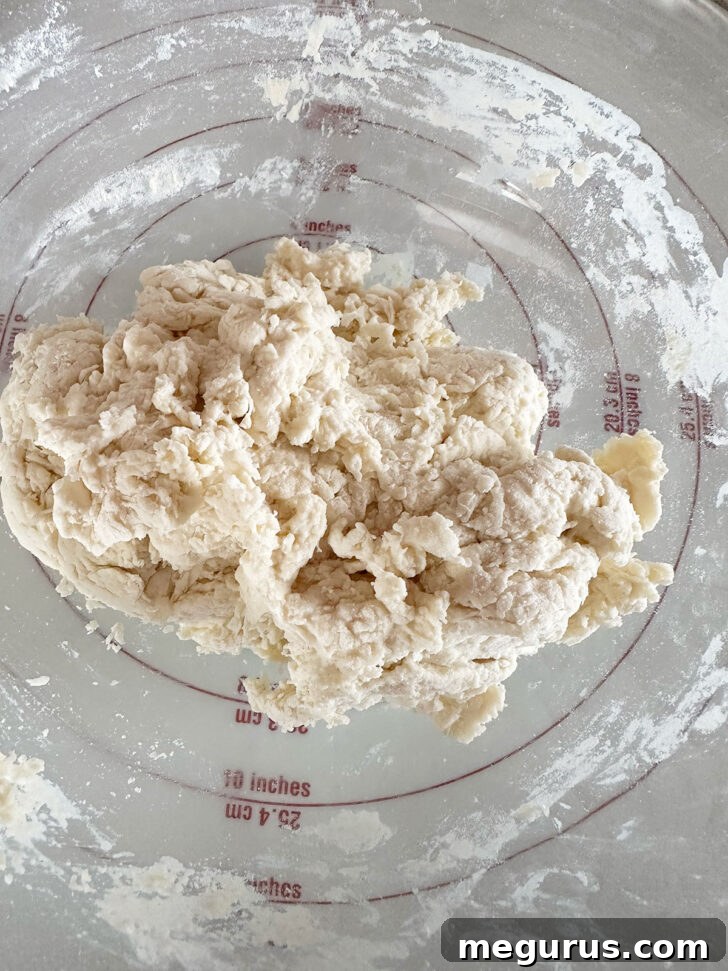
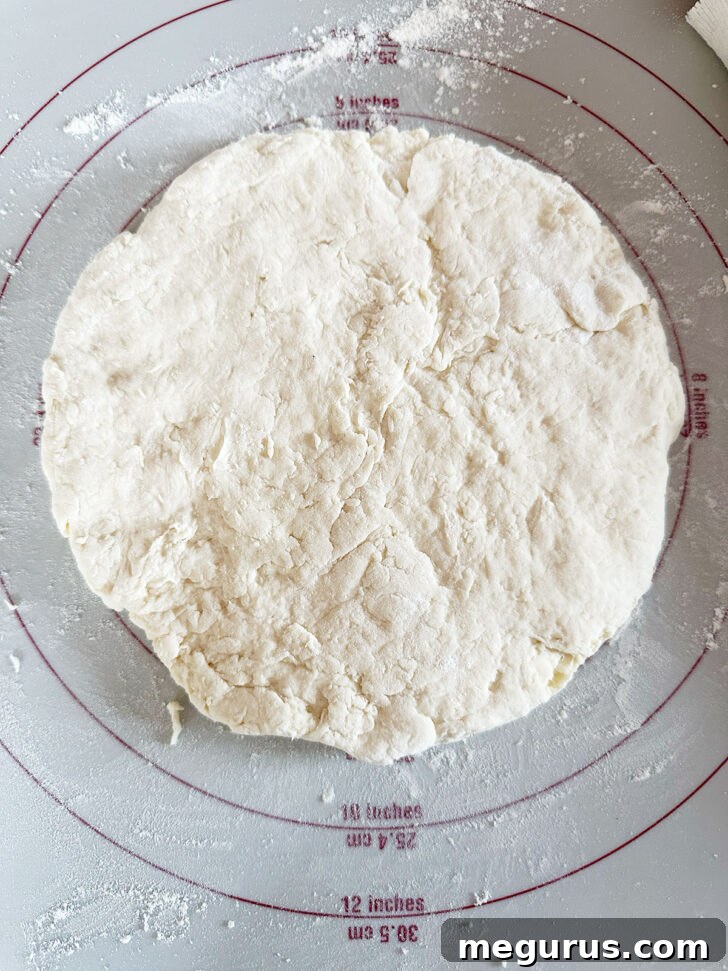
- Prepare for Shaping: At this stage, your dough should be evenly moistened and ready for the next step. Avoid overworking the dough, which can lead to tough farls.
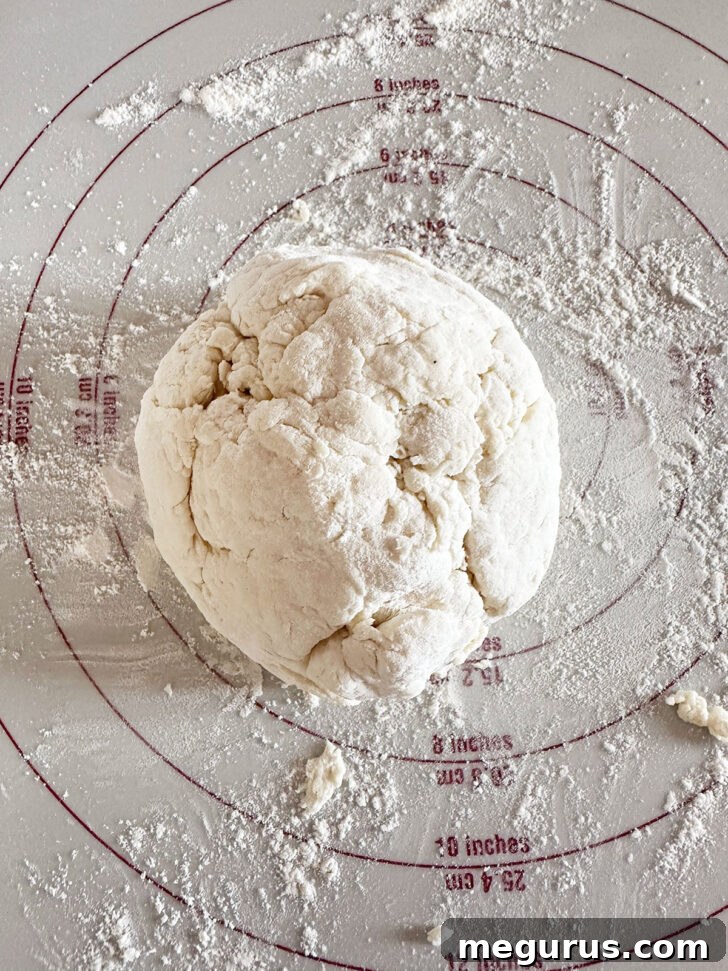
- Transfer and Form: Lightly flour a clean work surface. Carefully transfer the dough from the mixing bowl onto the floured surface. Gently gather the dough and form it into a soft ball.
- Pat into a Circle: Using the palm of your hand, gently pat the dough outwards to create an even 8-inch diameter circle, approximately 1/2 to 3/4 inch thick. If the dough begins to stick to your hands, lightly flour them. For larger skillets (e.g., 10-inch bottom diameter), you can pat the dough out slightly larger, around 9 inches, resulting in thinner farls that may cook a bit faster.
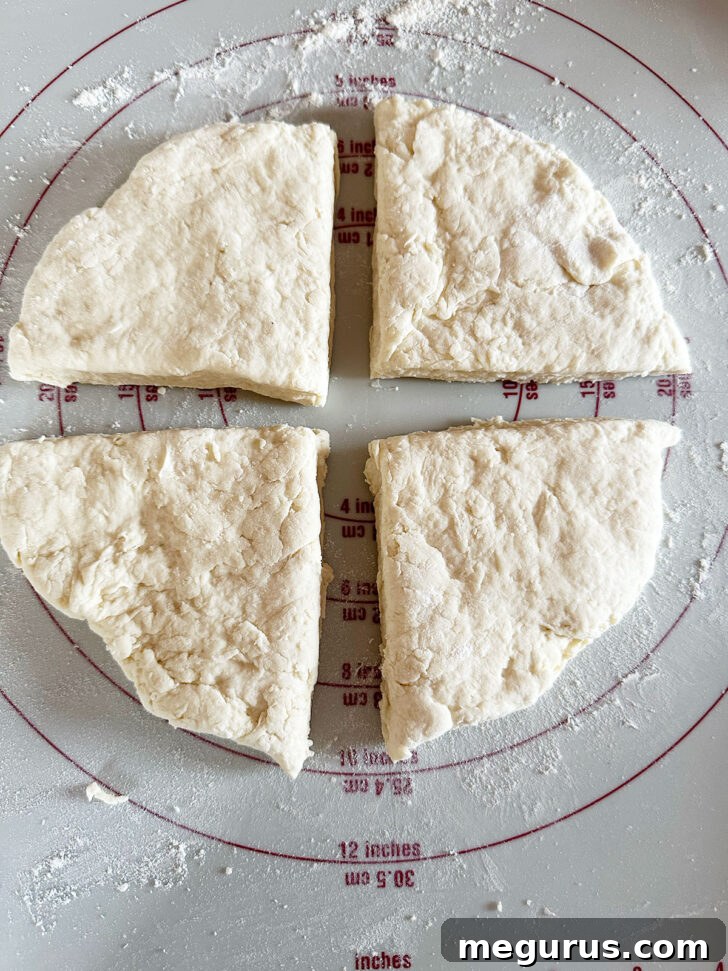
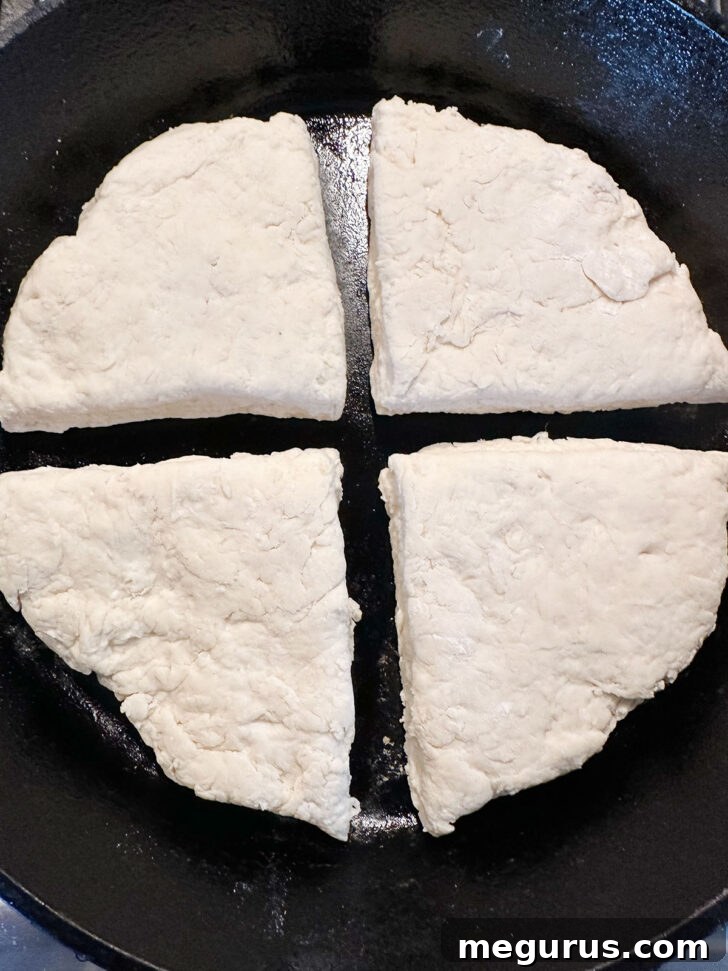
- Cut into Quarters: Using a sharp knife or a dough scraper, cut the 8-inch dough circle into four equal quarters, forming the characteristic “farl” shape.
- Preheat and Cook First Side: Place your cast iron skillet (or other heavy-bottomed pan) over medium heat on the stovetop. Allow it to warm thoroughly. Once warm, immediately reduce the heat to medium-low. Lightly sprinkle a bit of flour into the skillet to prevent sticking. Carefully transfer the dough quarters into the skillet, arranging them so they don’t touch. Cook undisturbed for 4 minutes. It’s wise to peek at the underside after two minutes; if browning too quickly, slightly reduce the heat.
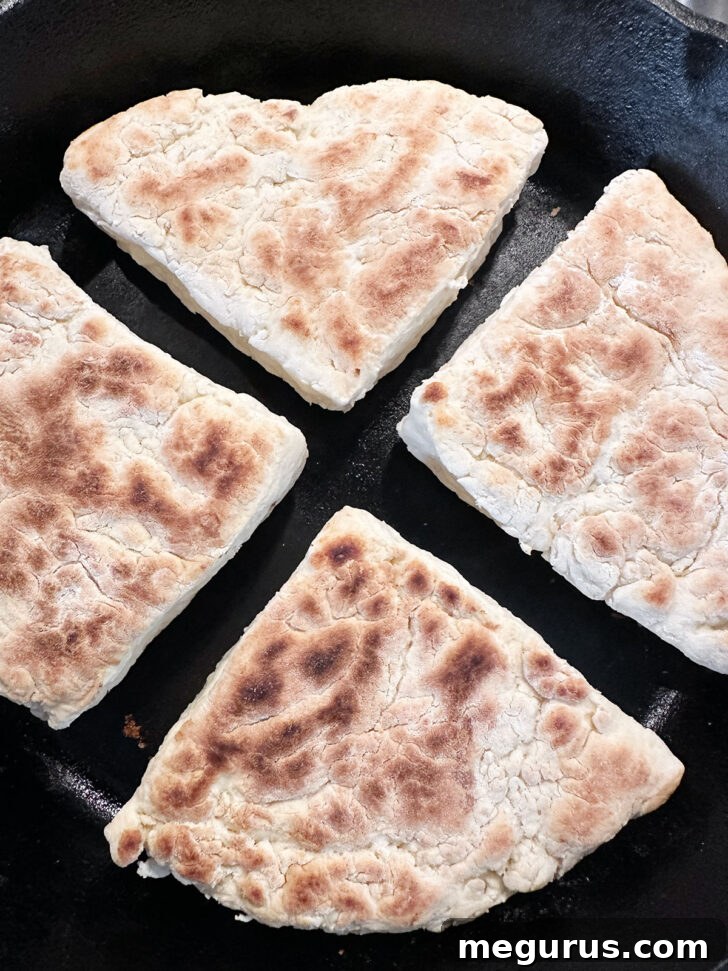
- Cook Second Side: After 4 minutes, the first side should be beautifully golden brown. Flip each farl over to cook the second side for another 4 minutes. A helpful tip for flipping: remove one farl to a plate, flip the remaining three in the pan, then return the first farl. You might also want to slightly reduce the heat after flipping, as the skillet will be retaining a good amount of heat, preventing the second side from over-browning.
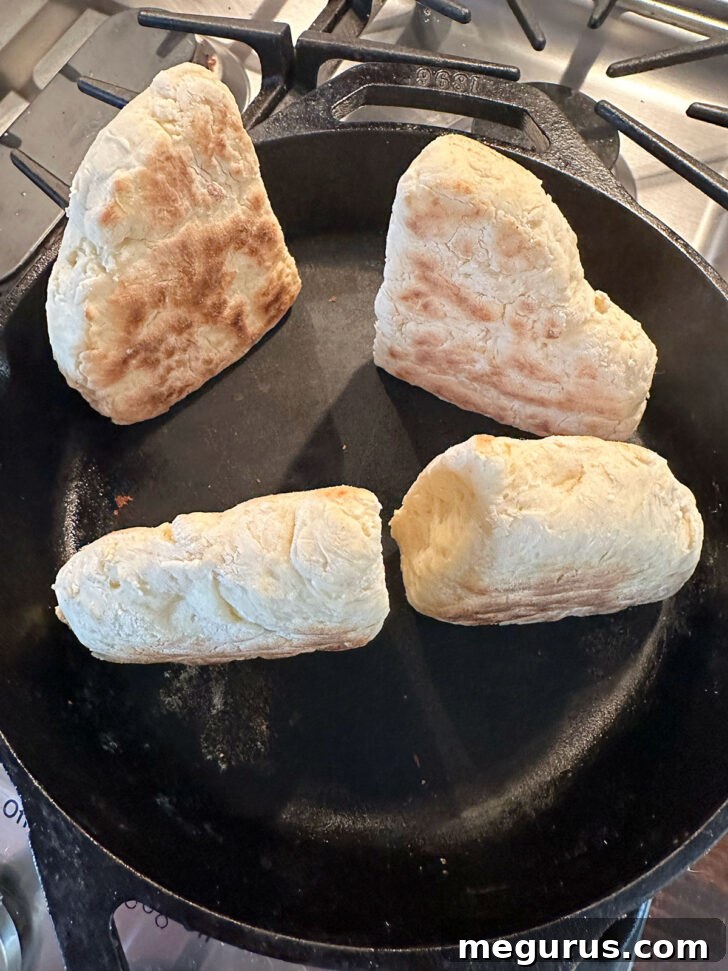
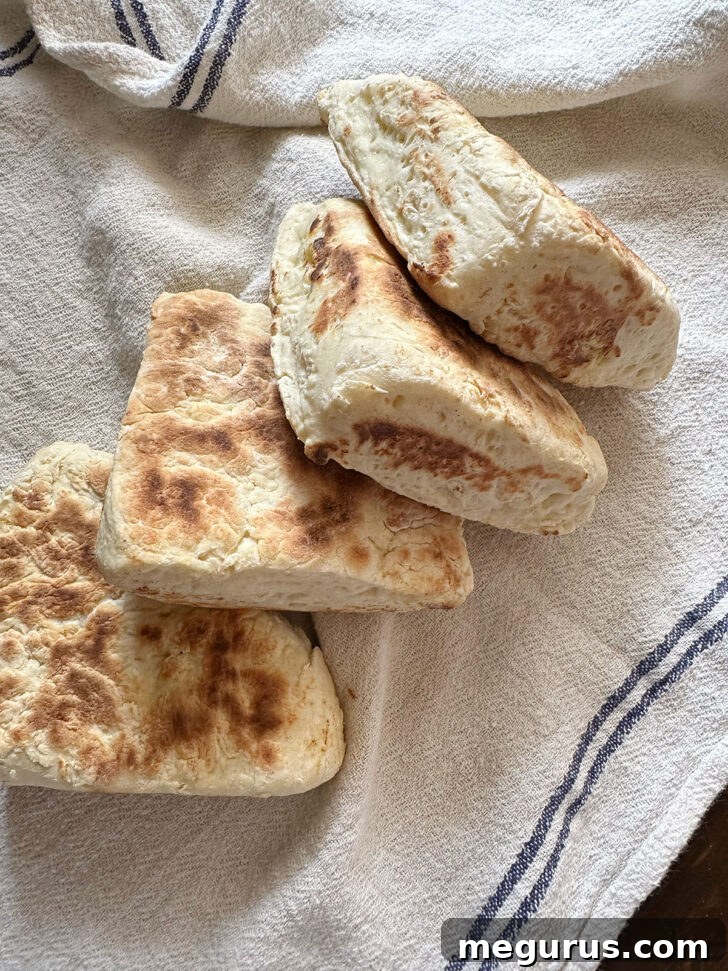
- Brown the Edges: To ensure even cooking and a delightful texture throughout, stand each farl on one of its cut edges in the skillet and cook for 1 minute. Then, rotate it to its other cut edge and cook for an additional minute. This step ensures all sides are perfectly browned and cooked through.
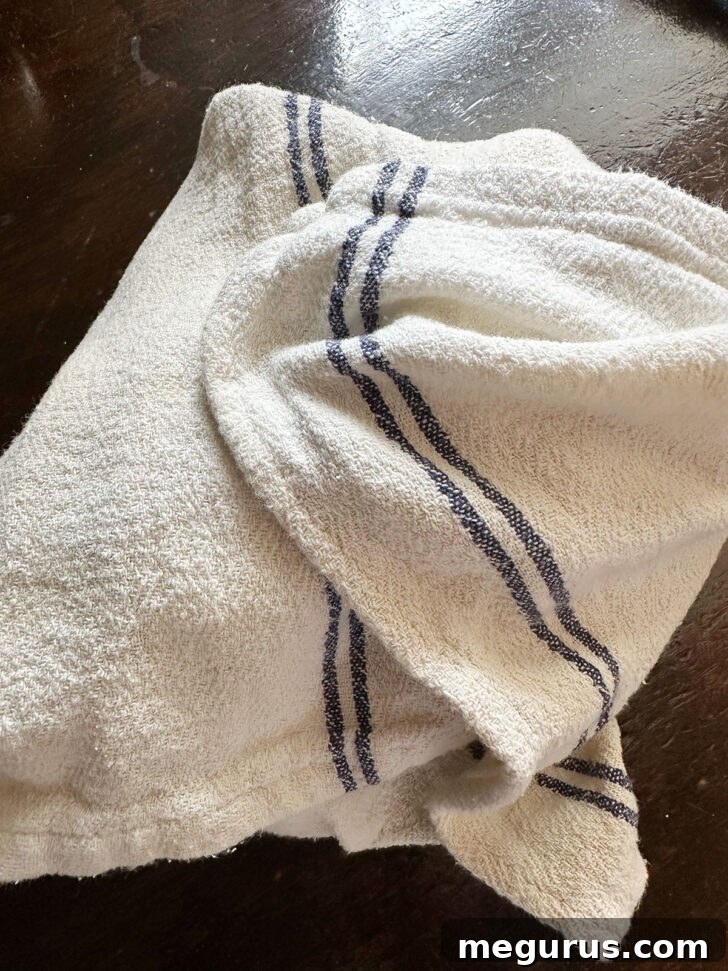
- Transfer to Tea Towel: Once all sides are golden and the farls are cooked, carefully remove them from the skillet and place them on a clean tea towel.
- Wrap and Rest: Gently wrap the farls entirely in the tea towel. This crucial step traps the residual heat and steam, keeping the farls wonderfully soft and warm. Allow them to rest for at least 10 minutes before splitting them open and enjoying them. They will remain warm in the tea towel for a surprising amount of time.
Following these steps will ensure you create authentic, tender, and delicious Irish Soda Farls, perfect for any occasion.
Top Tips for Perfect Irish Soda Farls
Recipe Success Secrets!
- Dough Consistency is Key: Think of making soda farls like making biscuits – the ideal dough should be moist but not sticky. The exact amount of liquid needed can vary based on factors like flour type, humidity in your kitchen, and even the batch of buttermilk. Always add water in very small increments, just enough to bring the dough together. A dough that’s too dry will result in crumbly farls, while one that’s too wet can be difficult to handle and may not cook through properly.
- Mastering Heat Control: Achieving the perfect golden-brown crust and a fully cooked interior requires careful heat management. Start with medium heat to warm your skillet, then reduce it to medium-low before adding the farls. Keep a close eye on them; if the outside starts browning too quickly, lower the heat slightly. The goal is a slow, even cook that allows the inside to bake thoroughly without burning the exterior. Remember the cooking times: 4 minutes per flat side, and 1 minute on each of the two cut edges. Consistent, moderate heat is your friend.
- The Tea Towel Trick: Don’t skip wrapping your freshly cooked farls in a clean tea towel. This simple technique is vital for keeping them soft and warm. The trapped steam prevents the farls from developing a hard crust as they cool, ensuring they remain tender and enjoyable. Allow them to rest for at least 10 minutes before serving.
- Skillet Type Matters: The cooking times provided in this recipe assume the use of a cast iron skillet, which excels at retaining and distributing heat evenly. If you’re using a lighter or thinner-bottomed skillet, you may find that cooking times vary. Always use your judgment and adjust the heat and cooking duration as needed to achieve the desired doneness and color. A slightly longer cooking time at a lower heat might be necessary for thinner pans.
Delightful Ways to Serve Irish Soda Farls
Irish Soda Farls are incredibly versatile, offering a canvas for both sweet and savory toppings. Here are some beloved ways to enjoy them:
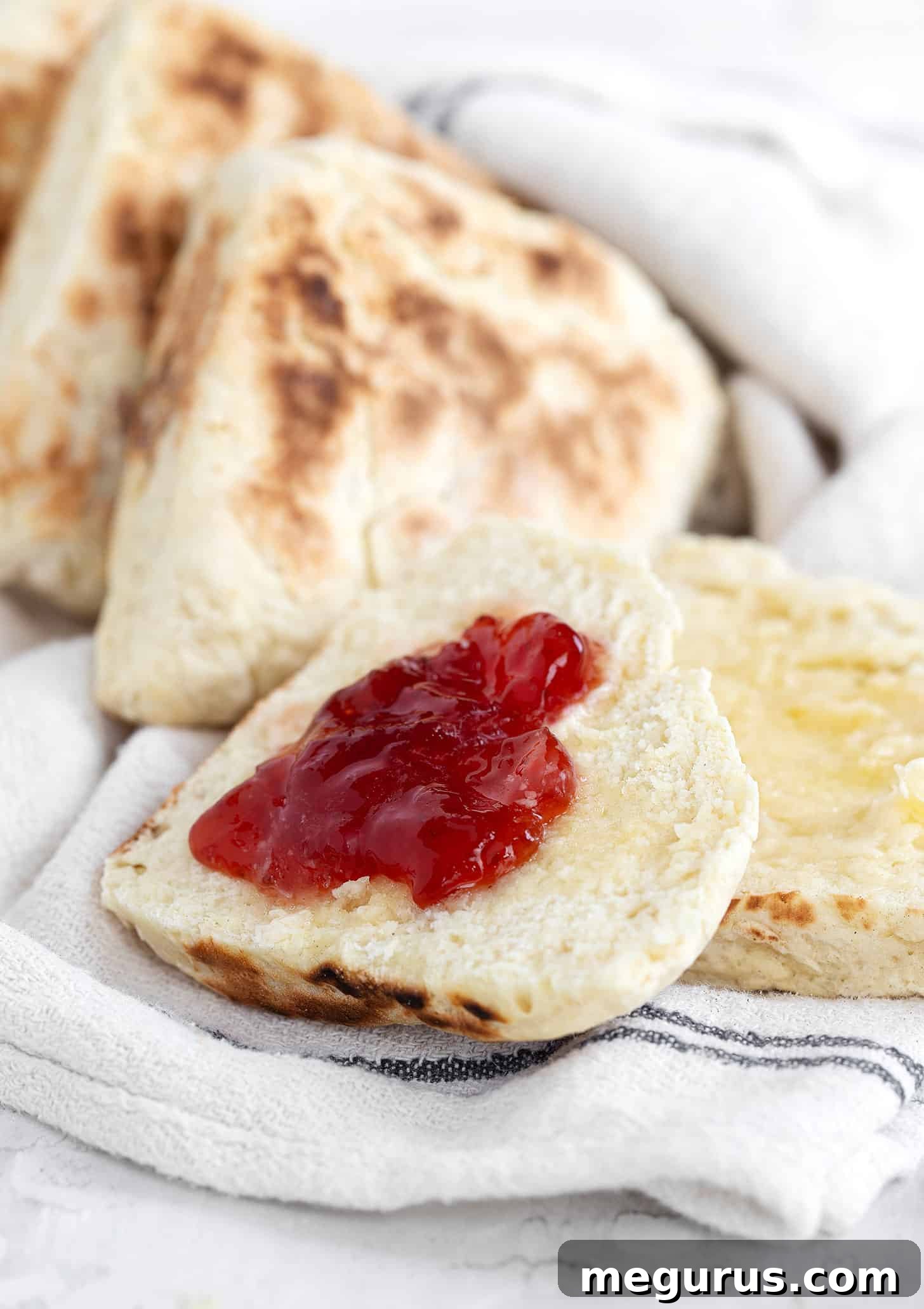
- Classic Butter and Jam: The simplest and often most satisfying way to enjoy farls. Split them warm, spread generously with creamy butter, and add a dollop of your favorite fruit jam or preserves. The contrast of the soft bread with sweet jam is heavenly.
- Toasted Perfection: For a delightful crunch, split your farls and lightly toast them. They become even more sturdy, perfect for holding any topping you desire, from avocado to cream cheese.
- Sweet Indulgence: Transform farls into a dessert by topping them with sweetened berries and a generous dollop of freshly whipped cream. A drizzle of honey or maple syrup can add an extra layer of sweetness.
- The Ultimate Breakfast Sandwich: Elevate your breakfast by using farls as the bread for a hearty sandwich. Fill them with crispy bacon, a fried egg, and perhaps a slice of cheese for a truly satisfying start to your day.
- Part of a Full Irish Feast: Embrace tradition by adding buttered, split farls to a classic Full Irish Breakfast or Northern Ireland’s “Ulster Fry.” This robust meal typically includes bacon, sausages, fried eggs, black pudding, and often potato farls or boxty. Soda farls are a fantastic addition, soaking up all the delicious flavors of the plate.
- Soup and Stew Dippers: Break apart warm farls and use them to dip into hearty soups and stews. Their absorbent texture and mild flavor make them an excellent accompaniment, adding substance to your meal.
- French Toast Farls: For a unique twist, dip split farls into a French toast custard (milk and eggs), then fry them until golden. Top with syrup, fruit, or powdered sugar for a delightful breakfast or brunch item.
Creative Soda Farl Variations
While the classic Irish Soda Farl is perfect on its own, its simple base makes it an excellent candidate for creative variations. Experiment with these ideas to find your new favorite twist:
- Hearty Wheaten Farls: For a nuttier flavor and added fiber, make Wheaten Farls by substituting half of the all-purpose flour with whole wheat flour. Be aware that whole wheat flour tends to absorb more liquid, so you will likely need to increase the buttermilk or water slightly to achieve the desired dough consistency.
- Sweetened Delights: Transform your farls into a sweet treat perfect for afternoon tea. Add a tablespoon of sugar to the dry ingredients, a splash of vanilla extract to the buttermilk, and fold in some dried currants or golden raisins. These additions make for a lovely, lightly sweetened bread.
- Savory Sensations: For a savory farl that pairs wonderfully with meals or as a cheese course accompaniment, incorporate some shredded sharp cheddar cheese and a pinch of dry mustard powder into the dough. Other savory additions like chopped chives or finely diced red onion can also be delightful.
- Herbs, Spices, and Seeds: Infuse your farls with extra flavor and texture. Try adding a teaspoon of dried herbs like rosemary or thyme, a pinch of black pepper, or a tablespoon of seeds such as poppy seeds or caraway seeds. These simple additions can dramatically change the character of your farls.
Making Ahead, Storing, and Freezing
Irish Soda Farls are truly at their best when enjoyed freshly cooked and warm, straight from the skillet. Their tender crumb and subtle tang are most pronounced immediately after preparation. However, they can be conveniently made ahead of time and easily re-warmed, making them a practical option for busy mornings or meal prepping.
- Storing at Room Temperature: Once cooled completely, transfer the farls to an airtight container. They will remain fresh and delicious at room temperature for approximately 2 days. For optimal softness, you can also store them wrapped tightly in a clean tea towel and then placed in a sealed bag or container.
-
Re-warming: To bring cooled farls back to their warm, tender glory, you have a few options:
- Oven Method: Wrap the farls loosely in aluminum foil and place them in a preheated oven at 350°F (175°C) for about 5-10 minutes, or until thoroughly warmed through. The foil helps to retain moisture.
- Toasting Method: Split the farls in half and toast them in a toaster, toaster oven, or under a broiler until golden brown and heated through. This method adds a lovely crispness.
- Microwave Method: For a quick reheat, place a single farl in the microwave for 15-30 seconds. Be careful not to overheat, as this can make them chewy.
- Freezing for Later: Soda farls freeze exceptionally well, allowing you to enjoy a taste of Ireland whenever the craving strikes. Once completely cooled, wrap each farl individually in plastic wrap, then place them together in a freezer-safe bag or airtight container. They can be stored in the freezer for up to 3 months. When ready to enjoy, thaw them at room temperature or re-warm directly from frozen using the oven or toaster method (you may need a slightly longer heating time for frozen farls).
Get the Recipe: Irish Soda Farls
Easy and delicious, these Irish soda farls are cooked in a dry skillet, then split and served with butter and jam or try them for a breakfast sandwich!
Pin This
Leave a Review
- Prep Time:
- 5 mins
- Cook Time:
- 10 mins
- Total Time:
- 15 mins
- Yield:
- 4 farls
Ingredients
- 2 cups (250 g) all-purpose flour, spooned and leveled
- 1/2 teaspoon baking soda, slightly rounded in the measure
- 1/2 teaspoon fine table salt, slightly rounded in the measure
- 3/4 cup + 1 Tablespoon (190 ml) buttermilk, well-shaken (*See Note 1 below for homemade buttermilk)
- 2 Tablespoons water, to use only as needed
Equipment
- Cast Iron skillet (or a flat griddle or other heavy skillet at least 8-inches bottom diameter)
- Clean tea towel
Instructions
- Add the flour to a mixing bowl. Add the baking soda and salt, then use a whisk to combine them well. Pour the buttermilk into the bowl and use a wooden spoon to stir, moistening as much of the flour as possible. If there’s still some dry flour, drizzle a bit of water around the edges and stir again. Your aim is an evenly moistened, not sticky dough.
- Transfer the dough to a lightly floured work surface. Lightly flour the top of the dough, then gently form it into a ball. Use the palm of your hand to pat the dough out into an evenly thick 8-inch diameter circle (flour your hands if the dough starts to stick). Use a sharp knife to cut the dough circle into 4 quarters. Tip: If your skillet is larger than 8 inches in bottom diameter, you can roll the dough slightly larger (around 9 inches). This will make thinner farls that may cook a little more quickly.
- Heat a cast iron skillet (or similar heavy-bottomed skillet) over medium heat on the stovetop. Once warm, REDUCE THE HEAT UNDER THE SKILLET TO MEDIUM-LOW and sprinkle with a bit of flour. Carefully transfer the dough quarters into the skillet. Allow the farls to cook undisturbed over medium-low heat for 4 minutes. Tip: Peek at the underside after a couple of minutes. If they are browning too quickly, reduce the heat under the pan slightly.
- After 4 minutes, flip the farls onto the other side and cook that side for another 4 minutes. Tip: It’s often easiest to remove one farl to a plate, then flip the other 3 in the pan, and then return the first farl to the pan. Consider reducing the heat slightly after flipping, as the pan retains heat well, preventing the second side from over-browning.
- Once both flat sides are browned, stand the farls on one of their cut edges to cook for 1 minute. Then, adjust them to place the other cut edge down and brown for another 1 minute.
- Remove the farls to a clean tea towel and wrap them securely. This step keeps the farls soft and warm. Allow them to stand for at least 10 minutes before slicing in half and enjoying warm. The farls will stay warm in the tea towel for quite some time. Once fully cooled, transfer them to an airtight container.
- Farls will keep for about 2 days at room temperature. Re-warm in the microwave, by toasting, or by wrapping in foil and placing in a 350°F (175°C) oven for 5-7 minutes, or until warmed through. Farls also freeze well; wrap tightly and freeze for up to 3 months.
Notes
Note 1: Real buttermilk is highly recommended! For a quick substitute, mix 2 teaspoons of lemon juice or white vinegar with 3/4 cup of regular milk. Let it stand for 10 minutes before using.
Making soda farls is very much like making biscuits. The amount of liquid needed to get the right consistency will vary from kitchen to kitchen, so be sure to add the water in small increments, adding just as much as is needed to bring the dough together.
Adjust the heat under the skillet as needed to prevent the outside from browning too quickly. We want the outside to be browned eventually, but it needs to happen slowly enough so that the inside will cook through. The farls will need to cook for 4 minutes on each side and 1 minute on each of the two cut edges.
Cooking times shown assume using a cast iron skillet, which retains heat very well. If you are using a thinner or lighter skillet, cooking time may vary.
How to serve soda farls
- Split and enjoy Irish soda farls warm with butter or add a bit of jam.
- Split and toast to enjoy with your favourite topping.
- Top the farls with jam or sweetened berries and whipped cream.
- Split and enjoy your farls for a bacon and egg breakfast sandwich.
- Split and butter and add to a breakfast plate, such as the traditional Full Irish breakfast or Northern Ireland’s “Ulster Fry”. This breakfast includes bacon, sausage, fried eggs and black pudding, soda bread or farls and often potatoes, either in the form of potato farls or boxty.
- Break apart and use for dipping in soups and stews.
- Split and dip in French toast custard (milk and eggs) then fry and top with your favourite toppings.
- Cuisine:
- Irish
- Course:
- Bread
- Author:
- Jennifer Maloney
Nutrition Facts (per farl)
- Serving: 1 farl
- Calories: 257 kcal
- Carbohydrates: 50 g
- Protein: 8 g
- Fat: 2 g
- Saturated Fat: 1 g
- Polyunsaturated Fat: 0.4 g
- Monounsaturated Fat: 0.5 g
- Cholesterol: 5 mg
- Sodium: 480 mg
- Potassium: 132 mg
- Fiber: 2 g
- Sugar: 3 g
- Vitamin A: 79 IU
- Calcium: 65 mg
- Iron: 3 mg