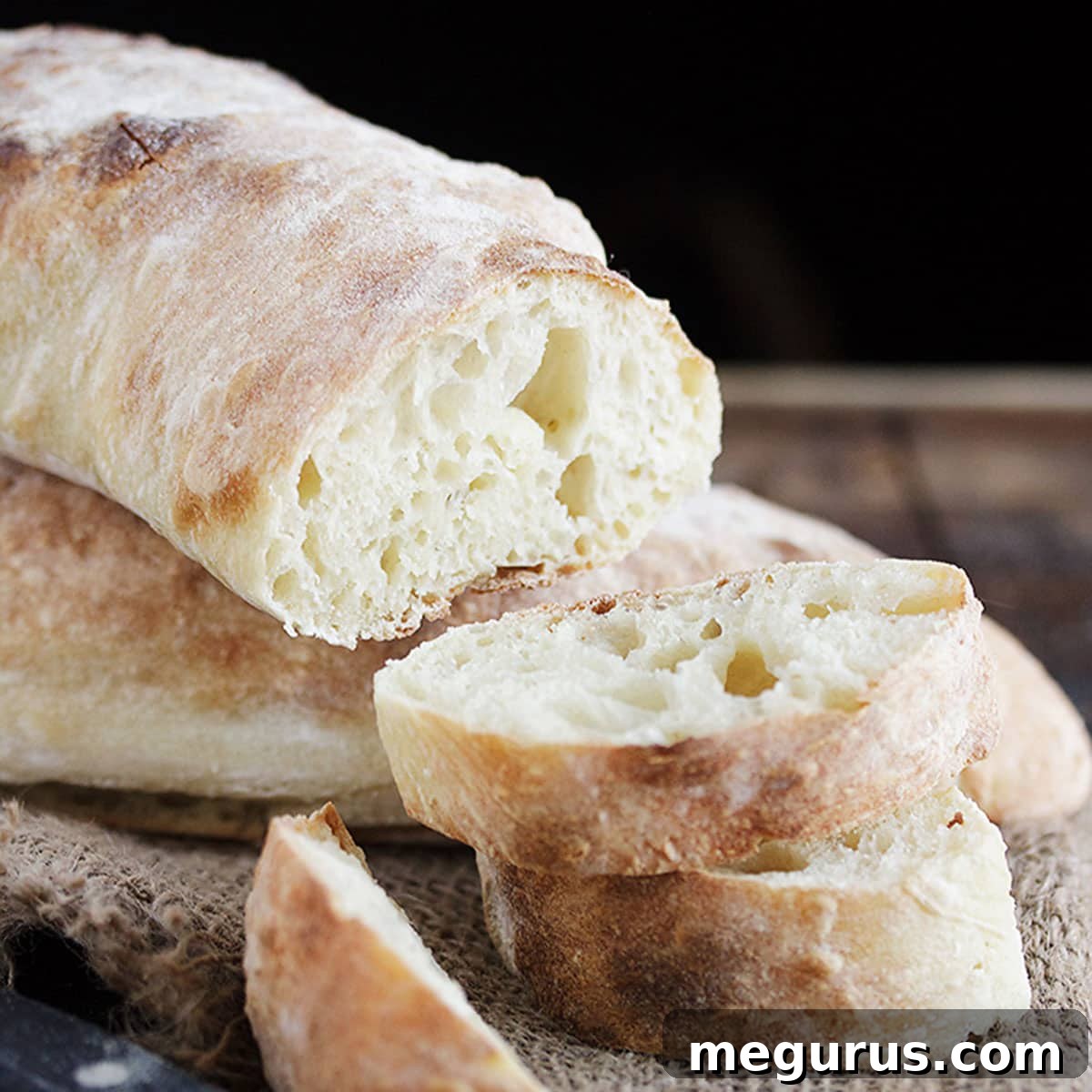
Mastering Homemade Ciabatta Bread: An Easy Recipe for Artisan Perfection
Imagine the irresistible aroma of freshly baked bread filling your kitchen, followed by the delightful crunch of a perfectly golden crust giving way to an unbelievably light and airy interior. That’s the magic of homemade ciabatta bread, and it’s far more achievable than you might believe! This comprehensive ciabatta recipe is designed to guide even first-time artisan bakers through the process, promising a reward that’s truly worth every moment.
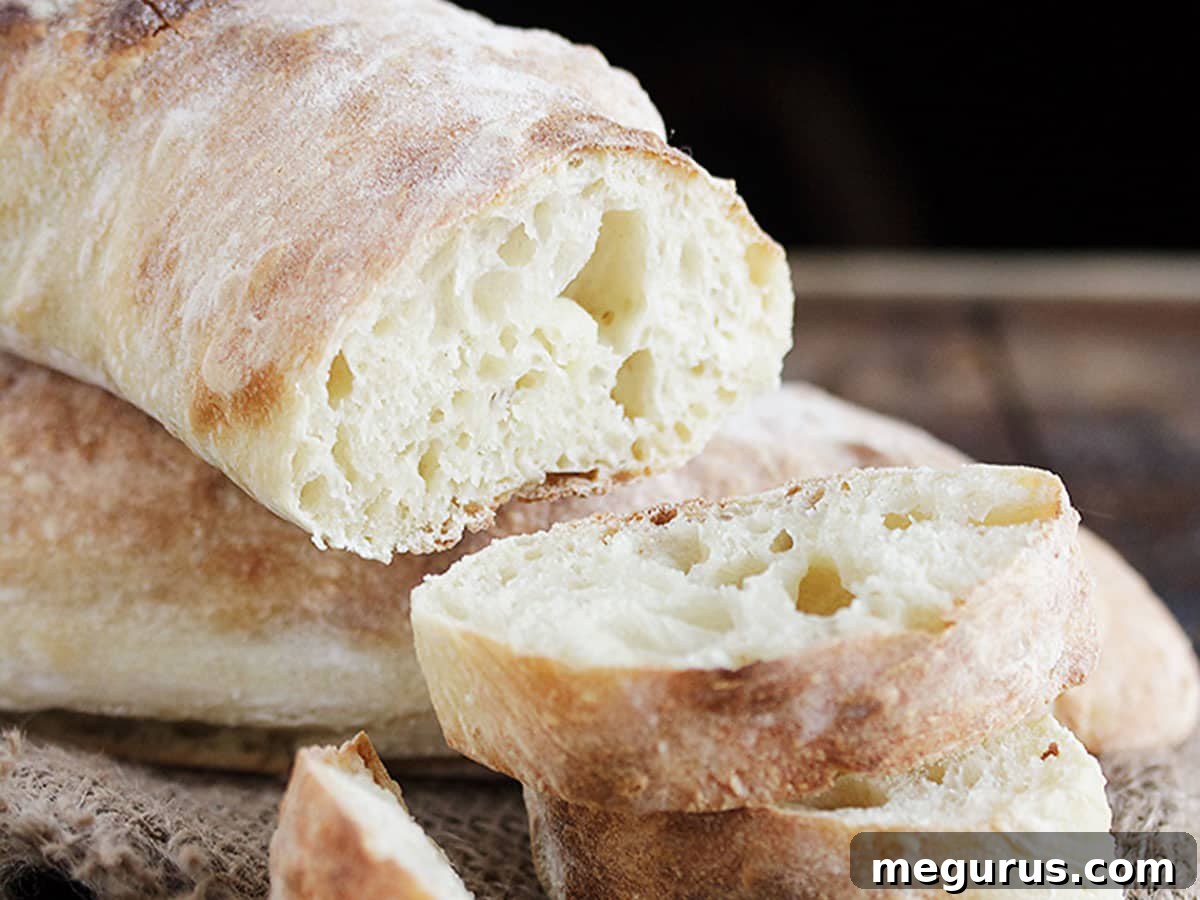
For many of us, weekends offer the perfect opportunity to dive into more involved culinary adventures. In that spirit, I’m thrilled to share this fantastic recipe for making truly exceptional ciabatta bread. While it might seem intimidating, often associated with skilled boulangeries, the truth is, crafting this Italian classic at home is not nearly as difficult as it appears. With a little patience and the right technique, you can produce loaves that rival those from your favorite artisan bakery.
It’s important to set expectations: ciabatta is somewhat unique in its dough consistency and method. If this is your very first foray into bread making, it might be a steeper learning curve than a simple sandwich loaf. However, “different” doesn’t mean “hard.” It simply means understanding the specific characteristics of this wet, sticky dough, which is the secret to its signature open, irregular crumb and chewy texture. Embrace the wetness, and you’ll be well on your way to ciabatta success!
What is Ciabatta Bread?
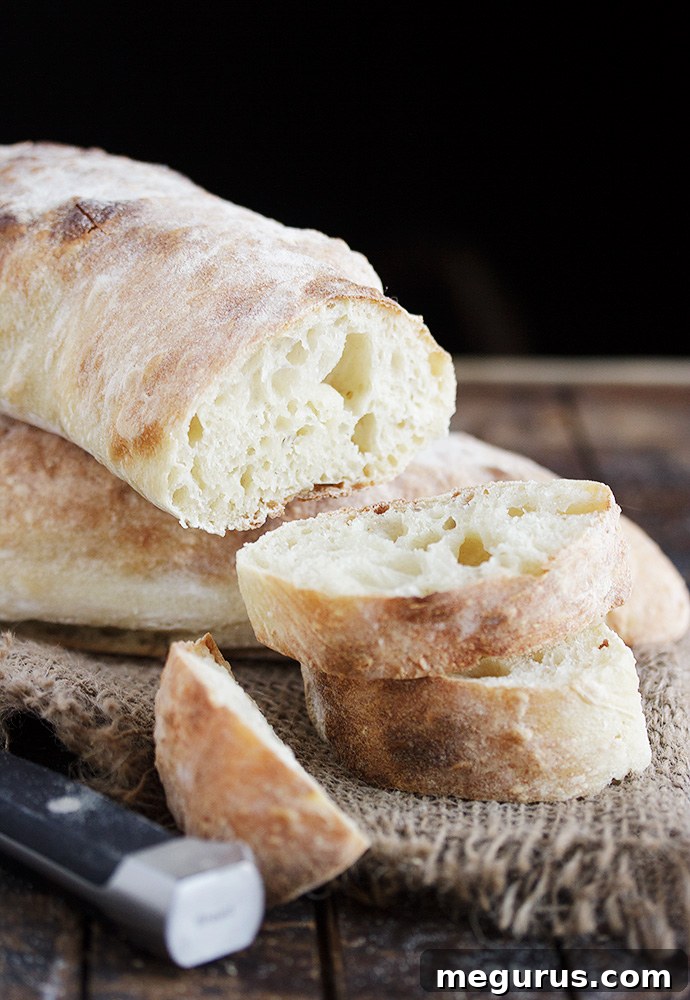
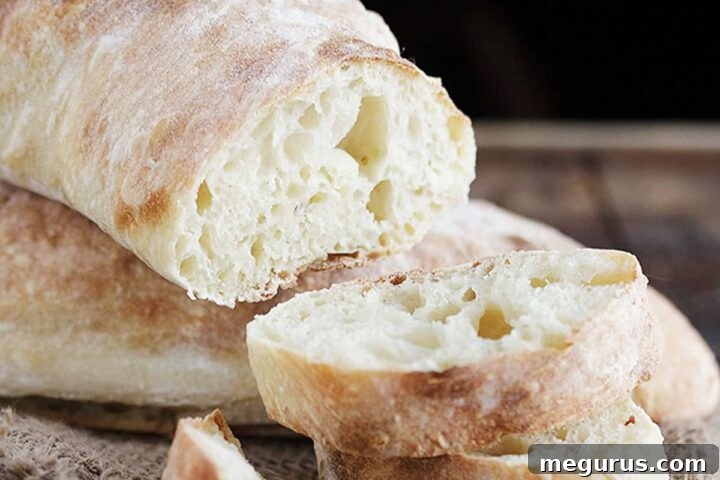
Ciabatta, meaning “slipper” in Italian, gets its name from its distinctive flattened, elongated shape. Originating in Italy in the early 1980s, it was created as an alternative to the popular French baguette. Unlike many traditional breads, ciabatta is characterized by its highly hydrated dough, which results in a wonderfully airy texture with large, irregular holes (the “open crumb”) and a remarkably crisp, golden-brown crust. Its slightly tangy flavor and satisfying chew make it a versatile bread, perfect for sandwiches, dipping in olive oil, or accompanying a wide range of meals.
Why Bake Ciabatta at Home?
- Unmatched Freshness: There’s nothing quite like bread straight from your own oven. The aroma, the warmth, the perfect crust – it’s an experience store-bought bread simply can’t replicate.
- Superior Flavor and Texture: Homemade ciabatta allows you to control the quality of ingredients, resulting in a deeper flavor profile and the ideal chewy interior and crisp exterior.
- A Rewarding Experience: Baking bread, especially an artisan loaf like ciabatta, is incredibly satisfying. Watching simple ingredients transform into something so delicious is a true joy.
- Cost-Effective: While specialized tools can be an initial investment, the cost per loaf of homemade ciabatta is significantly less than buying it from a bakery.
- Customization: Once you master the basic recipe, you can experiment with additions like herbs, olives, or sun-dried tomatoes to create your own unique ciabatta variations.
Essential Ingredients for Ciabatta Perfection
The beauty of ciabatta lies in its simplicity, using just a few core ingredients. However, the quality and type of these ingredients play a crucial role in the final outcome.
Flour
Bread Flour is highly recommended for ciabatta. It has a higher protein content (typically 12-14%) compared to all-purpose flour, which means it develops more gluten. This strong gluten network is essential for trapping the gases produced by the yeast, creating those characteristic large, open holes and providing the bread’s signature chewiness and structure. While All-Purpose Flour (around 10-12% protein) can technically be used, you might find the texture slightly less chewy and the crumb less open. If opting for all-purpose flour, be prepared to adjust the hydration slightly, as it may absorb less water.
Yeast
I personally find SAF Instant Yeast to be incredibly reliable and efficient for all my yeast baking projects, and I highly recommend it. It’s designed to be added directly to dry ingredients without prior proofing, making the process very straightforward. Active Dry Yeast will also work perfectly fine; just ensure it’s fresh and active. If using active dry yeast, you might prefer to proof it in a small amount of the recipe’s water (lukewarm, about 105-115°F or 40-46°C) for 5-10 minutes until foamy before adding it to the rest of the ingredients. This confirms its viability.
Water
Water is the most abundant ingredient in ciabatta dough, contributing to its high hydration. Using water at room temperature is generally best for the starter and main dough, as it helps maintain a consistent dough temperature throughout the fermentation process. Avoid using cold water, which can slow down yeast activity, or hot water, which can kill the yeast. The precise amount of water is crucial for ciabatta’s characteristic texture, so resist the urge to add more flour unless absolutely necessary to handle the stickiness, as outlined in the steps below.
Salt
Salt isn’t just for flavor; it also plays an important role in controlling yeast activity and strengthening the gluten structure. Too little salt can lead to an over-proofed, bland loaf, while too much can inhibit yeast and result in a dense crumb. Always use non-iodized salt for baking, such as fine sea salt or kosher salt, as iodine can sometimes interfere with yeast.
The Journey to Perfect Homemade Ciabatta: An Overview
Making ciabatta involves a two-stage process: first, creating an overnight yeast starter (often called a biga or poolish for artisan breads), and then incorporating this starter into the final dough. This approach develops deep flavor and contributes significantly to the open crumb structure.
1. The Overnight Yeast Starter Dough (Biga/Poolish)
This bread begins with a yeast “starter” dough, a preferment that develops complex flavors and active yeast cells over an extended period. I typically mix this up quickly before heading to bed. It then bubbles away on the counter overnight, giving the yeast ample time to work its magic. By the next morning, your starter will be bubbly and aromatic, ready to impart incredible depth to your final ciabatta loaves. This step is crucial for the unique flavor and texture of ciabatta, so don’t skip it!
2. Making the Ciabatta Dough: Embrace the Wetness
Once you begin mixing the main ciabatta dough, you’ll immediately notice its exceptionally wet, loose consistency. It will resemble more of a thick batter than a traditional bread dough. This is exactly what you want! Resist the strong urge to add more flour at this point. The secret to ciabatta’s signature large, irregular holes and light texture is this high hydration. Adding excessive flour will only defeat this purpose, leading to a denser crumb and a less authentic ciabatta.
A key principle for ciabatta: this is not a bread dough that will ever be kneadable in the conventional sense! You won’t be shaping it like a baguette or a boule with vigorous kneading.
That said, a small amount of additional flour will be necessary during the handling stages. Baking purists often suggest flouring your hands generously or even wetting them to manage the extremely sticky dough. While this is excellent advice for experienced bakers comfortable with very wet doughs, for the rest of us, a light sprinkling of flour here and there on your work surface and hands can be an absolute sanity saver. The goal is to make the dough manageable, not stiff.
Even as you progress with the dough, it will maintain its jiggly, somewhat amorphous quality, appearing to barely hold its shape. Again, trust the process. Add only enough flour to prevent extreme stickiness and to allow for the gentle folding that develops the gluten structure without kneading.
Top Tips for Ciabatta Baking Success
Ciabatta baking, while not difficult, benefits greatly from a few key techniques and tools:
- Invest in a Silicone Bowl Scraper: I cannot recommend the use of a silicone bowl scraper enough when dealing with this wet dough. It’s truly worth picking one up for this bread—it’s an absolute sanity saver! Its flexible edge allows you to efficiently scrape down the sides of the bowl and handle the sticky dough with minimal mess.
- Bench Scraper (Metal or Silicone): A metal bench scraper, lightly sprayed with cooking oil, is also an invaluable tool, especially for shaping and transferring the dough. If you don’t have one, a large silicone spatula would be my next choice. These tools enable you to work with the high-hydration dough effectively without having to constantly touch it with your hands, which is a significant advantage when battling stickiness.
- The Folding Technique: Instead of traditional kneading, ciabatta dough relies on a series of “stretch and folds.” This gentle method helps develop gluten while maintaining the open structure. Over a few repetitions, you’ll notice the dough gaining strength and elasticity.
- Proper Proofing: Give your dough ample time to rise in a warm, draft-free environment. Visual cues, like the dough becoming puffy and nearly doubled in size, are more important than strict timings.
- Flour Your Surface Liberally (But Don’t Incorporate Too Much): When turning out and shaping the dough, dust your work surface generously with flour. This prevents sticking. However, try not to work this flour into the dough itself, as it can stiffen the final product.
- High Oven Temperature: Ciabatta bakes best at high temperatures (around 475°F or 245°C). This high heat helps create a beautifully crisp crust and ensures a rapid rise, contributing to the open crumb.
- Consider Steam: For a truly professional crust, some bakers introduce steam into their oven during the first few minutes of baking. This can be done by placing a shallow pan of hot water on the bottom rack or by spritzing the oven walls with water. (This recipe doesn’t explicitly call for it, but it’s an advanced tip!)
- Don’t Overbake: Bake until the crust is deep golden brown and sounds hollow when tapped, or an internal thermometer reads over 200°F (93°C). Overbaking can lead to a dry loaf.
Storing and Freezing Homemade Ciabatta
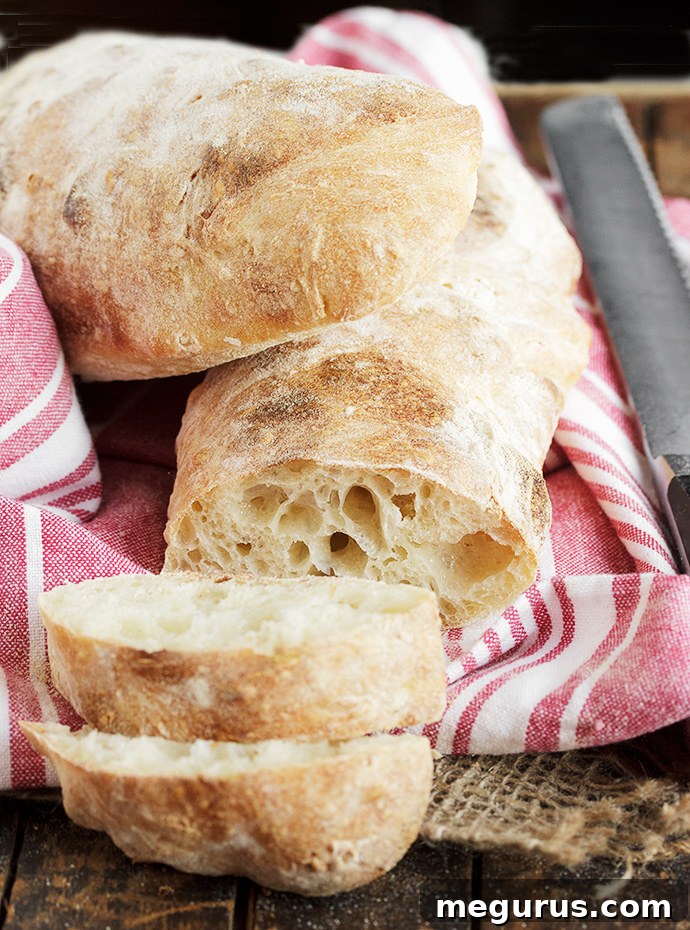
Once baked and cooled, ciabatta is best enjoyed fresh. However, if you have leftovers, store baked bread in an airtight container or a bread bag at room temperature for a couple of days. For longer storage, ciabatta freezes exceptionally well. Allow the bread to cool completely, then wrap it tightly in plastic wrap and then in aluminum foil before freezing for up to 2-3 months. To enjoy, thaw at room temperature and refresh in a hot oven (around 350°F or 175°C) for 5-10 minutes to revive its crustiness.
Get the Recipe: Homemade Ciabatta Bread
Pin This
Leave a Review
Ingredients
Yeast Starter Dough: (Start 8-12 hours ahead – the night before works perfectly)
- 1/2 teaspoon active dry yeast or instant yeast
- 3/4 cup (177 ml) water, at room temperature
- 1 cup (125 g) bread or all-purpose flour, bread flour recommended
Ciabatta Dough:
- 1/2 teaspoon active dry yeast or instant yeast
- 3/4 cup (177 ml) water, at room temperature
- All of the Yeast Starter Dough From above, plus the following:
- 2 cups (250 g) bread or all-purpose flour, bread flour recommended
- 1 1/2 teaspoons salt
Instructions
-
This bread dough is very moist and loose, but only use as much additional flour as you need to be able to handle it without it sticking. Be sure to start your starter dough 8-12 hours ahead of when you want to make your bread.
-
For the Yeast Starter Dough: Combine all ingredients in a 1-quart (4-cup) bowl and stir well. Cover with plastic wrap and allow to sit at room temperature for 8-12 hours (overnight works perfectly).
-
For the Ciabatta Dough: In a large bowl or the bowl of a stand mixer fitted with a paddle attachment, stir the yeast into the water. Add all of the Yeast Starter Dough that you made earlier and has been sitting. Mix briefly. Add the flour and salt and mix to combine. Beat on medium-low for 3 minutes. Stop the mixer and let dough rest for 10 minutes. Beat again on medium-low for 3 minutes. Stop again and let dough rest for 10 minutes.
-
Remove dough to a lightly oiled bowl large enough to hold double the amount of dough. Cover the bowl with plastic wrap and let the dough rest until it starts to puff up, about 30-45 minutes.
-
Using a silicone bowl scraper or spatula, scrape the dough onto a well-floured work surface. Have a cup of flour handy to use. Sprinkle the top of the dough with some flour. Using your silicone bowl scraper, scoop up one edge of the dough and fold it over the top of the dough to reach the middle. Scoop up the opposite edge and scoop it up to cover the fold you just made. Add some more flour to your board and the top of the dough (just enough to control stickiness). Let dough rest for 15 minutes and then repeat this same folding. Let rest another 15 minutes.
-
Line a baking sheet with parchment paper. Sprinkle the parchment paper with flour. Roughly shape the dough into an 8×8-inch square. Using a sharp knife, cut your dough into two 4×8-inch rectangles. Gently transfer to the parchment-lined baking sheet by using a bench scraper positioned underneath the rectangles to support it. Flour the top of the dough then cover with a tea towel and allow to rise until puffy, about 30 minutes.
-
Meanwhile, preheat oven to 475° F. (regular bake setting/not fan assisted)
-
Bake in the preheated oven for 20-25 minutes, or until deep golden brown and the internal temperature is over 200°. Transfer to a cooling rack to cool.
Notes
Frequently Asked Questions About Ciabatta
- Can I make ciabatta without a stand mixer?
- Yes, you absolutely can! It will require more manual folding and mixing, but the result can be just as good. You’ll need a large bowl and a sturdy spatula or a silicone scraper. Embrace the stickiness and the “stretch and fold” technique, repeating the folds every 15-20 minutes over 1.5-2 hours until the dough develops some elasticity.
- What is the difference between instant yeast and active dry yeast in this recipe?
- Instant yeast can be mixed directly with the dry ingredients. Active dry yeast typically needs to be dissolved and proofed in a small amount of warm water (from the recipe’s total water) for 5-10 minutes until foamy before being added to the other ingredients. Both work well, but instant yeast offers a slight convenience.
- Why is my ciabatta dense and not airy?
- A dense ciabatta often indicates one of two common issues: either too much flour was added during the mixing or handling stages, reducing the dough’s hydration, or the dough was not allowed enough time to properly proof. Ensure you maintain the wetness of the dough and allow it to rise until visibly puffy and expanded.
- How do I get those big holes in ciabatta?
- The large, irregular holes (open crumb) are a hallmark of ciabatta and are achieved through a high hydration dough, proper gluten development (via folding, not kneading), and sufficient proofing. Avoiding excessive handling and flour during shaping also helps preserve the air pockets.
- Can I add inclusions like olives or herbs to my ciabatta?
- Absolutely! Once you’re comfortable with the basic recipe, you can gently fold in additions like pitted olives, chopped fresh rosemary, sun-dried tomatoes, or garlic powder during the final folding stage before the last rest. Just be careful not to overwork the dough.
More Artisanal Bread Recipes to Love!
If you’ve enjoyed the rewarding experience of baking this ciabatta, you might be ready to explore other delightful bread recipes. Expanding your bread-baking repertoire is a fantastic way to bring more warmth and deliciousness into your home. Here are a few more bread creations that we think you’ll truly enjoy: