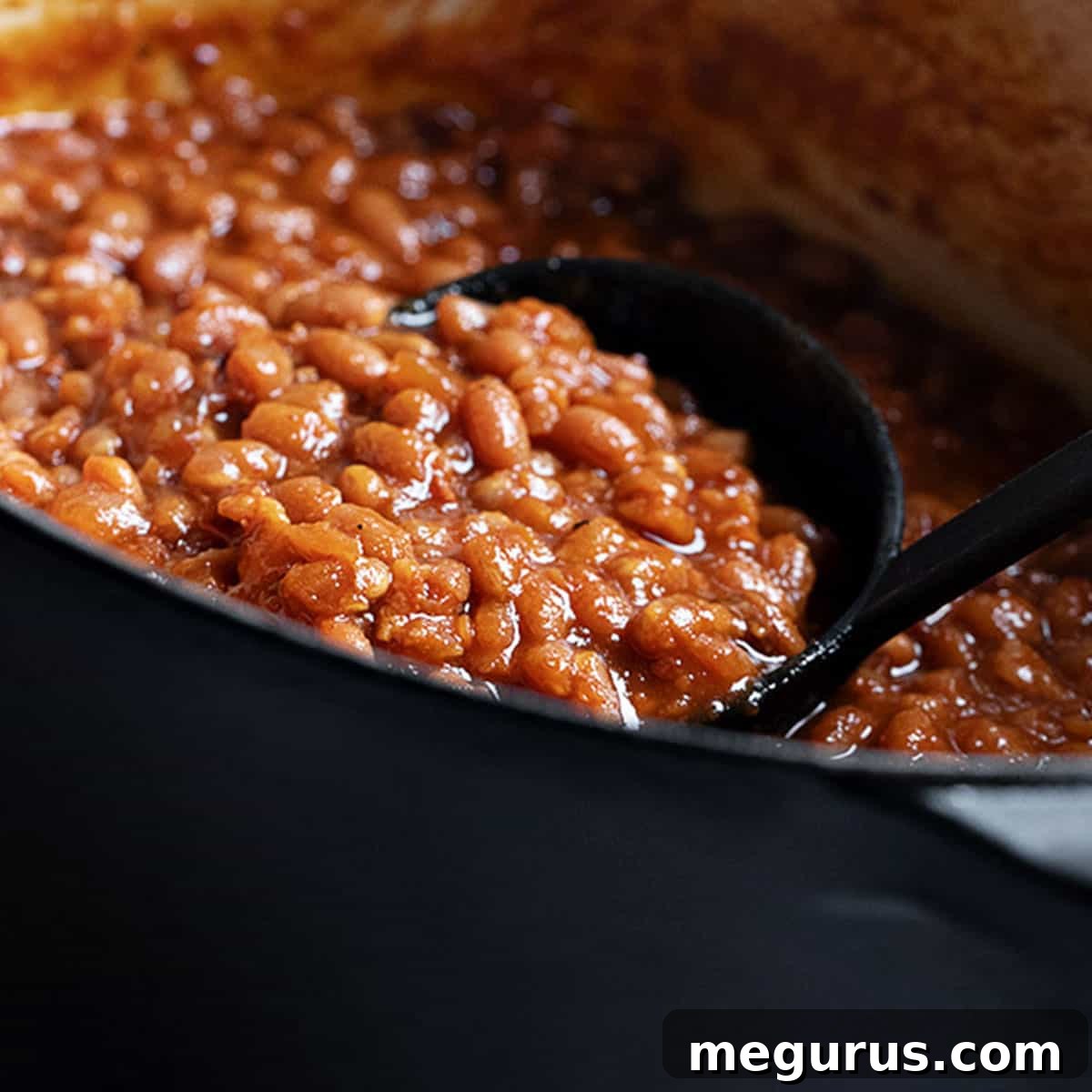
Classic Boston-style baked beans, made from dried beans, flavored with molasses and cooked low and slow with bacon and onion.
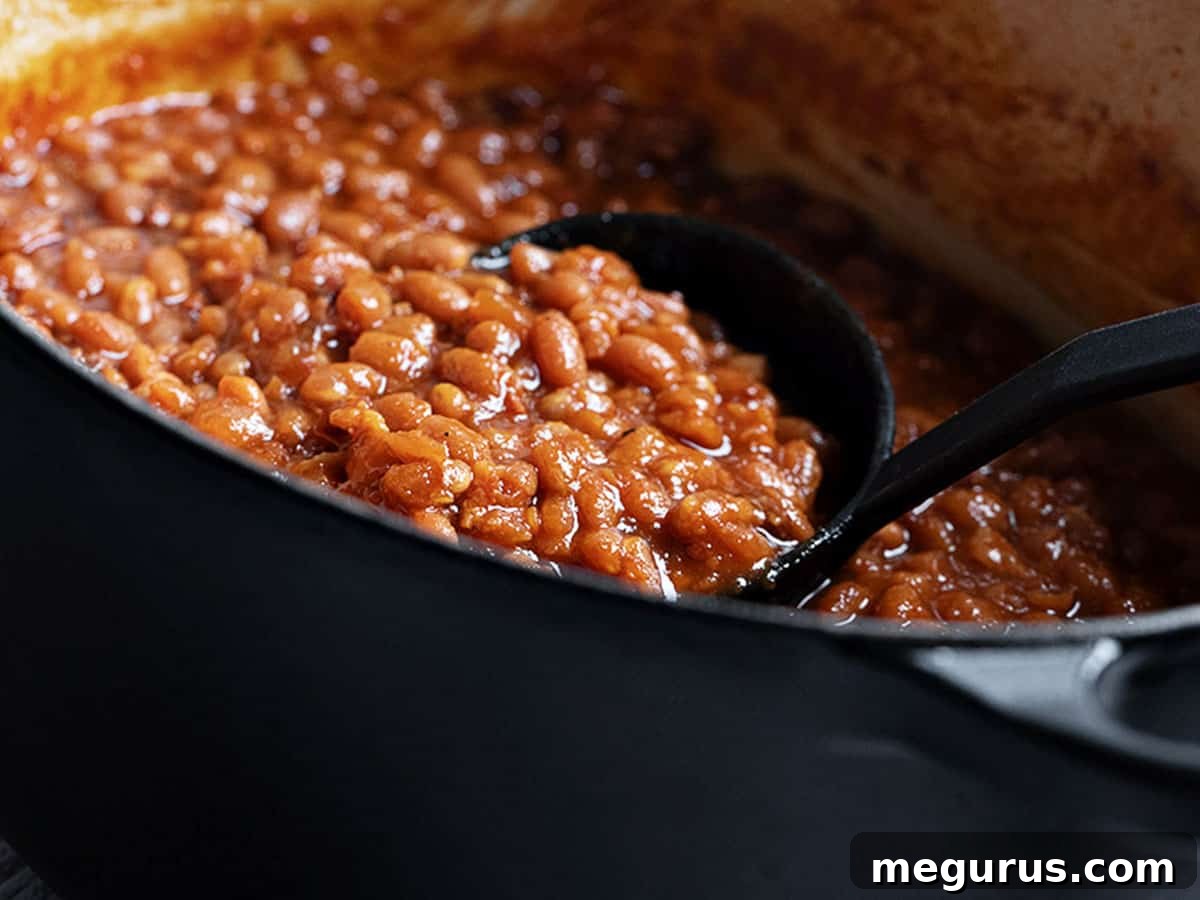
There’s an undeniable charm and depth of flavor that comes from preparing baked beans entirely from scratch. While convenient canned versions fill supermarket shelves, embarking on the journey of homemade baked beans is a truly rewarding culinary experience. This classic recipe requires two fundamental elements: good quality dried beans and a generous allowance of time for their transformation into a rich, comforting dish. For many of us who are spending more time at home and rediscovering the joys of traditional cooking, there has never been a more opportune moment to master this timeless homemade baked beans recipe.
These authentic Boston-style baked beans are meticulously flavored with rich, dark molasses and slowly simmered for hours with savory bacon and sweet, caramelized onions. The result is a profoundly satisfying dish that, despite its lengthy cooking time, is surprisingly straightforward to prepare. They are incredibly versatile, serving as a perfect side dish for any occasion – from a cozy family dinner to an elaborate Easter feast alongside your holiday ham, or as the quintessential accompaniment to your vibrant summer BBQ spread. Get ready to elevate your cooking and impress everyone with the irresistible taste of genuinely homemade baked beans.
Why Choose Homemade Baked Beans? The Unrivaled Flavor of From-Scratch Cooking
Opting to make baked beans from scratch rather than reaching for a can offers a multitude of benefits, primarily centered around superior taste, texture, and complete control over your ingredients. Canned baked beans, while undeniably convenient, often contain high levels of sodium, excessive sugar, and sometimes artificial flavors or preservatives that can detract from the natural goodness of the beans. When you craft your own batch of homemade Boston baked beans, you dictate every component, ensuring a fresh, wholesome, and incredibly flavorful outcome.
The “low and slow” cooking method, which is the cornerstone of this traditional Boston baked beans recipe, is crucial for unlocking the full potential of each ingredient. This extended, gentle heat allows the complex flavors of the molasses, bacon, onion, and spices to slowly meld and deepen. Over hours, the sauce caramelizes and thickens, thoroughly permeating the beans and transforming them into a tender, creamy delight that simply cannot be replicated by store-bought alternatives. The satisfaction derived from nurturing a dish from raw ingredients to a delicious, deeply flavored masterpiece is immense, and your discerning palate will undoubtedly appreciate the difference.
Essential Ingredients for Authentic Boston Baked Beans
Creating a truly exceptional batch of homemade baked beans begins with selecting the right high-quality ingredients. Here’s a comprehensive look at what you’ll need to prepare this iconic Boston-style dish:
- Dried Navy Beans (also known as Pea Beans): These small, white, oval-shaped beans are the traditional and ideal choice for classic Boston baked beans. Their delicate skin and creamy interior allow them to absorb the rich flavors of the sauce beautifully while maintaining their shape. For the best results, always use a fresh bag of dried beans, as older beans can sometimes be difficult to soften, even with prolonged soaking and simmering.
- Onion: A foundational aromatic, diced onion provides a crucial layer of savory sweetness. During the long cooking process, the onion slowly caramelizes and almost melts into the sauce, contributing a deep, mellow flavor that perfectly complements the beans and bacon.
- Bacon: Thick-cut, smoky bacon is a non-negotiable component for traditional baked beans, imparting a rich, salty, and umami depth that defines the classic flavor profile. The rendered bacon fat also adds a luxurious mouthfeel to the sauce. If you prefer to make a vegetarian version of these baked beans, simply omit the bacon altogether.
- Salt and Pepper: These fundamental seasonings are essential for balancing and enhancing all the other ingredients. We recommend starting with a conservative amount of salt, as the long cooking time can naturally concentrate the flavors, allowing for a final adjustment to taste at the end.
- Molasses – “Fancy” Molasses is Highly Recommended: This ingredient is the very heart and soul of Boston baked beans, responsible for their distinctive dark color, rich, earthy sweetness, and signature depth. “Fancy” molasses is a lighter, sweeter variety compared to blackstrap or cooking molasses. Consult our FAQ section below for suitable alternatives if you have different types of molasses or only dark brown sugar on hand.
- Dry Mustard Powder: Often considered a secret ingredient in many traditional recipes, dry mustard doesn’t make the beans taste overtly “mustardy.” Instead, it acts as a brilliant flavor enhancer and a natural emulsifier, adding a subtle tang and warmth that beautifully cuts through and balances the sweetness of the molasses and brown sugar.
- Light Brown Sugar: This provides an additional layer of sweetness and a delicate caramel note to the sauce. If you only possess dark brown sugar, you can use it, but remember it has a stronger molasses flavor, so a slight reduction in the added molasses might be beneficial (see FAQ for guidance).
- Ketchup: A dash of ketchup contributes a mild acidity, a hint of tomato flavor, and extra sweetness. It helps to round out the overall savory-sweet profile of the baked bean sauce, adding a familiar and comforting element.
- Boiling Water: Used to create the initial sauce mixture and, crucially, to maintain the optimal liquid levels throughout the extensive slow-baking process, ensuring the beans remain moist and cook evenly.
Step-by-Step Guide to Crafting the Best Homemade Baked Beans
Making homemade baked beans is a journey of patience and anticipation, resulting in a dish that is deeply rewarding. Follow these detailed instructions to achieve perfectly tender, richly flavored Boston baked beans:
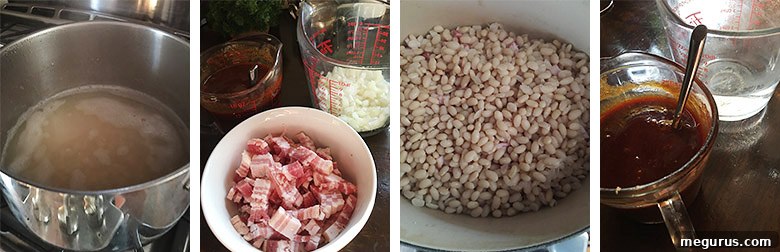
- Step 1: The Essential Overnight Soak and Gentle Simmer. Your preparation begins the night before you plan to bake. Place your dried navy beans in a large, uncovered pot or bowl. Cover them generously with cold water, ensuring there’s at least 2 inches of water above the beans. This overnight soak is crucial for rehydrating the beans thoroughly, which significantly reduces their cooking time and promotes an even, tender texture. The next morning, drain the soaked beans completely and transfer them to a clean, large pot. Cover the beans again with several inches of fresh cold water and bring the pot just to a rolling boil. Immediately reduce the heat to a low simmer—the water should barely bubble—to prevent the delicate bean skins from splitting. Continue simmering the beans gently for approximately 50-60 minutes, or until they are tender yet still hold their shape. It is absolutely vital to taste-test a few beans to confirm their tenderness before proceeding. Stir occasionally to prevent sticking and add more hot water if necessary to keep the beans fully submerged during this initial cooking phase.
- Step 2: Prepare Your Flavorful Sauce and Aromatics. While your beans are gently simmering, you can prepare the remaining components for your delicious baked beans. In a separate medium-sized bowl, thoroughly whisk together all the sauce ingredients: salt, pepper, Fancy molasses, dry mustard powder, light brown sugar, and ketchup until completely combined. Measure out your 1 1/2 cups of boiling water and set both the sauce mixture and water aside. Next, finely chop your onion and dice your bacon. Set these aside as well. Once your beans have reached the desired tenderness, drain them well and rinse them under cold water. This rinsing step is important as it halts the cooking process, ensuring your beans don’t become mushy during the long bake. Finally, preheat your oven to a low 275°F (135°C), preparing it for the slow and steady baking process.
- Step 3: Layering for Integrated Flavors. In a large, oven-safe pot with a tight-fitting lid (a sturdy Dutch oven is ideal due to its excellent heat retention), begin building the layers of flavor. Evenly scatter half of the diced bacon and half of the chopped onion across the bottom of the pot. This forms a savory base that will render its fat and caramelize during baking, infusing the entire dish. Next, carefully spoon half of your pre-cooked, drained beans over this bacon and onion layer. Follow with the remaining diced bacon and onion, ensuring they are evenly distributed. Finally, top with the rest of the cooked beans. This layering technique ensures that the rich bacon and sweet onion flavors are integrated throughout the dish, rather than just sitting on top.
- Step 4: Combine Sauce and Begin the Slow Bake. Carefully pour the prepared sauce mixture, which you combined with boiling water in Step 2, evenly over the layered beans in your pot. Use a fork to gently stir the contents, ensuring the sauce thoroughly permeates all the layers without mashing the delicate beans. If the liquid does not quite cover the beans, add a little more hot boiling water until the beans are just barely submerged. Securely place the lid on your pot and carefully transfer it to your preheated 275°F (135°C) oven. Set your kitchen timer for an initial 4-hour baking period. This low and slow beginning is crucial for the flavors to deeply meld and for the beans to continue softening and absorbing the rich sauce.
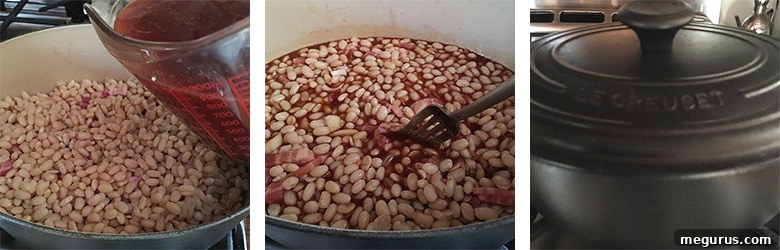
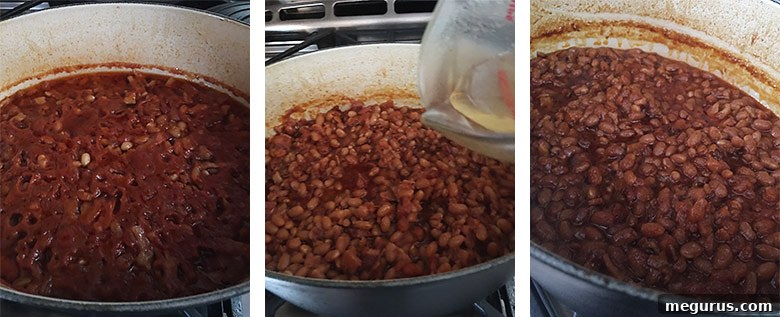
- Step 5: Monitoring Moisture and Stirring for Perfection. After the initial 4 hours of baking, gently remove the pot from the oven. Carefully lift the lid, being mindful of the steam. Gently stir the beans with a fork to redistribute the sauce and ensure even cooking. At this stage, your beans should still be quite saucy, with plenty of liquid visible. If the liquid has reduced significantly and the beans appear dry, add a small amount of additional hot water. The key is to maintain visible “puddles” of liquid on top of the beans at all times, rather than having them completely submerged, which could result in a thinner, less concentrated sauce. Return the pot to the oven, ensuring it is covered tightly. For the remaining 2 hours of cooking, continue to check the beans every 30 minutes, stirring gently and adding a small splash of hot water if needed, to maintain those crucial puddles on the surface. This diligent monitoring prevents the beans from drying out and allows the sauce to thicken perfectly.
- Step 6: Achieving the Ideal Sauce Consistency. After a total of 6 hours of patient, slow baking, your homemade Boston baked beans should be perfectly cooked, and the rich sauce should have achieved a beautiful, thick, and glossy consistency. Carefully remove the pot from the oven. For the sauce to fully settle and thicken further, let the beans stand, uncovered, for about 5 minutes, or covered for 10-15 minutes, allowing the residual heat to do its magic. In the rare event that your sauce appears too thin even after resting, you can easily remedy this. Simply transfer the pot to your stove-top and simmer it over very low heat for a short period, stirring frequently, until the sauce reduces to your desired thickness.
- Step 7: Final Seasoning Adjustment for Balanced Flavor. The ultimate step in perfecting your homemade baked beans is to taste them. The recipe intentionally begins with a conservative amount of salt, as the long cooking process concentrates flavors, including saltiness. This final tasting allows you to assess the balance of sweet, savory, and tangy notes. Add a touch more salt if you feel it’s necessary to truly round out and enhance all the wonderful, complex flavors. Serve warm and enjoy the fruits of your culinary labor!
Expert Tips for Making the Best Boston Baked Beans
Crafting exceptional homemade baked beans is a skill refined with a few key insights. Here are our top tips to ensure your Boston baked beans are always perfect:
- The Pre-Soak is Absolutely Essential: While some recipes tout “quick soak” methods, for truly tender, evenly cooked beans in this traditional recipe, an overnight cold water soak is highly recommended. It gently rehydrates the beans, promoting uniform cooking and preventing tough centers. Don’t skip this step for the best results.
- Ensure Beans Are Tender BEFORE Baking: This is arguably the most crucial tip! Before your beans even enter the oven, they must be tender from their stovetop simmer. Taste-test several beans to be absolutely certain they are soft, yielding, but not yet mushy. Many home cooks mistakenly believe the 6 hours in the oven will miraculously soften tough beans; however, if the beans go into the oven firm, they will likely remain that way, even after hours of baking. Do not hesitate to simmer them longer on the stovetop if needed; this initial tenderness is fundamental to the final dish’s success.
- Choose the Right Cooking Vessel: A heavy, oven-safe pot with a tight-fitting lid, such as a cast iron Dutch oven or a sturdy ceramic casserole dish, is ideal. These vessels distribute heat evenly and help maintain a consistent, low temperature throughout the long baking process, preventing the beans from drying out or scorching.
- Actively Monitor Liquid Levels: During the extended oven bake, it’s vital to keep a close eye on the liquid levels in your pot. You want the beans to remain moist and saucy, with small “puddles” of liquid visible on top, but not swimming in excess water. Adding small amounts of hot boiling water as needed, especially during the last two hours, prevents the beans from becoming dry and allows the sauce to thicken beautifully.
- Embrace the “Low and Slow” Philosophy: The unparalleled magic of authentic Boston baked beans lies in their deliberate “low and slow” cooking. This extended period in the oven is what develops the incredibly deep, complex, caramelized flavors and the wonderfully creamy, melt-in-your-mouth texture. Resist any temptation to increase the oven temperature or shorten the baking time; patience truly yields the most delicious rewards here.
- Adjust Seasoning at the Very End: Starting with a conservative amount of salt and making a final adjustment at the end is crucial. As the sauce slowly reduces and concentrates over hours, its saltiness will intensify. A final taste test before serving allows you to achieve that perfect, harmonious balance of sweet, savory, and tangy notes.
Frequently Asked Questions About Homemade Baked Beans
We understand that you might have several questions regarding the preparation, storage, and possible customizations of your homemade baked beans. Here are some common inquiries and detailed answers to guide you through your culinary journey:
- How long will homemade baked beans keep in the fridge?
- Leftover homemade baked beans, when stored properly in an airtight container, will keep beautifully in the refrigerator for 3-4 days. For the absolute best flavor and texture, we typically recommend enjoying them within approximately two days of preparation. Many people find that the flavors deepen and meld even more wonderfully on the second day.
- Can I freeze baked beans?
- Yes, absolutely! Baked beans are an excellent candidate for freezing. However, it is crucial to only freeze them once they are fully cooked and completely cooled. Transfer the cooled beans to freezer-safe containers or heavy-duty freezer bags, ensuring you leave a little headspace for expansion. They will maintain their quality in the freezer for 2-3 months. To reheat, thaw them overnight in the refrigerator, then gently warm them on the stovetop or in the oven, adding a splash of water or broth if the sauce appears too thick after thawing.
- Can I use Dark Brown Sugar instead of Light Brown Sugar?
- Yes, you certainly can. Dark brown sugar contains a higher percentage of molasses than light brown sugar, which contributes to its deeper color and more robust, slightly more caramel-like flavor. If you choose to use dark brown sugar, we advise slightly reducing the amount of additional Fancy molasses specified in the recipe. This precaution helps prevent the dish from becoming overly sweet or having an overpowering molasses flavor. You can always add a small amount more molasses at the very end if you feel it’s necessary to achieve your desired flavor balance.
- What about Cooking Molasses or Blackstrap Molasses?
- This recipe specifically calls for “Fancy” molasses because of its distinctively milder, sweeter flavor profile, which is characteristic of traditional Boston baked beans. If you only have blackstrap molasses available, it is generally best to seek out a baked bean recipe that has been specifically developed and tested for use with blackstrap. Blackstrap molasses has a very strong, intensely bitter, and much less sweet flavor compared to Fancy molasses, and using it in this recipe would likely result in a taste that is far too harsh and overwhelming for the delicate balance of these Boston-style beans. Similarly, “Cooking” molasses is a blend of Fancy and blackstrap, placing it somewhere in between in terms of flavor intensity. If you only have cooking molasses, you *could* attempt to reduce the amount of molasses by half and substitute the remaining half with an alternative sweetener like honey or maple syrup to achieve a similar sweetness and depth without the bitterness. However, please note that this specific substitution has not been personally tested with this recipe.
- Can I make these in a slow cooker or Instant Pot?
- While modern appliances like slow cookers and Instant Pots offer incredible convenience for many dishes, this classic Boston baked beans recipe is specifically formulated and optimized for the “low and slow” baking method in a conventional oven. The long, gentle, and dry heat of the oven allows for a gradual caramelization of the sugars and molasses, and a unique thickening of the sauce that is very difficult to replicate in the moister environment of a slow cooker, and impossible to achieve with the pressure-cooking speed of an Instant Pot. If your preference is to use a slow cooker or Instant Pot, we strongly recommend seeking out a recipe that has been specifically developed and tested for those appliances, as the ingredient ratios, liquid amounts, and cooking times will require significant adjustments to achieve a comparable result. This particular recipe truly shines and develops its authentic character when baked slowly in the oven.
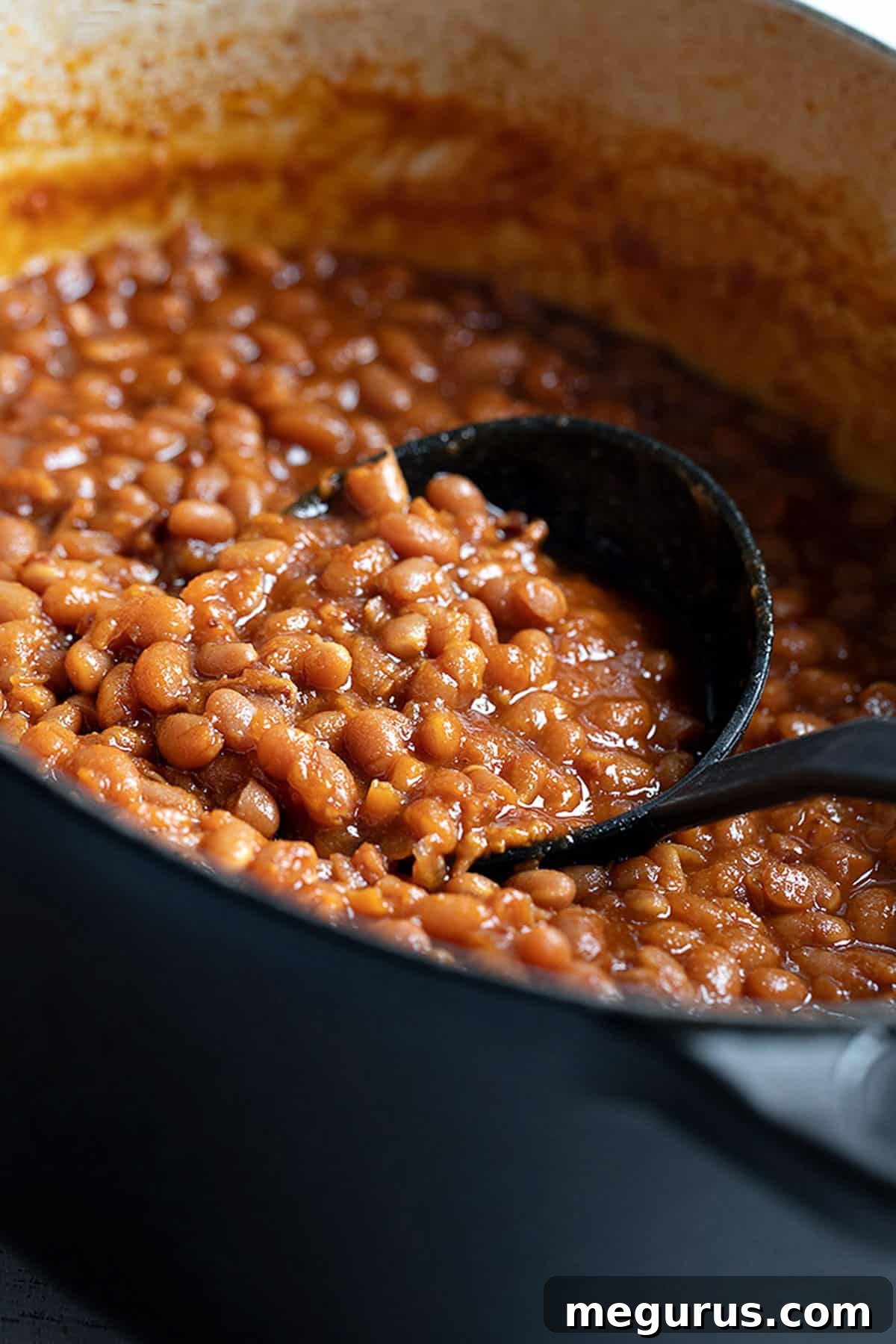
The Ultimate Homemade Baked Beans Recipe Card
Get ready to create a truly unforgettable dish with our detailed recipe for classic Boston Baked Beans, made from dried beans and slow-cooked to perfection. This recipe yields 10 generous servings.
Homemade Baked Beans from Dried Beans
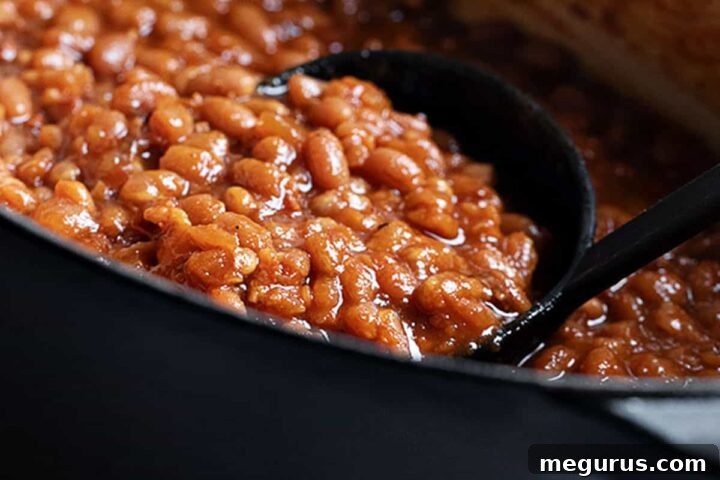
Classic homemade Boston-style baked beans, flavored with molasses and cooked low and slow with bacon and onion.
Rating: 4.95 stars from 39 ratings
Print Recipe
Pin This
Leave a Review
Prep Time: 15 mins
Cook Time: 7 hrs
Overnight Soaking: 8 hrs
Total Time: 15 hrs 15 mins
Yield: 10 servings
Ingredients
- 1 lb. dried navy beans
- 1 1/2 cups onion, diced
- 1/2 lb. bacon, diced
Sauce:
- 1 1/2 tsp salt
- 1/4 tsp pepper
- 5 Tbsp molasses, Fancy (not Cooking or Blackstrap)
- 1 1/2 tsp dry mustard powder
- 3/4 cup light brown sugar
- 3/4 cup ketchup
- 1 1/2 cups boiling water
Instructions
- Soak beans in a large bowl overnight, covering with about 2 inches of cold water.
- In the morning, drain soaked beans and place in a large pot. Cover with several inches of water and bring just to a boil, then immediately reduce heat to somewhere between medium and medium-low or whatever level maintains a gentle simmer. Cook beans for 50-60 minutes, or until beans are tender (but not mushy). Taste test to be sure they are tender before you stop cooking. Drain beans and rinse under cold water to stop the cooking process.
- Preheat oven to 275°F (135°C). Start 1 1/2 cups water to boil.
- In a large oven-safe casserole dish with a lid (or alternately, to be covered with aluminum foil), scatter 1/2 of the onion and 1/2 of the bacon over the bottom of the dish. Add 1/2 of the cooked beans. Scatter the remaining onion and bacon, then top with the remaining cooked beans.
- In a 4-cup measuring cup or similar sized bowl, stir together the sauce ingredients well. Add 1 1/2 cups of boiling water and stir. Pour over beans and mix gently with a fork. If necessary, add a bit more hot water so that the liquid just barely covers the beans. Cover the pot with a lid or doubled up aluminum foil and place in preheated 275°F (135°C) oven.
- Beans will cook in the oven for a total of 6 hours, but should be checked at intervals to ensure there is enough liquid in the pot.
- Cook beans for 4 hours, then remove from oven and gently stir with a fork. There should still be enough liquid in the pot to just barely cover the beans, but if not, add more as needed.
- Return pot to the oven, covered, checking beans every 30 minutes for the last 2 hours of cooking, first stirring, then adding a bit more water to the pot, if needed. You want to have some puddles of liquid showing on the top of the beans, but you don’t want to add too much water to the pot.
- After 6 hours of cooking, remove from oven and stir gently with a fork. Let stand, uncovered for 5 minutes or covered for 10-15 minutes before serving. Adjust salt to taste.
Notes
- Leftover baked beans can be refrigerated for 3-4 days. Fully cooked baked beans can also be frozen for 2-3 months.
- Be sure to read the notes and see the step-by-step photos above the recipe card for more tips to make this recipe successfully.
Cuisine: American, Canadian
Course: Side Dish
Author: Jennifer Maloney
Nutrition (per serving): Calories: 371kcal, Carbohydrates: 59g, Protein: 14g, Fat: 10g, Saturated Fat: 3g, Cholesterol: 15mg, Sodium: 674mg, Potassium: 842mg, Fiber: 12g, Sugar: 30g, Vitamin A: 101IU, Vitamin C: 3mg, Calcium: 110mg, Iron: 3mg
Serving Suggestions for Your Homemade Boston Baked Beans
These incredible homemade Boston baked beans are far more versatile than just a traditional summer barbecue staple. Their rich, sweet, and savory profile makes them an outstanding accompaniment to a wide array of meals, adding comfort and depth to any plate. For a truly classic American experience, serve them generously alongside grilled hot dogs, juicy hamburgers, or a tender rack of BBQ ribs. They are, of course, a quintessential side for festive occasions such as Easter dinner, complementing a succulent holiday ham or a hearty roasted pork loin beautifully.
Beyond the obvious, consider pairing your baked beans with a slice of warm, buttery cornbread for a simple yet incredibly comforting and complete meal. They can also be a robust addition to a weekend breakfast spread, alongside scrambled eggs and crispy sausage. Get creative by using them as a flavorful filling for a hearty baked potato, or as a vibrant component in a warm, satisfying lunch sandwich. Don’t be afraid to experiment; the deep, satisfying flavor of these homemade beans has the power to elevate many different dishes and bring a touch of comforting tradition to your table.
More Delicious Bean Recipes to Explore
If you’ve thoroughly enjoyed the process of making these classic Boston baked beans from scratch, you might be inspired to explore other delightful and comforting bean-centric recipes. Beans are incredibly nutritious, wonderfully versatile, and can be transformed into a vast array of flavorful and satisfying dishes. Here are a few more excellent options to inspire your culinary adventures and expand your repertoire:
- Oven or Slow Cooker Pork and Beans: Discover an easy, hearty, and utterly delicious dish featuring tender pork shoulder, slow-cooked together with pinto beans in a rich, flavorful, baked bean-like sauce. This recipe offers the flexibility of preparation in both a conventional oven and a slow cooker, making it perfect for a comforting meal any day of the week.
- Easy BBQ Baked Beans with Bacon: For those times when you need a quicker solution without sacrificing on taste, these easy BBQ baked beans start with convenient canned navy beans. They are combined with crispy bacon, sweet onion, and a simple, tangy BBQ sauce that comes together effortlessly. This is an excellent and speedy side dish, ideal for any summer gathering or impromptu barbecue!
- Peppy Baked Beans: If you’re looking for a vibrant, flavorful, and relatively quick baked bean option, these “Peppy Baked Beans” begin with canned pork and beans. They are then enhanced with additional onion, more bacon, and a kick of extra seasonings for an exciting twist. Requiring only about 90 minutes in the oven, they are perfect for entertaining when you need a delicious side dish with less hands-on time.