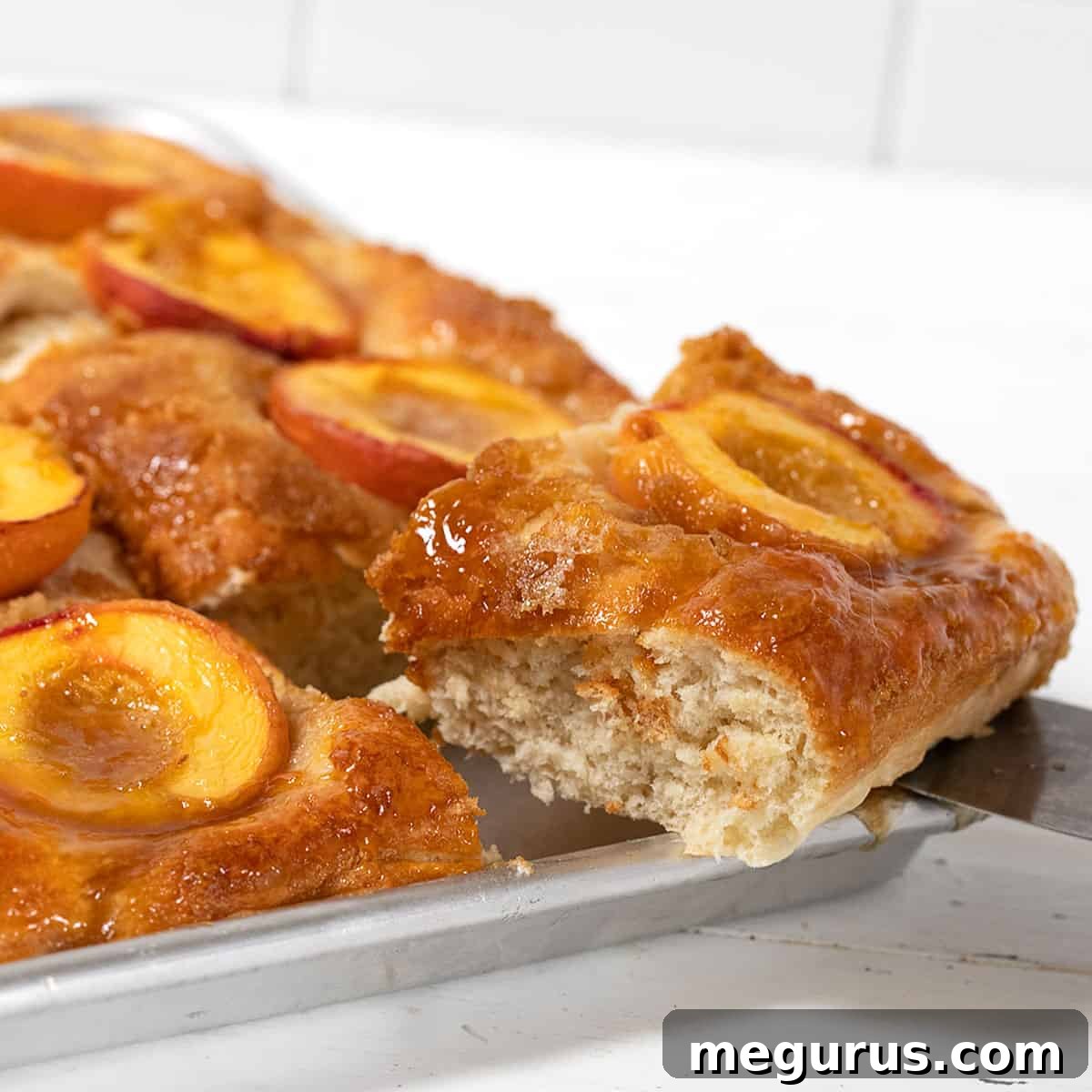
Discover the beloved **Baltimore Peach Cake**, a true regional delicacy that captivates with its unique charm and irresistible flavor. Far from a conventional cake, this Baltimore favorite is an exquisite creation featuring a tender, sweet yeasted dough, generously adorned with juicy peach halves and finished with a delectable brown sugar topping. Fresh from the oven, a delicate brushing of warm apricot jam adds the perfect touch of glossy sweetness, transforming it into a luxurious pastry that embodies the heart of Maryland’s culinary tradition.
What Makes Baltimore Peach Cake So Special?
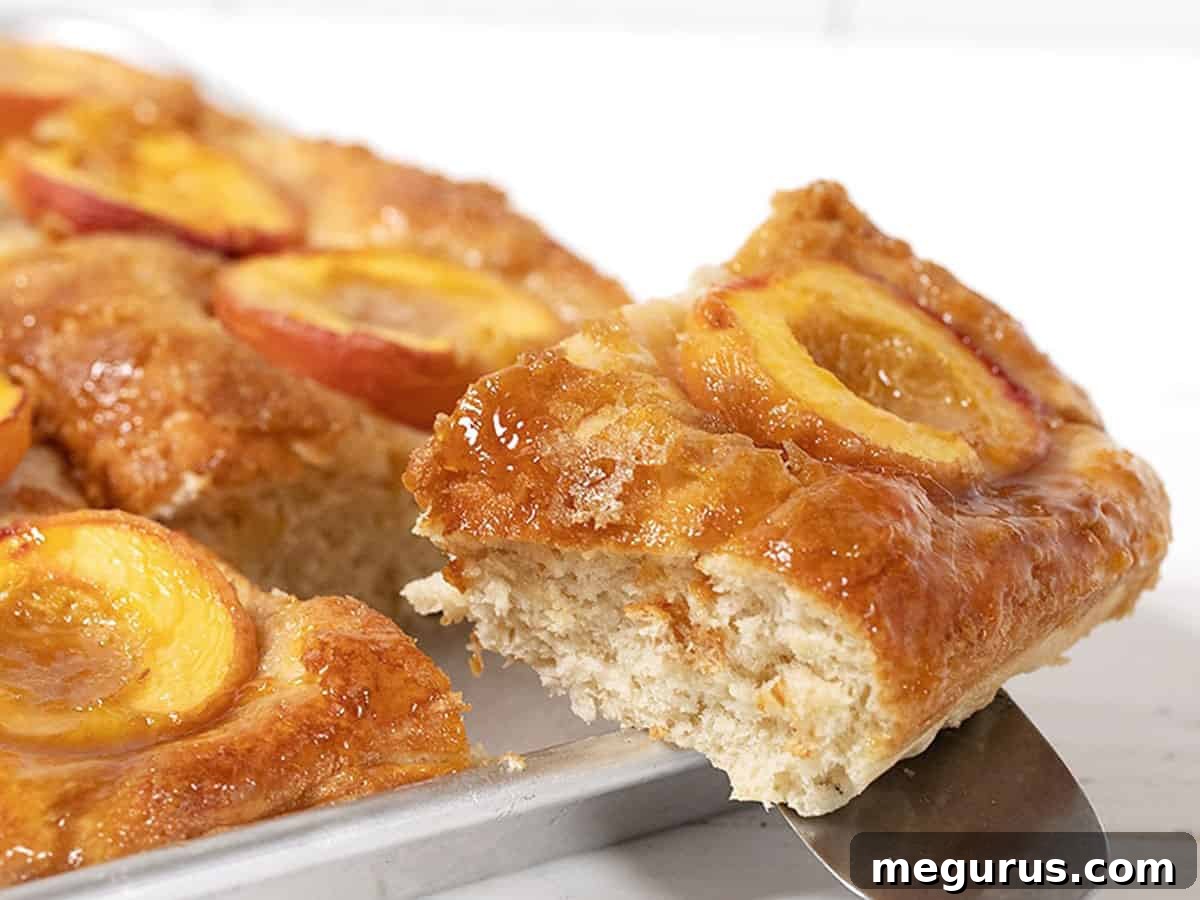
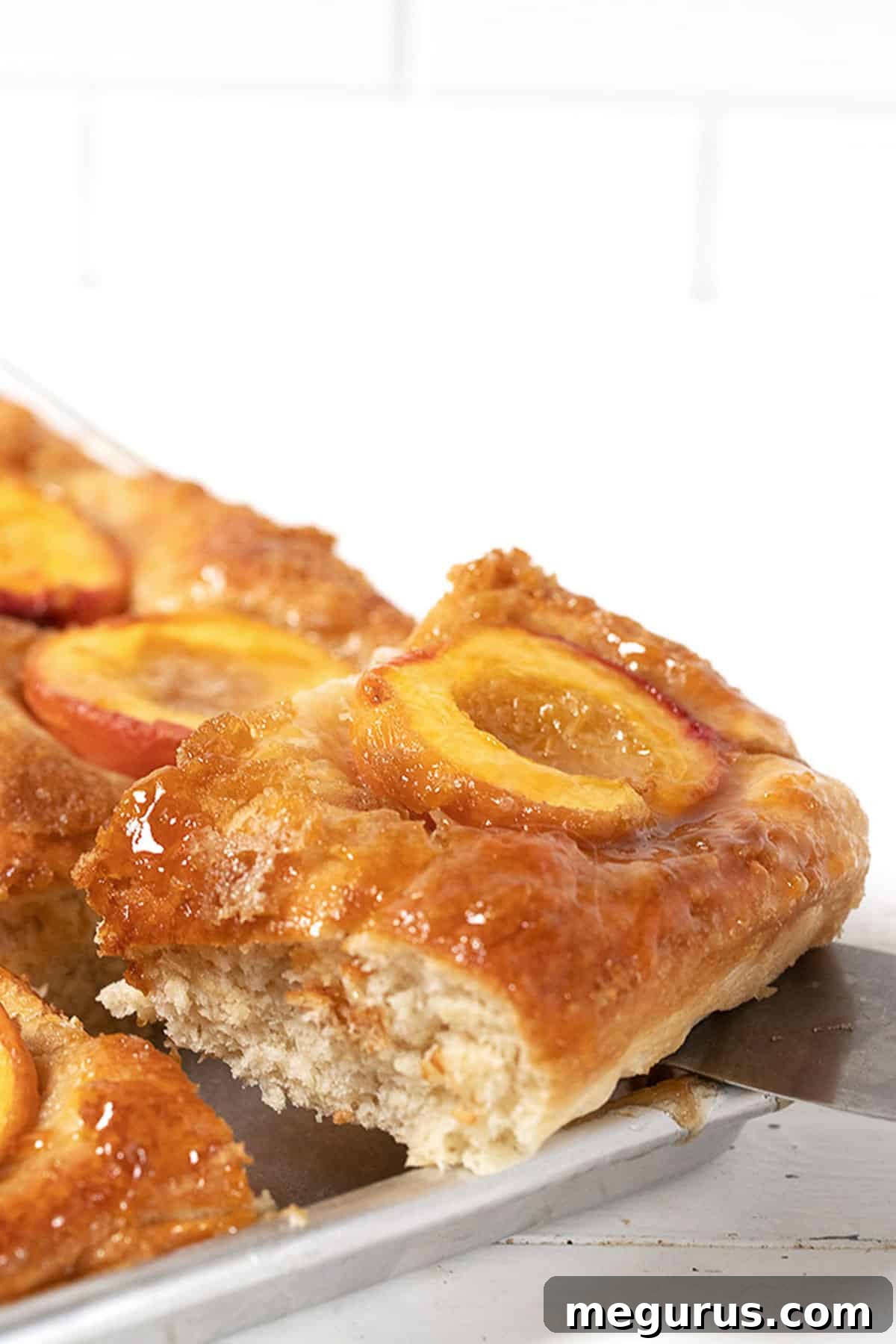
While commonly referred to as a “cake,” the Baltimore Peach Cake defies traditional cake definitions. Its foundation is a rich, sweet yeast dough, which gives it a distinct texture that’s more akin to a Danish pastry or a brioche than a typical sponge cake. This dough provides a sturdy yet soft base for the star of the show: ripe, succulent peaches. Each half is nestled into the dough, releasing its fragrant juices as it bakes, infusing the entire dessert with a vibrant, fruity essence. The golden-brown sugar topping adds a delightful crunch and caramelized sweetness, creating a beautiful contrast to the soft dough and tender fruit. Finally, a brush of warm apricot jam after baking adds a glistening sheen and an extra layer of fruity depth, making every bite a celebration of peach season.
Whether enjoyed as a casual treat straight from the pan, served elegantly as a slice, or paired with a scoop of creamy vanilla ice cream, this peach delight is an ideal summer dessert. Its versatility makes it perfect for a leisurely breakfast, a delightful brunch centerpiece, or a satisfying afternoon pick-me-up. It’s not just a recipe; it’s a taste of Baltimore’s heritage, a sweet reminder of sun-drenched days and abundant peach harvests.
Essential Ingredients and Thoughtful Substitutions
Crafting the perfect Baltimore Peach Cake begins with selecting the right ingredients. Here’s a closer look at what you’ll need and how you can make intelligent substitutions without compromising on flavor or texture:
- Yeast: For this recipe, either active dry yeast or regular instant yeast will work wonderfully. The key is to avoid quick-rise or rapid-rise yeast, as these are formulated to work much faster and might alter the delicate structure and flavor development of this sweet dough. Always check the expiration date of your yeast to ensure it’s active for optimal rising.
- Milk: Any type of dairy milk (whole, 2%, or skim) will yield excellent results. For those seeking dairy-free alternatives, unflavored almond milk, soy milk, or oat milk are all viable options that should integrate well into the dough without significant alterations to the final product. Ensure it’s lukewarm when added to activate the yeast.
- Peaches: You’ll need approximately 5-6 medium-sized fresh peaches. For the best presentation and ease of preparation, choose peaches that are relatively similar in size and ripe but firm. Freestone peaches are highly recommended because their pits detach easily from the flesh, making them much simpler to halve and prepare. Avoid overly soft or bruised peaches, as they can become mushy during baking.
- Cornstarch: This ingredient plays a crucial role in preventing the brown sugar topping from becoming too liquidy during baking. If cornstarch is unavailable, an equal amount of all-purpose flour can be used as a substitute in a pinch. The flour will provide a similar thickening effect, ensuring your topping retains its delicious texture.
- Apricot Jam or Jelly: The warm apricot glaze is a traditional finishing touch, adding shine and a subtle fruity note. While highly recommended for an authentic experience, this step is optional if you don’t have apricot preserves on hand. You can skip it or substitute with a thin brushing of melted butter for a simpler finish, though the apricot adds a lovely dimension.
- Flour: All-purpose flour is the standard for this recipe, providing the right balance of gluten for a tender yet structured dough.
- Sugar: Both white granulated sugar for the dough and light brown sugar for the topping are essential. The brown sugar contributes molasses notes that perfectly complement the peaches.
- Salt: Fine salt balances the sweetness and enhances the overall flavor profile of the cake.
- Butter: Unsalted butter at room temperature is used in the dough for richness, while cold butter is crucial for creating the crumbly brown sugar topping.
Expert Baking Tips for a Flawless Baltimore Peach Cake!
Achieving a perfect Baltimore Peach Cake is all about understanding a few key techniques. These tips will guide you through the process, ensuring a delicious outcome every time:
- Choosing the Right Pan: This recipe is designed for a quarter sheet pan, typically measuring 9×13-inches. If you don’t own a quarter sheet pan, a standard 9×13-inch cake pan is an excellent alternative. For smaller batches or if you prefer a thicker cake, you can divide the dough between two 8 or 9-inch square or round cake pans. Remember that baking times may vary slightly with different pan sizes and materials.
- Handling Sticky Dough: Don’t be alarmed by the stickiness of this sweet yeast dough; it’s perfectly normal! Unlike bread doughs, it’s not meant to be kneaded by hand until smooth. The goal is to add just enough extra flour during the second mixing phase for the dough to come together around the kneading hook, pulling away from the sides of the bowl. Resist the urge to add too much flour, as this will result in a dry, dense cake. The initial mixing is crucial for developing gluten structure, even if the dough remains sticky.
- Adjusting Sweetness to Your Liking: The Baltimore Peach Cake is inherently a sweet dessert. If you prefer a less sweet profile, you can easily reduce the amount of granulated sugar added to the dough by a tablespoon or two. The natural sweetness of the ripe peaches and the brown sugar topping will still provide ample flavor.
- Monitoring Baking and Preventing Over-Browning: Begin checking your cake around 25 minutes into baking. If the top has achieved a beautiful golden brown color but the cake still needs more time to cook through, loosely tent it with a sheet of aluminum foil. This prevents further browning while allowing the cake to finish baking. A 9×13-inch cake typically requires at least 30 to 35 minutes in the oven. Always use a cake tester inserted into the center to ensure it comes out clean, indicating thorough cooking.
- Pan Color Matters: The material and color of your baking pan can significantly affect baking time. Dark-colored pans absorb more heat and tend to bake faster, potentially leading to a darker crust. Lighter-colored pans, like the one often used in the original recipe, reflect heat, resulting in a slightly longer baking time and a lighter crust. Adjust your baking time accordingly based on your pan type.
- Peach Placement for Best Results: While you can use peach quarters, placing peach halves cut-side-down onto the dough is often preferred. This method helps to contain the peach juices within the fruit, preventing them from seeping too much into the dough and making it soggy. The halves also create a more dramatic and appealing presentation.
- Proofing Environment: Yeast doughs thrive in warm, draft-free environments. If your kitchen is cool, consider placing the covered bowl in a slightly warm oven (turned off, with just the light on) or near a warm spot to encourage a good rise.
- Don’t Rush the Rise: The rising times (proofing) are essential for developing the dough’s flavor and airy texture. While the times given are estimates, always look for the visual cue of the dough doubling in size rather than strictly adhering to a clock.
Mastering the Art of Halving a Peach
Properly preparing your peaches is key to this recipe. Here’s a simple technique for splitting peaches cleanly:
- Using a sharp knife, carefully cut around the entire circumference of the peach, starting from the stem end and circling back. Follow the natural seam or indent that often runs along the side of the peach.
- Once you’ve made a complete cut around the pit, firmly grasp the peach with both hands. Place your thumbs on either side of the cut line, and with a gentle but decisive motion, twist your hands in opposite directions. For example, twist your right hand forward and your left hand backward.
- The peach should separate cleanly into two halves, with the pit usually remaining in one half. Simply remove and discard the pit.
Making Ahead, Storing, and Freezing
This delightful peach cake is undoubtedly at its peak when enjoyed on the day it’s baked, offering the perfect combination of tender dough, warm peaches, and crisp topping. However, if you have leftovers or wish to prepare it in advance, here’s how to manage it:
- Short-Term Storage: Store the cake at room temperature, well-wrapped in plastic film or an airtight container, for 2-3 days. Be aware that the dough will naturally absorb some moisture from the peaches over time, leading to a slightly softer texture on subsequent days. Gently warming a slice in the microwave or oven can help revive its appeal.
- Long-Term Freezing: For longer storage, the Baltimore Peach Cake freezes beautifully. Once completely cooled, wrap individual slices or the entire cake (if it fits) tightly in plastic wrap, followed by a layer of aluminum foil. Freeze for up to 3 months. To enjoy, thaw overnight in the refrigerator, then warm gently in a conventional oven at 300°F (150°C) until heated through, or in a toaster oven for individual slices.
Baltimore Peach Cake Recipe
Get the Recipe: Baltimore Peach Cake
A lovely yeasted sweet dough, topped with peach halves and a brown sugar topping. A Baltimore classic!
Average Rating: 5 stars from 8 ratings
Print Recipe
Pin This
Leave a Review
Prep Time: 20 mins
Cook Time: 35 mins
Rising Time: 2 hrs 20 mins
Total Time: 3 hrs 15 mins
Yield: 8 servings
Ingredients
For the Dough:
- 2 1/4 teaspoons active dry or instant yeast (not rapid/quick rise)
- 1/2 cup lukewarm water
- 1 teaspoon white granulated sugar
- 3 cups all-purpose flour, DIVIDED
- 3 Tablespoons white granulated sugar
- 1 teaspoon fine salt
- 1 cup lukewarm milk
- 1/4 cup butter, at room temperature
For the Topping:
- 4-5 fresh peaches, unpeeled, halved and pitted
- 1/2 cup light brown sugar
- 1 Tablespoon cold butter
- 1 Tablespoon cornstarch, or flour
For Glazing After Baking:
- 3-4 Tablespoons Apricot preserves, slightly warmed
Instructions
- Add the lukewarm water to a large bowl (for a wooden spoon) or to the bowl of a stand mixer fitted with the paddle attachment. Stir in the 1 tsp of white sugar and sprinkle yeast over-top. Let stand for 5 minutes until foamy. Add 1 cup of the flour and mix well. Remove paddle attachment, then cover bowl with plastic wrap (or a dampened tea towel) and let rise until doubled, about 1 hour.
- Fit the mixer with the kneading hook and mix well. Add the 3 Tbsp white sugar, salt, milk, butter, and 1 more cup of the flour. Mix well until smooth. Gradually add the last 1 cup of flour in small increments, until the dough clears the sides of the bowl and wraps around the kneading hook. The dough should remain moist and sticky; add only enough flour to bring it together. Remove the kneading hook, cover the bowl with plastic wrap (or a damp tea towel) and let rise until doubled, about 1 hour.
- Grease a 9×13-inch sheet pan (quarter sheet pan) or alternately a 9×13-inch baking pan. Spoon the risen dough onto the pan and using your fingertips or a silicone spatula, spread the dough evenly to cover the entire bottom of the pan. Cover the pan with plastic wrap and let rise for another 20-30 minutes.
- Meanwhile, preheat your oven to 400°F (200°C). Prepare your peaches by splitting them in half and removing the pits.
- Prepare the brown sugar topping: In a small bowl, stir together the brown sugar and cornstarch. Add the cold butter and, using your fingertips, rub the cold butter into the sugar mixture until you have a coarse, even crumb mixture. Set aside.
- Once the dough has completed its final rise, arrange the peach halves on top of the dough, gently pressing them slightly into the surface. Evenly scatter the brown sugar mixture over the peaches and dough.
- Place your baking sheet on top of a larger baking sheet (this is a good precaution to catch any potential bubble-overs from the peaches or dough) and carefully place it into the preheated oven.
- Bake in the preheated 400°F (200°C) oven for 25 minutes. At this point, check the cake for browning. If the top is sufficiently browned, loosely lay a sheet of aluminum foil over the cake to prevent further darkening, and continue baking for an additional 5-10 minutes. The cake may look done on top before it is fully cooked through. Ensure it bakes for at least 30 minutes, and most likely about 35 minutes, to ensure the dough is cooked. Use a cake tester in the center to confirm doneness. If using two smaller pans, baking time will likely be shorter.
- Remove the cake from the oven and let it cool in the pan for 15 minutes. While the cake cools, gently warm the apricot jam until it is thinned and easy to spread. Brush the warm jam generously over the top of the cake for a beautiful glaze.
Notes
This cake is truly best enjoyed on the day it is baked. The dough will absorb moisture from the peaches over time, which may alter its texture on subsequent days.
Tips for Success:
- The dough will be very sticky, which is normal for this recipe. Do not over-flour. Just add enough extra flour so the dough pulls away from the sides of the bowl and gathers around the kneading hook. Ensure thorough mixing during the initial stages to develop proper dough structure.
- If you prefer a less sweet cake, feel free to slightly reduce the amount of granulated sugar in the dough.
- Using peach halves helps keep the peach juices contained within the fruit, preventing the dough from becoming soggy.
Recipe Information
Cuisine: American
Course: Dessert
Author: Jennifer Maloney
Nutrition Facts (Per Serving)
Serving: 1 serving, Calories: 355kcal, Carbohydrates: 64g, Protein: 7g, Fat: 8g, Saturated Fat: 5g, Cholesterol: 21mg, Sodium: 373mg, Potassium: 266mg, Fiber: 3g, Sugar: 26g, Vitamin A: 524IU, Vitamin C: 5mg, Calcium: 62mg, Iron: 2mg
If you enjoyed this recipe, please consider leaving a star rating and comment. Your feedback helps others discover and enjoy this delicious treat!