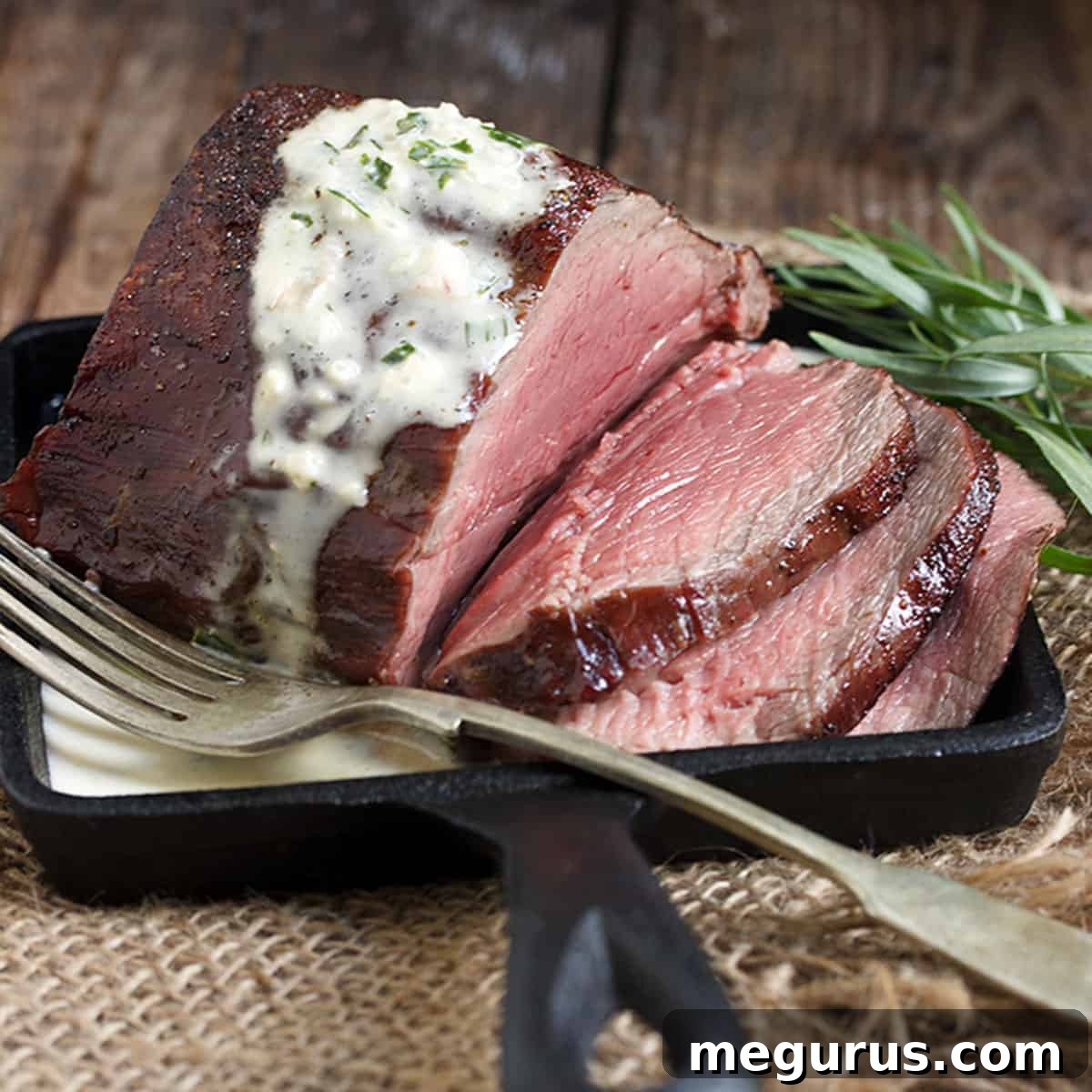
Embark on a culinary journey to master the art of preparing a truly magnificent meal: Reverse-Seared Chateaubriand. This comprehensive guide not only reveals the secrets to achieving a perfectly cooked, unbelievably tender beef tenderloin but also walks you through crafting a silky-smooth, classic Bearnaise sauce to elevate your dining experience to gourmet heights.
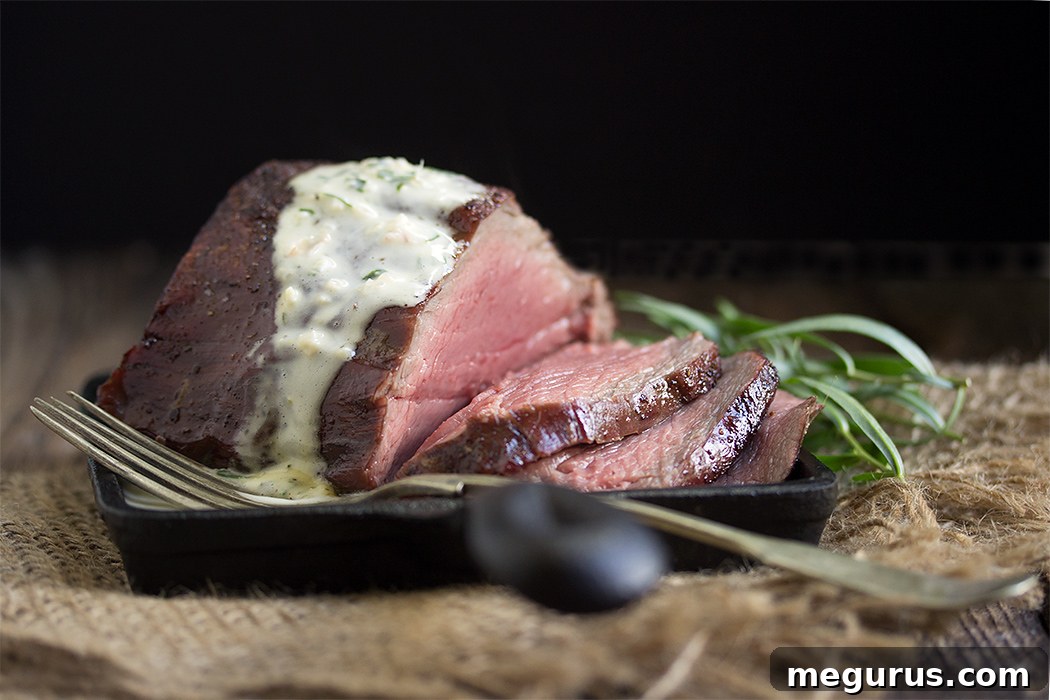
There are few cuts of beef that command as much respect and admiration as the Chateaubriand. Renowned for its unparalleled tenderness and rich, yet subtle flavor, it’s a cut that transforms any meal into a special occasion. Often perfectly portioned for two, making it an ideal choice for romantic dinners or intimate gatherings, Chateaubriand represents the pinnacle of premium beef. And what could possibly enhance this exquisite cut further? A decadent, homemade Bearnaise sauce, adding a layer of tangy, herbaceous richness that creates a truly unforgettable symphony of flavors.
My passion for Chateaubriand runs deep, and over the years, I’ve explored various cooking methods in pursuit of perfection. Through trial and error, I discovered that the reverse sear technique is, without a doubt, the superior approach for this esteemed cut. It consistently delivers results that are simply impossible to achieve with traditional methods, ensuring a flawless doneness from edge to edge and a crust that sings with flavor.
Unlocking Perfection: The Reverse Sear Method Explained
When most people think about cooking a premium steak, they typically imagine searing it first over high heat and then finishing it in the oven. The reverse sear method, however, flips this conventional wisdom on its head, offering a vastly improved outcome, especially for thicker cuts like Chateaubriand. Instead of an initial sear, the reverse sear begins with a slow, gentle roast in the oven, followed by a quick, high-heat sear at the very end. This revolutionary technique guarantees a superior finished product with far more predictable and precise doneness throughout the meat.
Why is the reverse sear so effective? The magic lies in its ability to cook the meat evenly from the center to the crust. Traditional searing can often lead to an overcooked grey band around the edges while the center struggles to reach the desired temperature. The slow roasting phase of the reverse sear gently raises the internal temperature of the entire steak, allowing the proteins to denature gradually and the muscle fibers to relax. This process results in an incredibly tender and uniformly cooked interior, often described as edge-to-edge perfection, with minimal grey banding.
Furthermore, by drying out the surface of the meat slightly during the slow roast, the reverse sear primes it for an exceptional Maillard reaction during the final high-heat sear. This chemical reaction, responsible for the delicious browning and complex flavors in seared foods, occurs much more efficiently on a dry surface. The result is an incredibly crisp, deeply flavorful crust that contrasts beautifully with the juicy, tender interior. This method virtually eliminates the guesswork, allowing you to achieve your desired level of doneness with confidence and consistency every single time. A reliable oven-safe probe thermometer is absolutely crucial for monitoring the beef’s internal temperature and ensuring this precision.
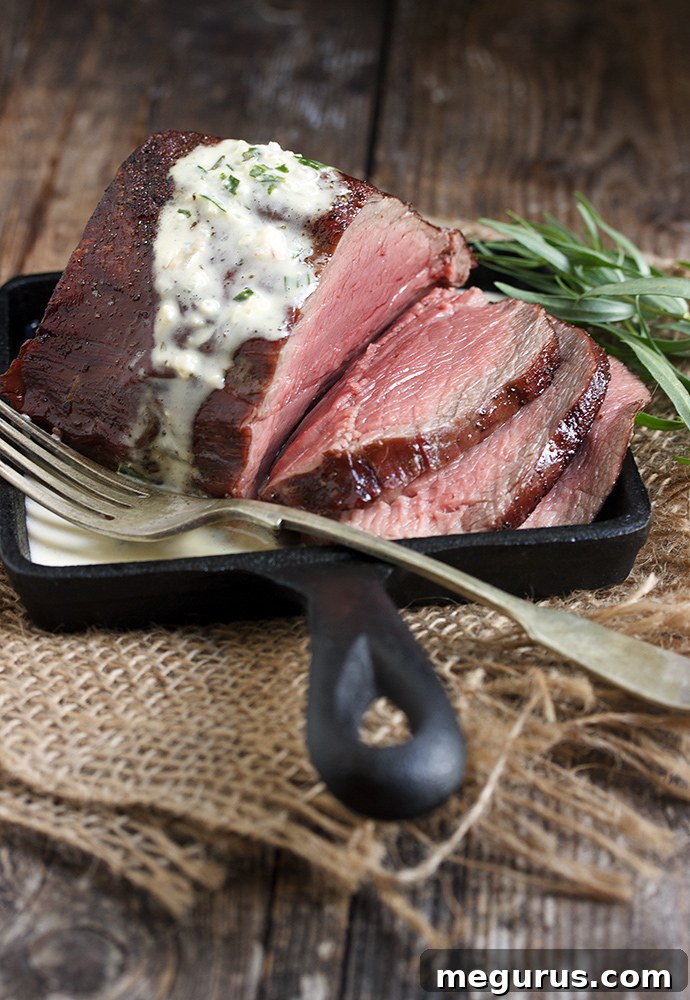
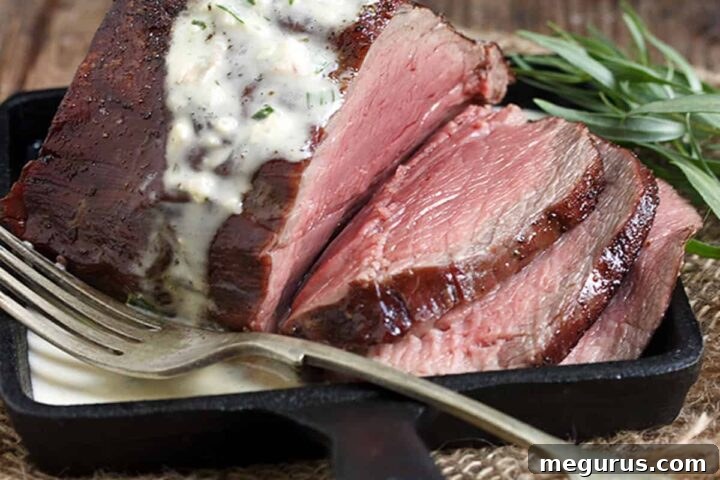
Get the Recipe: Reverse-Seared Chateaubriand with Bearnaise Sauce
Achieve a perfectly cooked Chateaubriand every time using the celebrated Reverse-Sear method. Crowned with a rich, homemade Bearnaise sauce, this is truly a special meal designed to impress. For optimal results, an oven-safe probe thermometer is essential to precisely monitor the beef’s internal temperature and ensure flawless doneness.
Pin This
Leave a Review
Ingredients
Chateaubriand:
- Chateaubriand (typically 1.5-2 lbs, center-cut beef tenderloin)
- Kosher salt and freshly ground black pepper, to taste
- 1 Tbsp Olive oil
- 1 Tbsp Unsalted butter
Bearnaise Sauce (enough for 1 Chateaubriand):
- 1/2 cup unsalted butter, cut into 1/2″ cubes
- 1 1/2 Tablespoons minced shallots
- Kosher salt and freshly ground black pepper, to taste
- 1 Tablespoon Champagne vinegar or white wine vinegar
- 1 large egg yolk
- 1 1/2 teaspoons fresh lemon juice
- 2 Tablespoons finely chopped fresh tarragon
Instructions
- For the Bearnaise Sauce:
- Melt a tiny bit of butter (about 1/2 teaspoon) in a small saucepan over medium heat. Add the minced shallots along with a pinch of salt and pepper, stirring to ensure they are well coated. Pour in the Champagne or white wine vinegar, then reduce the heat to medium-low. Cook, stirring occasionally, until the vinegar has completely evaporated, which typically takes about 2-3 minutes. Lower the heat to low and continue cooking the shallots, stirring frequently, until they become tender and translucent, approximately 3 minutes longer. Once done, transfer the shallot reduction to a small bowl and set aside to cool completely.
- While the shallots cool, warm your blender by filling it with hot water, then empty and thoroughly dry it. In a separate small saucepan, melt the 1/2 cup of unsalted butter over medium heat until it becomes foamy. Carefully transfer the melted butter to a heatproof measuring cup.
- In the warm, dry blender, combine the egg yolk, fresh lemon juice, and 2 teaspoons of water. Purée the mixture until it is smooth and well combined. With the blender running on low speed, slowly and steadily pour the hot melted butter into the blender in a thin stream of droplets. Be sure to discard any milk solids that settle at the bottom of your measuring cup. Continue blending until the sauce emulsifies and forms a smooth, creamy consistency, which should take 2-3 minutes. Pour the finished sauce into a medium bowl, then stir in the cooled shallot reduction and the finely chopped fresh tarragon. Taste and adjust seasoning with additional salt, pepper, or lemon juice as desired. This sauce can be made up to 1 hour ahead; cover it and let it stand at room temperature.
- For the Chateaubriand:
- Preheat your oven to a precise 275°F (135°C). Prepare a baking sheet by lining it with aluminum foil for easier cleanup, then place a wire cooking rack on top of the foil-lined sheet. Set this assembly aside.
- Thoroughly pat the Chateaubriand dry with paper towels. This crucial step helps create that coveted crispy crust later. Season the meat generously on all sides with kosher salt and freshly ground black pepper. Insert an oven-safe probe thermometer into the thickest part of the Chateaubriand, ensuring it reaches the center without touching any bone.
- Once the oven is preheated, place the seasoned Chateaubriand directly onto the wire rack on your prepared baking sheet. Transfer it to the oven and roast slowly. Monitor the internal temperature closely using your probe thermometer. Continue roasting until the thermometer registers 125-128°F (52-53°C) for a perfect medium-rare, or 135-138°F (57-59°C) for medium doneness. Remember, the temperature will rise slightly during resting.
- Remove the Chateaubriand from the oven and allow it to rest on the wire rack while you prepare your skillet for searing. This resting period is vital for juices to redistribute throughout the meat.
- Heat a heavy-bottomed skillet (a cast iron skillet is ideal for this) over medium-high heat until it is smoking hot. Add 1 tablespoon of olive oil and 1 tablespoon of unsalted butter to the hot pan. Once the butter is melted and sizzling, carefully add the rested Chateaubriand to the skillet. Sear vigorously on all sides, turning every 1-2 minutes, until a beautiful, deep golden-brown crust forms. This searing process should only take a few minutes total. Transfer the seared beef to a clean cutting board and allow it to rest for another 5 minutes. Finally, slice the Chateaubriand against the grain into thick medallions and serve immediately, generously topped with your freshly prepared Bearnaise sauce.
Course: Main Course
Nutrition Information
Serving: 1 serving,
Calories: 436 kcal,
Protein: 1 g,
Fat: 48 g,
Saturated Fat: 30 g,
Cholesterol: 219 mg,
Sodium: 10 mg,
Vitamin A: 1550 IU,
Vitamin C: 1.4 mg,
Calcium: 25 mg,
Iron: 0.3 mg
The Royal Cut: What Makes Chateaubriand So Special?
Chateaubriand refers to a specific cut from the center of the beef tenderloin, known for being the most tender muscle on the animal. This section is incredibly lean, with very little connective tissue or fat, which contributes to its melt-in-your-mouth texture. Traditionally, it’s prepared as a thick roast, often serving two people, making it an inherently elegant and romantic dish. Its mild, beefy flavor is refined, allowing it to pair beautifully with robust sauces like Bearnaise without being overwhelmed. When sourcing your Chateaubriand, always look for high-quality, well-marbled beef from a reputable butcher. The quality of your starting ingredient will profoundly impact the final taste and texture of your gourmet meal.
Crafting the Classic Bearnaise Sauce: A Touch of French Elegance
No Chateaubriand is truly complete without a generous dollop of a rich, creamy Bearnaise sauce. This classic French sauce is a derivative of Hollandaise, distinguished by its unique flavor profile derived from a reduction of white wine vinegar, shallots, and fresh tarragon. It’s an emulsified sauce, meaning butter is slowly incorporated into egg yolks, creating a luscious, velvety texture.
While making Bearnaise might sound intimidating, especially for home cooks, our blender method simplifies the process dramatically. The key to success lies in careful temperature control and a steady hand when pouring the melted butter. Overheating the egg yolks can lead to scrambling, so ensuring your blender is warm but not scalding hot, and pouring the butter in a slow, thin stream, are vital steps. The shallot and tarragon reduction provides a vibrant, aromatic base that infuses the sauce with its signature piquant and anise-like notes. Homemade Bearnaise surpasses any store-bought version in freshness and flavor, offering a brightness that perfectly cuts through the richness of the Chateaubriand. You can even prepare the reduction in advance, making the final assembly of the sauce quick and stress-free.
Beyond the Plate: Serving Suggestions and Wine Pairings
A perfectly cooked Reverse-Seared Chateaubriand with Bearnaise sauce deserves thoughtful accompaniment. For side dishes, consider classic French pairings that complement without overpowering. Creamy mashed potatoes, asparagus spears lightly roasted with garlic, haricots verts (fine green beans), or roasted root vegetables such as carrots and parsnips, all make excellent choices. A simple green salad with a light vinaigrette can also offer a refreshing contrast.
When it comes to wine, the rich flavors of Chateaubriand and Bearnaise call for a wine that can stand up to their intensity. A full-bodied red wine is often the preferred choice. Consider a robust Cabernet Sauvignon, a sophisticated Bordeaux blend, or a silky Merlot. If you prefer something lighter, a Pinot Noir with its earthy undertones can also be a delightful match. For those who enjoy white wine, a rich, oaked Chardonnay could surprisingly complement the creamy Bearnaise sauce.
Conclusion: An Unforgettable Culinary Masterpiece
The Reverse-Seared Chateaubriand with homemade Bearnaise sauce is more than just a meal; it’s an experience. By embracing the reverse sear method, you guarantee a tender, juicy, and uniformly cooked steak with a magnificent crust, while the classic Bearnaise adds a layer of sophisticated flavor. This dish is a testament to the fact that with a little patience and the right technique, you can create a restaurant-quality gourmet meal right in your own kitchen. Prepare to impress your guests and indulge in a truly unforgettable culinary masterpiece!