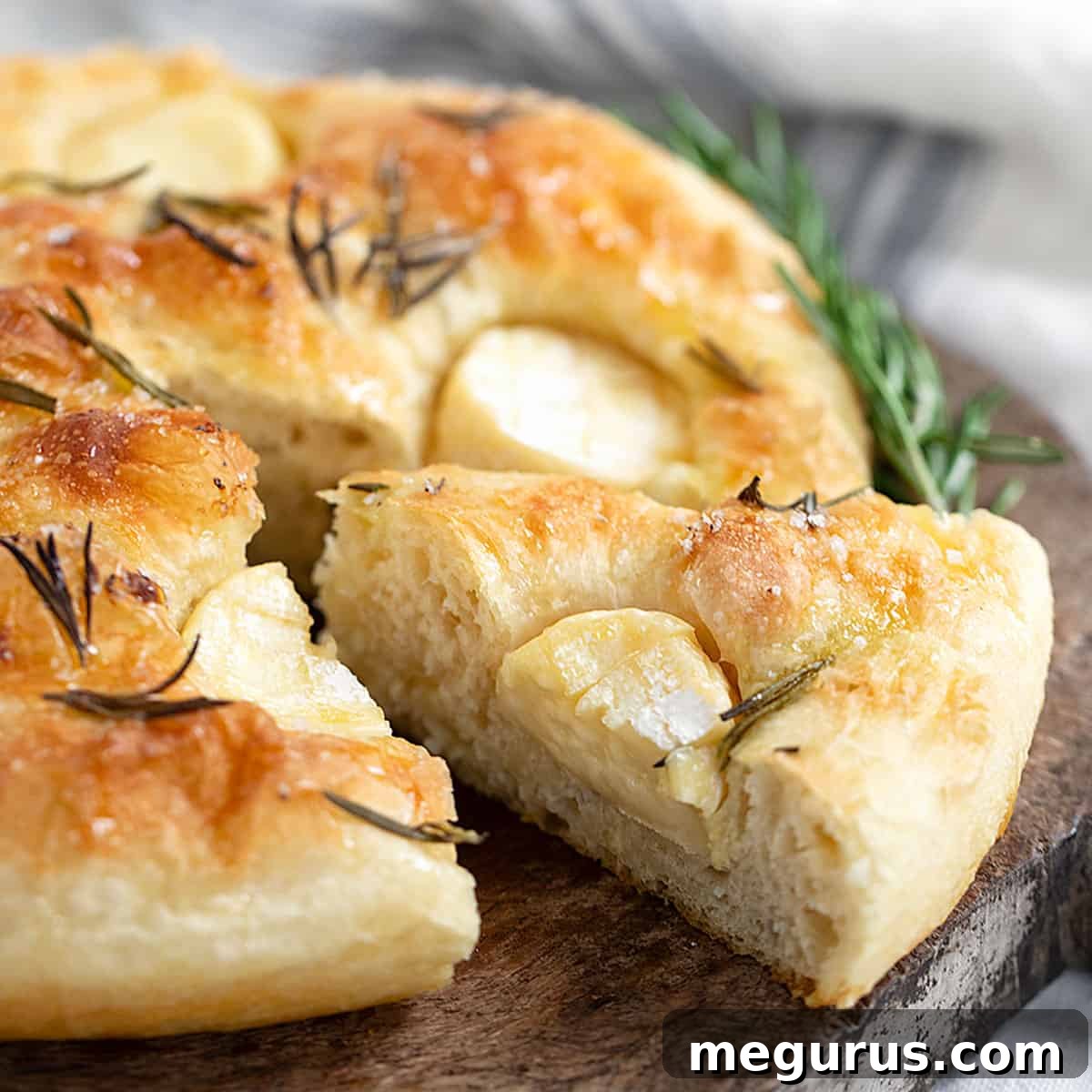
Delight your senses with this exquisite Rosemary Focaccia, artfully adorned with creamy mini Brie cheese rounds and finished with a luscious drizzle of golden honey after baking. This sophisticated yet surprisingly simple appetizer is an absolute showstopper, perfect for elevating any gathering, from intimate dinner parties to festive celebrations.
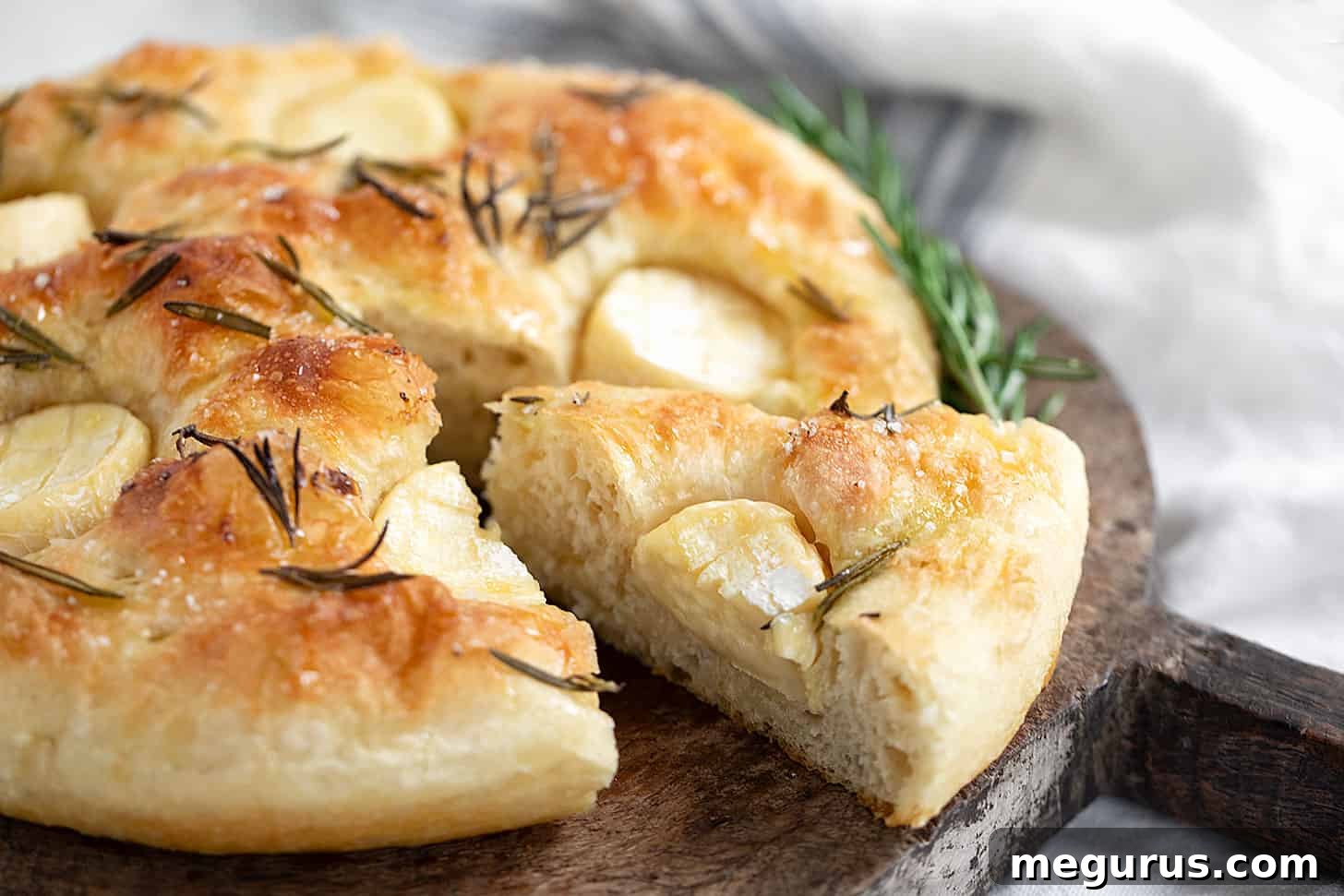
The culinary world has been captivated by the convenience and charm of mini Brie cheese bites, and I couldn’t resist incorporating their rich, buttery flavor into a classic focaccia. The result was nothing short of spectacular, exceeding all expectations with its harmonious blend of savory bread, melting cheese, aromatic rosemary, and a touch of sweet honey. This recipe transforms humble ingredients into a gourmet experience that is both comforting and impressive.
Key Ingredients for Your Gourmet Focaccia
Crafting the perfect focaccia begins with selecting the right ingredients. Here’s a detailed look at what you’ll need and potential substitutions to ensure your Rosemary and Mini Brie Focaccia turns out flawless every time.
- Bread Flour: For that signature chewy texture and robust structure that focaccia is known for, bread flour is highly recommended. Its higher protein content develops gluten more effectively, leading to a dough that is both elastic and airy. While all-purpose flour can be used in a pinch, expect a slightly less chewy crumb.
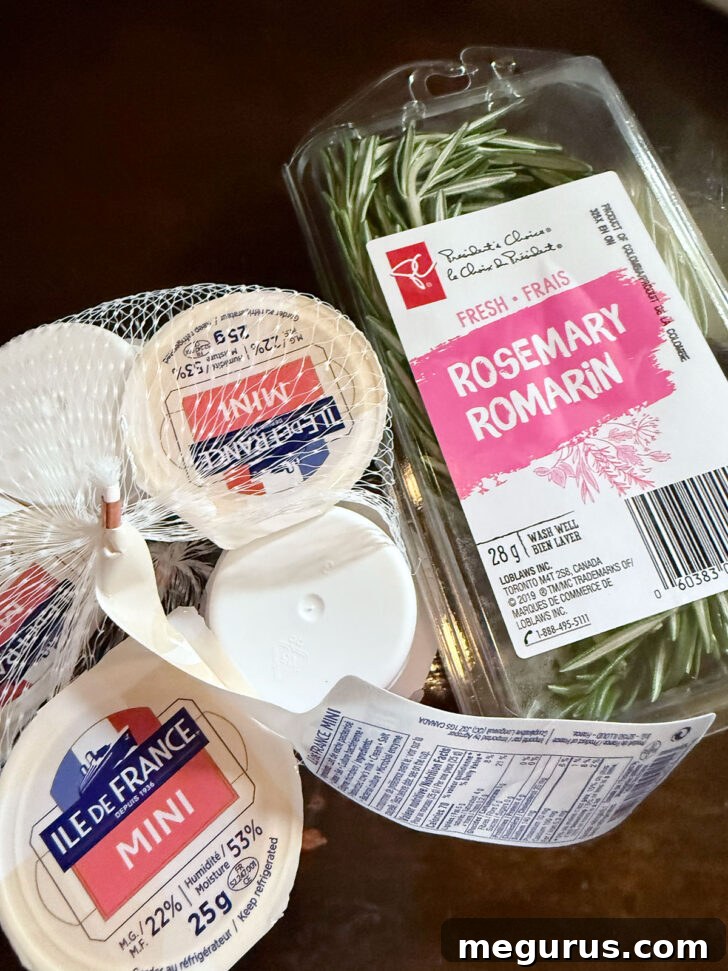
- Mini Brie Cheese: These delightful small rounds are the star of our focaccia! You can typically find them in the specialty cheese section of most well-stocked grocery stores, often alongside other portioned cheeses like Babybel. The brand I used, Ile de France, offers mini Brie rounds that are approximately 25g (about 1 ounce) each and usually come in packs of five. If mini Brie isn’t available, don’t fret! You can easily cut larger Brie wheels into smaller, approximately 1-inch (2.5 cm) rounds or wedges. Other soft, creamy cheeses like Camembert could also make a delicious substitute, offering a similar luxurious melt.
- Fresh Rosemary: The fragrant, piney notes of fresh rosemary are an ideal match for the rich Brie and olive oil in this focaccia, adding an earthy depth. While fresh is always best, you could use dried rosemary in a pinch, though the flavor will be less intense. If substituting with other fresh herbs, consider fresh thyme for a different aromatic profile. However, be aware that delicate herbs like thyme can scorch during baking, so it might be best to add them towards the end of the baking process or as a fresh garnish after the focaccia comes out of the oven.
- Honey: A generous drizzle of runny honey after baking is crucial for balancing the savory and salty flavors with a touch of sweetness. Any light, pourable honey will work beautifully. Experiment with local wildflower honey or a clover honey for nuanced sweetness.
- Lukewarm Water: Essential for activating the yeast. Aim for a temperature around 105°F (40°C), which is warm to the touch but not hot.
- Instant Yeast: This type of yeast can be mixed directly with the dry ingredients, making the process incredibly straightforward. If using active dry yeast, you’ll need to activate it first in the lukewarm water with a pinch of honey or sugar for about 10 minutes until foamy, before combining with the other dough ingredients.
- Olive Oil: A cornerstone of any good focaccia, extra virgin olive oil contributes flavor, moisture, and helps create a crispy crust. It’s used both in the dough and for preparing the baking pan.
- Honey or White Sugar: A small amount acts as food for the yeast, helping it to activate and proof the dough.
- Fine Table Salt & Coarse Salt: Fine salt is incorporated into the dough for overall flavor, while a sprinkle of coarse sea salt (like flaky Maldon salt) over the top before baking adds a delightful textural contrast and bursts of savory flavor.
How to Bake Irresistible Mini Brie Focaccia: A Step-by-Step Guide
Crafting this incredible focaccia is an enjoyable process that yields delicious results. Follow these detailed steps to create your own cheesy, herbaceous, and sweet bread masterpiece. Always refer to the complete recipe card below for precise measurements and timings.
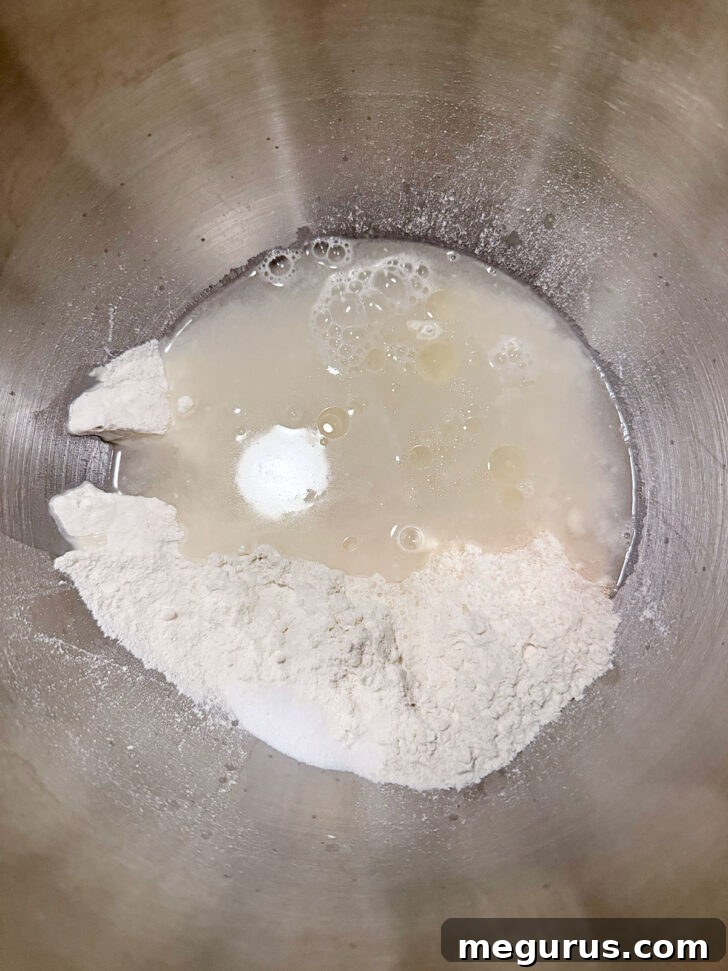
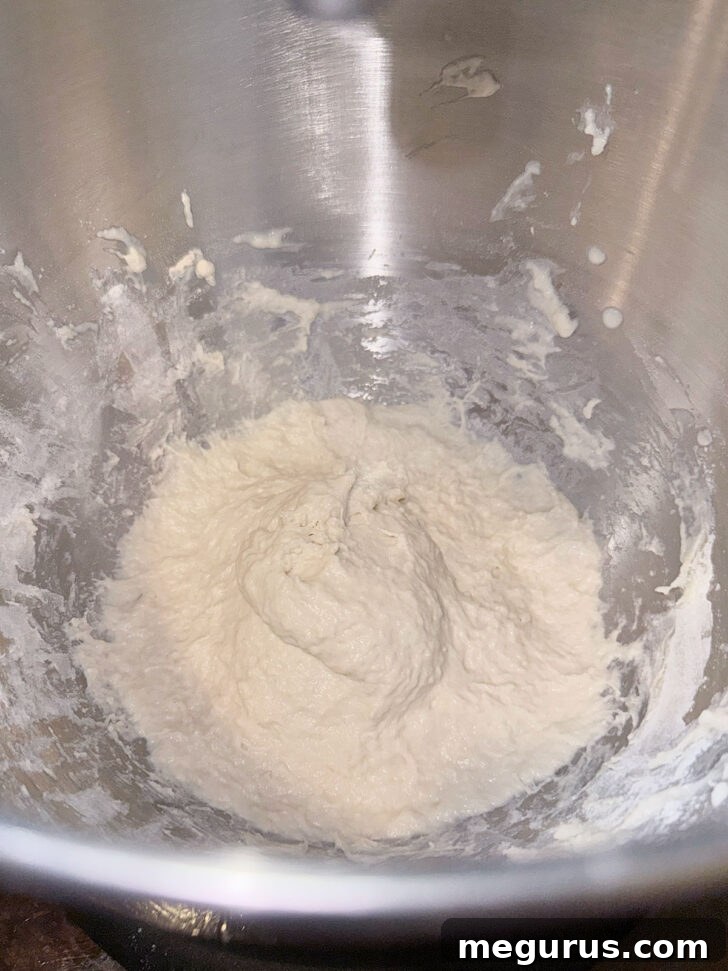
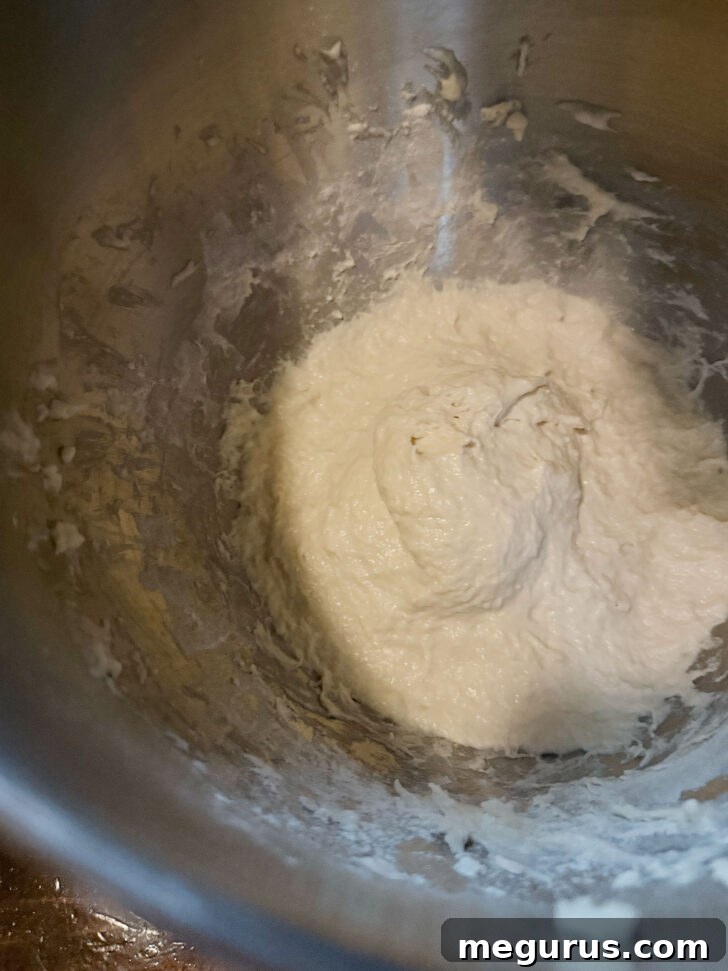
- Prepare the Dough: In the bowl of a stand mixer (or a large mixing bowl if kneading by hand), combine the lukewarm water, instant yeast, olive oil, honey (or sugar), and fine table salt. Stir gently to dissolve. Add the bread flour and mix on low speed with the dough hook attachment until all ingredients are well combined and a shaggy, very sticky dough forms. Avoid overmixing; the goal is just to bring everything together.
- First Rise and Stretch & Fold: Cover the bowl with a clean tea towel and let the dough rest for 15 minutes. This short rest allows the flour to fully hydrate. After 15 minutes, perform the first series of “stretch and folds” directly in the bowl. Lightly oil your hands, grab the edge of the dough, pull it straight up to stretch it, then fold it over onto itself. Rotate the bowl a quarter turn and repeat this process three more times, for a total of four stretches and folds. Re-cover the bowl and let it rest for another 15 minutes. Repeat the stretch and fold process one more time. Finally, cover the bowl again and let the dough rise at room temperature for 1 hour. This extended rest and repeated folding builds gluten structure without intense kneading, leading to focaccia’s characteristic airy crumb.
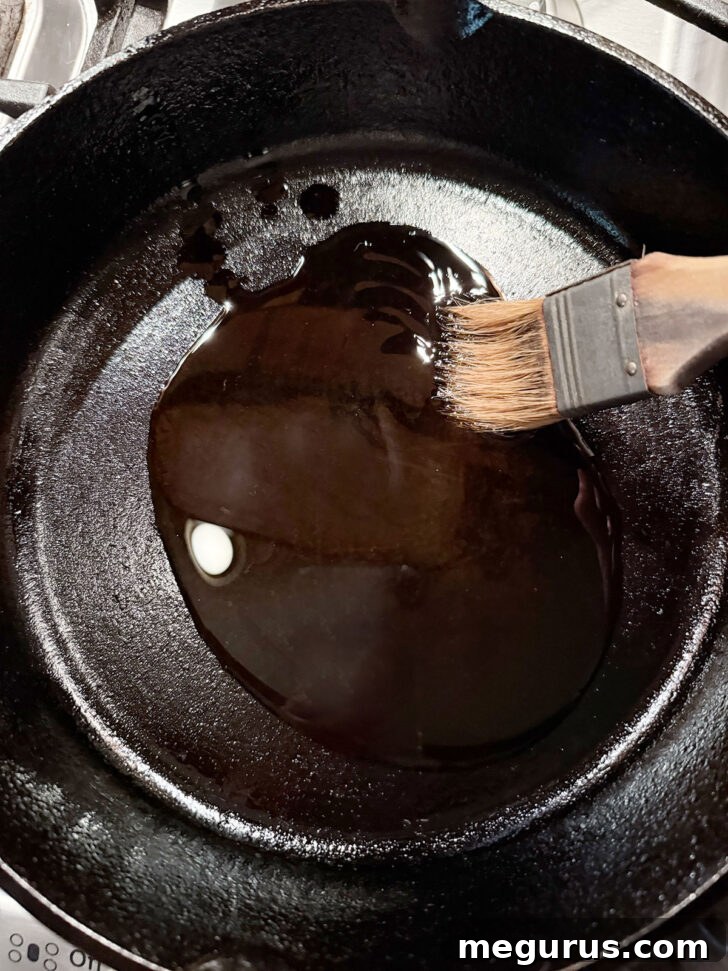
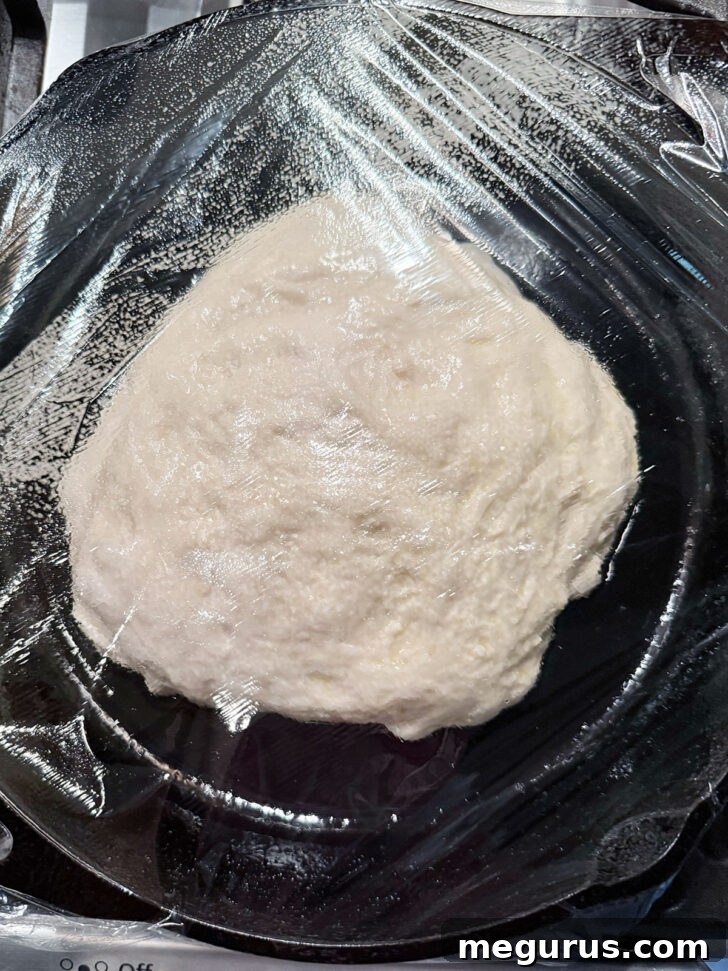
- Prepare the Baking Pan: Generously add 1 tablespoon of olive oil to the bottom of a 9-inch round baking pan or a 10-inch top-diameter cast iron skillet. Use a pastry brush to ensure the oil coats the entire bottom and sides of the pan. This not only prevents sticking but also contributes to the deliciously crisp focaccia crust.
- Transfer and Second Rise: Gently scrape the rested dough into the prepared pan. Perform another quick stretch and fold within the pan, folding the dough over itself a few times to create some tension. Then, gently shape the dough roughly into a round, but do not force it to fill the entire pan; it will naturally spread as it rises. Cover the pan with a large baking sheet or plastic wrap, and let it rise for approximately 1.5 hours, or until it has visibly expanded and nearly filled the pan.
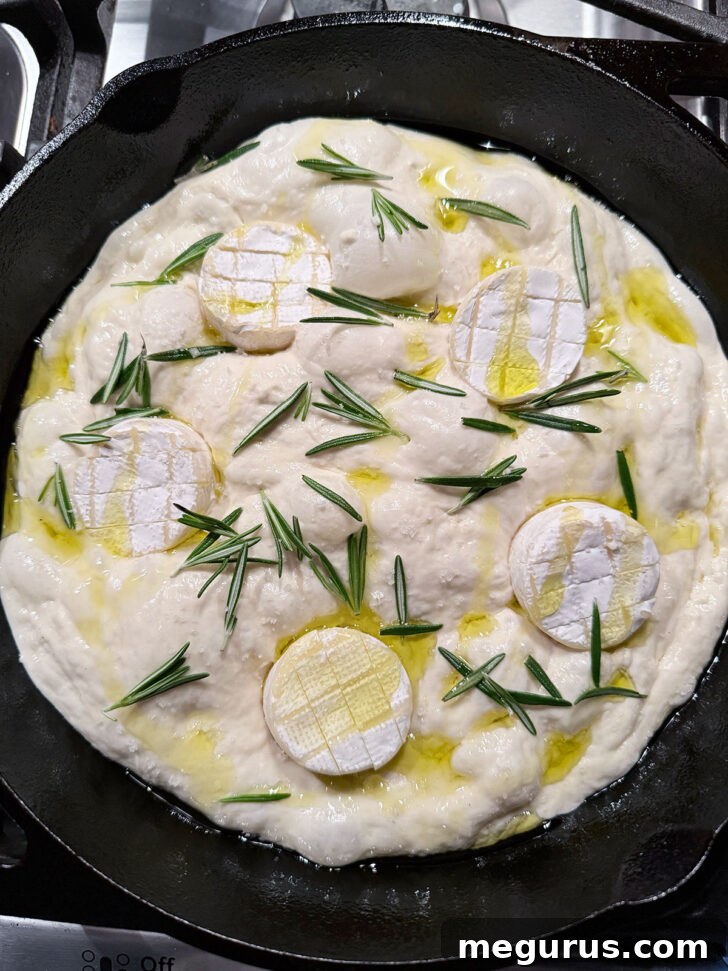
- Prepare Toppings: While the dough undergoes its second rise, prepare your toppings. Use a small sharp knife to lightly score the top of each mini Brie round with a hash pattern (two shallow horizontal cuts and two shallow vertical cuts). This helps the cheese melt beautifully and prevents it from bursting open. Pluck fresh rosemary leaves from their woody stems.
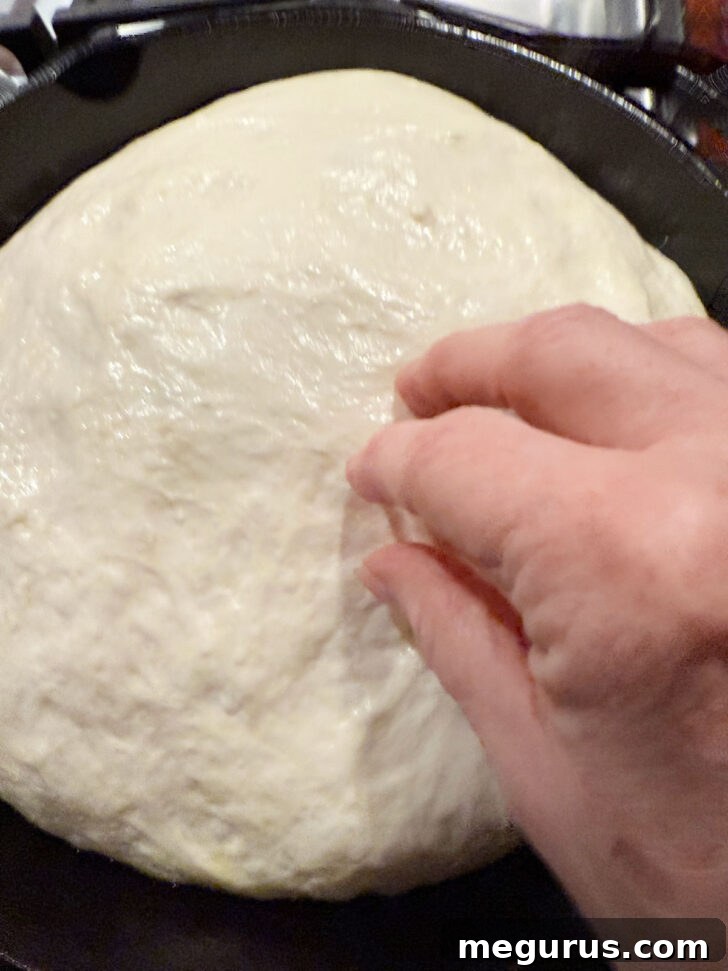
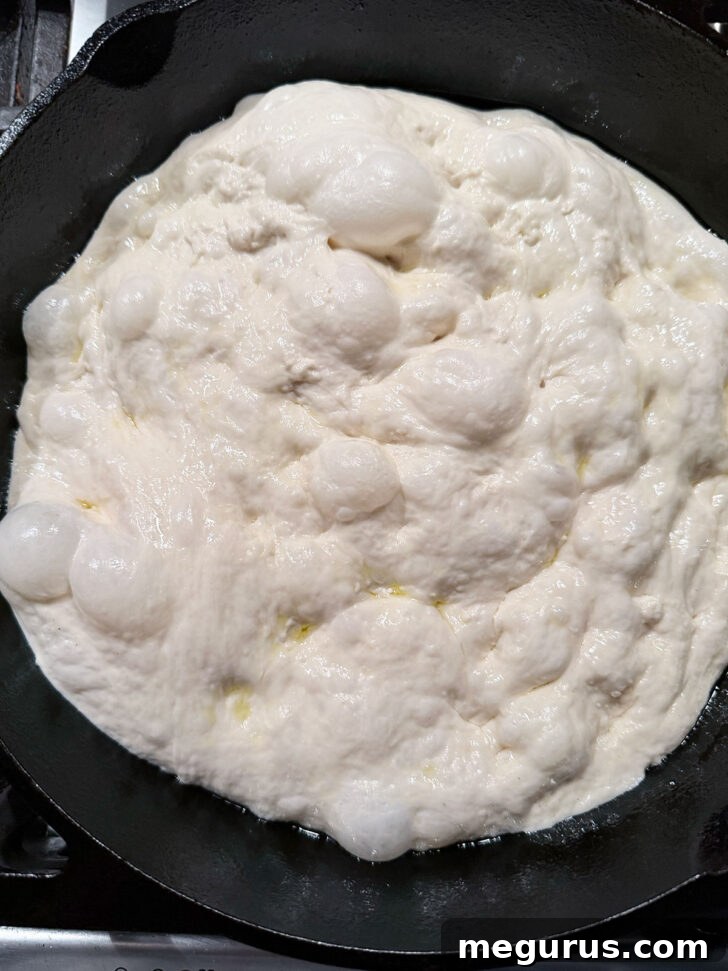
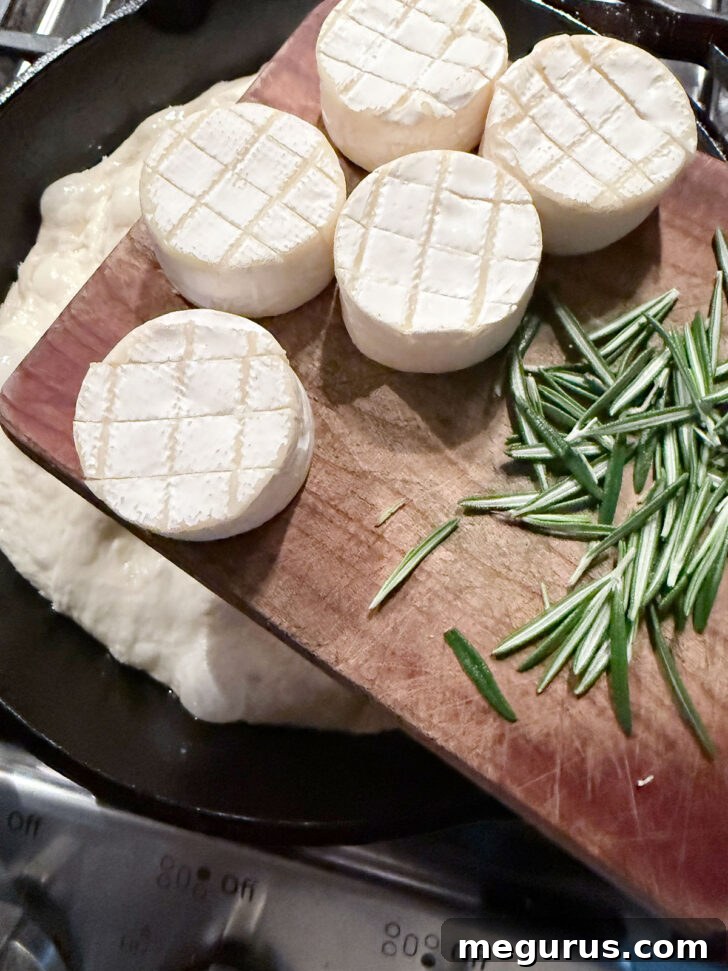
- Dimple the Dough: Once the dough has risen and beautifully filled the pan, gently oil your fingertips. Using a gentle but firm motion, press your fingers straight down into the dough to create numerous dimples, being careful not to deflate the precious air bubbles too much. The dough should look delightfully bubbly after this step.
- Add Toppings: Randomly arrange the scored mini Brie rounds over the dimpled dough, pressing them down ever so slightly. Scatter the fresh rosemary leaves evenly over the surface. Finish with a light drizzle of additional olive oil and a sprinkle of coarse sea salt.
- Preheat Oven: Preheat your oven to 430°F (220°C). For best results, avoid using a convection or fan-assisted setting unless you are familiar with adjusting temperatures for focaccia in your specific oven.
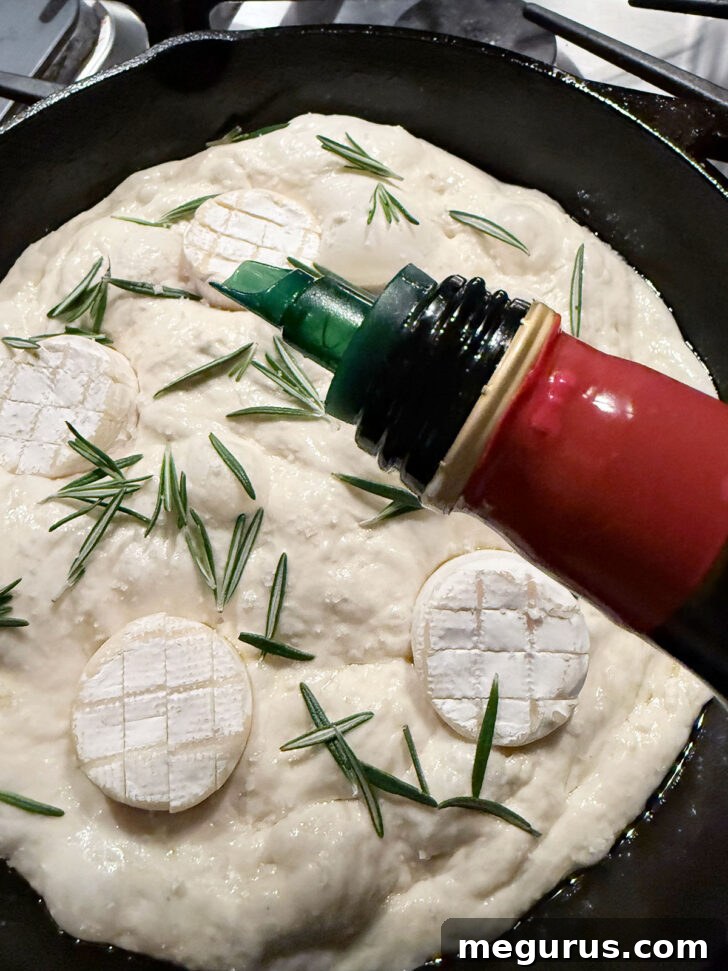
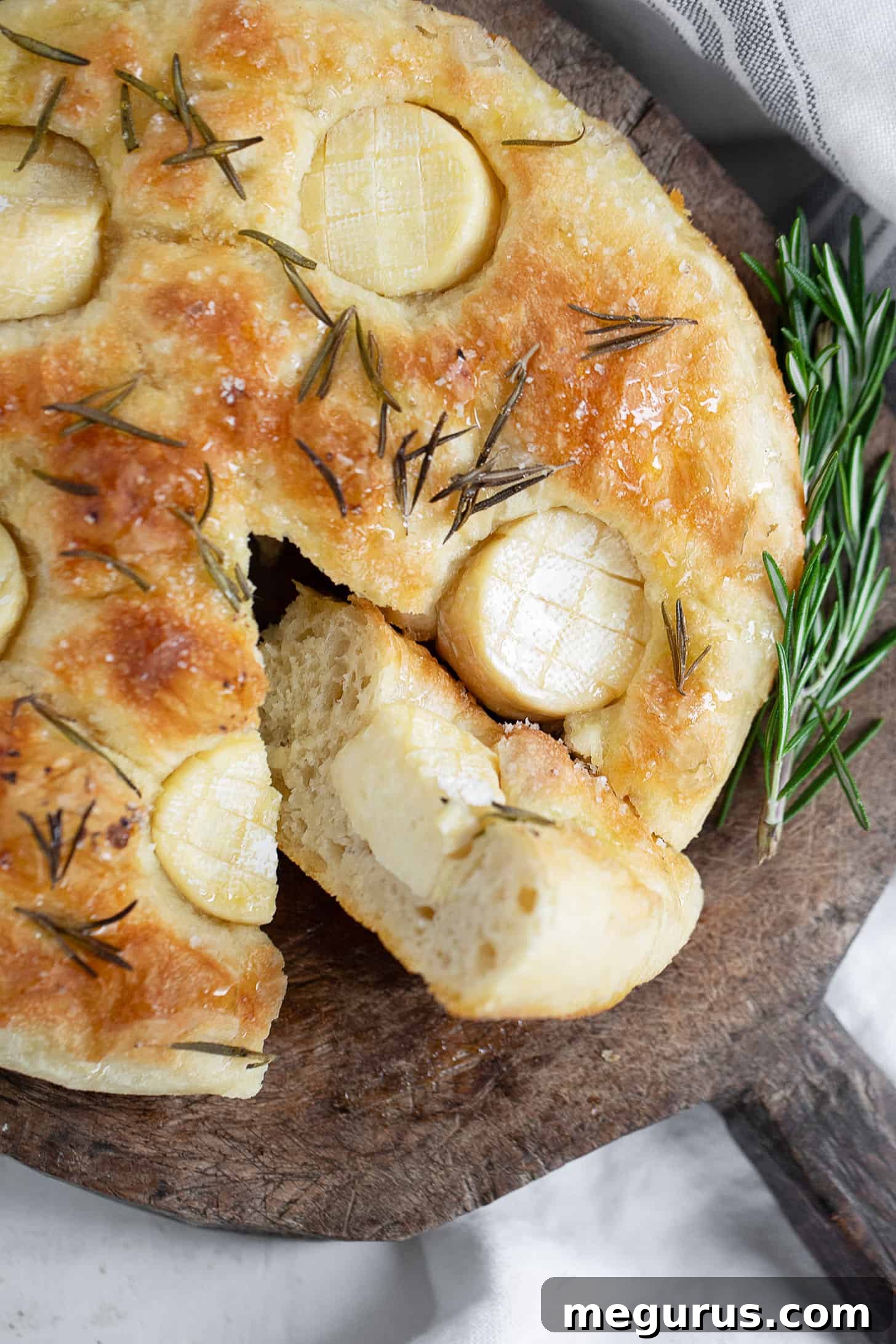
- Bake: Transfer the focaccia to the preheated oven and bake for 19-23 minutes, or until the crust is a deep golden brown and the Brie is melted and bubbly. The baking time can vary slightly depending on your oven.
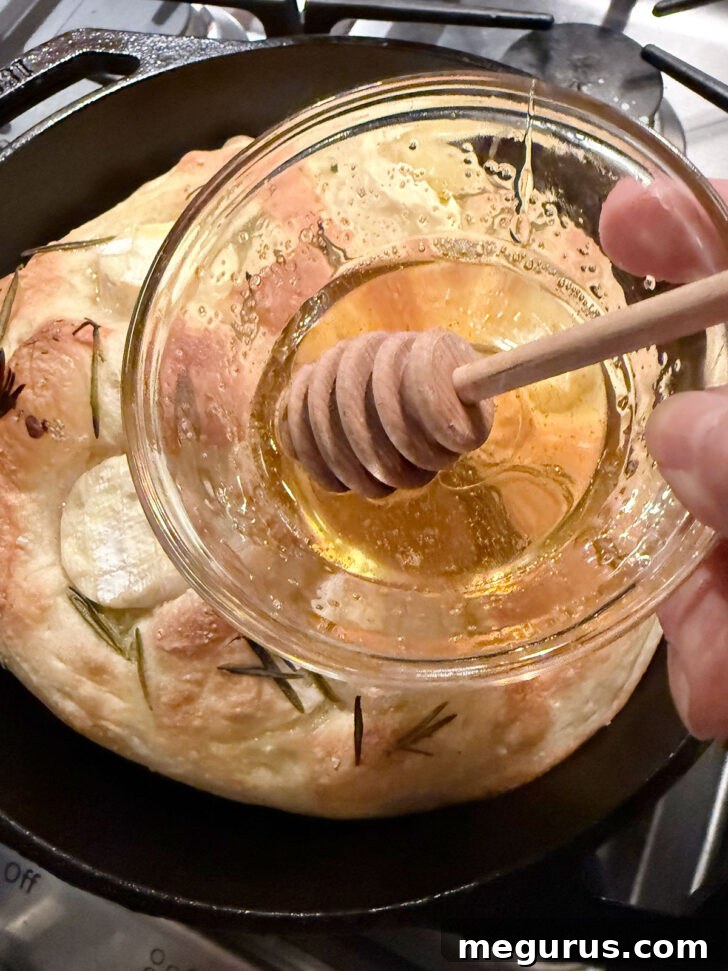
- Honey Drizzle & Cool: Immediately upon removing the focaccia from the oven, generously drizzle it with runny honey while it’s still hot. This allows the honey to lightly melt and meld with the warm cheese and bread. Carefully slide the focaccia out of the baking pan and onto a wire cooling rack to cool slightly before slicing and serving. This prevents the bottom from becoming soggy.
Serving Suggestions for Mini Brie Focaccia
This Rosemary and Mini Brie Focaccia is a versatile dish that shines in many settings. While absolutely delightful on its own as a sophisticated snack or light meal, it also pairs beautifully with a variety of accompaniments. Serve it warm or at room temperature. Consider offering it alongside a rich fig jam for an extra layer of sweetness and fruitiness, or with a shallow bowl of high-quality olive oil and a splash of balsamic vinegar for classic Italian dipping. It makes an excellent starter for an Italian-themed dinner, a beautiful addition to a brunch spread, or a refined appetizer for a wine and cheese evening. Its unique blend of flavors means it also complements light salads, charcuterie boards, or a comforting bowl of tomato soup.
Expert Recipe Tips for Perfect Focaccia!
- Baking Pan Choice: I successfully used an 8-inch diameter cast-iron skillet (measured at the bottom, flaring to 10 inches at the top) for this recipe. If you don’t have a cast-iron skillet, a 9-inch round metal cake pan will work equally well. The key is a pan that allows the dough to spread slightly and achieve a good crust.
- Overnight Rise for Enhanced Flavor: While this is a “same-day” focaccia recipe designed for relatively quick enjoyment, you can dramatically deepen its flavor profile by opting for an overnight cold fermentation. After completing the stretch and fold steps and before transferring the dough to the baking pan, cover the bowl tightly with plastic wrap and refrigerate it overnight (8-12 hours). The next day, remove the cold dough, place it into your oiled baking pan, and allow it to come to room temperature and rise. Be patient, as the cold dough will take longer to proof, potentially 2-3 hours, until it nicely fills the pan. This slower rise develops a more complex, nuanced flavor and a wonderfully airy texture.
- Weighing Ingredients: For the most consistent and accurate results in baking, especially with doughs, using a kitchen scale to weigh your ingredients (particularly flour and water) is highly recommended over volumetric measurements (cups).
- Dough Consistency: Don’t be alarmed by how sticky the dough is initially. Focaccia dough is designed to be very wet, which contributes to its tender crumb. Oiling your hands when handling the dough for stretching and folding will make it much easier to manage.
- Proper Dimpling: Dimpling the dough is not just for aesthetics; it helps create those characteristic pockets of air and prevents the focaccia from puffing up too much like a regular bread loaf. Ensure your fingertips are well-oiled to prevent sticking.
- Don’t Skimp on the Olive Oil: The generous amount of olive oil used in the pan and drizzled over the top is crucial for the focaccia’s flavor, texture, and crispy crust. It’s an essential part of what makes focaccia so delicious.
Make Ahead, Storing, and Freezing Your Focaccia
Get the Recipe: Mini Brie Focaccia
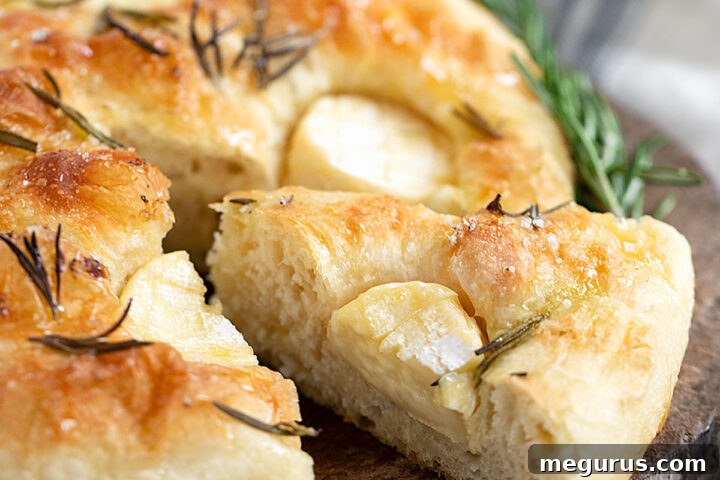
Rosemary focaccia topped with mini rounds of Brie cheese and drizzled with honey after baking. A great appetizer for entertaining!
Prep Time: 15 mins
Rising Time: 3 hrs
Total Time: 3 hrs 15 mins
Yield: 10 servings
Ingredients
For the focaccia dough:
- 2 cups (250 g) bread flour, spooned and levelled
- 7/8 cup (210 g) lukewarm water, about 105F
- 1 teaspoon (3.5 g) Instant yeast *see Note 1 below for using Active dry yeast
- 1/2 Tablespoon olive oil
- 1/2 teaspoon honey or white sugar
- 3/4 teaspoon fine table salt
For the pan:
- 1 Tablespoon olive oil
For topping before baking:
- 5 mini Brie cheese rounds, *see Note 2 below
- Coarse salt
- Rosemary leaves
For topping after baking:
- Runny honey, for drizzling
Instructions
- Tip! For best results, use a kitchen scale and weigh the ingredients with the weight measurements.
- In a large bowl or the bowl of a stand mixer fitted with the kneading hook, mix together the lukewarm water, instant yeast, olive oil, honey and salt. Add the flour and stir together until well combined. The dough will be very sticky! Cover the bowl with a tea towel and let rest for 15 minutes.
- Stretch and fold the dough (*see the Notes section below for how to stretch and fold the dough). Cover the bowl again and rest for another 15 minutes. Do another series of stretches and folds. Cover with the towel again and let rise for one hour.
- Add the oil to the bottom of a 9-inch round baking pan or a 10-inch top-diameter cast iron skillet. Use a brush to spread the oil evenly over the bottom of the pan. Scrape the dough into the greased pan, then stretch and fold the dough in the pan, top over bottom, bottom over top, then flip it over so that the smooth side is up. Roughly shape the dough into a round, but don’t stretch the dough to fill the pan. It will spread on its own as it rises. (See the step-by-step photos above to see how much of the pan it should fill before it rises.) Use a large baking sheet placed on top of the baking pan as a cover and let the dough rise for an hour and a half. (Alternatively, cover the baking pan with plastic wrap.)
- Use a knife to score the top of the mini Brie rounds with a hash pattern (two shallow slices horizontally and two slices vertically). Remove some rosemary leaves from the woody stem and set aside.
- Preheat the oven to 430F (non-convection/not fan-assisted).
- After the dough has risen, oil your hands and use your fingertips to make lots of dimples in the dough. Place the mini Brie rounds randomly on top of the dough, pressing them into the dough slightly. Scatter some rosemary leaves over the top of the dough. Drizzle with a bit more olive oil and sprinkle the top with a little coarse salt.
- Bake in the preheated oven 19-23 minutes or until deep golden.
- Remove from the oven and immediately drizzle the top of the focaccia with honey. Slide the focaccia out of the baking pan and onto a wire cooling rack to cool.
- Serve warm or at room temperature. This focaccia is nice as is, or serve with fig jam or balsamic vinegar and olive oil, for dipping.
Notes
How to stretch and fold the dough: You can stretch and fold the dough right in the mixing bowl. Lightly oil your hands and grab the dough around the edge of the bowl. Pull the dough straight up to stretch it, then lay it down across the top of the dough. Rotate the bowl a quarter turn and repeat the stretch and fold. Rotate the bowl another quarter turn and stretch and fold 2 more times, for a total of 4 stretches and folds around the bowl.
Note 1: For Active Dry yeast, add the yeast to the lukewarm water and the honey (or sugar). Stir and let stand 10 minutes before adding to the bowl with the other dough ingredients.
Note 2: The mini Brie cheese rounds I used (Ile de France) are 25g each and come in a package of 5, for a total of 125g (or 4.5oz).
Be sure to read the notes above this Recipe Card, for more tips on making this recipe. You’ll also find step-by-step photos there, that you might find helpful.
Cuisine: American, Canadian
Course: Bread
Author: Jennifer Maloney
Serving: 1 serving, Calories: 109kcal, Carbohydrates: 18g, Protein: 3g, Fat: 3g, Saturated Fat: 0.4g, Polyunsaturated Fat: 0.4g, Monounsaturated Fat: 2g, Sodium: 176mg, Potassium: 25mg, Fiber: 1g, Sugar: 0.1g, Vitamin A: 1IU, Calcium: 5mg, Iron: 0.2mg
Storage Tips:
- Room Temperature: This focaccia is best enjoyed the day it’s baked, especially while still warm. If you have leftovers, store them in an airtight container at room temperature for up to 2 days. The crust might soften slightly over time.
- Refrigeration: While not ideal for preserving its fresh texture, you can store focaccia in an airtight container in the refrigerator for up to 3-4 days. It’s best to bring it to room temperature or gently reheat before serving.
- Freezing: Focaccia freezes beautifully! Once completely cooled, wrap individual slices or the entire focaccia tightly in plastic wrap, then again in aluminum foil. It can be frozen for up to 1-2 months.
- Reheating: To reheat, thaw frozen focaccia in the refrigerator overnight. For best results, warm it in a preheated oven at 350°F (175°C) for 5-10 minutes, or until warmed through and the crust is crisp again. A toaster oven also works well for individual slices.