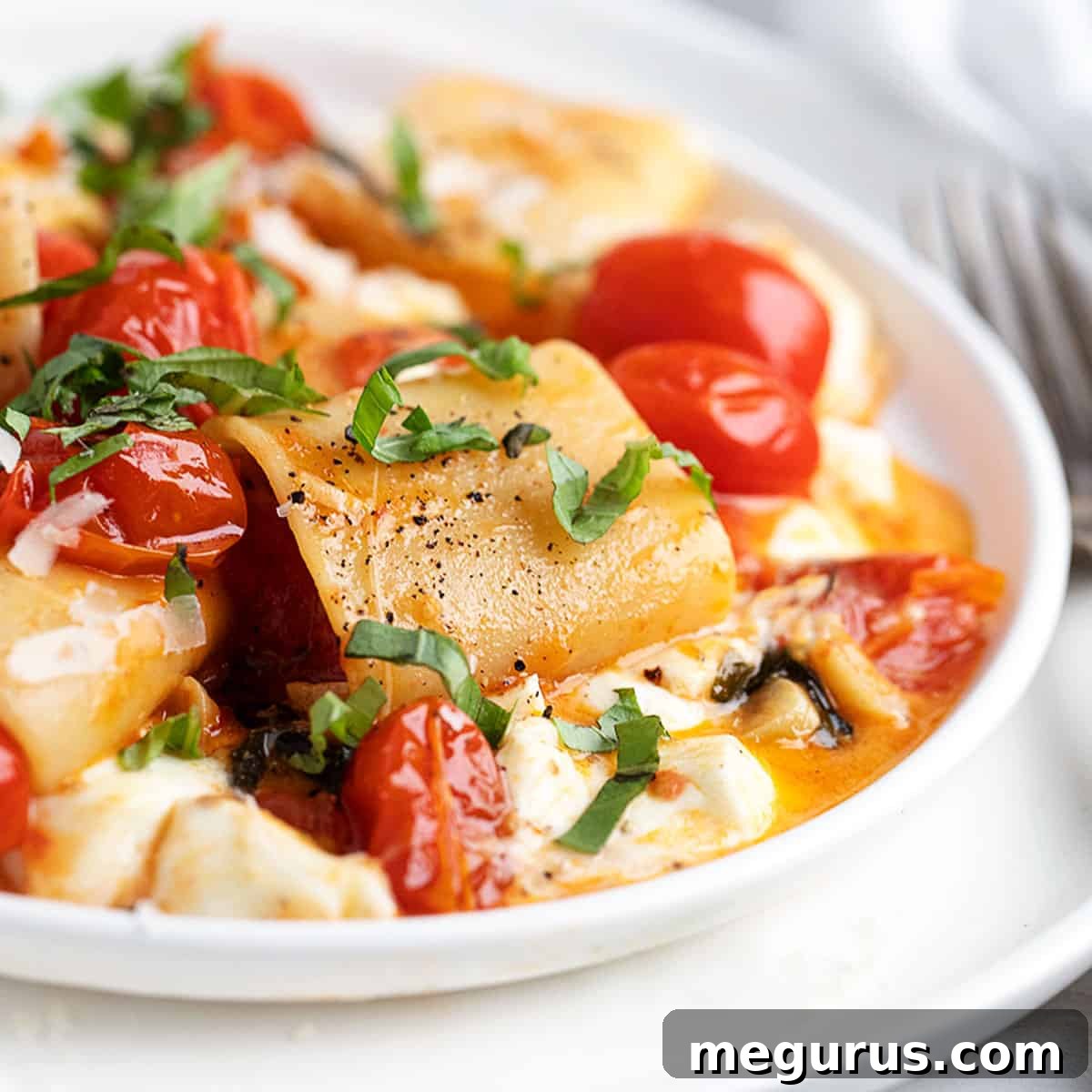
Discover the authentic taste of Southern Italy with Pasta alla Sorrentina, a cherished classic that celebrates the simplicity and vibrancy of fresh ingredients. This exquisite dish brings together hearty Paccheri pasta, a luscious burst cherry tomato sauce, generous chunks of creamy Buffalo mozzarella, and the aromatic freshness of basil and garlic. It’s a culinary journey that transports you straight to the sun-drenched coast of Sorrento, offering a delightful meal perfect for any time of year, but truly exceptional when prepared with peak-season summer tomatoes and fragrant basil.
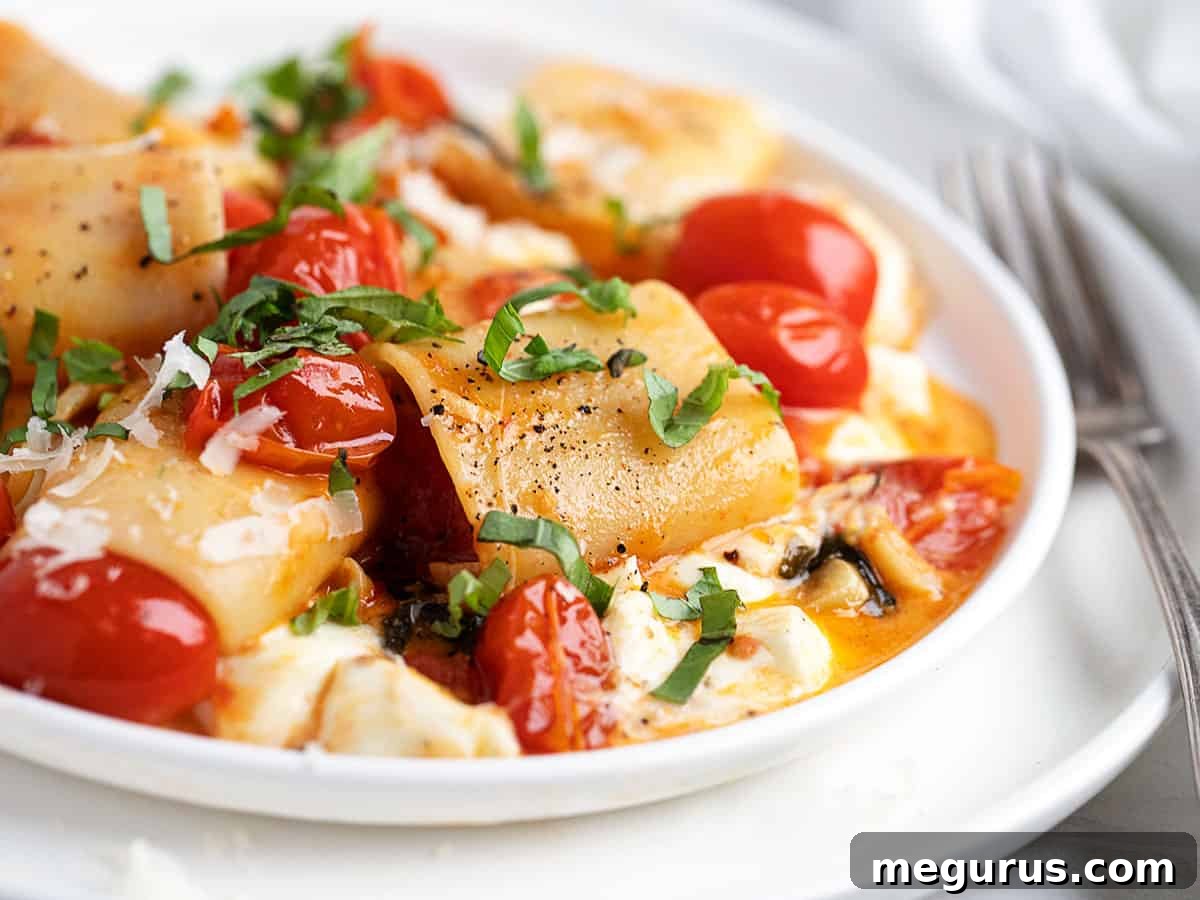
What is Pasta alla Sorrentina? A Taste of Italian Tradition
Despite its elegant name, Pasta alla Sorrentina is a testament to the Italian philosophy of elevating humble ingredients into a truly extraordinary culinary experience. Originating from the picturesque region of Sorrento, this dish is a staple of Neapolitan cuisine, renowned for its fresh, vibrant flavors and comforting appeal. It’s more than just a pasta dish; it’s an ode to the Mediterranean diet, showcasing the inherent deliciousness of high-quality components. At its heart, Pasta alla Sorrentina allows each ingredient to shine – from the robust texture of the pasta to the bright acidity of the tomatoes, the delicate perfume of fresh basil, the pungent kick of abundant garlic, and, of course, the irresistible melt of premium mozzarella cheese. It’s particularly suited for summer enjoyment, when garden-fresh basil and sun-ripened cherry tomatoes are at their absolute best, bursting with natural sweetness and aroma.
The Magic of Simple, High-Quality Ingredients
The secret to an unforgettable Pasta alla Sorrentina lies not in complexity, but in the unwavering commitment to the finest and freshest ingredients. Just like many traditional Italian recipes, this dish thrives on quality. Think of it as a symphony where each instrument plays a crucial role; if one is out of tune, the whole composition suffers. Investing in excellent pasta, perfectly ripe tomatoes, vibrant fresh basil, pungent garlic, and a ball of good mozzarella will make all the difference. While we’ve provided some substitution suggestions, remember that the closer you stick to authentic, top-tier ingredients, the more rewarding your culinary result will be. This approach not only enhances the flavor profile but also connects you to the rich culinary heritage of Italy, where respect for ingredients is paramount.
Choosing Your Ingredients for Authentic Flavor
Pasta Perfection: The Foundation of Your Dish
For this Pasta alla Sorrentina, we’ve chosen Paccheri pasta, a large, wide, tube-shaped pasta that is a true delight. Hailing from Campania, Paccheri is known for its impressive size and ability to capture and hold rich sauces within its generous folds. While it might be a bit harder to find in some local grocery stores, it’s often available at Italian markets or specialized online retailers. Discovering Paccheri feels like a culinary treat, and its hearty texture makes it well worth the effort to seek out. However, if Paccheri isn’t readily available, don’t let that deter you! Many other short, tube-shaped pastas work wonderfully here. Penne, rigatoni, or even mezzani (a slightly smaller version of paccheri) are excellent alternatives that will still provide a satisfying bite and scoop up plenty of that delicious sauce. The key is to select a pasta that is substantial enough to stand up to the sauce without being overwhelmed, ensuring a balanced and delightful culinary experience.
Tomato Triumph: The Heart of the Sauce
Our preference for this recipe leans towards fresh cherry tomatoes, especially during the warmer months when they are sweet, juicy, and abundant. These little gems burst beautifully when cooked, releasing their concentrated flavor and creating a naturally sweet and fresh sauce. Imagine using cherry tomatoes picked straight from your own garden – that’s the ultimate flavor boost! However, a truly great Pasta alla Sorrentina isn’t confined to seasonality. If fresh cherry tomatoes aren’t at their peak, or if you simply prefer a more robust sauce, high-quality canned whole tomatoes (preferably San Marzano from Italy) are an excellent substitute. When using canned whole tomatoes, simply crush them by hand directly into the pan, discarding any excess liquid from the can. This allows you to bypass the initial cooking down step for cherry tomatoes, streamlining your preparation while still achieving a rich, flavorful base.
Mozzarella Masterpiece: The Creamy Indulgence
The distinctive creaminess of Pasta alla Sorrentina comes from the star cheese: mozzarella. We highly recommend using a fresh ball of Buffalo Mozzarella (Formaggio Di Bufala Mozzarella) if you can find it. Buffalo mozzarella, made from the milk of Italian Mediterranean buffalo, boasts a richer, tangier flavor and a softer, more luxurious texture compared to standard cow’s milk mozzarella. It melts beautifully, creating those iconic gooey, luscious pockets throughout the dish. If Buffalo mozzarella is elusive, a high-quality fresh cow’s milk mozzarella ball is an excellent second choice. Alternatively, small bocconcini balls can also be used, offering individual pockets of melty cheese. For those with limited options, regular block-style mozzarella, cut into cubes, will also work. Keep in mind that block mozzarella may require a little extra heat and stirring in the pan to achieve that desirable, gooey melt.
Aromatic Essentials: Fresh Basil and Garlic
No Italian pasta dish is complete without the aromatic powerhouses of fresh basil and garlic, and Pasta alla Sorrentina is no exception. This recipe truly demands the vibrant, peppery notes of fresh basil. Its bright green leaves and sweet, fragrant aroma are integral to the dish’s character. While dried basil can be used in a pinch, we strongly encourage sourcing fresh basil for an authentic experience. If fresh is absolutely unavailable, freeze-dried basil (often found in larger jars in the produce section) is a superior alternative to regular dried basil, as it retains more of its natural flavor and color. Similarly, the robust, pungent flavor of fresh garlic is irreplaceable. For the best results, start with whole bulbs of garlic and peel and slice them yourself just before cooking. Avoid pre-minced garlic, which often lacks the potent aroma and complex flavor of freshly prepared cloves. The careful handling of garlic is crucial to avoid bitterness – a detail we’ll emphasize in our cooking instructions.
The Supporting Cast: Olive Oil, Chili Flakes, and Seasoning
The foundation of any good Italian sauce begins with high-quality extra-virgin olive oil. Its fruity notes provide a beautiful base for sautéing the garlic and tomatoes. Crushed red pepper flakes are added for a subtle hint of warmth and a touch of traditional Southern Italian spice, which can be adjusted to your personal preference. Kosher salt is used to season the dish throughout the cooking process, bringing out the natural flavors of the ingredients. An optional pinch of sugar can be added, particularly if your tomatoes are on the tart side, to balance the acidity and enhance their sweetness. Finally, a knob of butter at the end contributes to a silkier, richer sauce, adding an extra layer of decadence that elevates the overall dish.
Crafting Your Sorrentina: A Step-by-Step Guide
This section provides a detailed summary of the cooking process. For precise measurements and complete instructions, always refer to the full recipe card below. While not every nuance might be illustrated, these steps will guide you through creating this delightful pasta dish.
Preparing the Pasta: Timing is Key
Given the generous size of Paccheri pasta, it often requires a longer cooking time than smaller pasta shapes – sometimes even longer than indicated on the package. To ensure perfect synchronization with your sauce, begin by bringing a large pot of water to a rolling boil. Season the water generously with salt; this is your only chance to infuse the pasta itself with flavor. Once the water is vigorously boiling, add the Paccheri and cook according to package directions, or until it reaches a perfect al dente. This means it should be tender but still have a slight bite in the center. While the pasta cooks, you can start preparing your flavorful sauce, ensuring everything comes together seamlessly.
Building the Sauce: A Symphony of Flavors
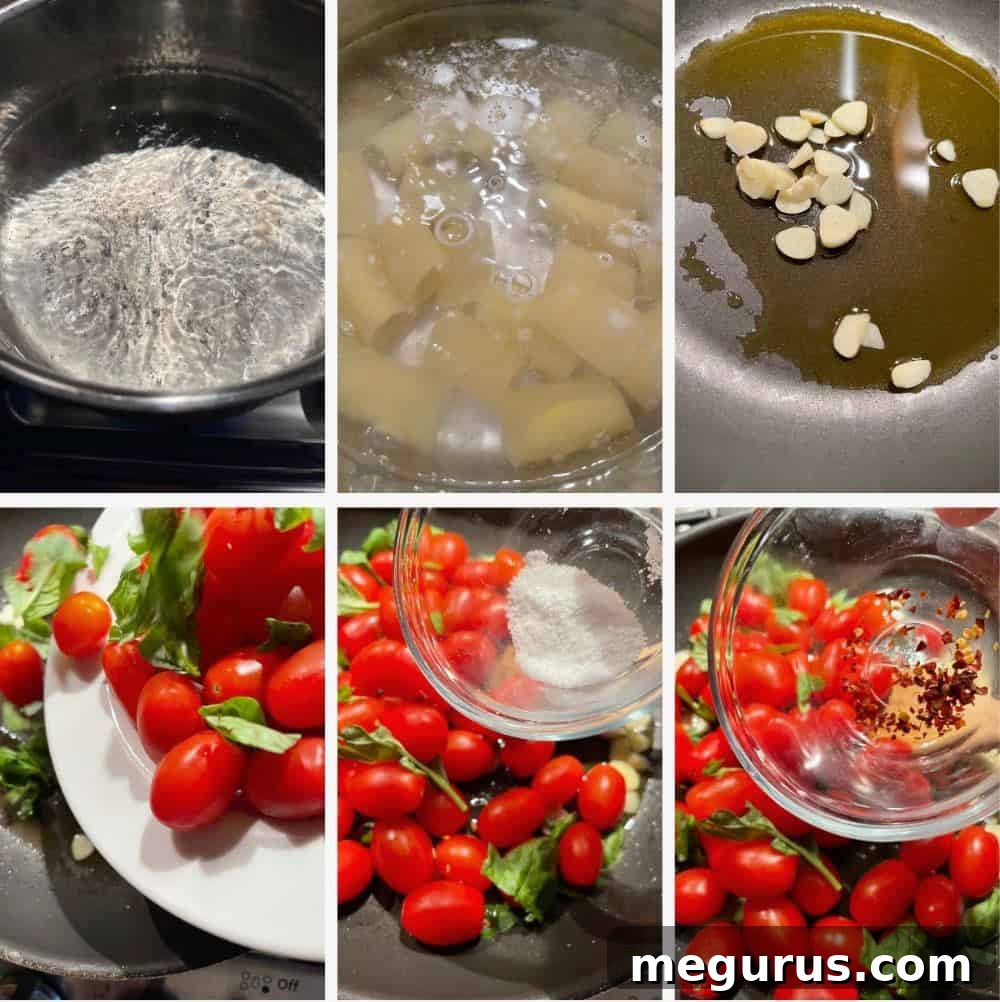
In a spacious skillet, combine your extra virgin olive oil and sliced fresh garlic. Heat this mixture gently over medium-low heat. The goal is to infuse the oil with garlic’s aroma without burning it. As soon as you see tiny bubbles forming around the garlic, indicating the oil is warmed, it’s time to add the cherry tomatoes and fresh basil. Stir in the crushed red pepper flakes, salt, and the optional pinch of sugar. Increase the heat slightly to medium and cook, stirring occasionally, until the skins of the cherry tomatoes begin to soften and crack. This “bursting” action releases their sweet juices, forming the core of your sauce.
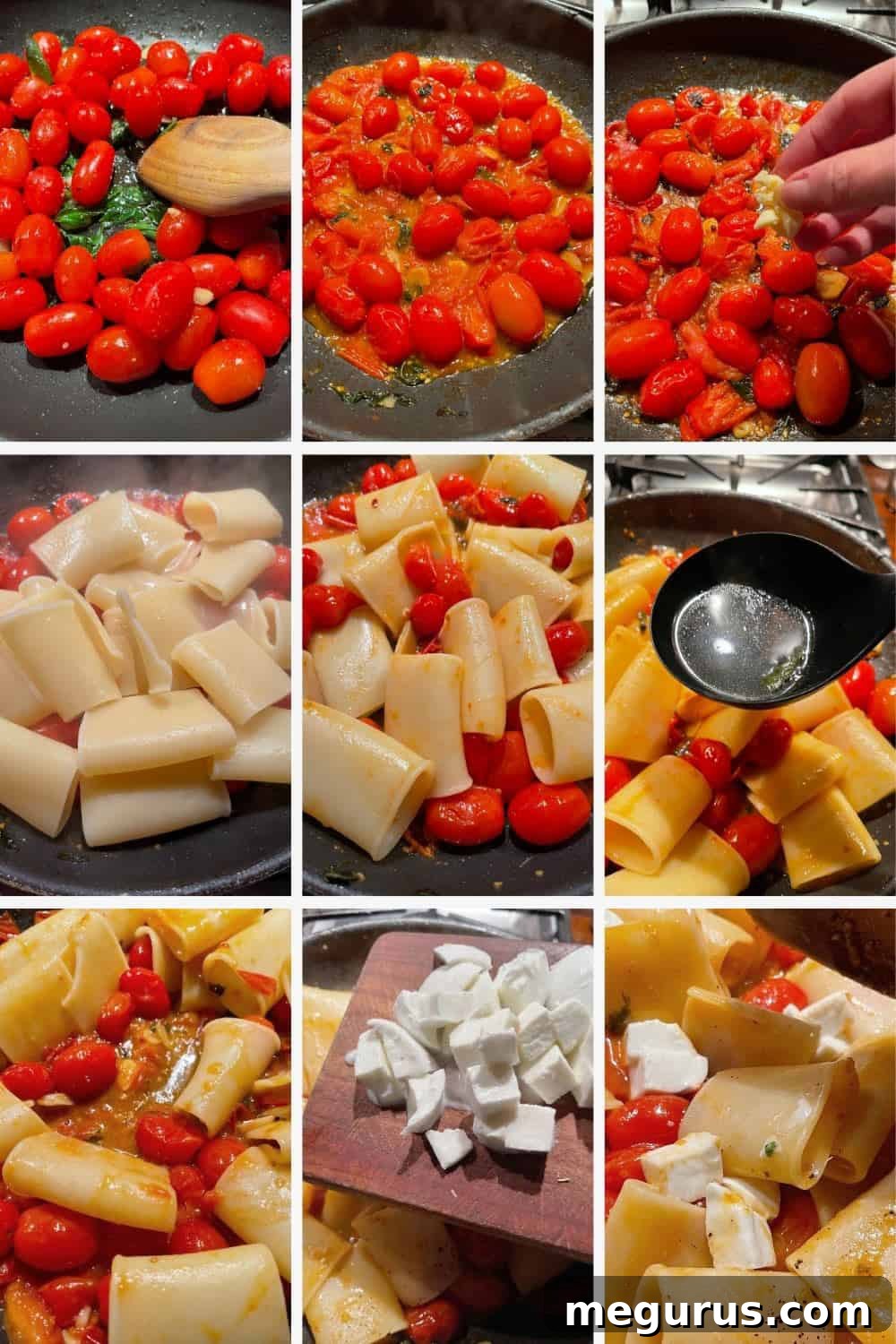
Throughout this process, vigilantly watch your garlic. Burnt garlic will introduce a bitter, unpleasant flavor to your entire dish, so prevent it from turning dark brown. If you notice the garlic starting to color too much, quickly add a tablespoon or two of water to the pan. This will cool the oil and halt the browning process, preserving the sweet, mellow garlic flavor. As the tomatoes soften and burst, use the back of a large spoon or a potato masher to gently smash about half of them. This creates a beautifully rustic texture for your sauce, with some tomatoes remaining whole for bursts of fresh flavor and others broken down to thicken the sauce. At this point, if you desire, stir in a pat of butter for added richness and gloss.
Bringing It All Together: The Grand Finale
Once your pasta is perfectly al dente, resist the urge to drain it completely in a colander. Instead, use tongs for long pasta or a spider strainer for short pasta to transfer the cooked pasta directly from the boiling water into the skillet with your tomato sauce. Allow any excess pasta water to drip back into the pot – this reserves that starchy, flavorful liquid for later use. Once the pasta is in the skillet, add about half a ladle (approximately 1/4 cup) of the reserved pasta cooking water. Stir everything together and cook for an additional 1-2 minutes over medium heat. This step is crucial: the starchy pasta water helps the sauce emulsify and cling beautifully to the pasta, creating a cohesive and flavorful dish. It also allows the pasta to absorb more of the sauce’s flavor, completing its journey to perfection.
The Mozzarella Finish: Creamy Perfection
After the pasta has mingled with the sauce, remove the skillet from the heat. Now, stir in the cubed fresh mozzarella. The residual heat from the pan will be sufficient to gently soften and melt the mozzarella into delightful pockets of creamy goodness, without fully incorporating it into the sauce. This technique preserves the distinct texture and flavor of the cheese. Season the entire dish generously with freshly ground black pepper. Serve immediately, garnished with a sprinkle of freshly grated Parmesan cheese and a generous scattering of thinly sliced fresh basil leaves for a final flourish of aroma and color. If you are using regular block mozzarella, you might want to briefly return the skillet to very low heat while stirring, just until the cheese starts to visibly soften, then remove immediately to serve.
Tips for an Unforgettable Pasta alla Sorrentina
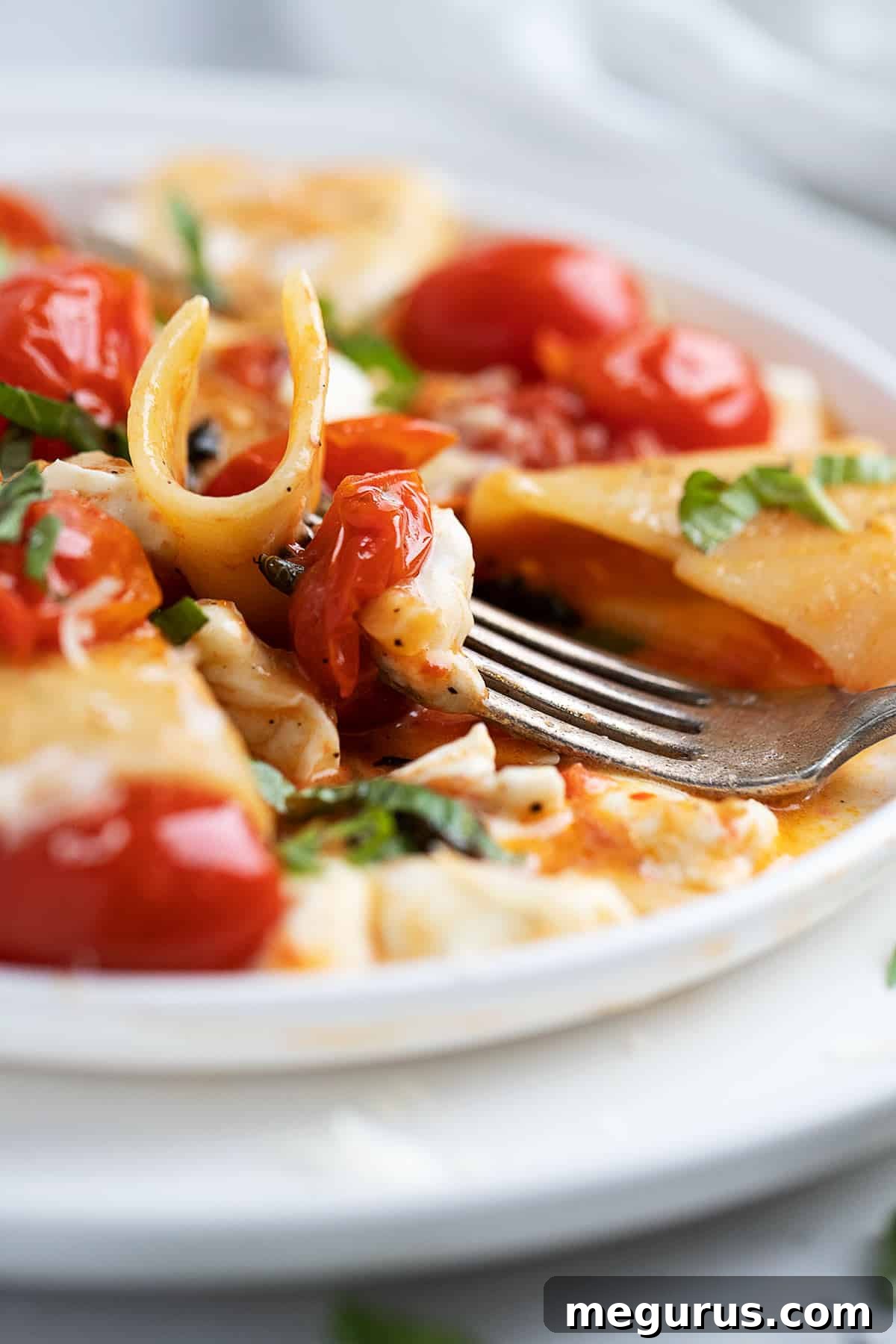
- The Art of Al Dente: Large pasta shapes like Paccheri can be tricky. Always taste your pasta as it cooks, starting a few minutes before the package suggests. It should be firm to the bite but cooked through. Paccheri, in particular, will lose its perfectly round shape and collapse slightly into an oval when ready. Cooking it al dente ensures it holds up well with the sauce and continues to cook slightly when combined.
- The Power of Pasta Water: If you’re still draining your pasta directly into the sink, it’s time for a game-changer! Instead, use tongs (for long pasta) or a spider strainer (for short pasta) to transfer the cooked pasta directly into your sauce pan. This method keeps plenty of starchy pasta cooking water readily available. This starchy water is liquid gold for your sauce; it helps create a silky, emulsified sauce that clings beautifully to the pasta. Don’t worry about a few extra drops of water on the pasta; they’ll quickly cook off into the sauce. Plus, you’ll avoid lugging a heavy pot of boiling water across your kitchen – a win-win for safety and convenience!
- Garlic Guard: This is arguably the most critical tip for many Italian sauces. Garlic is fantastic when golden and fragrant, but quickly turns acrid and bitter if burnt. Keep your heat on medium-low when starting the garlic and olive oil. As soon as you see the slightest hint of color or strong sizzling, add your tomatoes and basil, or a tablespoon of water to halt the cooking process. A little patience here prevents a ruined dish.
- Ingredient Quality Matters: We can’t stress this enough. For a dish with so few ingredients, each one contributes significantly. Seek out the best extra-virgin olive oil, the freshest basil and garlic, and the highest quality mozzarella and tomatoes you can find. It truly makes a noticeable difference in the final flavor profile.
Recipe Video
For a visual guide to crafting this exquisite dish, a detailed recipe video is available to walk you through each step.
Variations to Explore
Baked Pasta alla Sorrentina: A Comforting Twist
While traditionally served fresh from the pan, Pasta alla Sorrentina also lends itself beautifully to baking, offering a slightly different texture and even deeper flavors. If you prefer a heartier, gratin-style dish, simply transfer the pasta and sauce mixture (after stirring in the fresh mozzarella) into an oven-safe skillet or baking dish. Pop it into a preheated 400°F (200°C) oven and bake for 6-8 minutes, or until the cheese is gloriously bubbly and slightly browned, and the edges of the pasta begin to crisp. This baking process melds the flavors wonderfully, resulting in a comforting dish with a drier, more concentrated sauce and delightfully crispy bits of pasta and cheese.
Adding Protein or Vegetables
While the classic Pasta alla Sorrentina is perfect in its simplicity, feel free to personalize it with a few additions. Cooked shredded chicken or sautéed shrimp can be folded in at the end for an extra protein boost. For added vegetables, consider gently sautéing some finely diced eggplant, zucchini, or bell peppers with the garlic before adding the tomatoes. Remember to keep the additions minimal to respect the dish’s core philosophy of simple ingredients shining through.
Serving Suggestions for a Complete Meal
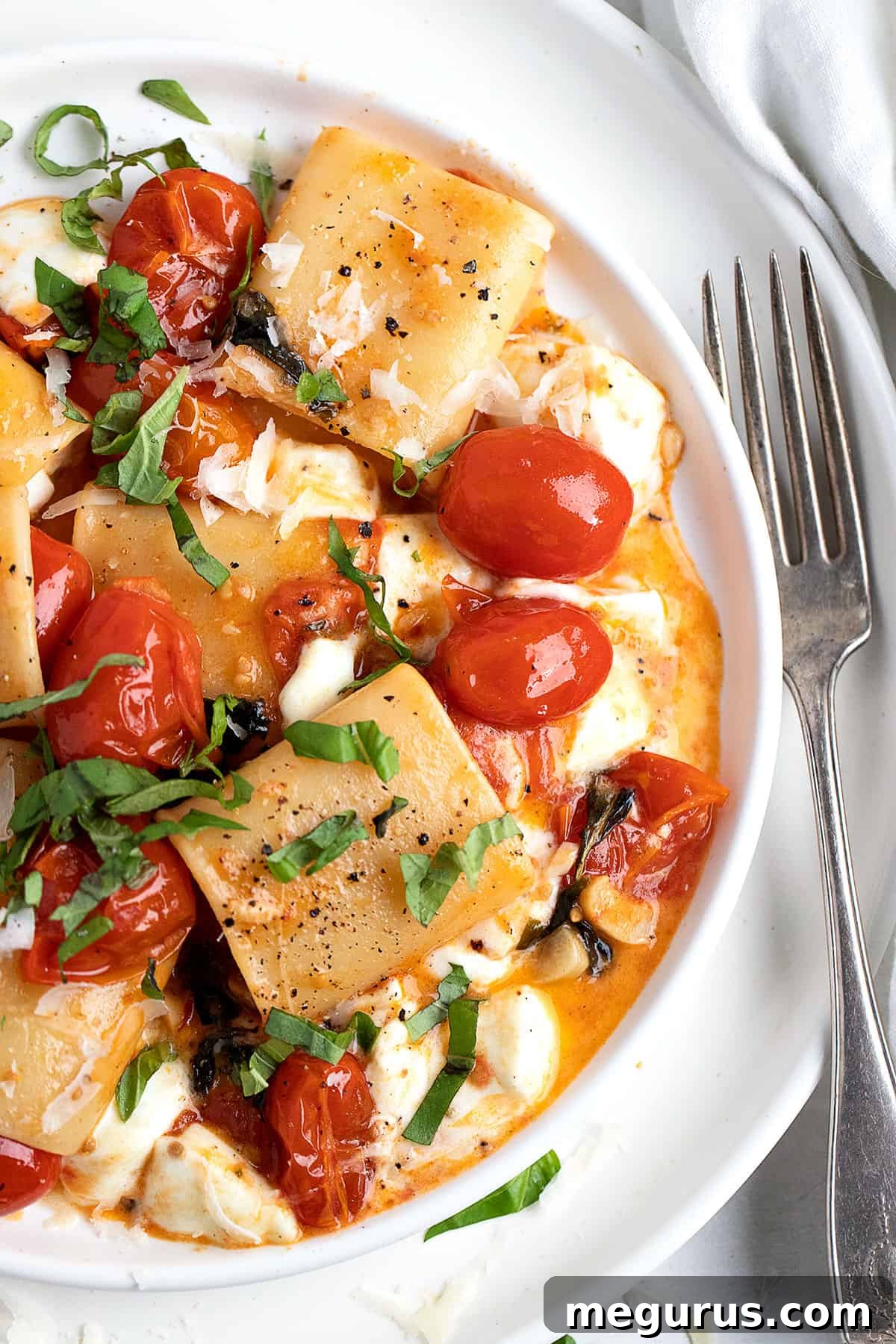
Pasta alla Sorrentina is a satisfying meal on its own, but it pairs wonderfully with a few simple accompaniments. A crisp green salad with a light vinaigrette provides a refreshing counterpoint to the rich pasta. Crusty Italian bread is essential for soaking up every last drop of the delicious sauce. For a wine pairing, a light-bodied red like a chilled Barbera or a robust white such as a Falanghina or Vermentino would complement the fresh tomato and basil flavors beautifully.
Get the Recipe: Pasta alla Sorrentina
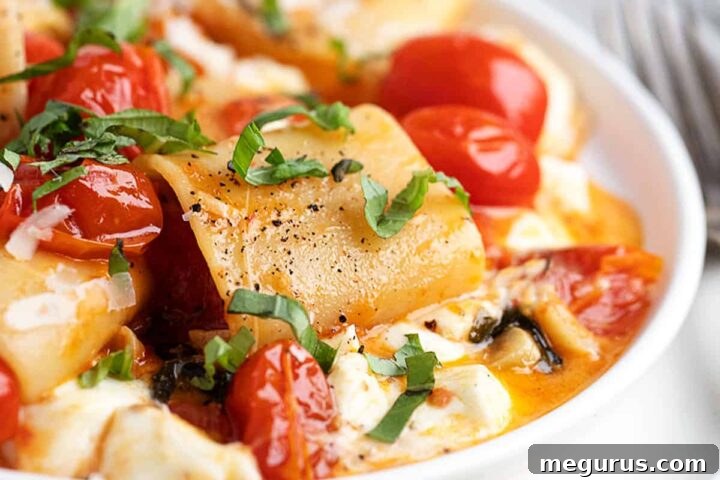
Paccheri pasta, with a burst cherry tomato sauce and chunks of Buffalo mozzarella, combine with fresh basil and garlic for a classic Pasta alla Sorrentina!
Pin This
Prep Time: 15 mins
Cook Time: 30 mins
Total Time: 45 mins
Yield: 4 servings
Ingredients
- 3 Tablespoons extra-virgin olive oil, plus more for drizzling
- 3-4 cloves garlic, roughly sliced (not too thin)
- 1 lb fresh cherry tomatoes, or canned whole tomatoes *see Note 1
- 1/2 cup basil leaves, loosely packed and torn if large
- 1/8 – 1/4 teaspoon crushed red pepper flakes
- 3/4 teaspoon Kosher salt, plus more, to taste
- Pinch sugar, optional
- 1 teaspoon butter, optional
- 12 oz Paccheri pasta tubes, 16-18 paccheri or more if using smaller pasta, about 14 oz *see Note 2
- 3.5 oz Buffalo or Fresh Mozzarella Ball, cut into 1/2-inch cubes (100g) *see Note 3
For serving:
- Finely grated Parmesan
- Fresh basil, thinly sliced
Instructions
- Start a large pot of water boiling for the pasta and salt it well. Once boiling, add the pasta to the pot and cook according to package directions, or until al dente.
- Add the olive oil and garlic to a skillet on the stovetop. Turn the heat on to medium-low and heat the oil and garlic slightly. As soon as the oil is heated and you can see tiny bubbles around the garlic, add the cherry tomatoes and basil to the pan and raise the temperature slightly. Add the red pepper flakes and salt (and a pinch of sugar, if using). Cook, stirring, until the skin on the cherry tomatoes starts to crack open. Make sure the garlic doesn’t brown during this process. If it is starting to color at all, add a Tablespoon or 2 of water to the pan to stop the garlic browning.
- When the tomatoes start cracking, use the back of a large spoon to smash about 1/2 of the cherry tomatoes. Add the butter (if using) and stir to combine.
- When pasta is ready, spoon out of pot with a slotted spoon, allowing the excess water to drain off back into the pot. Add the drained pasta to the skillet with the tomatoes. Stir to combine. Add a 1/2 ladle or so of pasta water to the skillet and cook the pasta with the sauce about 2 minutes. Season with some freshly ground pepper.
- Remove skillet from heat and stir in the cubed fresh mozzarella. Stir in and allow the residual heat from the pan to soften the cheese. Serve immediately with freshly grated Parmesan and some fresh, chopped basil. If using regular mozzarella cheese, you may need to leave it on the heat for a bit to soften the cheese.
Notes
- If you prefer, you can use good-quality, canned whole tomatoes. Just use the whole tomatoes (not any liquid in the can) and crush them into the pan by hand. If using canned tomatoes, you can skip the process of softening and crushing in the instructions.
- I love the large, hearty Paccheri pasta, but you can use any short pasta here. Penne works nicely. For smaller pasta, use more than specified.
- Fresh mozzarella is lovely in this dish and I like Buffalo mozzarella for a bit more flavor. You can also use regular mozzarella, if you like. Keep it in cubes, but you may want to add it to the pan before removing from the heat, as it will need a bit more than residual heat to start melting. Stir in the pan over the heat and as soon as it starts to soften, remove from heat and serve.
Cuisine: Italian
Course: Main Course
Author: Jennifer Maloney
Nutrition Information (per serving):
- Serving: 1 serving
- Calories: 511kcal
- Carbohydrates: 70g
- Protein: 17g
- Fat: 18g
- Saturated Fat: 6g
- Polyunsaturated Fat: 2g
- Monounsaturated Fat: 10g
- Trans Fat: 1g
- Cholesterol: 22mg
- Sodium: 494mg
- Potassium: 481mg
- Fiber: 4g
- Sugar: 5g
- Vitamin A: 1613IU
- Vitamin C: 27mg
- Calcium: 595mg
- Iron: 2mg