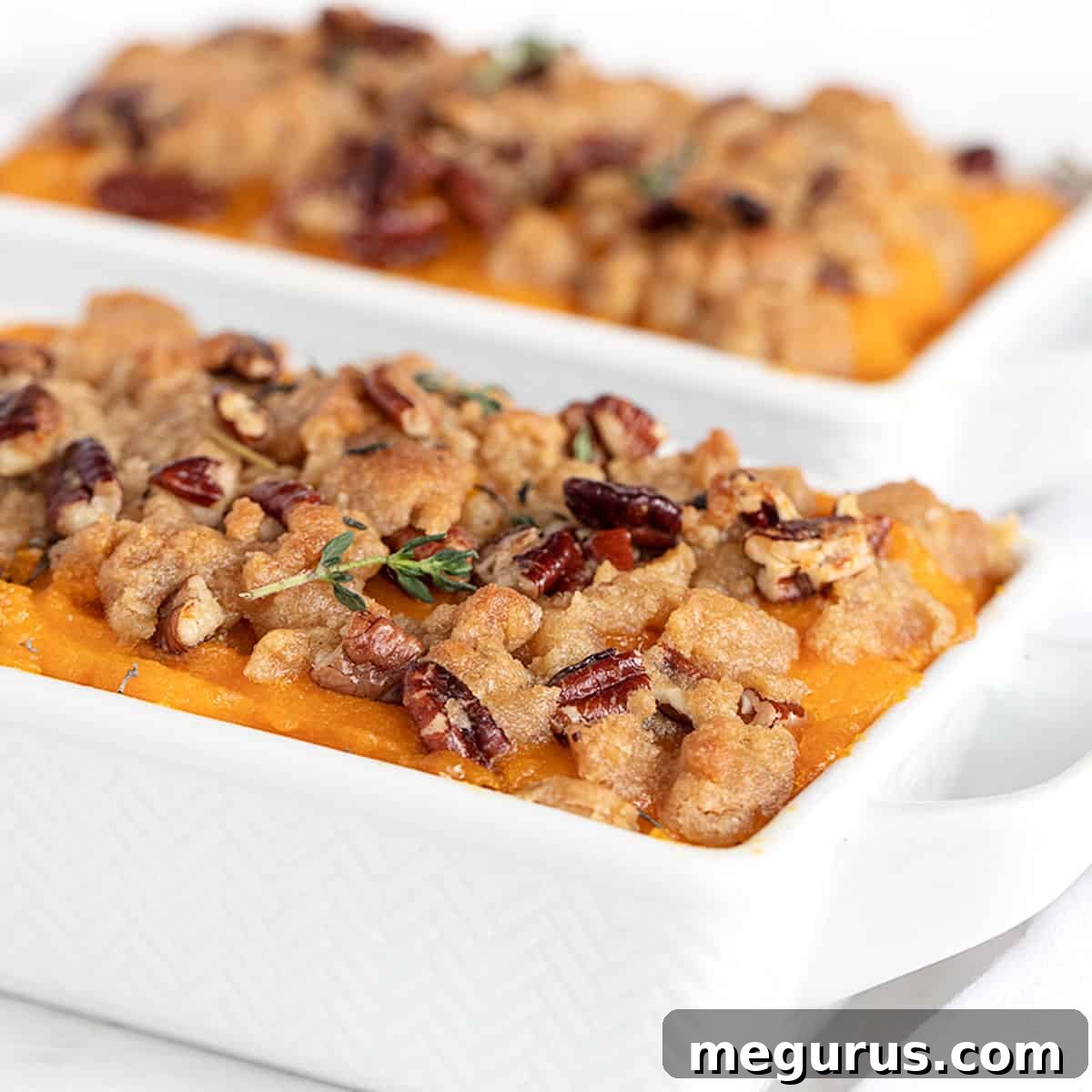
Roasted Butternut Squash Casserole with Sweet Pecan Crumble: The Ultimate Holiday Side Dish
Discover the delightful warmth and vibrant flavors of our oven-baked Roasted Butternut Squash Casserole. This isn’t just any side dish; it’s a culinary masterpiece featuring the natural sweetness of perfectly roasted butternut squash, elegantly crowned with a truly irresistible sweet, crunchy, and nutty pecan topping. Whether gracing your holiday table or elevating a simple weeknight meal, this casserole promises comfort, flavor, and a touch of gourmet sophistication. Its harmonious blend of creamy squash and textural crumble makes it a perennial favorite for gatherings and family dinners alike.
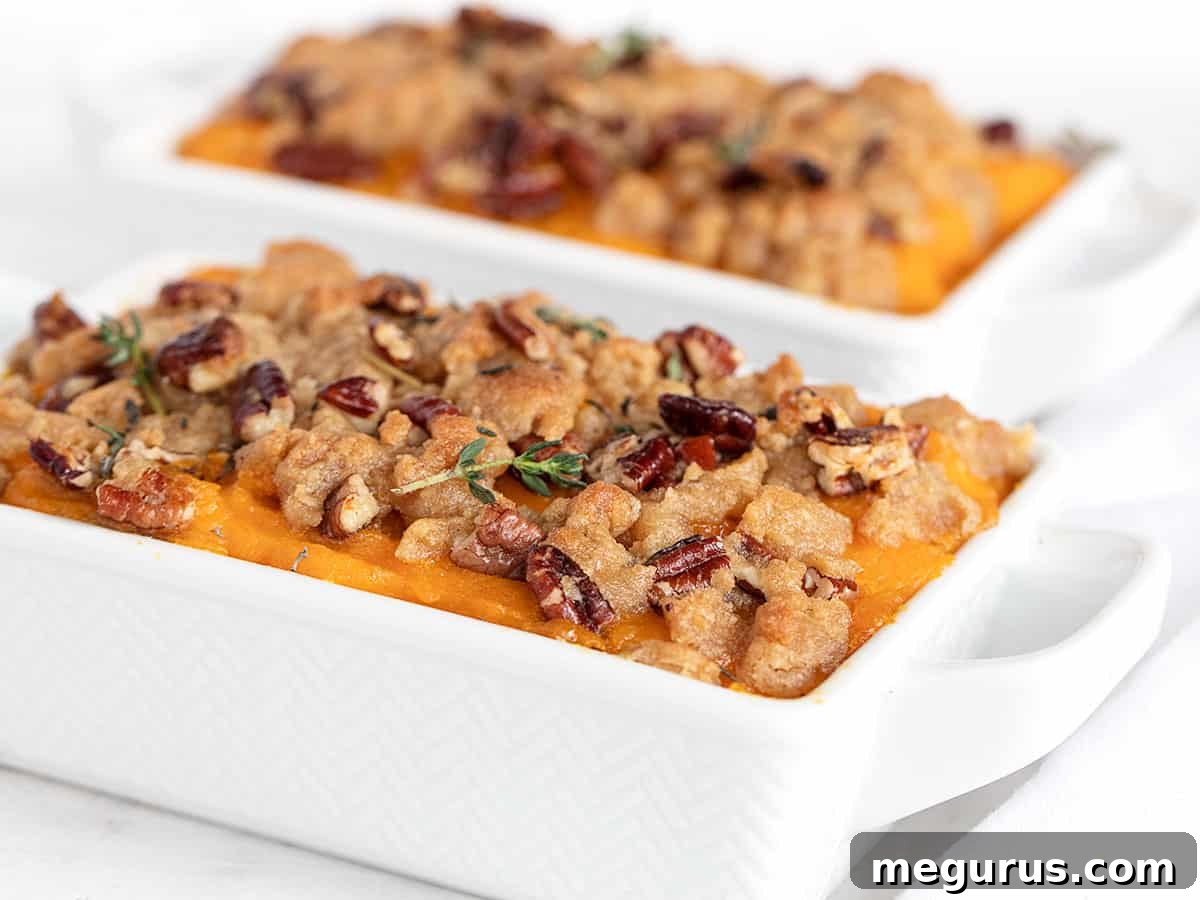
Our Butternut Squash Casserole recipe is meticulously crafted to let the inherent, wonderful flavor of roasted butternut squash truly shine. The squash base is lightly sweet, with only a handful of carefully chosen additions that perfectly complement its natural taste and contribute a delightful creaminess. This minimalistic approach ensures that the true essence of the squash remains the star of the show, enhanced rather than overshadowed.
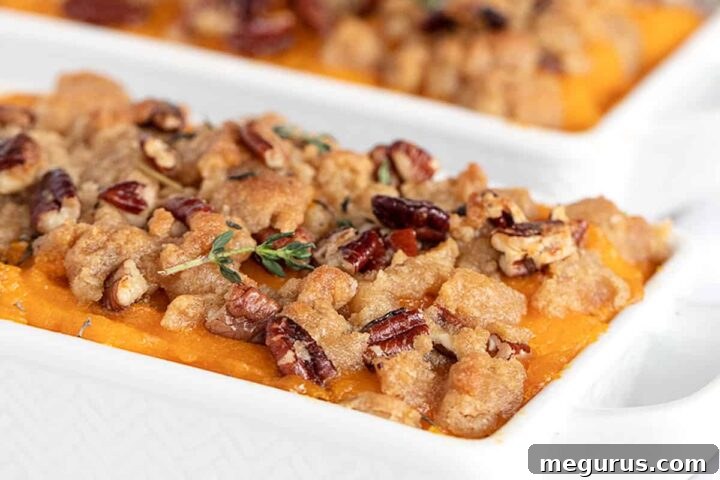
Crowning this roasted butternut squash goodness is a layer of pure indulgence: a buttery brown sugar crumble that melts slightly into the squash, providing a hint of extra sweetness. But the magic doesn’t stop there – a generous scattering of pecans introduces a much-needed crunch, toasting beautifully in the oven as the casserole bakes, adding a rich, nutty depth that makes every bite an experience. This combination of smooth, sweet squash and a textured, flavorful topping elevates a simple vegetable into an extraordinary dish.
Why This Butternut Squash Casserole Will Become Your Favorite
This Roasted Butternut Squash Casserole isn’t just a recipe; it’s a versatile culinary experience designed for both ease and elegance. Here’s why it’s destined to become a staple in your kitchen:
- Uncomplicated Elegance: Despite its impressive appearance and rich flavor, this casserole is surprisingly simple to prepare, making it accessible for home cooks of all skill levels.
- Perfect Flavor Balance: The natural sweetness of butternut squash is perfectly balanced with a touch of maple syrup and a savory pinch of salt, preventing it from being overly sugary. The brown sugar pecan topping adds just the right amount of extra sweetness and texture.
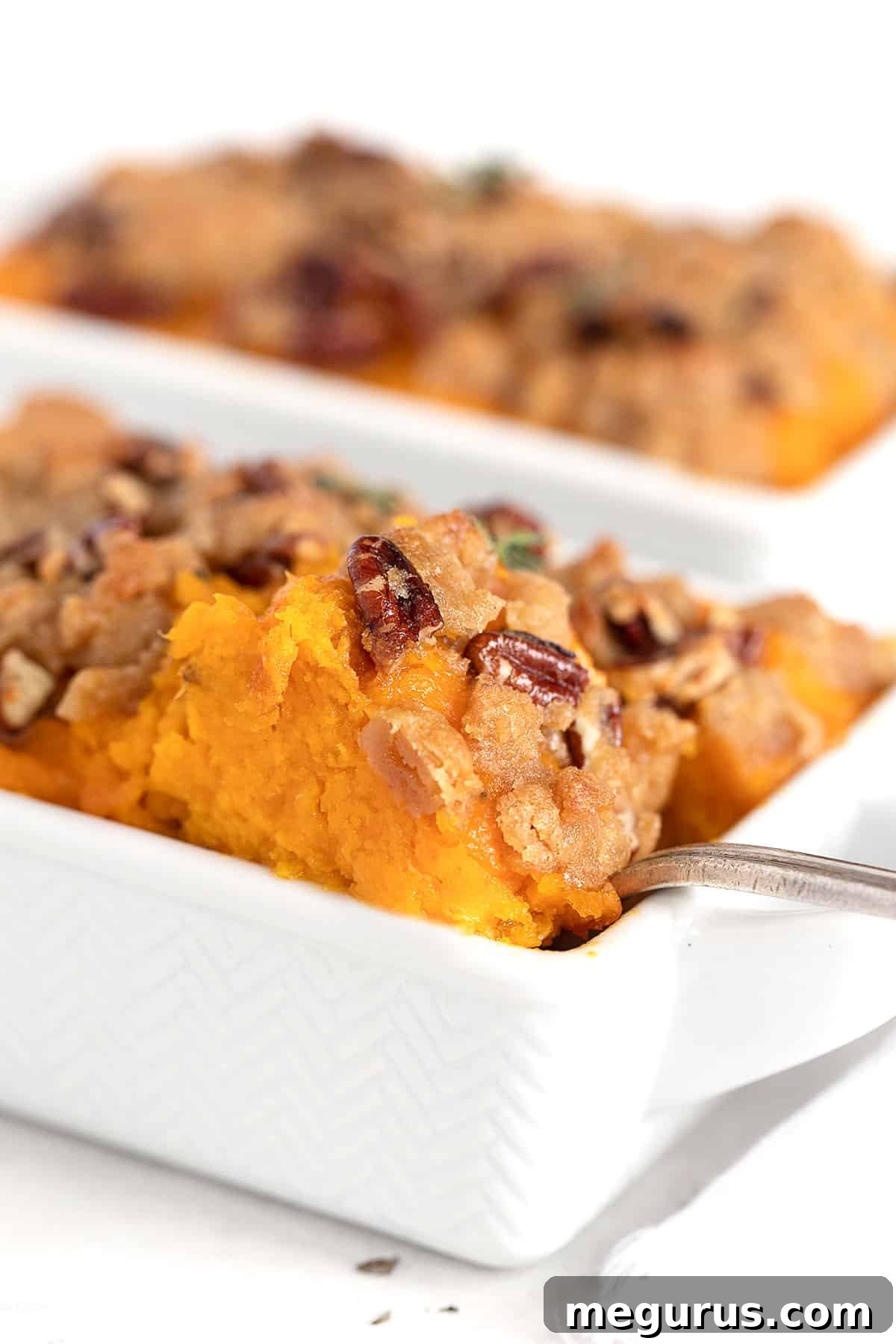
- Delightful Texture Contrast: Enjoy the velvety smoothness of the squash puree perfectly contrasted by the crisp, nutty crunch of the baked pecan crumble. This interplay of textures is what makes each spoonful so satisfying.
- Holiday Hero: It’s an ideal side dish for Thanksgiving, Christmas, Easter, or any festive gathering, offering a comforting and wholesome alternative or complement to traditional sweet potato casseroles.
- Everyday Appeal: While special enough for holidays, its straightforward preparation means it’s also a fantastic addition to your regular weeknight dinner rotation, adding a nutritious and flavorful vegetable to your meal.
- Make-Ahead Friendly: Prepare parts of this casserole in advance to reduce stress on busy days, especially during holiday meal prep. Its flavors deepen with a little time, making it excellent for planning ahead.
- Crowd-Pleaser: Even those who might be hesitant about squash often fall in love with this dish, thanks to its appealing sweetness and irresistible topping. It’s a guaranteed hit with both adults and children!
Essential Ingredients & Smart Substitutions
Understanding your ingredients is key to perfecting this delightful casserole. Here are a few notes on the primary components and how to adapt them:
- Butternut Squash: The star of our show! Butternut squash comes in a wide variety of sizes, so for this recipe, you’ll generally need two small-to-medium squash or one really large one to yield approximately 4 cups of roasted puree. Don’t worry about being exact; the recipe is forgiving. Simply use the amount of puree you obtain to guide the quantities of the additional ingredients and topping. When selecting, look for squash that feels heavy for its size and has a uniform, blemish-free skin. Roasting is crucial here as it caramelizes the natural sugars, intensifying the flavor far beyond what boiling or steaming would achieve.
- Maple Syrup: This ingredient adds a fantastic, warm note of flavor that complements the butternut squash beautifully. Pure maple syrup is always recommended for its rich, complex taste if you have it. If pure maple syrup isn’t available, a good quality maple-flavored pancake syrup can work in a pinch. For those who prefer a different flavor profile or don’t have maple syrup, a good substitute is vanilla extract (approximately 1 teaspoon for every tablespoon of maple syrup), which still imparts a lovely aromatic sweetness.
- Brown Sugar: Used exclusively in our glorious pecan crumble topping, brown sugar is essential for its moist texture and subtle caramel notes. I typically opt for light brown sugar, which offers a balanced sweetness. However, if you’re looking for a deeper molasses flavor and a slightly richer color in your topping, dark brown sugar is an excellent alternative and will work just as well.
- Cream: For the ultimate creamy texture and rich mouthfeel in the squash base, I highly recommend using heavy whipping cream (often 35% butterfat). You only need a small amount, and its extra thickness contributes significantly to the luxurious consistency of the casserole. If heavy cream isn’t on hand or you prefer a lighter option, a half-and-half cream (around 10% butterfat) can also be used, though the final texture may be slightly less rich.
- Pecans: These provide the essential crunch and nutty flavor for the topping. When toasted during baking, they become incredibly fragrant and add a wonderful dimension. You can chop them coarsely for bigger textural bites or finely for a more integrated crumble – choose according to your preference. If pecans are not available, walnuts or even a mix of nuts can be a good substitute.
- Salted Butter: Both for the casserole mixture and the topping, salted butter adds richness and balances the sweetness. If using unsalted butter, remember to increase the amount of salt slightly in both components.
- All-Purpose Flour: A small amount of flour in the topping helps create that desirable crumbly texture when combined with butter and sugar.
- Egg: The large egg acts as a binder in the squash mixture, helping to give the casserole its structure and preventing it from becoming too loose or watery.
Crafting Your Delicious Butternut Squash Casserole: A Step-by-Step Guide
Creating this stunning butternut squash casserole is a rewarding process. While this section provides a visual and summarized guide, always refer to the complete, detailed instructions in the Recipe Card below for precise measurements and timings.

Step 1: Roast the Butternut Squash to Perfection
The foundation of this casserole lies in perfectly roasted butternut squash. Begin by preheating your oven to 375°F (190°C), ensuring it’s not on a fan-assisted setting for even roasting. Carefully cut the butternut squash in half lengthwise from top to bottom. A sharp, heavy knife can make this task easier and safer. Using a spoon, scoop out and discard all the seeds and fibrous membrane from both halves. Place the squash halves, cut-side down, onto a sturdy baking sheet. Roast them in the preheated oven for approximately 50 to 70 minutes. The exact time will vary based on the size and density of your squash. You’ll know it’s ready when the flesh is fork-tender and yields easily to light pressure when you press on the skin. Once roasted, remove the squash from the oven and allow it to cool slightly, making it easier to handle. Then, with a large spoon, scoop the softened, sweet squash flesh into a large bowl. Measure out roughly 4 cups for your casserole base. If you’re preparing this ahead, cover the puree and refrigerate it. Otherwise, let it cool to almost room temperature before proceeding with the next steps.
Step 2: Assemble and Bake Your Casserole
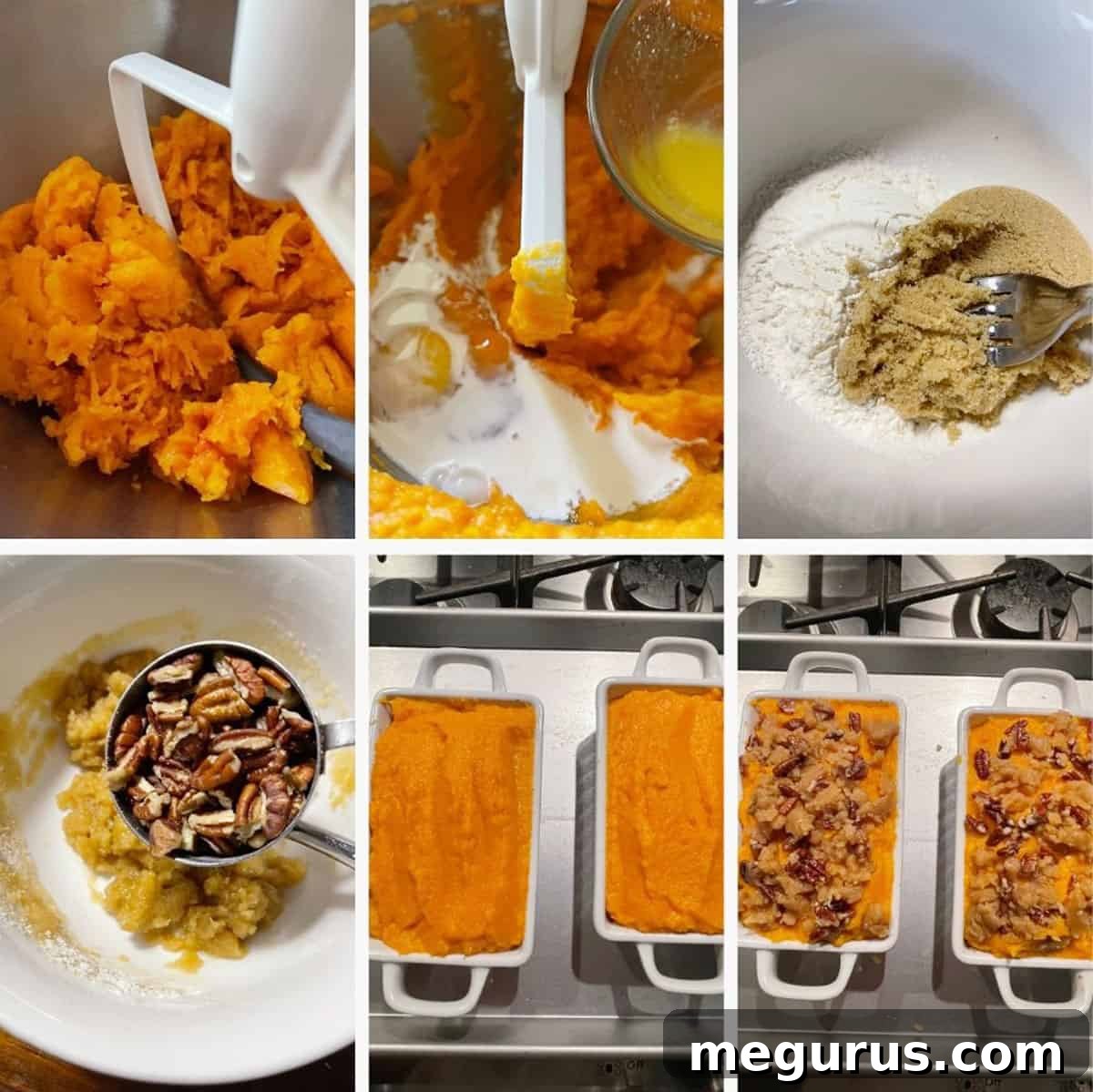
With your roasted butternut squash puree ready, it’s time to bring the casserole together. First, preheat your oven to 350°F (175°C). Lightly grease your chosen baking dish; an 8×8-inch pan is ideal for a single batch, or a 9×13-inch for a doubled recipe feeding a crowd. The exact shape isn’t critical, as long as the squash layer can be about 1.5 to 2 inches thick. In a large mixing bowl, either using an electric mixer, a food processor, or a stand mixer with a paddle attachment, add the cooled butternut squash puree. Mix on low speed for 1-2 minutes until the puree is beautifully smooth and lump-free. Then, incorporate the remaining casserole ingredients: the large egg (which acts as a binder), heavy whipping cream, real maple syrup, melted salted butter, and fine sea salt. Continue mixing until all ingredients are thoroughly combined and the mixture is silky smooth.
Carefully spoon this creamy butternut squash mixture into your prepared baking dish(es), ensuring an even layer. While it won’t expand or shrink during baking, aim for that ideal 1.5-2 inch thickness. If your dish is very full, consider placing it on a baking sheet to catch any potential bubbles-overs. At this stage, you have the option to cover and refrigerate the uncooked, untopped casserole for up to 24 hours, or freeze it for up to a month, making it perfect for advance meal prep. When ready to bake, prepare your irresistible crunchy topping: in a separate small bowl, combine the light brown sugar and all-purpose flour. Pour in the melted salted butter and mix until crumbly, then stir in the chopped pecans. Evenly sprinkle this sweet pecan topping over the butternut squash mixture in your dish. Bake in the preheated 350°F oven for about 40 minutes, or until the edges of the squash are gently bubbling and the pecan topping is golden brown and fragrant. If baking from cold or with a very deep casserole, you may need an extra 5-10 minutes. Once baked, remove from the oven and let it stand for a few minutes before serving to allow it to set slightly. Enjoy this masterpiece!
Expert Tips for a Flawless Casserole
- Mastering Sweetness: Remember that butternut squash is naturally quite sweet. This recipe accounts for that, adding only a subtle hint of maple syrup to the squash base for flavor, not overwhelming sweetness. The brown sugar and pecan topping then elevates it for special occasions or transforms everyday meals. I personally prefer a moderate amount of topping to avoid making it overly sweet, letting the squash flavor truly shine. However, if you adore a sweeter squash side, feel free to double the topping recipe for an extra indulgent crust!
- Choosing Your Baking Dish: A single batch of this recipe comfortably fills an 8×8-inch baking pan or several smaller ramekins or individual dishes. If you’re catering to a larger gathering, easily double or triple the recipe and bake it in a 9×13-inch or even larger casserole dish. The precise pan size and shape aren’t critical; the key is that the squash mixture fits snugly. The casserole won’t significantly expand or shrink during baking, so aim for a squash layer that is roughly 1 1/2 to 2 inches thick for optimal texture and an appealing presentation. This thickness ensures a moist interior while allowing the topping to crisp perfectly.
- Smooth Puree: For the silkiest texture, use an electric mixer, food processor, or stand mixer to puree the roasted squash. This ensures no lumps remain and your casserole base is wonderfully smooth.
- Don’t Overmix: Once the egg and cream are added, mix just until combined. Overmixing can sometimes lead to a tougher texture.
Planning Ahead: Make-Ahead, Storing, Freezing, and Reheating
This Roasted Butternut Squash Casserole is incredibly accommodating to busy schedules, making it an ideal candidate for holiday cooking or efficient meal planning:
- Make-Ahead Perfection: To simplify your holiday prep or weeknight cooking, you can roast the butternut squash up to two days in advance. Once roasted and pureed, cover it tightly and store it in the refrigerator. On the day you plan to serve, simply combine the cooled puree with the remaining casserole ingredients, spoon it into your baking dish, add the topping, and bake. If the casserole goes into the oven cold, allow an extra 5-10 minutes of baking time to ensure it heats through completely.
- Reheating Leftovers: Baked casserole leftovers can be beautifully reheated in a moderate 350°F (175°C) oven. To protect the delicate pecan crumble topping from over-browning, loosely cover the dish with aluminum foil. Heat until the casserole is warmed through to the center. For a quicker option, individual portions can also be swiftly reheated in the microwave, though the topping may lose some of its crispness.
- Freezing for Future Enjoyment: This casserole is wonderfully freezer-friendly, whether before or after baking, and with or without the topping. The only minor side effect you might notice after freezing is a slight increase in liquid in the squash layer upon thawing. However, this extra moisture typically cooks off during the baking or reheating process in the oven, leaving you with a perfectly delicious casserole. Freeze in an airtight container or a freezer-safe baking dish for up to 1 month.
- Safe Storage Guidelines: Due to the egg content in the casserole, it’s crucial to refrigerate the unbaked mixture immediately if you’re not planning to bake it right away. Always refrigerate leftovers promptly after cooling. They will keep well in an airtight container in the fridge for 3-4 days. Be aware that over time, the topping may soften, and the casserole might become a bit more moist as it sits, but it will remain flavorful.
Serving Suggestions
This versatile casserole pairs beautifully with a variety of meals, making it a perfect addition to your culinary repertoire. For holiday feasts, it stands proudly alongside roasted turkey, ham, or prime rib. Its sweetness also complements savory elements like green bean casserole or mashed potatoes. On a regular weeknight, serve it with grilled chicken, baked fish, or a simple pork chop for a wholesome and satisfying meal. It’s also a delightful accompaniment to a hearty vegetarian main course.
Delicious Variations to Explore
While the classic recipe is outstanding, don’t hesitate to personalize your butternut squash casserole with these creative variations:
- A Savory Twist: For a less sweet profile, reduce the maple syrup in the squash base and omit the brown sugar in the topping. Instead, mix in a pinch of sage, thyme, or rosemary with the squash, and add grated Parmesan cheese to the pecan topping for a savory crunch.
- Spice It Up: Enhance the warm flavors by adding a dash of cinnamon, nutmeg, or a hint of allspice to the butternut squash mixture. A tiny pinch of cayenne pepper can also add an unexpected, pleasant warmth.
- Nutty Alternatives: While pecans are traditional, feel free to experiment with other nuts in the crumble. Chopped walnuts, slivered almonds, or even pumpkin seeds can offer a different texture and flavor profile.
- Caramelized Onion Infusion: Sauté some finely diced onions until deeply caramelized and stir them into the squash puree before baking for an extra layer of savory depth.
- Vegan/Dairy-Free Adaptation: Substitute the heavy cream with full-fat coconut milk or a plant-based cream alternative. Use a high-quality vegan butter in place of dairy butter, and replace the egg with a flax egg (1 tbsp ground flaxseed + 3 tbsp water, let sit for 5 minutes).
Nutrition Highlights
Beyond its delicious taste, butternut squash is a nutritional powerhouse. Each serving of this casserole (approximately 1 serving) provides 162 kcal, making it a flavorful yet relatively light side. It contains 16g of carbohydrates, 2g of protein, and 10g of fat (5g saturated). You’ll also benefit from 1g of fiber, 11g of sugar, and essential micronutrients like Vitamin A (267 IU), Vitamin C (1mg), Calcium (24mg), and Iron (1mg). It’s a fantastic way to incorporate healthy vegetables into your diet.
Roasted Butternut Squash Casserole
This perfect dish is ideal for holiday entertaining, yet easy enough for everyday enjoyment. The sweet squash and crunchy topping ensure even the pickiest eaters will ask for seconds!
Prep Time: 15 mins
Cook Time: 1 hr 45 mins
Total Time: 2 hrs
Yield: 6 servings
Average Rating: 4.80 stars from 5 ratings
Pin This
Leave a Review
Ingredients
Main:
- 4 cup roasted butternut squash puree (from 2 small/medium or 1 large butternut squash, approximately)
For the Casserole Base:
- 1 large egg
- 2 Tablespoon heavy whipping cream (35% b.f.) or lighter cream such as 10% half and half cream
- 1 Tablespoon real maple syrup or substitute 1 tsp. vanilla
- 1 Tablespoon salted butter, melted
- 1/2 teaspoon fine sea salt, or to taste
For the Sweet Pecan Topping:
- 1/4 cup light brown sugar
- 1/4 cup all purpose flour
- 1 1/2 Tablespoon salted butter, melted
- 1/4 cup pecans, chopped (coarsely or finely, as you like)
Instructions
Part 1: Roast the Butternut Squash
- Preheat oven to 375° F (190°C), ensuring it’s not fan-assisted.
- Cut the squash in half lengthwise and remove the seeds. Place the squash cut side down on a baking sheet and cook in the preheated oven until soft, about 50 – 70 minutes, depending on size. Test doneness by pressing on the top; it should feel soft.
- When cooked, remove from oven, flip so the cut side is up, and let cool slightly. Scoop out the squash into a large bowl. If making ahead, cover and refrigerate. If making immediately, allow to cool to almost room temperature before mixing.
Part 2: Assemble and Bake the Casserole
- Preheat oven to 350°F (175°C), ensuring it’s not fan-assisted.
- Lightly grease an approximate 8×8-inch baking dish (for a single recipe) or a 9×13-inch dish (for a double recipe). Exact size isn’t critical; aim for a squash layer about 1 1/2 – 2 inches high. Smaller dishes or ramekins can also be used.
- In a large bowl with an electric mixer (or food processor/stand mixer), add the roasted butternut squash. Mix at low speed for 1-2 minutes until nice and smooth. Add the egg, cream, maple syrup, melted butter, and salt; mix until well combined and smooth.
- Spoon the squash mixture into the prepared pan(s), aiming for about 1 1/2-2-inches thick. The squash will not expand or shrink. If very full, bake on a baking sheet to catch any potential bubbles-over.
- **Optional Make-Ahead Step:** You can cover and refrigerate the uncooked, un-topped casserole at this point for up to 24 hours, or freeze for up to 1 month.
- Prepare the crunchy topping by stirring together the brown sugar and flour. Pour in the melted butter and stir to combine. Stir in the chopped pecans.
- Sprinkle the brown sugar/pecan topping mixture evenly over the squash mixture. You can double the topping recipe if you prefer more, but remember butternut squash is naturally sweet.
- Bake in the preheated 350°F oven until the squash is bubbling around the edges and the topping is lightly golden, about 40 minutes. Add 5-10 additional minutes if the casserole was cold when placed in the oven or if it is very large/deep.
- Remove from oven and let stand a few minutes before serving.
- Baked casserole can be frozen for up to 1 month. Refrigerate leftovers. Reheat in a 350°F oven, loosely covered with aluminum foil, until warmed through to prevent over-browning of the topping.
Notes
A single batch of this recipe yields enough for an 8×8-inch pan or several smaller dishes. For larger crowds, simply double or triple the recipe and use a 9×13-inch or larger casserole dish. The pan size isn’t critical as the casserole doesn’t change volume during baking; focus on achieving a squash layer about 1.5 to 2 inches thick for the best texture.
For additional insights and step-by-step photos, please refer to the detailed sections above this recipe card.
Cuisine: American, Canadian
Course: Side Dish
Author: Jennifer Maloney
Nutrition Information (per serving):
Serving: 1 serving, Calories: 162kcal, Carbohydrates: 16g, Protein: 2g, Fat: 10g, Saturated Fat: 5g, Polyunsaturated Fat: 1g, Monounsaturated Fat: 4g, Trans Fat: 1g, Cholesterol: 50mg, Sodium: 252mg, Potassium: 59mg, Fiber: 1g, Sugar: 11g, Vitamin A: 267IU, Vitamin C: 1mg, Calcium: 24mg, Iron: 1mg
Tried this recipe? If you enjoyed this recipe, please leave a star rating and comment. It helps others to find it!