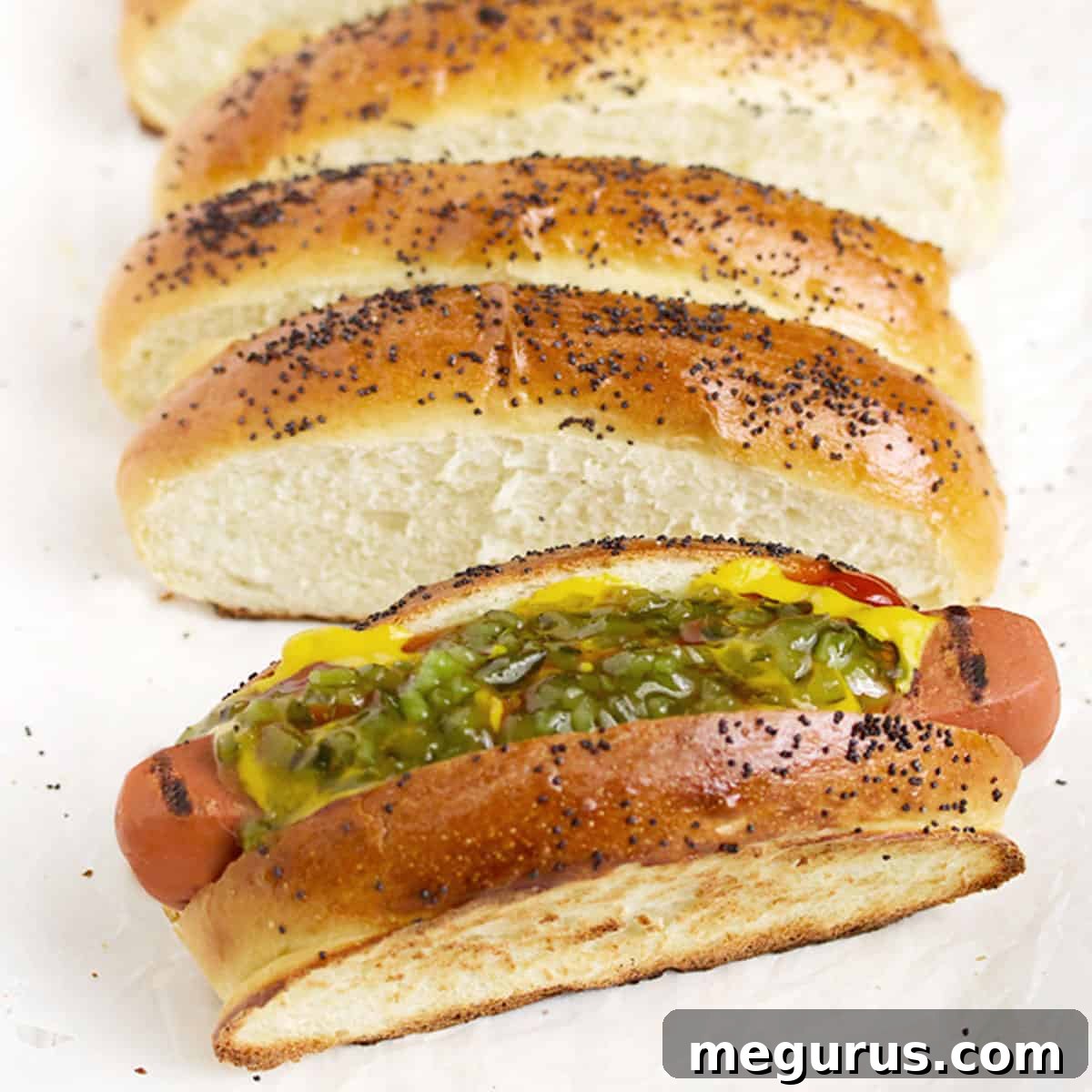
Transform your casual cookouts into memorable culinary experiences with these incredible homemade hot dog buns. Forget the flimsy, store-bought varieties; our New England style, top-sliced buns are designed for perfection. Featuring exceptionally tall, soft sides that toast up beautifully, they provide the ideal vessel for your favorite hot dogs, sausages, or even a decadent lobster roll. Discover the joy and superior flavor of freshly baked bread right in your own kitchen.
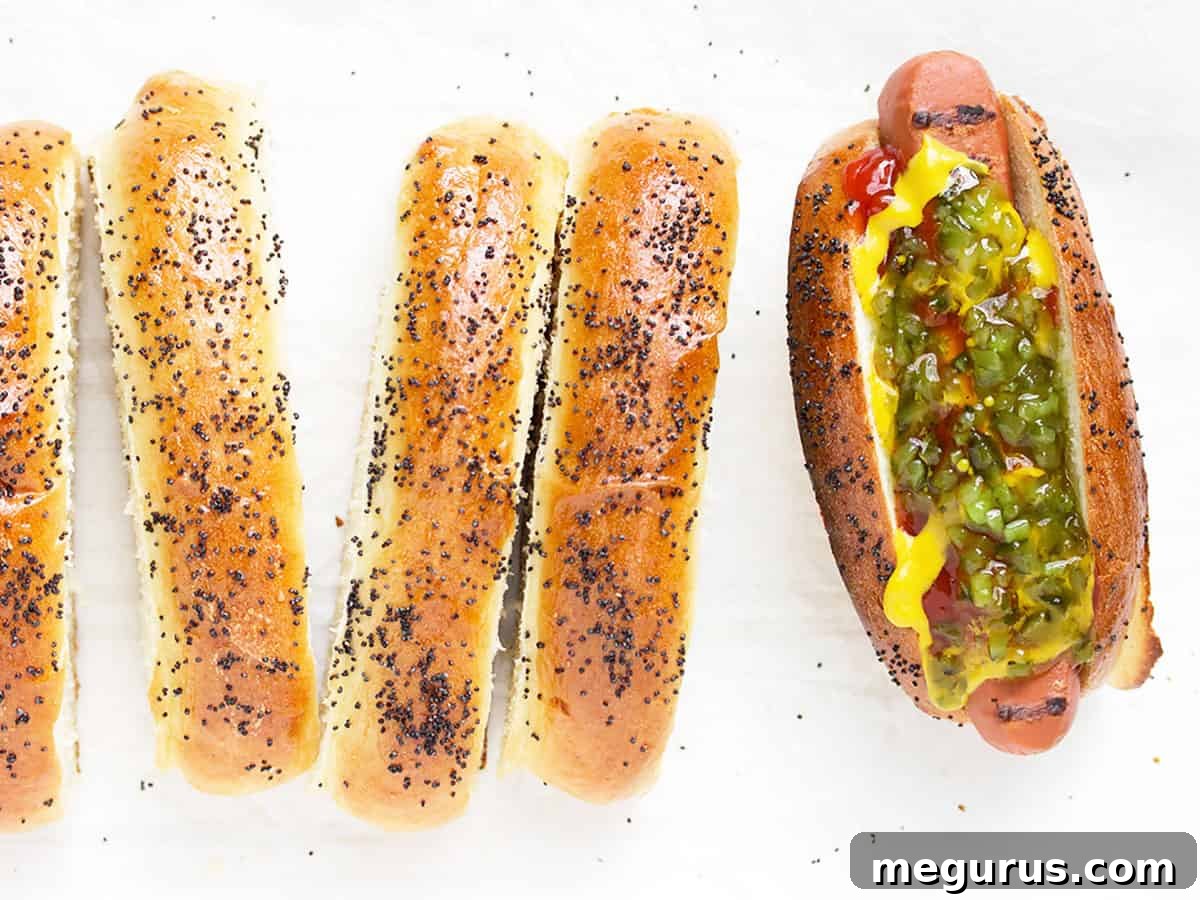
Why Bother Making Your Own Hot Dog Buns? Elevate Your BBQ Game
While a humble hot dog might seem like a simple pleasure, its true potential is often unlocked by the bun it’s nestled in. For too long, mass-produced buns have settled for mediocrity – thin, easily torn, and lacking in flavor. But what if you could easily make your own superior hot dog buns that redefine the entire experience? Our recipe for New England style, top-sliced buns offers an unparalleled upgrade, making every bite of your summer hot dogs an absolute delight. Beyond just hot dogs, these versatile buns are also the perfect foundation for other beloved treats, such as succulent lobster rolls or hearty sausage sandwiches.
The difference is truly astounding. Homemade buns boast a freshness and tender texture that store-bought options simply cannot match. You control the ingredients, ensuring a wholesome and delicious product free from unnecessary additives. The aroma of freshly baked bread filling your kitchen is an added bonus, setting the stage for an unforgettable meal. Once you experience the superior taste and texture of these scratch-made buns, you’ll wonder why you ever settled for anything less. Making your own demonstrates a commitment to quality and enjoyment, transforming a simple meal into something truly special.
The Unbeatable Advantage of New England Style Top-Sliced Hot Dog Buns
These aren’t just any hot dog buns; they are meticulously designed for the ultimate eating experience, especially popular in the Northeastern United States for good reason. Here’s why the New England style, top-sliced design is a game-changer for your culinary adventures:
- Effortless Eating and Filling: The defining characteristic of these buns is their top-sliced opening. Unlike traditional side-sliced buns that often tear or make it challenging to load toppings, these buns create a natural, wide pocket. This design allows for easy filling of hot dogs, sausages, and generous amounts of condiments and relish without spillage. It’s significantly easier to manage, making for a cleaner and more enjoyable eating experience.
- Superior Filling Retention: Imagine a hot dog bun that actually holds your frankfurter and all its delicious accompaniments perfectly in place. The sturdy, boat-like structure of a top-sliced bun acts as a reliable cradle, preventing your hot dog and toppings from slipping out the sides. This ensures every bite is complete and satisfying, from the first to the last.
- Perfect Toasting Potential: One of the greatest culinary benefits of these buns lies in their tall, flat, and soft sides. Unlike standard buns that only offer minimal surface area for toasting (usually just the top and bottom), New England style buns present ample, ideal surfaces for achieving a beautiful golden-brown toast. You can simply toss them on the BBQ grill or place them under the broiler, toasting both sides to perfection. This process doesn’t just add a delicious toasted flavor; it also creates a slightly crispy exterior that contrasts beautifully with the tender interior.
- Enhanced Texture and Structural Integrity: Toasting these buns does more than just enhance flavor. It transforms their soft texture into a wonderfully firm and structured foundation, making them incredibly easy to hold without squishing. This added stability is a welcome change from flimsy buns that often collapse under the weight of their fillings. Moreover, it completely does away with the frustrating need to awkwardly open and flatten classic buns to toast their insides, a process that frequently results in them breaking in two – a common complaint among hot dog enthusiasts.
- Incredibly Versatile Beyond Hot Dogs: While absolutely ideal for hot dogs, the robust structure and delightful taste of these buns make them exceptionally versatile for a variety of other fillings. They are the undisputed champion for classic lobster rolls, a staple of New England cuisine. They also perform brilliantly with tuna melts, chicken salad, or even as miniature sub rolls for various deli meats and cheeses. Their design ensures they can handle both moist and hearty fillings with grace.
By choosing to make these New England style, top-sliced hot dog buns, you’re not just baking bread; you’re investing in an elevated dining experience that brings comfort, convenience, and superior taste to your table. Embrace this delicious tradition and transform your next casual meal into an extraordinary culinary event.
Essential Ingredients for Your Perfect Buns and Smart Substitutions
Crafting these delicious hot dog buns requires a few simple, common ingredients that work together to create their signature soft texture and rich flavor. Understanding the role of each component and knowing potential substitutions will ensure your baking success and help you adapt the recipe to what you have on hand.
- Whole Milk (3-3.5% B.F.): This is arguably the most crucial ingredient for achieving tender, rich, and flavorful buns. The higher fat content of whole milk contributes significantly to a softer, more luxurious crumb and a moist interior. The initial step of scalding the milk and then letting it cool is vital; it denatures proteins in the milk that can interfere with gluten development, resulting in a finer, more consistent bread texture and better yeast activity. While 2% milk can be used if whole milk isn’t available, be aware that it may result in a slightly less tender bun due to its lower fat content. Skim milk is generally not recommended as it significantly impacts texture.
- White Sugar: More than just a sweetener, sugar plays multiple essential roles in this recipe. It provides immediate food for the yeast, helping it activate quickly and encouraging a vigorous rise. Additionally, sugar contributes to the beautiful golden-brown color of your baked buns through caramelization and enhances their overall depth of flavor, balancing the savory elements of the bread.
- Yeast (Active Dry or Instant): The vital leavening agent responsible for making your buns light, airy, and fluffy. This recipe is adaptable for both active dry and instant yeast. Active dry yeast typically requires proofing in lukewarm liquid to activate, while instant yeast is more forgiving and can often be added directly to the dry ingredients (though proofing is still a good test of its viability). Always ensure your yeast is fresh and active for optimal rising. If your yeast doesn’t foam when proofed, it’s likely expired or was exposed to incorrect temperatures, and should be replaced.
- All-Purpose Flour: The primary structural component of your buns. A standard all-purpose flour works perfectly for achieving a soft yet sturdy texture that holds up well to fillings. Accurate measurement of flour is critical; always spoon your flour into your measuring cup and then level it off with a straight edge rather than scooping directly from the bag. Scooping can compact the flour, leading to an excessive amount in your dough, which can result in dry, dense, and tough buns.
- Fine Salt: An indispensable ingredient for flavor development, salt also plays a critical role in controlling yeast activity, preventing it from working too quickly. It strengthens the gluten structure of the dough, contributing to its elasticity and texture, and balances the sweetness from the sugar. Do not omit or significantly reduce the salt, as it is key to the bun’s overall taste and structure.
- Large Egg (Lightly Beaten): Used primarily as an egg wash just before baking. Brushing the buns with a lightly beaten egg gives them a beautiful, glossy, golden-brown sheen and helps any optional toppings, such as seeds, adhere perfectly to the crust. The egg wash also contributes to a slightly crisper crust.
- Optional Poppy or Sesame Seeds: These are fantastic for adding a touch of visual appeal and a subtle, nutty flavor that complements the richness of the bun. They evoke the classic look of bakery-style hot dog buns. Feel free to enjoy your buns plain if you prefer, or experiment with other toppings like dried herbs or coarse salt.
With these high-quality, thoughtfully selected ingredients, you’re well on your way to baking a batch of homemade hot dog buns that will impress and delight everyone at your next gathering.
Expert Tips for Baking the Best Top-Sliced Hot Dog Buns
Baking homemade bread might seem daunting, but with these expert tips, you can achieve bakery-quality, New England style hot dog buns right in your own kitchen. Pay attention to these details for truly spectacular results:
- Precision in Flour Measurement: This cannot be stressed enough. The most common mistake in baking is incorrectly measuring flour, leading to overly dense or dry baked goods. Always use the “spoon and level” method: gently spoon flour into your dry measuring cup until it overflows, then use the back of a straight knife or a flat edge to level off the excess. Never scoop directly from the flour bag, as this compacts the flour, adding too much weight to your dough.
- Optimal Yeast Activation (Proofing): Yeast is a living organism, and its activity is temperature-sensitive. For active dry yeast, ensure your scalded milk has cooled precisely to between 105-115°F (40-46°C). If the liquid is too hot, it will kill the yeast; too cold, and it won’t activate properly. Instant yeast is more robust and can often be mixed directly with dry ingredients, but proofing it in lukewarm liquid (as in this recipe) is an excellent way to verify its freshness and ensure a good rise. Look for a foamy layer to confirm your yeast is alive and ready to work.
- The Art of Kneading: Proper kneading is fundamental to developing the gluten in the flour, which is responsible for the buns’ elasticity, chewiness, and soft texture. Whether by hand or with a stand mixer, knead until the dough becomes smooth, supple, and elastic. It should pull away cleanly from the sides of the bowl or feel less sticky when kneaded by hand. A well-kneaded dough will pass the “windowpane test” – you should be able to stretch a small piece thin enough to see light through it without tearing.
- Creating the Ideal First Rise Environment: The first rise (bulk fermentation) allows the yeast to work its magic, developing flavor and volume. Place your covered dough in a warm, draft-free spot. A slightly warm oven (turned off, perhaps after having been briefly on, or with just the light on) or a warm corner of your kitchen works well. Patience is key here; don’t rush the rise. A slower, more gradual rise often leads to superior flavor and texture.
- Pan Size is Crucial for Shape: The distinctive tall, straight sides of New England hot dog buns are achieved by baking them snugly together in a specific pan size, typically 7×11 inches. This forces them to rise vertically rather than spreading horizontally. If you don’t have this exact size, don’t worry! Our clever trick of using crumpled foil balls and a folded foil edge in a standard 9×13-inch pan effectively creates the necessary confined space, ensuring your buns develop their characteristic shape.
- Mastering Dough Shaping: The way you shape each individual piece of dough significantly impacts the final appearance and rise of your buns. The technique described in the instructions, which involves pinching the dough to create a taut, smooth surface, is vital. This smooth exterior allows the buns to rise evenly and prevents any irregular tearing during baking, resulting in uniformly beautiful rolls.
- The Importance of the Second Rise: Often called proofing, the second rise is shorter but equally critical. It gives the shaped buns their final burst of airiness before baking. Ensure the buns have nearly doubled in size again before placing them in the oven. Under-proofed buns will be dense, while over-proofed buns might collapse.
- The Perfect Egg Wash: A simple egg wash (one large egg, lightly beaten) applied before baking creates a stunning golden-brown, shiny crust and helps any decorative toppings like poppy or sesame seeds adhere beautifully. Make sure to brush all exposed surfaces for consistent color and shine.
- Tapping for Doneness: Don’t rely solely on visual cues. Once your buns appear golden, gently tap the bottom of one. A fully baked bun will sound hollow, indicating it’s cooked through. If it sounds dull, it may need a few more minutes in the oven.
By following these detailed tips, you’re not just following a recipe; you’re learning the nuances of bread baking that will empower you to create consistently perfect, delicious, and visually appealing homemade hot dog buns every time.
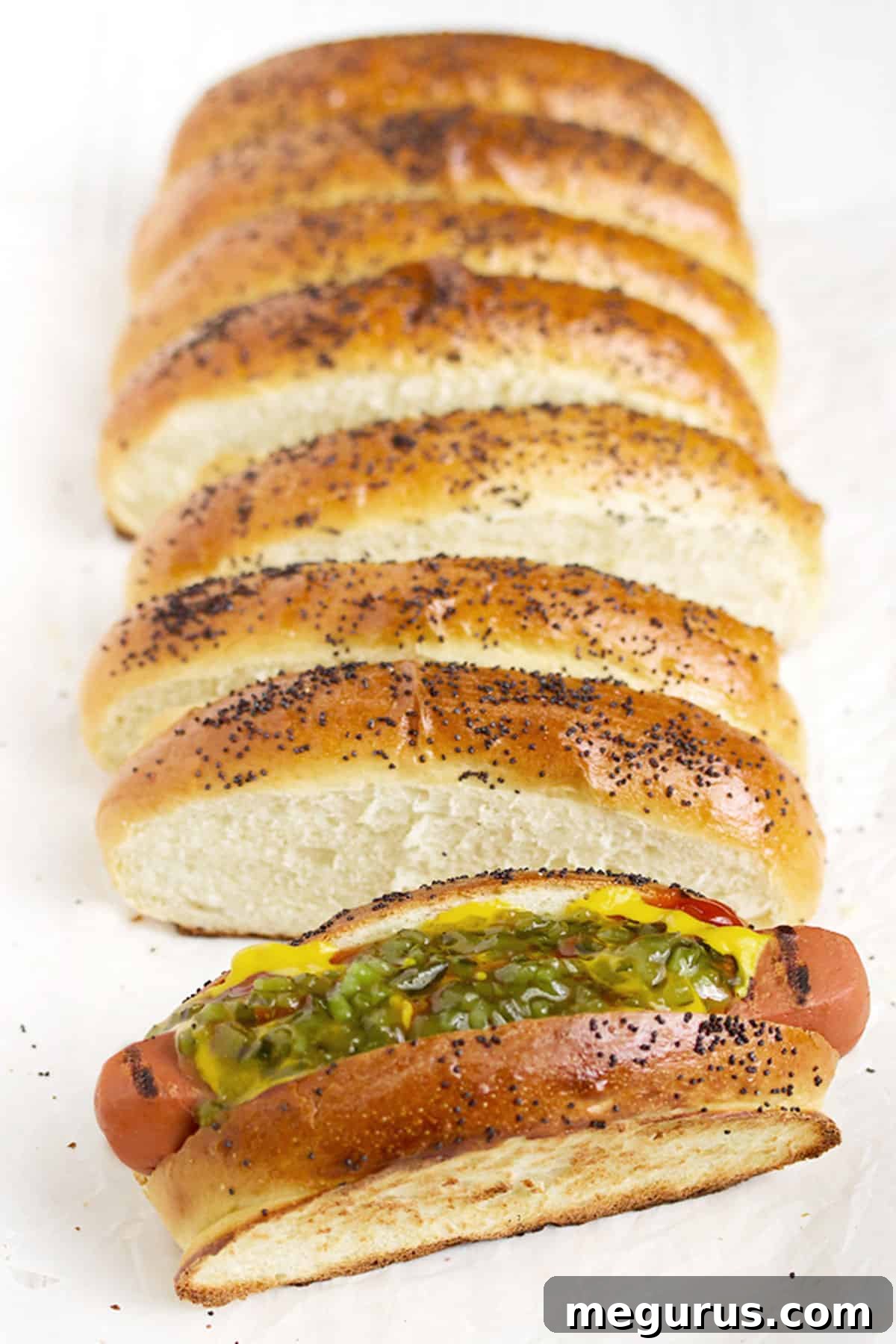
Recipe: Homemade New England Style Top-Sliced Hot Dog Buns
Homemade Top-Sliced Hot Dog Buns
Elevate your summer hot dogs with this easy homemade hot dog buns. These New England style, top-sliced buns also have tall soft sides that toast up beautifully!
Prep Time: 15 mins
Cook Time: 20 mins
Rising Time: 1 hr 45 mins
Total Time: 2 hrs 20 mins
Yield: 8 buns
Ingredients
- 1 1/4 cups whole milk, 3-3.5% b.f., scalded and cooled to lukewarm (120°F / 49°C for instant yeast or 110°F / 43°C for active dry yeast)
- 2 Tablespoons white sugar
- 2 1/4 teaspoons active dry or instant yeast
- 2 1/2 – 3 cups all-purpose flour, spooned and leveled
- 1 teaspoon fine salt
- 1 large egg, lightly beaten (for egg wash)
- Optional: Poppy or sesame seeds, for topping
Instructions
- Scald and Prepare Milk: In a small saucepan, heat the whole milk over medium heat until it just begins to simmer (you’ll see small bubbles forming around the edges). Remove from heat and let it cool until it reaches lukewarm temperature – specifically 120°F (49°C) for instant yeast or 110°F (43°C) for active dry yeast. Once cooled, add the white sugar and stir until dissolved. Sprinkle the yeast over the milk mixture, stir gently, and let it stand for 5-10 minutes to proof. It should become foamy, indicating the yeast is active.
- Combine Dry and Wet Ingredients: In a large mixing bowl or the bowl of a stand mixer fitted with a dough hook, combine 2 cups of the all-purpose flour and the fine salt. Pour in the milk/sugar/yeast mixture and mix on low speed (or by hand with a wooden spoon) until just combined. Gradually add more flour, a little at a time (up to 3 cups total), until the dough comes together and forms a soft, cohesive ball.
- Knead the Dough: Increase the speed to medium-low and knead with the dough hook for 8-10 minutes, or knead by hand on a lightly floured surface for 10-12 minutes, until the dough is smooth, elastic, and moist but no longer sticky.
- First Rise: Lightly grease a clean bowl with oil. Place the dough in the bowl, turning it once to coat. Cover the bowl tightly with plastic wrap or a clean kitchen towel and let it rise in a warm, draft-free place for about 1 hour, or until doubled in size.
- Prepare Baking Pan: Lightly grease a 7×11-inch baking pan. If you only have a 9×13-inch pan, see the “Pan Size Tip” in the notes below to adapt it.
- Shape the Buns: Once the dough has risen, gently punch it down to release the air. Transfer the dough to a lightly floured surface and divide it into 8 equal pieces. Each piece should be approximately 3 ounces if you’re using a kitchen scale. For each piece, shape it into a tight ball (refer to the “Dough Shaping Tip” in the notes for detailed instructions), then using the palm of your hand, gently roll and stretch it into an oblong shape, about 4 1/2 to 5 inches long.
- Arrange in Pan for Second Rise: Place the shaped dough pieces into your prepared pan, pinched side down. Arrange them snugly against each other, pushing the first bun slightly against the short end of the pan. Continue with the remaining pieces, ensuring they are all close together. This snug placement is crucial as it encourages the buns to rise upwards, creating those signature tall sides. Lightly spray a piece of plastic wrap with oil and cover the pan (oiled side down). Let the buns rise again in a warm place for about 45 minutes to 1 hour, or until they have nearly doubled in size and are pressing against each other.
- Preheat Oven: While the buns are on their second rise, preheat your oven to 375°F (190°C). Position an oven rack in the middle of the oven.
- Egg Wash and Top: Once the buns have risen, carefully remove the plastic wrap. Brush the tops and exposed sides of the buns with the lightly beaten egg, ensuring even coverage for a golden crust. If desired, sprinkle generously with poppy seeds or sesame seeds.
- Bake: Bake in the preheated oven for 20-25 minutes, or until the buns are beautifully golden brown and sound hollow when lightly tapped on the bottom.
- Cool and Slice: Remove the pan from the oven and let the buns cool in the pan for a few minutes. Then, run a knife along the edges of the pan to loosen, and carefully transfer the entire block of buns to a wire cooling rack to cool completely. Once cooled, use a serrated knife to carefully cut between the rolls.
- Toast and Serve: To serve, place the separated rolls onto a baking sheet and toast each side under the broiler until golden brown, or grill them on your BBQ. Once toasted, make a lengthwise slice in the middle of each bun (from the top down) to create the classic top-sliced opening for your hot dog, lobster, or other favorite fillings.
- Storage: Store any leftover buns in an airtight bag at room temperature for 2-3 days, or freeze them for up to 2 months. Thaw at room temperature or warm gently in the oven before serving.
Notes
- Pan Size Tip (for 9×13-inch pan): If you only have a 9×13-inch pan, you can create a makeshift 7×11-inch space. Crumple several pieces of aluminum foil into tight balls and fill the last 2 inches of the pan at one end. Then, take a longer piece of foil, fold it into a thick, sturdy strip, and place it along the inside edge of the foil balls to create a straight, firm barrier. This will effectively shorten the baking area from 13 inches to approximately 11 inches, ensuring your buns rise up tall instead of spreading out sideways.
- Dough Shaping Tip: To shape each piece of dough into a smooth ball, place it in the palm of your hand with the smoothest side down. Using your other hand, start pinching opposite sides of the dough together towards the center. Rotate the dough slightly and continue pinching until all the outside edges have been gathered and sealed tightly in the middle. Place the dough ball pinched-side down onto your work surface; the top should be taut and smooth. This technique helps create an even rise and a beautiful finished bun.
Cuisine: American, Canadian
Course: Bread
Author: Jennifer Maloney
Nutrition Information (approximate per serving)
Serving: 1 bun, Calories: 42kcal, Carbohydrates: 6g, Protein: 1g, Fat: 1g, Cholesterol: 4mg, Sodium: 256mg, Potassium: 63mg, Sugar: 5g, Vitamin A: 60IU, Calcium: 43mg
Frequently Asked Questions About Homemade Hot Dog Buns
- Can I use bread flour instead of all-purpose flour?
- Yes, you can use bread flour. Bread flour has a higher protein content, which will result in a chewier bun with a slightly firmer texture. If you prefer a wonderfully soft, tender crumb, stick with all-purpose flour. If using bread flour, you might need to adjust the liquid slightly, as it absorbs more liquid than all-purpose flour.
- How long do homemade hot dog buns last?
- These buns are undeniably at their absolute best when enjoyed fresh on the day they are baked. However, they will remain wonderfully fresh and soft when stored in an airtight container or bag at room temperature for 2-3 days. For longer storage options, refer to the freezing tips below.
- Can I freeze these hot dog buns?
- Absolutely! These homemade buns freeze exceptionally well, making them perfect for meal prepping or enjoying fresh buns any time. Once they have cooled completely to room temperature, place them in a freezer-safe bag or container, removing as much air as possible. They can be frozen for up to 2 months without loss of quality. To thaw, simply take them out of the freezer and let them come to room temperature on your countertop, or warm them gently in a low oven for a few minutes for a “freshly baked” feel.
- What if my yeast doesn’t foam when proofing?
- If your yeast mixture doesn’t become foamy and active after 5-10 minutes of proofing, it indicates a problem. This usually means your yeast is old or expired, or the milk temperature was incorrect (either too hot, killing the yeast, or too cold, preventing activation). It is best to discard that mixture and start again with fresh yeast and carefully measured lukewarm milk to ensure your buns rise properly and achieve the desired light and airy texture.
- Can I make these buns ahead of time for a party or event?
- Yes, you can definitely prepare these buns in advance! You can bake them a day or two before your event and store them as directed (in an airtight container at room temperature). For the ultimate freshness and convenience, baking them, allowing them to cool completely, and then freezing them is an excellent option. Thaw them a few hours before your party, and then a quick toast on the grill or under the broiler just before serving will make them taste as if they just came out of the oven.
Beyond Hot Dogs: Creative Ways to Enjoy Your Top-Sliced Buns
While these homemade buns are undeniably the perfect partner for a classic grilled hot dog, their soft texture, rich flavor, and unique top-sliced shape make them incredibly versatile. Don’t limit yourself to just one use! Here are a few creative ideas to expand your culinary horizons with these fantastic rolls:
- Lobster Rolls: This is the quintessential New England pairing and perhaps the most famous use for these specific buns after hot dogs. Fill them with a delightful mixture of fresh, succulent lobster meat, a touch of mayonnaise or melted butter, a squeeze of fresh lemon juice, and a sprinkle of chives or celery. A truly authentic taste of the coast!
- Sloppy Joe Sliders: The sturdy, open-top design of these buns is perfectly suited for holding messy, savory sloppy joe meat. They provide a stable base that prevents the saucy filling from spilling out, making for a much cleaner and more enjoyable experience than with traditional buns.
- Gourmet Breakfast Sandwiches: Elevate your breakfast game! These buns are ideal for creating luxurious breakfast sandwiches. Fill them with fluffy scrambled eggs, crispy bacon or savory sausage patties, and your favorite melty cheese for a truly satisfying morning meal.
- Mini Pulled Pork or Chicken Sandwiches: Whether for a party appetizer or a smaller meal, these buns are fantastic for serving pulled pork or shredded BBQ chicken. Their robust structure handles the saucy, tender meat exceptionally well, making them easy to eat and delightful to serve.
- Meatball Subs (Mini Version): Craving a meatball sub but want a more manageable portion? These top-sliced buns are perfect for a mini version. Fill them with flavorful meatballs and a generous spoon of marinara sauce, perhaps topped with a sprinkle of Parmesan cheese.
- Tuna Melts or Chicken Salad Sliders: For lighter, yet equally satisfying, options, fill these buns with creamy tuna salad or a zesty chicken salad. The toasted sides add a wonderful texture contrast.
Experiment with your favorite fillings and discover new, delicious ways to enjoy these fantastic homemade rolls. Their versatility makes them a staple for any home baker looking to add a touch of gourmet flair to everyday meals.