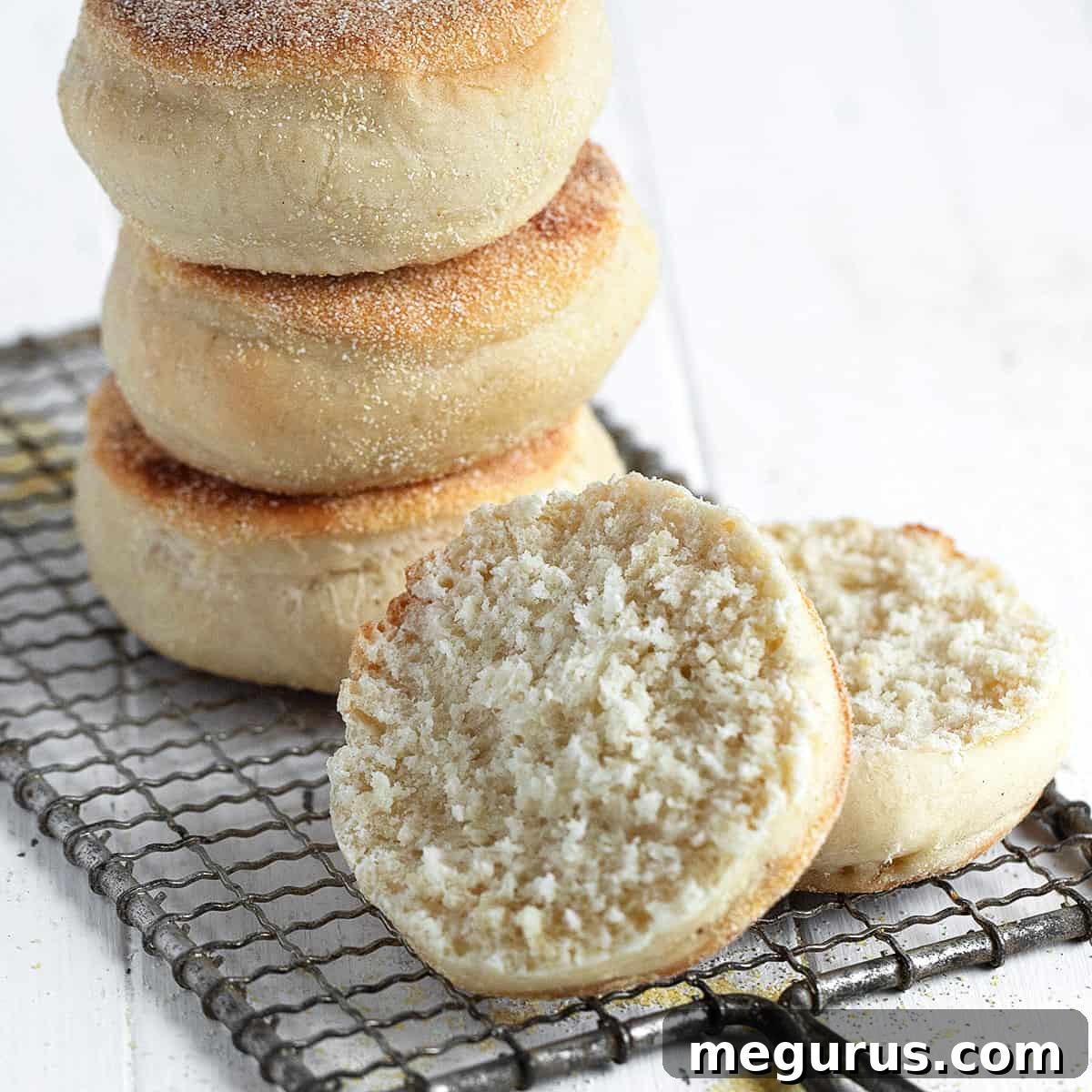
Discover the simple joy of baking homemade English Muffins right in your own kitchen! Forget store-bought versions; these delightful, airy muffins are surprisingly easy to make and offer unparalleled flavor and texture. Perfect for a leisurely breakfast, a satisfying lunch, or even a quick dinner, this recipe allows you to whip up a batch in under two hours, or you can opt for a convenient overnight rise to enjoy freshly baked goodness in the morning. Prepare to be amazed by their famously craggy interior, ready to capture every last drop of butter or jam.
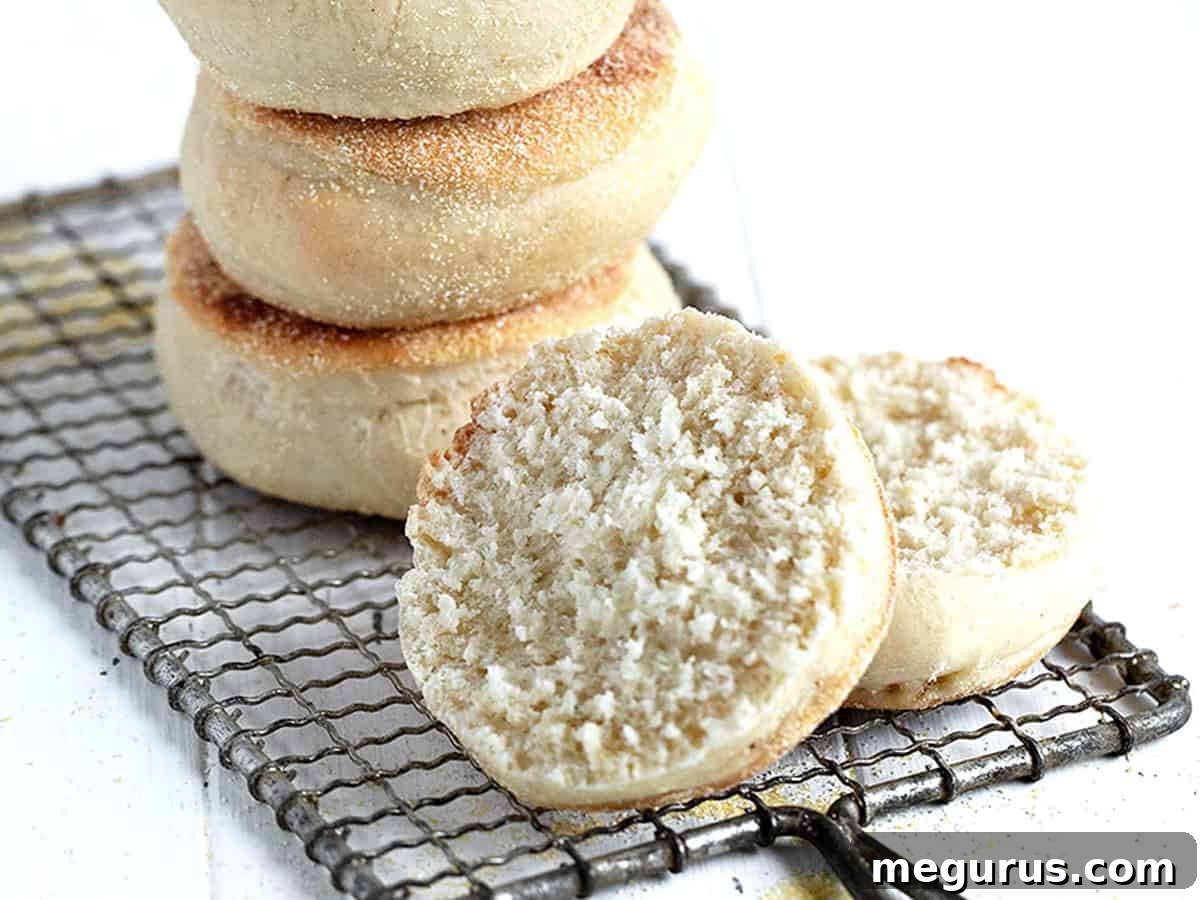
The Ultimate Homemade English Muffins: A Step-by-Step Guide
There’s truly nothing quite like a warm, freshly baked English muffin, split open and revealing its iconic “nooks and crannies.” As an avid home baker, I frequently prepare batches of these wonderful treats, ensuring I always have some on hand for crafting the perfect breakfast sandwich. This particular recipe stands out as my absolute favorite, largely due to its incredible flavor profile. The secret? Buttermilk, which infuses the muffins with a delightful, subtle tang reminiscent of sourdough, adding depth that elevates them far beyond any store-bought equivalent. This tang, combined with their famously porous texture, makes them ideal for soaking up butter, jam, or any topping you desire.
Why Bake Your Own English Muffins?
The decision to make English muffins from scratch might seem daunting at first, but the rewards are immeasurable. Beyond the sheer satisfaction of baking, homemade English muffins offer several distinct advantages. Firstly, the freshness is incomparable. Imagine biting into a warm muffin, still slightly crisp from the toaster, with a soft, chewy interior—a stark contrast to the often dry and dense store-bought varieties.
Secondly, you have complete control over the ingredients. No artificial preservatives, unwanted additives, or excessive sugars. You can choose high-quality flour, fresh buttermilk, and tailor the recipe to your dietary needs or preferences, such as experimenting with whole wheat flour for a heartier texture.
Thirdly, the flavor development in homemade English muffins is simply superior. The fermentation process of the yeast, especially when coupled with buttermilk, creates complex flavors that cannot be replicated in mass-produced products. That signature tangy note and the rich, yeasty aroma are unique to a muffin made with care in your kitchen.
Lastly, there’s the incredible texture. The iconic “nooks and crannies” are not just for show; they are designed to hold an abundance of butter, jam, or any other spread, turning each bite into a flavorful explosion. Achieving these perfect pockets is part of the charm and skill of homemade baking, a feat that is both rewarding and delicious.
The Secret to Superior Flavor: Buttermilk
One of the standout ingredients in this English muffin recipe is buttermilk. While it might seem like a small detail, buttermilk plays a crucial role in developing the distinct flavor and tender crumb that makes these muffins truly special. Its natural acidity reacts with the leavening agents, contributing to a wonderfully soft texture and that subtle, pleasant tang, often compared to sourdough. This unique tang adds a sophisticated layer of flavor, making your homemade English muffins truly irresistible. If you don’t have buttermilk on hand, don’t worry! You can easily make your own soured milk by adding a tablespoon of white vinegar or lemon juice to regular milk and letting it sit for a few minutes until it curdles slightly.
Achieving Those Signature Nooks and Crannies
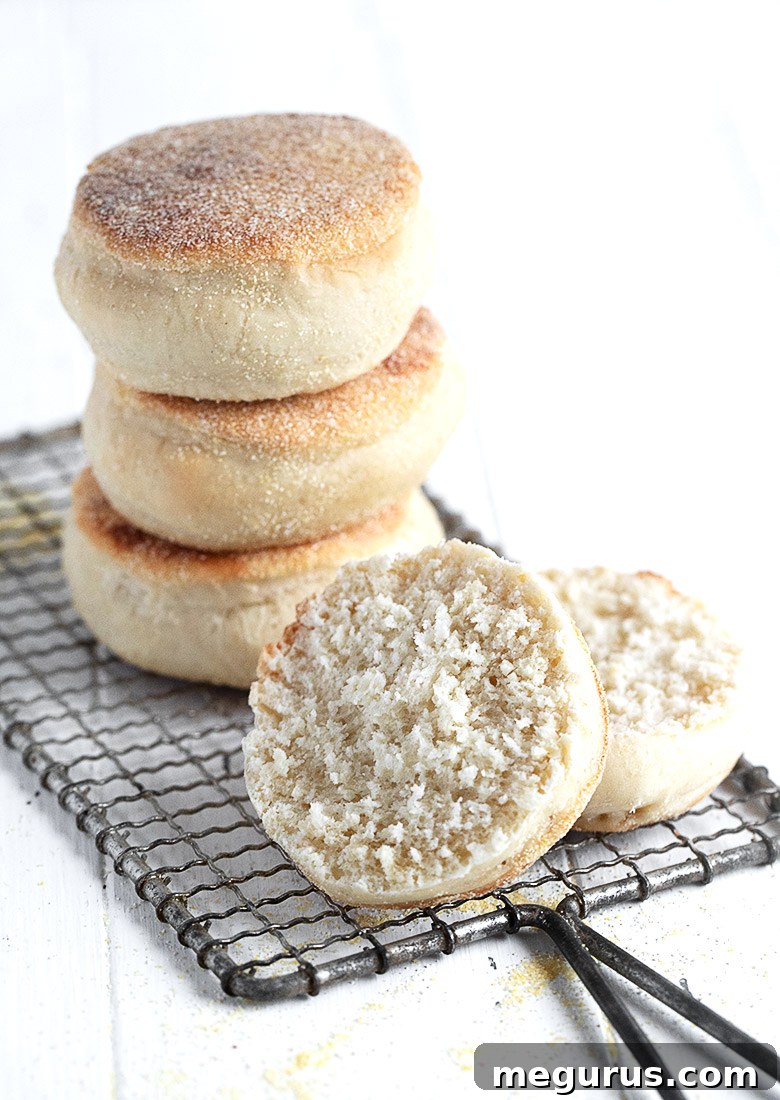
The hallmark of a truly great English muffin is its signature “nooks and crannies.” These delightful pockets are what make the muffin so adept at soaking up butter, jam, or the delicious fillings of a breakfast sandwich. Achieving them isn’t as complicated as it might seem, but it does require a specific technique: fork splitting. Instead of slicing your muffin with a knife, gently pierce around the circumference of the muffin with the tines of a fork. Then, gently pull the two halves apart. This method ensures that the delicate internal structure of the muffin is torn open rather than cut smoothly, preserving and enhancing all those wonderful little crevices that are so essential to the English muffin experience.
Step-by-Step Photos: Crafting Your English Muffins
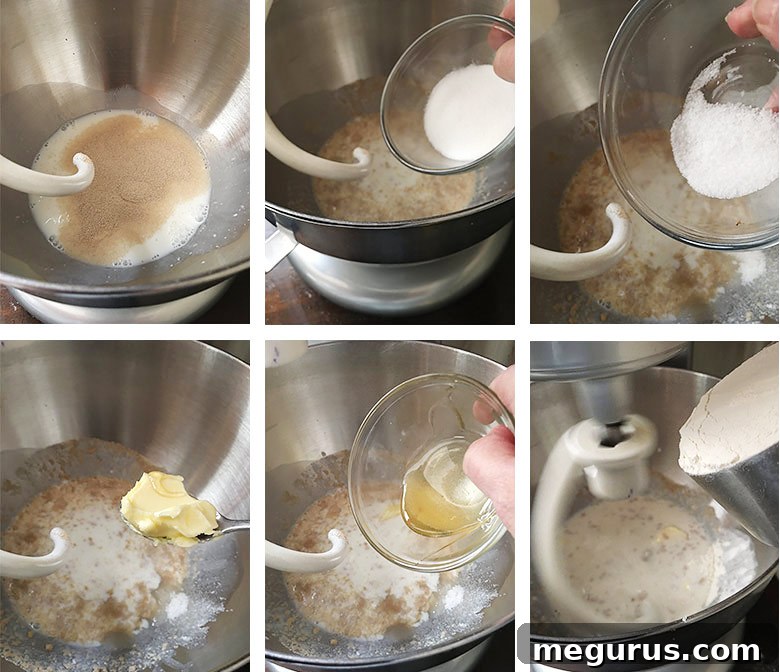
Step 1: Prepare the Dough. Begin by combining all the ingredients in a large bowl. You’ll notice the dough is quite moist and somewhat sticky—this is exactly how it should be! Resist the urge to add more flour to the bowl at this stage. Instead, transfer the moist dough to a lightly floured work surface. Knead it a few times, adding just a small amount of additional flour if necessary, until the dough becomes manageable and less sticky. The goal is to keep it as moist as possible without it being unworkable. Once kneaded, form the dough into a ball, place it in a greased bowl, cover it tightly with plastic wrap, and refrigerate for one hour. This chilling period helps develop flavor and makes the dough easier to handle.
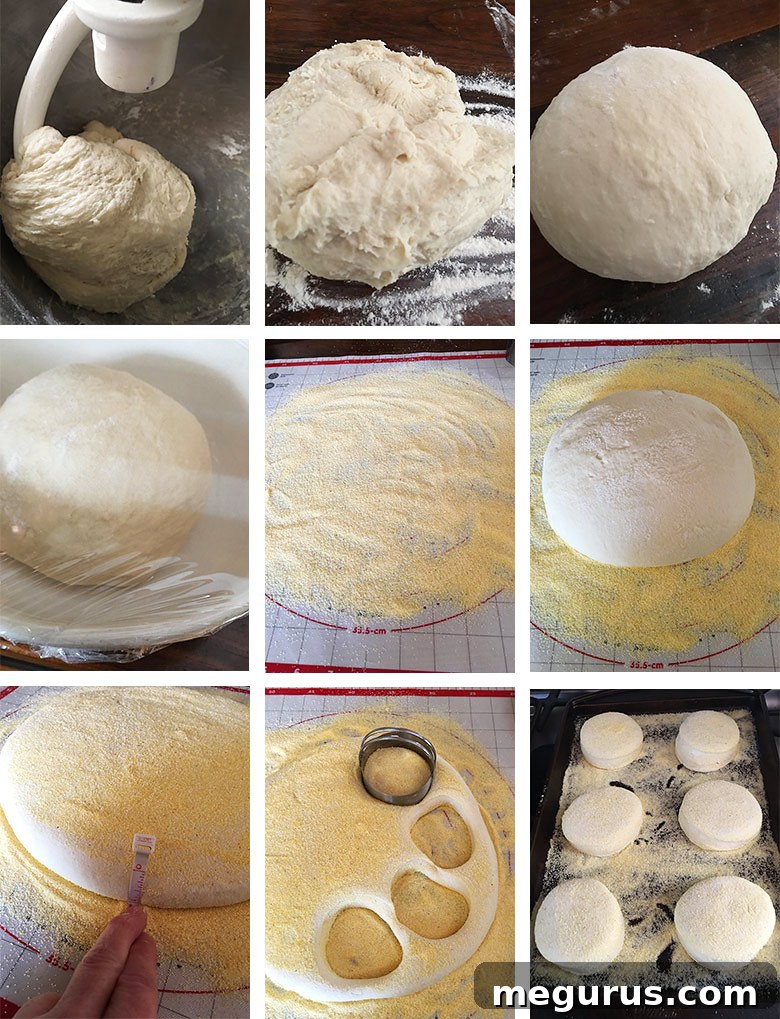
Step 2: Shape and Rise. After the refrigeration period, remove the dough to a lightly floured work surface. Briefly knead it again, adding only minimal flour if absolutely necessary to prevent excessive stickiness. Form the dough into a ball. Liberally sprinkle your rolling surface with cornmeal, polenta, or semolina in a roughly 10-inch circle. Place the dough ball on top, then sprinkle more cornmeal over the dough. Using a rolling pin, roll the dough evenly into a circle about 3/4 to 1-inch thick. Using a 3-inch biscuit cutter, cut out your muffin rounds. To minimize waste, try to cut them as close together as possible, but avoid cutting right to the outside edge; move your cutter in about 1/4-inch to ensure clean edges. Note that you cannot re-roll the leftover dough scraps, as this will toughen the muffins. Place the cut rounds onto a baking sheet generously sprinkled with cornmeal. Cover the sheet with plastic wrap and let the muffins rise at room temperature for 30-40 minutes. For an overnight option, place them in the fridge at this stage, and then let them rise at room temperature for 45-50 minutes in the morning.
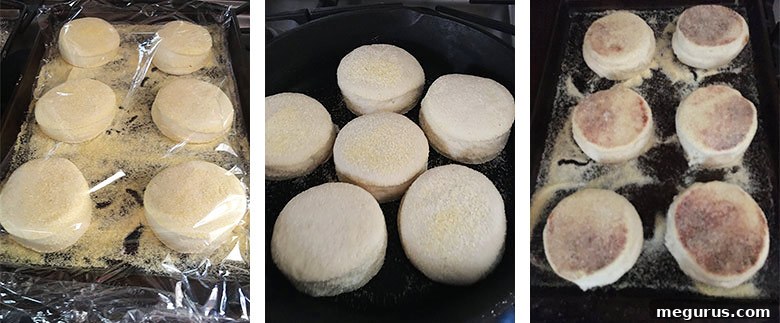
Step 3: Skillet Fry and Oven Bake. Preheat your oven to 350°F (175°C). While the oven heats, warm an un-greased skillet over medium-high heat on your stovetop. Once hot, carefully place the muffin dough rounds into the skillet, ensuring there’s enough space between them to easily flip. Reduce the heat to medium. Cook the muffins on one side until they begin to lightly color, then flip them over. After flipping, gently press down on each muffin with a spatula. This helps to create a flatter shape and ensures even cooking, while also releasing any large air pockets that may have formed. Once both sides are lightly browned, transfer the muffins from the skillet to your original cornmeal-dusted baking sheet. Transfer the baking sheet to the preheated oven and bake for approximately 15 minutes, or until an internal temperature of at least 195°F (90°C) is reached. Remove from the oven and transfer to a cooling rack to cool completely. This dual cooking method—skillet then oven—is key to achieving both the crusty exterior and fluffy interior.
Frequently Asked Questions & Expert Tips for English Muffins
Making homemade English muffins is a rewarding experience, and these tips will help you achieve perfect results every time.
- Can I incorporate whole wheat flour? Absolutely! Adding whole wheat flour can create a heartier, more nutritious muffin. I recommend substituting about 1 cup of all-purpose flour with whole wheat flour. Keep in mind that whole wheat flour tends to absorb more liquid, so you might need slightly less overall flour to achieve the desired moist dough consistency. Add the remaining flour gradually, just enough to make the dough kneadable but still soft and pliable.
- What’s a good substitute for honey? If you don’t have honey, you have several excellent alternatives. Maple syrup, light corn syrup, agave nectar, brown rice syrup, or barley malt syrup all work well. For a simpler swap, an equal measure of brown sugar can also be used, offering a rich, molasses-like sweetness.
- How can I make “cinnamon raisin” English muffins? To transform your plain English muffins into a spiced, fruity delight, add 1 to 1 1/2 tablespoons of ground cinnamon to the dough along with the flour. At the very end of the mixing process, fold in about 1 cup of raisins. For the best results, I suggest soaking the raisins in warm water for 10-15 minutes, then draining and drying them thoroughly before adding to the dough. This “plumps” them up and prevents them from absorbing moisture from the dough during the rise. Be aware that cinnamon can slightly slow down yeast activity, so you might need to extend the rising time by a small amount.
- What’s the best way to store baked English muffins? Once your delicious homemade English muffins have cooled completely, proper storage is key to maintaining their freshness. I prefer to store them in a sealed plastic storage bag in the refrigerator, which significantly extends their shelf life. For longer storage, English muffins freeze exceptionally well. Simply place them in a freezer-safe bag or airtight container, and they’ll keep beautifully for up to three months.
- How do I know when my English muffins are fully baked? The most accurate way to check for doneness is with an instant-read thermometer. Insert it horizontally through the side of a muffin, reaching the center. The internal temperature should register at least 195°F (90°C), ideally between 195-200°F (90-93°C). If you don’t have a thermometer, you can use a clean skewer: insert it into the center, and if it comes out clean and dry, your muffins are ready.
- Can I double the recipe for a larger batch? Yes, you can certainly double the ingredients to make more English muffins. However, I often find that working with a smaller batch is easier to manage, especially when it comes to the skillet-frying step, preventing the need to cook in multiple, crowded batches. Feel free to experiment and see what works best for your kitchen setup and needs.
- Is there an overnight rise option for baking in the morning? Absolutely! The overnight rise is a fantastic option for fresh muffins without the early morning rush. After you’ve rolled and cut your muffin rounds and placed them on the cornmeal-dusted baking sheet, cover them tightly with plastic wrap and refrigerate overnight. In the morning, remove them from the fridge, and let them rise at room temperature for about 45-50 minutes (still covered with the plastic wrap). Then, proceed with the skillet frying and oven baking steps as outlined in the recipe.
Creative Ways to Enjoy Your Homemade English Muffins
Your freshly baked English muffins are incredibly versatile and can be enjoyed in countless delicious ways, far beyond just breakfast!
- Toasted with Butter: The classic choice! Split a muffin, toast it to golden perfection, and slather with butter. Add your favorite jam, marmalade, or peanut butter for an extra layer of delight.
- Classic Breakfast Sandwich: The ideal vessel for a hearty breakfast. Layer a toasted and buttered muffin with a fried or scrambled egg, cheese, and your choice of bacon, sausage, or ham. A simple egg and cheese combo is always a winner.
- Open-Faced Sandwich: Elevate your lunch with an open-faced creation. Split, toast, and top your muffin with a fried egg, slices of ham, steamed asparagus, wilted spinach, or even a mini Eggs Benedict. Enjoy with a knife and fork!
- Any Type of Sandwich: Don’t limit English muffins to breakfast! Use the split halves as a delicious alternative to bread slices for any sandwich. One of my personal favorites is a warm, toasted, and buttered muffin filled with savory peameal bacon, tangy cranberry sauce, and creamy Brie cheese.
- English Muffin Pizzas: A nostalgic and quick meal, these were a staple in my childhood! Split your English muffins, spread a dollop of pizza sauce (or even tomato paste or plain tomato sauce) on each half, top generously with your favorite cheese, and bake in a 425°F (220°C) oven for 8-10 minutes, or until the cheese is bubbly and melted and the muffin edges are crisp.
- Grilled Cheese: Surprise! English muffins make fantastic grilled cheese sandwiches. Simply split them, fill with your preferred cheese, butter the outsides, and grill until golden brown and the cheese is gloriously gooey.
- Hamburger Bun Alternative: While not conventional, a toasted English muffin offers a delightful, slightly chewy texture and tangy flavor that can be a wonderful substitute for a traditional hamburger bun.
- English Muffin Bread Pudding: This is a brilliant way to use up English muffins that are starting to dry out. Cube the muffins, toss them with savory ingredients like ham, cheese, and perhaps some cooked asparagus or broccoli. Pour an egg and milk custard over the mixture and bake for a comforting and delicious savory bread pudding.
How to Split an English Muffin for Maximum Nooks and Crannies
To truly unlock the legendary “nooks and crannies” of your homemade English muffins and ensure they are perfectly textured to soak up butter and jam, resist the urge to use a knife! Instead, take a fork and gently pierce all around the sides of the muffin. Once scored, gently pull the muffin apart with your hands. This tearing action, rather than cutting, preserves the delicate internal structure, creating all those wonderful, irregular pockets that make English muffins so unique and enjoyable.
The Essential Homemade English Muffins Recipe
Get the Recipe: Homemade English Muffins
Pin This
Leave a Review
20 mins
25 mins
1 hr 30 mins
2 hrs 15 mins
7
servings
Ingredients
- 1 1/4 cup buttermilk, or soured milk, at room temperature (See Note 1)
- 1 Tablespoon Instant yeast, (See Note 2 below if using Active dry yeast)
- 2 1/4 teaspoons Kosher salt, or about 1 3/4 tsp fine salt
- 2 Tablespoons white sugar
- 1 1/2 Tablespoons honey
- 1 1/2 Tablespoons butter, at room temperature
- 3 cups all purpose flour
- 1/2 cup cornmeal, (See Note 3 below)
Equipment
-
3-inch biscuit cutter (or similar sized glass)
Instructions
-
Remove your buttermilk or milk from the fridge at least 30 minutes before you start, allowing it to come to room temperature. If you are making soured milk (see Note 1 below), prepare it and then let it stand at room temperature.
-
Add the room temperature buttermilk or milk to a large bowl, or the bowl of a stand mixer fitted with a kneading hook. Sprinkle in the instant yeast and stir gently to combine. Let this mixture stand for 5 minutes to activate the yeast. Next, add the white sugar, kosher salt, honey, and softened butter, mixing until well combined. Gradually add the all-purpose flour, one cup at a time, mixing after each addition. Once all the flour is added, you should have a somewhat sticky dough that is beginning to gather around the kneading hook. Do not add any more flour to the bowl. Instead, transfer the dough to a lightly floured work surface. Knead the dough a few times, adding a minimal amount of flour only if it’s too sticky to handle. It’s crucial to keep the dough as moist as possible, adding just enough flour to prevent excessive stickiness. Form the dough into a smooth ball, place it into a greased bowl, cover it tightly with plastic wrap, and refrigerate for 1 hour.
-
After the 1-hour refrigeration, remove the dough from the fridge and place it on a lightly floured surface. Knead the dough just a little, adding a tiny bit more flour if necessary to make it easier to work with. Be very careful not to add too much flour; the dough should remain soft and slightly tacky. Form the dough into a neat ball.
-
Scatter 2-3 tablespoons of cornmeal (or your chosen alternative like polenta or semolina) on a clean work surface, forming a circle roughly 10 inches in diameter. Place the dough ball directly on top of this cornmeal, then sprinkle another 2-3 tablespoons of cornmeal over the top of the dough ball. Take the remaining cornmeal and scatter it evenly onto a baking sheet; set this aside for later.
-
Using a rolling pin, carefully roll the cornmeal-dusted dough ball into a uniform circle, aiming for a thickness of about 3/4 to 1 inch. With a 3-inch biscuit cutter (or a glass of similar size), cut rounds out of the dough. Maximize your cuts by placing the cutter as close together as possible, but avoid cutting right to the very edge of the dough. Move your cutter in about 1/4 inch from the edge before making each cut to ensure clean, well-formed muffins. From a single batch of this recipe, you should yield between six to eight 3-inch rounds. Important: Do not attempt to re-roll and re-use the dough scraps, as this will result in tough muffins. Place the cut dough rounds onto the cornmeal-dusted baking sheet you prepared earlier. Cover the baking sheet loosely but completely with plastic wrap. Allow the muffins to rise at room temperature for 30-40 minutes. Alternatively, for a convenient overnight option, you can place the covered baking sheet in the refrigerator overnight. If opting for the overnight rise, remove the muffins from the fridge in the morning and let them rise at room temperature for approximately 45-50 minutes before proceeding to fry and bake as detailed in the subsequent steps.
-
Preheat your oven to 350°F (175°C).
-
As the rising time for your muffins is nearing its end, heat an un-greased skillet on your stovetop over medium-high heat. Once the skillet is hot, carefully place the English muffins into it, ensuring you leave some space between each muffin so you can easily maneuver a spatula. Reduce the heat slightly to about medium. Allow the muffins to cook on one side until the underside develops a light golden color. Then, using your spatula, carefully flip them over to cook the other side. After flipping, I like to gently press down on the top of each muffin with the spatula. This subtle pressure helps to flatten them slightly and releases any large air pockets that may have formed due to the heat, contributing to a more even and desirable texture.
-
Once both sides of the muffins are lightly browned from the skillet, transfer them back to the same cornmeal-dusted baking sheet. Place the baking sheet into your preheated 350°F (175°C) oven. Bake for approximately 15 minutes, or until the English muffins register an internal temperature of between 195-200°F (90-93°C) when tested with an instant-read thermometer. If you don’t have a thermometer, you can test for doneness by inserting a wooden skewer into the side and center of a muffin; it should come out clean and dry.
-
As soon as the muffins are removed from the oven, immediately transfer them to a wire cooling rack to cool down completely. This prevents them from becoming soggy on the bottom. Once fully cooled, store your homemade English muffins in an airtight container to maintain their freshness. For optimal shelf life, I recommend storing them in the refrigerator if they won’t be consumed within a day or two. These muffins also freeze exceptionally well for up to 3 months, perfect for having a stash of deliciousness ready whenever a craving strikes.
Notes
2. If using Active Dry Yeast instead of Instant Yeast: Gently warm the buttermilk to about 90°F (32°C). Then, add the active dry yeast to the warmed buttermilk and let it sit for 5-10 minutes until foamy, indicating the yeast is active. Proceed with the recipe by adding the remaining ingredients. Be careful not to overheat the buttermilk, as this can kill the yeast.
3. For dusting the work surface and baking sheet, you can use cornmeal, polenta, semolina, or any other fine ground corn product you have available.
Be sure to read the FAQ section above the recipe card for more tips and tricks for making this recipe successfully!
American, Canadian
Bread
Jennifer Maloney
Serving:
1
muffin
,
Calories:
272
kcal
,
Carbohydrates:
50
g
,
Protein:
7
g
,
Fat:
4
g
,
Saturated Fat:
2
g
,
Cholesterol:
11
mg
,
Sodium:
816
mg
,
Potassium:
121
mg
,
Fiber:
2
g
,
Sugar:
9
g
,
Vitamin A:
147
IU
,
Calcium:
57
mg
,
Iron:
2
mg
Tried this recipe?
If you enjoyed this recipe, please leave a star rating and comment. It helps others to find it!
Conclusion: Your New Favorite Homemade Treat
Embarking on the journey of making English muffins at home is an incredibly rewarding experience that yields delicious results far superior to anything you’ll find pre-packaged. From the satisfying process of dough preparation to the unique skillet-then-oven cooking method, each step contributes to muffins that are bursting with flavor, boast a tender crumb, and feature those essential “nooks and crannies.” Whether you’re making them for a quick breakfast sandwich, a savory open-faced delight, or simply to enjoy toasted with butter, these homemade English muffins are sure to become a cherished staple in your kitchen. Don’t hesitate to give this recipe a try; your taste buds will thank you!