Ultimate Cast Iron Skillet Focaccia: A Simple Guide to Perfectly Crispy, Flavorful Bread
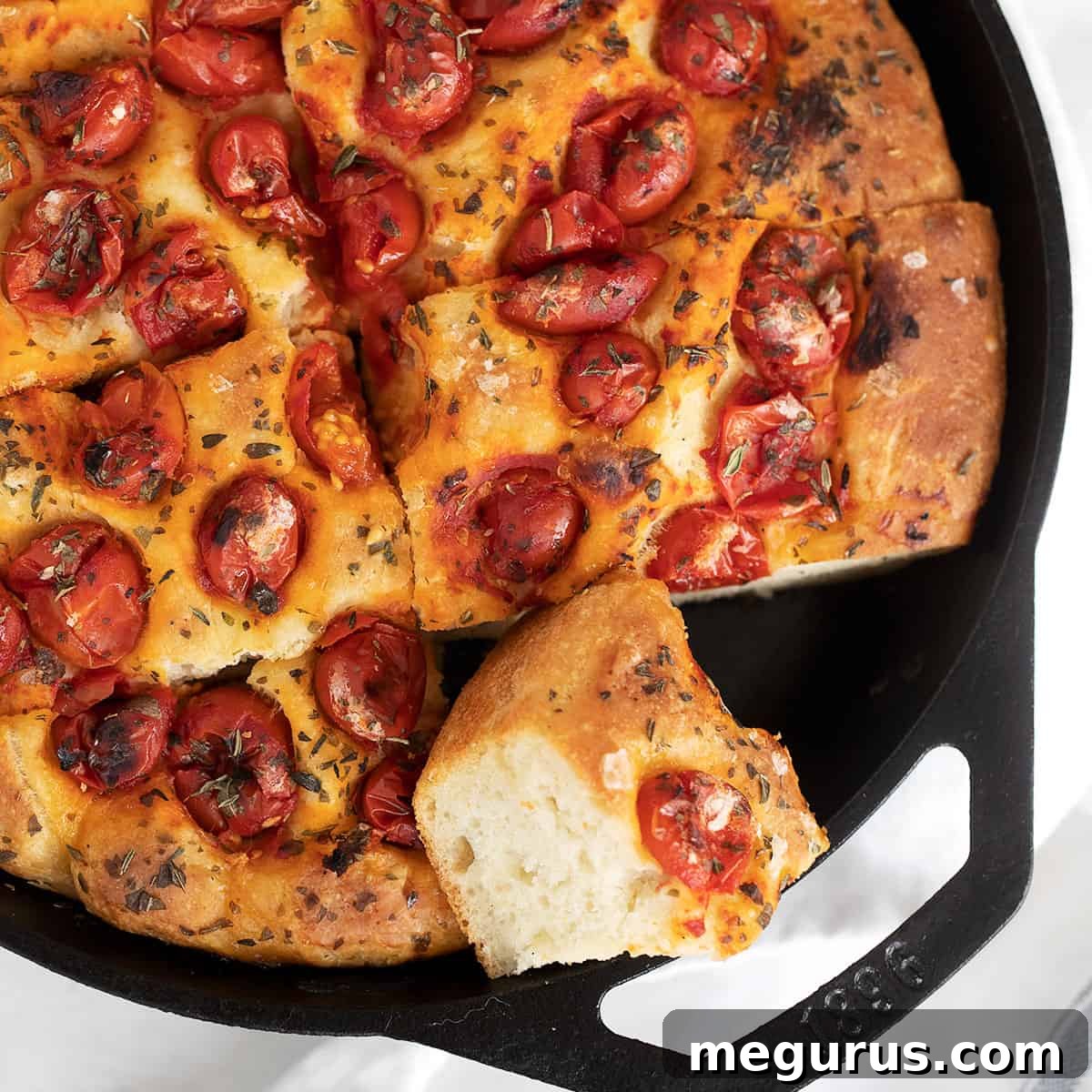
Imagine a warm, aromatic loaf of focaccia, golden brown and kissed with olive oil, fresh from your oven. Now imagine achieving that perfection with minimal effort, right in your trusty cast iron skillet. This comprehensive guide will show you how to create an incredibly easy and irresistibly delicious cast iron skillet focaccia that’s perfect for any occasion. Whether you’re a seasoned baker or just starting your journey into homemade bread, this recipe offers a straightforward path to an exceptional focaccia that boasts a beautifully crisp crust and a soft, airy interior, ideal for dipping into your favorite olive oil and balsamic vinegar.
Why This Cast Iron Skillet Focaccia Will Become Your New Favorite
There’s a reason focaccia is a beloved staple, and when baked in a cast iron skillet, it reaches new heights. This recipe stands out for its simplicity, speed, and stunning results. Here’s why you’ll want to make this recipe again and again:
- Effortlessly Delicious: This focaccia is genuinely easy to make, delivering incredible flavor with minimal hands-on time, making it accessible for bakers of all skill levels. The simple ingredients combine to create a taste that rivals your favorite bakery.
- Versatile Culinary Companion: From a delightful side dish for your weeknight dinner to an elegant appetizer at your next gathering, focaccia complements almost any meal. Its robust flavor and satisfying texture make it a welcome addition to soups, salads, and pasta dishes alike, or simply enjoyed on its own as a delicious snack.
- Perfect for Dipping: Serve it warm with a small bowl of high-quality extra virgin olive oil and a splash of aged balsamic vinegar. The bread’s abundant nooks and crannies are perfect for soaking up these flavorful liquids, offering a simple yet sophisticated culinary experience. Consider infusing your olive oil with minced garlic or fresh herbs for an extra layer of taste that truly elevates the dipping experience.
- Quick & Mostly Hands-Off: Despite its impressive appearance and taste, this focaccia is ready in just a couple of hours. Much of that time is dedicated to resting and rising, allowing the dough to naturally develop its magnificent flavor and texture while you attend to other tasks. This makes it a fantastic option for a weekend project or even a weeknight indulgence.
- Excellent Make-Ahead Option: Life gets busy, but that shouldn’t stop you from enjoying fresh bread. This focaccia dough can be assembled and refrigerated for up to 6 hours after its initial folds. This means you can prepare it in the morning or early afternoon and bake it fresh just before dinner, impressing your guests (or yourself!) with warm, homemade bread without last-minute fuss.
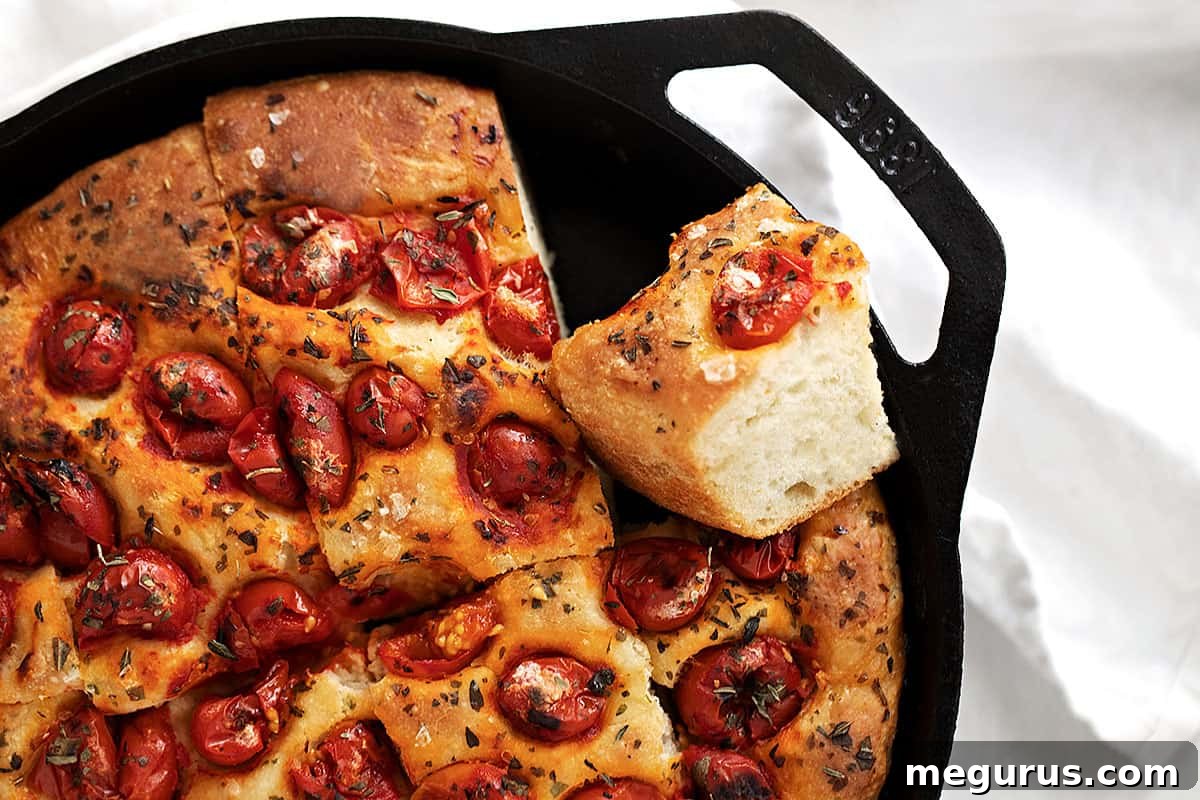
- Beautiful Presentation, Every Time: Baking in a cast iron skillet not only contributes to a superior, evenly cooked crust but also creates a beautiful, rustic presentation. The golden-brown crust and perfectly dimpled surface make for an Instagram-worthy dish that looks as good as it tastes. The heavy cast iron also helps retain heat, keeping your focaccia warm at the table for longer.
- Superior Texture: The consistent heat distribution of a cast iron skillet creates an unparalleled golden, crispy bottom crust that contrasts beautifully with the airy, soft crumb. This textural perfection is a hallmark of truly exceptional focaccia.
Choosing the Right Flour for Your Focaccia
The type of flour you choose plays a significant role in the texture and chewiness of your focaccia. For the best results, selecting a flour with higher protein content is key. This helps develop strong gluten, which is essential for that characteristic chewy crumb and open, airy structure. Understanding your flour will unlock the secret to bakery-quality focaccia at home.
Recommended Flours for Optimal Texture:
- Tipo 00 Flour (also known as Double Zero Flour): Hailing from Italy, Tipo 00 flour is incredibly finely milled and typically has a moderate to high protein content, ideal for producing a tender yet chewy crumb that’s a hallmark of authentic Italian bread. It’s often used for traditional Italian breads and pizzas, giving your focaccia an authentic texture and a delicate mouthfeel. If possible, look for varieties specifically milled for pizza or bread dough, as these will have the optimal protein levels for gluten development.
- Bread Flour: Readily available in most grocery stores, bread flour boasts a higher protein content (typically 12-14%) than all-purpose flour. This increased protein helps form a robust gluten network, which traps gases produced by the yeast, resulting in a chewier, more structured focaccia with excellent rise and those desirable large air pockets. Its strength is invaluable for a bread with high hydration like focaccia.
- Combination of Flours: For a balanced texture that captures the best of both worlds, you can experiment with using half Tipo 00 flour and half bread flour. This blend can offer a wonderfully tender interior combined with a satisfying chew, creating a complex and delightful experience.
Can You Use All-Purpose Flour?
If Tipo 00 or bread flour isn’t readily available, all-purpose flour can certainly be used in a pinch, and you will still yield a delicious loaf. However, be aware that all-purpose flour has a lower protein content (around 10-12%) compared to bread flour. This will likely result in a focaccia that is slightly less chewy and potentially softer, with a less pronounced open crumb structure. You might also find that you need to adjust the amount of flour slightly, as all-purpose flour can absorb liquids differently. When substituting, start with the recommended amount but be prepared to add a tablespoon or two more if your dough feels overly wet, or a tiny bit less if it seems too stiff. The final product will still be enjoyable, but the texture will be distinct from a focaccia made with higher-protein flours.
Essential Tips for Focaccia Perfection: Step-by-Step Guidance
Creating a stellar focaccia involves a few key techniques and a little patience. Paying close attention to dough hydration and gentle handling is paramount for achieving that signature open, airy texture. For this recipe, I use a cast iron skillet with a 10-inch top diameter (and an 8-inch bottom diameter). If your skillet is larger, your focaccia will naturally be thinner and may bake more quickly, so keep an eye on it and adjust baking time as needed to prevent overbrowning.
For ultimate precision in baking, especially when working with high-hydration doughs like focaccia, weight measurements (grams) are highly recommended. Using a kitchen scale ensures consistent results every time, which is critical for achieving the correct dough consistency. If you’re using measuring cups, remember to employ the “spoon and level” method: gently spoon flour into the measuring cup until it’s overflowing, then level it off with the straight edge of a knife, rather than packing it down or scooping directly from the bag. This prevents over-measuring and yields a lighter, more accurate amount of flour.
Step 1: Mastering the Dough Mix – The Foundation of Flavor
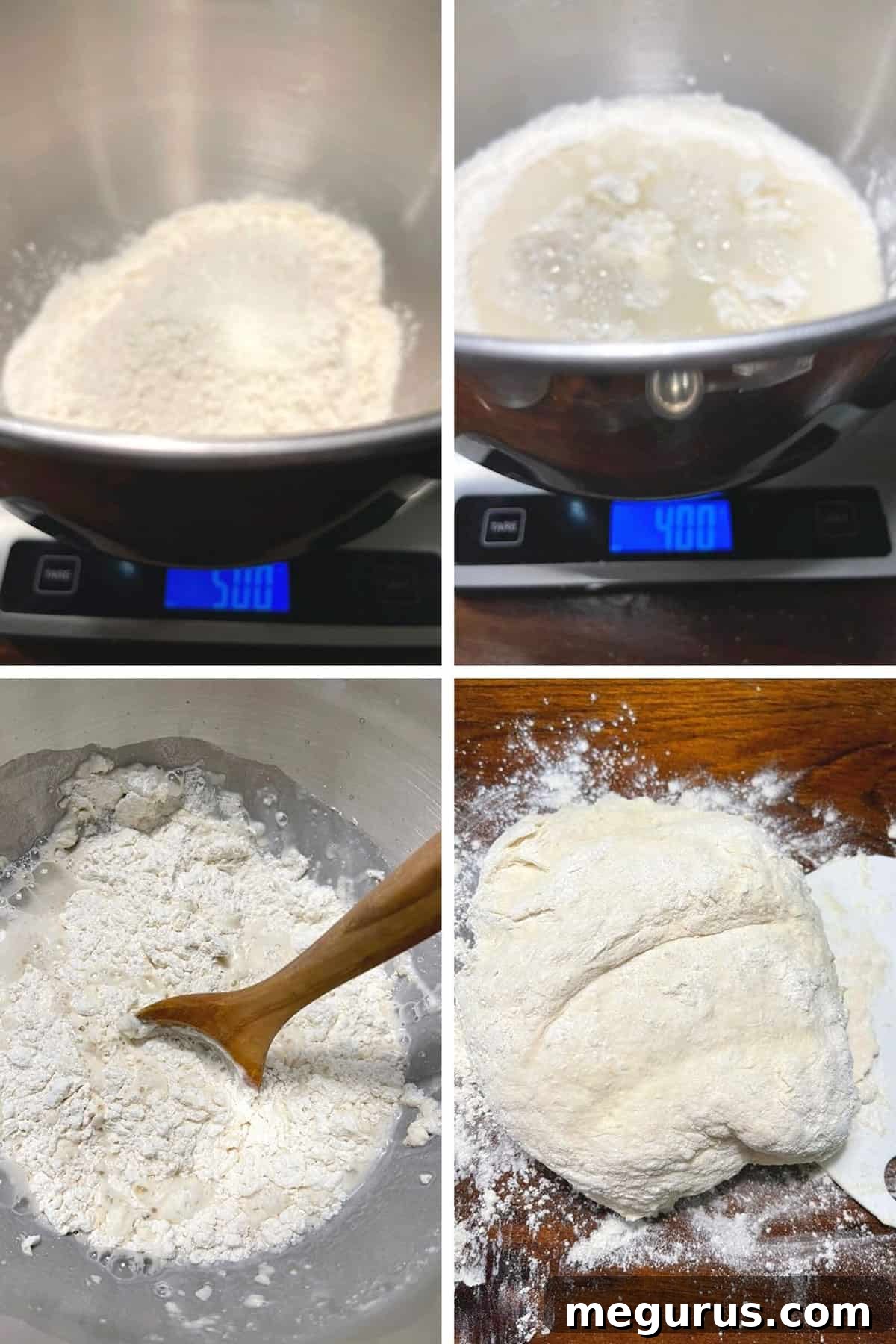
The initial mixing of the dough is crucial for developing gluten without overworking it and for ensuring proper hydration. I cannot stress enough the importance of weighing your flour and water for accuracy – this is the true secret to a perfectly hydrated dough that will result in a light, airy focaccia. Once measured, combine the dry ingredients (flour, salt, yeast) in a large bowl, then pour in the cold water. Simply stir them together with a wooden spoon or Danish dough whisk until a shaggy, somewhat sticky dough forms and no dry streaks of flour remain. Unlike traditional bread recipes that call for warm water, using cold water here helps to slow down the yeast activity, allowing for a longer, slower fermentation which develops more complex flavors.
Carefully transfer the sticky dough to a generously floured work surface. Don’t be afraid to use a silicone bowl scraper to get every last bit out of the bowl. If the dough feels overly sticky on the surface as you begin to work with it, gently move it through the flour to reduce stickiness, but be cautious not to incorporate too much extra flour. The goal is to keep the dough very moist; this high hydration is what contributes to focaccia’s wonderfully open, airy crumb and tender texture. At this stage, instead of vigorous kneading, perform a few gentle “stretches and pushes”: push the dough away from you with the heel of your hand, then fold it back over itself, repeating this motion for about 3-4 minutes. This technique helps to begin gluten development without making the dough tough or dense. The dough will transform from shaggy to slightly smoother and more cohesive, though still very soft.
Step 2: Cultivating Structure with Rises, Stretches, and Folds
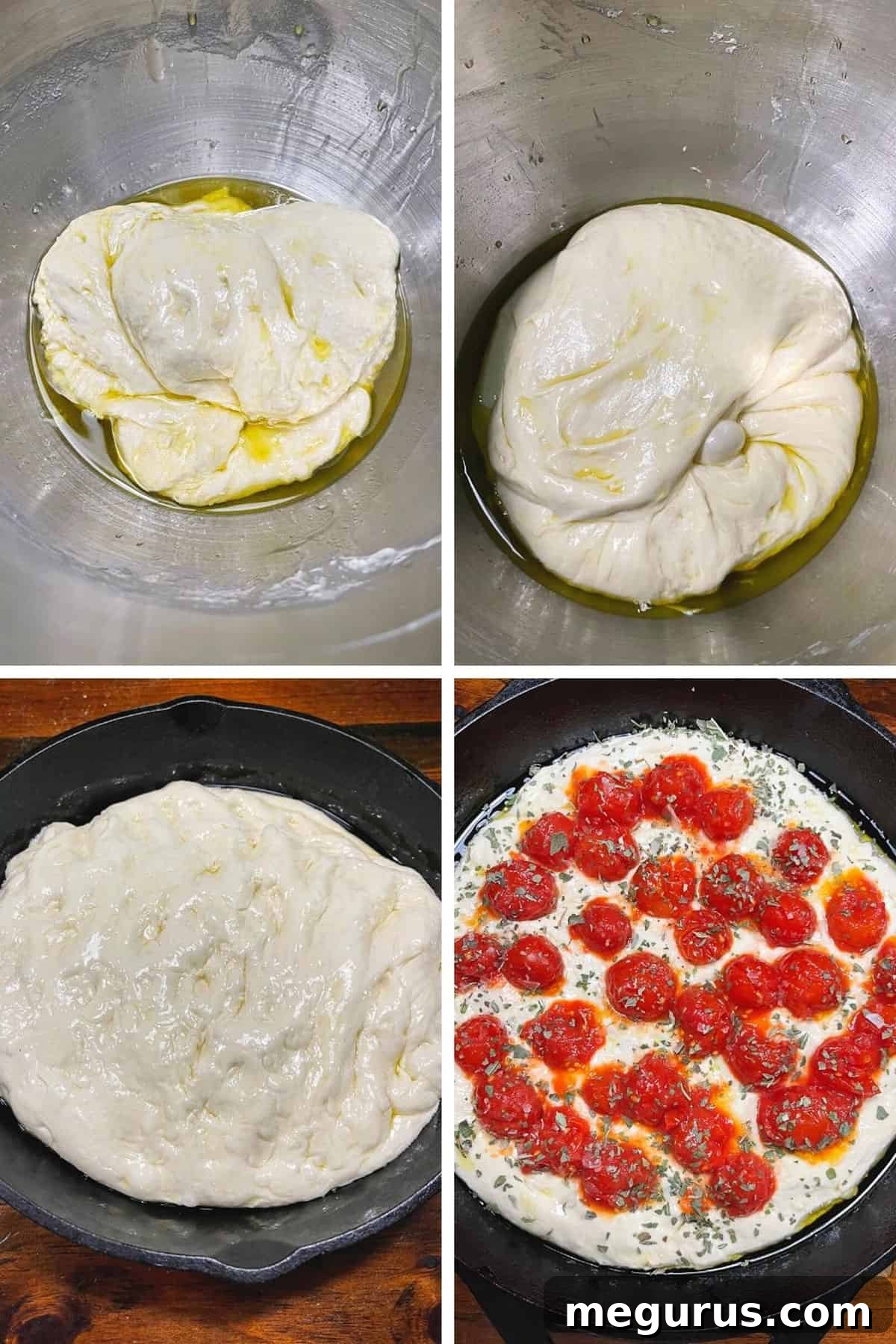
Once your dough is initially mixed and lightly worked, it’s time to nurture its structure and flavor through a series of “stretch and folds.” Transfer the dough into the same large bowl used previously, ensuring it has been generously coated with 3 1/2 tablespoons of extra virgin olive oil. This oil will not only prevent sticking but also infuse the dough with a beautiful Mediterranean flavor and contribute significantly to a wonderfully crisp crust.
You will perform a series of gentle “stretch and folds,” a technique that develops gluten strength and elasticity much more effectively and gently than traditional kneading. To do this, grab the edge of the dough (which will be slippery with oil), pull it straight up, extending it as far as it will go without tearing, then fold it back over the main mass of dough to the other side of the bowl. Rotate the bowl 45 degrees and repeat this process three more times, effectively completing a full rotation of the dough. This action builds strength and elasticity in the dough while preserving the delicate air pockets that create focaccia’s characteristic open texture.
These stretches and folds are alternated with resting periods (three 30-minute rests in total), allowing the gluten to relax, hydrate further, and become more extensible. This methodical approach ensures a tender, airy crumb. During these resting periods, the yeast continues its work, slowly fermenting the dough and developing complex flavors. Just before it’s ready for the skillet, a short 10-minute chill in the refrigerator helps the dough firm up slightly, making it easier to handle and contributing to a better texture in the final bake. This brief cold period can also improve the crust.
When it’s time to transfer to the skillet, drizzle the remaining 1 tablespoon of olive oil into the bottom of your cast iron pan, ensuring it coats the entire surface. Gently slide your dough into the skillet, then add more olive oil over the top of the dough. Use your fingertips to gently press and stretch the dough to fill the skillet, creating those iconic focaccia dimples. These dimples aren’t just for looks; they help capture the olive oil and any toppings, ensuring every bite is bursting with flavor. Finally, add your desired toppings and allow the dough to undergo its final rise for 30 minutes before baking. This last proofing period is crucial for achieving that light and airy texture and a beautiful oven spring.
Unleash Your Creativity: Inspired Focaccia Topping Ideas
Focaccia is a canvas for culinary creativity, and the topping possibilities are truly endless. While the classic sprinkle of flaky sea salt and a generous drizzle of olive oil is always a winner, don’t hesitate to experiment with fresh and flavorful additions to make your focaccia unique. Here are some ideas to spark your imagination and elevate your focaccia game:
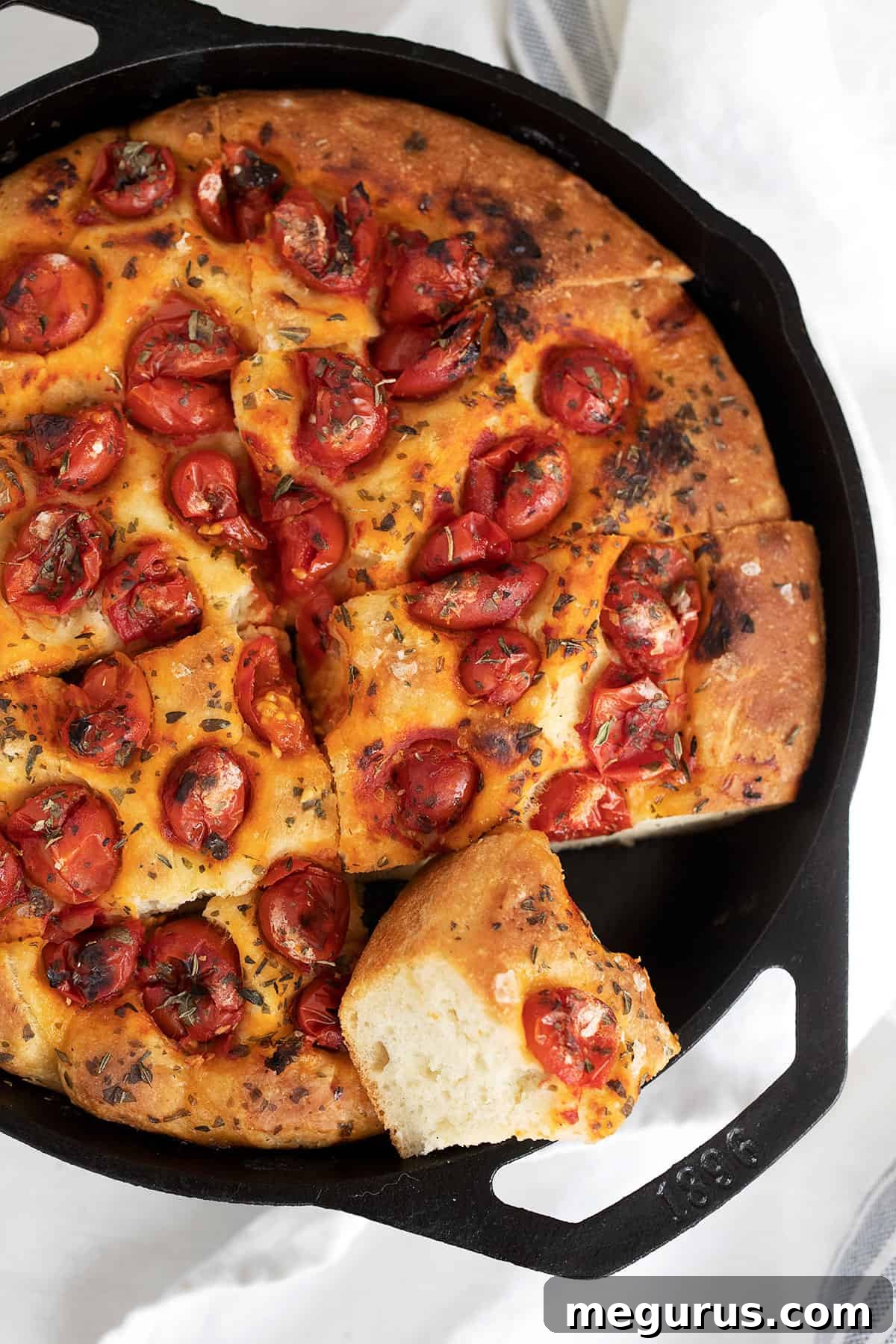
- Rich Tomato Flavors: I adore the deep, concentrated flavor of canned cherry tomatoes. Drained well and gently pressed into the dough, they release a wonderful sweetness and savory depth as they bake. Alternatively, fresh cherry or grape tomatoes, halved or left whole, will burst with juicy goodness, adding a bright acidity.
- Onion Sweetness or Zest: Thinly sliced red or yellow onions can add a delightful sharpness and a slight crunch that mellows beautifully in the oven. For an even more profound, sweet-savory flavor, caramelize the onions gently in a pan before adding them to the focaccia – their rich, jammy notes are truly transformative. A sprinkle of fresh thyme pairs wonderfully with caramelized onions.
- Classic Olives: Pitted Kalamata or green olives are a timeless choice, offering briny bursts of flavor that perfectly complement the rich bread. You can slice them, roughly chop them, or leave them whole for visual appeal. A mix of different olive varieties adds complexity.
- Unexpected Fruit Pairings: For a surprisingly delightful sweet and savory twist, try thinly sliced pear or apple. These fruits soften and caramelize slightly during baking, adding a subtle sweetness and unique texture. A sprinkle of fresh rosemary or a touch of honey pairs beautifully with these fruit toppings.
- Cheesy Indulgence: A generous scattering of cheese can elevate your focaccia to new heights. Consider grated Parmesan for a salty, nutty bite, sharp cheddar for robust flavor, or creamy feta or goat cheese for a tangy contrast. Blue cheese can also be an adventurous, pungent addition for true cheese lovers. For best results, add softer cheeses like mozzarella or feta in the last 10 minutes of baking to prevent them from burning.
- Fragrant Herbs: Herbs are essential for authentic Italian flavors. While fresh herbs like rosemary, basil, or oregano are lovely, they can sometimes burn or dry out if added too early in the baking process. For that reason, I often stick with dried herbs like oregano, basil, rosemary, and thyme, which infuse the bread with their aromas without scorching. If using fresh herbs, consider adding them halfway through baking or just after the focaccia comes out of the oven for maximum freshness and aroma.
- Garlic Lover’s Dream: Thinly sliced garlic cloves or a spoonful of roasted garlic paste pressed into the dimples before baking will infuse the entire focaccia with an irresistible aroma and flavor. Pair with rosemary and sea salt for a classic combination.
- Spicy Kick: A sprinkle of red pepper flakes can add a subtle warmth and a gentle kick, especially when paired with tomatoes or olives.
- Pesto Swirl: After dimpling the dough, swirl small dollops of pesto over the surface before adding other toppings. This adds a vibrant herbaceous and garlicky note.
Feel free to mix and match these ideas to create your signature focaccia. A classic combination like cherry tomatoes, a scattering of fresh basil (added after baking), and flaky sea salt is always a crowd-pleaser that celebrates simple, quality ingredients.
Elegant Ways to Serve Your Homemade Focaccia
This cast iron skillet focaccia is so versatile, it can grace your table in many forms, from a simple snack to the star of a meal. Its rustic charm and incredible flavor make it a welcoming addition to any spread. Here’s how to best enjoy your freshly baked bread:
- Straight from the Skillet: The most rustic and appealing way to serve focaccia is often right in the skillet it was baked in! Once slightly cooled (it will be easier to slice and handle when just warm), simply slice it diagonally into squares or wedges directly in the pan. This retains its warmth and rustic charm, making it a focal point on your table.
- Classic Appetizer or Snack: For a delightful appetizer, cut the focaccia into small, manageable pieces. Arrange them elegantly on a platter with individual small bowls of high-quality extra virgin olive oil and a rich balsamic vinegar for dipping. A garlic-infused olive oil, a homemade herb oil, or even a spicy chili oil can elevate the dipping experience further, offering varied flavor profiles for your guests.
- Alongside a Summer Salad: I find focaccia to be an absolutely perfect companion to a crisp, vibrant summer salad. The rich, savory bread with its hint of olive oil perfectly balances the fresh greens and bright vinaigrette, making for a satisfying and complete meal that feels both hearty and light.
- With Soups or Stews: Use focaccia to sop up every last drop of your favorite hearty soup or rich stew. Its sturdy yet soft texture is ideal for absorbing flavorful broths and sauces, ensuring no deliciousness goes to waste. It’s particularly comforting with a minestrone or a rich tomato soup.
- The Ultimate Sandwich Base: Slice a larger piece of focaccia horizontally and use it as a flavorful, robust base for sandwiches. It’s particularly good with roasted vegetables, cured Italian meats like prosciutto or salami, fresh mozzarella and pesto, or even a simple grilled chicken. Its texture holds up well to substantial fillings.
- Bruschetta Alternative: Toast small pieces lightly and top with classic bruschetta ingredients like diced ripe tomatoes, fresh basil, a drizzle of olive oil, and a sprinkle of sea salt. The focaccia’s inherent flavor adds an extra dimension to this Italian staple.
- Cheese Board Companion: Serve slices of focaccia alongside your favorite cheeses, charcuterie, and fruit for an elevated cheese board. Its simple elegance allows the flavors of the accompaniments to shine.
Storage and Reheating Tips for Focaccia
One of the many wonders of focaccia is how well it stores, allowing you to enjoy its deliciousness days after baking. With proper storage and reheating, you can preserve its wonderful texture and flavor, making it perfect for meal planning or unexpected cravings. Here’s how to keep it fresh and reheat it perfectly:
Can You Freeze Focaccia? Absolutely!
Focaccia freezes beautifully, making it an excellent candidate for meal prep or simply having a delicious homemade bread on hand whenever you desire. You can store baked focaccia in the freezer for up to 2 months without compromising its quality. To freeze focaccia effectively:
- Cool Completely: Ensure your focaccia is completely cooled to room temperature after baking. Freezing warm bread can lead to ice crystals and a soggy texture upon thawing.
- Wrap Tightly: Wrap individual slices or larger portions tightly in plastic wrap, ensuring no air can get in. This is your first line of defense against freezer burn.
- Add Extra Protection: Follow the plastic wrap with a layer of aluminum foil for extra protection. This double-layer method helps to seal in moisture and prevent odors from permeating the bread.
- Freezer-Safe Container: Place the wrapped focaccia in a freezer-safe bag or an airtight container. This provides an additional barrier and protects the bread from getting crushed.
When ready to enjoy, simply remove the desired amount from the freezer. You can allow it to thaw at room temperature for an hour or two before reheating, or if you’re in a hurry, proceed directly to reheating, which might just take a few extra minutes.
How to Reheat Focaccia in the Oven (Recommended for Best Results)
Reheating focaccia in the oven is the best way to restore its fresh-baked taste and texture, particularly its coveted crispy crust, making it taste almost as good as day one:
- Preheat Oven: Preheat your oven to 350°F (175°C).
- Prepare Focaccia: For best results, lightly sprinkle the focaccia with a tiny bit of water (this helps rehydrate the interior without making it soggy) and then wrap it loosely in aluminum foil. This prevents the crust from over-browning while the interior warms up.
- Heat: Place the foil-wrapped focaccia directly on the oven rack.
- Bake Until Warm: Heat for about 8-10 minutes for individual slices or up to 15-20 minutes for a larger piece, or until thoroughly warmed through. For an even crispier bottom crust, remove the foil for the last 2-3 minutes of heating.
Other Reheating Methods:
- Toaster Oven: For individual slices, a toaster oven works wonderfully. Follow the same temperature and time guidelines as a regular oven, often without foil for extra crispness.
- Stovetop Skillet: You can also reheat individual slices in a dry cast iron skillet on the stovetop over medium-low heat. Cook for a few minutes on each side until warmed through and the crust is crisp again. This method is great for a quick, crispy refresh.
- Air Fryer: An air fryer can quickly crisp up focaccia. Place slices in a single layer at 325°F (160°C) for 3-5 minutes, checking frequently to prevent burning.
Cast Iron Skillet Focaccia Recipe
Get the Recipe:
Cast Iron Skillet Focaccia
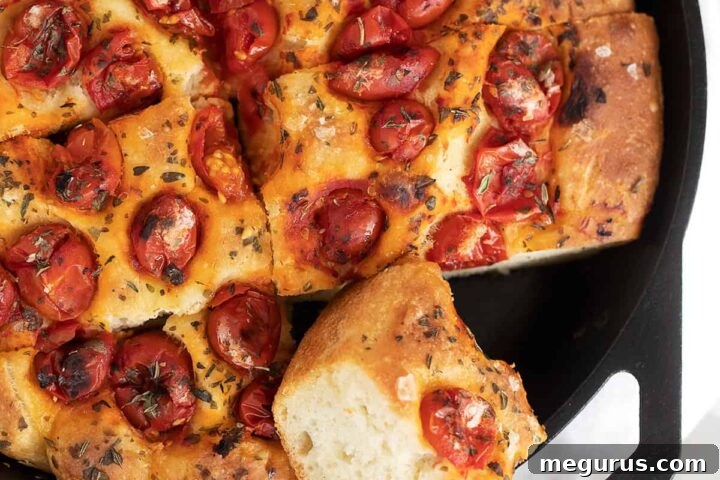
This easy and delicious cast iron skillet focaccia makes a wonderful side or appetizer. It’s perfectly crisp on the outside and wonderfully airy on the inside, ideal for dipping in olive oil and balsamic. Plus, it offers endless options for creative toppings!
Prep Time: 15 minutes
Cook Time: 25 minutes
Rising and Chilling Time: 1 hour 40 minutes
Total Time: 2 hours 20 minutes
Yield: 12 servings
Ingredients
For the Dough:
- 3 3/4 cups (500 g) bread flour or Tipo 00 flour, spooned and leveled, plus more as needed for dusting
- 1 1/2 teaspoons fine salt
- 1 teaspoon instant or active dry yeast
- 1 2/3 cups (400 g) cold water
For the Bowl (for first rise):
- 3 1/2 Tablespoons (50 g) extra virgin olive oil
For the Pan (for baking):
- 1 Tablespoon (30 g) extra virgin olive oil
Optional Toppings (Choose your favorites!):
- Canned cherry tomatoes, thoroughly drained
- Flaky sea salt
- Dried herbs, such as Basil, oregano, rosemary, and/or thyme
- Thinly sliced red onion
- Pitted Kalamata or green olives
- Garlic cloves, thinly sliced or roasted
- Fresh rosemary sprigs (add partway through baking or after)
Instructions
- In a large mixing bowl, accurately weigh out the flour. Sprinkle the instant yeast and fine salt into the bowl, then stir them together to ensure even distribution. (If using Active Dry yeast: First, mix the yeast with a small portion of the cold water, warmed slightly to lukewarm, and let it stand for 5-10 minutes until foamy before adding to the flour mixture.) Make a well in the center of the flour mixture and pour in the cold water. Using a wooden spoon or sturdy spatula, stir everything together until a loose, shaggy dough forms and no dry pockets of flour remain. The dough will be quite sticky.
- Carefully transfer the sticky dough to a generously floured work surface. Use a silicone bowl scraper to ensure you get all the dough out of the bowl. Set the bowl aside; it will be used again for rising.
- With the heel of your hand, push the dough into the work surface and gently stretch and tear the dough for approximately 3-4 minutes. This process helps to initiate gluten development. If the dough feels overly sticky and unmanageable, work in a tiny bit more flour, as needed, but be careful not to add too much; the dough needs to remain very moist for a light and airy final texture.
- Add the 3 1/2 tablespoons of extra virgin olive oil to the large bowl that was used to mix the dough. Place the dough into this oiled bowl, turning it once to ensure the oil coats the entire surface of the dough. Now, perform the first series of “stretch and folds”: Grab one edge of the dough, pull it straight up, extending it as far as it will go without tearing, then fold it over to the opposite side of the bowl. Rotate the bowl 45 degrees and repeat this process 3 more times, completing a full rotation of the dough.
- Leave the dough to rest for 30 minutes at room temperature. There is no need to cover the bowl at this stage, as the dough is well coated with oil and will not dry out. However, you can cover it loosely with a clean kitchen towel if you prefer.
- After the first 30-minute rest, repeat the “stretch and fold” pattern described in Step 4.
- Allow the dough to rest for another 30 minutes.
- Repeat the “stretch and fold” pattern one final time. Then, allow the dough to rest for a final 30 minutes. (This results in a total of three 30-minute rest periods, each preceded by a set of folds, for a total bulk fermentation time of 1 hour 30 minutes).
- After the final rest, place the bowl with the dough into the refrigerator for 10 minutes. This short chilling period helps to firm up the dough, making it easier to handle and contributing to a better texture.
- While the dough is chilling, preheat your oven to 450°F (230°C) using the regular bake setting (not fan assisted).
- Once the dough has chilled for 10 minutes, drizzle about half of the remaining 1 tablespoon of olive oil into your cast iron skillet, spreading it to coat the bottom. Carefully slide the dough from the bowl into the skillet. Drizzle the rest of the olive oil over the top of the dough. Using your fingertips, gently massage the top oil into the dough’s surface while simultaneously stretching and pressing your fingers into the dough to create those signature focaccia dimples. Continue stretching the dough gently until it fills the skillet.
- Evenly distribute your desired toppings over the dimpled dough. Now, leave your dough in the skillet to rise for a final 30 minutes at room temperature. (Make-ahead option: At this point, you can cover the skillet with plastic wrap and refrigerate for up to six hours. If refrigerating, bring the skillet back to room temperature for 30 minutes before baking to allow for the final rise).
- Bake the focaccia for 20-25 minutes, or until it is beautifully golden brown on top and the edges are crisp. The internal temperature should reach around 200-210°F (93-99°C).
- Allow the focaccia to cool in the skillet until just warm before slicing and serving. This resting period is crucial for the internal structure to set, preventing a gummy texture and ensuring the best flavor.
Notes
- For variations in texture, you can use all bread flour, all Tipo 00 flour, or a 50/50 mix of bread flour and Tipo 00 flour. Each will yield a slightly different, but equally delicious, result.
- If you have the option, use Tipo 00 flour specifically formulated for pizza dough. These flours often have the ideal protein content and extensibility for high-hydration, chewy breads.
- For additional detailed tips and insights into each step of the process, especially regarding flour choices, dough handling, and topping ideas, please refer to the comprehensive sections above this recipe card!
Cuisine: American, Canadian, Italian
Course: Bread, Appetizer, Side Dish, Snack
Author: Jennifer Maloney
Nutrition Information (per serving)
Serving: 1 slice (based on 12 servings)
Calories: 210 kcal
Carbohydrates: 30 g
Protein: 5 g
Fat: 7 g
Saturated Fat: 1 g
Polyunsaturated Fat: 1 g
Monounsaturated Fat: 5 g
Sodium: 324 mg
Potassium: 44 mg
Fiber: 1 g
Sugar: 0.1 g
Vitamin A: 1 IU
Vitamin C: 0.001 mg
Calcium: 7 mg
Iron: 0.4 mg
Tried this recipe? If you enjoyed this recipe for Cast Iron Skillet Focaccia, we’d love to hear from you! Please consider leaving a star rating and comment below. Your valuable feedback helps others discover and enjoy this delicious homemade bread too!