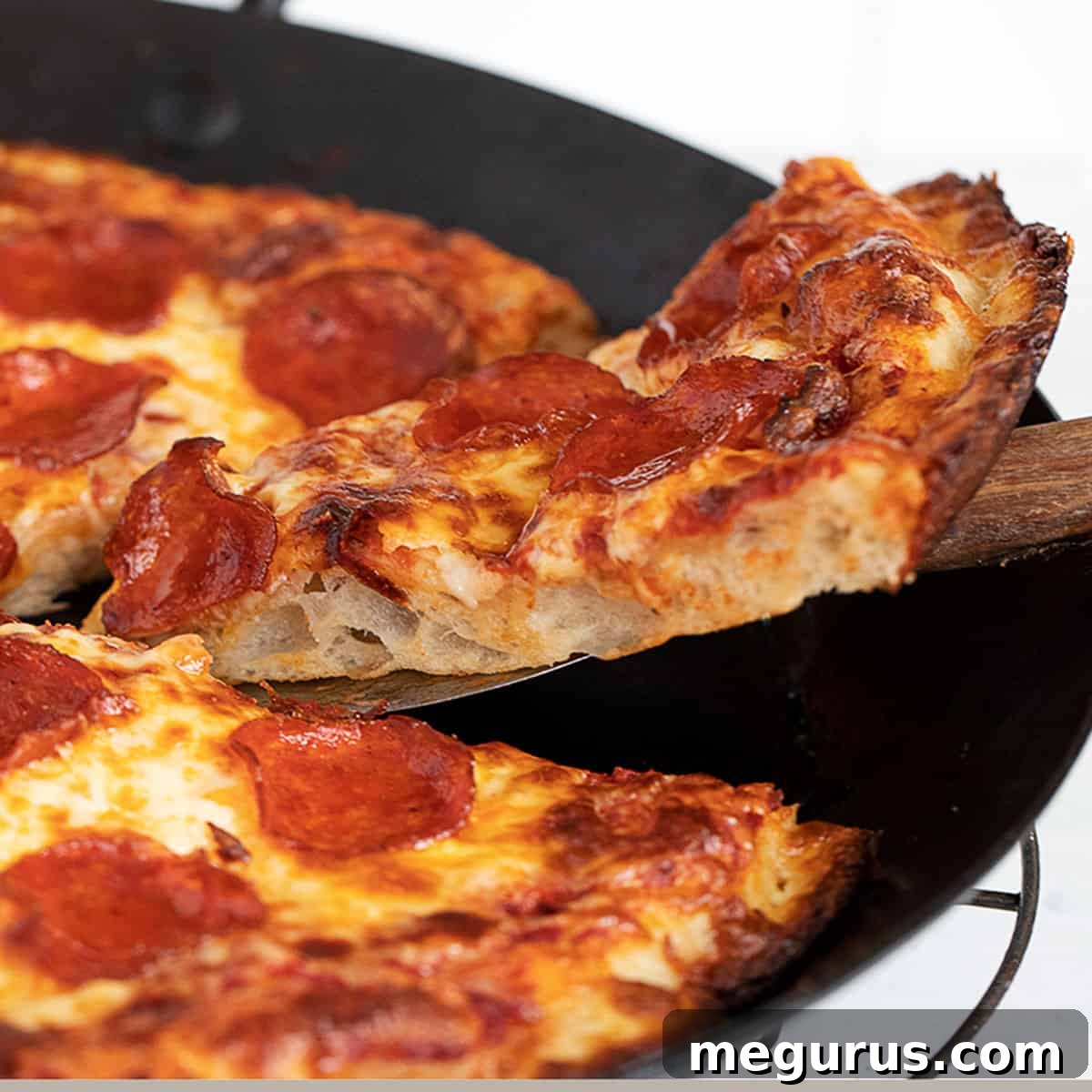
Embark on a culinary journey to craft the ultimate pan pizza right in your own kitchen! This comprehensive guide reveals the secrets to a perfect, homemade pan pizza, featuring an incredibly easy, no-knead pizza crust. With classic toppings baked to golden perfection in your choice of a steel or cast iron skillet, or a traditional baking pan, this recipe promises a delightful experience for both novice and seasoned home cooks. Prepare to savor a pizza that boasts a uniquely chewy, deeply flavorful crust and a satisfyingly rich topping layer, all achievable with minimal effort.
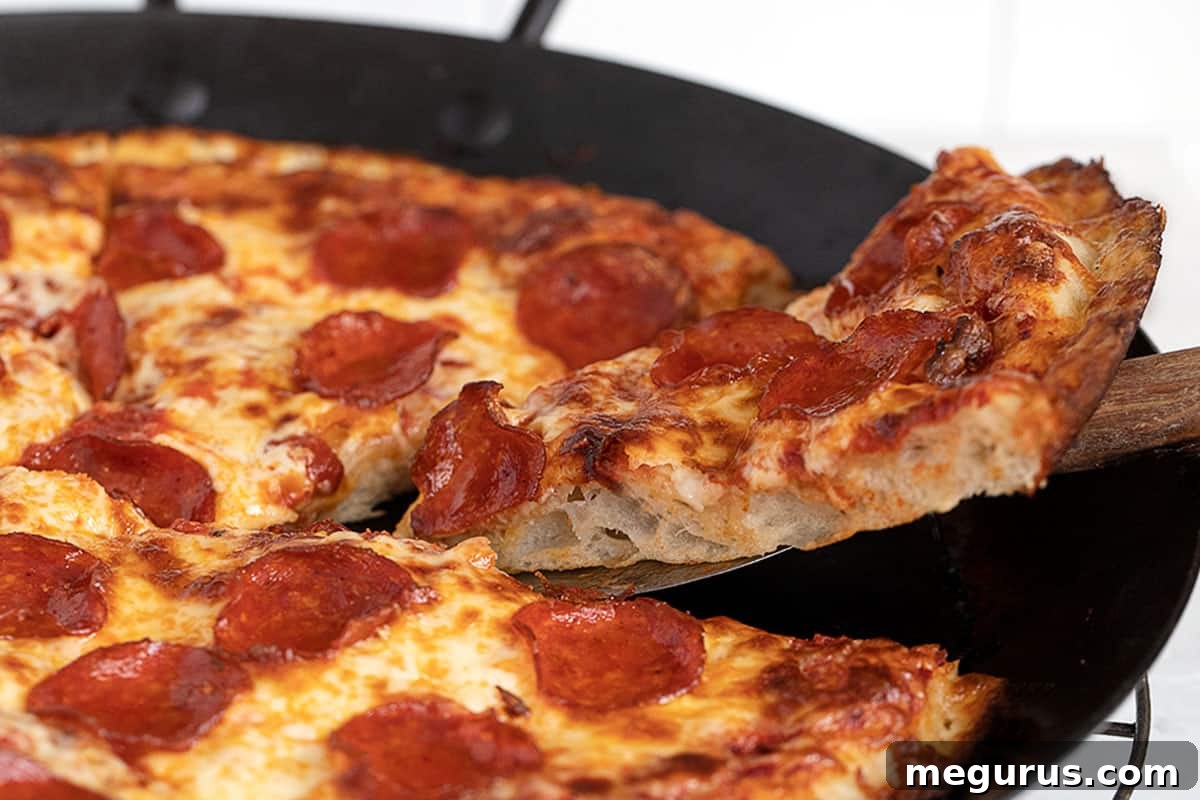
Discovering Pan Pizza: A Unique Culinary Delight
As its name elegantly suggests, pan pizza is a distinct style of pizza expertly crafted within a pan. This could range from a robust cast-iron skillet, a well-seasoned steel skillet, a sturdy metal cake pan, or even a high-sided baking sheet. The magic of baking pizza in a pan lies in its ability to impart several signature characteristics that set it apart from other pizza varieties.
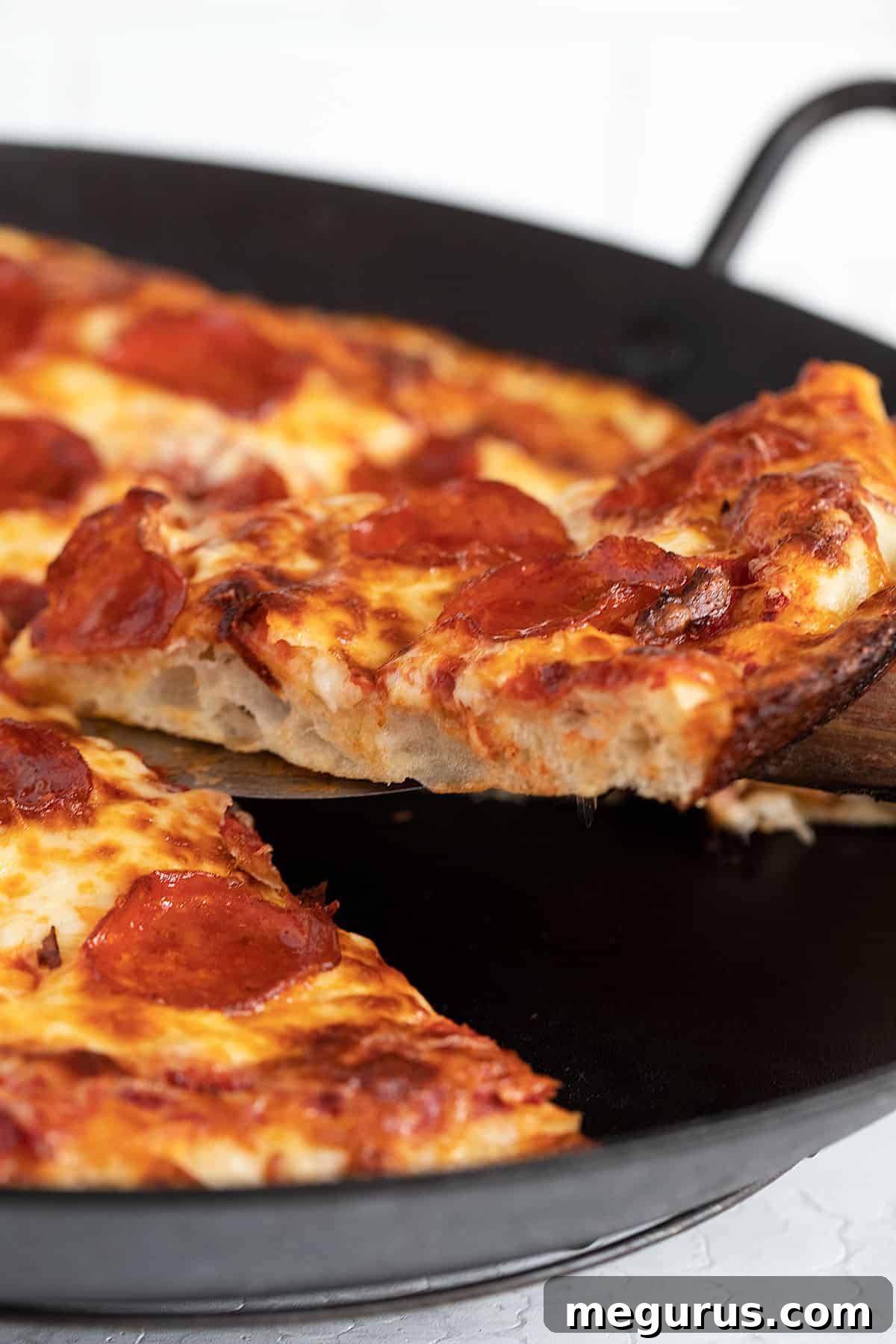
Firstly, the confining sides of the pan guide the dough to rise and bake upwards rather than spreading outwards. This crucial detail results in a wonderfully thicker crust, creating a more substantial and satisfying bite. Secondly, the direct contact of the dough with the hot pan during baking leads to a crust that is distinctly chewy and beautifully golden-brown, a delightful contrast to the typically crisp texture of a stone-baked pizza. This unique baking method ensures a crust that is both tender on the inside and irresistibly crunchy on the bottom.
It’s important to differentiate pan pizza from its deeper-dish relatives. While it offers a thicker, chewier crust than a conventional hand-tossed pizza, pan pizza remains notably thinner than the iconic Detroit-style or Chicago-style deep-dish pizzas. It strikes a perfect balance, offering the satisfying heft of a thicker crust without delving into the extreme depths of its deep-dish cousins, making it a versatile and beloved choice for pizza aficionados.
Why This Easy Pan Pizza Recipe Will Become Your Go-To
Prepare to fall in love with this perfect pan pizza recipe, designed for maximum flavor with minimal effort. The secret weapon is a super easy, no-knead homemade pizza dough. This ingenious dough recipe requires remarkably little hands-on time, yet it consistently produces a light, airy, and wonderfully bubbly crust that’s bursting with flavor and boasts an exceptional texture. Say goodbye to strenuous kneading and hello to effortless deliciousness!
One of the standout features of this recipe is its incredible flexibility when it comes to dough rising time. Whether you have a tight schedule or ample time, this dough adapts to you. It can be adjusted anywhere from an 8-hour to an 18-hour rise. The shorter 8-hour option means you can mix the dough in the morning and enjoy freshly baked pan pizza the very same day, eliminating the need for an overnight rise. This flexibility makes homemade pizza a realistic and stress-free option for any day of the week, from busy weeknights to relaxed weekends.
Life can be hectic, and sometimes making dough from scratch just isn’t an option. No worries at all! This recipe is incredibly accommodating. If you’re pressed for time or simply prefer the convenience, feel free to seamlessly swap in your favorite high-quality store-bought pizza dough. The beauty of this recipe lies in its adaptability, ensuring you can enjoy a fantastic pan pizza regardless of your schedule or preference.
Furthermore, this recipe empowers you to control the quantity. The base recipe yields enough dough for one generous 12-inch pizza, perfect for a family meal, or two smaller 8-10 inch pizzas, ideal for individualized preferences or smaller servings. Need more? Simply double or triple the dough recipe to cater to larger gatherings or to stock up for future cravings. Any extra dough can be easily frozen for later use, making meal prep a breeze and ensuring you’re always just a step away from a delicious homemade pizza.
Essential Ingredients and Smart Substitutions
Crafting the perfect pan pizza starts with understanding your ingredients. Here’s a breakdown of what you’ll need and how to make smart substitutions:
- Yeast: For optimal results, regular Instant Yeast (such as SAF Brand) is highly recommended. Its convenience allows it to be mixed directly with the flour without prior activation. If Active Dry Yeast is your only option, gently warm the water to a lukewarm temperature (around 105-115°F or 40-46°C) and activate the yeast in it for 5-10 minutes until foamy, before incorporating the flour and salt. It’s crucial to avoid using fast or quick-rising yeast for this recipe, as the long-rising dough benefits from a slower, more controlled fermentation process that develops deeper flavor and a better texture.
- Flour: The choice of flour significantly impacts crust quality. Bread flour or Italian “00” Pizza flour will yield the best results, producing a wonderfully chewy and structured crust due to their higher protein content. However, don’t fret if these aren’t readily available; regular all-purpose flour will also work beautifully, still providing a delicious homemade crust.
- Pizza Dough: As highlighted, this recipe includes an incredibly easy, no-knead pizza dough recipe designed for convenience and flavor. But remember, flexibility is key! If time is a constraint or you simply prefer, substituting with your favorite store-bought pizza dough is a perfectly acceptable and delicious alternative.
- Pizza Sauce: The foundation of any great pizza. I personally adore Mutti™ pizza sauce for its rich, authentic flavor and recommend it as a superb store-bought option. Approximately 3/4 cup is typically sufficient for one pizza. For a quick and effortless homemade alternative, consider canned whole tomatoes. Break them up a bit with a fork, then drain them well in a fine strainer for about an hour to remove excess liquid. Mash them further and season generously with salt to taste – a simple yet flavorful sauce.
- Cheese: For that perfect melt and stretch, low-moisture mozzarella cheese, specifically crafted for pizza, is your best bet. I’m a big fan of Saputo’s Mozzarellissima™ pizza mozzarella. Freshly grated mozzarella not only melts more evenly but also prevents clumping often found in pre-shredded varieties, which can contain anti-caking agents. Beyond mozzarella, thinly sliced Provolone cheese offers a fantastic alternative or complement, adding a sharper, more complex flavor profile.
- Pepperoni: Elevate your pan pizza with high-quality pepperoni slices. Seek out brands known for their flavor and texture. My personal go-to is Marc Angelo™ brand pepperoni, which famously cups and crisps up beautifully as it cooks, creating those irresistible little reservoirs of flavorful oil.
Mastering the Art of Pan Pizza: A Step-by-Step Guide
Creating this perfect pan pizza is a rewarding process. Follow these detailed steps for a truly exceptional result:
Step 1: Preparing the Easy, No-Knead Pizza Dough
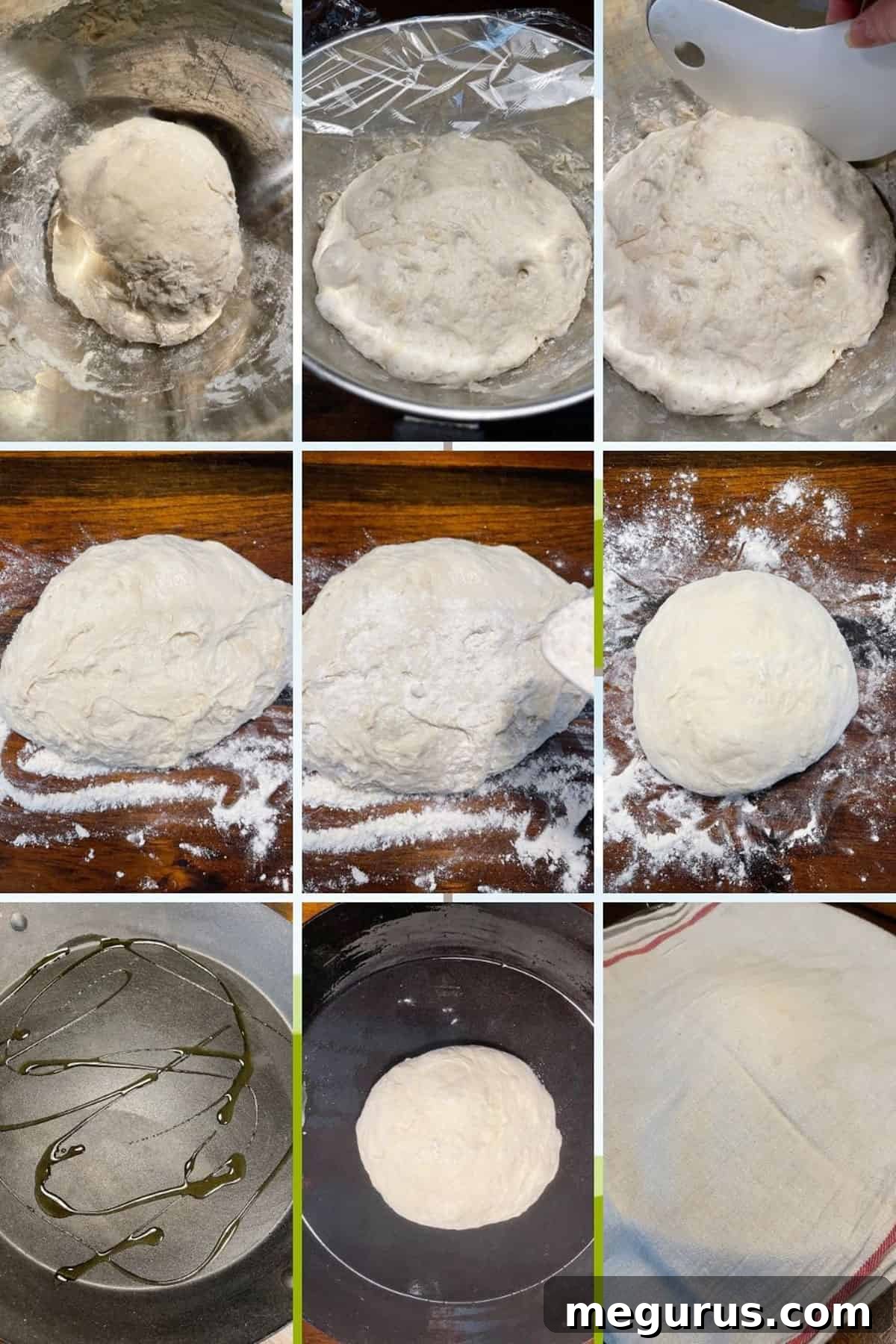
Begin by simply stirring together all the dough ingredients in a large mixing bowl. It’s crucial to use a bowl significantly larger than you think you’ll need, as the dough will triple in size during its rise. The mixture will initially appear shaggy and somewhat dry, but continue to stir until the flour is well moistened. Once combined, cover the bowl tightly with plastic wrap and set it on your kitchen counter to rise. The ideal rising time is between 7 to 8 hours, but for even deeper flavor development and a more complex texture, you can extend this to 16-18 hours. This extended fermentation is key to the dough’s incredible character.
After its resting period, the dough will be noticeably moist and sticky. Gently scrape the risen dough onto a generously floured work surface. Sprinkle a bit more flour over the top of the dough. With light hands, gently knead the dough a few times, incorporating just enough additional flour to prevent it from sticking to your hands or the counter. The goal is to make it manageable, not to develop gluten through vigorous kneading. Form the dough into a smooth ball. Now, generously grease your chosen baking pan (whether it’s a skillet or baking sheet) with olive or vegetable oil. Place the dough ball into the center of the greased pan, cover it with a clean tea towel, and let it rest for another hour. This resting period allows the dough to relax, making it easier to stretch.
While your dough rests and relaxes, it’s the perfect time to preheat your oven. Set it to a blistering 500°F (260°C) on a regular bake setting (not convection or fan-assisted, as it can dry out the crust). A high oven temperature is crucial for achieving that characteristic golden, chewy pan pizza crust.
Step 2: Stretching the Dough and Adding Toppings
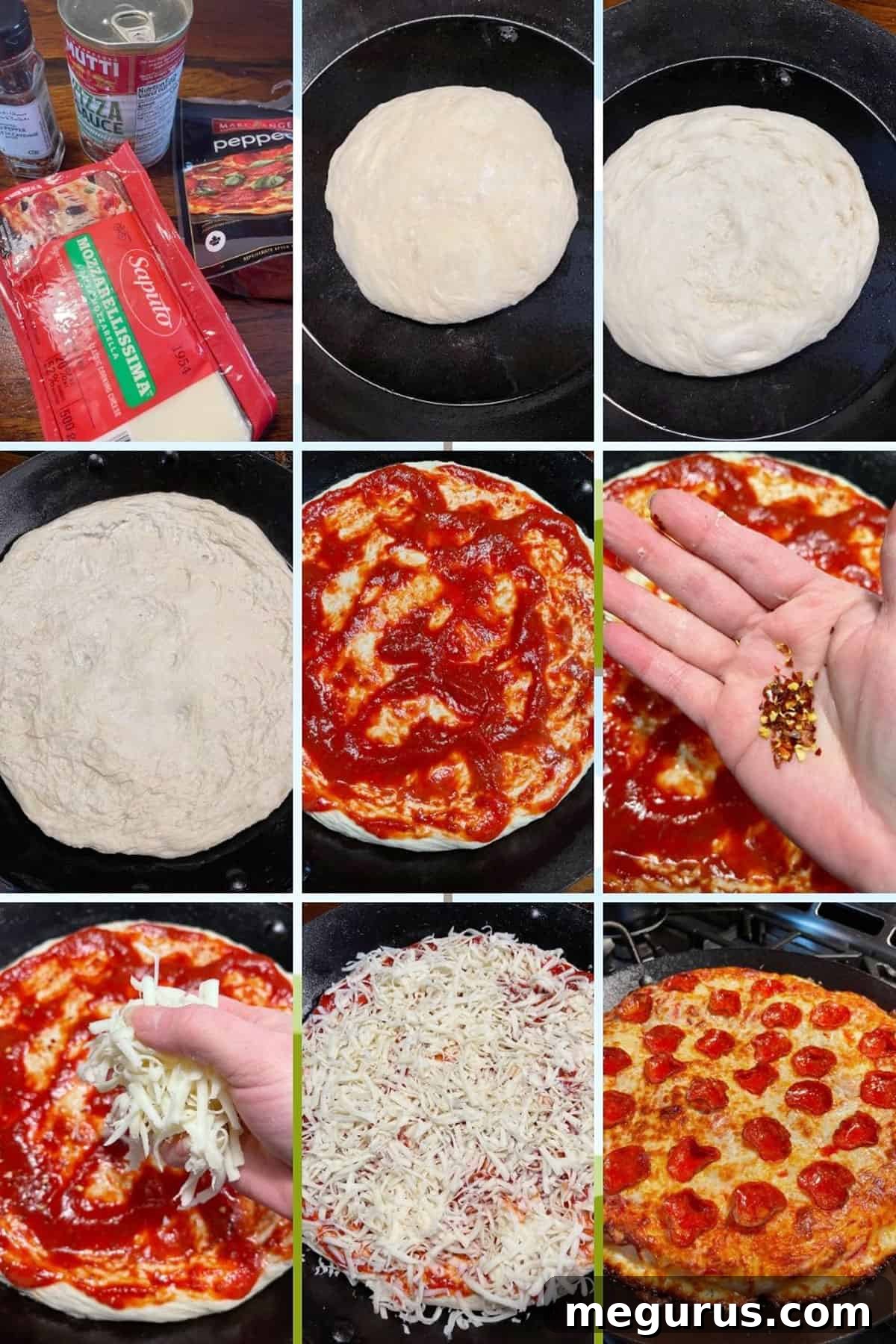
Once the dough has completed its final rest, gently begin to press and stretch it towards the outer edges of the pan using only your fingertips. The dough will have a natural tendency to spring back a bit due to the gluten structure. Be persistent but patient; you don’t want to deflate the precious air bubbles that have formed during the long rise. If the dough proves stubborn and resists stretching, simply allow it to rest for another couple of minutes. This brief pause will help the gluten relax, making it more pliable for the next attempt.
Once your dough is evenly stretched to the edges of the pan, it’s time for the exciting part: adding the toppings! Begin by spreading your chosen pizza sauce across the dough. I personally enjoy extending the sauce right to the very edges of the crust for a flavor-packed bite from start to finish, but feel free to leave a small margin if you prefer a less saucy edge. If you enjoy a hint of spice, sprinkle some red pepper flakes over the sauce. Next, generously layer on your freshly grated cheese, ensuring even coverage. Finally, arrange your pepperoni slices (or other desired toppings) over the cheese.
Step 3: Baking to Perfection
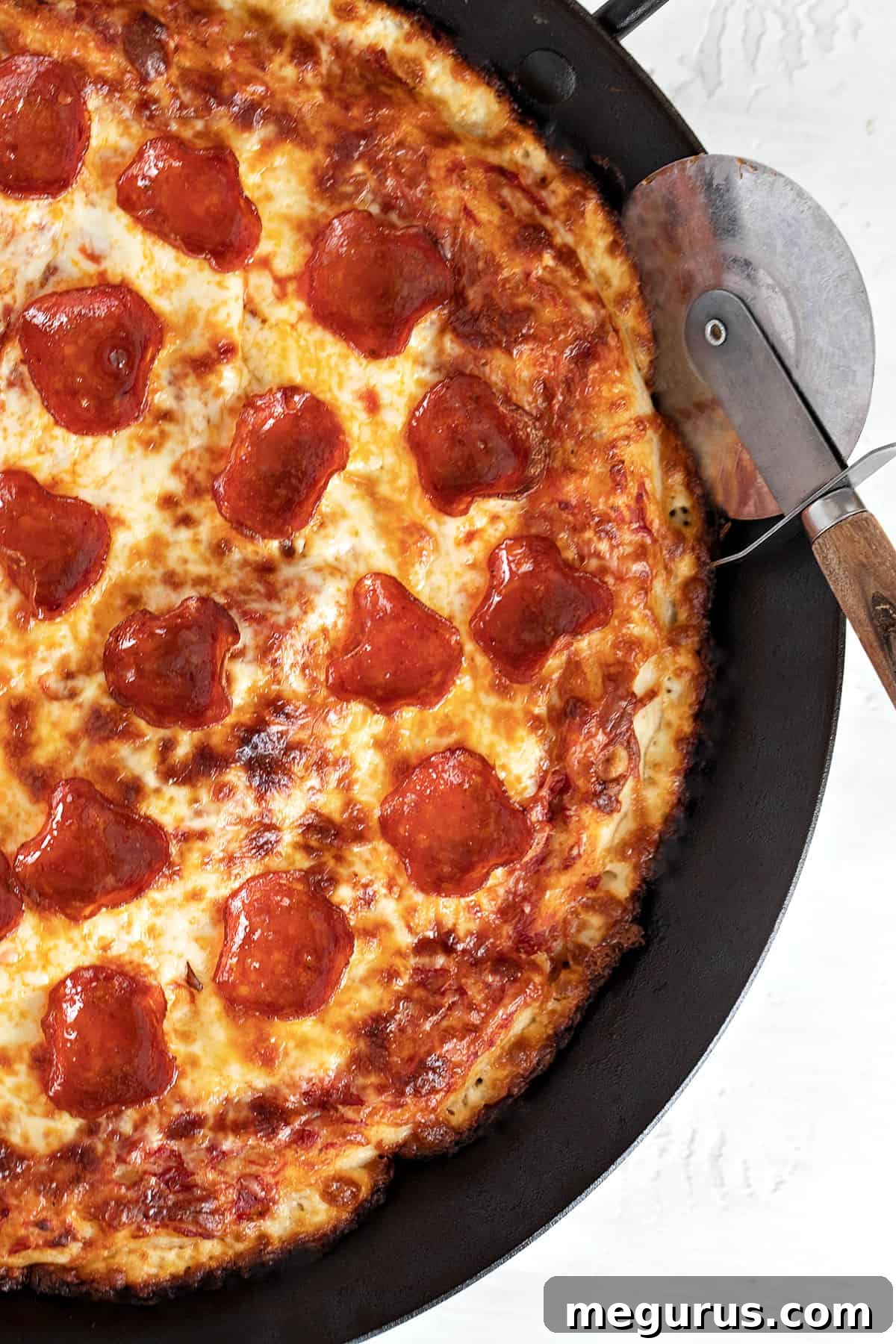
Carefully transfer your topped pizza into the preheated 500°F (260°C) oven. Bake for approximately 13-15 minutes. Keep a close eye on it; you’re looking for a crust that is gloriously golden-brown and cheese that is bubbly and melted with beautifully browned edges. The high heat ensures a quick bake, preventing the crust from becoming tough and creating a delightful crispness on the bottom.
Once baked, remove the pan pizza from the oven and let it rest in the pan for about 4-5 minutes. This brief resting period allows the cheese to set slightly and the crust to firm up, making it easier to remove and slice. After resting, carefully loosen the pizza from the pan with a spatula, then slide it onto a cutting board. Slice your perfect pan pizza into generous wedges or squares and serve immediately to enjoy its irresistible warmth and flavor.
Choosing the Best Pan for Your Pan Pizza
The pan you select for your pizza plays a critical role in the final texture and appearance of the crust. Understanding the options will help you achieve the best results:
- 12-inch (Bottom Diameter) Round Steel Pan, Cast Iron Pan, or Cast Iron Skillet: These are the gold standard for pan pizza. The pan I used here, a 15-inch Lodge Seasoned Steel Skillet, boasts a 12-inch bottom diameter, which is absolutely ideal for the amount of dough in this recipe.
- Cast Iron Skillets: These are excellent choices due to their superior heat retention and distribution, which leads to an incredibly even and crispy crust. If you have a 12-inch bottom diameter cast iron skillet, it’s perfect. If your skillet is smaller, you can adjust the dough amount (use about 2/3 of the dough for a 10-inch pan) and make an additional smaller pizza, or freeze the extra dough for another time.
- Seasoned Steel Skillets: Similar to cast iron, steel skillets offer excellent heat conduction and retention, contributing to a wonderfully browned and chewy crust. Ensure your steel pan is well-seasoned to prevent sticking.
- 9×13-inch Baking Pan or High-Sided Baking Sheet: If you prefer a rectangular pizza over a round one, a 9×13-inch metal baking pan works perfectly. The heavier and thicker the pan, the better, as it will distribute heat more evenly and prevent hot spots. A nice thick baking sheet with raised sides is also a fantastic option. For both baking pans and sheets, a darker colored pan will typically give you superior crust browning compared to lighter-colored pans, so utilize a darker one if you have the choice.
Important Note: Because this pizza bakes at a very high temperature (500°F/260°C), glass pans are generally not suitable for pan pizza. Glass can shatter or crack when subjected to extreme temperature changes or prolonged high heat, posing a safety risk. Always opt for metal pans for this recipe.
Exciting Pan Pizza Topping Ideas for Every Palate
While a classic pepperoni and cheese pizza is always a winner, pan pizza is incredibly versatile when it comes to toppings. Here are some inspiring ideas to get you started, along with crucial tips for the best results:
- Classic Perfection: The timeless combination of freshly grated, low-moisture mozzarella cheese and flavorful pepperoni. For an extra touch of sophistication and savory depth, consider a light garnish of freshly grated Parmesan cheese immediately after baking.
- Italian Meat and Provolone Feast: Elevate your pizza with thin slices of rich Provolone cheese, topped generously with an assortment of premium Italian deli meats such as delicate prosciutto, spicy salami, or savory capicola. A sprinkle of fresh basil leaves after baking adds a vibrant, aromatic finish.
- Zesty BBQ Chicken: For a flavor-packed alternative, substitute your traditional pizza sauce with a tangy and sweet BBQ sauce. Top with thinly sliced red onion, tender cooked chicken (shredded or diced), and a generous scattering of fresh chopped cilantro after baking for a burst of freshness.
- Tropical Hawaiian Delight: Embrace the classic sweet and savory combination with chopped, cooked ham and juicy pineapple pieces. For an added layer of flavor and texture, you might also include a sprinkle of diced red onion or finely chopped red bell pepper into the mix.
You can truly top your pan pizza any way you like, allowing your creativity to shine. However, for the very best results, keep these two essential tips in mind:
- Avoid Over-Loading Your Pizza: While tempting, piling on too many toppings can be detrimental. Excessive toppings introduce too much moisture and weight onto the pizza. Both of these factors can negatively affect the quality of the baked crust, potentially leading to a soggy center or an undercooked base. Stick to a balanced amount for optimal flavor and texture.
- Prioritize Low-Moisture Toppings: To prevent a soggy crust, it’s vital to choose toppings with naturally low moisture content. Try to avoid water-rich ingredients like sliced fresh tomatoes or zucchini, which can release significant liquid during baking. For ingredients that tend to be watery, such as mushrooms, a quick pre-cook or sauté beforehand is always a good strategy to cook off a little moisture before adding them to your pizza. This extra step ensures your crust remains delightfully crisp and chewy.
Expert Recipe Tips for Your Best Pan Pizza
- Edge-to-Edge Sauce and Cheese: I personally love to spread both the pizza sauce and the cheese right to the very edges of the dough. This ensures every single bite is packed with flavor and minimizes any dry spots. However, if you prefer a slightly drier crust edge, feel free to leave a small margin around the outside.
- Crispy Cheese Bits: For an extra special treat, sprinkle a little additional cheese directly onto the edges of the pan, just beyond the dough. As it bakes, this cheese will crisp up into irresistible, golden-brown bits – a truly delightful textural contrast.
- Ensure a Thorough Bake: It’s crucial not to under-bake your pizza. An undercooked crust can be gummy and unappetizing. Ensure your pizza bakes until the crust is well-set, deeply golden, and the cheese is thoroughly melted and bubbling vigorously, with some browned spots for maximum flavor.
The Longer Rise Option: Enhancing Flavor and Texture
If you have the luxury of time and remember to mix your dough earlier in the day (or even the night before), consider utilizing the longer rise option. You can let the dough sit on the counter for an extended period of 16-18 hours. When opting for this longer fermentation, simply reduce the amount of instant yeast by half (using 1/2 teaspoon for the base recipe). This extended rising time allows the yeast to work slowly, developing a much more complex, nuanced flavor profile and an even more exceptional texture in your pizza crust. It’s a simple adjustment that yields profound improvements!
Storing and Reheating Your Pan Pizza
Don’t let any delicious leftovers go to waste! Pan pizza reheats wonderfully, allowing you to enjoy it for days:
- Storing Leftovers: Any leftover pan pizza should be wrapped tightly in plastic wrap or aluminum foil, or stored in an airtight container, and refrigerated promptly. It will stay fresh and delicious in the refrigerator for 2-3 days. For longer storage, pan pizza can be frozen for up to 2 months. To freeze, wrap individual slices or the whole pizza securely in plastic wrap, then an additional layer of aluminum foil, and place in a freezer-safe bag or container.
- Reheating for Freshness: Reheating pan pizza is incredibly simple and helps restore much of its original texture. The best method is to place the leftover pizza back into the same type of pan you originally baked it in (a cast iron skillet or baking pan works best). Then, pop it into a preheated 350°F (175°C) oven. Heat for approximately 10-15 minutes, or until the cheese is re-melted and bubbly, and the crust is heated through and slightly crisped. This method ensures an even reheat and helps prevent the crust from becoming soggy.
Perfect Pan Pizza Recipe
This recipe delivers a perfect pan pizza with an easy, homemade no-knead pizza crust and classic toppings, baked to perfection in a steel or cast iron skillet or pan.
Key Details
- Prep Time: 15 minutes
- Cook Time: 15 minutes
- Rising and Resting Time: 9 hours 30 minutes (minimum 7-8 hours rise + 1 hour rest)
- Total Time: Approximately 9 hours 30 minutes
- Yield: 8 servings (1 x 12-inch pizza or 2 x 8-10 inch pizzas)
Ingredients
For the No-Knead Pizza Dough (or substitute store-bought pizza dough):
- 2 1/2 cups bread flour, Italian “00” Pizza flour, or all-purpose flour (plus more, as needed)
- 2 teaspoons fine sea salt
- 1 teaspoon Instant yeast (such as SAF Brand; see Notes for other yeast options)
- 1 1/4 cups water (at room temperature)
For the pizza toppings (or substitute your favorite toppings):
- 3/4 cup pizza sauce (store-bought or see Notes for a quick homemade option)
- 1/4 teaspoon red pepper flakes (optional)
- 2 1/2 – 3 cups full-fat, low-moisture pizza mozzarella cheese (grated)
- 20 pepperoni slices (or to taste)
- 1 Tablespoon olive oil (for greasing the pan)
Instructions
- Timeline for Success: For best results, stir together the dough ingredients in the morning (ideally before 9 am). Allow it to rise on the counter throughout the day (at least 7-8 hours is best, longer for more flavor). Approximately 1 1/2 hours before you plan to eat, proceed to form the dough into a ball. It will then rest for 1 hour. During this final rest time, preheat your oven to 500°F (260°C) and gather all your pizza topping ingredients. Finally, spread the dough into your prepared baking pan, add your chosen toppings, and bake!
- Prepare the Pizza Dough: In a large bowl, stir together the flour, salt, and instant yeast. Add the room temperature water and mix with a wooden spoon until all the flour is moistened and a shaggy, somewhat dry dough forms. Ensure you use a bowl large enough to allow the dough to triple in size during its rise. Cover the bowl tightly with plastic wrap and let it sit on the counter to rise for a minimum of 7-8 hours (the longer the rise, up to 18 hours, the better the flavor and texture).
- Choose and Prepare Your Baking Pan: A round cast-iron skillet or steel skillet with a 12-inch bottom diameter is the perfect size for this dough. Alternatively, you can use a 9×13-inch metal baking pan (a heavy, dark-colored one is best for crust browning) or a high-sided baking sheet. You can also divide the dough to make two smaller 8-10-inch pizzas in smaller round skillets or cake pans. Liberally brush your chosen baking pan with olive or vegetable oil.
- Dough Prep and Final Rest: About 1 1/2 hours before you wish to enjoy your pizza, gently scrape the risen dough onto a well-floured work surface. The dough will be very moist and sticky. Use a silicone bowl scraper if available to easily remove it from the bowl. Lightly dust the top of the dough with a bit more flour, then gently knead it a few times, incorporating only enough extra flour as needed to prevent it from sticking to your hands or work surface. Form the dough into a cohesive ball. Place this dough ball into the center of your prepared, oiled baking pan. Cover the pan with a clean tea towel and let the dough rest for 1 hour.
- Preheat Your Oven: During the dough’s final rest, preheat your oven to 500°F (260°C) using a regular bake setting (avoid fan-assisted or convection, as these can dry out the crust).
- Stretch the Dough: Once the dough has rested, use only your fingertips to gently press down and stretch the dough outwards towards the edges of the pan. The dough may resist and try to shrink back; be patient and persistent. Avoid deflating the dough too much by using only your fingertips. If it’s particularly stubborn, let it rest for another couple of minutes before trying again.
- Top Your Pizza: Once the dough is evenly stretched to fill the pan, spread your pizza sauce across the surface. You can spread it all the way to the edges for a fully flavored crust, or leave a small margin if preferred. Sprinkle with red pepper flakes if using, then generously top with your grated mozzarella cheese and pepperoni slices.
- Bake and Serve: Carefully place the pizza in the preheated 500°F oven. Bake for 13-15 minutes, or until the crust is golden-brown and the cheese is bubbly and beautifully melted. Remove from the oven and let the pizza rest in the pan for about 4-5 minutes. This allows the cheese to set and the crust to firm up slightly. Then, use a spatula to loosen the pizza and slide it onto a cutting board. Slice and enjoy your perfect pan pizza immediately!
Notes & Tips
- Yeast Options: If you only have Active Dry yeast, warm the water to lukewarm (105-115°F or 40-46°C) and activate the yeast in the water first. Then, add the flour and salt and stir as directed. Fast or quick-rising yeast is not recommended for this long-rising dough, as it won’t develop the same depth of flavor or texture.
- Quick Homemade Pizza Sauce: For a simple and flavorful homemade pizza sauce, take whole canned tomatoes. Break them up roughly with a fork, then drain them in a fine strainer for about an hour to remove excess liquid. Mash them further to your desired consistency and season generously with salt.
- Pan Pizza Topping Ideas:
- Classic: Freshly grated, low-moisture mozzarella cheese and pepperoni. A garnish of freshly grated Parmesan after baking is a nice touch.
- Italian Meat and Provolone: Provolone cheese slices, topped with Italian deli meats (prosciutto, salami, etc.). Garnish with fresh basil after baking.
- BBQ Chicken: Substitute BBQ sauce for the pizza sauce. Top with sliced red onion, cooked chicken, and chopped cilantro.
- Hawaiian: Top with chopped, cooked ham and pineapple, perhaps with some red onion or red pepper added to the mix.
- General Topping Tips for Best Results:
- Don’t over-load your pizza: Too many toppings create excess moisture and weight, negatively impacting the baked crust’s quality.
- Stick with low-moisture toppings: Avoid water-rich ingredients like sliced tomatoes or zucchini to prevent a soggy crust. Pre-cooking items like mushrooms can help remove moisture before adding them to the pizza.
Recipe Information
- Cuisine: Italian
- Course: Main Course
- Author: Jennifer Maloney
Nutritional Information (per serving)
Serving: 1 serving, Calories: 263kcal, Carbohydrates: 33g, Protein: 13g, Fat: 8g, Saturated Fat: 4g, Polyunsaturated Fat: 1g, Monounsaturated Fat: 2g, Trans Fat: 1g, Cholesterol: 21mg, Sodium: 978mg, Potassium: 174mg, Fiber: 2g, Sugar: 1g, Vitamin A: 289IU, Vitamin C: 2mg, Calcium: 219mg, Iron: 2mg