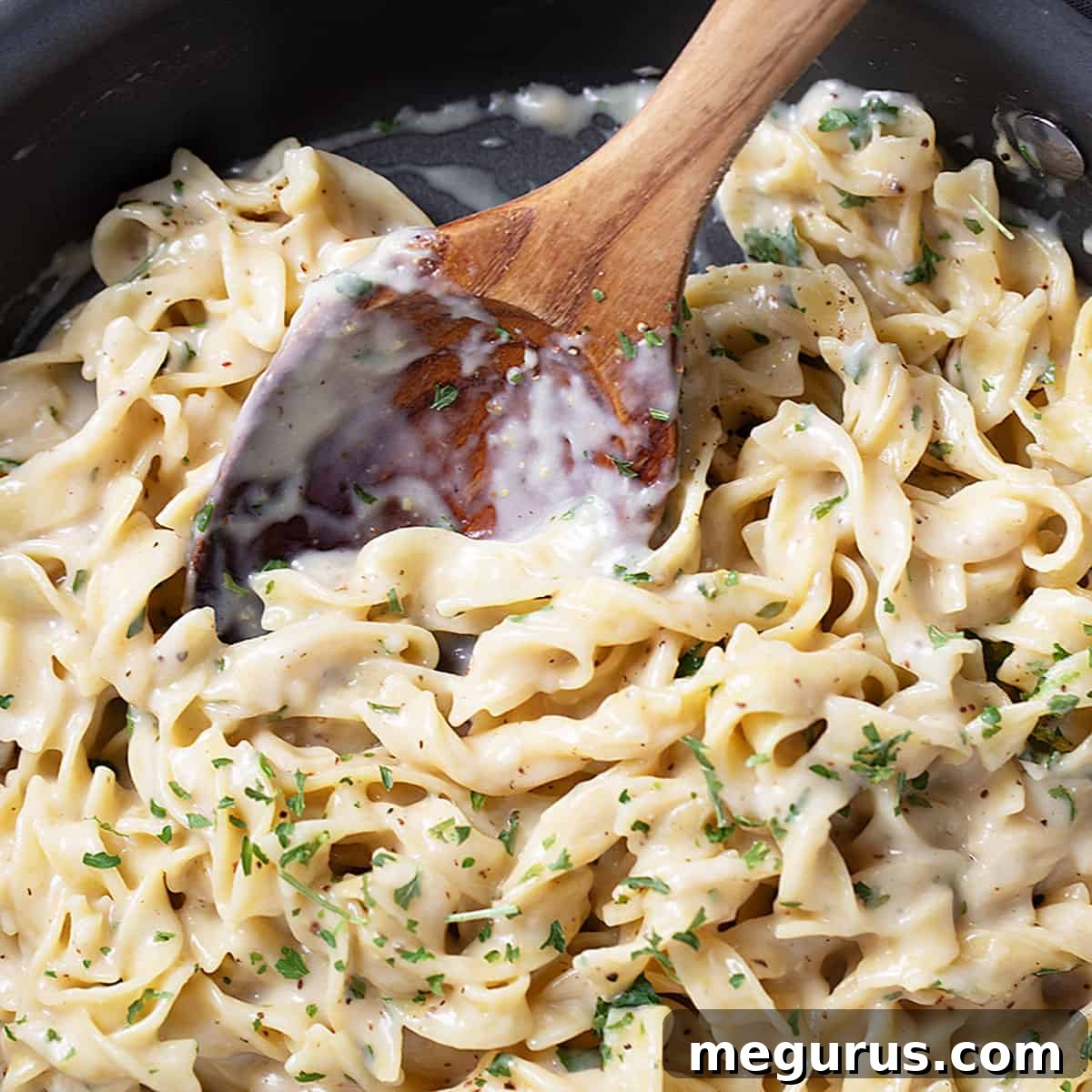
Welcome to your new favorite weeknight side dish: these incredibly easy and utterly delicious one-pan creamy egg noodles! If you’ve been searching for a comforting, satisfying accompaniment to your dinner that comes together in a flash, you’ve just found it. This recipe ditches the canned soup, opting instead for a simple, homemade roux that delivers a rich, velvety sauce without any artificial flavors or excessive sodium. The best part? Everything cooks right in one skillet, meaning fewer dishes and more time to enjoy your meal. Forget the hassle of boiling noodles separately; this streamlined process makes culinary magic happen directly on your stovetop.
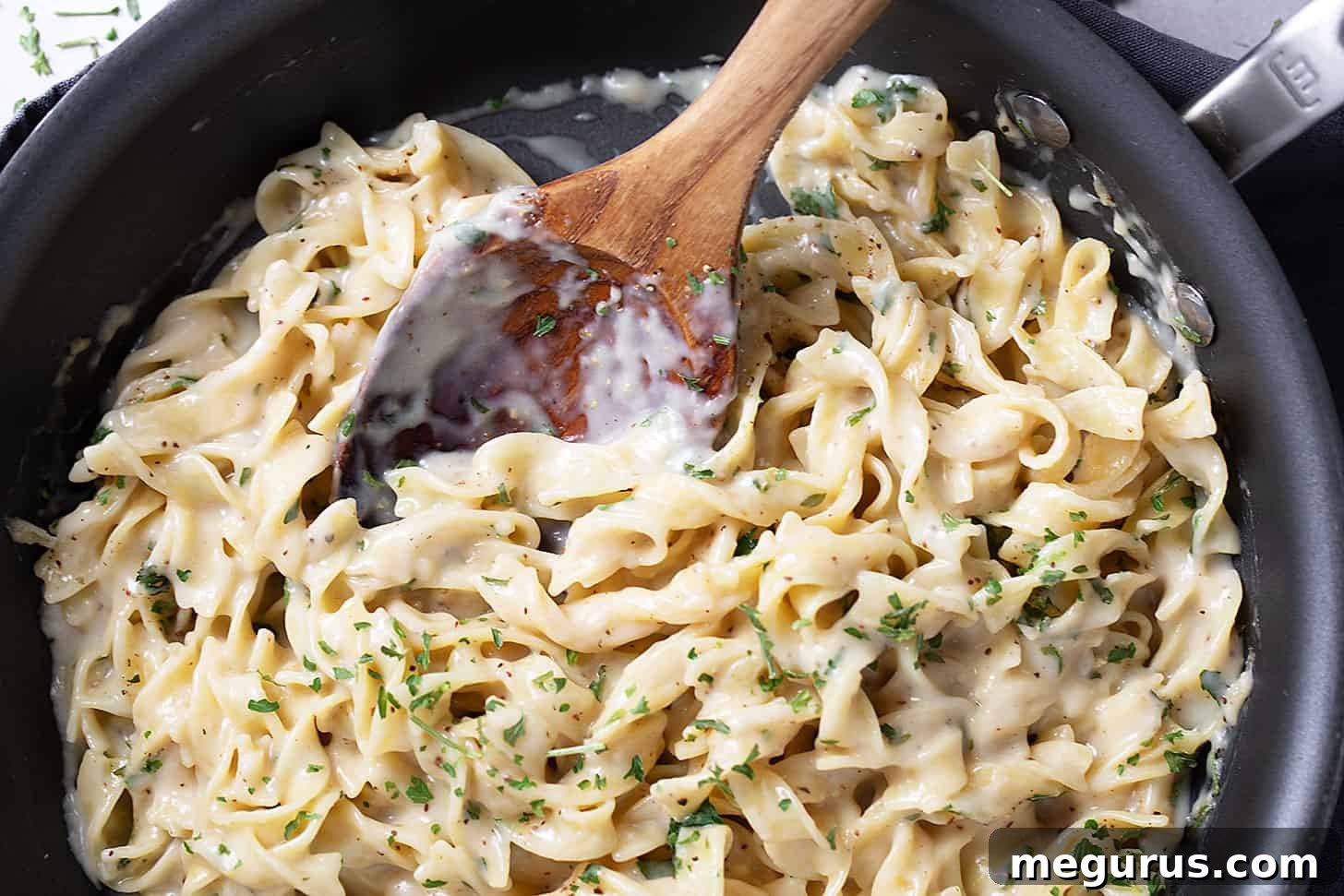
This budget-friendly egg noodle dish is more than just a side; it’s a testament to how simple ingredients can create extraordinary flavor. Crafted from scratch with a classic roux, it transforms everyday pantry staples into a comforting bowl of creamy goodness. Whether you serve them alongside a robust protein or enjoy them on their own as a cozy, indulgent meal, these noodles are designed for pure eating pleasure. Their versatility makes them an ideal choice for busy weeknights when you need something quick, delicious, and deeply satisfying.
These creamy egg noodles are incredibly versatile and pair beautifully with a variety of main courses. Imagine them beside my Bake and Sauce Cornflake Chicken, or complementing the savory flavors of my Mini BBQ Meatloaf. They also make a fantastic partner for fish, such as a crispy Panko Crusted Cod, offering a soft, rich contrast to flaky seafood. Don’t limit yourself – these noodles are a delicious canvas for many meal combinations!
Why You’ll Love This One-Pan Noodle Recipe
There are countless reasons to add these creamy egg noodles to your regular meal rotation. First and foremost, the simplicity is unmatched. No separate pots for boiling, no complex steps, just one pan and simple stirring. This not only saves you time during cooking but also minimizes the dreaded post-dinner cleanup. The use of basic pantry ingredients means you likely have everything on hand right now, eliminating last-minute grocery runs.
Beyond convenience, the flavor profile is exceptional. By building a roux from scratch with butter and flour, then simmering the noodles directly in a rich chicken broth and milk mixture, you create a depth of flavor that canned soups simply cannot replicate. This method ensures every noodle is infused with creamy, savory goodness from the inside out, offering a truly comforting and satisfying experience. It’s the kind of dish that evokes fond memories of home-cooked meals, making it perfect for both nostalgic enjoyment and creating new culinary traditions.
Moreover, this recipe is highly adaptable. Whether you’re looking to add extra vegetables, a different protein, or simply adjust the seasonings to your personal preference, these noodles provide a flexible foundation. They’re a budget-friendly option that doesn’t skimp on taste or heartiness, making them an ideal choice for families, busy professionals, or anyone seeking delicious comfort food without the fuss.
Essential Ingredients & Smart Substitutions
Creating these delightful creamy egg noodles relies on a few core ingredients. Understanding each component and its role can help you achieve the best results and make smart substitutions when needed.
- Egg Noodles: The star of our dish! For this recipe, I primarily use “No-Yolks” egg noodles, which are typically broad and cook beautifully to a tender, yet resilient texture. Any brand or style of egg noodle will work, but be mindful of thickness. Thicker noodles may require a touch more broth or a slightly longer simmering time to reach perfect tenderness. Always check the package instructions for general cooking times.
- Salted Butter: Forms the foundation of our creamy roux, lending a rich, savory base. If using unsalted butter, you may need to adjust the final salt seasoning slightly. Vegetable oil or olive oil can be used for a dairy-free option, but butter adds a unique depth of flavor.
- All-Purpose Flour: The thickening agent for our roux, creating that luxurious, smooth sauce. Ensure it’s fresh for optimal performance. For a gluten-free alternative, a 1:1 gluten-free all-purpose flour blend can often be substituted, though results may vary slightly in texture.
- Chicken Broth: Provides the primary liquid and savory flavor base for cooking the noodles. I recommend using a good quality, low-sodium chicken broth so you can control the overall saltiness of the dish. Vegetable broth can be used for a vegetarian version, though the flavor profile will shift.
- Milk: Adds richness and enhances the creaminess of the sauce. Whole milk or 2% milk works best for a truly decadent result. Lighter milks or non-dairy alternatives like unsweetened almond or oat milk can be used, but may slightly alter the sauce’s texture and richness.
- Seasonings (Celery Salt, Onion Powder, Garlic Powder, Salt, Pepper): This classic blend creates a well-rounded savory profile that’s both familiar and incredibly comforting. Celery salt offers a subtle, aromatic background note. Feel free to adjust these to your taste. A pinch of white pepper can be used for a milder heat, and a dash of nutmeg can add a surprising warmth and complexity.
- Chicken Bouillon Paste (Optional): For an extra boost of savory chicken flavor, especially if your broth is mild, a teaspoon of chicken bouillon paste (like Better Than Bouillon) or a crumbled bouillon cube can make a significant difference. Add it after the initial liquids for the best distribution.
- Fresh Parsley (Garnish): A sprinkle of fresh, finely chopped parsley adds a vibrant pop of color and a fresh, herbaceous note that brightens the entire dish. Dried parsley can be used in a pinch, about 1 teaspoon for every tablespoon of fresh.
Step-by-Step Guide: Crafting Your Creamy Skillet Noodles
Creating these creamy, dreamy egg noodles is simpler than you might imagine. Follow these detailed steps to achieve perfect results every time. Remember to read through all instructions before you begin!
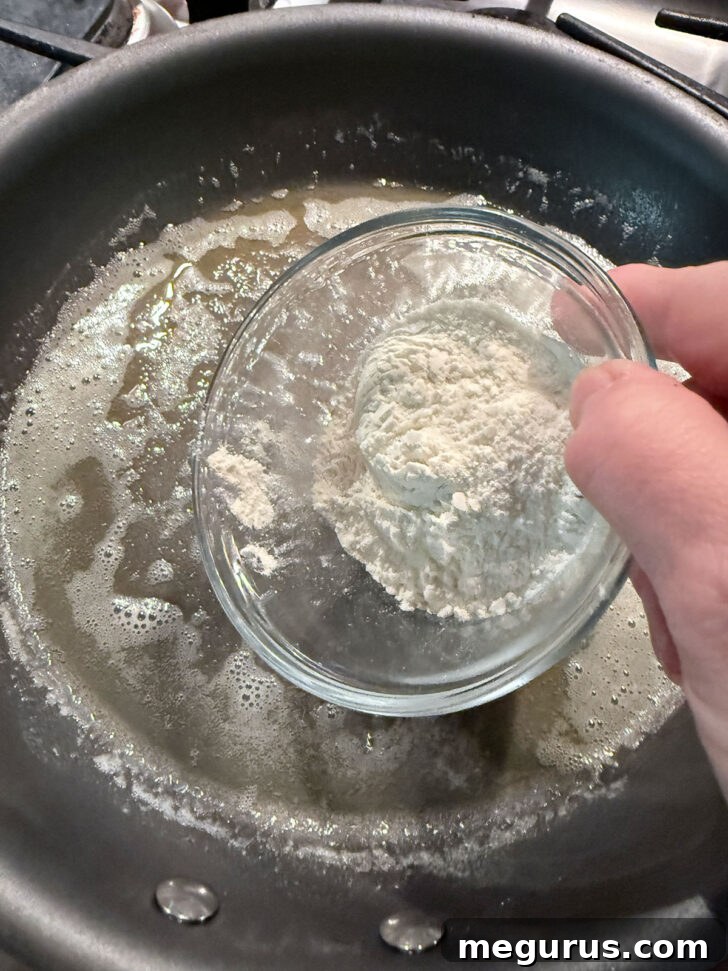
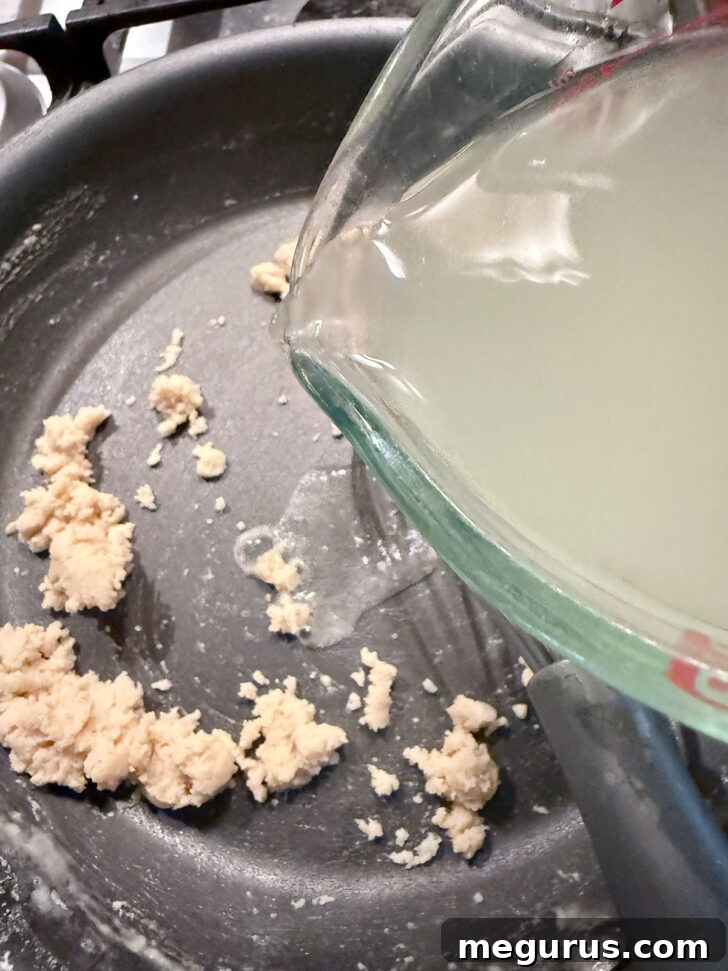
- Prepare the Roux: Begin by melting 2 tablespoons of salted butter in a medium to large non-stick skillet over medium heat. Once the butter is shimmering and fully melted, sprinkle in 5 tablespoons of all-purpose flour. Stir continuously with a wooden spoon or whisk until the flour has completely absorbed the butter, forming a thick, clumpy paste. Continue to cook this mixture, stirring constantly, for about 1 minute. This cooking time helps to cook out the raw flour taste, ensuring a smooth, flavorful sauce.
- Create the Sauce Base: Gradually add 1 cup of the chicken broth to the skillet, whisking vigorously as you pour to prevent lumps. Continue whisking until the mixture is completely smooth.
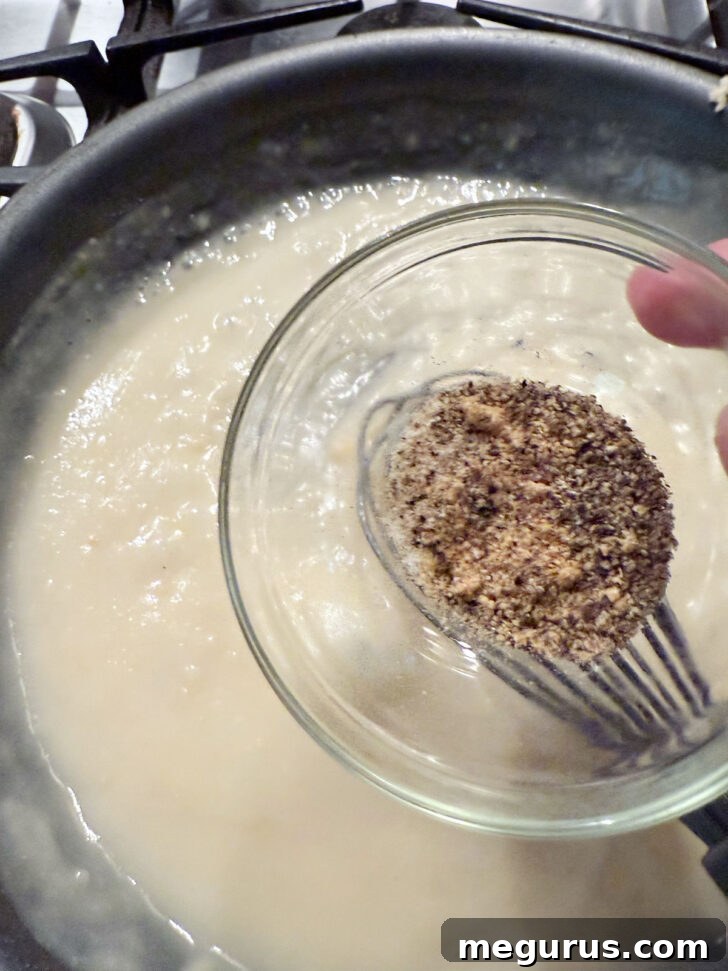
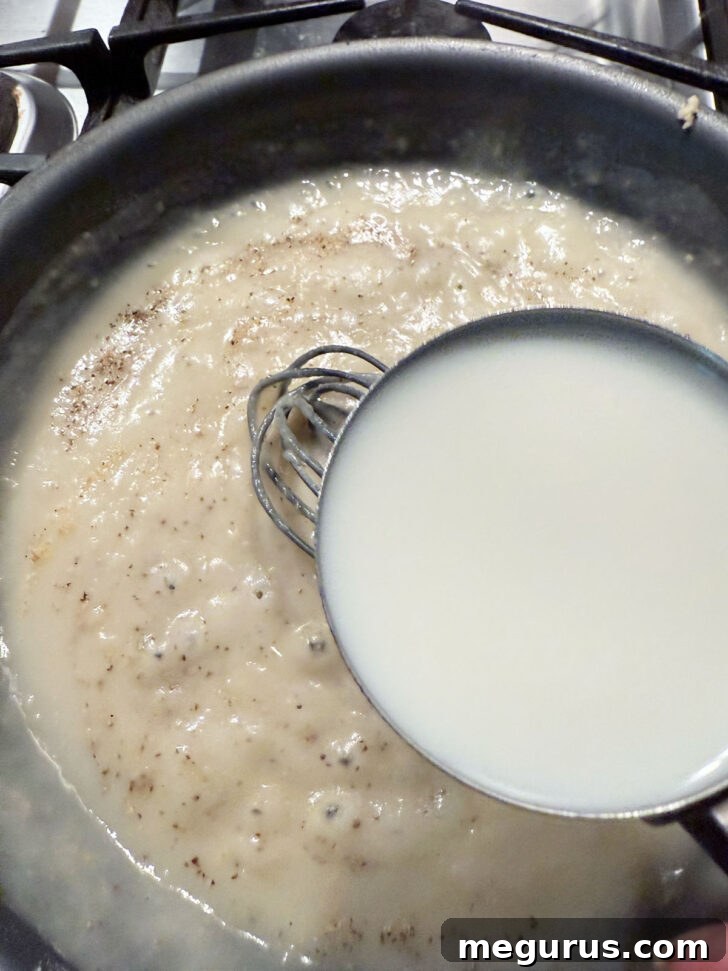
- Season and Combine: Now, add the 1/2 cup of milk along with the celery salt, onion powder, garlic powder, salt, and pepper to the skillet. Stir everything together until the sauce is well combined and smooth.
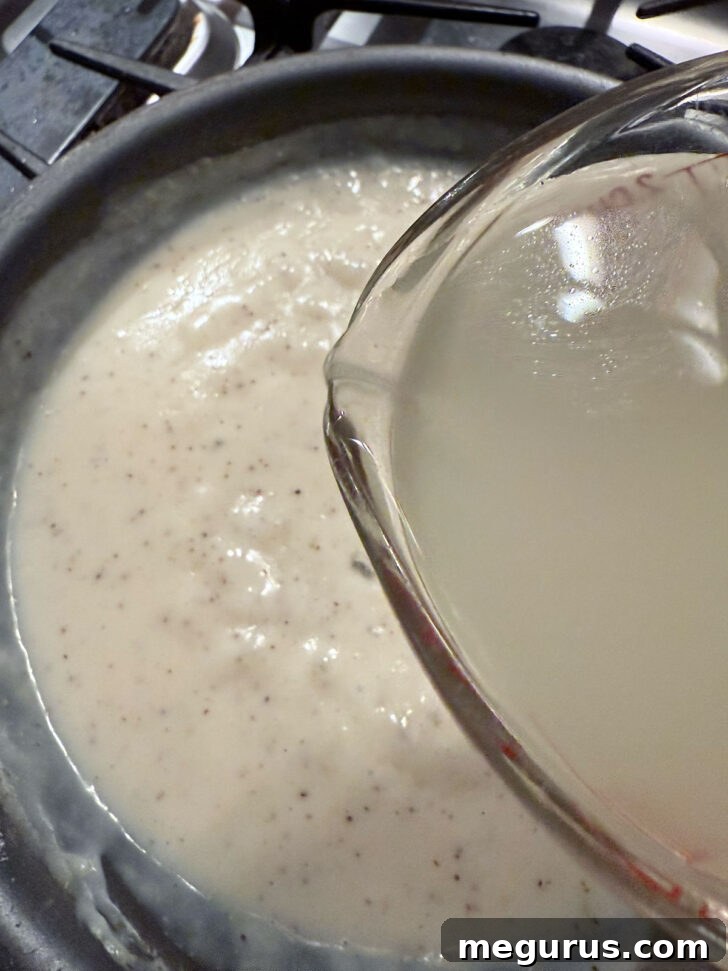
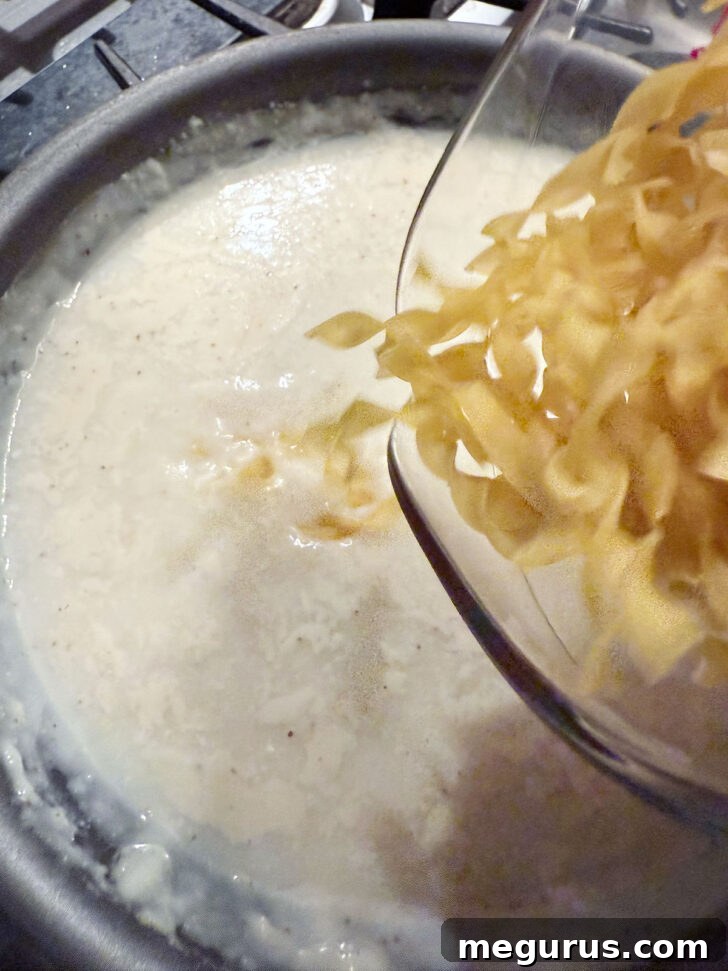
- Introduce the Noodles: Add the 3 cups (or 6 oz) of dry egg noodles to the skillet, along with the remaining 1 1/2 cups of chicken broth. Stir well to ensure the noodles are fully submerged in the liquid.
- Simmer to Perfection: Bring the mixture to a gentle boil, then immediately reduce the heat to a low simmer. If using, stir in the optional 1 teaspoon of chicken bouillon paste (or 1/2 crumbled bouillon cube) now to enhance the chicken flavor. Continue cooking, stirring regularly to prevent sticking, until the noodles are tender and the sauce has thickened to your desired creamy consistency. This typically takes about 10-15 minutes.
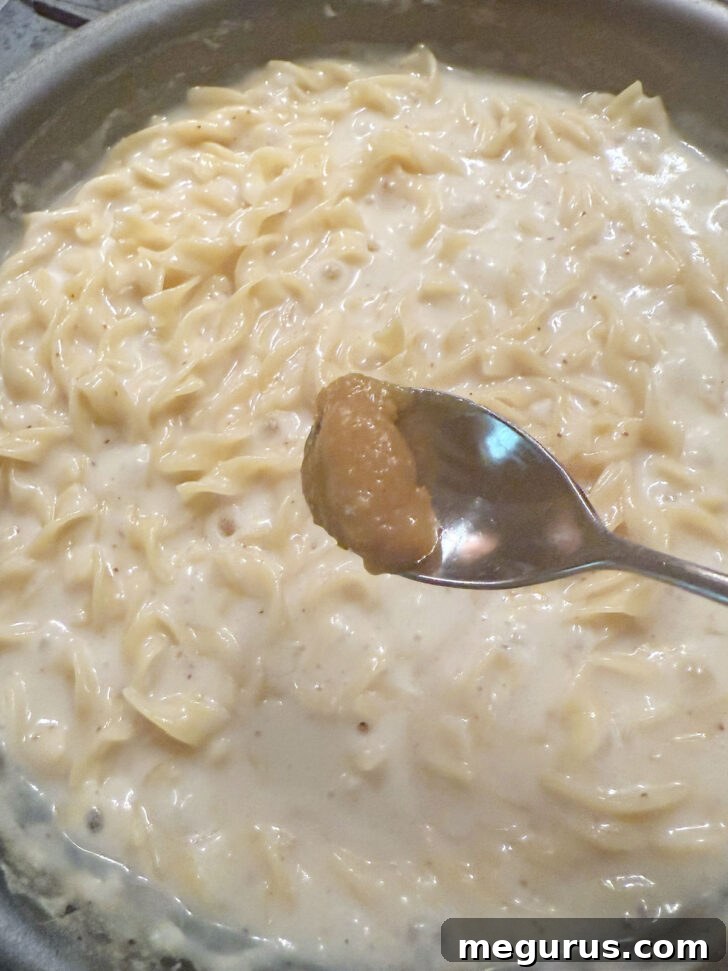
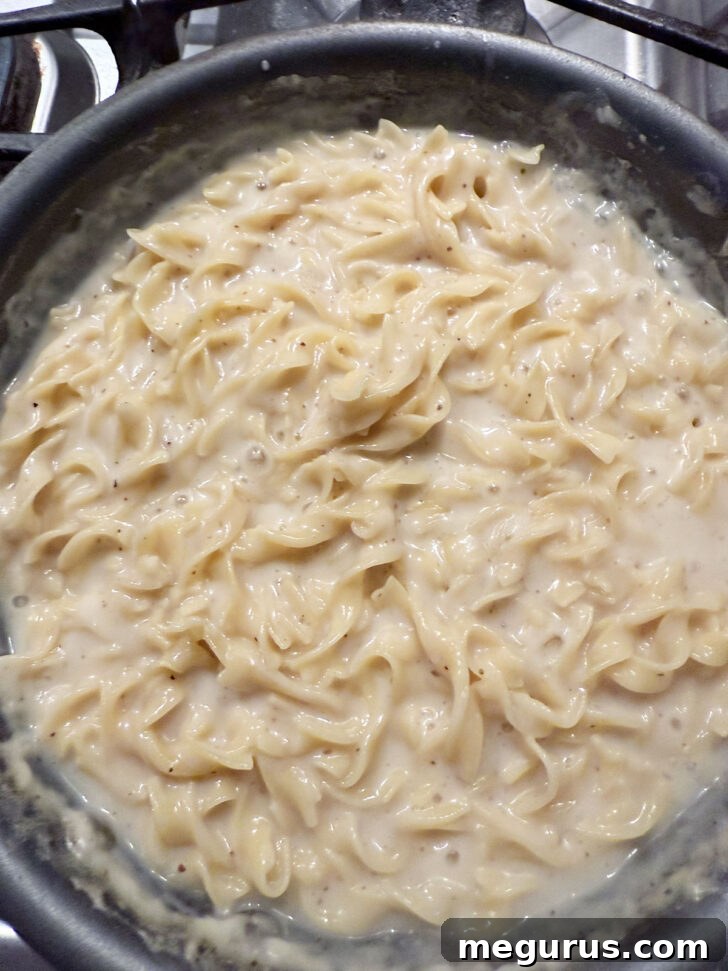
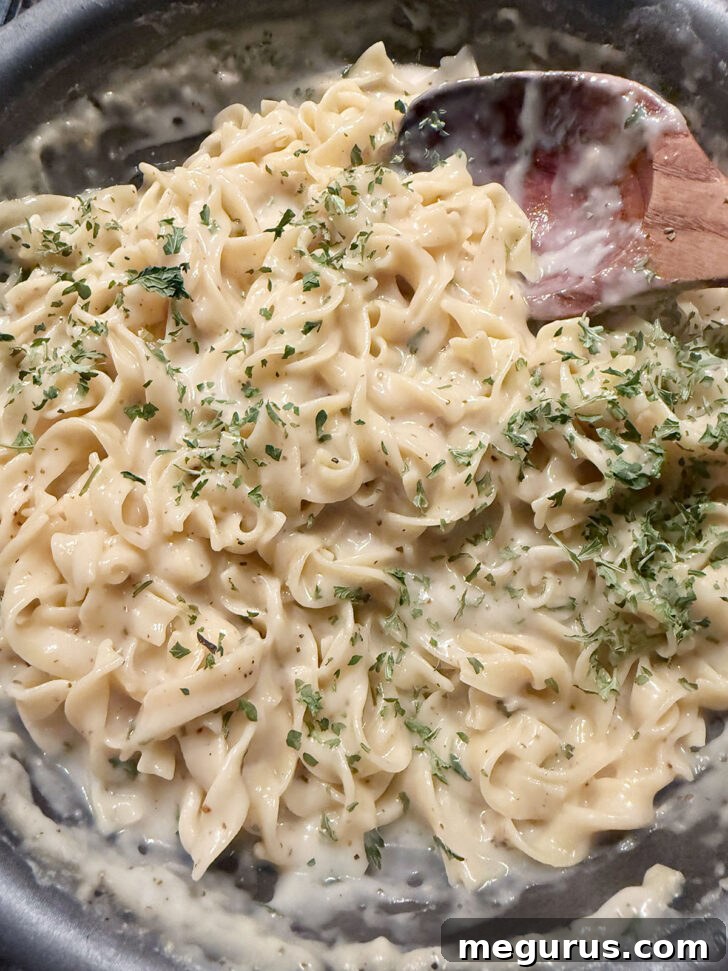
- Final Touches and Serving: Once the noodles are tender and the sauce is creamy but still flowing, remove the skillet from the heat. Stir in the 1 tablespoon of fresh parsley (or 1 teaspoon dried) and the optional 1/2 tablespoon of additional butter for extra richness. Taste the noodles and adjust seasoning as needed, adding more salt and plenty of freshly ground black pepper to your preference. Serve immediately while warm and creamy.
Recipe Video
Want to see these creamy egg noodles come to life? Watch the video below for a visual guide that makes preparing this dish even easier. See firsthand how simple it is to achieve that perfect creamy consistency and tender noodles.
(Video coming soon! In the meantime, follow the detailed instructions above for a delicious meal.)
Pro Tips for Achieving Perfect Creamy Noodles
While this recipe is straightforward, a few key tips can elevate your creamy egg noodles from good to absolutely unforgettable:
- Serve Immediately: These noodles are at their absolute best when enjoyed fresh, hot, and creamy. As they cool, egg noodles, especially “No-Yolks” varieties, tend to absorb more liquid and clump together. Plan to serve them as soon as they are ready for the optimal texture and consistency.
- Reheating Leftovers: If you do have leftovers, don’t despair! They can be easily revived. Gently reheat them in a skillet over low heat or in the microwave, adding a splash (1-2 tablespoons) of extra milk or chicken broth. Stir gently until the noodles loosen up and regain their creamy texture.
- Adjusting Seasoning is Key: The amount of salt needed will heavily depend on your chicken broth’s sodium content and your personal preference. Always taste the noodles at the end of cooking and adjust with additional salt and fresh black pepper until the flavors truly sing. Don’t be shy with the pepper!
- Watch the Noodles, Not Just the Clock: Cooking times can vary slightly based on your specific type of egg noodle and your stove’s heat. Cook until the noodles are just tender, not mushy. If the sauce becomes too thick before the noodles are done, simply add another tablespoon or two of broth or milk until the desired consistency is reached.
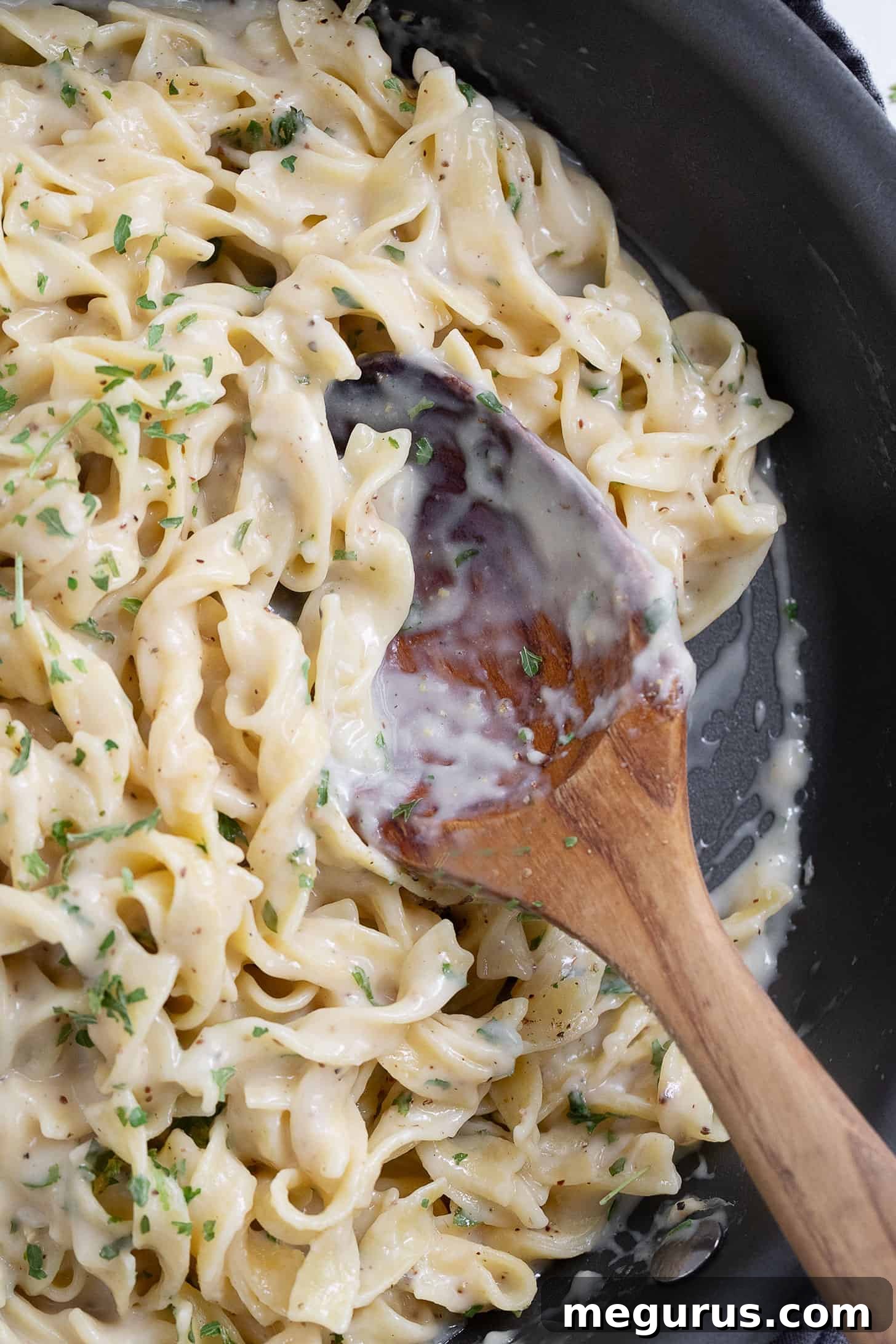
- Skillet Choice Matters: Use a good quality, non-stick skillet to prevent the noodles from sticking to the bottom as they simmer. A wide skillet also allows for even cooking of the noodles.
Creative Variations to Elevate Your Dish
These creamy egg noodles are wonderfully delicious as is, but they also serve as an excellent base for a variety of creative additions. Don’t hesitate to experiment and make this recipe your own:
- Lemon Zest & Juice: A squeeze of fresh lemon juice or a pinch of lemon zest at the end of cooking can add a bright, fresh counterpoint to the richness of the cream sauce.
- Cheesy Indulgence: Stir in a generous handful of grated Parmesan cheese or a blend of your favorite melting cheeses (like cheddar or Gruyere) for an extra layer of savory flavor and even more creaminess.
- Cacio e Pepe Style: For a sophisticated twist, stir in plenty of freshly grated Parmesan cheese and an abundance of coarsely ground black pepper. This mimics the flavors of the classic Italian pasta dish, Cacio e Pepe, with a comforting egg noodle base.
- Herbaceous Freshness: Beyond parsley, consider adding other fresh herbs like finely chopped chives, dill, or tarragon for different aromatic profiles.
- Tangy & Onion Notes: For a delightful tang and a hint of sharpness, stir in a tablespoon or two of sour cream or cream cheese along with some finely diced green onion or chives.
- Creamy Tomato Delight: After adding the milk, stir in a tablespoon or two of tomato paste for a subtle, savory tomato flavor. A pinch of dried basil or oregano would complement this variation beautifully.
- Vegetable Boost: Enhance the nutritional value and texture by stirring in frozen peas, diced carrots, or small broccoli florets during the last few minutes of simmering, allowing them to cook through. Sautéed mushrooms or spinach (wilted in at the very end) are also fantastic additions.
- Protein Power-Up: Transform this side dish into a complete meal by incorporating cooked protein. Shredded rotisserie chicken, leftover cooked ham, crumbled cooked sausage, or even sautéed shrimp would be delicious stirred in towards the end of cooking to warm through.
Frequently Asked Questions (FAQ)
- Can I use a different type of pasta?
- While egg noodles are traditional for their soft, rich texture, you can experiment with other short pasta shapes like rotini, penne, or macaroni. Keep in mind that cooking times and liquid absorption might differ, so you may need to adjust the amount of broth or milk accordingly.
- How do I prevent the noodles from clumping?
- Regular stirring during the simmering process is crucial to prevent the noodles from sticking together and to the bottom of the pan. Also, serving them immediately helps maintain their individual texture. If they do clump, a splash of warm broth or milk during reheating can help loosen them.
- Can I make this recipe gluten-free?
- Yes, you can! Substitute the all-purpose flour with a 1:1 gluten-free all-purpose flour blend for the roux. You will also need to find gluten-free egg noodles, which are increasingly available in specialty stores or online.
- Is it possible to make this dairy-free?
- Absolutely. Replace the salted butter with a dairy-free butter alternative or olive oil. For the milk, use an unsweetened plain non-dairy milk like almond or oat milk. Be aware that the flavor and creaminess might vary slightly.
- Can I freeze these creamy egg noodles?
- Freezing is not recommended for this dish. The creamy sauce may separate upon thawing and reheating, and the noodles can become overly soft and mushy. It’s best enjoyed fresh or stored in the refrigerator for a few days.
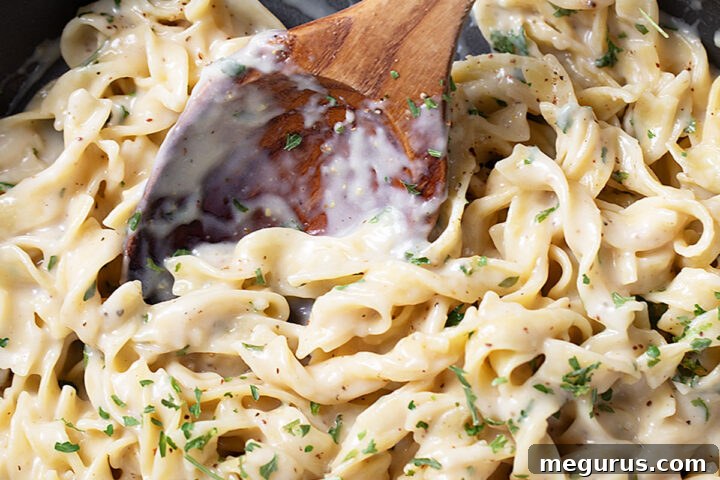
Cafeteria Noodles (without canned soup)
These quick and easy cafeteria noodles are a fantastic side dish for so many meals. They cook up quickly in a skillet on the stovetop and use no canned soup! The noodles simmer right in the creamy chicken broth, so no separate boiling is needed. Yields 5 servings as a side dish or 2-3 as a main course.
Recipe at a Glance:
- Prep Time: 5 minutes
- Cook Time: 20 minutes
- Total Time: 25 minutes
- Yield: 5 servings
Ingredients
- 2 Tablespoons salted butter
- 5 Tablespoons all-purpose flour
- 2 1/2 cups chicken broth, DIVIDED
- 1/2 cup milk
- 1/4 teaspoon celery salt
- 1/4 teaspoon onion powder
- 1/4 teaspoon garlic powder
- 1/4 – 1/2 teaspoon salt (to taste)
- 1/4 teaspoon pepper
- 3 cups no-yolks egg noodles (approx. 6oz or any egg noodle)
- 1 teaspoon chicken bouillon paste (optional, or 1/2 a crumbled bouillon cube)
- 1 Tablespoon fresh parsley, finely chopped (or 1 teaspoon dried parsley)
- 1/2 Tablespoon butter, optional (for finishing)
- Salt and pepper, as needed (for final seasoning)
Instructions
- Melt 2 tablespoons of butter in a medium to large non-stick skillet over medium heat. Add the flour and stir with a wooden spoon until the flour has absorbed the butter and the mixture is clumpy. Cook, stirring constantly, for about 1 minute to cook out the raw flour taste.
- Gradually add 1 cup of the chicken broth, whisking continuously until smooth and no lumps remain. Add the milk, celery salt, onion powder, garlic powder, salt, and pepper to the skillet and stir until smooth and well combined.
- Add the dry egg noodles to the skillet, along with the remaining 1 1/2 cups of chicken broth. Bring the mixture to a gentle boil, then immediately reduce the heat to a low simmer.
- Stir in the additional chicken bouillon (if using) and continue cooking the noodles, stirring regularly, until they are tender and the sauce has thickened to a creamy, yet still loose, consistency. This usually takes about 10-15 minutes. Taste test the noodles to ensure they are tender. Avoid overcooking, as they can become mushy. If the sauce becomes too thick before the noodles are cooked, add a splash more chicken broth as needed to thin the sauce.
- When the noodles are done, remove the skillet from heat. Stir in the fresh parsley and the optional 1/2 tablespoon of additional butter. Taste and adjust seasoning, adding more salt and plenty of freshly ground pepper as needed.
- These noodles are best enjoyed freshly cooked. Refrigerate any leftovers in an airtight container for up to 3 days. Reheat in the microwave or in a skillet over low heat with a splash of broth or milk to loosen the noodles.
Notes
- This recipe serves 5 as a generous side dish or 2-3 as a main course.
- Bouillon Boost: Adding chicken bouillon paste (like Better than Bouillon) or a crumbled bouillon cube enhances the chicken flavor, which is highly recommended for a richer taste.
- Seasoning is Crucial: The final taste of this dish heavily relies on proper seasoning. How much additional salt you’ll need depends on the sodium content of your chicken broth and personal preference. Always taste and adjust at the end.
- Noodle Variations: Different brands or types of egg noodles may absorb liquid differently. This recipe was tested with “No-Yolks” large/broad noodles. If using a different noodle, you might need to add a bit more broth if the sauce thickens too quickly, or simmer longer if the noodles aren’t tender.
- Spice Adjustment: The spice amounts provided are for a subtle flavor. Feel free to increase them slightly if you prefer a bolder seasoning.
Cuisine: American, Canadian
Course: Side Dish
Author: Jennifer Maloney
Nutrition Information (per serving):
Serving: 1 serving, Calories: 197kcal, Carbohydrates: 25g, Protein: 7g, Fat: 8g, Saturated Fat: 4g, Polyunsaturated Fat: 1g, Monounsaturated Fat: 2g, Trans Fat: 0.2g, Cholesterol: 35mg, Sodium: 423mg, Potassium: 214mg, Fiber: 1g, Sugar: 2g, Vitamin A: 303IU, Vitamin C: 1mg, Calcium: 48mg, Iron: 1mg