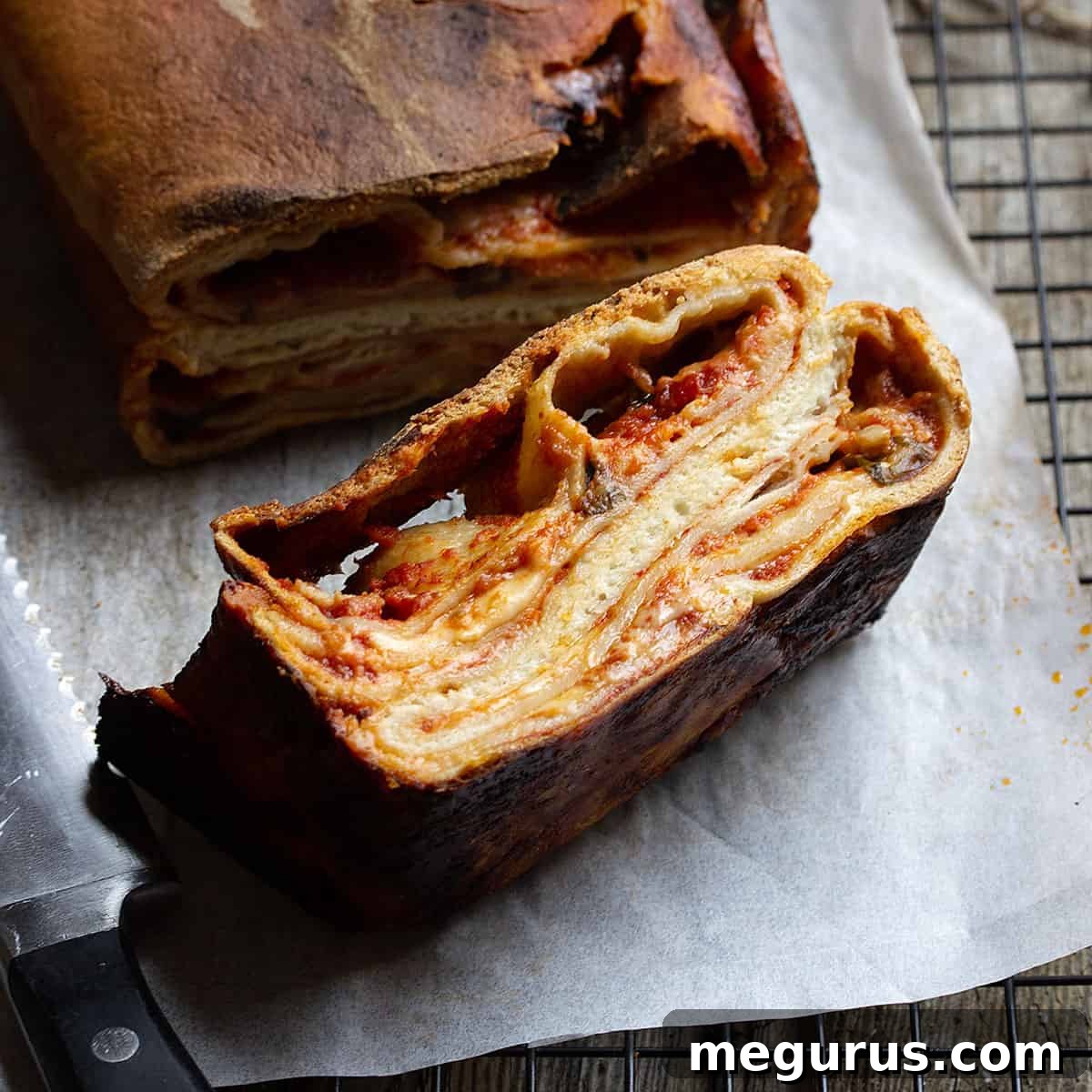
Step into the heart of Sicily with a culinary delight that beautifully blurs the lines between a rustic pasta dish and a savory pizza: the Italian Scaccia Ragusana. Often described as a “lasagna in loaf form,” this traditional dish hails from the Ragusa province of Sicily and embodies the region’s rich gastronomic heritage. While it might not win any awards for its polished appearance, the Scaccia holds a special place in the hearts of those who know its true value. In fact, a popular saying suggests, “the uglier the Scaccia, the better it tastes!” This charmingly humble exterior hides layers of intensely flavorful tomato sauce and rich cheese, all encased in a perfectly baked, crisp semolina crust.
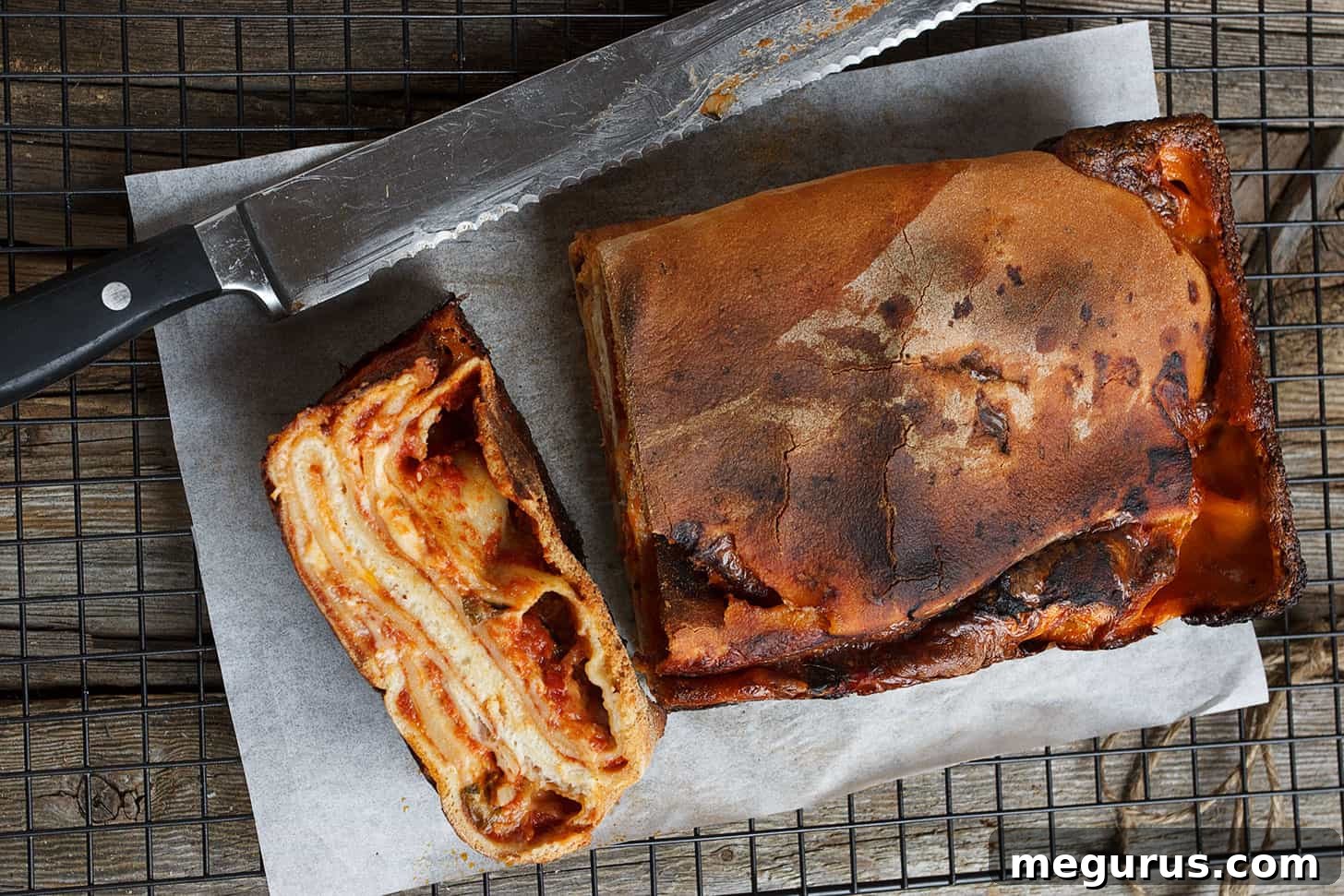
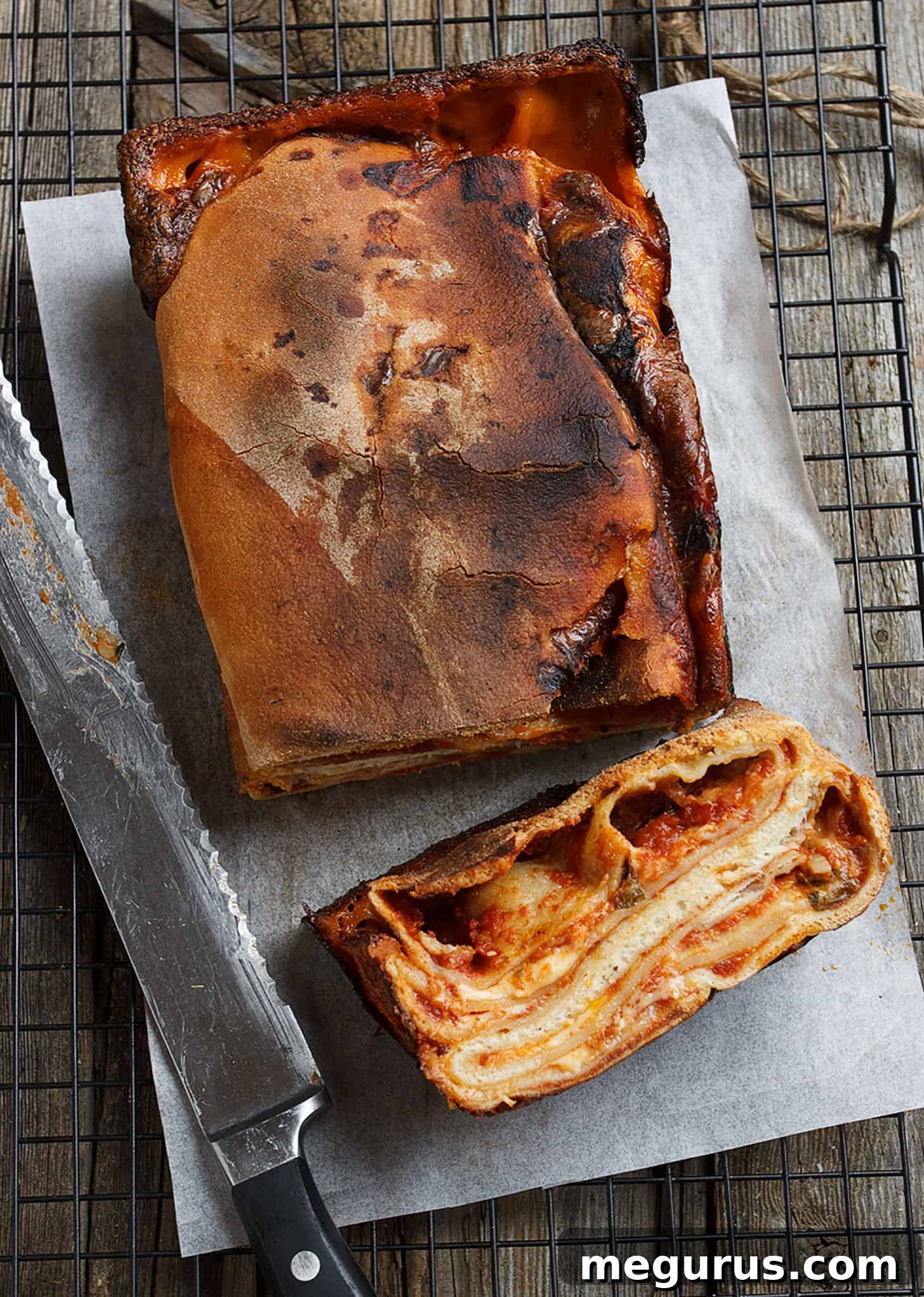
Imagine the best elements of your favorite Italian comfort foods converging into one irresistible creation. The Scaccia Ragusana offers an experience where the exterior bakes up beautifully crisp and slightly charred, reminiscent of a perfectly cooked artisanal pizza. Meanwhile, the interior boasts soft, pasta-like layers generously filled with a vibrant tomato sauce and creamy cheese, evoking the comforting essence of a classic lasagna. This delightful contrast of textures and flavors makes every bite an adventure, promising a truly delicious and satisfying meal.
Beyond its unique composition, Scaccia stands out for its incredible versatility. It’s a dish that invites creativity and personal touch. You can savor it in its simplest form, showcasing the exquisite flavors of high-quality tomatoes and robust cheese. Alternatively, elevate your Scaccia by layering in savory Italian cured meats like prosciutto or salami, or add some browned, crumbled sausage for a heartier, more substantial version. Whether you prefer a vegetarian delight or a meat-lover’s dream, Scaccia effortlessly adapts to your culinary desires.
Despite its intricate appearance, making Scaccia is surprisingly straightforward. The process, while requiring a bit of patience and attention to detail, is incredibly rewarding. The final result — a deeply flavorful, textural masterpiece — is more than worth the time and effort invested. This guide will walk you through every step, ensuring you can recreate this authentic Sicilian treasure in your own kitchen.
Unlocking the Flavors: Essential Ingredients and Smart Substitutions
Crafting the perfect Scaccia Ragusana begins with understanding its core ingredients. Here’s what you’ll need, along with helpful notes and potential substitutions to ensure your success:
Semolina Flour: The Dough’s Foundation
For an authentic Scaccia, seek out fine semolina flour, often found in Italian specialty grocers or well-stocked supermarkets. This type of semolina is more powdery than the coarser cornmeal-like varieties, lending the dough its signature smooth yet firm texture and unique chewiness. If fine semolina is hard to come by, you can use regular semolina, or a blend of semolina and all-purpose flour. When making substitutions, it’s wise to add the flour gradually, reserving a small portion, and incorporating it as needed until your dough reaches a smooth and pliable consistency. This cautious approach helps prevent an overly dry dough, ensuring the elasticity needed for rolling and folding.
Yeast: The Patient Leavening Agent
Whether you choose Active Dry Yeast or Instant Yeast, both will work beautifully for this Scaccia recipe. Active dry yeast typically requires proofing in lukewarm water with a touch of sugar to activate it, while instant yeast can often be mixed directly with the dry ingredients. Whichever you use, ensure your yeast is fresh and active for optimal dough rise. Remember, Scaccia dough uses a minimal amount of yeast and has a slow rise, so patience is key for developing its deep flavor and characteristic texture.
Quality Tomatoes: The Soul of the Sauce
The tomato sauce is the heart of your Scaccia. Opt for high-quality whole peeled canned tomatoes, preferably San Marzano for their balanced sweetness and low acidity. These tomatoes, along with their natural juice, will form the base of a rich and flavorful sauce. While the recipe is simple, the quality of your tomatoes will significantly impact the final taste profile. Don’t skimp on seasoning your sauce liberally with salt and pepper; as the dough itself contains very little salt, a well-seasoned sauce ensures the entire dish is bursting with flavor.
Extra Virgin Olive Oil: A Touch of Mediterranean Essence
A good quality extra virgin olive oil is indispensable for both the dough and the sauce. Its fruity, peppery notes enhance the overall flavor, grounding the dish in its Mediterranean roots. Choose a mild yet flavorful oil for the best results.
Kosher Salt and Sugar: Balancing Act
Kosher salt provides a clean, mineral flavor to the dough, while a small amount of sugar in both the dough (to activate the yeast) and the tomato sauce (to balance acidity) plays a crucial role in developing the complex flavors of your Scaccia.
Expert Tips for a Flawless Scaccia
- Embrace Customization, Thoughtfully: Scaccia is wonderfully adaptable, much like a pizza or lasagna. Feel free to experiment with a variety of cheeses (such as mozzarella, caciocavallo, or even a touch of ricotta), meats (like browned Italian sausage, pancetta, or cured ham), or fresh vegetables and greens (spinach, thinly sliced mushrooms, or sautéed onions). However, keep the folding process in mind: overly chunky or heavy fillings can make the dough difficult to fold and seal. Aim for finely chopped ingredients or thinly sliced meats to ensure a smooth, manageable layering process.
- Season Your Sauce Generously: This cannot be stressed enough! Because the semolina dough has a relatively low salt content, the tomato sauce needs to carry the bulk of the seasoning for the entire dish. Taste your sauce and adjust the salt and freshly ground black pepper liberally before layering. A perfectly seasoned sauce is the secret to a Scaccia that’s bursting with flavor from crust to core.
- Mastering the Final Fold: The folding technique is a signature aspect of Scaccia, and while most steps are intuitive, the very last fold can be a bit tricky to visualize. To clarify: just before the final fold, you’ll have an elongated rectangle of dough, approximately 4 or 5 inches wide and around 18 inches long. To prepare it for your loaf pan, simply take the far, open end of the dough and fold it back towards you, meeting the edge closest to you. This creates a more compact piece, roughly 4-5 inches wide by 9 inches long, perfectly sized to fit into your prepared pan.
- The Transfer Tango: Moving the filled, folded dough into the loaf pan is often the most delicate part, especially with all that delicious sauce inside. The best strategy is a swift, confident movement. I find using two wide spatulas, one placed under each end of the folded dough, offers the most support. Lift quickly and gently transfer it to the parchment-lined pan. Don’t fret if it looks a little messy or imperfect in the pan – remember the golden rule of Scaccia: “the uglier it is, the better it is!” Embrace its rustic charm.
Storing and Freezing Your Scaccia
Scaccia Ragusana is a fantastic dish for meal prepping or enjoying leftovers. To maintain its delightful flavors and textures, proper storage is key.
Refrigeration: Any leftover Scaccia can be stored in an airtight container in the refrigerator for up to 3 days. For best results, allow it to cool completely before storing. When reheating, a toaster oven or conventional oven at 350°F (175°C) will help crisp up the crust again, taking about 10-15 minutes, or until heated through.
Freezing: This Italian delight freezes exceptionally well, making it a perfect candidate for future meals. Once completely cooled, wrap individual slices or the entire loaf tightly in plastic wrap, then an additional layer of aluminum foil to prevent freezer burn. It can be stored in the freezer for up to 3 months. To reheat from frozen, unwrap and bake in a preheated oven at 350°F (175°C) for 30-45 minutes, or until thoroughly hot and the crust is crisp. Freezing and reheating don’t compromise its wonderful taste, making it a convenient option for busy days.
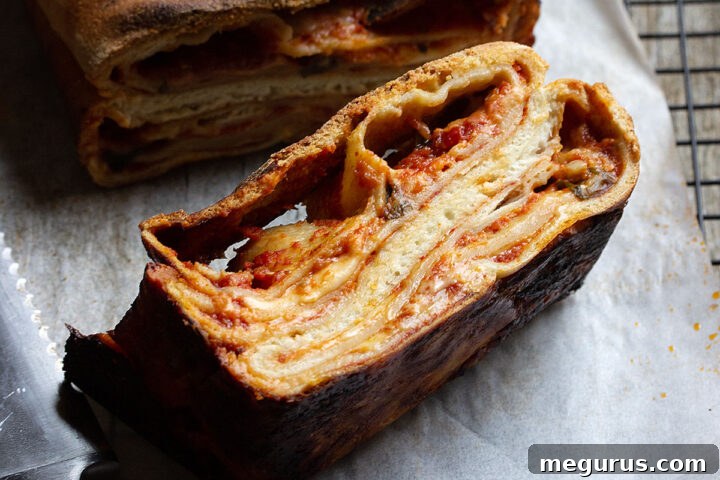
Get the Recipe: Authentic Italian Scaccia (Lasagna Loaf)
Pin This
Leave a Review
Ingredients
For the Dough:
- 1/4 teaspoon white granulated sugar
- 1/4 teaspoon active dry or instant yeast
- 1/2 cup + 2 Tbsp. (130 ml) lukewarm water
- 2 cups (336 g) semolina flour
- 1 Tablespoon extra-virgin olive oil
- 1/2 teaspoon kosher salt
- all-purpose flour, for dusting your work surface
For the Tomato Sauce:
- 1 Tablespoon olive oil
- 2 cloves garlic, finely chopped
- 2 cups whole peeled canned tomatoes, with juice
- 1 teaspoon white granulated sugar
- 1/2 cup fresh basil leaves, roughly chopped, loosely packed
- Freshly ground black pepper, to taste
- Salt, to taste
Instructions
-
In a spacious mixing bowl, combine the granulated sugar, yeast, and lukewarm water. Whisk these ingredients together until well combined. Allow this mixture to rest for approximately 10 minutes, or until a foamy layer appears on the surface, indicating the yeast is active. Next, stir in the semolina flour, 1 tablespoon of olive oil, and 1/2 teaspoon of kosher salt. Continue mixing until the dough starts to come together in a shaggy mass. Transfer the dough to a lightly floured work surface. Knead the dough vigorously for about 8 minutes. Initially, the dough will feel quite dry and crumbly, but with consistent kneading, it will gradually transform into a smooth, moist, and elastic dough. Once kneaded, place the dough into a clean bowl, cover it tightly with plastic wrap, and let it rise at room temperature until its size has visibly doubled, a process that typically takes around 2 hours. Be patient, as this dough is designed for a slow rise due to its minimal yeast content, which contributes to a more developed flavor and texture.
-
While the dough is rising, prepare your flavorful tomato sauce. Pour the whole peeled tomatoes along with their juice into a blender and process until completely smooth. In a small saucepan, heat the remaining 1 tablespoon of olive oil over medium heat. Add the finely chopped garlic and sauté, stirring continuously, until it becomes fragrant and just begins to turn a light golden brown, usually about 2 minutes. Pour the puréed tomatoes into the saucepan, adding the remaining 1 teaspoon of sugar. Bring the sauce to a gentle simmer and cook, stirring occasionally, for about 10 minutes, allowing it to thicken slightly. Remove the saucepan from the heat, stir in the fresh basil leaves, and season the sauce generously with salt and freshly ground black pepper. It’s crucial to taste and adjust the seasoning here, remembering that the dough contains very little salt, so a well-seasoned sauce is vital for the overall flavor of the finished Scaccia.
-
Preheat your oven to 450°F (230°C). Line a standard 9-by-5-inch loaf pan with parchment paper, allowing some overhang on the sides for easy removal later. Once the dough has risen, gently scrape it onto a lightly floured work surface. Using a rolling pin, gradually flatten and roll the dough into a large, thin rectangle, aiming for a thickness of about 1/16-inch and dimensions of approximately 25-by-18 inches. Position the dough so that one of the longer sides is facing you. Achieving this thinness may require considerable rolling; if the dough resists and shrinks back, allow it to rest for a few minutes before continuing to roll. Persistence will pay off! If at any point the dough seems excessively thin or begins to tear, stop rolling and proceed with the next step, as some minor imperfections can be forgiven in this rustic dish.
-
For easier application of the sauce, you might find it helpful to lightly mark your dough into approximate 5-inch increments along the long side. This provides a visual guide for dividing the dough into fifths when spreading the filling.
-
Carefully spread half of the prepared tomato sauce evenly over the middle three-fifths of the dough rectangle. Ensure you leave the leftmost and rightmost 5-inch sections of the dough bare. Now, take the two plain, unsauced sides of the dough and fold them inwards over the sauced central portion. Their edges should overlap slightly in the middle of the rectangle. At this point, your dough piece will be roughly 15 inches wide by 18 inches long.
-
Next, spread the remaining half of the tomato sauce over the left two-thirds of the now-folded dough. If desired, sprinkle with your choice of cheese (not listed in original ingredients, but common for Scaccia). Take the plain, unsauced right-hand third of the dough and fold it over the sauced portion. Then, fold the leftmost side of the dough over the top, much like you would tri-fold a letter for an envelope. This action will reduce your dough piece to approximately 5 inches wide and 18 inches long. For the final fold, take the far open end of this elongated dough piece and fold it back towards you, so it meets the open end closest to you. This will result in a more compact dough piece, roughly 5 inches wide by 9 inches long, ready for the loaf pan.
-
With great care, transfer the folded Scaccia into your prepared loaf pan. Using two wide spatulas, one positioned under each end of the dough, can greatly assist in lifting and moving it quickly and securely. Don’t be discouraged if it looks a little rustic or messy in the pan; this is part of its charm! Pierce the top of the Scaccia several times with the tines of a fork. This step is crucial, as it allows steam to escape during baking, preventing the crust from becoming soggy. Bake in the preheated oven for approximately 1 hour, or until the top is a deep golden brown and the edges are beautifully crisp and lightly charred. Immediately after removing from the oven, invert the Scaccia onto a wire rack. Carefully remove the loaf pan and the parchment paper. Allow the Scaccia to cool in this inverted position for 10 minutes. This helps prevent the bottom crust from becoming soggy. Finally, invert the Scaccia right-side-up before slicing and serving. Enjoy this rustic, flavorful Sicilian masterpiece!
Chef’s Notes & Pro Tips
- Customizing Your Scaccia: Feel free to experiment with various cheeses (mozzarella, caciocavallo) or additions like browned Italian sausage or sautéed vegetables (spinach, mushrooms, thinly sliced onions). Remember to keep fillings finely chopped or thinly sliced to facilitate the dough folding process.
- The Importance of Sauce Seasoning: Since the dough is minimally salted, the tomato sauce must be robustly seasoned with salt and pepper. This ensures a balanced and flavorful profile throughout the entire Scaccia.
- Visualizing the Last Fold: Before the very last fold, your dough will be an oblong rectangle, approximately 4-5 inches wide and 18 inches long. To fit it into your pan, fold the far end back over itself to meet the closest edge, creating a piece roughly 4-5 inches wide by 9 inches long.
- Graceful Transfer: Moving the sauced and folded dough into the loaf pan is best done swiftly with two spatulas under each end. Don’t worry if it looks a little unkempt in the pan – its rustic charm is part of its appeal, and the taste is paramount!