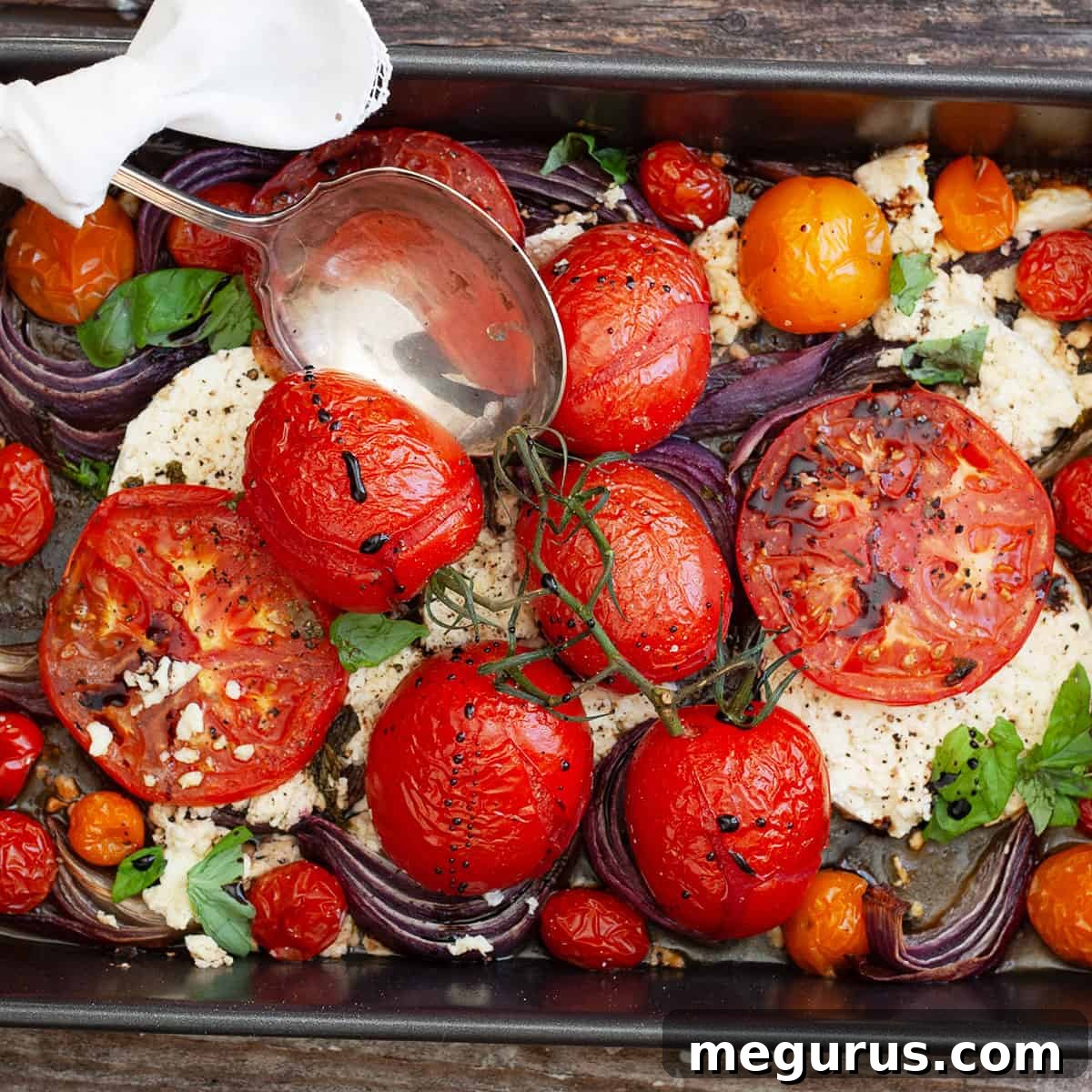
Roasted Tomatoes and Feta: A Mediterranean-Inspired Side Dish for Any Season
Discover the delightful simplicity of **Roasted Tomatoes and Feta**, a vibrant side dish that effortlessly transforms humble ingredients into a culinary masterpiece. This recipe is a true testament to how roasting can elevate flavors, especially making it a standout choice for enjoying tomatoes even during the colder months when they might not be at their peak. It’s not just a dish; it’s an experience – rich, tangy, and incredibly satisfying, perfect for a cozy weeknight dinner or an elegant buffet spread.
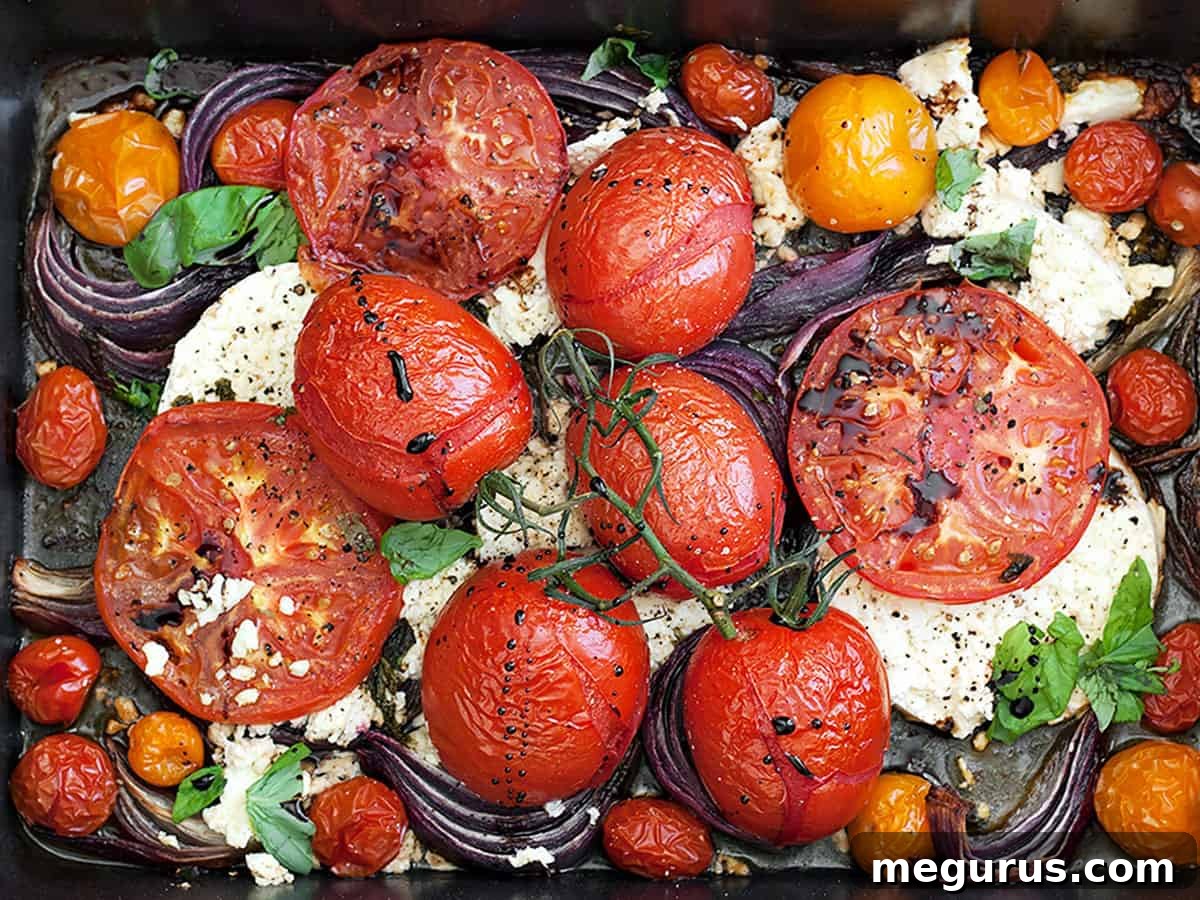
Why You’ll Love This Roasted Tomatoes and Feta Recipe
This dish captures the essence of slow roasting, coaxing out the natural sweetness and depth from tomatoes, turning them into succulent, flavorful bites. While summer tomatoes burst with flavor on their own, roasting provides an incredible advantage during winter. It takes even average tomatoes and concentrates their essence, imbuing them with a wonderfully rich, almost jam-like quality that is simply irresistible.
The addition of feta cheese brings a salty, tangy counterpoint that perfectly complements the sweet acidity of the roasted tomatoes. Feta is a fascinating cheese; despite extended time in the oven, it doesn’t truly melt into a liquid state. Instead, it softens beautifully, retaining its distinct crumbly texture and robust flavor, merely warming through to a creamy consistency. Remember that feta is naturally quite salty, so careful seasoning is key. I often advise holding back on additional salt until the very end, tasting first, and then adding only as necessary to achieve perfect balance.
The Magic of Roasting: Unlocking Deep Tomato Flavor
Roasting vegetables is a simple yet powerful cooking technique that intensifies their flavors by caramelizing their natural sugars. For tomatoes, this process is particularly transformative. The high heat of the oven not only softens the tomatoes but also causes them to release their juices, which then reduce and thicken, creating a rich, concentrated sauce. This brings out an umami depth that fresh tomatoes can’t always offer, making them incredibly delicious. This is precisely why this recipe shines brightest with **winter tomatoes**, which can often lack the vibrant flavor of their summer counterparts.
Key Ingredients for the Perfect Roasted Tomatoes and Feta
Creating this flavorful side dish requires just a handful of fresh ingredients, each playing a crucial role in the final harmony of tastes and textures. Quality ingredients will undoubtedly yield the best results.
Tomatoes: A Symphony of Shapes and Sizes
- Variety is Key: Don’t limit yourself to a single type! Employ a delightful mix of sizes and colors to add visual appeal and varying textures. Smaller varieties like cherry, grape, or tiny heirloom tomatoes on the vine are excellent choices. They become wonderfully sweet and burst in your mouth after roasting.
- Size Matters: For the smaller tomatoes, aim for nothing larger than golf-ball size for optimal roasting. For larger tomatoes, slicing them into thick rounds (about ½ to ¾ inch) ensures they hold their shape and roast evenly without becoming mushy. Roma tomatoes, beefsteak, or even larger heirloom varieties work beautifully when sliced.
- Choosing the Best: Look for firm, unblemished tomatoes, regardless of season. Even if they’re not bursting with summer sweetness, the roasting process will work its magic.
Feta Cheese: The Salty Heart of the Dish
- Opt for Quality: Always choose feta that comes packed in brine (liquid) in containers, rather than the pre-crumbled, dry varieties. Feta in brine is typically creamier, more flavorful, and has a superior texture.
- Preparation: Cut the larger block of feta into ¾-inch thick slices. These slices will hold their form well during roasting and provide delightful pockets of creamy, salty goodness. Any smaller crumbles can be scattered around the pan to infuse the entire dish with feta’s distinct tang.
Red Onion: Sweetness and Structure
- Flavor Profile: Red onion is a classic pairing with tomatoes and feta, offering a delightful sharpness that mellows into a sweet, tender bite after roasting. Its vibrant color also adds to the dish’s visual appeal.
- Substitution: In a pinch, a regular yellow onion will work perfectly fine. It will still provide that essential aromatic base and sweet flavor once roasted.
- Preparation: Cut the onion into thin wedges rather than finely dicing it. This allows the onion pieces to roast evenly and become beautifully tender without disappearing into the dish.
Other Essential Ingredients:
- Olive Oil: A good quality extra virgin olive oil is indispensable for coating the vegetables, facilitating even roasting, and adding a subtle fruity note.
- Freshly Ground Black Pepper: Adds a touch of warmth and spice.
- Fresh Basil Leaves: The aromatic hero of Mediterranean cuisine. Fresh basil, added at the end, provides a fragrant, vibrant finish. If fresh is unavailable, dried basil (added during roasting) is a suitable alternative.
- Balsamic Vinegar & Brown Sugar: These two combine to create a quick, luscious balsamic glaze that adds a sweet, tangy depth to the finished dish, elevating its overall flavor profile.
- Salt: As mentioned, exercise caution. Feta is salty, so a final sprinkle of salt should only be added to taste at the very end.
Expert Tips for Success
- Versatile Serving: This dish is incredibly versatile! It serves as a fantastic weeknight side with grilled chicken, baked fish, or a hearty steak. Its robust flavors also make it an ideal candidate for a buffet table; it holds its own beautifully, remaining delicious whether served warm or at room temperature. No need to stress about keeping it piping hot!
- Winter Tomato Savior: Embrace this recipe during the colder months! It’s specifically designed to transform less-than-perfect, out-of-season tomatoes. Roasting breathes new life into them, concentrating their flavors and making them wonderfully rich. Don’t pass up those winter tomatoes at the grocery store anymore – they have delicious potential!
- Even Roasting: Ensure your tomatoes and onions are spread in a single layer in your roasting pan. Overcrowding can lead to steaming instead of roasting, preventing that desirable caramelization. Use two pans if necessary.
- Don’t Forget the Glaze: The balsamic reduction is an easy step that adds a significant flavor boost. Don’t skip it! It brings a lovely sweet-tangy finish.
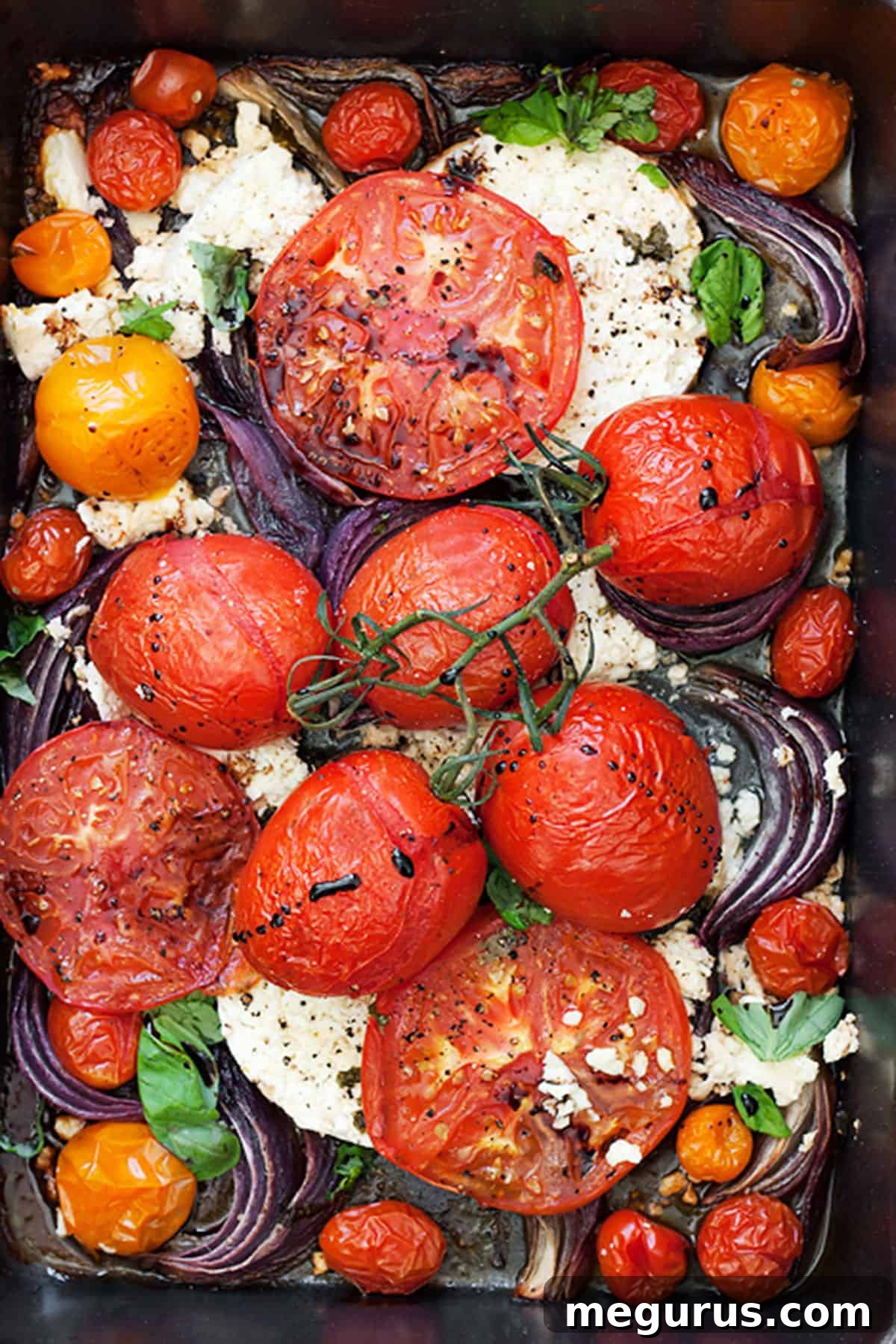
Making Ahead and Storing Your Roasted Tomatoes and Feta
One of the many beauties of this **Roasted Tomatoes and Feta** dish is its flexibility with meal prepping and storage. You can easily prepare components or the entire dish in advance, making it perfect for entertaining or enjoying leftovers throughout the week.
- Roasting Ahead: You can roast the tomatoes and onions earlier in the day. Allow them to cool completely before storing them.
- Reheating: To reheat, place the roasted vegetables (and feta, if it was roasted with them) in a baking dish, loosely covered with foil, and warm in a 350°F (175°C) oven until heated through, about 15-20 minutes. Covering with foil prevents them from drying out.
- Storing Leftovers: Any leftovers should be stored in an airtight container in the refrigerator for up to 3-4 days. For best results, re-warm gently in the oven or a microwave (though oven reheating is preferred for texture) before enjoying.
- Balsamic Glaze: The balsamic reduction can also be made ahead of time and stored in a small jar at room temperature. Drizzle it over the dish just before serving.
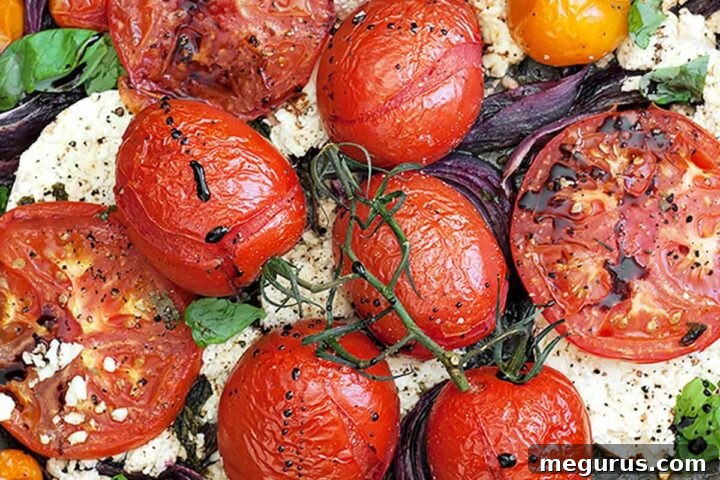
Get the Recipe: Roasted Tomatoes and Feta
Delicious roasted tomatoes and feta is a great tomato side dish, especially with winter tomatoes. Nice for the buffet table, too!
5 stars from 3 ratings
Pin This
Leave a Review
Ingredients
- 1 medium red or yellow onion
- 1/4 cup olive oil
- Freshly ground black pepper
- Variety of small tomatoes (such as cherry, grape etc. no larger than golf-ball size)
- 2 large tomatoes, cut into thick slices
- 6-7 oz feta cheese, cut into 3/4″ thick slices
- Fresh basil leaves (or 1/2-1 tsp. dried basil)
- 1/2 cup balsamic vinegar
- 1 Tablespoon brown sugar
- Salt, for finishing (*feta is salty, so don’t salt until the end and only a bit is needed)
Instructions
-
Preheat oven to 350° F (175°C, regular bake setting/not fan assisted). Cut onion into thin wedges. Place in a baking dish or roasting pan and drizzle with a bit of olive oil. Roast in the pre-heated oven for 30 minutes. Meanwhile, prepare your tomatoes and feta. Once the onions have roasted, carefully remove the pan from the oven.
-
Place feta slices into the roasting pan, nestled among the onions, and drizzle with a bit more olive oil. Scatter any feta crumbles around the pan. Place a large tomato slice over most of the large rounds of feta. Scatter smaller tomatoes around the pan, ensuring they are in a single layer for even roasting. Give one final drizzle of olive oil over all the tomatoes and a generous grind of freshly ground pepper. If using dried basil, you can add it now. Return to the oven and roast for another 35-45 minutes, or until tomatoes are tender and slightly caramelized.
-
Meanwhile, while the tomatoes and feta are roasting, add balsamic vinegar and brown sugar to a small saucepan. Bring the mixture to a boil over medium heat, then lower the heat and simmer gently until the liquid is reduced by half and has thickened into a light glaze. This typically takes about 8-12 minutes. Set aside.
-
Once roasted, allow the dish to cool for about 5 minutes. Sprinkle generously with fresh basil leaves. Taste the dish before adding any additional salt; remember, feta is quite salty. If needed, add just a tiny bit of salt for finishing. Finally, drizzle the warm, reduced balsamic vinegar glaze over the entire dish. Serve warm and enjoy!
Notes
Be sure to read the detailed sections above this Recipe Card for more comprehensive tips, ingredient options, thoughtful substitutions, and exciting variations to make this recipe truly your own!
Nutrition Information (per serving)
- Serving: 1 serving
- Calories: 189kcal
- Carbohydrates: 8g
- Protein: 4g
- Fat: 15g
- Saturated Fat: 5g
- Cholesterol: 25mg
- Sodium: 323mg
- Potassium: 89mg
- Sugar: 7g
- Vitamin A: 195IU
- Vitamin C: 2.6mg
- Calcium: 150mg
- Iron: 0.4mg
Tried this recipe?
If you enjoyed this recipe, consider leaving a star rating and comment! It helps others discover delicious dishes like this.
Frequently Asked Questions (FAQs)
Can I use frozen tomatoes for this recipe?
While fresh tomatoes are always preferred for their texture, if you only have frozen, you can use them. However, they will release significantly more water when roasting, which might make the dish a bit wetter. You might need to extend the roasting time or drain off some liquid during the process. For best results, allow them to thaw completely and pat them dry before roasting.
What can I serve with Roasted Tomatoes and Feta?
This versatile side dish pairs wonderfully with a variety of main courses. It’s excellent with grilled chicken breasts, baked or pan-seared fish (salmon, cod, snapper), roasted lamb or pork tenderloin, or even simple pasta dishes. For a vegetarian meal, serve it alongside quinoa, couscous, or crusty bread for dipping.
Can I add other vegetables to this dish?
Absolutely! This recipe is highly adaptable. Bell peppers (especially red or yellow), zucchini, eggplant, or even asparagus spears would be delicious additions. Just be mindful of their cooking times; some might need to be added later in the roasting process to prevent overcooking.
Is this recipe suitable for dietary restrictions?
This dish is naturally gluten-free and vegetarian. If you’re looking to reduce sodium, be very cautious with the amount of additional salt you add, as feta is already quite salty. For a dairy-free option, you could experiment with a plant-based feta alternative, though the flavor and texture might differ slightly.
How do I prevent the tomatoes from getting mushy?
The key to perfectly roasted, non-mushy tomatoes is to ensure they are in a single layer in the roasting pan. Overcrowding causes them to steam rather than roast, leading to a softer texture. Also, cut larger tomatoes into thick slices so they retain their structure. Avoid stirring too frequently during roasting.