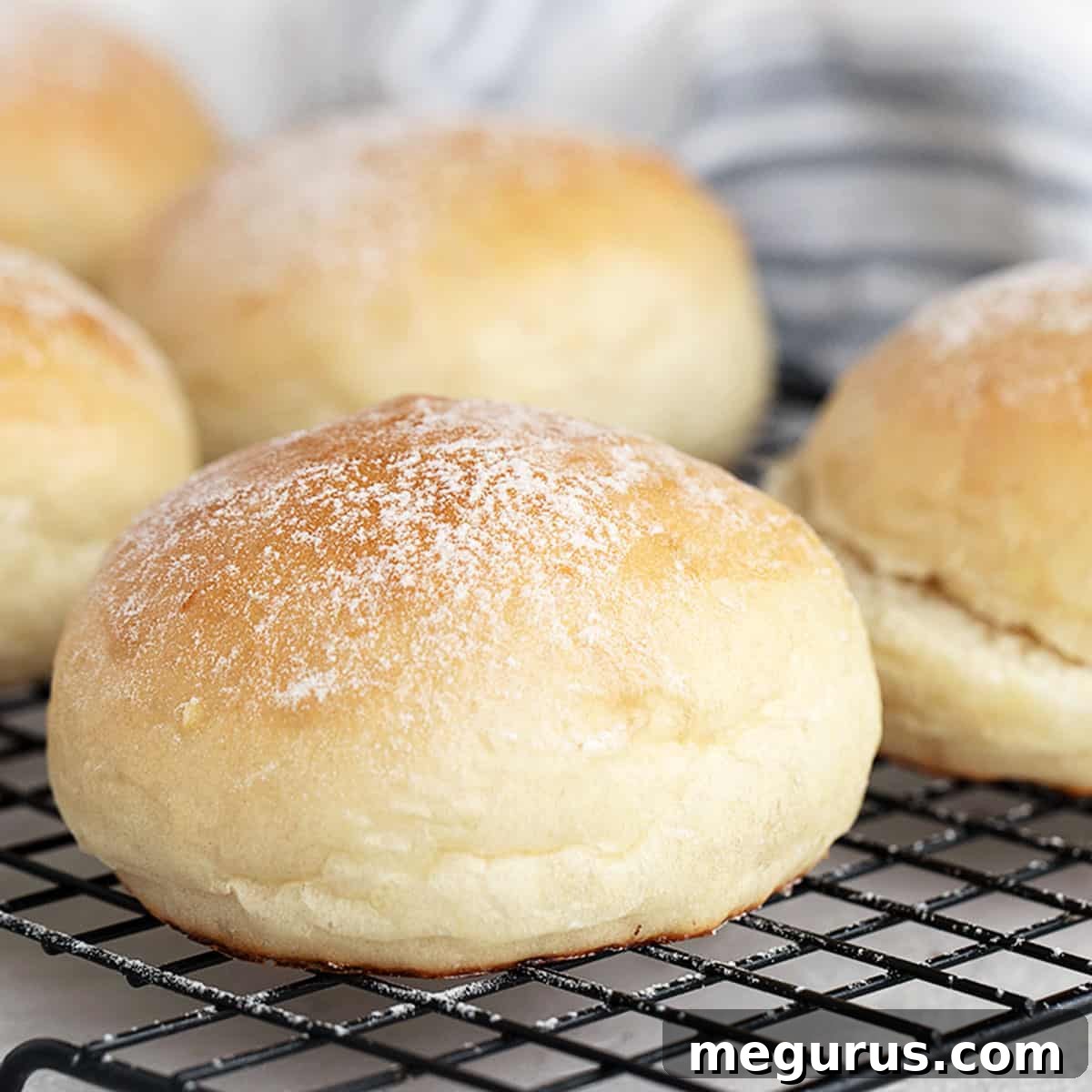
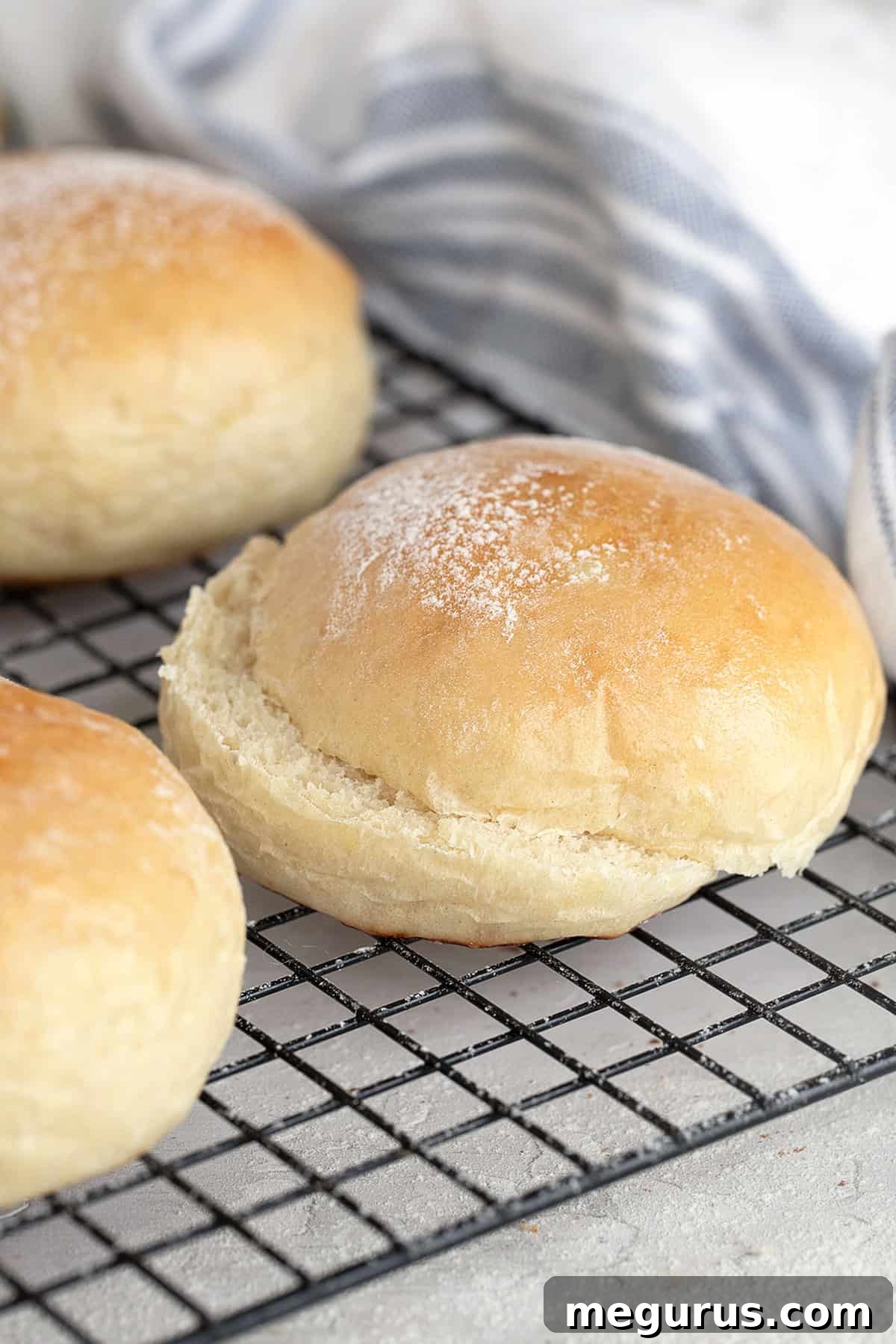
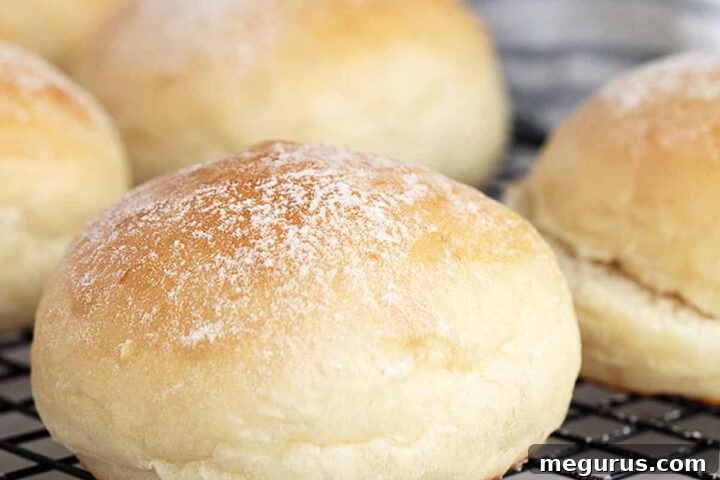
Unlock the secret to baking the most irresistibly soft and perfectly squishy potato hamburger buns you’ve ever tasted! This recipe harnesses the power of humble potatoes and their cooking water to create buns that are exceptionally light, airy, and moist, yet robust enough to hold your juiciest burger without crumbling. Forget store-bought buns; these homemade delights will elevate any burger or sandwich to gourmet status. Prepare to be amazed by the texture and flavor that only real potato can provide, making every bite a truly delightful experience. Whether you’re planning a backyard barbecue, a family dinner, or simply craving the ultimate sandwich experience, these potato buns are an absolute game-changer. They aren’t just for burgers; their versatile softness makes them ideal for any type of sandwich, from hearty deli creations to light and fresh vegetarian fillings. Get ready to bake buns that will impress everyone at your table!
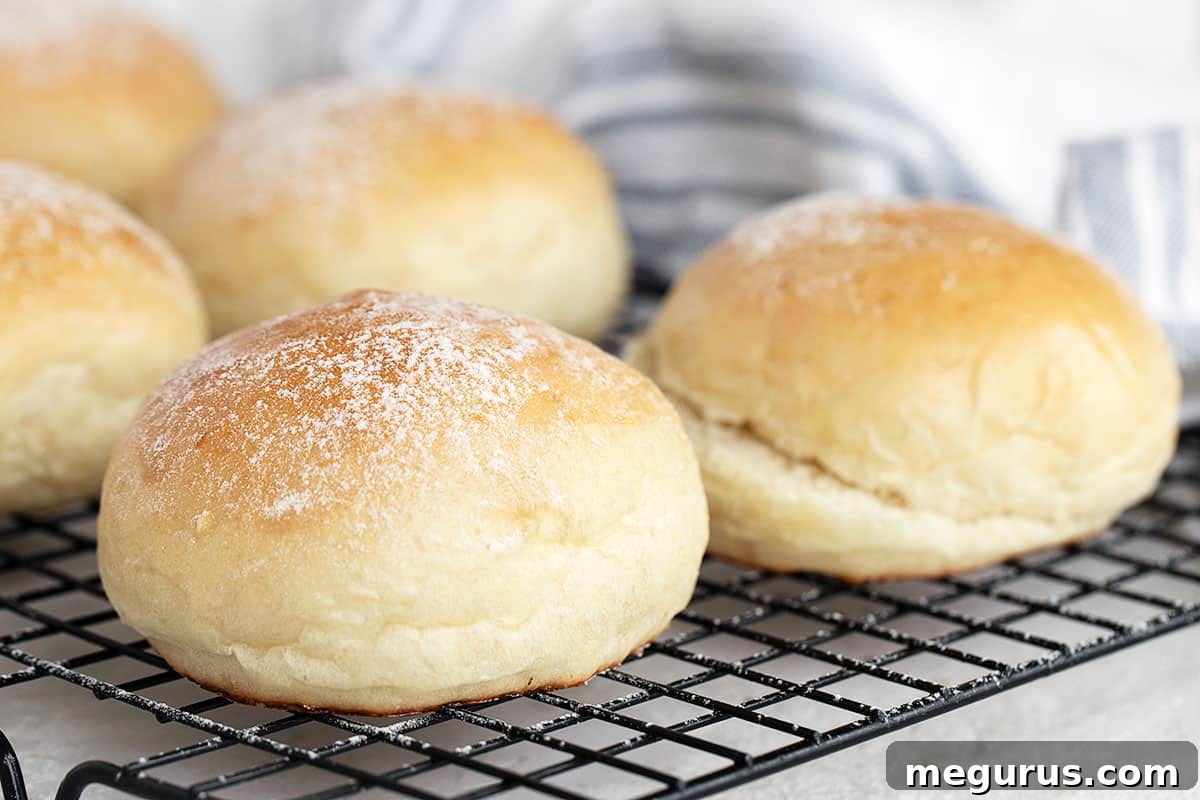
Why You’ll Fall in Love with This Potato Hamburger Bun Recipe
There’s a significant difference between a good burger and an unforgettable one, and often, that difference lies in the bun. This potato hamburger bun recipe delivers an unparalleled experience that will make you a loyal baker. Here’s why these buns are destined to become your new favorite:
- Unmatched Softness and Resilience: Many soft buns tend to disintegrate under the weight of a juicy burger and its toppings. Not these! Our potato hamburger buns are uniquely designed to be incredibly light as a feather and delightfully squishy, offering that perfect pillow-soft bite. Yet, they possess a hidden strength, maintaining their structure without becoming soggy or falling apart. This ideal balance means you can load up your burger with confidence, enjoying every component without worry.
- The Magical Touch of Potato: The true secret behind their superior texture isn’t complicated; it’s the addition of a small amount of mashed potato and its starchy cooking water directly into the dough. Potatoes introduce a natural moisture and softness that’s hard to achieve with flour alone. The starch in potatoes helps create a finer, more tender crumb and extends the freshness of the buns, ensuring they stay soft longer. This simple ingredient transforms ordinary buns into extraordinary ones, giving them a subtle earthy flavor and an irresistible tenderness.
- Perfect for Any Occasion & Easy to Store: Whether you’re feeding a small family or a large gathering, this recipe is incredibly flexible. It can be effortlessly doubled or even tripled to produce enough buns for a crowd. What’s more, these versatile buns freeze beautifully, allowing you to bake ahead and always have a supply of fresh-tasting, homemade buns ready whenever the craving strikes. Just thaw and enjoy! Beyond hamburgers, their adaptable nature makes them splendid as dinner rolls, breakfast sandwiches, or even for hearty deli sandwiches.
Essential Ingredients and Thoughtful Substitutions
Crafting these exceptional potato buns requires just a few basic ingredients, each playing a crucial role in achieving that signature soft and squishy texture. Understanding these components will help you make the best buns every time.
- Potatoes: The star of the show! For the best results, you can use either baking potatoes (like Russet) known for their high starch content and fluffy texture when mashed, or white or yellow mashing potatoes (such as Yukon Gold) which offer a creamy texture. Both varieties have been successfully tested and yield fantastic, tender buns. The key is ensuring they are mashed very smoothly.
- Yeast: For optimal rising and dough development, we recommend using either Active Dry Yeast or standard Instant Yeast (such as SAF Brand yeast, a popular choice among bakers). These types of yeast provide a consistent and reliable rise, contributing to the airy structure of the buns. Quick or Rapid-Rise yeast is not recommended for this recipe as it can sometimes lead to a faster, less controlled rise, potentially affecting the final texture and flavor development.
- Potato Cooking Water: Do not underestimate this humble liquid! Reserving and using the hot water in which your potatoes were boiled is paramount. This starchy water adds an extra layer of moisture and a subtle potato flavor, enhancing the overall tenderness and keeping quality of the buns. It’s a simple trick that makes a significant difference.
- Oil: A neutral-tasting vegetable oil, such as canola oil, is ideal. It contributes to the dough’s softness and moistness without imparting any strong flavors that might compete with the subtle potato essence.
- Honey: A touch of runny honey provides a delicate sweetness and helps with browning, giving the buns a lovely golden crust. If you don’t have honey on hand, you can substitute it with 1½ tablespoons of white granulated sugar. Both options will feed the yeast and enhance flavor.
- All-Purpose Flour: Unbleached all-purpose flour is generally recommended for its consistent protein content, which is great for bread. While the recipe specifies an amount, always remember that flour absorption can vary, so have a little extra on hand, but be careful not to overdo it.
- Fine Table Salt: Salt is essential for flavor and also plays a role in controlling yeast activity and strengthening the gluten structure.
Step-by-Step Visual Guide: Crafting Your Perfect Potato Buns
Baking these fluffy potato hamburger buns is a rewarding process, and following these detailed steps, accompanied by a visual guide, will ensure your success. Let’s break down each stage to help you create bakery-quality buns in your own kitchen.
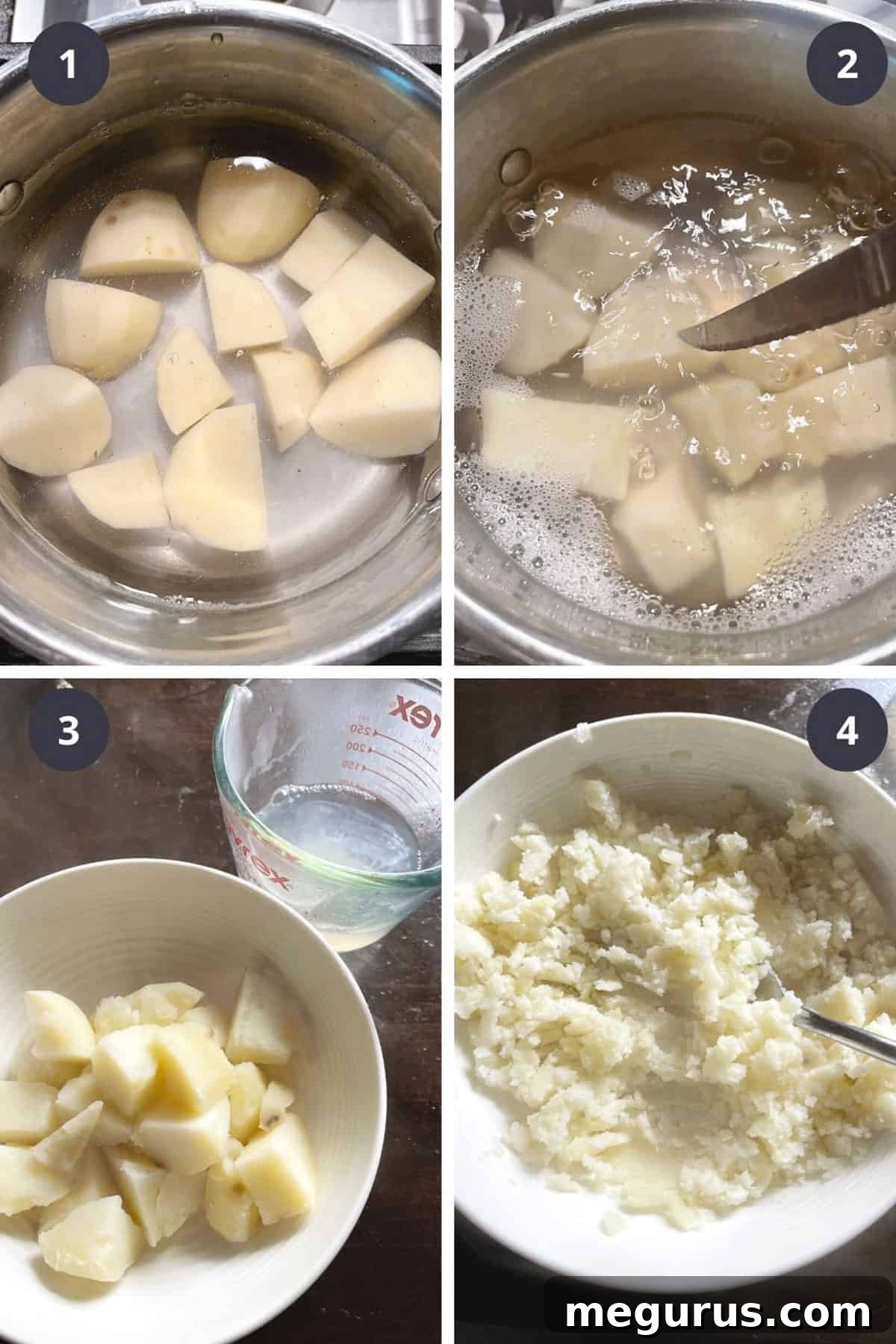
Phase 1: Preparing the Potato Base
- Prepare the Potatoes: Begin by peeling your chosen potatoes and cutting them into evenly sized pieces. This ensures they cook uniformly. Place the potato pieces into a pot, then cover them with at least an inch of cold water.
- Cook Until Tender: Bring the pot to a boil over high heat. Once boiling, reduce the heat slightly to maintain a gentle simmer and continue cooking until the potatoes are very tender. You can easily test their doneness by piercing them with a knife – it should slide in without resistance.
- Reserve the Cooking Water: This step is crucial! Place a strainer over a medium bowl. Carefully pour the cooked potatoes and their water into the strainer, allowing the starchy potato cooking water to collect in the bowl below. Transfer the strained potatoes to a separate bowl.
- Mash Thoroughly: Using a fork, mash the potatoes really well until they are completely smooth and free of lumps. For an even smoother consistency, a potato ricer or food mill works wonderfully if you have one. Measure out the exact amount of potato cooking water required by the recipe and set it aside; this will be incorporated into the dough later.
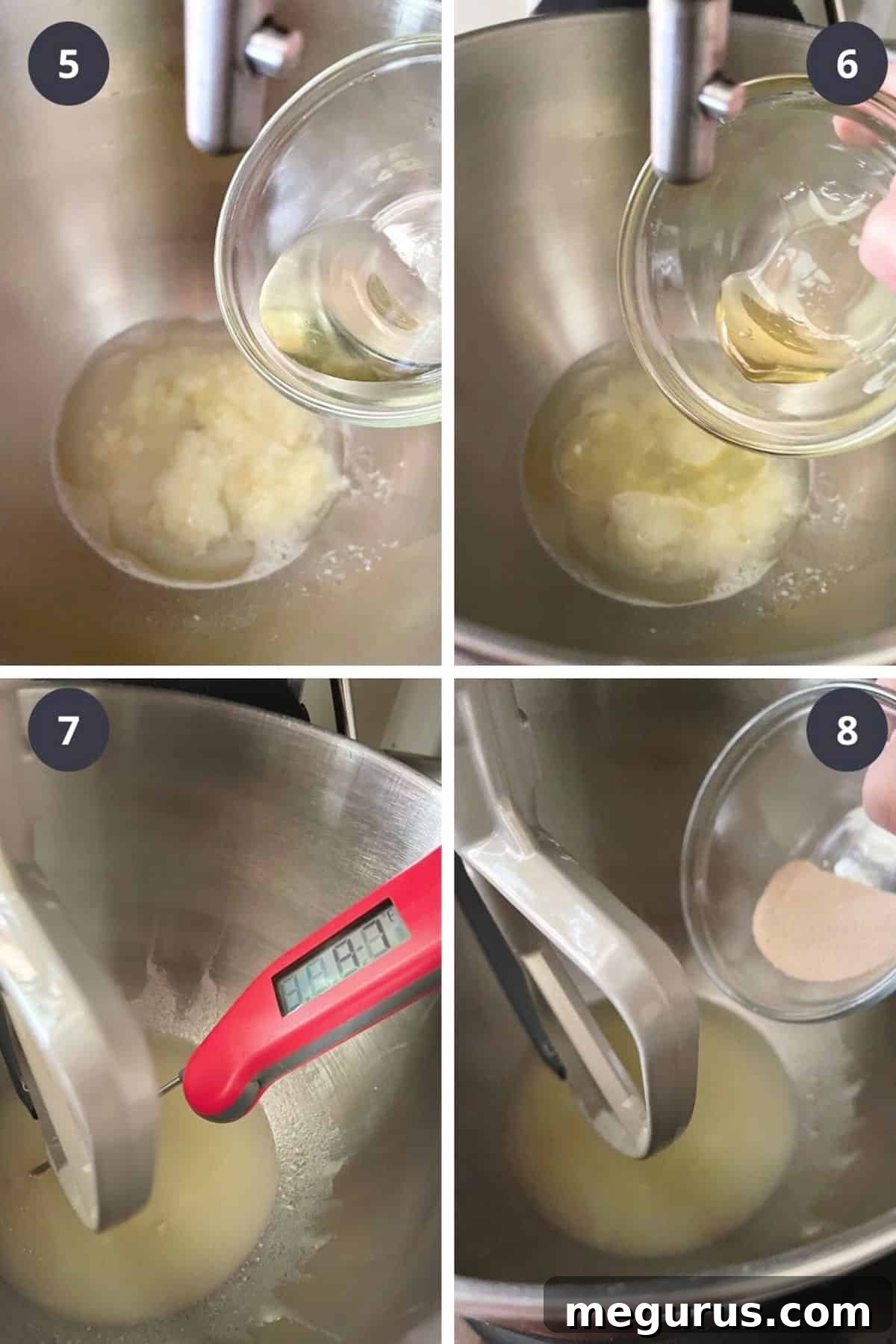
Phase 2: Mixing the Dough – The Wet Ingredients
- Combine Wet Ingredients: In a large mixing bowl, or the bowl of a stand mixer fitted with the paddle attachment, add the smoothly mashed potatoes. If there are any stubborn lumps, briefly run the mixer on low speed with the paddle attachment to achieve a smoother consistency. Then, add the reserved potato cooking water, the vegetable or canola oil, and the runny honey to the bowl.
- Mix and Cool: Stir these ingredients together with the paddle attachment until they are well combined and smooth. It’s essential to allow this mixture to cool down to at least 105°F (40°C) before adding the yeast. Use a thermometer to verify the temperature; a mixture that is too hot will kill the yeast, preventing your buns from rising.
- Activate the Yeast: Once the potato mixture has cooled to the correct temperature, sprinkle the instant or active dry yeast over the liquid. If using Active Dry Yeast, allow it to sit in the liquid for about 5 minutes to fully hydrate and activate before proceeding. This step ensures the yeast is vibrant and ready to work its magic.
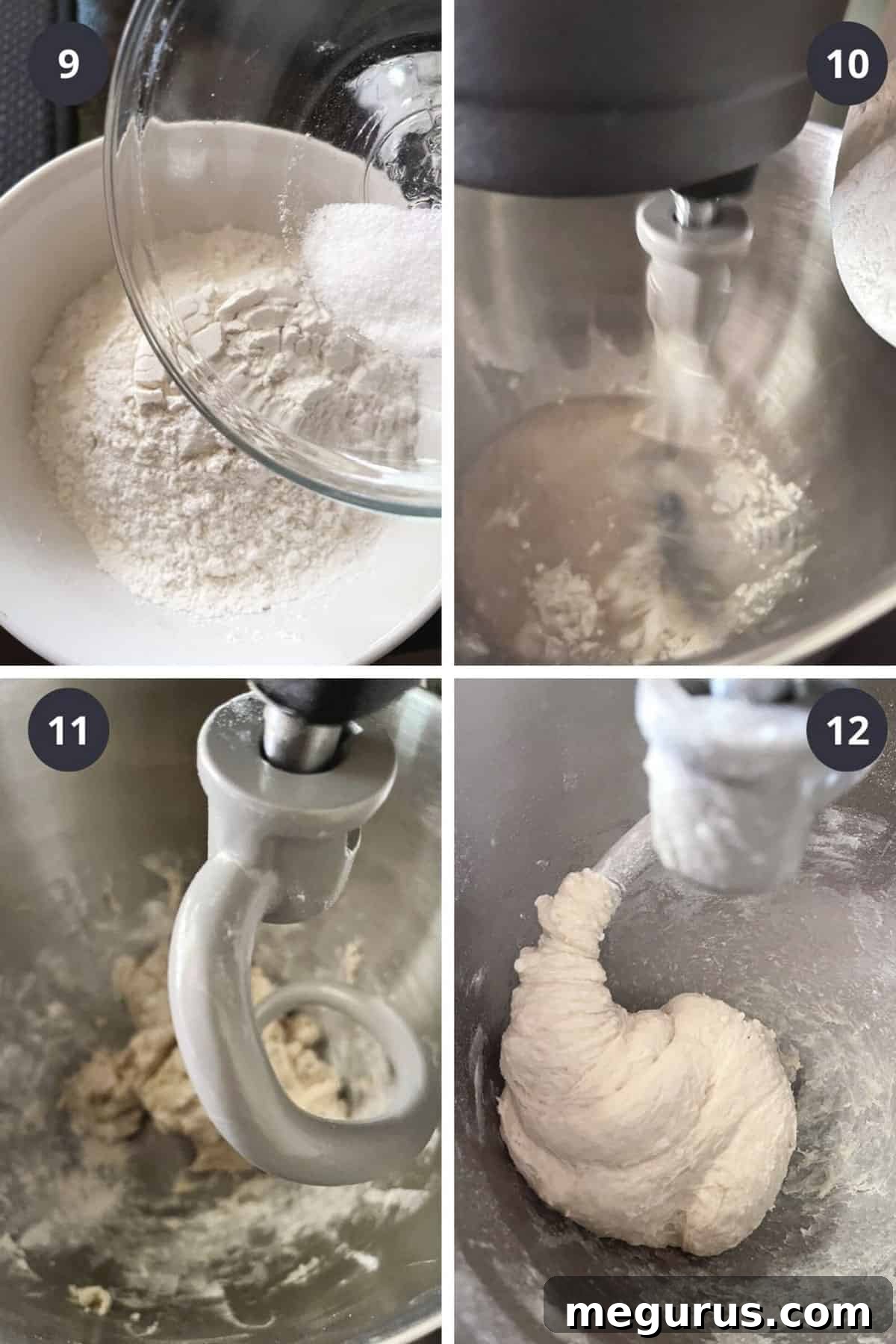
Phase 3: Incorporating Flour and Kneading
- Prepare Dry Ingredients: Measure out the all-purpose flour accurately and stir in the fine table salt. This ensures the salt is evenly distributed throughout the dough.
- Initial Flour Addition: Add approximately half of the flour mixture to the wet potato-yeast mixture in the bowl. Mix this in thoroughly using the paddle attachment until just combined.
- Switch and Knead: Switch from the paddle attachment to the dough hook attachment on your stand mixer. Add the remaining flour mixture. Knead the dough on medium-low speed until it comes together, wraps around the hook, and begins to clear the sides of the bowl. The dough should be quite moist and slightly sticky to the touch, but it shouldn’t be excessively wet or cling stubbornly to the bowl. Avoid adding too much flour at this stage, as it can result in dry, dense buns. You want to maintain a high moisture content for that ultimate squishy texture.
- Final Hand Knead (Optional, but Recommended): Remove the dough to a lightly floured work surface. Knead it by hand for about a minute. Add only a minimal amount of additional flour if the dough is sticking significantly to your hands or the work surface. The goal is to keep the dough as moist as possible while still being manageable. This brief hand knead helps develop gluten and creates a smoother, more elastic dough.
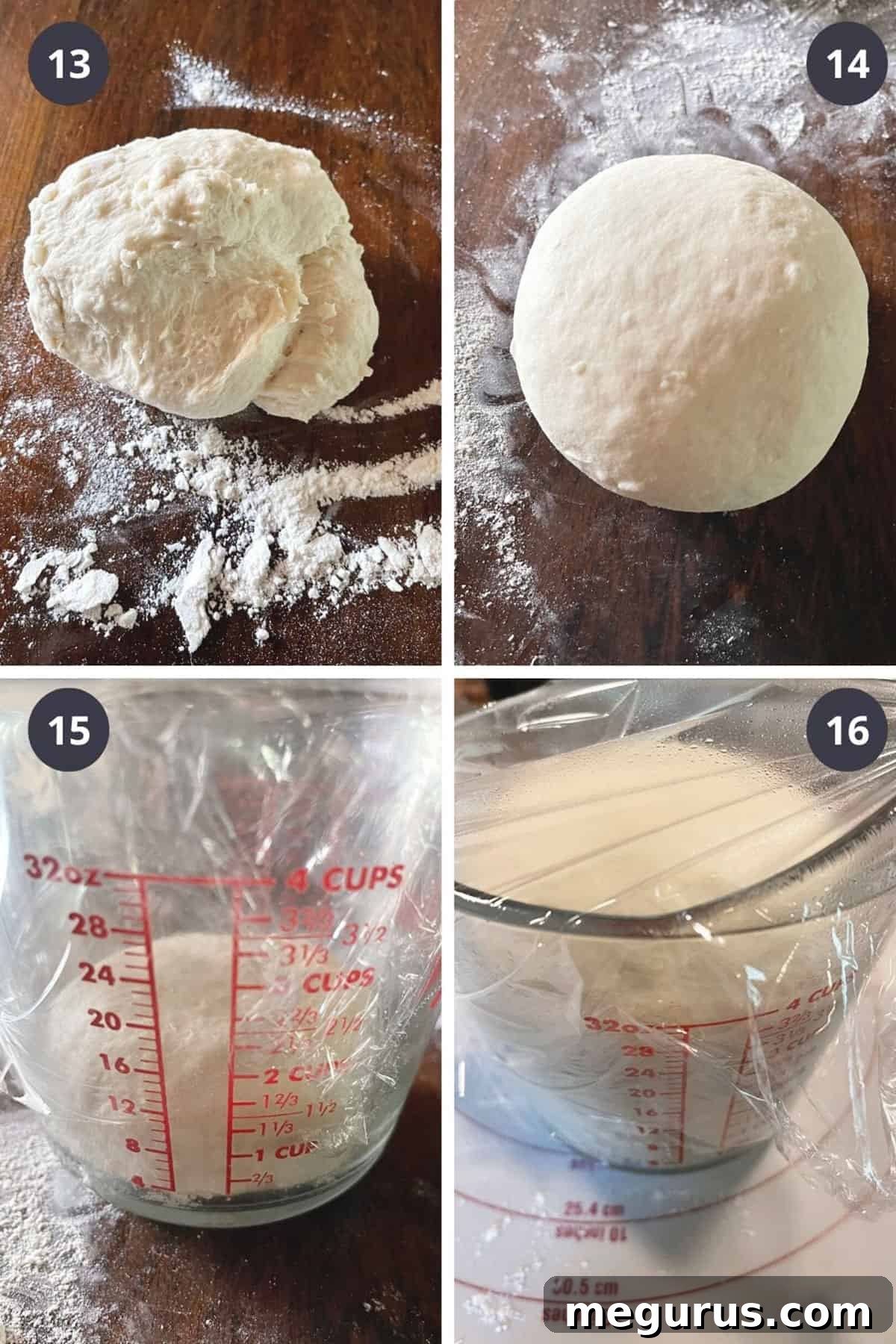
Phase 4: First Rise and Shaping
- Form and Rise: Gently form the kneaded dough into a smooth ball. Place it into a lightly greased bowl or container, turning it once to coat all sides with oil. Cover the bowl tightly with plastic wrap or a clean kitchen towel. Allow the dough to rise in a warm, draft-free place until it has visibly doubled in size. This typically takes about 45-60 minutes, depending on the warmth of your environment.
- Preheat Oven: While your dough is undergoing its first rise, preheat your oven to 350°F (175°C). Make sure it’s set to regular bake, not fan-assisted, for even heating.
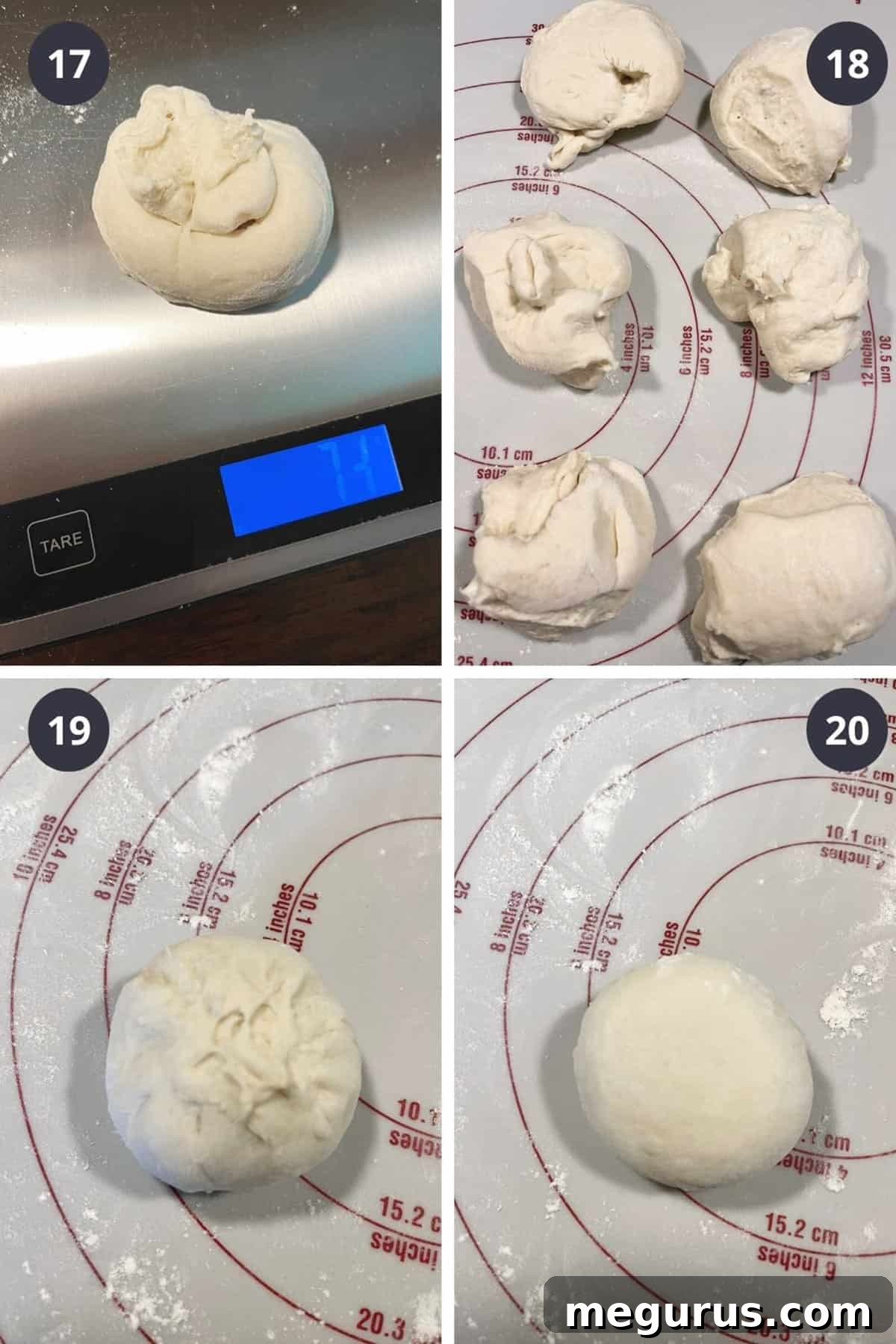
Phase 5: Dividing and Shaping the Buns
- Deflate and Weigh: Once the dough has doubled, gently remove it to a lightly floured work surface and gently deflate it by pressing out the air. For uniform buns, it’s highly recommended to weigh the entire dough ball, then divide that total weight by the number of buns you intend to make (6 for the 1X recipe). This ensures all your buns are the same size and will bake evenly. For instance, if your dough weighs 438g, each of your 6 buns would be approximately 73g.
- Weigh and Set Aside: Weigh out each individual dough portion and set them aside.
- Shape into Balls: To form each piece into a perfectly round bun: Take a piece of dough and, using both hands, gently stretch the top surface of the dough, tucking the edges underneath. Continue this motion, rotating the dough and pinching the bottom seam together firmly. This creates tension on the top, resulting in a smooth, taut surface. Flip the dough ball over so the smooth side is facing up. Repeat this process for all the dough pieces.
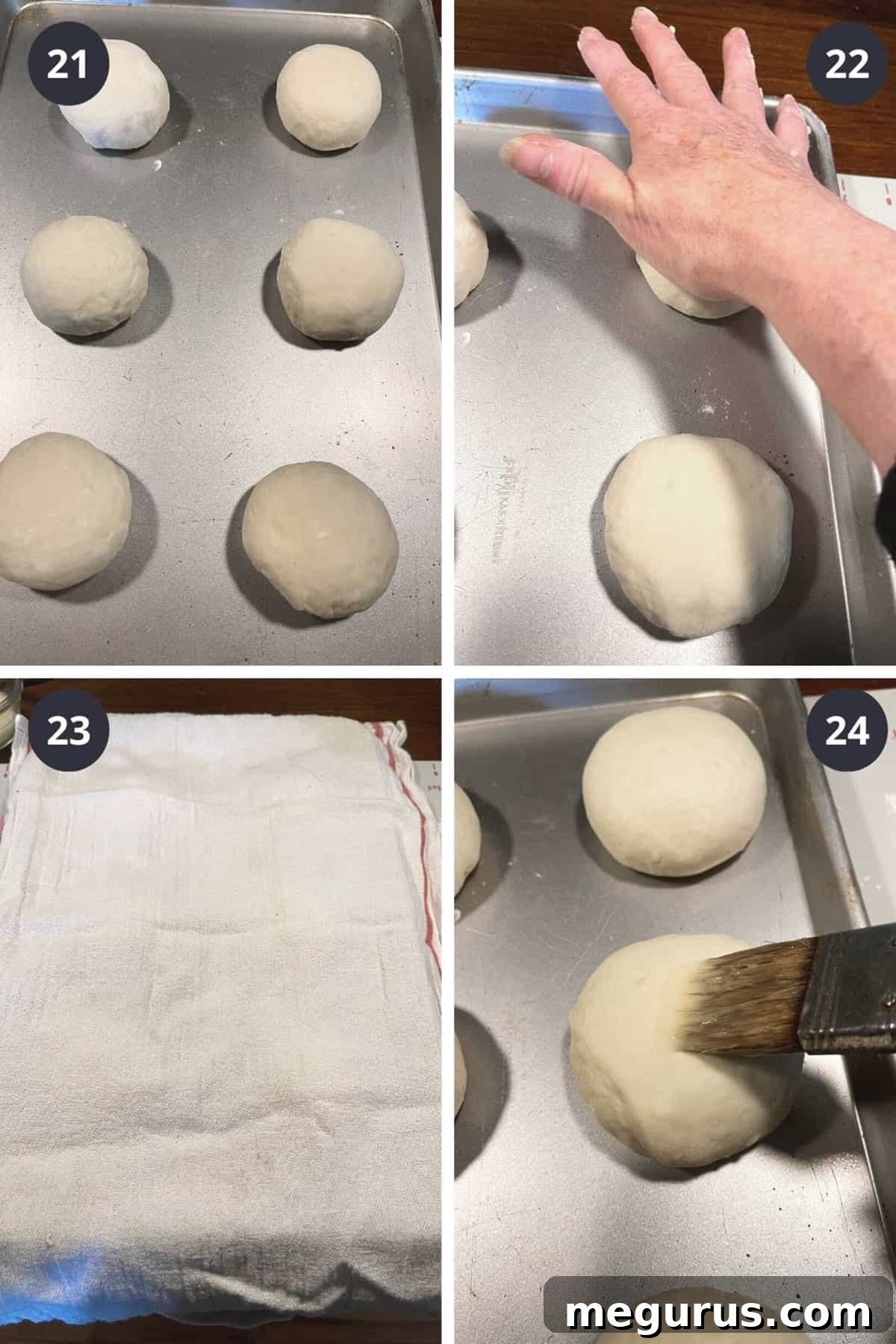
Phase 6: Second Rise, Egg Wash, and Baking
- Arrange on Baking Sheet: Place the shaped dough balls onto a baking sheet lined with parchment paper, ensuring ample space (about 3 inches) between each bun to allow for their final rise.
- Gentle Flattening: Use the palm of your hand to gently flatten each dough ball slightly. This encourages a classic hamburger bun shape rather than a tall, round roll.
- Second Rise: Cover the baking sheet with a clean tea towel and allow the buns to rise again until they have doubled in size and appear visibly puffy. This second rise typically takes about 30 minutes.
- Apply Egg Wash: Just before baking, prepare an egg wash by whisking together one large egg and one teaspoon of water. Gently brush this mixture over the entire surface of each bun, making sure to cover them completely and thoroughly, all the way down to the bottom edges. This egg wash will give your buns a beautiful, slightly shiny, golden-brown crust. If you prefer a lighter, less shiny bun, you can dust them lightly with flour instead. Some bakers even like to apply the egg wash then dust with flour after baking for a subtle contrast.
- Bake to Perfection: Place the baking sheet into the preheated oven and bake for 20-23 minutes. Midway through baking (around the 10-12 minute mark), rotate the pan 180 degrees to ensure even baking and coloring. Bake until the tops are lightly golden and the sides are just beginning to color. Avoid over-baking, as this can dry out the buns.
- Cool Completely: Once baked, remove the buns from the oven and let them cool in the pan for about 5 minutes. Then, transfer them to a wire cooling rack to cool down completely. This prevents the bottoms from becoming soggy and allows the internal structure to set properly.
- Storage: If you’re not enjoying them immediately, store the cooled buns in an airtight container at room temperature for up to 2-3 days, or freeze them for longer storage.
Frequently Asked Questions (FAQ)
Here are some common questions about making these soft and squishy potato hamburger buns, along with helpful answers to guide your baking journey:
Can I use leftover mashed potatoes?
Yes, you certainly can! Using leftover mashed potatoes is a clever way to repurpose them. However, remember that leftover mashed potatoes are likely already seasoned with salt, butter, milk, or other ingredients. If your mashed potatoes are seasoned, be sure to significantly reduce the amount of added salt in the bun recipe to avoid over-salting. You might also need to adjust the moisture slightly if your mashed potatoes are particularly wet or dry.
Can I use instant mashed potatoes?
While instant mashed potatoes can be used in a pinch, they might not yield the exact same texture as freshly boiled and mashed potatoes. The primary reason is that you won’t have access to the starchy potato boiling water, which is a key component for extra softness and moisture in this recipe. If you choose to use instant mashed potatoes, substitute the potato boiling water called for in the recipe with an equal amount of lukewarm plain water. Ensure the instant mashed potatoes are prepared according to package directions to a smooth consistency before incorporating them into the dough.
Can I double or triple the recipe?
Absolutely! This recipe is incredibly forgiving and scales up beautifully. Whether you’re planning a large gathering or simply want to stock your freezer, feel free to double or triple the ingredients. When scaling the recipe, ensure you have a large enough mixing bowl if using a stand mixer, or be prepared to knead by hand in batches if necessary. The cooking times may remain similar, but always keep an eye on your buns as ovens can vary.
How should I store these buns? Can I freeze them?
You can, and you absolutely should! These potato buns freeze exceptionally well, making them perfect for meal prep or having fresh buns on demand. Once the buns have cooled completely, place them in a freezer-safe airtight bag or container. They can be stored in the freezer for up to 2-3 months without losing their quality. To thaw, simply remove the desired number of buns from the freezer and let them sit on the kitchen counter at room temperature for 15-20 minutes, or until fully thawed. For an extra touch of warmth and freshness, you can briefly warm them in a preheated oven (around 300°F/150°C) for a few minutes before serving.
Get the Recipe: Soft and Squishy Potato Hamburger Buns
Pin This
Leave a Review
20 minutes
20 minutes
1 hour 30 minutes
2 hours 10 minutes
6 buns
Ingredients
Dough:
- 1/2 cup (85 g) mashed potatoes, from 1 large baking potato or two small mashing potatoes, such as Russet or Yukon Gold
- 1/2 cup (125 ml) hot potato cooking water
- 2 Tablespoon vegetable or canola oil, or other neutral-tasting cooking oil
- 1 Tablespoon runny honey, lightly flavoured or *see Note 1 below
- 2 1/4 teaspoon instant or dry active yeast
- 1 teaspoon fine table salt
- 1 1/2 cups (200 g) all purpose flour, unbleached recommended, plus more as needed
Optional Egg Wash:
- 1 large egg
- 1 teaspoon water
Instructions
Prepare the mashed potatoes:
- Cut the potatoes in evenly sized pieces and place in a medium-large saucepan. Cover potatoes with at least an inch of cold water. Bring to a boil over high heat, then lower heat slightly and continue cooking until potatoes are tender. DO NOT DRAIN YET! Place a strainer over a medium bowl and pour potatoes and water over, reserving the potato water in the bowl and the potatoes in the strainer. Remove strained potatoes to a bowl and mash really well with a fork (or run through a potato ricer, if you have one). Measure out the required amount of potato cooking water and set aside.
Prepare the bread:
- In a large bowl or the bowl of a stand mixer fitted with the paddle attachment, add the measured mashed potatoes. *Tip! If your potatoes are a little lumpy still, run the mixer on low with the paddle attachment to smooth them a little more before proceeding. Add the potato cooking water, oil and honey to the bowl and mix in. Allow mixture to cool to at least 105F. Check with a thermometer to be sure. If the mixture is too hot, it may kill the yeast.
- When potato mixture has cooled as required, add the yeast and mix in. *Tip! If using Active Dry Yeast, allow the yeast to stand in the liquid 5 minutes before proceeding. Measure out the flour and stir in the salt. Add 1/2 of the flour mixture to the bowl and mix in with the paddle attachment. Switch to the kneading hook and mix in the remaining flour mixture until you have a moist dough ball, not sticky to touch, but almost. You may need to add a bit more flour than specified, but be careful you don’t add too much. You want to stop when the dough clears the bowl and wraps the kneading hook, but is still very moist.
- Remove dough to a floured work surface and knead a minute or so, adding a bit more flour if necessary, only if the dough is sticking to your hands or the work surface. Don’t add too much! Keep the dough as moist as possible.
- Place dough into a greased bowl, cover with plastic wrap and allow to rise until doubled, about 45-60 minutes.
- Preheat oven to 350F (regular bake/not fan-assisted).
- Remove dough to a floured work surface and gently deflate. Divide dough into 6 equal pieces (*see Note 2 below). Form each piece into a ball (*see Note 3 below) and place onto a baking sheet, leaving about 3 inches between the dough balls.
- Cover the baking sheet with a clean tea towel and set aside to rise until doubled and puffy, about 30 minutes.
- Before baking, you can brush with egg wash (mix together egg and water and brush on top of buns). Be sure to cover the buns completely and thoroughly with the egg wash, all the way to the bottom, to ensure an even baked colour. The egg wash will produce a slightly shiny, golden colour. Alternatively, you can dust with flour instead. The buns will not be shiny and will be lighter in colour after baking. I like to use the egg wash then sometimes I will dust lightly with flour after baking.
- Bake the buns for 20-23 minutes, rotating the pan halfway through baking. Bake until just lightly golden on top and not yet browning on the sides. Cool rolls in the pan for 5 minutes, then remove to a cooling rack to cool completely. If not enjoying immediately, store in an airtight container or freeze for longer storage.
Notes
2. I like to weigh the entire dough ball, then divide that weight by 6, to figure out what the weight for each bun should be. That way all the rolls will be the same size and cook at the same rate, as well. My dough balls were about 73g each.
3. To form the dough into balls, take the piece of the dough and using both hands, stretch dough out from the 3 and 9 o’clock position to smooth, then flip over and pinch together well, creating tension on the smooth side of the dough. Flip back over with the smooth side up.
American, Canadian
Bread
Jennifer Maloney
Calories: 169kcal,
Carbohydrates: 33g,
Protein: 7g,
Fat: 1g,
Saturated Fat: 0.4g,
Polyunsaturated Fat: 0.3g,
Monounsaturated Fat: 1g,
Trans Fat: 0.003g,
Cholesterol: 31mg,
Sodium: 408mg,
Potassium: 145mg,
Fiber: 2g,
Sugar: 3g,
Vitamin A: 46IU,
Vitamin C: 4mg,
Calcium: 13mg,
Iron: 2mg
Tried this recipe?
If you enjoyed this recipe, please leave a star rating and comment. It helps others to find it!
More Delicious Bun Recipes to Love!
Once you’ve mastered these incredible potato hamburger buns, you might be inspired to explore more homemade bread options. Expand your baking repertoire with these other fantastic bun recipes, perfect for various meals and occasions: