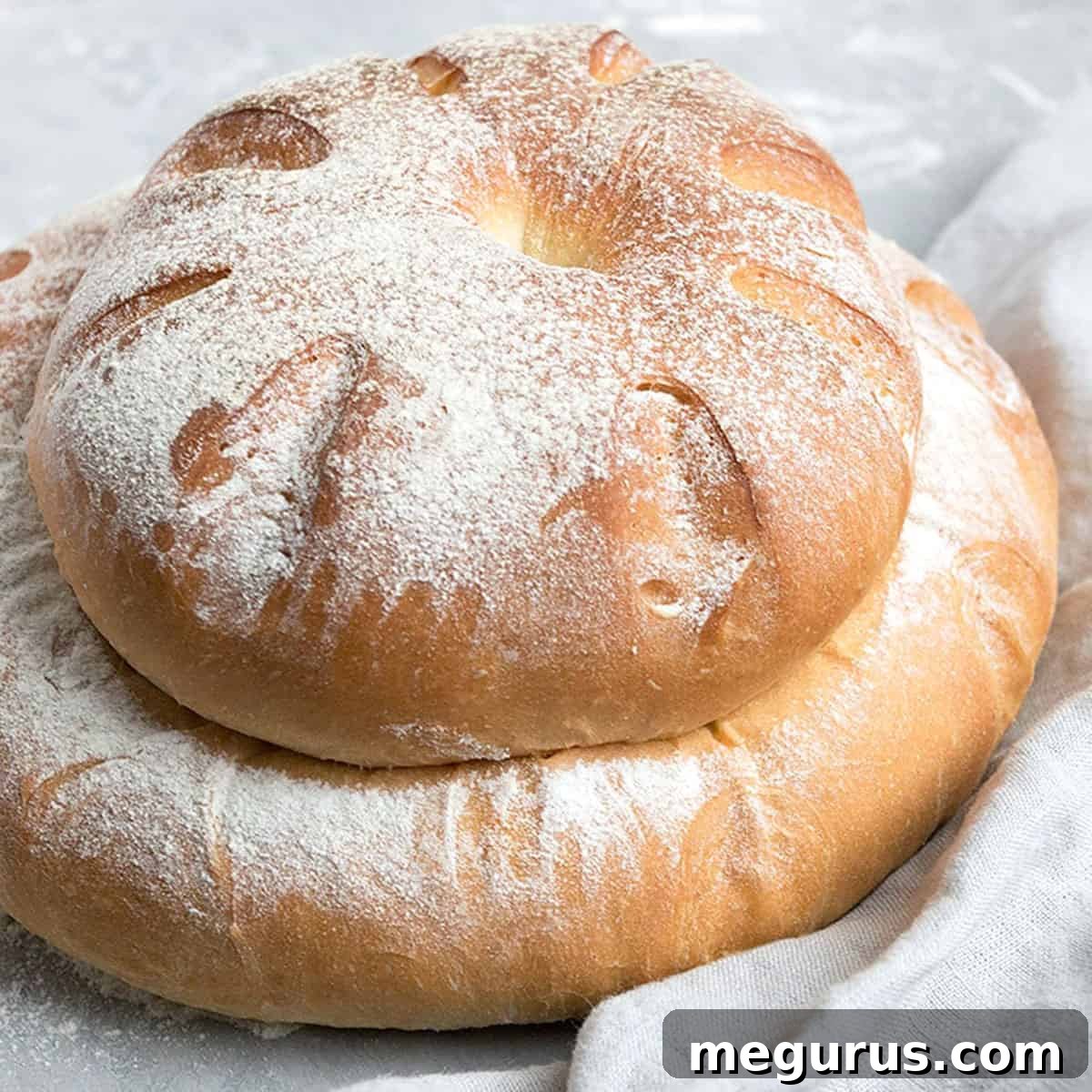
Discover the art of traditional British baking with this classic crusty cottage loaf. This delicious white bread boasts a truly unique free-form shape, making it as much a treat for the eyes as it is for the palate.
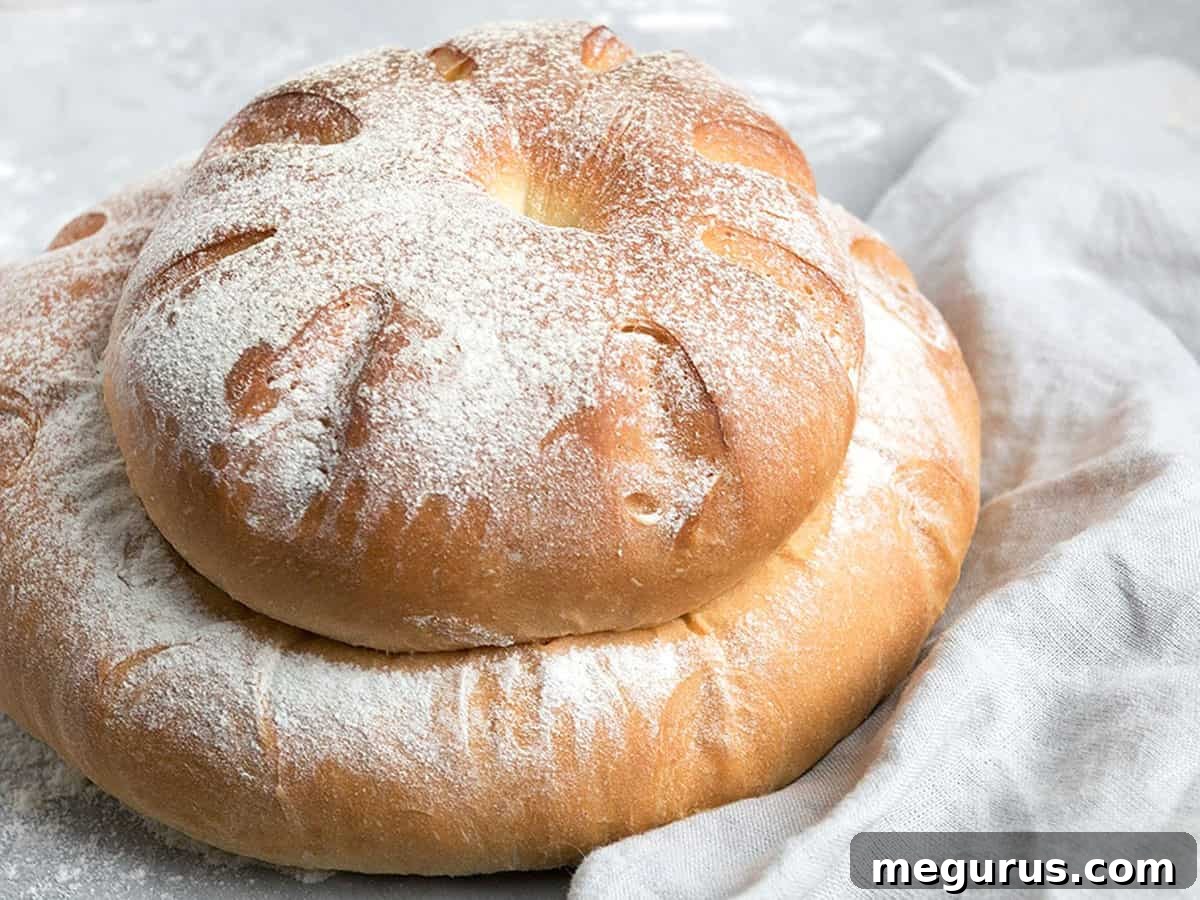
Embracing the Bake-Off Spirit: My Journey to the British Cottage Loaf
One of my absolute favorite traditions during the festive holiday season is indulging in those wonderfully lazy days, perfect for binge-watching beloved shows with the family. This past year, my household immersed itself for a glorious few days in the charming world of The Great British Bake Off. As an avid home baker, I quickly realized that while I enjoy my time in the kitchen, the incredible talent showcased on that show operates on an entirely different level! My patience and skill, I admit, aren’t quite up to par for some of their more intricate challenges.
However, amidst the dazzling showstoppers and technical challenges, a few simpler bakes genuinely captured my imagination. They seemed like the perfect at-home baking adventures to embark upon. One such bake, which I’d never encountered before, was the British Cottage Loaf. It presented itself as a fundamental white bread recipe, distinguished primarily by its fascinating, two-tiered form. I immediately thought, “This looks like something I could tackle!” I mentally bookmarked the idea, anticipating a quiet, snowy day – the ideal backdrop for a cozy baking project.
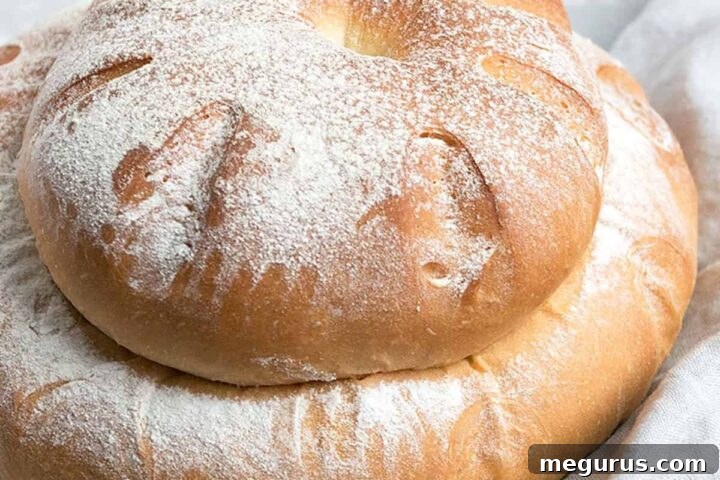
That serene, snow-kissed day finally arrived, bringing with it the perfect opportunity to bring this unique bread to life. And here it is – my very first British Cottage Loaf! Let me tell you, the result was nothing short of delicious, a wonderfully fragrant and crusty loaf. What surprised me most was that despite its distinctive appearance, it required only a fraction more effort than baking a standard pan loaf. While I did encounter a minor setback with my oven (a story I’ll share in the Recipe Tips section!), preventing me from achieving absolute perfection on this initial attempt, I am already looking forward to baking it again. Each bite was a testament to the joy of homemade bread, a simple pleasure that never fails to impress.
What Makes the British Cottage Loaf So Special?
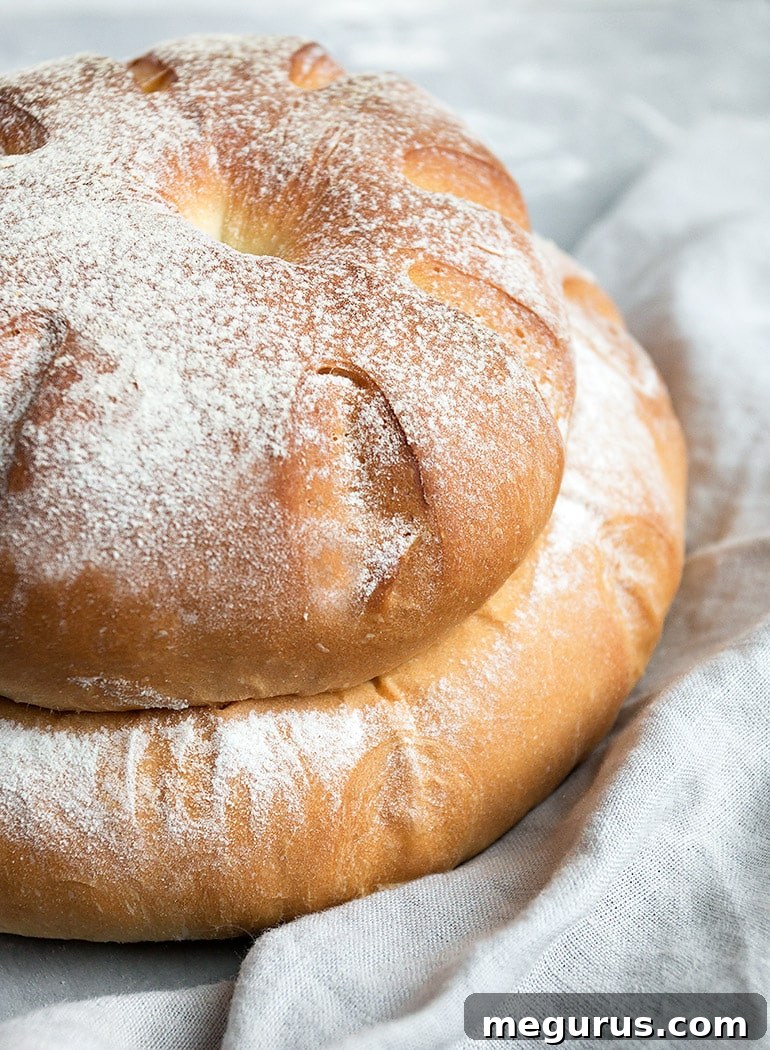
The British Cottage Loaf is a true testament to traditional British baking, characterized by its iconic shape: two round loaves, one smaller than the other, stacked and fused together before baking. This distinctive silhouette, reminiscent of a rustic cottage, gives the bread its charming name and instantly sets it apart from other loaves. Beyond its aesthetic appeal, this unique shaping technique contributes to a delightful texture, featuring a substantial crust and a soft, airy crumb within. It’s a free-form bread, meaning it’s baked directly on a tray without the support of a tin, which encourages a beautifully rustic, irregular finish. Historically, cottage loaves were a staple in British homes, offering a satisfying and versatile bread perfect for sandwiches, toast, or simply torn and enjoyed with butter. Its rich history and charming appearance make it a delightful challenge and a rewarding bake for any bread enthusiast.
Essential Ingredients for Your Perfect Cottage Loaf
Crafting a truly exceptional British Cottage Loaf begins with understanding the role each ingredient plays. While the list is simple, the quality and type of ingredients make a significant difference to the final texture and flavor of your bread.
- Flour: For the best possible texture and a robust, chewy crumb, this recipe specifies using bread flour or strong flour. These flours have a higher protein content than all-purpose flour, which is crucial for developing strong gluten networks. This gluten is what gives bread its elasticity and allows it to rise beautifully. In a pinch, all-purpose flour can be used, but be prepared to adjust the liquid slightly, as it may require less water to achieve the correct dough consistency. The resulting bread might also have a slightly softer texture and less pronounced chew.
- Yeast: Instant yeast (like SAF Brand) is recommended for its convenience. It can be mixed directly into the dry ingredients without prior proofing, saving time and simplifying the process. If you only have Active Dry yeast on hand, you’ll need to activate it first. This involves dissolving it in a portion of the lukewarm water with a pinch of sugar (not included in the original recipe but a good activation aid) and letting it sit for 5-10 minutes until it becomes foamy, indicating it’s active and ready to use.
- Fine Salt: Salt is more than just a seasoning; it’s vital for bread making. It enhances the flavor of the bread, strengthens the gluten structure, and controls the rate of yeast fermentation. Ensure you use fine salt to allow for even distribution throughout the dough.
- Butter or Lard: The original Paul Hollywood recipe calls for lard, a traditional fat in British baking known for imparting a delicate texture and rich flavor. However, I’ve found that softened butter works beautifully as a substitution, contributing tenderness and a lovely aroma to the loaf. Cut it into small pieces to help it incorporate more easily into the dough.
- Lukewarm Water: The temperature of your water is critical when working with yeast. Lukewarm water (ideally between 105-115°F or 40-46°C) is perfect for activating yeast without killing it. Using water that’s too hot will kill the yeast, while water that’s too cold will inhibit its activity, leading to a poor rise.
Expert Baking Tips for Your Cottage Loaf Success!
- Embrace the Original (with a Twist): This recipe is a fantastic adaptation of Paul Hollywood’s original Cottage Loaf from The Great British Bake Off. My only modification was substituting soft butter for the traditionally specified lard. Both options yield delicious results, so feel free to choose based on preference and availability.
- Learning from Oven Antics: In true Bake Off style, my first attempt wasn’t without its drama! While setting my oven timer for the initial 15-minute bake, I inadvertently turned off the oven. By the time I checked at the 15-minute mark, the temperature had plummeted to 312°F (155°C). I quickly reset it to 375°F (190°C) and continued baking. While the finished loaf was still tasty, I suspect this temperature hiccup compromised its optimal rise and crust development, likely extending the overall baking time. Don’t make my mistake – double-check your oven settings!
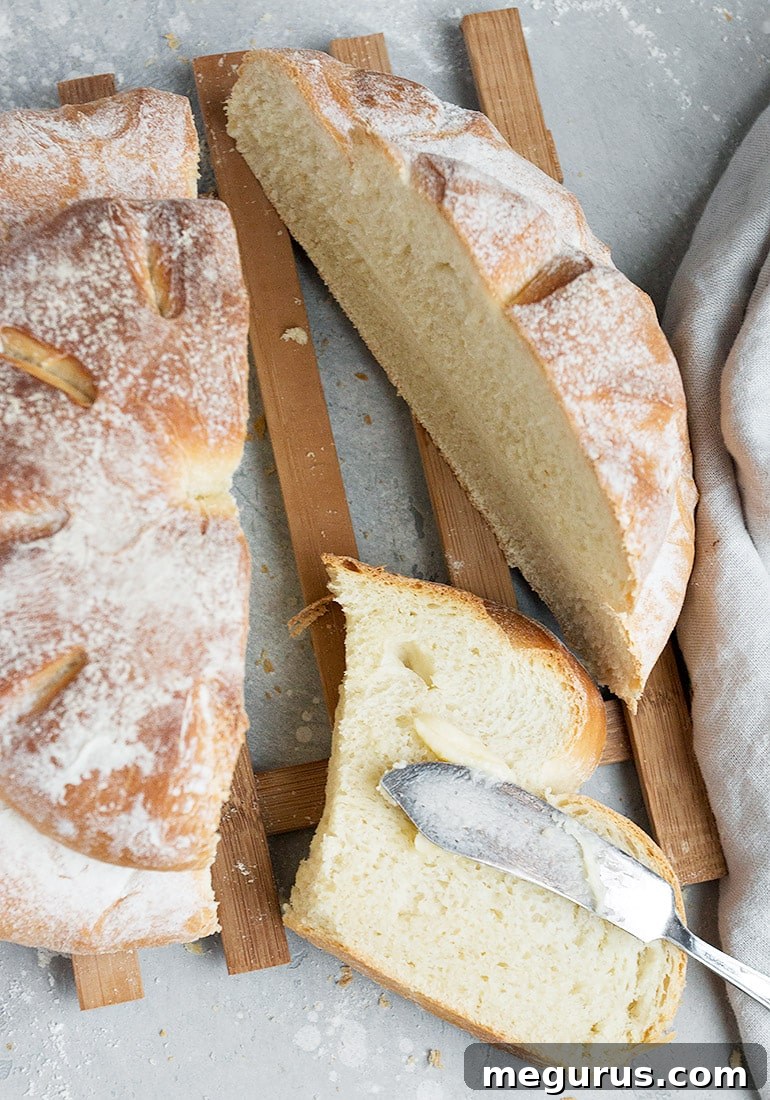
- The Thermometer Test is Key: An internal thermometer is your best friend for perfectly baked bread. On my first loaf, it registered around 201°F (94°C) when I removed it, which I thought was sufficient. However, after slicing, I realized it could have benefited from a few more minutes in the oven – a sentiment I’m sure Paul Hollywood would echo! For a truly done loaf with a firm crust and cooked-through interior, aim for an internal temperature between 208-210°F (98-99°C).
- Preventing Over-Browning: The distinctive top tier of the cottage loaf can sometimes brown faster than the rest of the bread. If you notice it getting too dark before the loaf is fully baked, simply drape a piece of aluminum foil loosely over the top for the final minutes of baking. This acts as a shield, allowing the loaf to cook through without scorching the beautiful golden crust.
- Patience is a Virtue – Especially with Proofing: Proper proofing is crucial for a light and airy loaf. My dough took a full hour for the first rise and another complete hour for the second rise. Remember, rise times are approximate and depend heavily on your room temperature and the activity of your yeast. Look for the visual cues: the dough should be doubled in size and springy when gently prodded. Don’t rush this step!
Storing and Freezing Your Homemade Cottage Loaf
To enjoy your British Cottage Loaf at its best, allow it to cool completely on a wire rack before storing. Once cooled, store the bread in an airtight container or a bread bin at room temperature for up to 2 days. For longer preservation, this delicious bread freezes beautifully. Wrap the cooled loaf tightly in plastic wrap, then in aluminum foil, and store in the freezer for up to 2 months. Thaw at room temperature and refresh in a warm oven for a few minutes to bring back its fresh-baked crustiness.
Get the Recipe: British Cottage Loaf
Pin This
Leave a Review
20 mins
40 mins
2 hrs
1 hr
Ingredients
- 4 cups (500 g) bread flour, plus extra for dusting
- 2 teaspoons (7 g) Instant yeast
- 1 1/4 teaspoon (7 g) fine salt
- 3 1/2 Tablespoons (50 g) butter, cut into small pieces and softened or lard
- 1 1/3 cups lukewarm water
Instructions
-
Important Note on Yeast: If you are using Active Dry yeast instead of Instant yeast, you must proof it first. Combine the yeast with a small portion of the lukewarm water (about 1/4 cup) and a pinch of sugar (optional, but aids activation). Let it sit for 5-10 minutes until it becomes foamy. Once proofed, proceed with the recipe, incorporating the proofed yeast mixture into the dough.
-
Begin by combining the dry ingredients. Add the bread flour into a large mixing bowl. Place the instant yeast on one side of the bowl and the fine salt on the opposite side; this separation helps prevent the salt from inhibiting the yeast initially. Add the softened butter pieces, then pour in about 1 cup of the lukewarm water. Using one hand, start mixing the ingredients together. Gradually add the remaining 1/3 cup of water, a little at a time, until all the flour is incorporated and you have a soft, pliable dough that is not sticky or soggy.
-
Transfer the dough onto a lightly floured work surface. Knead the dough vigorously for 5–10 minutes. The goal is to develop the gluten, transforming the dough from shaggy to smooth, elastic, and silky to the touch. This crucial step contributes to the bread’s structure and rise.
-
Lightly oil a clean bowl and place the kneaded dough inside. Cover the bowl with a clean tea towel or plastic wrap. Allow the dough to undergo its first rise (bulk fermentation) in a warm, draft-free place until it has visibly doubled in size. This process typically takes at least 1 hour but can extend to 2–3 hours, or even longer, depending on your room’s ambient temperature and the yeast activity.
-
Once doubled, gently remove the dough from the bowl onto a lightly floured surface. To “knock out” the air and redistribute the yeast, fold the dough inwards repeatedly. This step is essential for encouraging the loaf to rise upwards rather than spreading outwards, particularly vital for a free-standing loaf like the cottage loaf that doesn’t rely on a tin for support.
-
Now it’s time to shape the distinctive cottage loaf. First, tear off approximately one-third of the dough and set it aside for the top tier. Take the larger piece and flatten it into a rough rectangle. Roll it tightly into a thick oblong shape. Turn the dough so its longer edge faces away from you and gently flatten it again. Fold the two short ends towards the center and press them down firmly, creating a chunky, squarish base. Flip this larger piece over so the seam is underneath.
-
To create a beautifully taut, smooth surface on the larger base, cup your palms upwards and place your hands slightly under each side of the dough. Gently rotate the dough, tucking the sides neatly underneath itself as it turns. You’re essentially “stitching” the dough underneath, creating tension on top. Try to avoid using excessive flour during this shaping phase to maintain a good seal. Place this perfectly shaped large ball of dough onto a prepared baking tray lined with parchment paper.
-
Repeat the rolling and shaping process for the smaller piece of dough you set aside, forming it into a neat, smaller ball. Carefully place this smaller ball directly on top of the larger base. Gently flatten the top of the smaller ball slightly. Now, lightly dust your middle finger and forefinger with flour and push them firmly through the center of both loaves, all the way to the bottom of the tray. This creates the signature central hole. Finally, use a very sharp knife or baker’s lame to make 8 decorative slashes around the circumference of both the top and larger lower part of the loaf. These cuts allow for expansion during baking.
-
Carefully place the entire baking tray, with the shaped loaf, inside a large, clean plastic bag or cover it loosely with plastic wrap. Allow the loaf to undergo its second proofing (final rise) for approximately 1 hour, or until it looks well risen and springs back slowly when gently prodded. While the dough is proofing, preheat your oven to 415°F (215°C). Crucially, place a roasting tray or cast-iron pan in the bottom of the oven during preheating; this will be used to create steam.
-
Once the loaf is perfectly risen, carefully remove it from the plastic bag and lightly dust the surface with a touch more flour. Open the hot oven and, with extreme caution, pour about 1 cup of cold water into the preheated roasting tray at the bottom (this generates steam, crucial for a crusty exterior). Quickly place your bread into the oven. Bake for an initial 15 minutes at 415°F (215°C). After 15 minutes, reduce the oven temperature to 375°F (190°C) and continue baking for another 20–25 minutes, or until the loaf is deeply golden brown, crusty, and sounds hollow when tapped on the base. If it doesn’t sound hollow, return it to the oven for an additional 5 minutes.
-
As soon as the loaf is baked to perfection, transfer it immediately to a wire rack to cool completely. Cooling on a rack is important to prevent the bottom crust from becoming soggy. Slice and enjoy your magnificent homemade British Cottage Loaf!
Notes
Additional Tips & Insights:
While the original Paul Hollywood recipe calls for lard, I successfully substituted soft butter for a tender crumb and delightful flavor. Feel free to use either.
For an accurately baked loaf, I highly recommend using an instant-read thermometer. Aim for an internal temperature of 208-210°F (98-99°C) for ideal doneness. My first attempt registered 201°F (94°C) and could have used a few more minutes.
If the top of your loaf browns too quickly during baking, loosely tent it with aluminum foil for the final minutes to prevent over-browning while allowing the rest of the loaf to finish cooking.
Be mindful of your proofing times. Both the first and second rises took a full hour in my kitchen. Adjust times based on your ambient room temperature, aiming for the dough to double in size and be springy to the touch.
More Delicious Bread Recipes to Explore!
If you’ve enjoyed the rewarding experience of baking this British Cottage Loaf, you’re in for a treat with these other delightful bread recipes. Expanding your baking repertoire is a joy, and these options offer unique flavors and textures perfect for any occasion. From simple everyday loaves to special weekend projects, there’s always a new bread adventure waiting!