
Discover the exquisite delight of homemade Pear and Walnut Focaccia, a perfect blend of subtle sweetness, earthy walnuts, and aromatic thyme baked into a golden, pillowy bread. This sophisticated focaccia is an ideal companion for a relaxed evening of wine and cheese, elevated with a drizzle of golden honey and the creamy tang of gorgonzola. It’s more than just bread; it’s an experience designed to tantalize your taste buds and impress your guests, offering a unique twist on a beloved Italian classic.
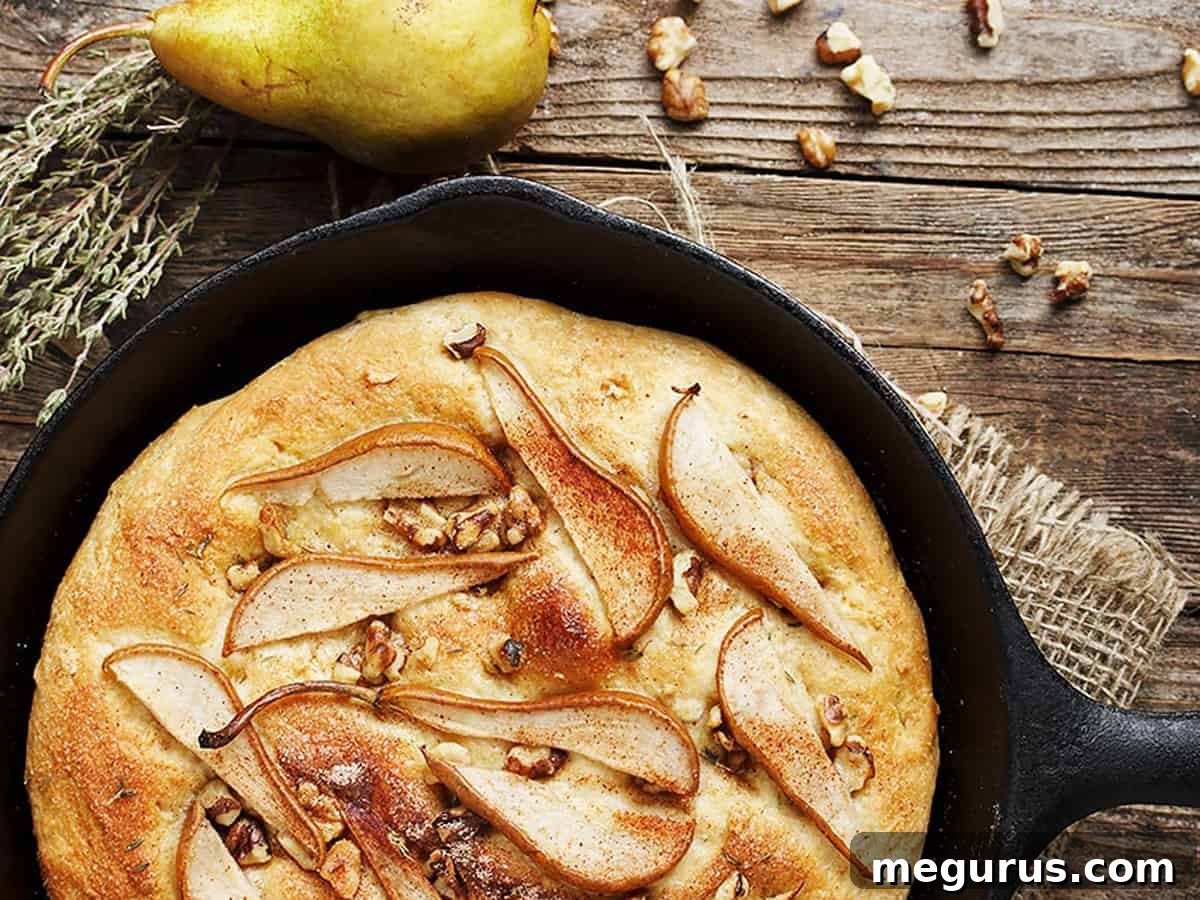
Our Pear Focaccia strikes a delicate balance between sweet and savory. It’s kissed with just enough sweetness to highlight the natural succulence of ripe pears without venturing into dessert territory. Each tender bite is further enhanced by the nutty crunch of walnuts and the subtle, peppery notes of fresh thyme, creating a harmonious flavor profile that is both comforting and elegantly surprising. This isn’t your average focaccia; it’s a testament to how simple ingredients can create something truly extraordinary.
The beauty of this recipe lies in its versatility and approachable nature. Whether you’re an experienced baker or new to the world of artisan breads, you’ll find joy in crafting this beautiful focaccia. It serves wonderfully as an appetizer, a side dish, or even a light lunch when paired thoughtfully. Get ready to transform your kitchen into an Italian bakery and fill your home with the irresistible aroma of freshly baked bread.
Essential Ingredients and Smart Substitutions for Perfect Focaccia
Crafting the perfect pear and walnut focaccia begins with selecting the right ingredients and understanding how to make clever substitutions when needed. Each component plays a vital role in achieving that desirable soft, airy interior and delightfully crisp crust.
Pears: The Star of the Show – While you can use virtually any pear variety, for the best results, aim for pears that are ripe but still quite firm. Varieties like Bosc, Anjou, or Bartlett work wonderfully. A firm pear is easier to slice neatly and will hold its shape better during baking, preventing it from becoming mushy. If your pears are overly soft, they might release too much moisture, impacting the focaccia’s texture. Peeling the pears is recommended for a smoother texture, but leaving the skin on adds a rustic charm and extra fiber if you prefer.
Cornmeal: The Secret to Texture – The addition of fine cornmeal to the dough is a fantastic trick for imparting a unique, slightly grainy texture and a subtle, sweet flavor. It contributes to a more substantial and satisfying bite, distinguishing this focaccia from plain versions. If you don’t have cornmeal on hand, you can omit it. However, be prepared to adjust your flour measurements, likely needing to add a bit more all-purpose flour to achieve the correct dough consistency. Alternatively, a small amount of semolina flour could offer a similar textural benefit.
Molasses: For Depth and Color – Molasses adds a rich, nuanced sweetness and beautiful golden-brown color to the focaccia. We highly recommend using “Fancy” or “Cooking” molasses, which are lighter in flavor and sweetness. Avoid Blackstrap molasses for this recipe, as its intense, bitter notes are far too strong and would overpower the delicate flavors of pear and thyme. If molasses is unavailable, you can substitute it with an equal amount of dark brown sugar, or a mix of granulated sugar and a tiny bit of honey or maple syrup for a similar depth of flavor, though the color might vary slightly.
Thyme and Walnuts: Aromatic Accents – Fresh thyme leaves provide an earthy, slightly peppery counterpoint to the sweet pears, adding a layer of sophisticated flavor. If fresh thyme isn’t available, dried thyme can be used, but reduce the quantity as dried herbs are more concentrated. Rosemary or a blend of “herbes de Provence” could also be intriguing alternatives. Walnuts contribute a delightful crunch and nutty depth. For a different profile, pecans or even slivered almonds could be substituted. Toasting the nuts lightly before adding them can enhance their flavor significantly.
Flour: The Foundation – All-purpose flour is the standard for this recipe, providing a tender crumb. However, for a heartier focaccia with added nutritional value and a deeper flavor, consider substituting up to 1 cup of all-purpose flour with whole wheat flour. This modification will result in a denser bread but with a wonderful, robust character. You might need slightly more liquid when using whole wheat flour, so adjust accordingly.
Mastering the Dough: Advanced Recipe Tips for Focaccia Success
Baking focaccia, like any bread, is a journey of patience and understanding the nuances of yeast. These tips will help you achieve a beautifully risen, flavorful pear focaccia every time.
The Art of the Sponge: Kickstarting Fermentation – If you’re new to bread baking, the term “sponge” might sound intimidating, but it’s a simple yet powerful technique. A sponge is essentially a small, preliminary mixture of yeast, water, and a portion of the flour and sugar from the recipe. Allowing this mixture to proof first creates a highly active starter, giving your yeast a significant head start. This initial fermentation process develops complex flavors, results in a more vigorous rise, and ultimately yields a lighter, more airy focaccia with a superior texture. Look for a bubbly, foamy mixture that has noticeably increased in volume—this is your signal that the sponge is ready to be incorporated into the main dough.
Dough Consistency: The Key to Airiness – Focaccia dough is typically softer and stickier than traditional bread doughs. Don’t be tempted to add too much flour during the kneading process. A slightly tacky dough, one that still clings to your fingers but can be gently handled, is ideal. Over-flouring will result in a dense, tough focaccia. The kneading process, whether by hand or stand mixer, is crucial for developing gluten, which gives the focaccia its characteristic chewiness and open crumb structure. Knead until the dough becomes elastic and smooth, able to stretch without tearing easily.
Proofing: Patience is a Virtue – Both the initial rise (bulk fermentation) and the final rise (proof) are critical for light and airy focaccia. Ensure your dough rises in a warm, draft-free environment. Optimal temperatures promote yeast activity, leading to a well-aerated dough. The dough should double in volume during the first rise, and during the second rise, it should become noticeably puffy and full of air bubbles. These bubbles are essential for creating the signature dimples and chewy texture of focaccia.
Baking Vessel Options: From Sheet Pans to Skillets – This pear focaccia recipe is incredibly adaptable to various baking vessels. You can bake it as one large focaccia, typically fitting a 12×17-inch baking sheet, which is perfect for serving a crowd or cutting into many small pieces. Alternatively, for a more rustic presentation or smaller portions, bake it as two 8-9-inch rounds in cast iron skillets. Cast iron skillets provide excellent heat retention, promoting an incredibly crispy bottom crust. If you only have one skillet, simply bake the rounds one after the other. The unbaked dough can wait briefly, covered, at room temperature. The beauty of this recipe is that extra rounds can be easily frozen for enjoyment later, offering a convenient make-ahead option.
Pairing and Enjoying Your Artisan Pear Focaccia
This gourmet pear focaccia is a culinary chameleon, delicious enough to stand alone and incredibly versatile when paired. Its subtle sweetness, combined with the savory notes of thyme and walnuts, makes it a fantastic addition to various meals and occasions.
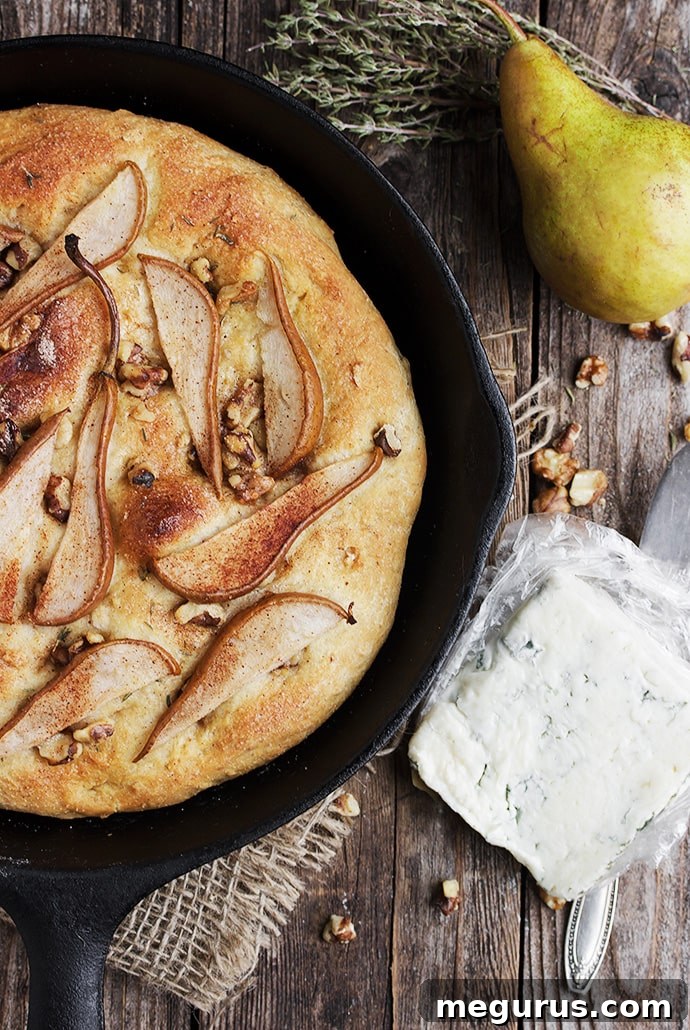
The Perfect Pairing for Wine and Cheese – This focaccia shines brightest as an accompaniment to a sophisticated wine and cheese spread. The sweetness of the pears complements robust cheeses like Gorgonzola or other strong blue cheeses beautifully. The salty, pungent notes of the cheese create an exquisite contrast with the sweet fruit and airy bread. A drizzle of high-quality honey over the warm focaccia and cheese brings all the flavors together in a symphonic bite. For wine, consider a crisp, dry white wine like a Pinot Grigio, Sauvignon Blanc, or a light Prosecco. Their acidity and effervescence cut through the richness of the cheese and focaccia, cleansing the palate and enhancing the overall experience. A lighter-bodied red, such as a chilled Beaujolais, could also be a delightful choice.
More Ways to Enjoy: Beyond the Cheese Board –
- As an Appetizer: Serve warm, sliced into wedges or squares, with a simple bowl of good quality olive oil for dipping.
- With Soups or Salads: Its hearty yet delicate flavor makes it a wonderful side for creamy vegetable soups or fresh, vibrant salads, adding a touch of elegance to a simple meal.
- Light Lunch or Brunch: Top a slice with a thin layer of prosciutto, a sprinkle of fresh arugula, and a balsamic glaze for an open-faced sandwich that’s bursting with flavor.
- Breakfast Treat: Surprisingly, a slice of this focaccia lightly toasted and spread with a creamy mascarpone cheese or even a fruit compote can be a delightful breakfast or brunch option.
Storage and Reheating Tips for Freshness – This pear and walnut focaccia is undoubtedly at its peak flavor and texture when enjoyed warm, straight from the oven. However, if you find yourself with leftovers, fear not! Focaccia can be stored at room temperature in an airtight container for up to 2 days, though its crust will soften. For longer storage, it freezes exceptionally well. Simply wrap cooled slices tightly in plastic wrap and then aluminum foil, then place them in a freezer-safe bag for up to 1-2 months.
To revive frozen focaccia, thaw it at room temperature, then pop it into a preheated oven at 350°F (175°C) for 5-10 minutes, or until warmed through and crispy. For an extra special treat, try placing leftover slices under the broiler for a minute or two with a thin slice of Gorgonzola or your favorite cheese on top—the melted cheese and re-crisped crust are absolutely divine.
Get the Recipe: Pear and Walnut Focaccia
Pin This
Leave a Review
Ingredients
For the Sponge:
- 1 teaspoon active dry or instant yeast
- 1/2 cup lukewarm water
- 1 Tablespoon white sugar
- 1/2 cup all-purpose flour
For the Dough:
- 1 teaspoon active dry or instant yeast
- 2/3 cup lukewarm water
- 1 Tablespoon brown sugar
- 1 Tablespoon molasses
- 2 Tablespoon vegetable oil, or canola oil
- 1/3 cup fine cornmeal
- 1 teaspoon fine sea salt
- 2 1/2-3 cups all-purpose flour, can use 1 cup whole wheat in place of AP
For the Topping:
- 2 teaspoon chopped fresh thyme
- 1/3 cup chopped walnuts
- 2-3 pears, ripe but firm. peeled, quartered, cored and sliced in wedges (about 1/2 inch thick at thickest point)
- 2 Tablespoon white sugar
- 1 teaspoon cinnamon
Instructions
-
Prepare the Sponge: In a large bowl or the bowl of a stand mixer, combine the yeast and water, stirring gently until the yeast dissolves. Whisk in the sugar and 1/2 cup of all-purpose flour until well combined. Cover the bowl tightly with plastic wrap and let it proof in a warm, draft-free place for about 45 minutes, or until the mixture is bubbly and has doubled significantly in volume. This active sponge is the secret to a light and airy focaccia.
-
Craft the Dough: If continuing with a stand mixer, whisk together the remaining 1 teaspoon of yeast and 2/3 cup lukewarm water in a small separate bowl; let it stand for a few minutes until it becomes creamy. Add this yeast mixture to the proofed sponge in the mixer bowl, along with the brown sugar, molasses, and vegetable oil. Incorporate the fine cornmeal and sea salt. Using the paddle attachment, mix for 1 to 2 minutes until all ingredients are thoroughly combined. Gradually add 2 cups of all-purpose flour. Switch to the dough hook attachment and knead on medium speed for 8 to 10 minutes. During kneading, add the remaining flour (up to 1 cup more) in 1/4 cup increments only if necessary, until the dough comes together, forms a smooth ball, and begins to slap against the sides of the bowl. The dough should still be slightly tacky to the touch – avoid adding too much flour, as this will result in a dry focaccia.
-
First Rise (Bulk Fermentation): Gently transfer the kneaded dough to a lightly greased large bowl. Turn the dough once to coat all sides with oil. Cover the bowl tightly with plastic wrap to prevent drying. Allow the dough to rise in a warm spot for approximately 1 1/2 hours, or until it has visibly doubled in volume. This slow rise develops deep flavors.
-
Shape and Second Rise: Line a large baking sheet (approximately 12×17 inches for one large focaccia) with parchment paper and lightly spray it with cooking spray or brush with olive oil. Carefully turn the risen dough out onto the prepared baking sheet. With lightly oiled or moistened hands, gently press and stretch the dough until it almost covers the bottom of the pan. The dough might be a bit sticky, but be patient and work it gently. Cover the dough loosely with a damp, clean kitchen towel and let it rise in a warm place for another 45 minutes to 1 hour, or until it appears puffy and full of air bubbles.
-
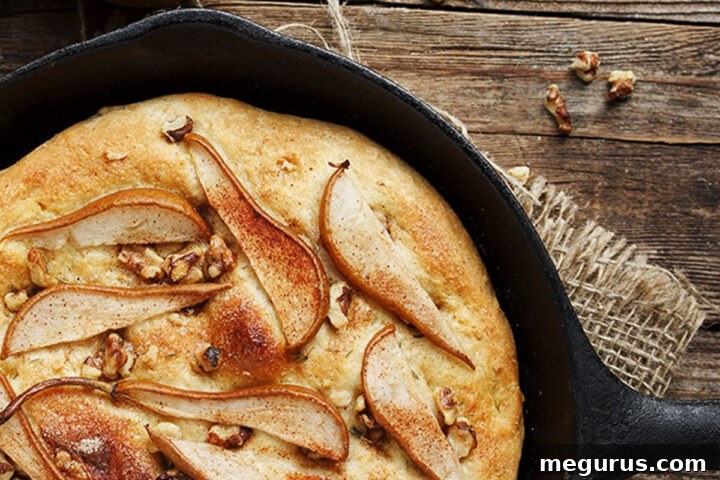
Prepare for Baking: While the focaccia is undergoing its second rise, preheat your oven to 425°F (220°C). Once the dough is ready, lightly oil your fingertips or knuckles. Gently but firmly dimple the dough all over, pressing down to create indentations. These dimples will hold the olive oil and toppings, creating pockets of flavor and texture. Evenly distribute the chopped walnuts into these indentations, then sprinkle the fresh chopped thyme over the entire surface of the dough. Arrange the pear wedges attractively and evenly over the dough. In a small bowl, combine the white sugar and cinnamon, then sprinkle this cinnamon sugar mixture generously and evenly over the pears and dough.
-
Bake to Golden Perfection: Place the focaccia in the preheated oven and bake for 20 to 25 minutes. The focaccia is ready when its edges are crisp, and the top is beautifully golden brown. For an even crisper bottom crust, you can carefully slide the focaccia off the parchment paper and directly onto the oven stone or rack for the last 10 minutes of baking. Once baked, immediately remove the focaccia from the pan and transfer it to a wire rack to cool. If you prefer a softer, chewier focaccia, cover it with a clean kitchen towel as it cools. Serve warm or at room temperature.
-
Serving Suggestions: This focaccia is best enjoyed fresh from the oven, offering the perfect combination of crispy crust and tender interior. For leftovers, you can refresh it by popping it under the broiler for a minute or two to re-crisp. For an indulgent treat, melt some gorgonzola or another favorite cheese on top during this reheating process.
Notes
More Focaccia Recipes to Love!
In conclusion, this Pear and Walnut Focaccia offers a delightful journey for your senses, combining sweet fruit with savory herbs and crunchy nuts in a remarkably versatile bread. Whether you’re serving it as an elegant appetizer, a unique side to your main course, or simply enjoying a slice with your morning coffee, its unique flavor profile is sure to become a cherished addition to your recipe collection. Embrace the joy of baking and discover the irresistible charm of this homemade focaccia.