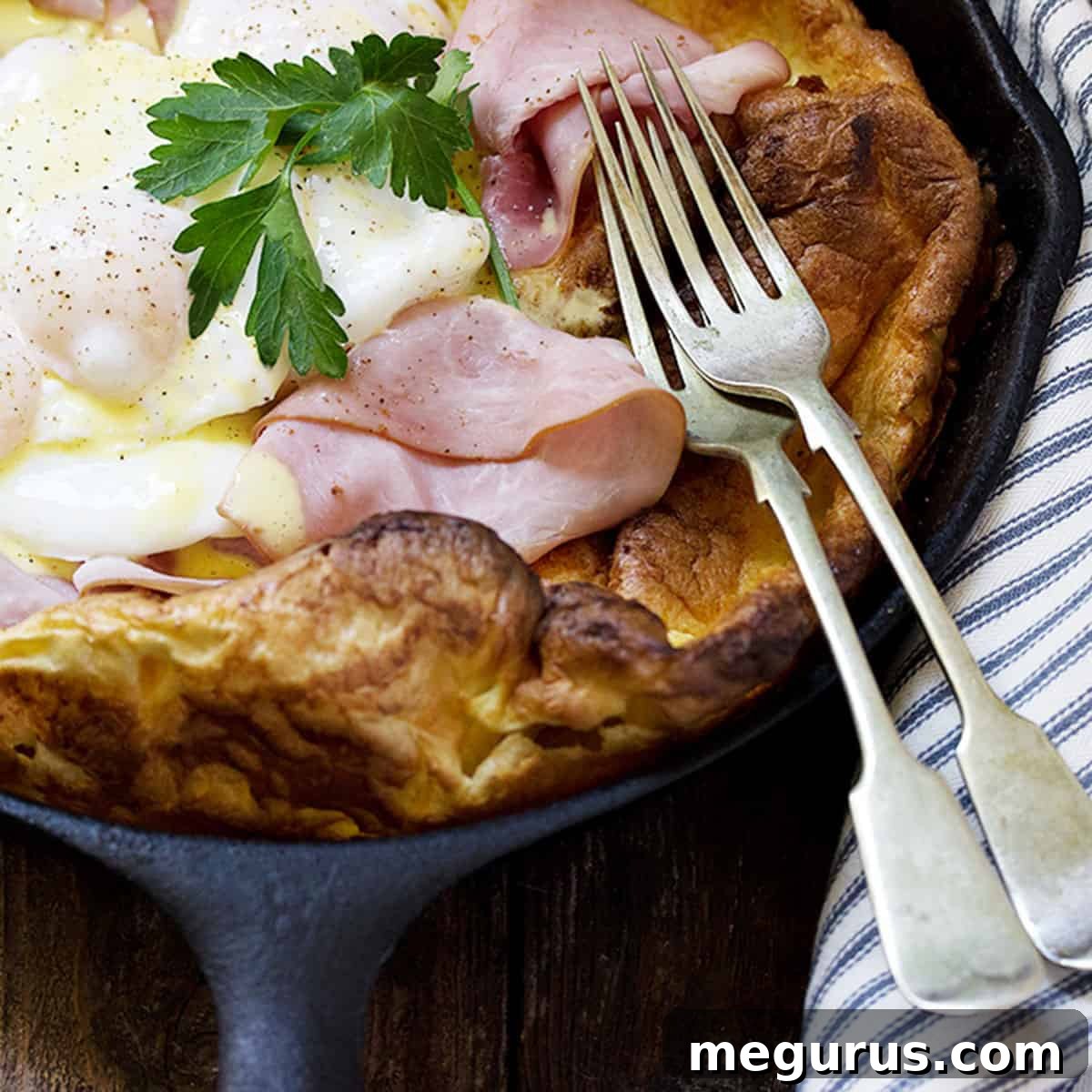
Imagine the classic elegance of Eggs Benedict, flawlessly combined with the rustic charm of a giant, puffy Dutch Baby pancake. This incredible Eggs Benedict Dutch Baby isn’t just a meal; it’s an experience. Perfect for any time of day – be it a delightful breakfast, a leisurely brunch, a unique lunch, or even a comforting dinner – this dish promises to satisfy every craving. Featuring perfectly poached eggs, savory ham, and generously draped with a quick, velvety blender Hollandaise sauce, it’s truly all-day breakfast perfection, elevating your dining to a whole new level.
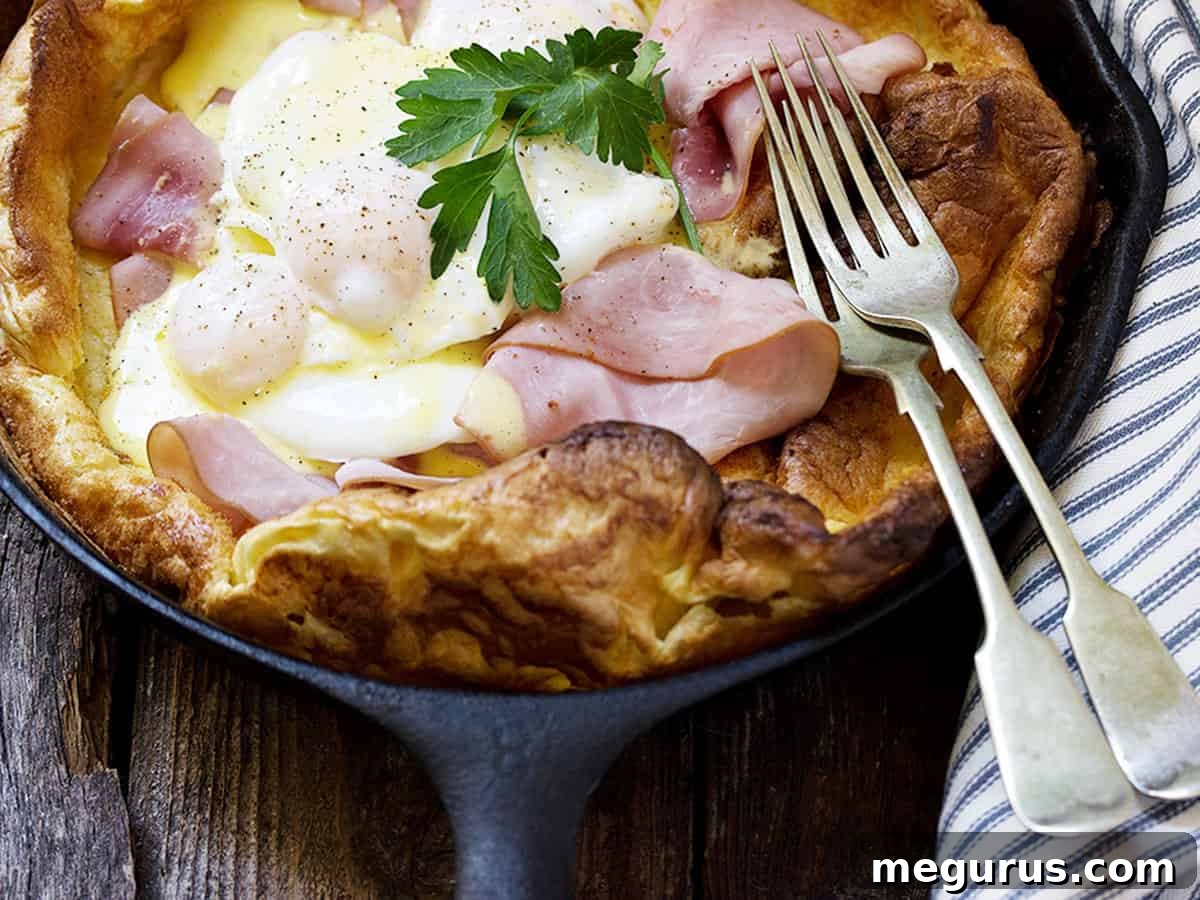
For those who adore the light, airy texture of a Dutch Baby pancake and the sophisticated flavors of Eggs Benedict, this fusion recipe is an absolute dream come true. It takes two beloved breakfast (or any-time) staples and combines them into one spectacular dish that’s surprisingly easy to make. Whether you’re planning a special summer brunch with guests, enjoying a relaxed breakfast at the cottage, or simply treating yourself to something extraordinary on a regular Tuesday, this Eggs Benedict Dutch Baby is wonderfully versatile and perfectly suited for any season or occasion.
What is an Eggs Benedict Dutch Baby?
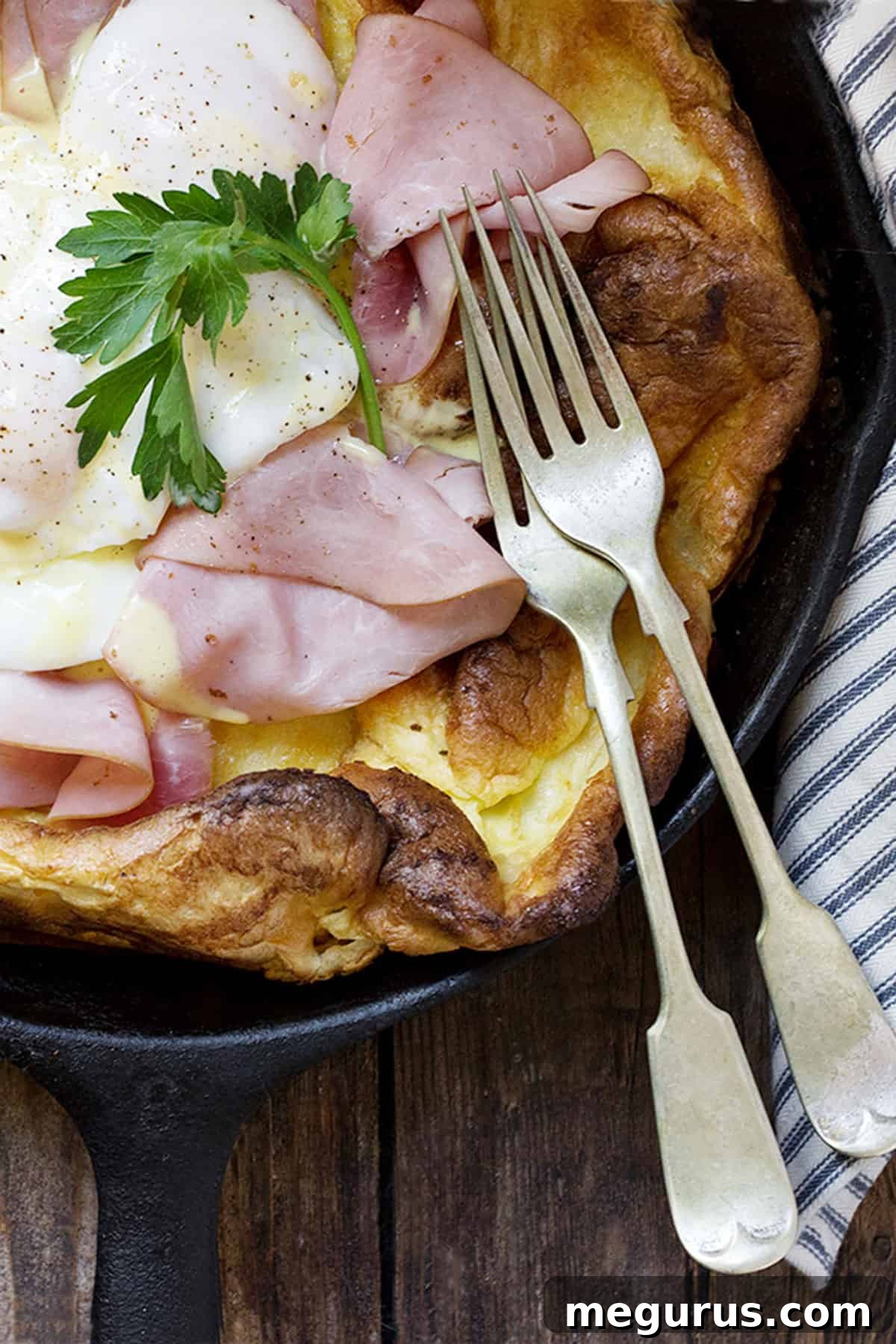
A Dutch Baby pancake, also known as a German pancake or a Bismark, is a large, puffy, oven-baked pancake that typically cooks in a cast iron skillet. It’s known for its dramatic rise and golden, crispy edges, often sinking back slightly in the center once removed from the oven. Instead of the usual sweet toppings like fruit and powdered sugar, this rendition transforms the Dutch Baby into a savory masterpiece, serving as the perfect base for Eggs Benedict. We top it with slices of delicious ham and expertly poached eggs, then finish it all with a luscious, bright Hollandaise sauce. It’s a complete meal in one skillet, offering a delightful blend of textures and flavors – from the soft, custardy center of the pancake to the rich egg yolk and tangy sauce.
Why You’ll Love This Ultimate Brunch Recipe
Beyond its impressive appearance and gourmet taste, there are several compelling reasons why this Eggs Benedict Dutch Baby will become a fast favorite in your kitchen:
- Effortlessly Elegant: This dish looks incredibly impressive, making it ideal for entertaining. Your guests will think you spent hours in the kitchen, but it’s surprisingly quick to assemble.
- Perfect Anytime: While it screams “brunch,” its robust flavors and satisfying components make it suitable for breakfast, a hearty lunch, or even a unique weeknight dinner. It’s a truly flexible meal.
- Blender Magic: The Dutch Baby batter and the Hollandaise sauce both come together quickly in a blender, minimizing fuss and clean-up. This simplifies what might seem like complex components.
- Customizable: While ham and poached eggs are classic, the base is versatile. You can explore variations (see below for ideas!) to suit different tastes or ingredients on hand.
- Comfort Food Elevated: It offers all the comforting elements of a warm pancake and classic egg dish but with a sophisticated twist that feels special and indulgent.
Essential Ingredients for Your Eggs Benedict Dutch Baby
Crafting this incredible dish requires a few key components. Here’s a closer look at what you’ll need and some helpful substitution tips to ensure your meal is perfect every time.
- Eggs: This recipe uses a generous amount of eggs – ten in total! You’ll need four to five large eggs for poaching and three large eggs for the Dutch Baby batter, plus three egg yolks for the Hollandaise. Fresh, large eggs are recommended for the best flavor and texture, especially for successful poaching. Ensure the eggs for the Dutch Baby batter are at room temperature, as this helps create a smoother batter and a better rise.
- Ham: The classic choice for Eggs Benedict is Canadian bacon, but this recipe is wonderfully flexible. You can use leftover carved ham, high-quality deli ham slices, or even thick-cut bacon. For a special touch, consider a smoked ham for extra depth of flavor. If you prefer a vegetarian option, sautéed spinach or avocado slices make excellent substitutes.
- Milk: Use whole milk for the richest Dutch Baby, but any dairy or non-dairy milk (like almond or oat milk) can work if that’s what you have on hand. Just ensure it’s at room temperature for optimal batter consistency.
- Butter: Both unsalted butter for the batter and the skillet, and plenty of it for the Hollandaise sauce, are crucial. The butter contributes significantly to the richness and flavor of both components.
- Flour & Cornstarch: All-purpose flour provides the structure for the Dutch Baby, while a touch of cornstarch adds to its signature crispiness and puff.
- Seasonings: Kosher salt and freshly ground black pepper are essential for seasoning the Dutch Baby batter and the Hollandaise. Fresh lemon juice for the Hollandaise brightens the rich sauce, cutting through its richness with a lovely tang.
Top Tips for Success
While this recipe may seem like it has multiple steps, careful timing and a few smart techniques will bring it all together smoothly. Follow these tips for a flawless Eggs Benedict Dutch Baby:
- Mastering Poached Eggs: Poached eggs are the crowning glory of Eggs Benedict. To make them perfectly and efficiently, poach them first. After cooking, immediately transfer them to a bowl of cold water. This “suspends” their cooking, keeping the yolks perfectly runny while the whites are set. When you’re ready to serve, simply drain the cold water and replace it with warm water for about a minute to gently reheat the eggs. If poaching seems daunting, don’t fret! Sunny-side-up or over-easy fried eggs are a delicious and easy alternative that still delivers that lovely runny yolk.
- Dutch Baby Perfection: The key to a wonderfully puffy Dutch Baby is a properly preheated cast iron skillet. Place your skillet in a cold oven, then turn the oven on to 450°F (230°C). This ensures the skillet gets uniformly hot, creating that dramatic rise. Don’t open the oven door while it’s baking!
- Blender Hollandaise: This method is a game-changer for homemade Hollandaise. Ensure your butter is hot and foamy, and pour it into the blender with the egg yolks, salt, pepper, and lemon juice in a very slow, steady stream. Start with just a few drops at first to emulsify, then gradually increase the flow. This slow addition is crucial for a thick, creamy sauce that won’t separate. Remember, Hollandaise is best made and served immediately, as it doesn’t reheat well.
- Room Temperature Ingredients: For the Dutch Baby batter, make sure your eggs and milk are at room temperature. This helps create a smoother batter and contributes to a better, more consistent rise in the oven.
- Timing is Everything: The recipe instructions below are carefully timed. Start with poaching your eggs, then prepare the Dutch Baby batter, and finally, make the Hollandaise while the Dutch Baby is baking. This sequence ensures all components are ready at the same time for serving.
Making Ahead and Storing Your Dutch Baby
Like most oven-baked pancakes, this Eggs Benedict Dutch Baby is truly at its best when served immediately, fresh out of the oven, with the Hollandaise and eggs still warm. The crispy edges and puffy texture are paramount to the Dutch Baby experience, and these diminish over time.
If you do have leftovers, they can be stored in an airtight container in the refrigerator for up to 2 days. The Dutch Baby itself can be gently reheated in a warm oven or a toaster oven, but the poached eggs and Hollandaise sauce are best made fresh. For optimal enjoyment, plan to assemble and serve this dish right before eating.
Get the Recipe: Eggs Benedict Dutch Baby
Pin This
Leave a Review
20 minutes
15 minutes
35 minutes
5
servings
Ingredients
For the Poached Eggs:
- 4-5 large eggs
For the Dutch Baby Batter:
- 3 large eggs, at room temperature
- 3/4 cup milk, at room temperature
- 2 Tablespoons butter, melted and cooled slightly
- 1/2 cup all-purpose flour
- 2 Tablespoons cornstarch
- 1/2 teaspoon kosher salt
- 1/2 teaspoon freshly ground pepper
- For the pan:
- 1 Tablespoon unsalted butter
For the Blender Hollandaise:
- 3 egg yolks
- 1/4 teaspoon salt
- Pinch freshly ground pepper
- 1 Tablespoon fresh lemon juice
- 1/2 cup unsalted butter
To Serve:
- 5 slices ham, deli sliced or leftover ham
- Fresh parsley sprigs
Instructions
-
Place a cast iron skillet in a cold oven and preheat the oven to 450°F (230°C). Heating the skillet with the oven ensures it reaches the perfect temperature for a puffy Dutch Baby.
-
Poach Eggs: In a large, deep skillet, bring several inches of water to a boil over high heat. Once boiling, reduce the heat to a gentle simmer (medium-low). Crack each egg into a small dish or ramekin, then gently slide them into the simmering water. If necessary, gently stir the water to help the egg whites gather around the yolks. Cook until the whites are just set and the yolks are still very runny, about 3 minutes. Immediately transfer the poached eggs to a bowl of cold water to halt the cooking process. Set aside until ready to serve.
-
Make Dutch Baby Batter: Combine all the Dutch Baby batter ingredients (room temperature eggs, milk, melted butter, all-purpose flour, cornstarch, kosher salt, and freshly ground pepper) in a blender. Blend for 30 seconds, or until the mixture is completely smooth and frothy.
-
Once the oven is fully preheated, carefully remove the hot skillet. Add 1 Tablespoon of unsalted butter to the pan. Quickly swirl the pan to coat the bottom and sides with the melting butter. Don’t worry if it doesn’t melt completely. If the Dutch Baby batter has been sitting, give it another quick blend. Pour the batter into the hot skillet. Immediately return the pan to the oven and set a timer for 13 minutes.
-
Prepare Hollandaise Sauce: While the Dutch Baby bakes, make the Hollandaise. Rinse out your blender and dry it thoroughly. In a small saucepan, melt the 1/2 cup of unsalted butter until it’s hot and foamy. Add the 3 egg yolks to the clean blender and blend for 30 seconds until well mixed. Add the salt, a pinch of freshly ground pepper, and 1 Tablespoon of fresh lemon juice (you can always add more to taste later). With the blender running on low speed, begin to add the hot, foamy butter VERY SLOWLY. Start with a few drops, then increase to a slow, steady stream. This is typically done through the small opening in the blender lid. If your lid doesn’t have one, carefully remove the entire lid and cover most of the opening with a tea towel to prevent splatters while pouring. Continue blending until all the butter is incorporated and the sauce is thickened and lightened in color. Taste and adjust seasonings with more salt, pepper, or lemon juice as desired. Remember to serve immediately.
-
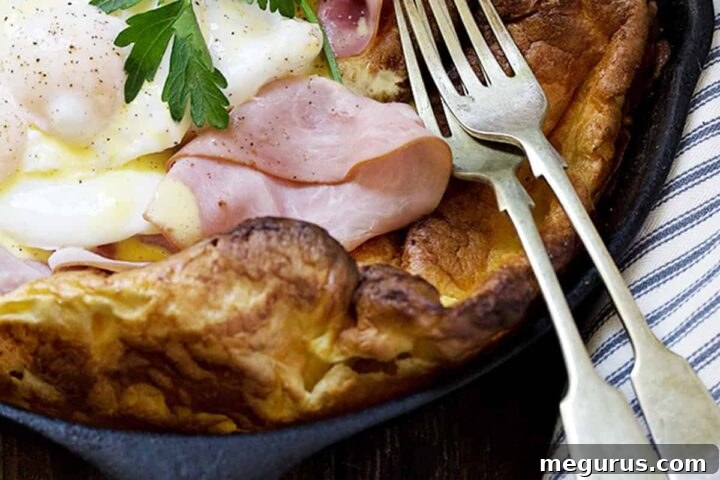
Assemble and Serve: After 13 minutes, check the Dutch Baby. It should be wonderfully puffy and deeply golden brown around the edges. If needed, bake for a few more minutes until golden. Carefully remove it from the oven and let it stand briefly. Drain the cold water from the poached eggs and replace it with warm water for about a minute to gently rewarm them. Transfer the warm eggs to a paper towel to drain any excess water, then place them on top of the warm Dutch Baby. Arrange scrunched-up ham slices around the eggs. Generously spoon the freshly made Hollandaise sauce over the ham and eggs. Season with a final sprinkle of salt and pepper, and garnish with fresh parsley sprigs. Serve immediately and enjoy!
Notes
Flavor Variations:
- Smoked Salmon Benedict: Replace ham with smoked salmon for a classic variation.
- Vegetarian Option: Sautéed spinach, asparagus, or grilled portobello mushrooms can beautifully substitute the ham.
- Spicy Kick: Add a pinch of cayenne pepper to the Hollandaise sauce or sprinkle some red pepper flakes over the finished dish.
- Herbaceous Twist: Garnish with fresh chives or dill instead of parsley for a different aromatic touch.
American, Canadian
Breakfast, Brunch, Main Course
Jennifer Maloney
Tried this recipe?
If you enjoyed this recipe, please leave a star rating and comment. It helps others to find it!